Dive slate · divesites.com.au · printed 7 Nov 2026
Million Dollar Bommie
Christmas Island, External Territories · near Flying Fish Cove (The Settlement)
| Depth | 3–26 m |
|---|---|
| Minimum level | Advanced Open Water |
| Difficulty | Beginner |
| Access | Boat |
| Entry | Giant stride or back roll from dive boat |
| Current | Mild |
| Visibility | 25-40 m |
| Water | summer 28-29 °C, winter 26-27 °C |
| Suit | 3 mm full wetsuit (many dive in a 3 mm shorty or rash vest); 5 mm for multiple long dives or cave dives |
| Best season | April–November (south-east trade season – north coast calm); whale sharks most likely November–April, especially after red crab spawning (often Nov–Dec); avoid peak swell Feb–Apr |
| Bottom time | 50 min |
| Position | -10.44000, 105.65400 (approximate) |
| Permit | Christmas Island Marine Park (Australian Marine Parks, proclaimed March 2022): inshore waters are Habitat Protection Zone (yellow) – diving, snorkelling and recreational fishing allowed, no seabed-disturbing activities; the no-take National Park Zone starts about 12 nautical miles offshore. Christmas Island National Park also extends 50 m seaward of low-water mark along about 46 km of coast. No permit required for recreational diving; do not collect or disturb marine life. |
| Nearest chamber | Fiona Stanley Hospital (Perth) – approx. 2,600 km away; there is no recompression chamber on Christmas Island. Stabilisation at Christmas Island Hospital, then aeromedical evacuation to Perth (many hours) |
| Emergency | 000 · DAN Asia-Pacific diving emergency 1800 088 200 |
Million Dollar Bommie
Also known as MDB, Million Dollar
A solitary coral bommie rising from sand, with a dense garden eel colony and outstanding photography on the summit.
Near Flying Fish Cove (The Settlement) · Christmas Island, External Territories
- Depth
- 3–26 m
- Minimum level
- Advanced Open Water
- Access
- Boat
- Boat ride
- ~8 min
- Water
- 28-29 °C
- Visibility
- 25-40 m
Million Dollar Bommie3–26 m · Advanced Open Water
Dive factsDepths, conditions, location & safety
Season
In season nowBest months: year-round.
April–November (south-east trade season – north coast calm); whale sharks most likely November–April, especially after red crab spawning (often Nov–Dec); avoid peak swell Feb–Apr
- Best months
- Now (November)
- Stinger suit Nov–May
Dive facts
- Depth
- 3–26 m
- Typical depth
- 17 m
- Certification
- Advanced Open Water
- Difficulty
- Beginner
- Depth tier
- Advanced Open Water (18–30 m)
- Access
- Boat
- Offshore
- 0.1 km
- Dive centre needed
- Yes – boat access only
- Shore / independent
- No
- Boat ride
- ~8 min
- Current
- Mild
- Visibility
- 25-40 m
- Water temp (summer)
- 28-29 °C
- Water temp (winter)
- 26-27 °C
- Water
- Tropical
- Bottom time
- 50 min
- Dive traffic
- Popular (weekly charters)
- Night dive
- Possible
- Snorkel friendly
- Partial
Exposure suit
3 mm full wetsuit (many dive in a 3 mm shorty or rash vest); 5 mm for multiple long dives or cave dives
Location
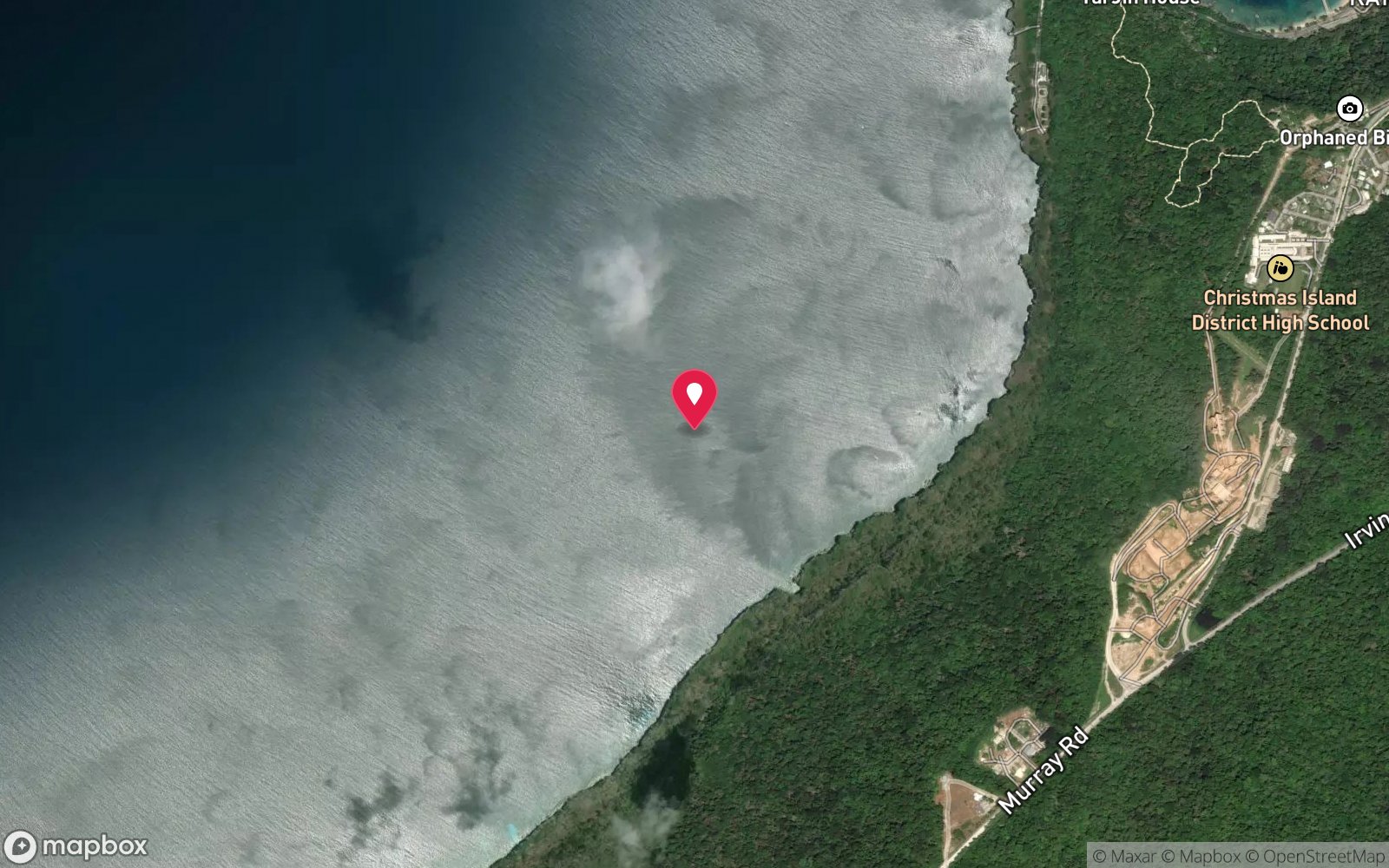
North coast – west of Flying Fish Cove · Christmas Island (Indian Ocean)
-10.44000, 105.65400
Approximate position — not for navigation.
Open in Google MapsPrimary source: diveplanit.comMarine park & permits
Christmas Island Marine Park (Australian Marine Parks, proclaimed March 2022): inshore waters are Habitat Protection Zone (yellow) – diving, snorkelling and recreational fishing allowed, no seabed-disturbing activities; the no-take National Park Zone starts about 12 nautical miles offshore. Christmas Island National Park also extends 50 m seaward of low-water mark along about 46 km of coast. No permit required for recreational diving; do not collect or disturb marine life.
Nearest recompression chamber
Fiona Stanley Hospital (Perth) – approx. 2,600 km away; there is no recompression chamber on Christmas Island. Stabilisation at Christmas Island Hospital, then aeromedical evacuation to Perth (many hours)
Diving emergency: call 000, then DAN AP 1800 088 200.
Trip planner
Build a trip around Million Dollar Bommie →
A day-by-day plan for Christmas Island with this site locked in.
This guide is a planning aid. Conditions change daily — confirm with a local dive centre and dive within your training. Data & safety notes.
Dive profile
How this site rates
Scores are computed from the recorded data, not opinions. How?
At a glance
Million Dollar Bommie is a pinnacle / bommie boat dive in Christmas Island, Australia's external territories, 3–26 m, suited to Advanced Open Water divers, about 8 minutes by boat.
Rated beginner: sheltered, shallow and manageable for a newly certified diver on a normal day, though note depth beyond 18 m and surge on the entry or in the shallows and boat traffic overhead.
Why dive here
- A solitary coral bommie rising from sand, with a dense garden eel colony and outstanding photography on the summit.
- A photographer's site: bring a macro lens or a wide-angle depending on the season.
- Visibility often reaches 25-40 m.
Conditions to avoid
- Swell above about 1.5 m
- Strong southerly or south-east swell and wind
- Strong westerlies
- Strong northerlies
- Outgoing tide or run-off after rain (poor visibility)
About Million Dollar Bommie
Million Dollar Bommie is one of the island's favourite photography dives. On a coast where coral usually grows almost to the surface and the reef quickly becomes a wall, this site is unusual: between the cliff and the dive there is a stretch of sand and rock bottom, and on it sits a single bommie about 7 m high on a 26 m base. Extra Divers describe a shallow bommie system from 3 m to 17 m, and Diveplanit's report puts the bommie's top at about 19 m and its base at 26 m – in practice divers can make it anything from a shallow reef dive to a deeper circuit of the pinnacle.
The sand holds what Extra Divers call a famously dense garden eel colony, which rises and sways in the current. The bommie itself is thick with life: sea fans tucked beneath overhangs, and fish congregating both on the summit, where they graze algae in the light, and in its crevices. Species recorded include velvet surgeonfish, Meyer's butterflyfish, lyretail hogfish, mimic surgeonfish, red fire gobies, coral trout, parrotfish, moray eels and octopus. Occasional megafauna pass through, and snorkellers have seen manta rays go by.
The combination of a compact, well-lit structure, lots of fish and a sandy backdrop makes it a favourite for underwater photographers – the summit in particular. It is equally good for first-timers, who can stay shallow, and for experienced divers who want a relaxed but fish-rich dive. The name is a local joke that the encounters here are priceless. It is dived in the calm south-east trade season and is one of the standard sites on the run west along the north coast.
Getting there & entry
A 7 m-high coral bommie on a 26 m sand and rock base below the cliffs on the north coast, near the water tanks west of Flying Fish Cove.
Fly from Perth (about 4 hours, two to three flights a week, some via Cocos Islands) and hire a car – there is no public transport. Both dive centres are in The Settlement and launch their boats from the jetty/boat ramp at Flying Fish Cove, normally at about 8 am for a two-dive morning trip. From the cove the boat runs west from the cove past Smith Point and then south-west along the north coast along the coast for roughly 5–10 minutes to the site below the water tanks.
There is no land access to the dive, and the vertical sea cliffs mean no exit other than the boat. Operators choose sites on the morning according to swell and wind.
Entry: Giant stride or back roll from dive boat
Facilities: Departs Flying Fish Cove jetty/ramp.
Weather, swell & tides
On the north coast, which is in the lee of the south-east trade winds from roughly April/May to November – that is the calm, reliable season here with glassy seas and 30 m+ visibility. From about December to March/April the north-west monsoon brings northerly and north-westerly swell (and occasional cyclone-generated swell) that can make the north coast undiveable and the Flying Fish Cove ramp unusable for days; Extra Divers treat February–April as peak swell season when trips are often cancelled. Any swell over about 1.5 m from the north-west quarter usually cancels the site.
Visibility dips after heavy rain run-off from the plateau and during red crab spawning (Oct–Jan) when plankton blooms. Tides are small (about 1 m) and rarely matter, but currents along the coast can pick up without warning.
Best season: April–November (south-east trade season – north coast calm); whale sharks most likely November–April, especially after red crab spawning (often Nov–Dec); avoid peak swell Feb–Apr
If it's blown out
Sheltered or shore sites within 25 km that often work when Million Dollar Bommie doesn't.
- Flying Fish Cove · 2 km · Max 25 m
- The Sandpatch · 2 km · Max 18 m
- Admin Wall · 2 km · Max 30 m
- Pirate Cove · 2 km · Max 15 m
How the dive is usually run
Descend over the sand and rock between the cliff and the bommie, visit the garden eels on the sand, then circle the bommie from its 26 m base up to the top at about 19 m, checking the fans under the overhangs. Spend the latter part of the dive working back across the shallower reef towards the cliff for the safety stop.
Marine life
- Garden eels
- velvet surgeonfish
- Meyer's butterflyfish
- lyretail hogfish
- mimic surgeonfish
- red fire gobies
- coral trout
- parrotfish
- moray eels
- octopus →
- sea fans
- occasional manta rays →
Linked species have their own page listing every site where they are recorded. All marine life →
Training required
Beyond 18 m an Advanced certification (which includes a deep dive to 30 m) is the accepted minimum. Anything past 25 m is a deep dive in practice.
Open Water divers can dive the shallower section (typical depth 17 m); the full site to 26 m needs Advanced Open Water. Operators often quote Open Water. At more than 25 m this counts as a deep dive: watch no-decompression limits and gas.
Operators' own listing: Open Water.
Courses that help here
- Enriched Air Nitrox – Longer no-decompression time at 25 m and deeper.
Depth tiers: 0–10 m easy · to 18 m Open Water · 18–30 m Advanced (25 m+ is a deep dive) · 30–40 m Deep specialty · 40 m+ technical. All courses
Hazards & warnings
Depth creeps on the bommie base (26 m) – watch no-deco limits; boat traffic; surge in the shallows with northerly swell; no shore exit below the cliffs.
Dive centres that go here
Extra Divers Christmas Island – regular boat dive; CI Wet'n'Dry Adventures – regular site, popular with photographers. Snorkellers are sometimes taken for the shallow reef.
Operators recorded for Million Dollar Bommie
Extra Divers Christmas Island
ListedFlying Fish Cove · Christmas Island · WA
The main dive operation on Christmas Island, servicing the island's wall and drop-off diving.
extradivers-worldwide.com/en/extra-divers-christmas-island
CI Wet'n'Dry Adventures
Named by sitesChristmas Island · Christmas Island · External Territory
Trades as Christmas Island Wet'n'Dry Adventures / Dive Christmas Island; family business since 1994.
divingchristmas.com · 0439 215 290
Other dive centres in Christmas Island
Map
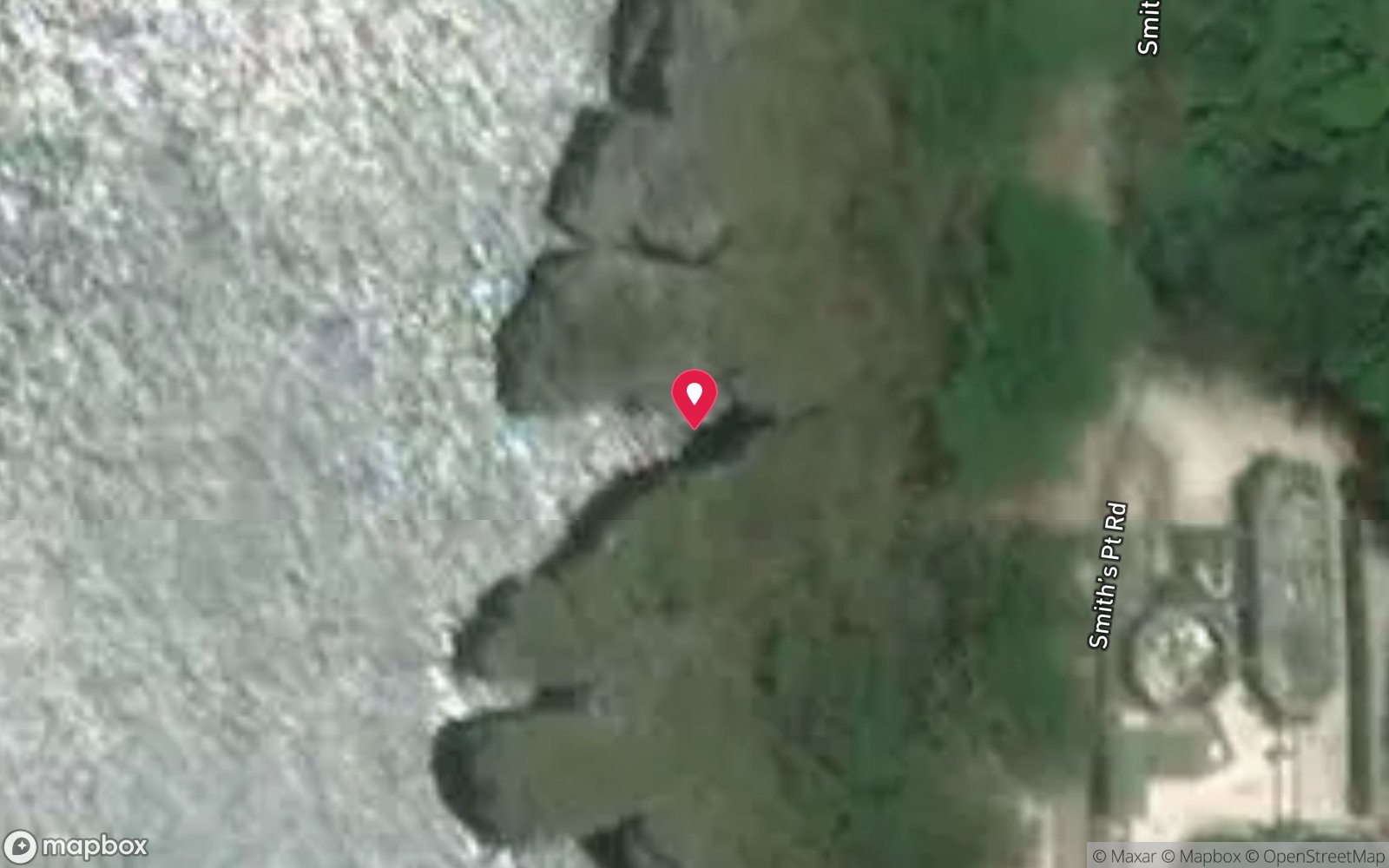
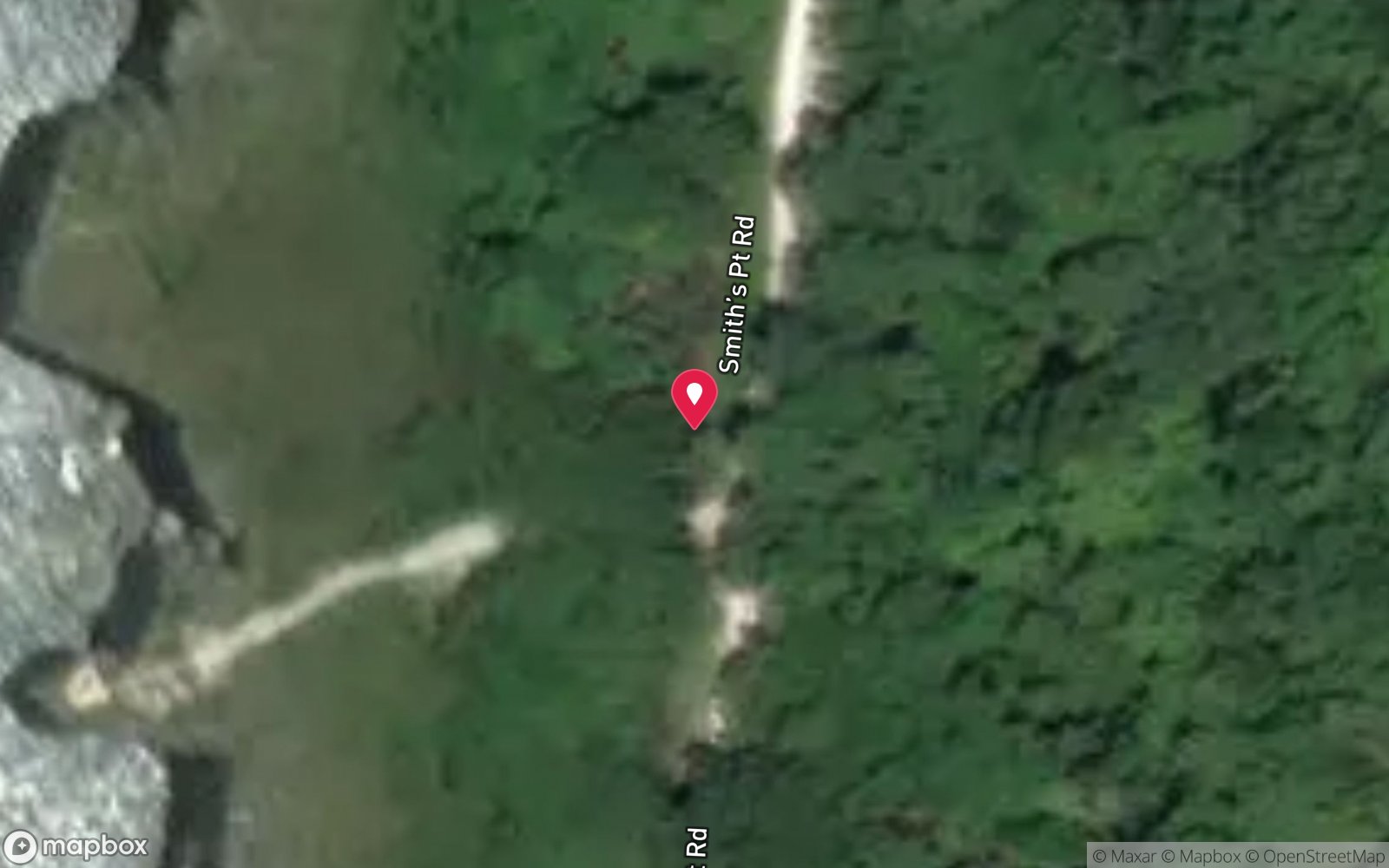
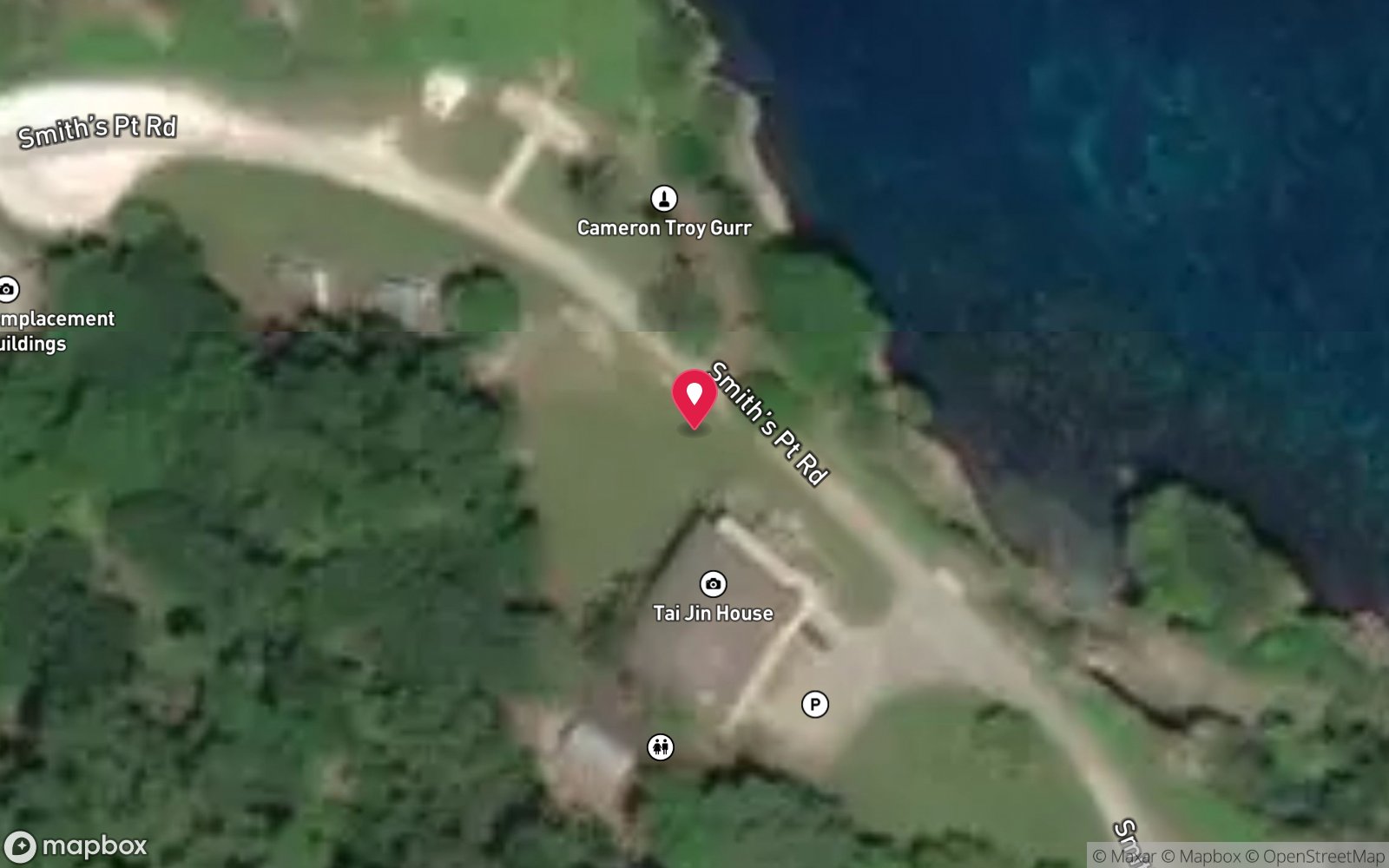
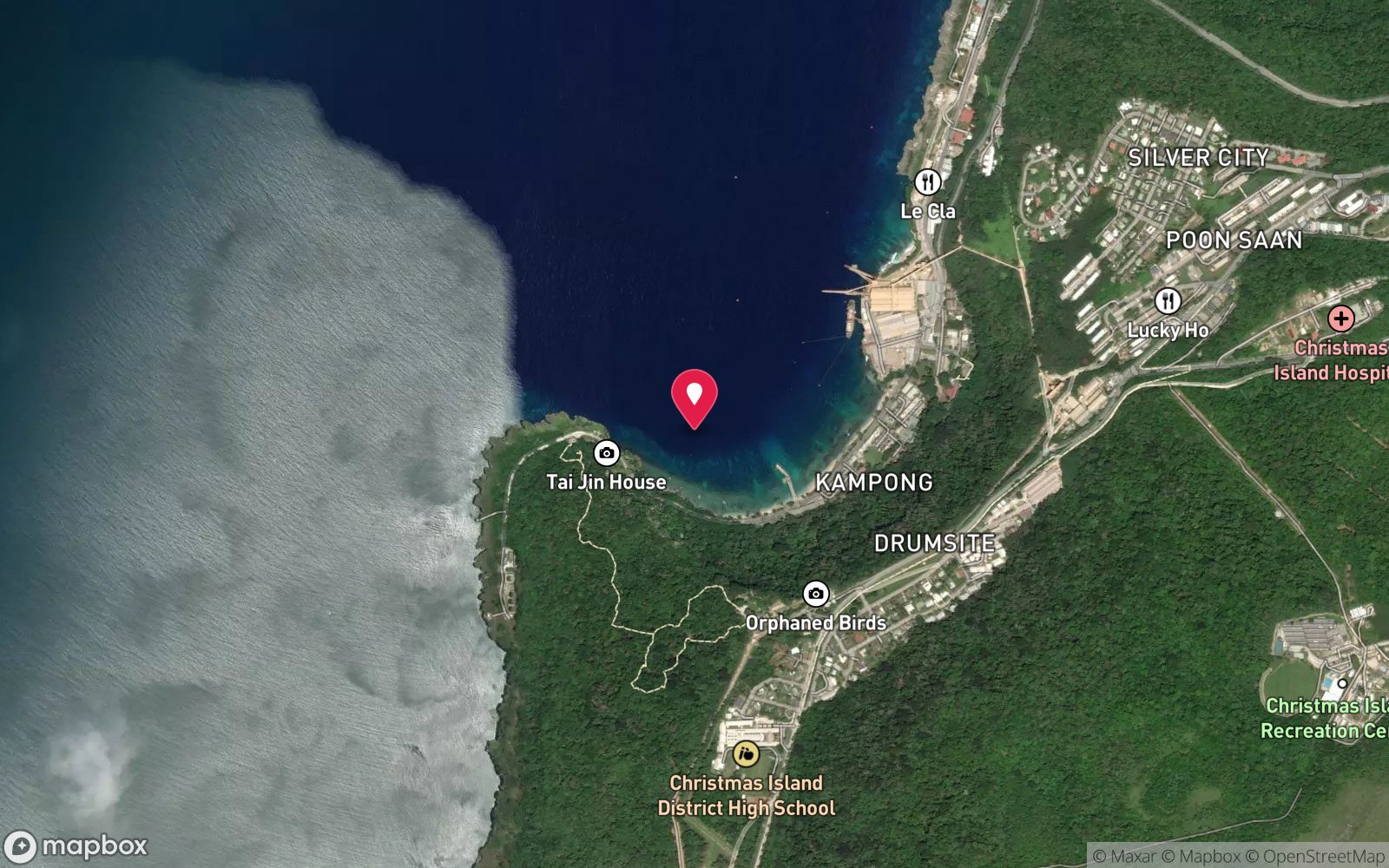
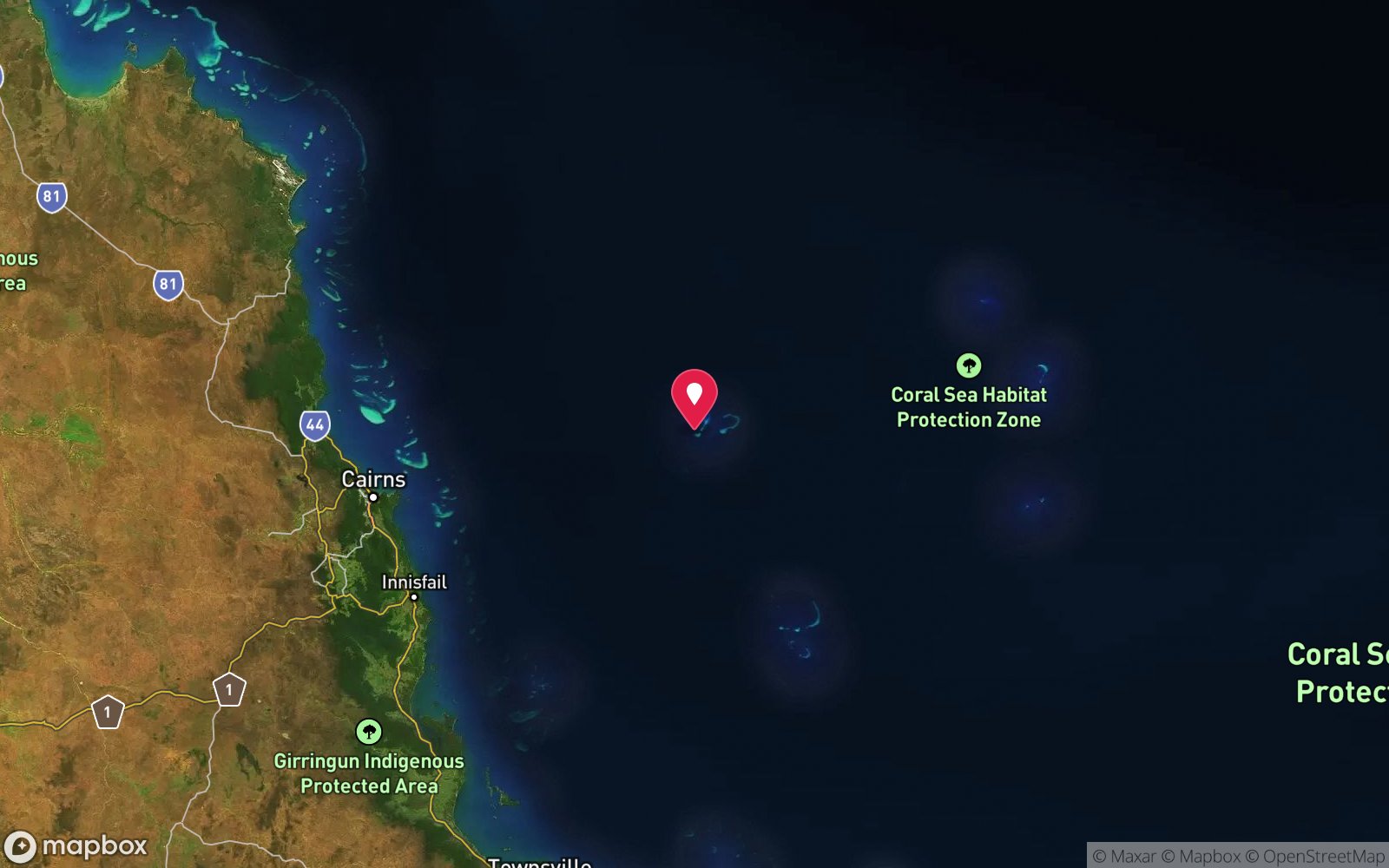
7 pinned sites. Pins marked approximate on their pages show the general area only; not for navigation.
Satellite views
Million Dollar Bommie: frequently asked questions
How deep is Million Dollar Bommie?
Million Dollar Bommie reaches a maximum depth of 26 m, with the shallowest part at about 3 m; most of the dive is spent around 17 m.
What certification do I need to dive Million Dollar Bommie?
Advanced Open Water is the recommended minimum. Open Water divers can dive the shallower section (typical depth 17 m); the full site to 26 m needs Advanced Open Water. Operators often quote Open Water. At more than 25 m this counts as a deep dive: watch no-decompression limits and gas. Rated beginner: sheltered, shallow and manageable for a newly certified diver on a normal day, though note depth beyond 18 m and surge on the entry or in the shallows and boat traffic overhead.
Can I shore dive Million Dollar Bommie?
No, it is reached by boat (about 8 minutes). A dive centre is required: boat access only.
When is the best time to dive Million Dollar Bommie?
April–November (south-east trade season – north coast calm); whale sharks most likely November–April, especially after red crab spawning (often Nov–Dec); avoid peak swell Feb–Apr.
What marine life will I see at Million Dollar Bommie?
Regularly recorded: Garden eels, velvet surgeonfish, Meyer's butterflyfish, lyretail hogfish, mimic surgeonfish, red fire gobies, coral trout, parrotfish, moray eels, octopus, sea fans, occasional manta rays.
What wetsuit do I need at Million Dollar Bommie?
3 mm full wetsuit (many dive in a 3 mm shorty or rash vest); 5 mm for multiple long dives or cave dives.
How cold is the water at Million Dollar Bommie?
Typically 28-29 °C in summer and 26-27 °C in winter.
What are the main hazards at Million Dollar Bommie?
Depth creeps on the bommie base (26 m) – watch no-deco limits; boat traffic; surge in the shallows with northerly swell; no shore exit below the cliffs. See the hazards section above for the full list.
Where is the nearest recompression chamber to Million Dollar Bommie?
Fiona Stanley Hospital (Perth) – approx. 2,600 km away; there is no recompression chamber on Christmas Island. Stabilisation at Christmas Island Hospital, then aeromedical evacuation to Perth (many hours). In an emergency call 000, then DAN Asia-Pacific on 1800 088 200.
Diving in Christmas Island
Christmas Island is the top of a volcanic seamount, so the fringing reef gives way to a wall within 20–50 m of the shore and keeps falling to 500 m. The diving is drift and wall diving in exceptional visibility, with sea caves such as Thundercliff, the endemic dragon moray, grey reef and silvertip sharks, spinner dolphins and, from November to January, whale sharks that arrive to feed on red crab spawn.
Getting there: Fly from Perth (about four hours) with a single dive operator based at Flying Fish Cove. Shore entries are possible at Flying Fish Cove and a few north-coast sites when the sea is flat.
Sources
- diveplanit.com/dive-site/million-dollar-bommie
- extradivers.com.au/dive-sites
- christmas.net.au/scuba-diving
- diveplanit.com/australia/christmas-island/wet-n-dry-adventures
- christmasislandstories.org.au/stories/diving-on-ci-25
Data confidence: High · Being verified: Coordinates approximate ('adjacent to the water tanks').. Last updated September 2026. Know this site better? How to send a correction
Nearby dive sites
More pinnacle/bommie dives in External Territories
Explore more
This region
Similar dives
Marine life