Dive slate · divesites.com.au · printed 8 Nov 2026
Moon Ledge
Hervey Bay & K'gari, Queensland · near Urangan (Hervey Bay)
| Depth | 10–21 m |
|---|---|
| Minimum level | Advanced Open Water |
| Difficulty | Intermediate |
| Access | Boat |
| Entry | Backward roll or giant stride from boat; descend the anchor or shot line |
| Current | Variable/Tidal |
| Visibility | 3-10 m |
| Water | summer 26-28 °C, winter 18-21 °C |
| Suit | 3 mm full suit in summer; 5 mm full suit and hood in winter |
| Best season | June-October (calmer, clearer water); dive at high-water slack year-round |
| Bottom time | 45 min |
| Position | not published |
| Permit | Great Sandy Marine Park – no dive permit required outside designated areas; observe zoning (green zones) and go-slow areas. |
| Nearest chamber | Royal Brisbane & Women's Hospital hyperbaric unit (Herston, Brisbane) — nearest chamber; Wesley Hospital hyperbaric unit (Auchenflower, Brisbane) is the alternative. Divers Emergency Service 1800 088 200. |
| Emergency | 000 · DAN Asia-Pacific diving emergency 1800 088 200 |
Moon Ledge
Hervey Bay's best natural reef: a long coffee-rock ledge from 10 m to 21 m+ with caves, boulders, eroded spires and big cod.
Near Urangan (Hervey Bay) · Hervey Bay & K'gari, Queensland
- Depth
- 10–21 m
- Minimum level
- Advanced Open Water
- Access
- Boat
- Boat ride
- —
- Water
- 26-28 °C
- Visibility
- 3-10 m
Moon Ledge10–21 m · Advanced Open Water
Dive factsDepths, conditions, location & safety
Season
In season nowBest months: year-round.
June-October (calmer, clearer water); dive at high-water slack year-round
- Best months
- Now (November)
- Stinger suit Nov–May
Dive facts
- Depth
- 10–21 m
- Typical depth
- 15 m
- Certification
- Advanced Open Water
- Difficulty
- Intermediate
- Depth tier
- Advanced Open Water (18–30 m)
- Access
- Boat
- Dive centre needed
- Yes – boat access only
- Shore / independent
- No
- Current
- Variable/Tidal
- Visibility
- 3-10 m
- Water temp (summer)
- 26-28 °C
- Water temp (winter)
- 18-21 °C
- Water
- Subtropical
- Bottom time
- 45 min
- Dive traffic
- Moderate (occasional charters/club dives)
- Night dive
- No
- Snorkel friendly
- No
Exposure suit
3 mm full suit in summer; 5 mm full suit and hood in winter
Location
Hervey Bay · Hervey Bay & K'gari (Fraser Island)
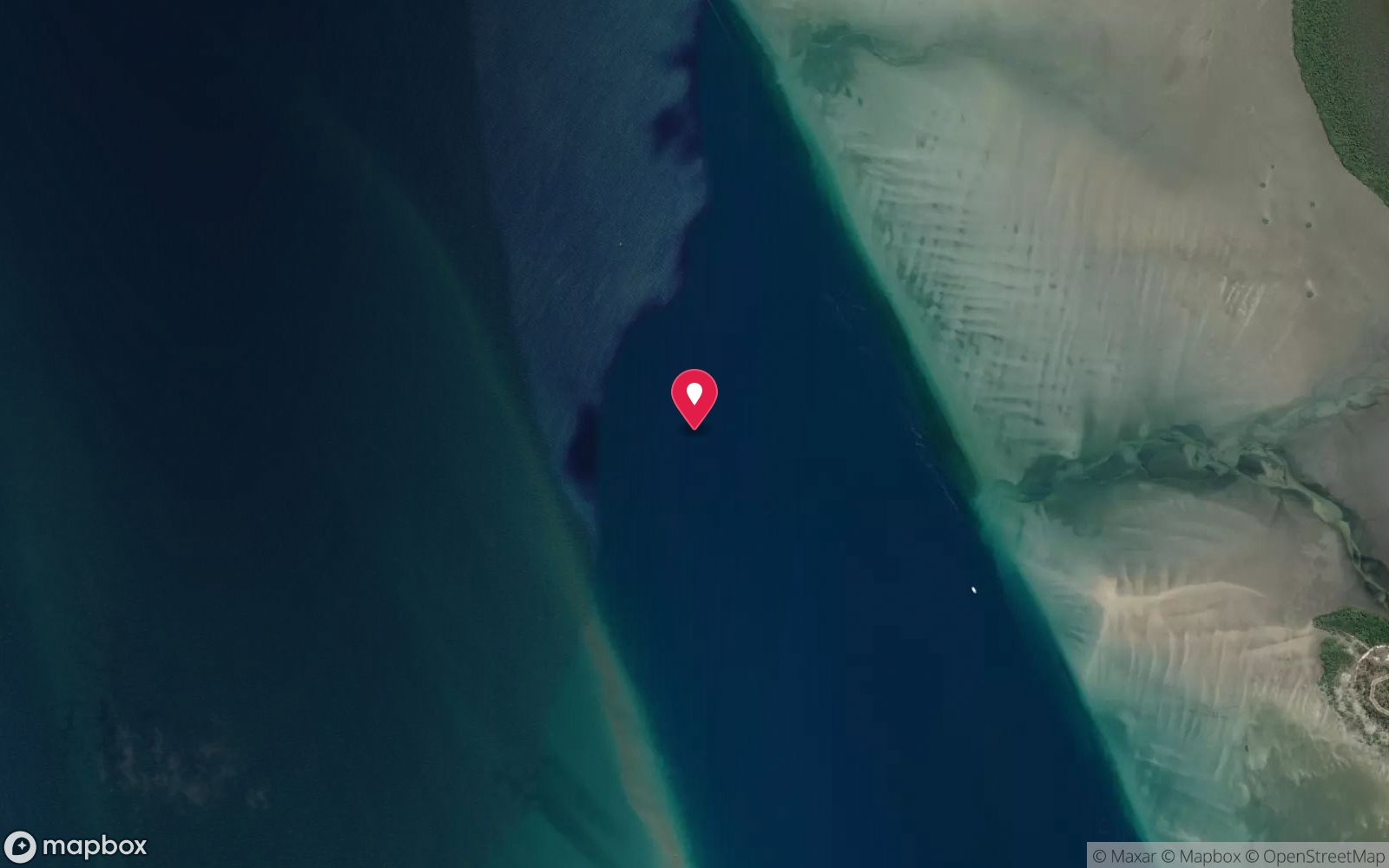
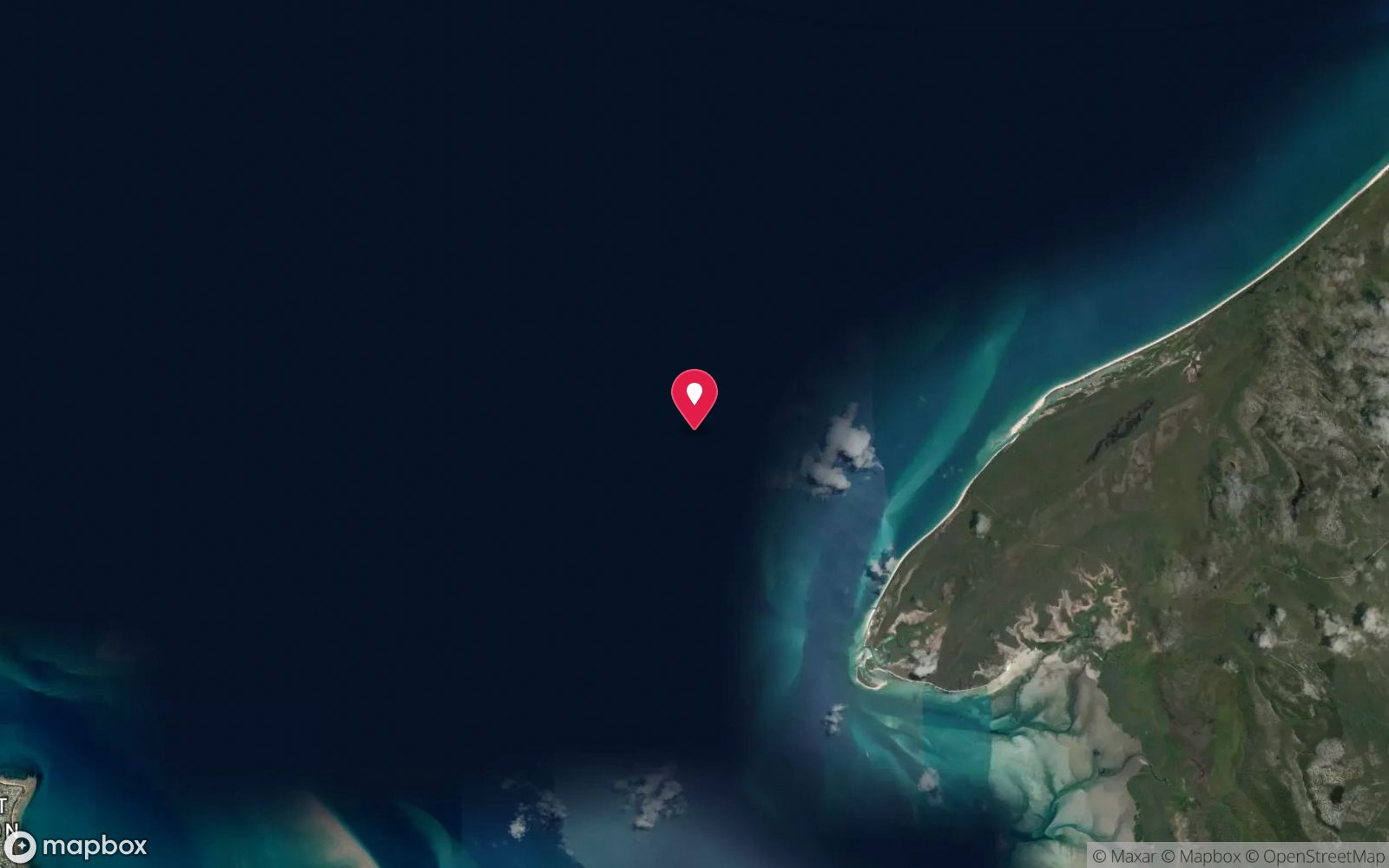
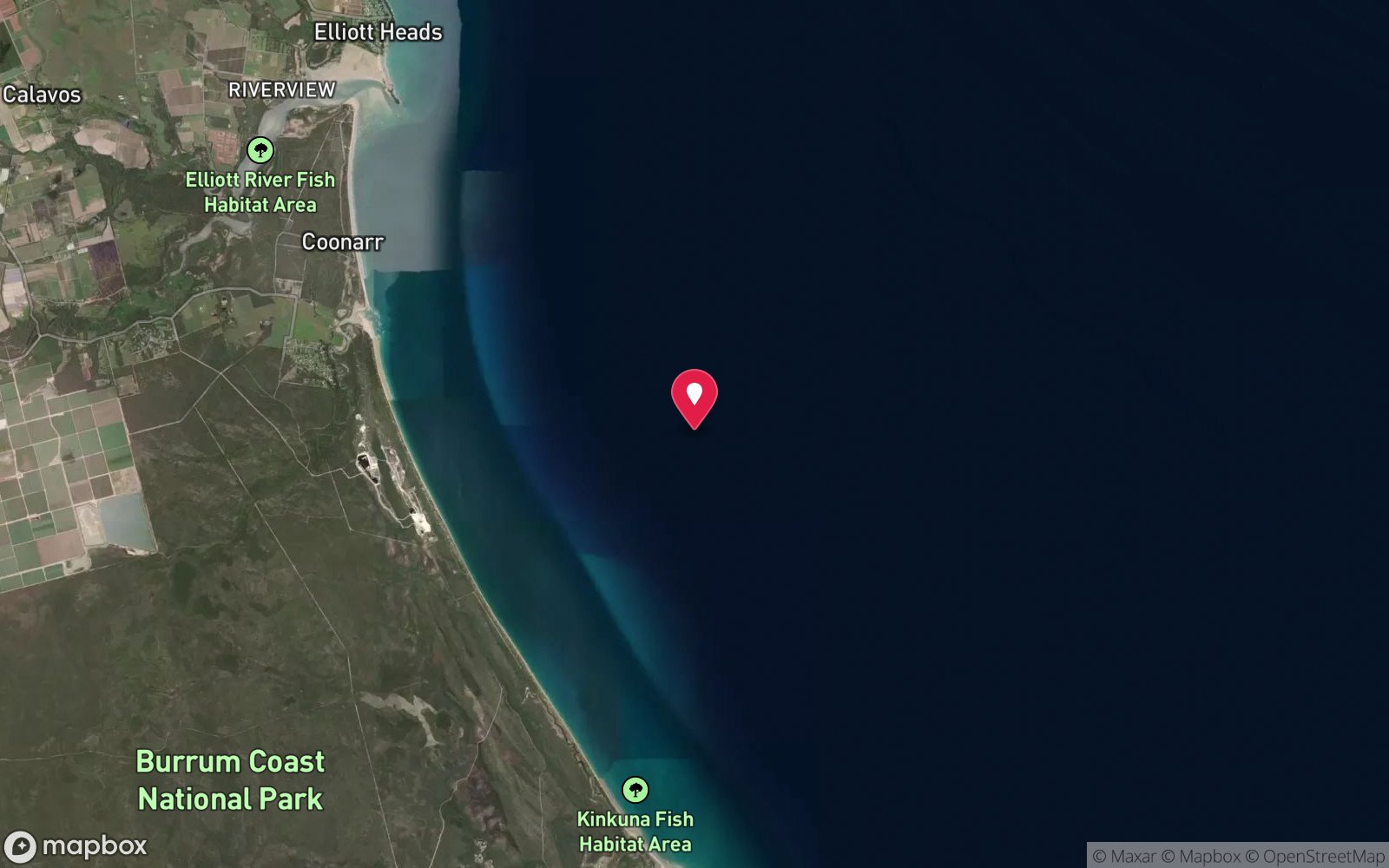
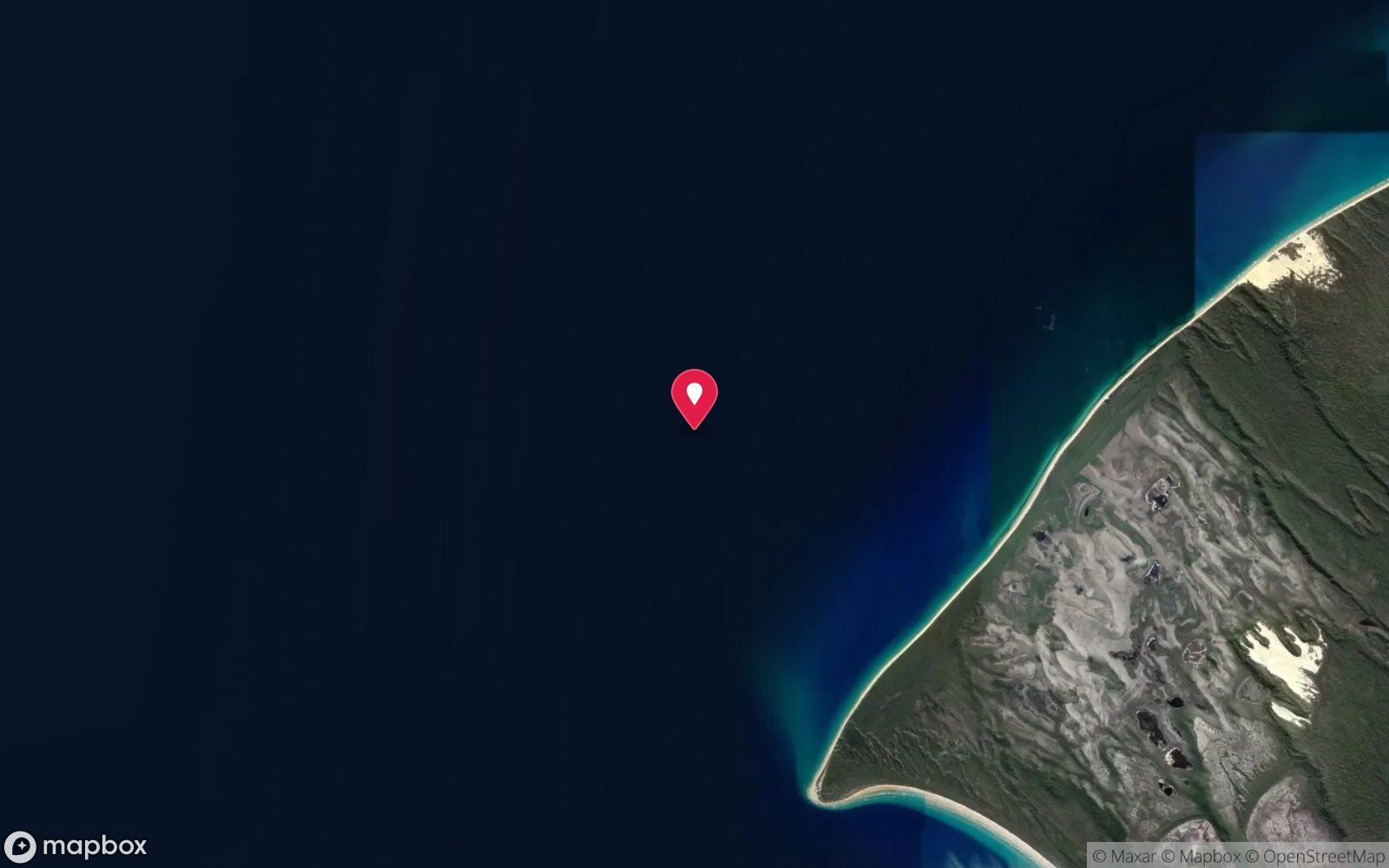
No published coordinates. The map above shows the general area, estimated from other documented sites near Urangan.
Primary source: scubadivefrasercoast.weebly.comMarine park & permits
Great Sandy Marine Park – no dive permit required outside designated areas; observe zoning (green zones) and go-slow areas.
Nearest recompression chamber
Royal Brisbane & Women's Hospital hyperbaric unit (Herston, Brisbane) — nearest chamber; Wesley Hospital hyperbaric unit (Auchenflower, Brisbane) is the alternative. Divers Emergency Service 1800 088 200.
Diving emergency: call 000, then DAN AP 1800 088 200.
Trip planner
Build a trip around Moon Ledge →
A day-by-day plan for Hervey Bay & K'gari with this site locked in.
This guide is a planning aid. Conditions change daily — confirm with a local dive centre and dive within your training. Data & safety notes.
Dive profile
How this site rates
Scores are computed from the recorded data, not opinions. How?
At a glance
Moon Ledge is a reef boat dive in Hervey Bay & K'gari, QLD, 10–21 m, suited to Advanced Open Water divers, variable/tidal current.
Rated intermediate because of depth beyond 18 m, tidal current that must be timed, boat traffic overhead.
Why dive here
- Hervey Bay's best natural reef: a long coffee-rock ledge from 10 m to 21 m+ with caves, boulders, eroded spires and big cod.
Conditions to avoid
- Outgoing tide or run-off after rain (poor visibility)
- Any time other than slack water
About Moon Ledge
Moon Ledge is Hervey Bay's best natural reef dive. The Fraser Coast diving guide describes it as a coffee-rock ledge stretching for some hundreds of metres, with depths from 10 m to more than 21 m, shallow caves and fallen boulders along its face. Marinelife.org.au adds that the coffee rock – compacted, iron-stained sand typical of the Great Sandy region – has eroded into spires and craters, giving the site more relief than anything else in the bay.
The ledge supports soft corals and feather-duster worms, and the caves and boulders shelter schools of large fish. Cod are a particular feature, along with snapper, angelfish and turtles. Because the ledge is long, a dive is a linear swim along the face and back, with the depth easily controlled by moving up or down the rock.
Visibility is the main variable. Marinelife.org.au warns it can be as low as 3 m after storms; on a calm neap tide in winter it will be better. Tidal current runs across the bay, so the site is dived around slack water.
Moon Ledge features on Hervey Bay Dive Centre's list of local dives from Urangan and makes a good contrast to the artificial structures of Roy Rufus – natural topography, bigger schools of fish and interesting geology. It suits Open Water divers with a guide, and more experienced divers who want to explore the deeper base of the ledge beyond 20 m. The coffee rock is soft and fragile, so keep off the face and avoid kicking up the fine sediment at the base.
Getting there & entry
A coffee-rock ledge several hundred metres long in Hervey Bay, dropping from 10 m to 21 m+, with shallow caves, fallen boulders and eroded spires; dived from Urangan.
Hervey Bay's boat dives leave from Urangan Boat Harbour (Great Sandy Straits Marina / Boat Club Marina, Buccaneer Drive, Urangan), at the eastern end of Hervey Bay's Esplanade about 10 minutes' drive from Pialba; there is free parking at the marina and a public boat ramp in the harbour. Hervey Bay Dive Centre runs its local wreck and reef trips from here. Moon Ledge is included in Hervey Bay Dive Centre's local-dive list; its position is not published, so dive it with the operator or obtain the mark locally.
Anchor in sand off the ledge, not on the rock.
Entry: Backward roll or giant stride from boat; descend the anchor or shot line
Facilities: Departure: Urangan Boat Harbour
Weather, swell & tides
Hervey Bay lies in the lee of K'gari, so ocean swell is rarely a problem; the limits are wind, tide and visibility. South-east trades over about 15-20 knots kick up a steep, short chop across the bay, and strong northerlies do the same in summer. Tides in the Great Sandy Strait run hard, so dives are timed for high-water slack – the Roy Rufus reef is dived only around high tide – and neap tides give the calmest water and best visibility.
Visibility is modest, typically 5 m and rarely above 10 m, and drops further after rain when the Mary River and creeks discharge into the bay (December-March). Winter (June-October) is generally calmer and clearer, and coincides with humpback whale season.
Best season: June-October (calmer, clearer water); dive at high-water slack year-round
How the dive is usually run
Descend to the base of the ledge and follow it with the rock on one shoulder, checking the shallow caves and boulders for cod and turtles. Turn on a third of your gas and return along the top of the ledge at 10-12 m. Ascend on the anchor line or an SMB.
Marine life
- Cod
- snapper
- angelfish
- turtles →
- schooling fish
- soft corals
- feather-duster worms
Linked species have their own page listing every site where they are recorded. All marine life →
Training required
Beyond 18 m an Advanced certification (which includes a deep dive to 30 m) is the accepted minimum. Anything past 25 m is a deep dive in practice.
Open Water divers can dive the shallower section (typical depth 15 m); the full site to 21 m needs Advanced Open Water. Operators often quote Open Water.
Operators' own listing: Open Water.
Depth tiers: 0–10 m easy · to 18 m Open Water · 18–30 m Advanced (25 m+ is a deep dive) · 30–40 m Deep specialty · 40 m+ technical. All courses
Hazards & warnings
Visibility can drop to 3 m after storms; tidal current – dive at slack; depth beyond 18 m at the base; boat traffic.
Dive centres that go here
Hervey Bay Dive Centre (Urangan Harbour) – 'Local Wreck Dives' trips to the Roy Rufus Artificial Reef and nearby sites (Goori, 3 Ships, K'gari, Iron Maria, Hardie and Simpson reefs, Snapper Grounds, Moon Ledge) on demand, timed to the high-tide slack; private boats also use the site.
Operators recorded for Moon Ledge
Other dive centres in Hervey Bay & K'gari
Bundaberg Aqua Scuba
ListedBundaberg · Bundaberg & Agnes Water · QLD
A Bundaberg-based training and equipment business serving the local diving community and southern reef access.
aquascuba.com.au · 0402 937 765
Lady Musgrave Experience
ListedBurnett Heads · Bundaberg & Agnes Water · QLD
A Bundaberg-based operation providing day and overnight access to Lady Musgrave Island and its lagoon.
ladymusgraveexperience.com.au · (07) 4151 5225
General area
No position has been published for Moon Ledge. The circle shows where it is likely to be, worked out from other documented sites near Urangan. Ask a local operator for the exact site.
Dashed circle: general area (about 59 km), from other documented sites near Urangan. 6 pinned sites. Pins marked approximate on their pages show the general area only; not for navigation.
Moon Ledge: frequently asked questions
How deep is Moon Ledge?
Moon Ledge reaches a maximum depth of 21 m, with the shallowest part at about 10 m; most of the dive is spent around 15 m.
What certification do I need to dive Moon Ledge?
Advanced Open Water is the recommended minimum. Open Water divers can dive the shallower section (typical depth 15 m); the full site to 21 m needs Advanced Open Water. Operators often quote Open Water. Rated intermediate because of depth beyond 18 m, tidal current that must be timed, boat traffic overhead.
Can I shore dive Moon Ledge?
No, it is reached by boat. A dive centre is required: boat access only.
When is the best time to dive Moon Ledge?
June-October (calmer, clearer water); dive at high-water slack year-round.
What marine life will I see at Moon Ledge?
Regularly recorded: Cod, snapper, angelfish, turtles, schooling fish, soft corals, feather-duster worms.
What wetsuit do I need at Moon Ledge?
3 mm full suit in summer; 5 mm full suit and hood in winter.
How cold is the water at Moon Ledge?
Typically 26-28 °C in summer and 18-21 °C in winter.
What are the main hazards at Moon Ledge?
Visibility can drop to 3 m after storms; tidal current – dive at slack; depth beyond 18 m at the base; boat traffic. See the hazards section above for the full list.
Where is the nearest recompression chamber to Moon Ledge?
Royal Brisbane & Women's Hospital hyperbaric unit (Herston, Brisbane) — nearest chamber; Wesley Hospital hyperbaric unit (Auchenflower, Brisbane) is the alternative. Divers Emergency Service 1800 088 200. In an emergency call 000, then DAN Asia-Pacific on 1800 088 200.
Diving in Hervey Bay & K'gari
Hervey Bay is famous for humpback whales from July to October and, for divers, for the artificial reefs and wrecks off Urangan, the Roy Rufus reef and the coral around Big Woody and Round islands. K'gari (Fraser Island) has the Maheno wreck on the beach and surf-side reefs for the adventurous.
Getting there: Three and a half hours north of Brisbane or a flight to Hervey Bay. Local dive operators launch from Urangan.
All Hervey Bay & K'gari dive sites and a suggested itinerary →
Sources
- scubadivefrasercoast.weebly.com/diving-spots.html
- marinelife.org.au/?page_id=1580
- diveherveybay.com.au
Data confidence: Low · Being verified: Position not published (v1 coordinates removed as unverified).. Last updated September 2026. Know this site better? How to send a correction