Dive slate · divesites.com.au · printed 8 Nov 2026
Burrill Rocks
Ulladulla, New South Wales · near Ulladulla
| Depth | 9–24 m |
|---|---|
| Minimum level | Advanced Open Water |
| Difficulty | Intermediate |
| Access | Boat |
| Entry | Giant stride or backward roll from anchored boat; descend the anchor line |
| Current | Moderate |
| Visibility | 10–20 m m |
| Water | summer 19–22 °C °C, winter 13–16 °C °C |
| Suit | 7 mm wetsuit with hood most of the year (5 mm adequate Feb–Apr); semi-dry or drysuit and gloves Jul–Oct |
| Best season | Year round; autumn and early winter bring the clearest water, summer the warmest |
| Bottom time | 45 min |
| Position | -35.39260, 150.46840 (GPS) |
| Permit | None required – not in a NSW marine park |
| Nearest chamber | Prince of Wales Hospital Hyperbaric Unit (Randwick, Sydney) |
| Emergency | 000 · DAN Asia-Pacific diving emergency 1800 088 200 |
Burrill Rocks
Also known as Burrill Rocks Arch, Burrill Rocks South Wall, Burrill Rocks Cave, Burrill Rocks East Wall, Birrell Rocks
Interconnected caves and swim-throughs through a collapsed boulder field, the fish-filled Arch, and a sheer southern wall; often the clearest water around Ulladulla.
Near Ulladulla · Ulladulla, New South Wales
- Depth
- 9–24 m
- Minimum level
- Advanced Open Water
- Access
- Boat
- Boat ride
- ~15 min
- Water
- 19–22 °C
- Visibility
- 10–20 m
Burrill Rocks9–24 m · Advanced Open Water
Dive factsDepths, conditions, location & safety
Season
Off-peak nowBest months: January, February, March, April, May, June, July, August, December.
Year round; autumn and early winter bring the clearest water, summer the warmest
- Best months
- Now (November)
Dive facts
- Depth
- 9–24 m
- Typical depth
- 18 m
- Certification
- Advanced Open Water
- Difficulty
- Intermediate
- Depth tier
- Advanced Open Water (18–30 m)
- Access
- Boat
- Offshore
- 1 km
- Dive centre needed
- Yes – boat access only
- Shore / independent
- No
- Boat ride
- ~15 min
- Current
- Moderate
- Visibility
- 10–20 m
- Water temp (summer)
- 19–22 °C
- Water temp (winter)
- 13–16 °C
- Water
- Temperate
- Bottom time
- 45 min
- Dive traffic
- Popular (weekly charters)
- Night dive
- Possible
- Snorkel friendly
- No
Exposure suit
7 mm wetsuit with hood most of the year (5 mm adequate Feb–Apr); semi-dry or drysuit and gloves Jul–Oct
Location
Burrill Rocks group (south of Ulladulla) · Ulladulla – Mollymook & Bawley Point
-35.39260, 150.46840
Published GPS position.
Open in Google MapsPrimary source: michaelmcfadyenscuba.infoMarine park & permits
None required – not in a NSW marine park
Nearest recompression chamber
Prince of Wales Hospital Hyperbaric Unit (Randwick, Sydney)
Diving emergency: call 000, then DAN AP 1800 088 200.
Trip planner
Build a trip around Burrill Rocks →
A day-by-day plan for Ulladulla with this site locked in.
This guide is a planning aid. Conditions change daily — confirm with a local dive centre and dive within your training. Data & safety notes.
Dive profile
How this site rates
Scores are computed from the recorded data, not opinions. How?
At a glance
Burrill Rocks is a reef boat dive in Ulladulla, NSW, 9–24 m, suited to Advanced Open Water divers, moderate current, about 15 minutes by boat.
Rated intermediate because of depth beyond 18 m, an overhead environment, surge on the entry or in the shallows, boat traffic overhead, cold water.
Why dive here
- Interconnected caves and swim-throughs through a collapsed boulder field, the fish-filled Arch, and a sheer southern wall; often the clearest water around Ulladulla.
- Visibility often reaches 10–20 m.
Conditions to avoid
- Swell above about 1.5 m
- Strong southerly or south-east swell and wind
- Afternoon north-easterlies
- Outgoing tide or run-off after rain (poor visibility)
About Burrill Rocks
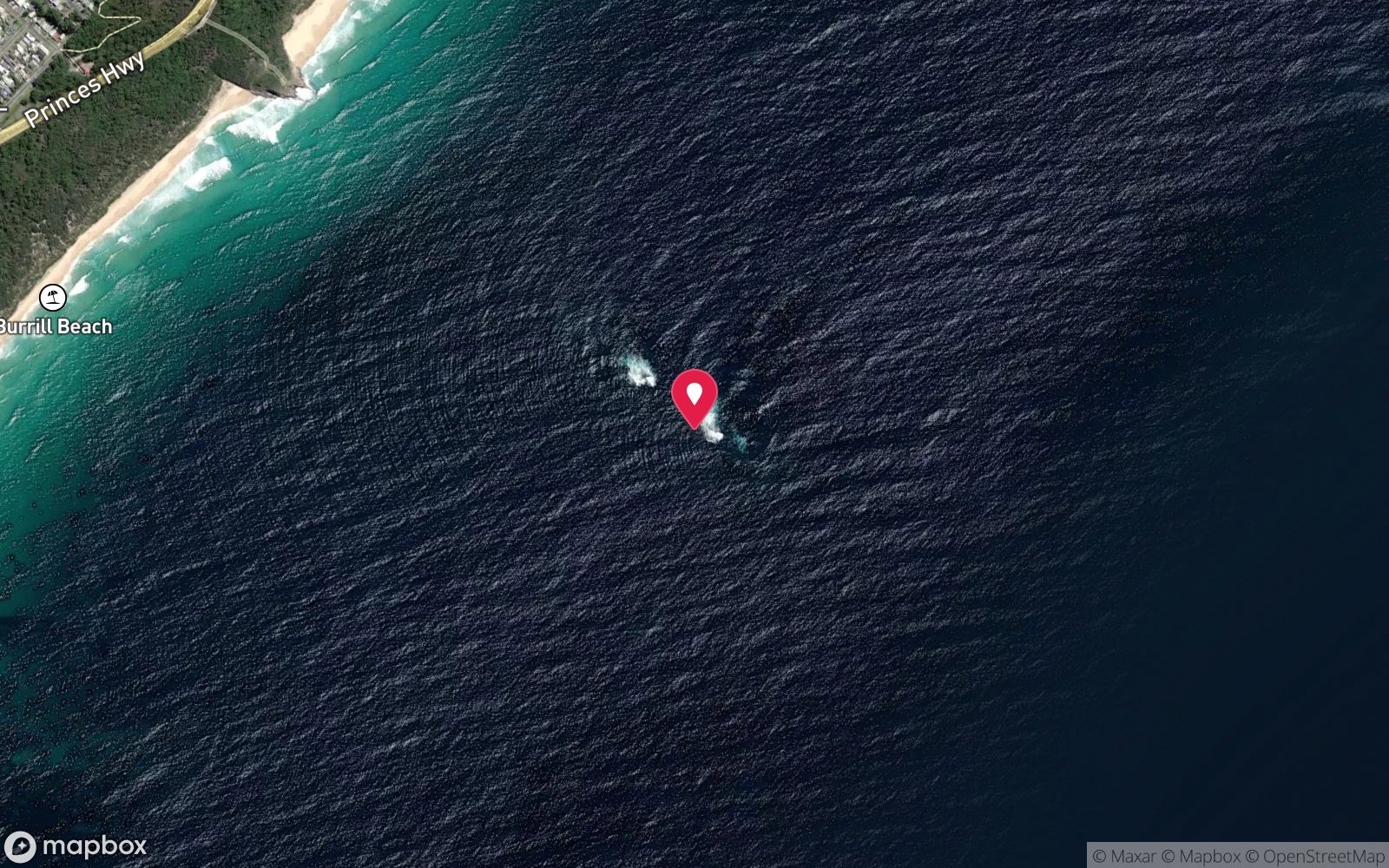
Burrill Rocks is the signature dive of Ulladulla and one of the best temperate reef dives on the NSW coast. A group of rock outcrops rises from a sand floor about a kilometre offshore, south of Ulladulla Harbour and opposite the entrance to Burrill Lake. The northern wall tops out at 9–10 m, while the southern side drops beyond 23 m to sand. What sets it apart is the terrain: the rocks have split and collapsed into a jumble of boulders, leaving canyons and caves between them. Most caves are only a metre or two wide, but several are large, and many link up so you can move from one to the next with an exit never far away.
The best-known feature is the Arch, a larger cave entrance that is usually full of hundreds of silver sweep hanging in the gloom. North of the usual anchoring area the main cave system runs through the boulder field; to the south, another cave and tunnel open onto a sheer wall that is the dive's other highlight. Overhangs throughout are packed with fish: yellowtail, one-spot pullers, red morwong, eastern rock blackfish, luderick and the endemic eastern blue devilfish, which sits in most dark recesses. Old man snapper (Tasmanian trumpeter) are occasionally seen. Walls and cave ceilings carry sponges, sea squirts and small gorgonians.
Michael McFadyen rates it alongside Fish Rock Cave and the Poor Knights as one of the best temperate dives he has done, and the local shop lists it as its headline site. Visibility is often good by South Coast standards. The dive suits competent Open Water divers who have good buoyancy and are comfortable in overhead environments with daylight exits. Those who prefer to stay in open water can have an equally good dive following the walls. It can be dived several times without repeating a route, and a current running west gives the option of an easy drift along the rocks.
Getting there & entry
Cluster of rock outcrops about 1 km offshore and just over 4 km south of Ulladulla Harbour, off the mouth of Burrill Lake; walls from 9–10 m on top to more than 23 m on the southern side, riddled with caves and swim-throughs.
Boat access only. Charters and private boats launch from the public ramp inside Ulladulla Harbour, reached off the Princes Highway in the centre of Ulladulla (about three hours' drive south of Sydney); there is trailer parking around the harbour and the dive shop is a short walk away. From the harbour mouth the boat turns south past Warden Head and runs about 4 km down the coast to the rocks off Burrill Lake, 10–15 minutes in reasonable seas.
McFadyen recommends anchoring on the reef in about 20 m; the old public mooring was removed around 2014, so boats now anchor on rock clear of the cave entrances and divers descend the line.
Entry: Giant stride or backward roll from anchored boat; descend the anchor line
Facilities: Ulladulla Harbour boat ramp, toilets and parking; air fills at Dive Adventures Ulladulla.
Weather, swell & tides
The rocks sit about 1 km off an open coastline and take swell from the south, south-east and east; a southerly swell above about 1.5 m creates heavy surge in the shallow caves and makes anchoring on the northern side awkward. Best on a westerly or light north-westerly after several days of small swell. Strong north-easterly afternoon sea breezes in summer make the ride back choppy but the dive itself is usually still possible in the morning.
Current is common and can be used for a drift west off the rocks. Visibility drops after heavy rain when Burrill Lake is open to the sea.
Best season: Year round; autumn and early winter bring the clearest water, summer the warmest
If it's blown out
Sheltered or shore sites within 25 km that often work when Burrill Rocks doesn't.
- Dolphin Point · 2 km · Max 12 m
- Ulladulla Harbour · 4 km · Max 8 m
- Narrawallee Beach and Inlet · 9 km · Max 8 m
- Bawley Point · 15 km · Max 13 m
How the dive is usually run
Anchor in about 20 m and decide on north or south. Heading north takes you into the main cave system: follow the boulder field and enter the Arch, the largest cave, then work through the interconnected caves and canyons, using the many exits. Heading south, a cave and tunnel lead out to the prominent South Wall in 20–23 m.
Return along the wall top at 10–12 m and do the safety stop on the rocks rather than mid-water. With current, run a drift west and have the boat follow.
Marine life
- Silver sweep (large schools in the Arch)
- yellowtail scad
- one-spot pullers
- red morwong
- eastern rock blackfish
- luderick
- eastern blue devilfish →
- old man snapper (Tasmanian trumpeter)
- wobbegongs →
- Port Jackson sharks →
- sponges
- sea squirts
- gorgonians
Linked species have their own page listing every site where they are recorded. All marine life →
Training required
Beyond 18 m an Advanced certification (which includes a deep dive to 30 m) is the accepted minimum. Anything past 25 m is a deep dive in practice.
Open Water divers can dive the shallower section (typical depth 18 m); the full site to 24 m needs Advanced Open Water. Operators often quote Open Water.
Operators' own listing: Open Water.
Courses that help here
- Cavern Diver – An overhead environment.
- Drysuit Diver – Cold water; locals dive dry for much of the year.
- Peak Performance Buoyancy – Silt and low visibility punish poor trim.
Depth tiers: 0–10 m easy · to 18 m Open Water · 18–30 m Advanced (25 m+ is a deep dive) · 30–40 m Deep specialty · 40 m+ technical. All courses
Hazards & warnings
Overhead environments: caves are tight in places, easily silted and need a torch and good buoyancy. Current can be moderate. Surge in the shallower caves in any southerly swell.
No mooring since 2014, so anchor carefully and avoid dropping onto the cave roofs. Boat traffic near Burrill Lake entrance. Nearest recompression is Sydney, a long evacuation.
Technical notes
Swim-throughs are short with daylight exits; do not push into the smaller passages without cavern training.
Dive centres that go here
Dive Adventures Ulladulla visits regularly on its RIB MV Duckunder (lists the site at max 30 m, standard 15–22 m) whenever the sea allows; visiting Sydney clubs and private boats from Ulladulla Harbour also dive it. No other charter operates out of Ulladulla.
Operators recorded for Burrill Rocks
Other dive centres in Ulladulla
Map
7 pinned sites. Pins marked approximate on their pages show the general area only; not for navigation.
Satellite views
Burrill Rocks: frequently asked questions
How deep is Burrill Rocks?
Burrill Rocks reaches a maximum depth of 24 m, with the shallowest part at about 9 m; most of the dive is spent around 18 m.
What certification do I need to dive Burrill Rocks?
Advanced Open Water is the recommended minimum. Open Water divers can dive the shallower section (typical depth 18 m); the full site to 24 m needs Advanced Open Water. Operators often quote Open Water. Rated intermediate because of depth beyond 18 m, an overhead environment, surge on the entry or in the shallows, boat traffic overhead, cold water.
Can I shore dive Burrill Rocks?
No, it is reached by boat (about 15 minutes). A dive centre is required: boat access only.
When is the best time to dive Burrill Rocks?
Year round; autumn and early winter bring the clearest water, summer the warmest.
What marine life will I see at Burrill Rocks?
Regularly recorded: Silver sweep (large schools in the Arch), yellowtail scad, one-spot pullers, red morwong, eastern rock blackfish, luderick, eastern blue devilfish, old man snapper (Tasmanian trumpeter), wobbegongs, Port Jackson sharks, sponges, sea squirts and more.
What wetsuit do I need at Burrill Rocks?
7 mm wetsuit with hood most of the year (5 mm adequate Feb–Apr); semi-dry or drysuit and gloves Jul–Oct.
How cold is the water at Burrill Rocks?
Typically 19–22 °C in summer and 13–16 °C in winter.
What are the main hazards at Burrill Rocks?
Overhead environments: caves are tight in places, easily silted and need a torch and good buoyancy. See the hazards section above for the full list.
Where is the nearest recompression chamber to Burrill Rocks?
Prince of Wales Hospital Hyperbaric Unit (Randwick, Sydney). In an emergency call 000, then DAN Asia-Pacific on 1800 088 200.
Diving in Ulladulla
Ulladulla is the quiet middle of the south coast, with the Lighthouse Reef and the Bommie off Warden Head, the Burrill Rocks, and a series of gutters and caves that hold grey nurse sharks and eastern blue devils. It is dived mainly by locals and Canberra clubs.
Getting there: Three hours south of Sydney. A local dive shop runs charters from the harbour; the Ulladulla harbour breakwall is a sheltered shore dive.
Sources
- michaelmcfadyenscuba.info/viewpage.php?page_id=102
- marinelife.org.au/?page_id=1659
- diveadventuresulladulla.com.au
Data confidence: High. Last updated September 2026. Know this site better? How to send a correction
Nearby dive sites
More reef dives in New South Wales
Explore more
This region
Marine life