Dive slate · divesites.com.au · printed 8 Nov 2026
Crawfish Rock
Mornington Peninsula, Victoria · near Warneet / Somers
| Depth | 1–32 m |
|---|---|
| Minimum level | Deep/Advanced + experience |
| Difficulty | Advanced |
| Access | Boat |
| Entry | Boat – live drop at slack water, anchor on sand only |
| Current | Strong |
| Visibility | 3–10 m m |
| Water | summer 17–20 °C °C, winter 11–13 °C °C |
| Suit | 7 mm wetsuit or semi-dry with hood and gloves; drysuit preferred June–October |
| Best season | Winter neap tides after a dry spell, at slack water |
| Bottom time | 30 min |
| Position | -38.27047, 145.29647 (GPS) |
| Permit | Crawfish Rock is a listed threatened marine community (Flora and Fauna Guarantee Act) – no anchoring on the reef, no collecting |
| Nearest chamber | The Alfred (Melbourne) |
| Emergency | 000 · DAN Asia-Pacific diving emergency 1800 088 200 |
Crawfish Rock
Also known as Crawfish Rock, Western Port; North Arm sponge gardens
A tide-scoured pinnacle in Western Port's North Arm with walls to 32 m covered in Victoria's richest sponge and hydroid gardens – a protected, rarely dived marine community.
Near Warneet / Somers · Mornington Peninsula, Victoria
- Depth
- 1–32 m
- Minimum level
- Deep/Advanced + experience
- Access
- Boat
- Boat ride
- ~30 min
- Water
- 17–20 °C
- Visibility
- 3–10 m
Crawfish Rock1–32 m · Deep/Advanced + experience
Dive factsDepths, conditions, location & safety
Season
Off-peak nowBest months: May, June, July, August, September, October.
Winter neap tides after a dry spell, at slack water
- Best months
- Now (November)
Dive facts
- Depth
- 1–32 m
- Typical depth
- 18 m
- Certification
- Deep/Advanced + experience
- Difficulty
- Advanced
- Depth tier
- Deep / Advanced + experience (30–40 m)
- Access
- Boat
- Offshore
- 2 km
- Dive centre needed
- Yes – boat access only
- Shore / independent
- No
- Boat ride
- ~30 min
- Current
- Strong
- Visibility
- 3–10 m
- Water temp (summer)
- 17–20 °C
- Water temp (winter)
- 11–13 °C
- Water
- Temperate
- Bottom time
- 30 min
- Dive traffic
- Rarely dived (private boat/club only)
- Night dive
- No
- Snorkel friendly
- No
Exposure suit
7 mm wetsuit or semi-dry with hood and gloves; drysuit preferred June–October
Location
Western Port North Arm
-38.27047, 145.29647
Published GPS position.
Open in Google MapsPrimary source: scubadoctor.com.auMarine park & permits
Crawfish Rock is a listed threatened marine community (Flora and Fauna Guarantee Act) – no anchoring on the reef, no collecting
Nearest recompression chamber
The Alfred (Melbourne)
Diving emergency: call 000, then DAN AP 1800 088 200.
Trip planner
Build a trip around Crawfish Rock →
A day-by-day plan for Mornington Peninsula with this site locked in.
This guide is a planning aid. Conditions change daily — confirm with a local dive centre and dive within your training. Data & safety notes.
Dive profile
How this site rates
Scores are computed from the recorded data, not opinions. How?
At a glance
Crawfish Rock is a pinnacle / bommie boat dive in Mornington Peninsula, VIC, 1–32 m, suited to Deep/Advanced + experience divers, strong current, about 30 minutes by boat.
Rated advanced because of depth to 32 m, strong current, boat traffic overhead, cold water.
Why dive here
- A tide-scoured pinnacle in Western Port's North Arm with walls to 32 m covered in Victoria's richest sponge and hydroid gardens – a protected, rarely dived marine community.
- Rarely dived: expect to have the site to yourself, and plan your own logistics.
Conditions to avoid
- Outgoing tide or run-off after rain (poor visibility)
- Any time other than slack water
About Crawfish Rock
Crawfish Rock is one of the most remarkable and least-known dive sites in Victoria: a rock that shows at low tide in the middle of the North Arm of Western Port, off the north-western tip of French Island, whose sides plunge to 32 m on one face and 26 m on the French Island side into deep reefs, pinnacles, canyons and underwater channels. The deep water and the scouring tidal current keep sand and gravel from settling, and the result is a vertical garden of filter feeders of a richness found nowhere else in the bay – The Scuba Doctor describes a notably high invertebrate diversity and a unique and vulnerable marine community, home to threatened hydroids and other listed species, and the site is protected as a threatened community under Victoria's Flora and Fauna Guarantee Act. The walls are covered in sponges of every form and colour, soft corals, gorgonians, bryozoans, hydroid trees, ascidians and sea whips, with rock lobsters (the 'crawfish' of the name), blue devils, boarfish, morwong, wrasse and schooling sweep and trevally along the faces, and rays and draughtboard sharks on the sand at the foot.
It has been studied by marine scientists since the 1960s as the outstanding example of Western Port's deep-channel sponge communities, and its decline and partial recovery have tracked the health of the bay. Diving it is a serious exercise in tidal planning: the current is strong and reversing, slack lasts minutes rather than hours, the depth is technical-adjacent, and the visibility is estuarine. It belongs to experienced club divers with a capable boat, a skipper who understands Western Port, and a conservative plan; anchoring on the rock is prohibited.
For those who manage it, Crawfish Rock is a glimpse of the invertebrate wealth that made Western Port a Ramsar wetland, and one of the great hidden dives of the state.
Getting there & entry
Rock exposed at low tide in the main tidal channel of Western Port's North Arm, 1.5 km north of Scrub Point off the north-western tip of French Island, dropping to 32 m on one side and 26 m on the French Island side.
Launch at Warneet (closest, on the northern shore), Hastings, Stony Point or Sandy Point/Somers and navigate the North Arm channel to the rock, which shows at low tide and is marked on charts – 20–40 minutes depending on the ramp. Because the rock is a protected community, anchor only on sand well away from it and drop divers at slack water to descend directly onto the reef; recover on SMBs. Tide times at Warneet Pier are the reference.
Private boats and clubs only – no charters run here.
Entry: Boat – live drop at slack water, anchor on sand only
Facilities: Boat ramps at Warneet, Hastings, Stony Point and Somers; no facilities on site; nearest air fills at Frankston (Aquability, Diveline).
Weather, swell & tides
Crawfish Rock stands in the main tidal channel of the North Arm and the current is strong and reversing – the whole of Western Port's northern basin drains past it – so the dive is possible only in the brief slack at the turn of the tide, preferably a neap tide, and must be timed from Warneet Pier tide tables with a margin. Wind is secondary because the site is enclosed, but strong southerlies raise a chop against the ebb. Visibility depends on rain in the catchment and on the tide: the last of the flood brings the cleanest water.
Winter dry spells give the best conditions; after heavy rain the North Arm is brown for a week.
Best season: Winter neap tides after a dry spell, at slack water
If it's blown out
Sheltered or shore sites within 25 km that often work when Crawfish Rock doesn't.
- Mornington Pier · 24 km · Max 12 m
- Hastings Pier · 9 km · Max 5 m
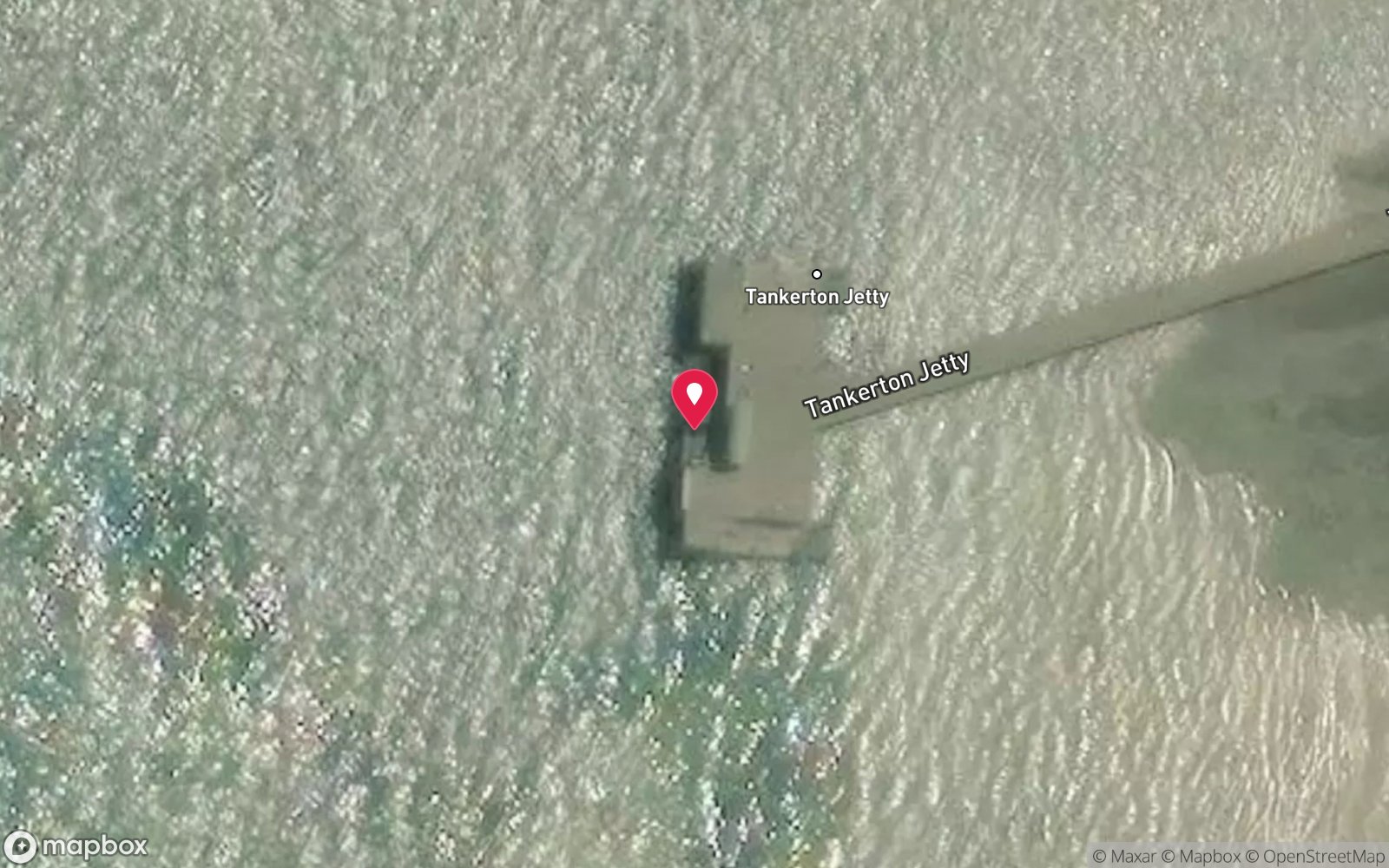
- Tankerton Jetty, French Island · 13 km · Max 8 m
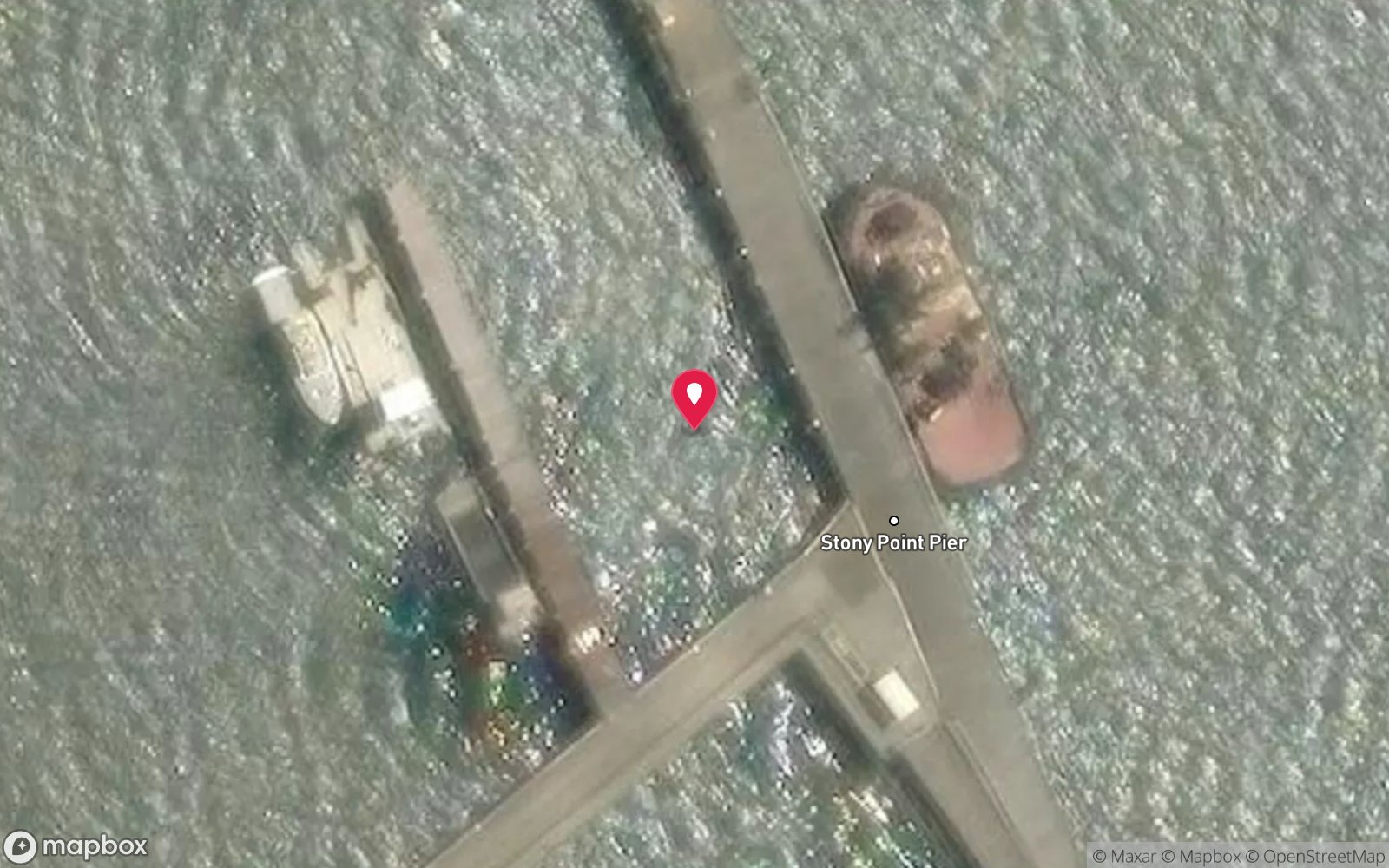
- Stony Point Pier · 13 km · Max 9 m
How the dive is usually run
Drop onto the rock at the last of the flood, descend the steep face on the deeper side to a planned maximum (20–25 m is ample), and work along the wall and through the canyons with the rock on one shoulder as the slack holds. Turn on time or gas, ascend the face to the shallows near the rock, and deploy an SMB for the boat as the ebb begins; be prepared for a drift pick-up.
Marine life
- Sponges (exceptional diversity)
- hydroids including threatened species
- soft corals
- gorgonians
- sea whips
- bryozoans
- ascidians
- southern rock lobster
- southern blue devil →
- long-snouted boarfish
- dusky morwong
- bluethroat wrasse
- sea sweep
- silver trevally
- draughtboard shark
- rays
Linked species have their own page listing every site where they are recorded. All marine life →
Training required
The recreational limit. Operators expect a Deep Diver specialty or Advanced plus a log of similar dives, and most recommend nitrox.
This is a deep dive: plan gas, bottom time and a safety stop accordingly, and consider nitrox.
Courses that help here
- Enriched Air Nitrox – Longer no-decompression time at 25 m and deeper.
- Deep Diver – The site reaches 32 m.
- Drift Diver – Current is a feature of the dive.
- Drysuit Diver – Cold water; locals dive dry for much of the year.
Depth tiers: 0–10 m easy · to 18 m Open Water · 18–30 m Advanced (25 m+ is a deep dive) · 30–40 m Deep specialty · 40 m+ technical. All courses
Hazards & warnings
Strong reversing tidal current – slack water only, brief window; depth to 32 m; low visibility and silt; boat traffic in the channel; protected community – no anchoring on the rock, no collecting; remote from help; drift pick-up on SMB required.
Technical notes
Depths to 32 m on a strong tidal site; nitrox beneficial; some clubs dive it as a light-deco dive on the deeper face – plan conservatively and carry redundant gas and SMB. Threatened community listing prohibits anchoring on the reef and collecting.
Dive centres that go here
No regular operator – Victorian dive clubs (notably the Victorian Sub-Aqua Group), marine scientists and experienced private boats; a handful of dives a year.
Operators recorded for Crawfish Rock
The Scuba Doctor
ProfiledRye · Melbourne & Port Phillip Bay · VIC
A Victorian equipment and service business with an extensive retail presence, located to serve both Melbourne and Mornington Peninsula divers.
scubadoctor.com.au · (03) 5985 3322
Diveline Scuba Centre
ListedFrankston · Melbourne & Port Phillip Bay · VIC
A Victorian business associated with technical training and gas support alongside recreational courses.
diveline.com.au · (03) 9783 7166
Aquability
ListedMordialloc · Melbourne & Port Phillip Bay · VIC
A Victorian operation associated with technical diving training. Exact agency, course levels and gas support require verification.
aquability.com.au · (03) 9587 1811
Scubabo Dive Victoria (Dive Victoria Group)
Named by sitesQueenscliff · Port Phillip Heads · VIC
Rebranded as Scubabo Dive Victoria, Queenscliff; dive.scubabo.com is live for 2026 with active charter bookings.
dive.scubabo.com · (03) 5258 1188
Bayplay
Named by sitesPortsea · Port Phillip Heads · VIC
PADI dive resort and adventure tours.
bayplay.com.au · (03) 5984 0888
Other dive centres in Mornington Peninsula
Bay City Scuba
ListedEast Geelong · Melbourne & Port Phillip Bay · VIC
A Victorian business associated with recreational and technical training alongside equipment and gas services.
baycityscuba.com · (03) 5248 1488
Scuba Culture
ListedBurwood · Melbourne & Port Phillip Bay · VIC
A Melbourne business providing training and equipment support for local divers.
scubaculture.com.au · (03) 9808 0033
Ocean Divers
ListedBentleigh East · Melbourne & Port Phillip Bay · VIC
A Victorian operation associated with recreational and technical training and access to Port Phillip diving.
oceandivers.com.au · (03) 9579 2600
Academy of Scuba
ListedRye · Melbourne & Port Phillip Bay · VIC
A Melbourne training business offering recreational courses with technical pathways.
academyofscuba.com.au · (03) 9889 9952
ADRENO Melbourne
ListedCheltenham · Melbourne & Port Phillip Bay · VIC
An equipment retailer with a spearfishing and freediving emphasis. Primarily retail rather than a training centre.
adreno.com.au/pages/contact-us-melbourne · (03) 9584 7228
All About Scuba
ListedCampbellfield · Melbourne & Port Phillip Bay · VIC
A Victorian training operation listed among those associated with technical diving. Capability requires verification.
allaboutscuba.com.au · (03) 9939 4913
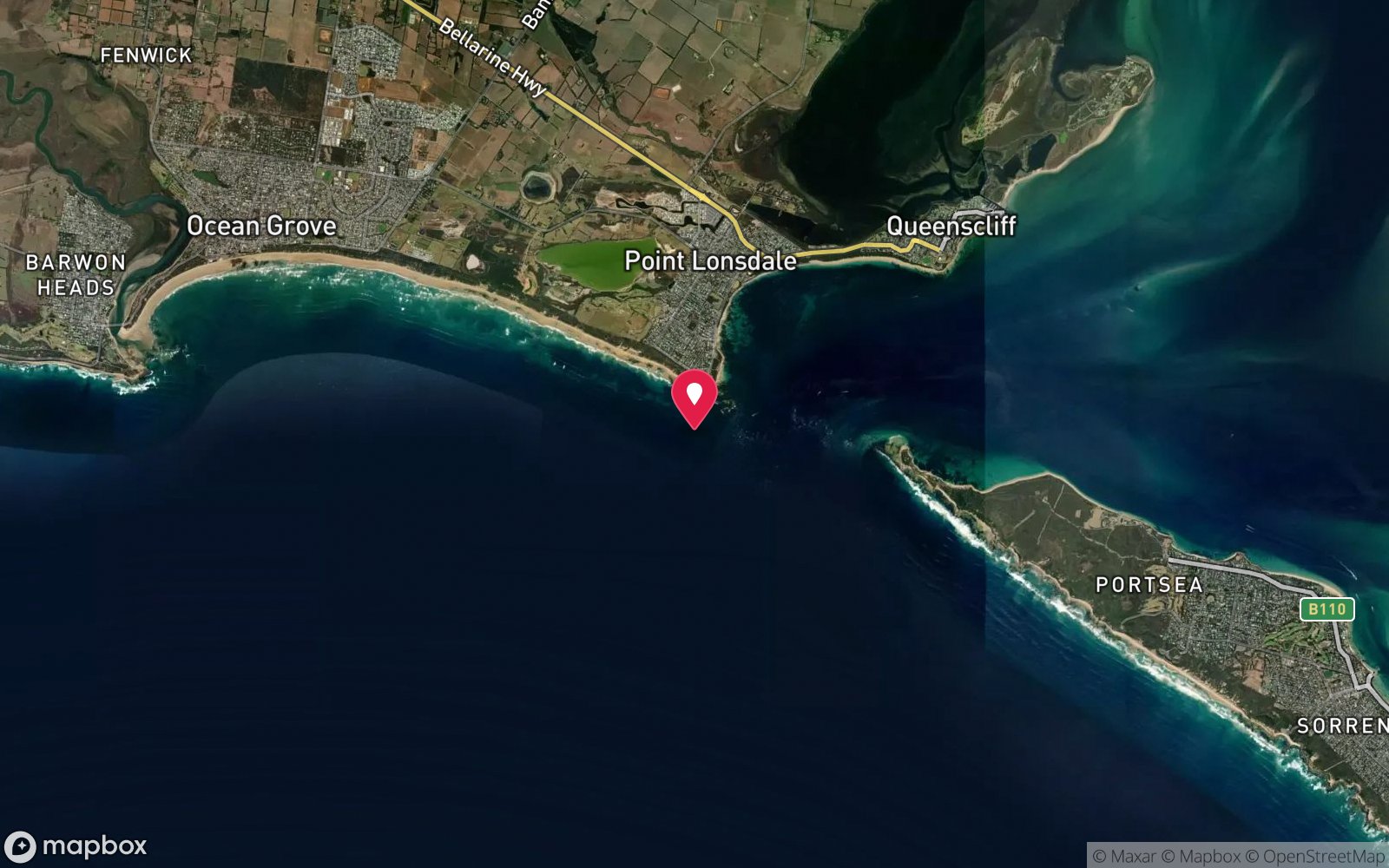
Map
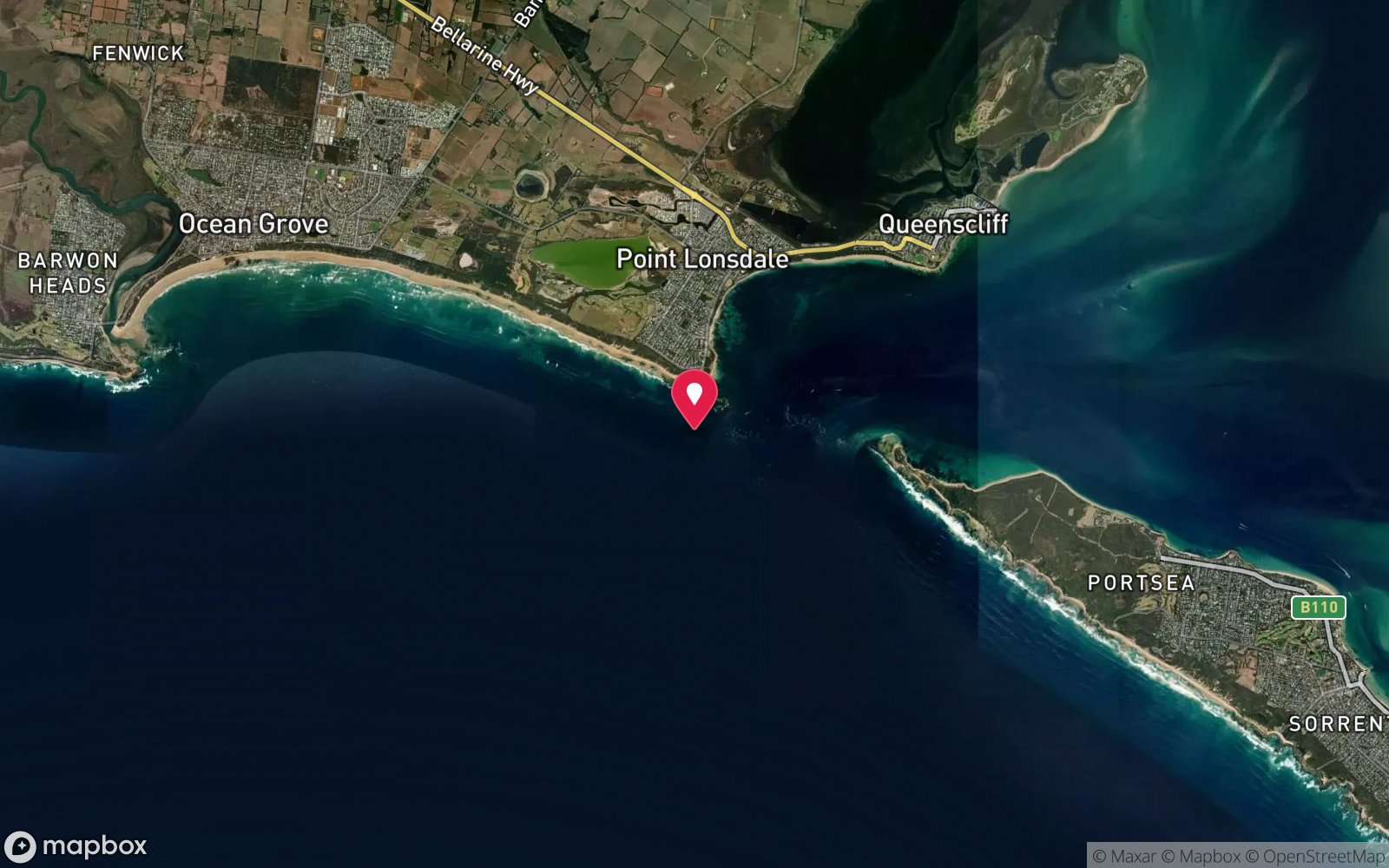
7 pinned sites. Pins marked approximate on their pages show the general area only; not for navigation.
Satellite views
Crawfish Rock: frequently asked questions
How deep is Crawfish Rock?
Crawfish Rock reaches a maximum depth of 32 m, with the shallowest part at about 1 m; most of the dive is spent around 18 m.
What certification do I need to dive Crawfish Rock?
Deep/Advanced + experience is the recommended minimum. This is a deep dive: plan gas, bottom time and a safety stop accordingly, and consider nitrox. Rated advanced because of depth to 32 m, strong current, boat traffic overhead, cold water.
Can I shore dive Crawfish Rock?
No, it is reached by boat (about 30 minutes). A dive centre is required: boat access only.
When is the best time to dive Crawfish Rock?
Winter neap tides after a dry spell, at slack water.
What marine life will I see at Crawfish Rock?
Regularly recorded: Sponges (exceptional diversity), hydroids including threatened species, soft corals, gorgonians, sea whips, bryozoans, ascidians, southern rock lobster, southern blue devil, long-snouted boarfish, dusky morwong, bluethroat wrasse and more.
What wetsuit do I need at Crawfish Rock?
7 mm wetsuit or semi-dry with hood and gloves; drysuit preferred June–October.
How cold is the water at Crawfish Rock?
Typically 17–20 °C in summer and 11–13 °C in winter.
What are the main hazards at Crawfish Rock?
Strong reversing tidal current – slack water only, brief window; depth to 32 m; low visibility and silt; boat traffic in the channel; protected community – no anchoring on the rock, no collecting; remote from help; drift pick-up on SMB required. See the hazards section above for the full list.
Where is the nearest recompression chamber to Crawfish Rock?
The Alfred (Melbourne). In an emergency call 000, then DAN Asia-Pacific on 1800 088 200.
Diving in Mornington Peninsula
The Mornington Peninsula's piers are among the best macro dives in the world. Blairgowrie, Rye, Portsea and Flinders piers have weedy seadragons, giant cuttlefish, spider crab aggregations in May and June, pyjama squid, frogfish and seahorses in 4–8 m of water, and are dived by night as much as by day. The back beaches (Sorrento, Portsea, Cape Schanck) have caves, ledges and bull rays on the rare flat days.
Getting there: Ninety minutes from Melbourne. All the piers are walk-in shore dives with parking; the back beaches need swell under 1 m.
All Mornington Peninsula dive sites and a suggested itinerary →
Sources
Data confidence: Medium · Being verified: Boat time and fish list generalised; confirm current protection status and any access restrictions. Last updated September 2026. Know this site better? How to send a correction