Dive slate · divesites.com.au · printed 8 Nov 2026
Forresters Reef
Central Coast, New South Wales · near Forresters Beach
| Depth | 20–30 m |
|---|---|
| Minimum level | Advanced Open Water |
| Difficulty | Intermediate |
| Access | Boat |
| Entry | Back-roll from boat; descend anchor line |
| Current | Mild |
| Visibility | 10-20 m |
| Water | summer 20-23 °C, winter 14-17 °C |
| Suit | 5 mm steamer/full suit in summer; 7 mm semi-dry or drysuit June-October |
| Best season | Late summer to autumn |
| Bottom time | 30 min |
| Position | not published |
| Permit | None required |
| Nearest chamber | Prince of Wales Hospital (Randwick, Sydney) |
| Emergency | 000 · DAN Asia-Pacific diving emergency 1800 088 200 |
Forresters Reef
Also known as Foresters Reef
A large offshore reef system with clear water and attractive sponge gardens at 25-30 m.
Near Forresters Beach · Central Coast, New South Wales
- Depth
- 20–30 m
- Minimum level
- Advanced Open Water
- Access
- Boat
- Boat ride
- ~10 min
- Water
- 20-23 °C
- Visibility
- 10-20 m
Forresters Reef20–30 m · Advanced Open Water
Dive factsDepths, conditions, location & safety
Season
Off-peak nowBest months: January, February, March, April, May, December.
Dive facts
- Depth
- 20–30 m
- Typical depth
- 26 m
- Certification
- Advanced Open Water
- Difficulty
- Intermediate
- Depth tier
- Advanced Open Water (18–30 m)
- Access
- Boat
- Dive centre needed
- Yes – boat access only
- Shore / independent
- No
- Boat ride
- ~10 min
- Current
- Mild
- Visibility
- 10-20 m
- Water temp (summer)
- 20-23 °C
- Water temp (winter)
- 14-17 °C
- Water
- Temperate
- Bottom time
- 30 min
- Dive traffic
- Moderate (occasional charters/club dives)
- Night dive
- No
- Snorkel friendly
- No
Exposure suit
5 mm steamer/full suit in summer; 7 mm semi-dry or drysuit June-October
Location
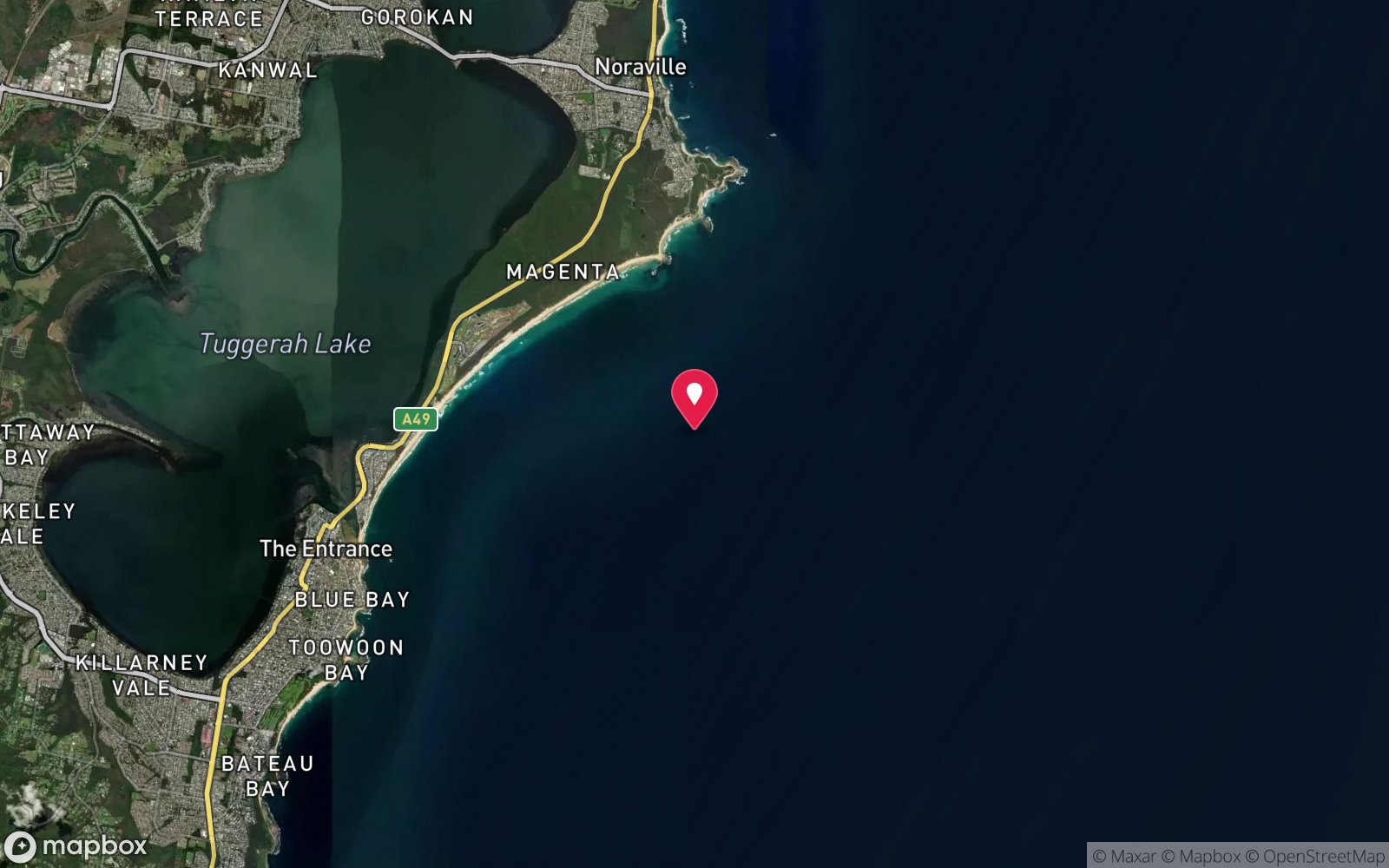
Forresters Beach offshore reefs · Terrigal / Avoca
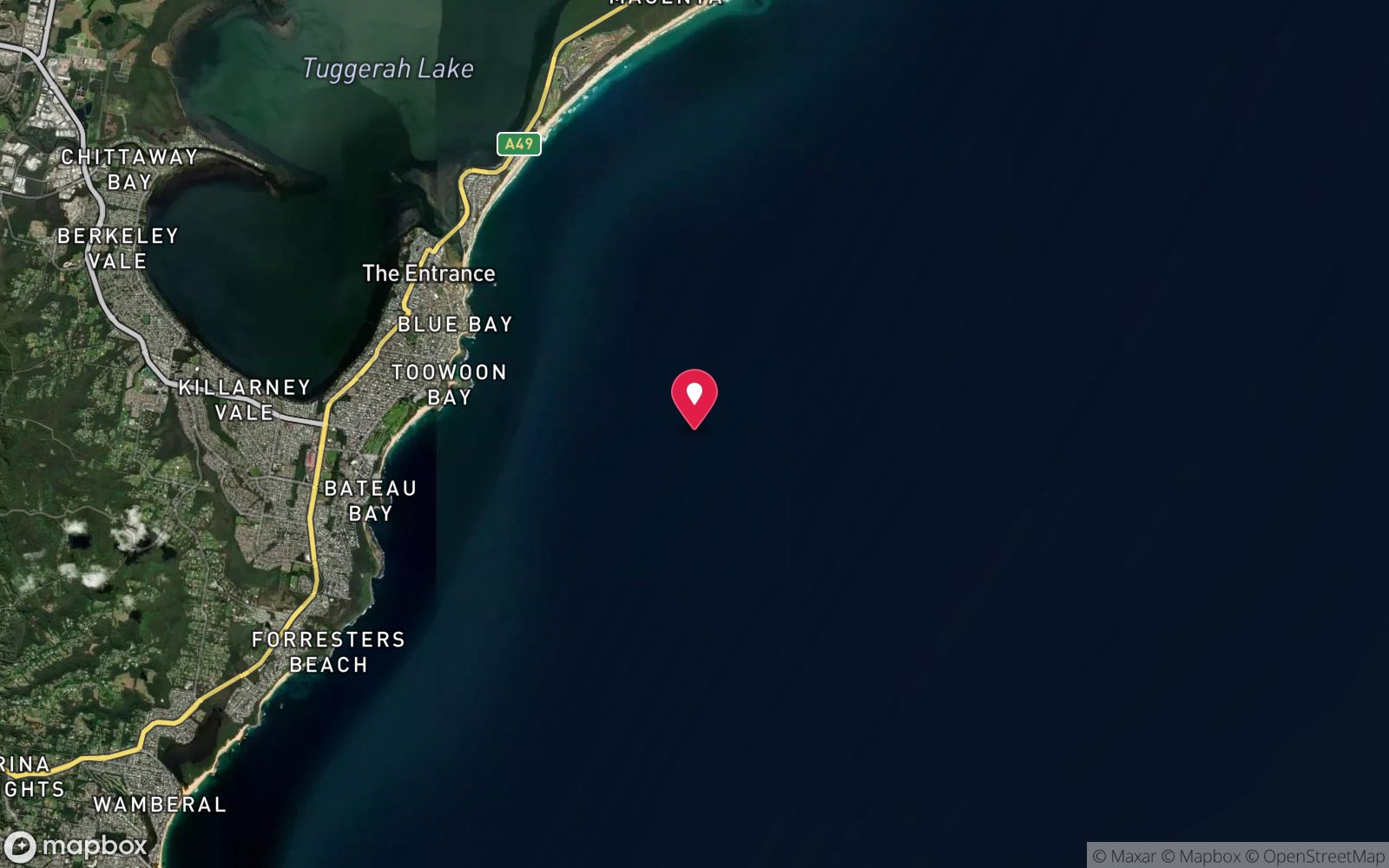
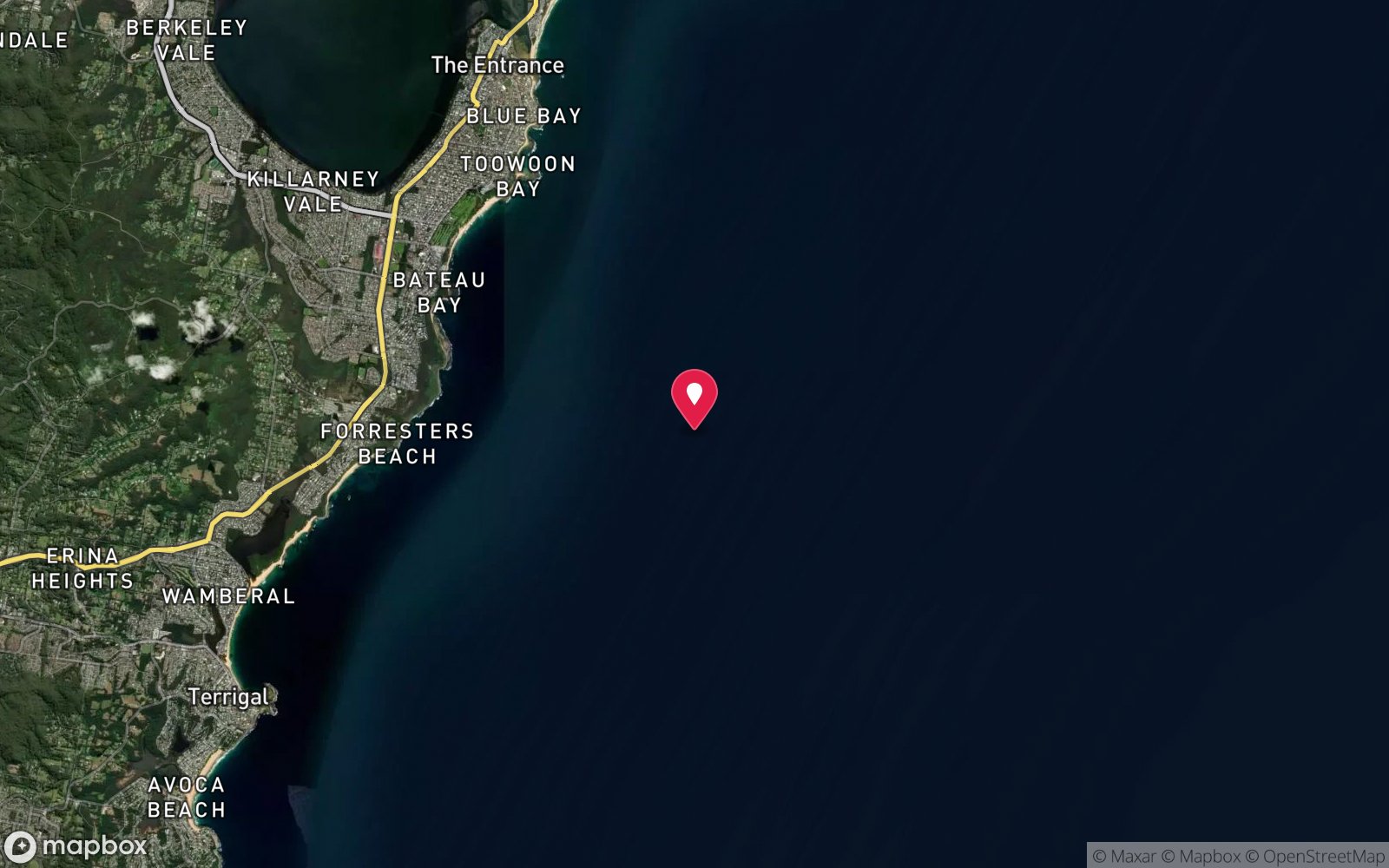
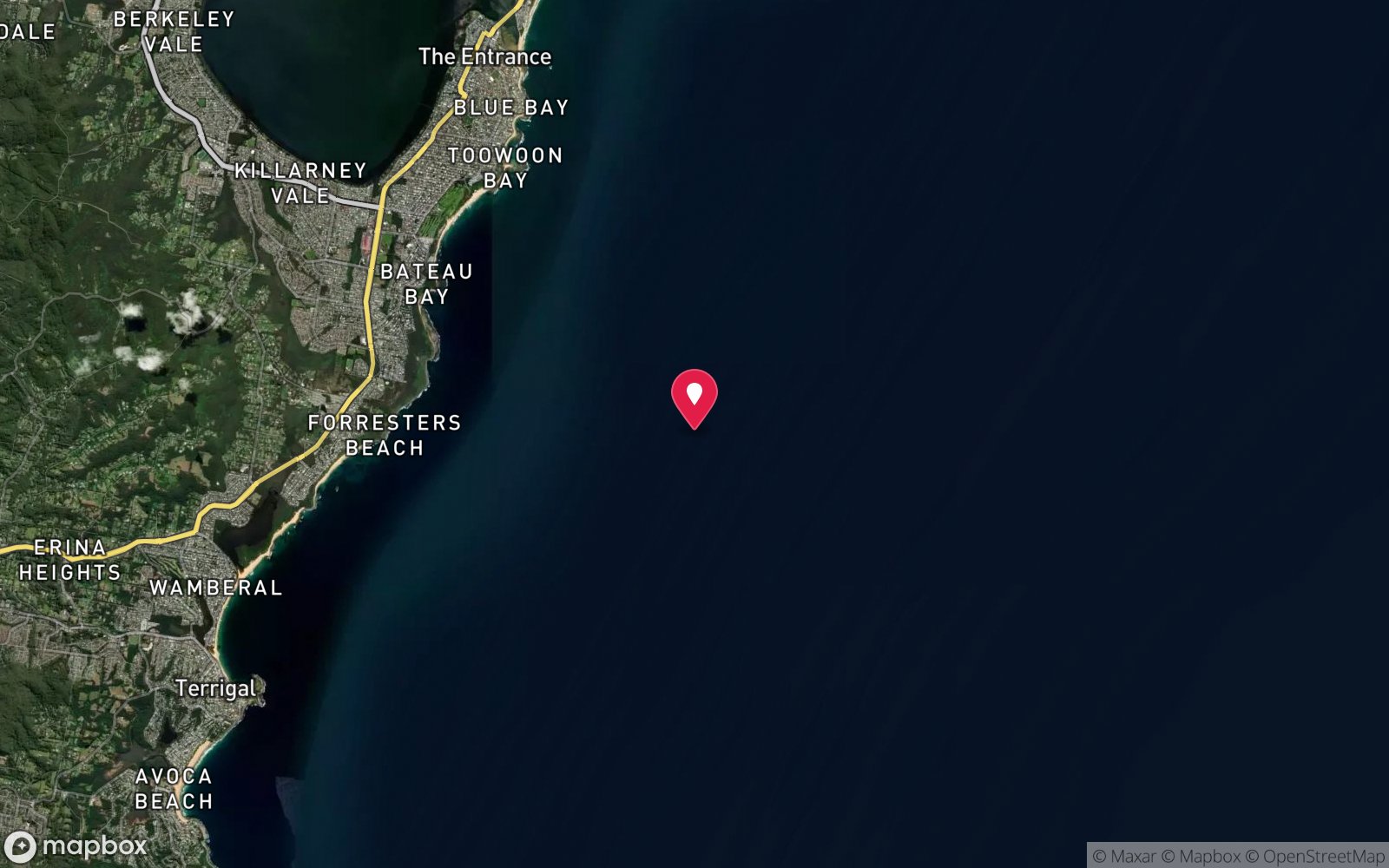
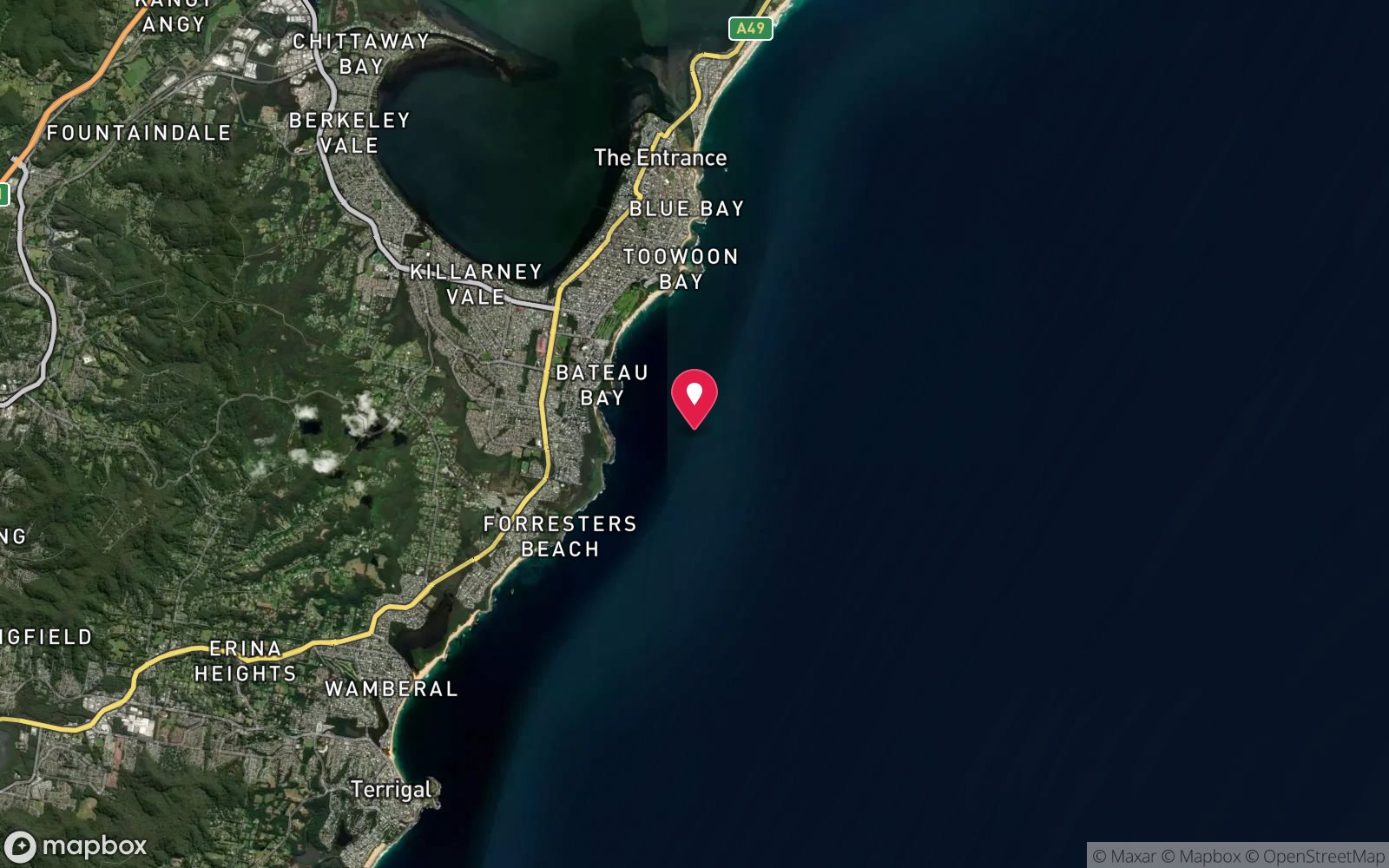
No published coordinates. The map above shows the general area, estimated from documented sites across the Central Coast region.
Primary source: terrigalunderwatergroup.comMarine park & permits
None required
Nearest recompression chamber
Prince of Wales Hospital (Randwick, Sydney)
Diving emergency: call 000, then DAN AP 1800 088 200.
Trip planner
Build a trip around Forresters Reef →
A day-by-day plan for Central Coast with this site locked in.
This guide is a planning aid. Conditions change daily — confirm with a local dive centre and dive within your training. Data & safety notes.
Dive profile
How this site rates
Scores are computed from the recorded data, not opinions. How?
At a glance
Forresters Reef is a reef boat dive in Central Coast, NSW, 20–30 m, suited to Advanced Open Water divers, about 10 minutes by boat.
Rated intermediate because of depth beyond 18 m, cold water.
Why dive here
- A large offshore reef system with clear water and attractive sponge gardens at 25-30 m.
- Visibility often reaches 10-20 m.
Conditions to avoid
- Afternoon north-easterlies
- Outgoing tide or run-off after rain (poor visibility)
About Forresters Reef
Forresters Reef is one of the bigger reef systems on the Terrigal boat dive list. The Terrigal Underwater Group lists it at 29 m and describes an extensive reef system with plenty of marine life, while the Marine Life Network's Central Coast guide - which spells it Foresters Reef - lists it at 30 m and highlights clear waters and an attractive sponge garden. Its size means no single dive covers it, and different anchor points give quite different dives.
The reef sits deep enough that swell and kelp have much less influence than on the inshore reefs. Instead, the rock is covered in sponges of many shapes and colours - fans, fingers, cups and encrusting forms - with ascidians, bryozoans and small gorgonians between them. Low ledges and gutters cut through the reef and form the boundaries of the sponge patches, and the sand edges attract wobbegongs, fiddler rays and Port Jackson sharks.
Fish life scales with the reef. Schools of yellowtail and silver sweep hover over the top, bullseyes and one-spot pullers crowd the ledges, and red morwong, eastern blue groper and Maori wrasse cruise through. In warmer months kingfish and bonito may pass overhead, and in cooler months the chance of grey nurse sharks moving along the coast adds interest.
Nudibranchs are plentiful among the sponges. At 25-30 m the dive suits Advanced divers comfortable with open-water descents and depth management; nitrox is useful for extending bottom time. It is often chosen when conditions offshore are clear and calm and operators want to show a classic temperate sponge garden, and it rewards repeat visits because each drop point reveals a different part of the system.
Getting there & entry
An extensive offshore reef system off Forresters Beach, north of Terrigal, in up to about 30 m, noted for clear water and sponge gardens.
All boat dives in this area launch from the Terrigal Haven boat ramp at the southern end of Terrigal Beach, tucked behind The Skillion headland. From the Central Coast Highway follow Terrigal Drive into Terrigal, then Kurrawyba Avenue and Terrigal Esplanade to The Haven, where there is a paid car park beside the ramp; Pro Dive Central Coast's shop is a short walk away and gear is loaded on the ramp or the adjacent beach. Private boats need a ramp with good parking early on weekends as the car park fills by mid-morning in summer.
From The Haven the boat runs north past Wamberal to the waters off Forresters Beach, around 10 minutes in reasonable conditions. The reef is large, so operators choose a drop point based on the day's current and the section they want to show.
Entry: Back-roll from boat; descend anchor line
Facilities: Departs Terrigal Haven: paid parking, toilets, kiosk and dive shop.
Weather, swell & tides
Terrigal's offshore reefs are open to the Tasman Sea and are dived only when swell is below roughly 1.5 m; a north-east sea breeze building through the afternoon in summer and strong southerlies after a front are the usual reasons trips are cancelled, so morning departures are the norm. The Haven boat ramp is sheltered by The Skillion but the run out past the headland can be lumpy in a south-easterly. Visibility is best in late summer and autumn when the East Australian Current pushes warm blue water inshore, and worst after heavy rain when Terrigal Lagoon, Wamberal Lagoon and Avoca Lagoon open and stain the inshore water.
Winter water is cooler (around 15-17 °C) but often clear. Deeper offshore reefs also need manageable current - when the East Australian Current runs hard, skippers may skip them for sites closer in.
Best season: Late summer to autumn
How the dive is usually run
Descend the anchor line, note the reef features at the anchor, then swim into the current along the reef edge at 25-28 m. Turn at half gas or when no-deco time dictates, drift back a little shallower over the sponge gardens, and ascend the line with a safety stop.
Marine life
- Sponge gardens
- ascidians
- small gorgonians
- bryozoans
- yellowtail
- silver sweep
- bullseyes
- one-spot pullers
- red morwong
- eastern blue groper →
- Maori wrasse
- wobbegong sharks →
- fiddler rays
- Port Jackson sharks →
- nudibranchs →
- seasonal kingfish
Linked species have their own page listing every site where they are recorded. All marine life →
Training required
Beyond 18 m an Advanced certification (which includes a deep dive to 30 m) is the accepted minimum. Anything past 25 m is a deep dive in practice.
At more than 25 m this counts as a deep dive: watch no-decompression limits and gas.
Courses that help here
- Enriched Air Nitrox – Longer no-decompression time at 25 m and deeper.
- Drysuit Diver – Cold water; locals dive dry for much of the year.
Depth tiers: 0–10 m easy · to 18 m Open Water · 18–30 m Advanced (25 m+ is a deep dive) · 30–40 m Deep specialty · 40 m+ technical. All courses
Hazards & warnings
Depth to 30 m - watch no-deco limits and narcosis; possible current; offshore exposure.
Technical notes
Nitrox recommended to extend no-decompression time.
Dive centres that go here
Pro Dive Central Coast (Terrigal Haven) runs boat dives from The Haven most days, weather permitting; Central Coast Divers also runs Terrigal charters; the Terrigal Underwater Group dives the site from club and members' boats. It is usually offered as a second dive or when conditions or demand favour reef sites over the ex-HMAS Adelaide.
Operators recorded for Forresters Reef
Central Coast Divers
ProfiledKillarney Vale · Central Coast · NSW
An SSI Instructor Training Facility at Killarney Vale with two full-time Instructor Trainers, onsite servicing for all major brands, and freediving courses.
centralcoastdivers.com.au · +61 2 4389 3483
Pro Dive Central Coast
Named by sitesKillarney Vale · Central Coast · NSW
Independent SSI centre (formerly Central Coast Divers), not part of the PRO DIVE Sydney chain.
prodivecentralcoast.com.au · (02) 4389 3483
Terrigal Underwater Group
Named by sitesTerrigal · Central Coast · NSW
Dive club, not a shop.
terrigalunderwatergroup.com · (02) 4324 0064
Other dive centres in Central Coast
Dive Newcastle
ProfiledBeresfield · Port Stephens · NSW
A Beresfield dive superstore teaching RAID courses, with air fills, servicing, rental and a large scuba, freediving and spearfishing range.
neptunesports.com.au · (02) 4966 4900
Terrigal Dive Centre
ProfiledTerrigal · Central Coast · NSW
A dive shop on the waterside at Terrigal Haven, running boat and wreck dives including the ex-HMAS Adelaide, a few minutes offshore.
+61 2 4384 1219
Norah Head Divers Depot
Named by sitesNorah Head · Central Coast · NSW
No trace of any business by this name at Norah Head.
General area
No position has been published for Forresters Reef. The circle shows where it is likely to be, worked out from documented sites across the Central Coast region. Ask a local operator for the exact site.
Dashed circle: general area (about 14 km), from documented sites across the Central Coast region. 6 pinned sites. Pins marked approximate on their pages show the general area only; not for navigation.
Forresters Reef: frequently asked questions
How deep is Forresters Reef?
Forresters Reef reaches a maximum depth of 30 m, with the shallowest part at about 20 m; most of the dive is spent around 26 m.
What certification do I need to dive Forresters Reef?
Advanced Open Water is the recommended minimum. At more than 25 m this counts as a deep dive: watch no-decompression limits and gas. Rated intermediate because of depth beyond 18 m, cold water.
Can I shore dive Forresters Reef?
No, it is reached by boat (about 10 minutes). A dive centre is required: boat access only.
When is the best time to dive Forresters Reef?
Late summer to autumn.
What marine life will I see at Forresters Reef?
Regularly recorded: Sponge gardens, ascidians, small gorgonians, bryozoans, yellowtail, silver sweep, bullseyes, one-spot pullers, red morwong, eastern blue groper, Maori wrasse, wobbegong sharks and more.
What wetsuit do I need at Forresters Reef?
5 mm steamer/full suit in summer; 7 mm semi-dry or drysuit June-October.
How cold is the water at Forresters Reef?
Typically 20-23 °C in summer and 14-17 °C in winter.
What are the main hazards at Forresters Reef?
Depth to 30 m - watch no-deco limits and narcosis; possible current; offshore exposure. See the hazards section above for the full list.
Where is the nearest recompression chamber to Forresters Reef?
Prince of Wales Hospital (Randwick, Sydney). In an emergency call 000, then DAN Asia-Pacific on 1800 088 200.
Diving in Central Coast
The Central Coast's headline is the ex-HMAS Adelaide, a 138 m frigate scuttled off Avoca in 2011 that is now one of the busiest wreck dives in the country. Around it are the reefs and caves of Terrigal Haven, Foggy's Cave and the Skillion, the shore dive at Terrigal, and the grey nurse gutters at the Pinnacles off Bangalley Head.
Getting there: Ninety minutes north of Sydney. Charters from Terrigal Haven run the Adelaide daily in season; Terrigal Haven itself is a sheltered shore dive with parking on the beachfront.
Sources
Data confidence: Low · Being verified: No GPS or detailed layout published; minimum/typical depths estimated.. Last updated September 2026. Know this site better? How to send a correction
Nearby dive sites
More reef dives in New South Wales
Explore more
This region
Marine life