Dive slate · divesites.com.au · printed 7 Nov 2026
Lake Eacham
Atherton Tablelands, Queensland · near Yungaburra
| Depth | 1–65 m |
|---|---|
| Minimum level | Technical (decompression) |
| Difficulty | Intermediate |
| Access | Shore |
| Entry | Walk-in from the grassed day-use area and boat ramp (second car park); no jumping from decks or pontoons |
| Current | None |
| Visibility | 5-10 m |
| Water | summer 25-27 °C, winter 20-23 °C |
| Suit | 5 mm full wetsuit (water cooler below the thermocline); 7 mm or drysuit for deep dives |
| Best season | Year-round; May-October usually gives the clearest water |
| Bottom time | 45 min |
| Position | -17.28600, 145.62600 (GPS) |
| Permit | Crater Lakes National Park – recreational diving permitted without a permit; commercial diving requires a permit; no fishing; motorised vessels need a permit |
| Nearest chamber | Townsville University Hospital Hyperbaric Medicine Unit (Townsville) – Cairns Hospital has no recompression chamber; divers are evacuated by RFDS/air ambulance |
| Emergency | 000 · DAN Asia-Pacific diving emergency 1800 088 200 |
Lake Eacham
Also known as Yidyam, Wiinggina
A rainforest-fringed volcanic crater lake with sunken trees, turtles and submerged boats at 25 m – Queensland's classic altitude and freshwater dive.
Near Yungaburra · Atherton Tablelands, Queensland
- Depth
- 1–65 m
- Minimum level
- Technical (decompression)
- Access
- Shore
- Boat ride
- Shore entry
- Water
- 25-27 °C
- Visibility
- 5-10 m
Lake Eacham1–65 m · Technical (decompression) · Shore
Dive factsDepths, conditions, location & safety
Season
Off-peak nowBest months: May, June, July, August, September, October.
Year-round; May-October usually gives the clearest water
- Best months
- Now (November)
Dive facts
- Depth
- 1–65 m
- Typical depth
- 15 m
- Certification
- Technical (decompression)
- Difficulty
- Intermediate
- Depth tier
- Technical (40 m +)
- Access
- Shore
- Offshore
- 0 km
- Dive centre needed
- No – independently diveable
- Shore / independent
- Yes
- Current
- None
- Visibility
- 5-10 m
- Water temp (summer)
- 25-27 °C
- Water temp (winter)
- 20-23 °C
- Water
- Cold Freshwater
- Bottom time
- 45 min
- Dive traffic
- Moderate (occasional charters/club dives)
- Night dive
- Possible
- Snorkel friendly
- Yes
Exposure suit
5 mm full wetsuit (water cooler below the thermocline); 7 mm or drysuit for deep dives
Location
Crater Lakes National Park · Far North QLD – Atherton Tablelands (freshwater)
-17.28600, 145.62600
Published GPS position.
Open in Google MapsPrimary source: nquec.org.auMarine park & permits
Crater Lakes National Park – recreational diving permitted without a permit; commercial diving requires a permit; no fishing; motorised vessels need a permit
Nearest recompression chamber
Townsville University Hospital Hyperbaric Medicine Unit (Townsville) – Cairns Hospital has no recompression chamber; divers are evacuated by RFDS/air ambulance
Diving emergency: call 000, then DAN AP 1800 088 200.
Trip planner
Build a trip around Lake Eacham →
A day-by-day plan for Atherton Tablelands with this site locked in.
This guide is a planning aid. Conditions change daily — confirm with a local dive centre and dive within your training. Data & safety notes.
Dive profile
How this site rates
Scores are computed from the recorded data, not opinions. How?
At a glance
Lake Eacham is a freshwater lake / river shore dive you can do independently in Atherton Tablelands, QLD, 1–65 m, suited to Technical (decompression) divers.
Rated intermediate because of depth to 65 m, cold water.
Why dive here
- A rainforest-fringed volcanic crater lake with sunken trees, turtles and submerged boats at 25 m – Queensland's classic altitude and freshwater dive.
- Snorkel-friendly, so non-diving companions can join at the surface.
About Lake Eacham
Lake Eacham is Queensland's best-known freshwater dive: a clear volcanic crater lake ringed by World Heritage rainforest on the Atherton Tablelands, about an hour and a quarter from Cairns. The crater was formed more than 9,000 years ago by violent steam explosions, and the Ngadjon-jii people, who call it Wiinggina, hold oral traditions thought to record those events. No streams flow in or out, and the lake is roughly 65 m deep at the centre, with water levels varying by several metres through the year.
The lake has been protected since 1888 and is now part of Crater Lakes National Park. The North Queensland Underwater Explorers Club describes the dive: entry from the day-use area near the boat ramp, water around 23 °C (cool after a North Queensland summer), visibility typically 5-6 m, and a shoreline of fallen trees that create underwater structure. Archerfish school near the boat ramp, cardinalfish shelter under the submerged trees and redclaw crayfish hide in hollow logs, and submerged timber boats lie at around 25 m.
Saw-shelled turtles are common, and a freshwater crocodile lives in the lake. Introduced predatory fish have devastated the native fish, and only the hardyhead remains of the original species. The club recommends swimming clockwise toward the turtle-viewing platform, careful finning to avoid silt, and an altitude-adjusted computer, since the lake is at around 760-820 m.
It suits Open Water divers looking for something different, and deeper divers for altitude and depth training. Weekday mornings are the quietest time to dive.
Getting there & entry
Volcanic crater lake in Crater Lakes National Park on the Atherton Tablelands, about 760 m above sea level, with shore entry from the day-use area near the boat ramp.
From Cairns drive south to Gordonvale and up the Gillies Range Road to Yungaburra (about 1 hour 15 minutes), then follow Lake Barrine Road and Lakes Drive to Lake Eacham, about 6 km from Yungaburra. From Townsville it is about 4.5 hours via Millaa Millaa and Malanda. Use the second car park near the day-use area and boat ramp, which gives the easiest entry and exit and has grass for setting up gear; arrive early as it fills with visitors.
The carry to the water is short. Enter at the boat ramp (rough and slippery) or from the shore beside it. There is no dive shop at the lake; the nearest air fills are in Cairns.
Entry: Walk-in from the grassed day-use area and boat ramp (second car park); no jumping from decks or pontoons
Facilities: Two car parks off Lakes Drive, day-use area with grass, picnic tables, wheelchair-accessible toilets, boat ramp (paddle craft), pontoon, 3 km circuit walk; cafes and accommodation in Yungaburra; nearest air fills in Cairns
Weather, swell & tides
There is no swell or current; the lakes are diveable year-round. Visibility is typically 5-10 m and is best in the drier, cooler months (May-October); heavy wet-season rain and algal growth in warm months can reduce it. Surface water is about 23-27 °C, but it is cooler at depth below the thermocline.
Weekends and school holidays bring crowds of swimmers, so dive early. The lakes are at altitude, so adjust your computer or tables and allow time to acclimatise after driving up from the coast; do not dive and then drive back down over the Gillies or Kuranda ranges without a sufficient surface interval.
Best season: Year-round; May-October usually gives the clearest water
If it's blown out
Sheltered or shore sites within 25 km that often work when Lake Eacham doesn't.
- Lake Barrine · 4 km · Max 65 m
How the dive is usually run
Enter at the boat ramp, check buoyancy (freshwater needs noticeably less weight), and swim clockwise along the shore towards the turtle-viewing platform, where the shoreline is more interesting. Follow the fallen trees down the slope to 10-15 m, or to the submerged boats at about 25 m for experienced divers, then return shallower along the shore. Keep off the silty bottom.
Marine life
- Saw-shelled turtles →
- archerfish
- cardinalfish
- redclaw crayfish
- eels
- hardyheads
- freshwater crocodile (one resident, shy); submerged trees and timber boats
Linked species have their own page listing every site where they are recorded. All marine life →
Training required
Beyond recreational limits: decompression, mixed gas or full cave/wreck training is required.
Open Water divers can dive the shallower section (typical depth 15 m); the full site to 65 m needs Technical (decompression). Operators often quote Open Water.
Operators' own listing: Open Water.
Courses that help here
- Enriched Air Nitrox – Longer no-decompression time at 25 m and deeper.
- Drysuit Diver – Cold water; locals dive dry for much of the year.
- Peak Performance Buoyancy – Silt and low visibility punish poor trim.
Depth tiers: 0–10 m easy · to 18 m Open Water · 18–30 m Advanced (25 m+ is a deep dive) · 30–40 m Deep specialty · 40 m+ technical. All courses
Hazards & warnings
Altitude diving (about 760-820 m) – use altitude settings and allow acclimatisation; do not drive over the Gillies or Kuranda ranges straight after diving; freshwater crocodile – do not approach or disturb, report sightings to CrocWatch (1300 130 372); silt-outs; depth to 65 m in the centre; slippery boat ramp; swimmers and kayakers; no jumping from decks or pontoons; nearest recompression chamber Townsville
Technical notes
Altitude dive: reduce no-decompression limits and use altitude tables or an altitude-capable computer; the deep centre (to about 65 m) is used for deep and technical training – trimix and full technical procedures required beyond recreational depths; cold, dark water below the thermocline.
Dive centres that go here
No commercial operator – dived independently and by clubs such as the North Queensland Underwater Explorers Club (Townsville); commercial diving requires a Queensland Parks permit
Operators recorded for Lake Eacham
Map
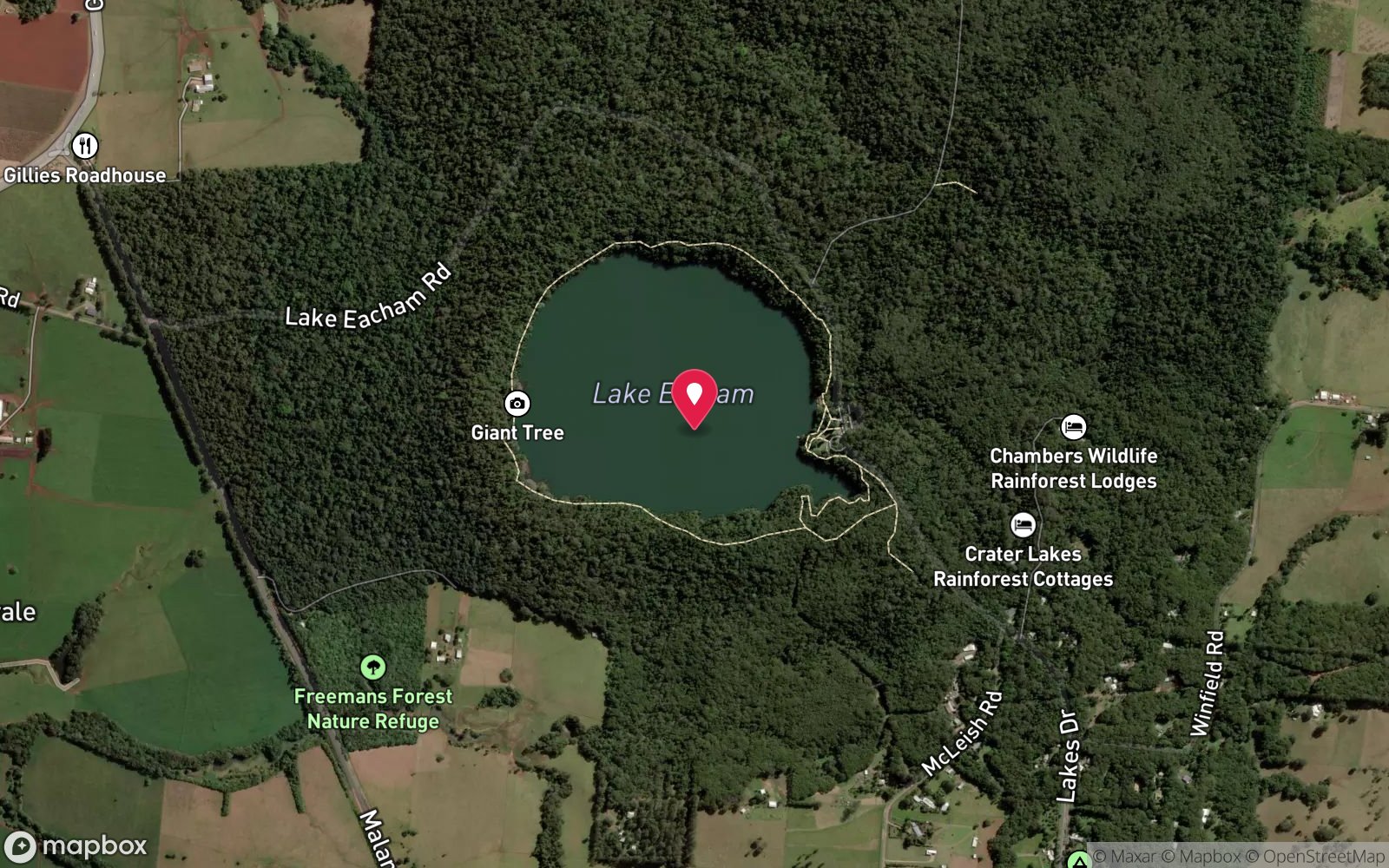
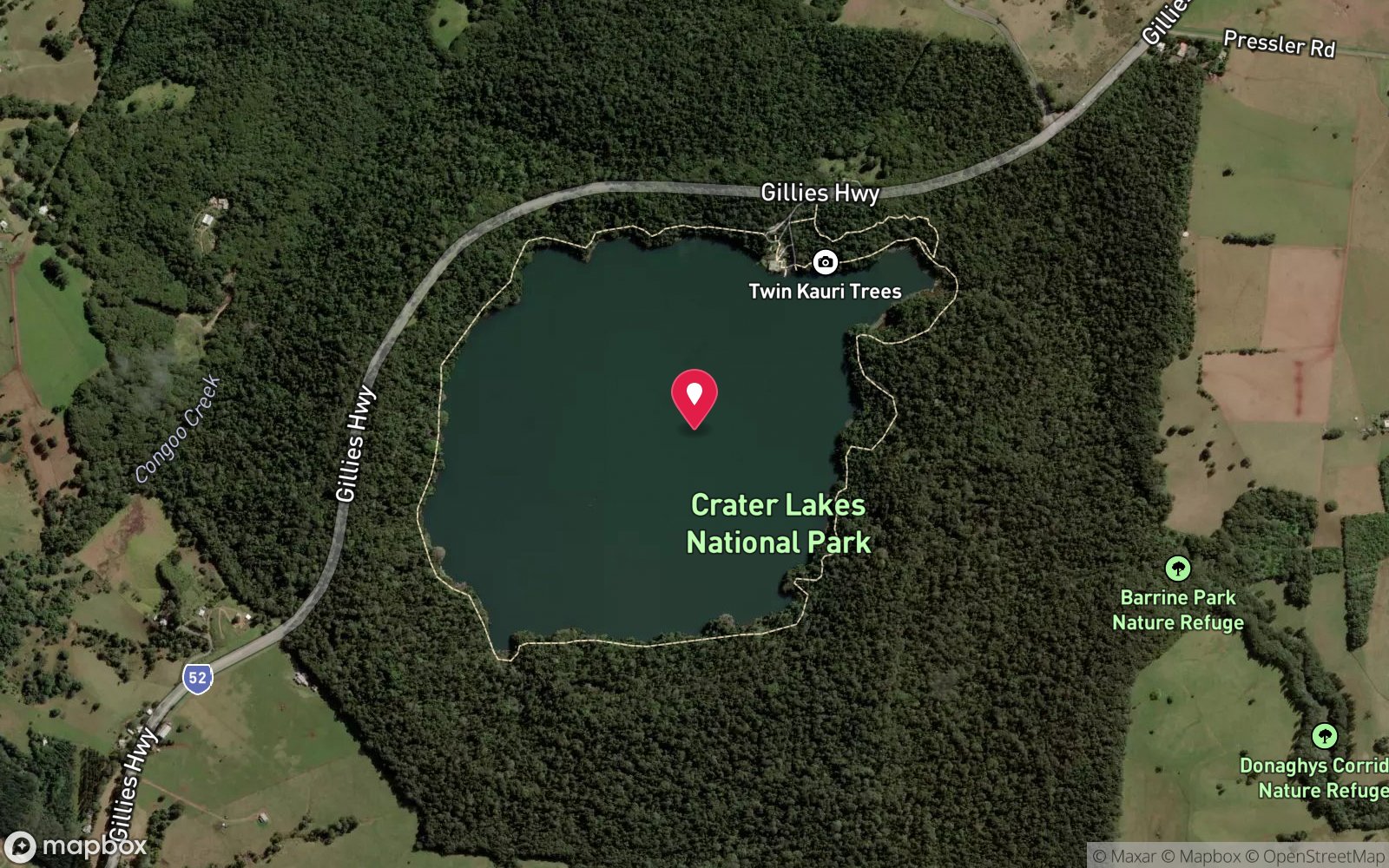
7 pinned sites. Pins marked approximate on their pages show the general area only; not for navigation.
Satellite views
Lake Eacham: frequently asked questions
How deep is Lake Eacham?
Lake Eacham reaches a maximum depth of 65 m, with the shallowest part at about 1 m; most of the dive is spent around 15 m.
What certification do I need to dive Lake Eacham?
Technical (decompression) is the recommended minimum. Open Water divers can dive the shallower section (typical depth 15 m); the full site to 65 m needs Technical (decompression). Operators often quote Open Water. Rated intermediate because of depth to 65 m, cold water.
Can I shore dive Lake Eacham?
Yes. Lake Eacham is a shore dive that can be done independently: walk-in from the grassed day-use area and boat ramp (second car park); no jumping from decks or pontoons.
When is the best time to dive Lake Eacham?
Year-round; May-October usually gives the clearest water.
What marine life will I see at Lake Eacham?
Regularly recorded: Saw-shelled turtles, archerfish, cardinalfish, redclaw crayfish, eels, hardyheads, freshwater crocodile (one resident, shy); submerged trees and timber boats.
What wetsuit do I need at Lake Eacham?
5 mm full wetsuit (water cooler below the thermocline); 7 mm or drysuit for deep dives.
How cold is the water at Lake Eacham?
Typically 25-27 °C in summer and 20-23 °C in winter.
What are the main hazards at Lake Eacham?
Altitude diving (about 760-820 m) – use altitude settings and allow acclimatisation; do not drive over the Gillies or Kuranda ranges straight after diving; freshwater crocodile – do not approach or disturb, report sightings to CrocWatch (1300 130 372); silt-outs; depth to 65 m in the centre; slippery boat ramp; swimmers and kayakers; no jumping from decks or pontoons; nearest recompression chamber Townsville. See the hazards section above for the full list.
Where is the nearest recompression chamber to Lake Eacham?
Townsville University Hospital Hyperbaric Medicine Unit (Townsville) – Cairns Hospital has no recompression chamber; divers are evacuated by RFDS/air ambulance. In an emergency call 000, then DAN Asia-Pacific on 1800 088 200.
Diving in Atherton Tablelands
Above Cairns, the volcanic crater lakes of the Atherton Tablelands, Lake Eacham and Lake Barrine, are freshwater dives in a rainforest setting with 65 m depths, turtles, eels and the odd sunken canoe. They are training and novelty dives rather than destinations, and freshwater algorithms apply.
Getting there: Ninety minutes from Cairns; shore entries from the picnic areas.
All Atherton Tablelands dive sites and a suggested itinerary →
Sources
- nquec.org.au/dive-site-lake-eacham
- en.wikipedia.org/wiki/Lake_Eacham_(Queensland)
- parks.qld.gov.au/parks/crater-lakes/visiting-safely
Data confidence: High · Being verified: Elevation sources differ (about 760 m vs 820 m); water classification set to Cold Freshwater as the only freshwater category though surface water is warm. Last updated September 2026. Know this site better? How to send a correction
Nearby dive sites
More shore dives in Queensland
Explore more
This region
Marine life