Dive slate · divesites.com.au · printed 8 Nov 2026
Sir John Young Banks
Shoalhaven Coast, New South Wales · near Culburra Beach / Crookhaven Heads
| Depth | 16–50 m |
|---|---|
| Minimum level | Technical (decompression) |
| Difficulty | Expert/Technical |
| Access | Boat (day trip) |
| Entry | Back roll from boat anchored on the 33 m reef, or live-boat drift on a float line |
| Current | Strong |
| Visibility | 15-30 m |
| Water | summer 20-24 °C, winter 16-18 °C |
| Suit | 5–7 mm wetsuit with hood in summer–autumn; 7 mm semi-dry or drysuit June–October |
| Best season | Late summer–autumn for warm clear EAC water and pelagics; any rare calm window |
| Bottom time | 20 min |
| Position | -34.94898, 150.92950 (GPS) |
| Permit | None required |
| Nearest chamber | Prince of Wales Hospital (Randwick, Sydney) – approx. 3 h by road from Jervis Bay; call 000 and DAN Asia-Pacific hotline (evacuation usually by air) |
| Emergency | 000 · DAN Asia-Pacific diving emergency 1800 088 200 |
Sir John Young Banks
Also known as SJY Banks, The Banks
Remote offshore banks with walls to 50 m, pristine colourful sessile life and pelagic sharks including hammerheads.
Near Culburra Beach / Crookhaven Heads · Shoalhaven Coast, New South Wales
- Depth
- 16–50 m
- Minimum level
- Technical (decompression)
- Access
- Boat (day trip)
- Boat ride
- ~35 min
- Water
- 20-24 °C
- Visibility
- 15-30 m
Sir John Young Banks16–50 m · Technical (decompression)
Dive factsDepths, conditions, location & safety
Season
Off-peak nowBest months: January, February, March, April, May, December.
Late summer–autumn for warm clear EAC water and pelagics; any rare calm window
- Best months
- Now (November)
Dive facts
- Depth
- 16–50 m
- Typical depth
- 33 m
- Certification
- Technical (decompression)
- Difficulty
- Expert/Technical
- Depth tier
- Technical (40 m +)
- Access
- Boat (day trip)
- Offshore
- 16 km
- Dive centre needed
- Yes – boat access only
- Shore / independent
- No
- Boat ride
- ~35 min
- Current
- Strong
- Visibility
- 15-30 m
- Water temp (summer)
- 20-24 °C
- Water temp (winter)
- 16-18 °C
- Water
- Temperate
- Bottom time
- 20 min
- Dive traffic
- Remote/expedition only
- Night dive
- No
- Snorkel friendly
- No
Exposure suit
5–7 mm wetsuit with hood in summer–autumn; 7 mm semi-dry or drysuit June–October
Location
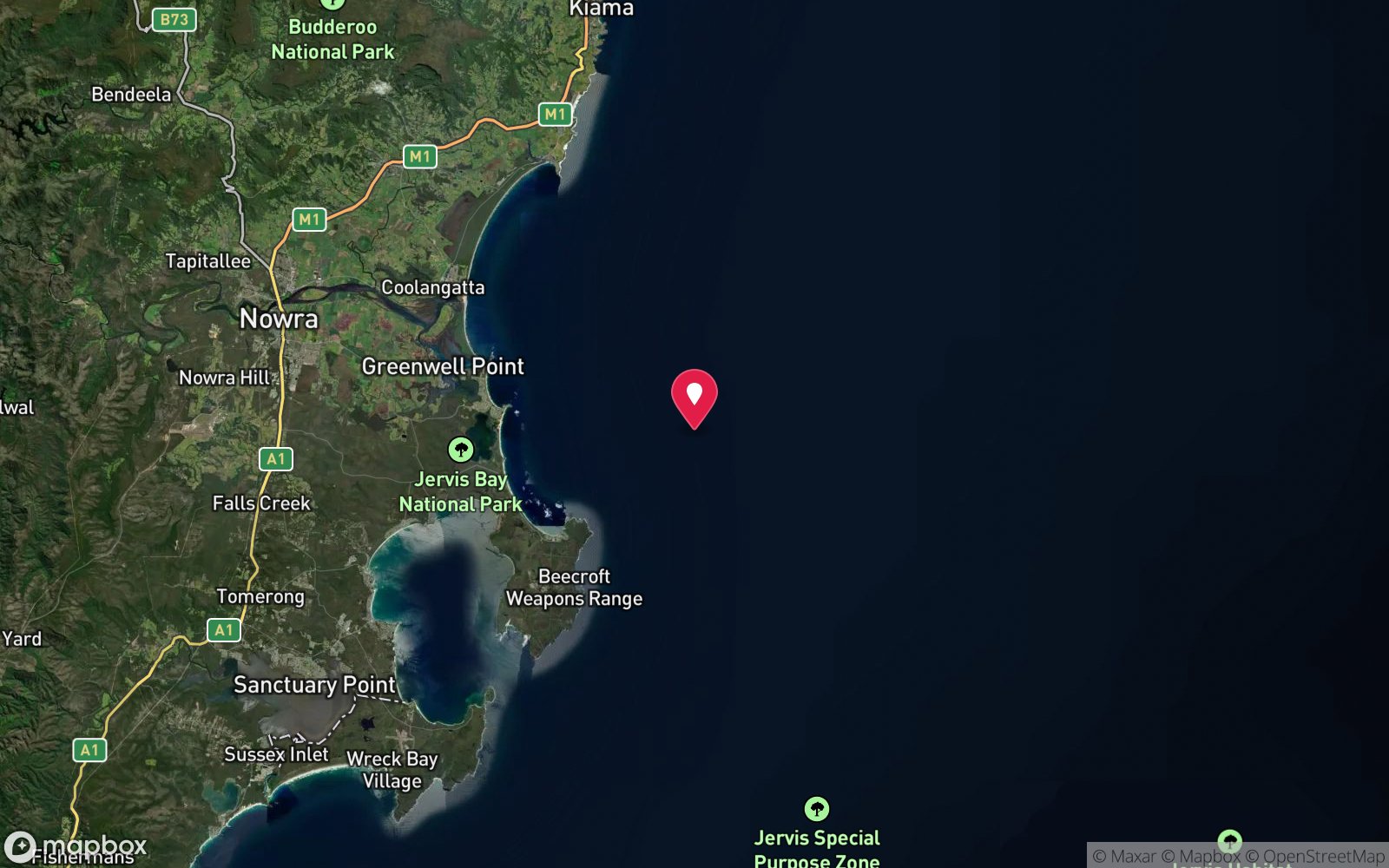
Offshore Shoalhaven · Shoalhaven – Crookhaven & Currarong
-34.94898, 150.92950
Published GPS position.
Open in Google MapsPrimary source: michaelmcfadyenscuba.infoMarine park & permits
None required
Nearest recompression chamber
Prince of Wales Hospital (Randwick, Sydney) – approx. 3 h by road from Jervis Bay; call 000 and DAN Asia-Pacific hotline (evacuation usually by air)
Diving emergency: call 000, then DAN AP 1800 088 200.
Trip planner
Build a trip around Sir John Young Banks →
A day-by-day plan for Shoalhaven Coast with this site locked in.
This guide is a planning aid. Conditions change daily — confirm with a local dive centre and dive within your training. Data & safety notes.
Dive profile
How this site rates
Scores are computed from the recorded data, not opinions. How?
At a glance
Sir John Young Banks is a seamount boat dive in Shoalhaven Coast, NSW, 16–50 m, suited to Technical (decompression) divers, strong current, about 35 minutes by boat.
Rated expert/technical because of depth to 50 m, strong current, cold water.
Why dive here
- Remote offshore banks with walls to 50 m, pristine colourful sessile life and pelagic sharks including hammerheads.
- Rarely dived: expect to have the site to yourself, and plan your own logistics.
- Visibility often reaches 15-30 m.
Conditions to avoid
- Afternoon north-easterlies
- Outgoing tide or run-off after rain (poor visibility)
About Sir John Young Banks
Sir John Young Banks is the most serious dive in this region – an offshore reef system 16 km out from Crookhaven Heads that rises from depths of more than 70 m to a plateau as shallow as 16 m. The main dive is on the 33 m reef, which runs roughly north–south and drops to a narrow shelf at 42 m before a second wall falls to 50 m. Other marks give an 18 m reef and a 40 m+ reef, and a northern reef is also charted.
The banks are a magnet for pelagic life. McFadyen lists tuna, yellowtail kingfish, hammerhead sharks, oceanic whitetips, and grey and bronze whalers, alongside cuttlefish, leatherjackets and swirling bait. The fixed life is spectacular: sea whips, sponges and sea squirts cover the walls, and nudibranchs and sea stars are abundant. He describes the colours as unlike almost any other dive, a result of the clear oceanic water and the absence of kelp at depth.
This is not a site for casual visits. The banks are usually swept by currents from the north, often strong enough to make anchoring and descending difficult, and the presence of large sharks, the depth, the distance from shore and the Crookhaven bar all add risk. Divers need a capable boat with a skipper who stays aboard, excellent sea conditions, and experience in deep open-ocean diving; most visits are by technical divers using trimix or nitrox with decompression gases. For those who can meet those conditions it is one of the most spectacular offshore dives on the NSW coast, and it is rarely dived, so the reef remains in pristine condition.
Getting there & entry
Offshore reef system 16 km east of Crookhaven Heads rising from more than 70 m to a plateau at about 16 m, with walls dropping to 42 m and 50 m; pelagic sharks and strong currents.
Launch at the Crookhaven Heads boat ramp at the mouth of the Shoalhaven River (one of the region's largest ramps; trailer parking and toilets), about 2.5 hours south of Sydney. Cross the Crookhaven bar with care and run 18 km east-south-east to the banks – at least 30–35 minutes, sometimes under 25 in flat seas. GPS is essential: marks (WGS84) are 18 m reef 34° 56.922' S 150° 55.737' E; 33 m reef 34° 56.939' S 150° 55.770' E; 40 m+ reef 34° 56.955' S 150° 55.787' E.
Anchor on the 33 m reef.
Entry: Back roll from boat anchored on the 33 m reef, or live-boat drift on a float line
Facilities: Crookhaven Heads boat ramp: trailer parking, toilets; air and nitrox at Huskisson (Dive Jervis Bay) or Nowra-area shops.
Weather, swell & tides
A fully exposed offshore site: it needs a long spell of calm weather with swell under about 1 m and light winds, both for the 18 km run and for the Crookhaven bar, which breaks dangerously in easterly swell and on an ebb tide. Currents from the north are the rule rather than the exception – when the East Australian Current is running they can be too strong to dive. Visibility is typically excellent (15–30 m) in oceanic water.
Plan to be back across the bar before afternoon north-easterly sea breezes build.
Best season: Late summer–autumn for warm clear EAC water and pelagics; any rare calm window
If it's blown out
Sheltered or shore sites within 25 km that often work when Sir John Young Banks doesn't.
- Abrahams Bosom Reserve · 11 km · Depth not published
- Honeymoon Bay · 20 km · Max 10 m
- Callala Bay · 20 km · Depth not published
- Boat Harbour (Gerringong) · 24 km · Depth not published
How the dive is usually run
Anchor on the 33 m reef, descend and look over the edge at the narrow shelf at 42 m and the wall dropping to 50 m. Technical divers drop the wall; recreational divers stay on the 33 m reef. In current, drift along the wall on a float line with the boat following.
Run a planned decompression ascent up the anchor line or on a DSMB.
Marine life
- Hammerhead sharks →
- oceanic whitetip sharks →
- grey and bronze whalers
- tuna
- yellowtail kingfish
- cuttlefish →
- leatherjackets
- nudibranchs →
- sea stars
- sea whips
- sponges
- sea squirts
Linked species have their own page listing every site where they are recorded. All marine life →
Training required
Beyond recreational limits: decompression, mixed gas or full cave/wreck training is required.
Courses that help here
- Enriched Air Nitrox – Longer no-decompression time at 25 m and deeper.
- Drift Diver – Current is a feature of the dive.
- Drysuit Diver – Cold water; locals dive dry for much of the year.
Depth tiers: 0–10 m easy · to 18 m Open Water · 18–30 m Advanced (25 m+ is a deep dive) · 30–40 m Deep specialty · 40 m+ technical. All courses
Hazards & warnings
Strong currents from the north; depth – decompression for most profiles; large pelagic sharks; 16–18 km offshore with no shelter; dangerous Crookhaven bar crossing; skipper must remain on board; very remote from the chamber.
Technical notes
Plan as a technical dive: EAN28–32 for the 33 m reef or trimix (e.g. 21/35) for the 50 m wall, with EAN50/oxygen for decompression; drift decompression on a DSMB if current pulls the anchor. Full redundancy and a surface support boat essential.
Dive centres that go here
No regular operator – private boats and technical diving groups on calm days only; occasionally visited by Jervis Bay or Sydney technical charters.
Operators recorded for Sir John Young Banks
Map
7 pinned sites. Pins marked approximate on their pages show the general area only; not for navigation.
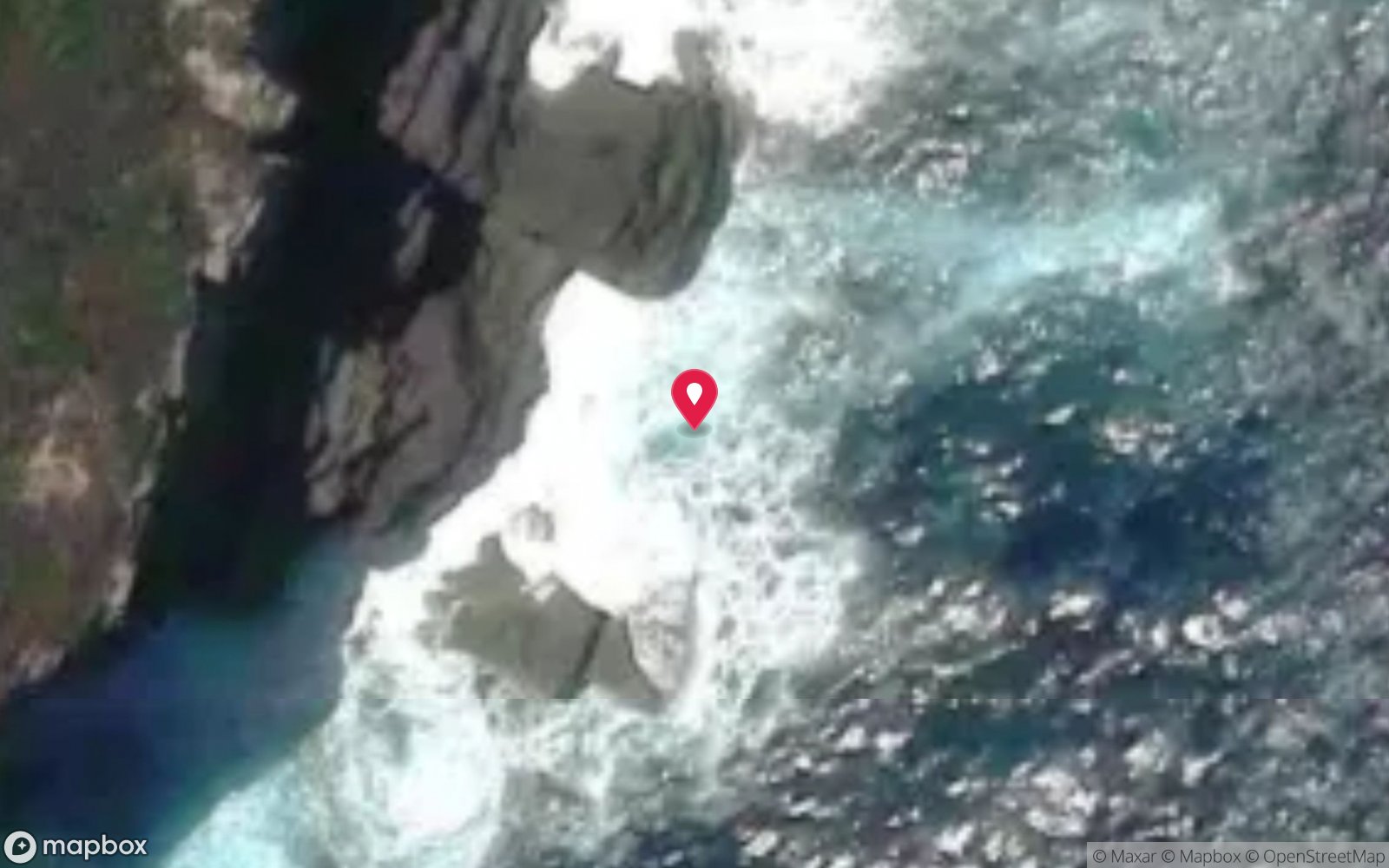
Satellite views
Sir John Young Banks: frequently asked questions
How deep is Sir John Young Banks?
Sir John Young Banks reaches a maximum depth of 50 m, with the shallowest part at about 16 m; most of the dive is spent around 33 m.
What certification do I need to dive Sir John Young Banks?
Technical (decompression) is the recommended minimum. Rated expert/technical because of depth to 50 m, strong current, cold water.
Can I shore dive Sir John Young Banks?
No, it is reached by boat (about 35 minutes). A dive centre is required: boat access only.
When is the best time to dive Sir John Young Banks?
Late summer–autumn for warm clear EAC water and pelagics; any rare calm window.
What marine life will I see at Sir John Young Banks?
Regularly recorded: Hammerhead sharks, oceanic whitetip sharks, grey and bronze whalers, tuna, yellowtail kingfish, cuttlefish, leatherjackets, nudibranchs, sea stars, sea whips, sponges, sea squirts.
What wetsuit do I need at Sir John Young Banks?
5–7 mm wetsuit with hood in summer–autumn; 7 mm semi-dry or drysuit June–October.
How cold is the water at Sir John Young Banks?
Typically 20-24 °C in summer and 16-18 °C in winter.
What are the main hazards at Sir John Young Banks?
Strong currents from the north; depth – decompression for most profiles; large pelagic sharks; 16–18 km offshore with no shelter; dangerous Crookhaven bar crossing; skipper must remain on board; very remote from the chamber. See the hazards section above for the full list.
Where is the nearest recompression chamber to Sir John Young Banks?
Prince of Wales Hospital (Randwick, Sydney) – approx. 3 h by road from Jervis Bay; call 000 and DAN Asia-Pacific hotline (evacuation usually by air). In an emergency call 000, then DAN Asia-Pacific on 1800 088 200.
Diving in Shoalhaven Coast
Between Jervis Bay and Ulladulla, the Shoalhaven's headlands at Currarong, Culburra and Bendalong have wrecks, caves and reefs that are dived far less than their neighbours. The wreck of the Merimbula at Currarong is a shallow shore dive on a 1928 steamer, and Beecroft Peninsula's outer walls are boat dives for experienced divers.
Getting there: Two and a half hours from Sydney. Shore entries at Currarong and Bendalong; boat dives via Huskisson or Ulladulla operators.
Sources
Data confidence: High. Last updated September 2026. Know this site better? How to send a correction
Nearby dive sites
Explore more
This region
Similar dives
Marine life