Dive slate · divesites.com.au · printed 9 Nov 2026
Busselton Jetty
Geographe Bay & Busselton, Western Australia · near Busselton
| Depth | 6–9 m |
|---|---|
| Minimum level | Open Water |
| Difficulty | Beginner |
| Access | Shore or Boat |
| Entry | Ladders from the Universal Access Platform on the west side just south of the Observatory gates; or boat drop by Swan Dive |
| Current | Mild |
| Visibility | 5-15 m |
| Water | summer 21-24 °C, winter 16-18 °C |
| Suit | 5 mm wetsuit in summer; 7 mm or semi-dry in winter |
| Best season | Year-round; summer and autumn for warmer, calmer water |
| Bottom time | 60 min |
| Position | -33.63690, 115.34000 (GPS) |
| Permit | Ngari Capes Marine Park - Busselton Jetty Sanctuary Zone (no fishing or take); $5 dive/snorkel day pass and waiver required from the Interpretive Centre |
| Nearest chamber | Fiona Stanley Hospital Hyperbaric Medicine Unit (Murdoch, Perth) |
| Emergency | 000 · DAN Asia-Pacific diving emergency 1800 088 200 |
Busselton Jetty
Also known as Busselton Jetty Underwater Observatory, Busselton Jetty dive
A 1.8 km heritage jetty whose end is a forest of sponge- and coral-covered piles at 8 m, with an Underwater Observatory and sculpture park.
Near Busselton · Geographe Bay & Busselton, Western Australia
- Depth
- 6–9 m
- Minimum level
- Open Water
- Access
- Shore or Boat
- Boat ride
- ~10 min
- Water
- 21-24 °C
- Visibility
- 5-15 m
Busselton Jetty6–9 m · Open Water · Shore
Dive factsDepths, conditions, location & safety
Season
In season nowBest months: year-round.
Year-round; summer and autumn for warmer, calmer water
- Best months
- Now (November)
Dive facts
- Depth
- 6–9 m
- Typical depth
- 8 m
- Certification
- Open Water
- Difficulty
- Beginner
- Depth tier
- Easy (0–10 m)
- Access
- Shore or Boat
- Offshore
- 1.8 km
- Dive centre needed
- No – independently diveable
- Shore / independent
- Yes
- Boat ride
- ~10 min
- Current
- Mild
- Visibility
- 5-15 m
- Water temp (summer)
- 21-24 °C
- Water temp (winter)
- 16-18 °C
- Water
- Temperate
- Bottom time
- 60 min
- Dive traffic
- Very popular (dived daily)
- Night dive
- Yes
- Snorkel friendly
- Yes
Exposure suit
5 mm wetsuit in summer; 7 mm or semi-dry in winter
Location
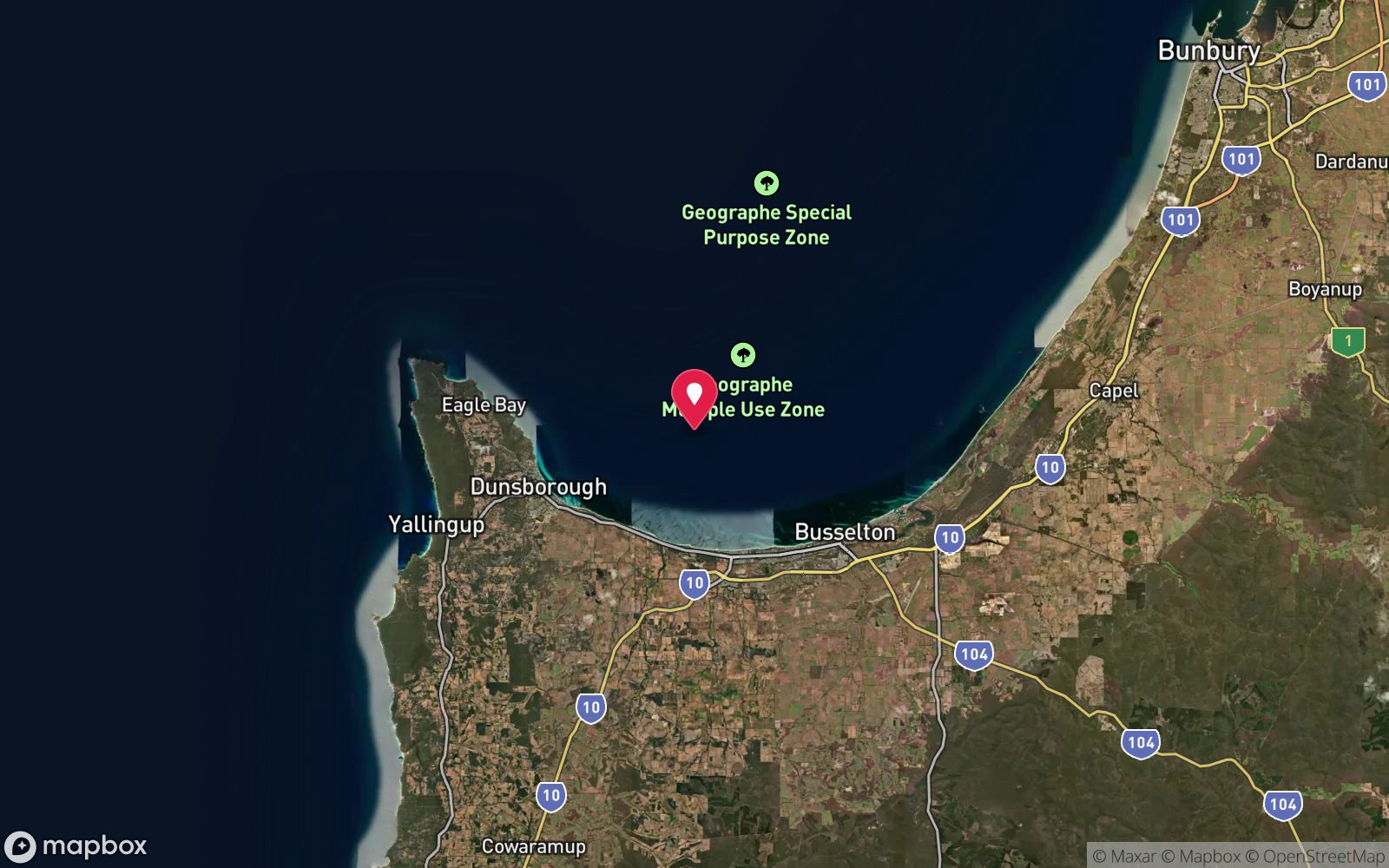
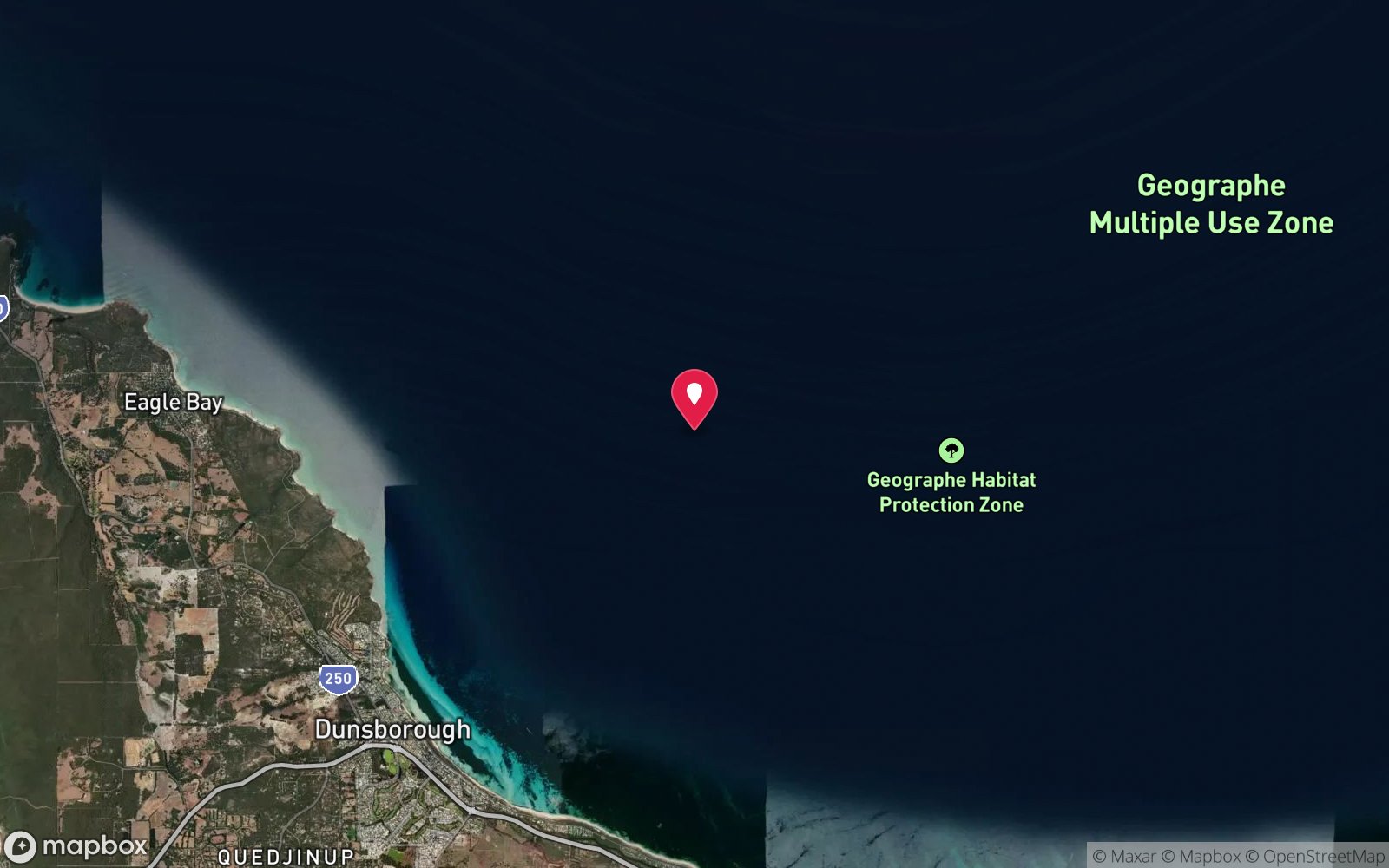
Busselton Jetty (Busselton Jetty Sanctuary Zone) · South West WA - Busselton & Geographe Bay
-33.63690, 115.34000
Published GPS position.
Open in Google MapsPrimary source: busseltonjetty.com.auMarine park & permits
Ngari Capes Marine Park - Busselton Jetty Sanctuary Zone (no fishing or take); $5 dive/snorkel day pass and waiver required from the Interpretive Centre
Nearest recompression chamber
Fiona Stanley Hospital Hyperbaric Medicine Unit (Murdoch, Perth)
Diving emergency: call 000, then DAN AP 1800 088 200.
Trip planner
Build a trip around Busselton Jetty →
A day-by-day plan for Geographe Bay & Busselton with this site locked in.
This guide is a planning aid. Conditions change daily — confirm with a local dive centre and dive within your training. Data & safety notes.
Dive profile
How this site rates
Scores are computed from the recorded data, not opinions. How?
At a glance
Busselton Jetty is a jetty / pier shore dive you can do independently in Geographe Bay & Busselton, WA, 6–9 m, suited to Open Water divers, about 10 minutes by boat.
Rated beginner: sheltered, shallow and manageable for a newly certified diver on a normal day.
Why dive here
- A 1.8 km heritage jetty whose end is a forest of sponge- and coral-covered piles at 8 m, with an Underwater Observatory and sculpture park.
- A photographer's site: bring a macro lens or a wide-angle depending on the season.
- Commonly dived at night, when octopus, cuttlefish and crustaceans are out.
- Snorkel-friendly, so non-diving companions can join at the surface.
About Busselton Jetty
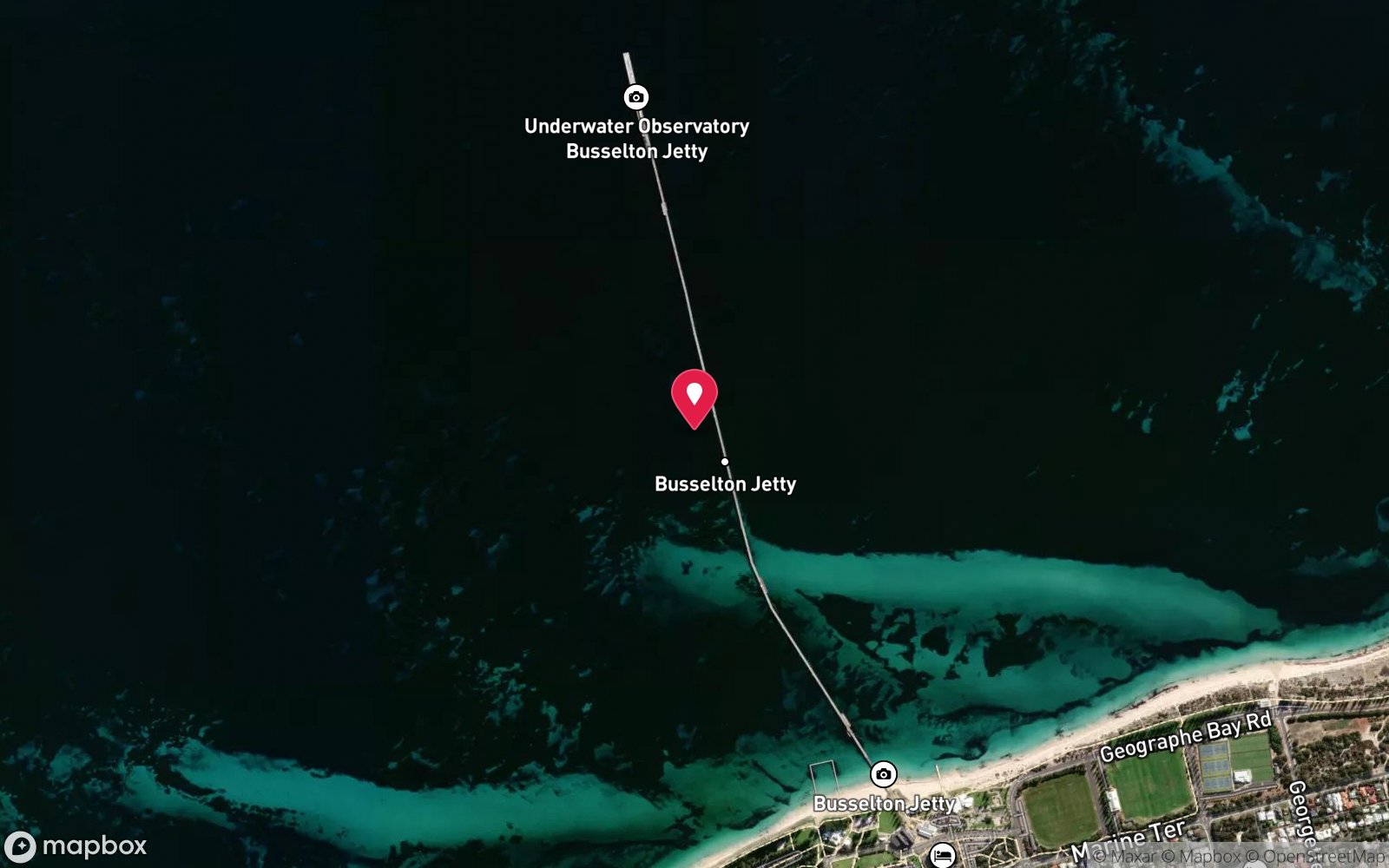
Busselton Jetty is one of Australia's iconic dives. Construction began in 1864 and the first 176 m opened in 1865; extensions continued until the 1960s, giving the present length of 1,841 m, the longest timber-piled jetty in the Southern Hemisphere. The last commercial ship called in 1971 and the jetty closed to shipping in 1972. Cyclone Alby destroyed much of the shore end in 1978 and a fire burned 65 m in 1999, but a preservation committee formed in 1987 led its restoration, completed in 2011. A solar-powered train runs to the end, and the Underwater Observatory, opened in December 2003, takes visitors 8 m down into a chamber with eleven viewing windows.
For divers the attraction is the forest of piles at the jetty's end, encrusted with corals, sponges and other growth and hosting more than 300 marine species; Swan Dive calls it Australia's largest artificial reef. Howies Scuba describes how the jetty broadens near the Observatory, the piles multiply and the area becomes dark and atmospheric. Depths are around 6-9 m, and the sandy sections between pile clusters are sparser but still hold fish and seagrass. Since 2023 an underwater sculpture park has added 13 artworks on the seabed nearby (listed separately).
It is a superb, easy dive for Open Water divers and photographers, and a famous night dive when the piles come alive. Independent divers can walk out with a day pass, but the 1.8 km carry is a real effort. Rules include keeping 10 m from the Observatory.
Getting there & entry
The 1,841 m heritage timber jetty running north into Geographe Bay from the Busselton foreshore - the longest timber-piled jetty in the Southern Hemisphere - with the Underwater Observatory and dive platform near its end in about 8-9 m.
Busselton is about 2.5 hours south of Perth. Park near the Busselton Jetty Interpretive Centre on the foreshore, buy a $5 dive/snorkel day pass and sign the waiver at the Interpretive Centre. Dive gear is not allowed on the jetty train, so walk it out (20-30 minutes one way) - trolleys can be hired.
Enter via the ladders on the Universal Access Platform on the west side of the jetty, just south of the Observatory gates, down the ramp. Alternatively, Swan Dive runs guided boat dives to the jetty end from the Busselton foreshore, which avoids the long walk.
Entry: Ladders from the Universal Access Platform on the west side just south of the Observatory gates; or boat drop by Swan Dive
Facilities: Interpretive Centre (passes, waiver, trolley hire), Marine Discovery Centre (opened 2024), toilets, cafes and parking on the Busselton foreshore; Swan Dive for fills, hire and nitrox.
Weather, swell & tides
Geographe Bay is sheltered from the south-west swell, and marinelife.org.au calls the jetty's water very protected, but strong northerly and north-westerly winds (mainly in winter) create chop and stir the sandy bottom. Visibility varies from excellent to murky depending on recent weather. Calm mornings are best; afternoon sea breezes add surface chop for the long walk back.
Best season: Year-round; summer and autumn for warmer, calmer water
If it's blown out
Sheltered or shore sites within 25 km that often work when Busselton Jetty doesn't.
- Busselton Jetty Underwater Sculpture Park · 0 km · Max 8 m
- Meelup Beach · 25 km · Max 4 m
- Castle Rock (Castle Bay) · 23 km · Max 6 m
- Point Picquet · 25 km · Max 6 m
How the dive is usually run
Enter at the platform ladders, descend to about 8 m and work among the piles around the jetty end, where the structure broadens and the piles multiply. Keep at least 10 m from the Observatory, watch for the large anchor about 7 m south of it, visit the sculpture park, then return to the ladders.
Marine life
- Sponges and corals on piles
- western blue devil →
- bullseyes
- old wife
- western king wrasse
- buffalo bream
- nudibranchs →
- octopus →
- cuttlefish →
- stingrays
- occasional fur seals and sea lions - over 300 species →
Linked species have their own page listing every site where they are recorded. All marine life →
Training required
Shallow enough for snorkellers and for a first dive under supervision. Any certified diver can dive it.
Courses that help here
- Night Diver – Commonly dived at night.
Depth tiers: 0–10 m easy · to 18 m Open Water · 18–30 m Advanced (25 m+ is a deep dive) · 30–40 m Deep specialty · 40 m+ technical. All courses
Hazards & warnings
Keep 10 m from the Observatory; a large anchor lies about 7 m south of it; boats and jet skis near the jetty; fishing lines on piles; long walk with gear (no gear on the train); dive platform occasionally closed for maintenance; night divers must carry a tank light.
Technical notes
Swan Dive requires night divers to complete a daylight familiarisation dive first and carry an indicator light on the tank.
Dive centres that go here
Swan Dive (Busselton) - daily guided and unguided jetty dives by boat, try dives and night dives (OW or higher; dived within 12 months); Dive Busselton Jetty - scuba, snorkel and SeaTREK helmet diving; Octopus Garden (Bunbury) occasionally. Independent divers can walk out with a day pass.
Operators recorded for Busselton Jetty
Swan Dive
Named by sitesBusselton · Margaret River & Augusta · WA
Also operates from 310 Geographe Bay Rd, Quindalup (Dunsborough).
swandive.com.au · 0439 108 760
Dive Busselton Jetty
Named by sitesBusselton · Geographe Bay & Busselton · WA
Not operating dives or undersea walks for the 2025-26 season due to jetty redevelopment; hopes to resume Dec 2026.
divebusseltonjetty.com.au
Octopus Garden Dive Charters
Named by sitesBunbury · Geographe Bay & Busselton · WA
Operates from Bunbury (not Busselton); dive charters and dolphin cruises.
octopusgardendivecharters.com.au · 0417 794 008
Other dive centres in Geographe Bay & Busselton
Map
7 pinned sites. Pins marked approximate on their pages show the general area only; not for navigation.
Satellite views
Busselton Jetty: frequently asked questions
How deep is Busselton Jetty?
Busselton Jetty reaches a maximum depth of 9 m, with the shallowest part at about 6 m; most of the dive is spent around 8 m.
What certification do I need to dive Busselton Jetty?
Open Water is the recommended minimum. Rated beginner: sheltered, shallow and manageable for a newly certified diver on a normal day.
Can I shore dive Busselton Jetty?
Yes. Busselton Jetty is a shore dive that can be done independently: ladders from the Universal Access Platform on the west side just south of the Observatory gates; or boat drop by Swan Dive.
When is the best time to dive Busselton Jetty?
Year-round; summer and autumn for warmer, calmer water.
What marine life will I see at Busselton Jetty?
Regularly recorded: Sponges and corals on piles, western blue devil, bullseyes, old wife, western king wrasse, buffalo bream, nudibranchs, octopus, cuttlefish, stingrays, occasional fur seals and sea lions - over 300 species.
What wetsuit do I need at Busselton Jetty?
5 mm wetsuit in summer; 7 mm or semi-dry in winter.
How cold is the water at Busselton Jetty?
Typically 21-24 °C in summer and 16-18 °C in winter.
What are the main hazards at Busselton Jetty?
Keep 10 m from the Observatory; a large anchor lies about 7 m south of it; boats and jet skis near the jetty; fishing lines on piles; long walk with gear (no gear on the train); dive platform occasionally closed for maintenance; night divers must carry a tank light. See the hazards section above for the full list.
Can you night dive Busselton Jetty?
Yes, Busselton Jetty is commonly dived at night.
Diving in Geographe Bay & Busselton
Geographe Bay is sheltered from the Southern Ocean swell and has the 1.8 km Busselton Jetty with its underwater observatory, the HMAS Swan wreck off Dunsborough, the Four Mile Reef sponge gardens and easy beach dives at Meelup and Castle Rock. It is the South-West's most reliable diving.
Getting there: Two and a half hours south of Perth. Busselton Jetty is a walk-in dive (or a jetty-train ride); charters from Dunsborough run the Swan.
All Geographe Bay & Busselton dive sites and a suggested itinerary →
Sources
- busseltonjetty.com.au/frequently-asked-questions
- en.wikipedia.org/wiki/Busselton_Jetty
- swandive.com.au/snorkelling-and-scuba-diving/busselton-jetty
- howiesscuba.com/busselton-jetty.php
- divebusseltonjetty.com.au
- marinelife.org.au/?page_id=170
- busseltonjetty.com.au/attractions/underwater-sculpture-park
Data confidence: High · Being verified: Sanctuary zone name taken from ProtectedSeas/Ngari Capes listing - confirm zone rules.. Last updated September 2026. Know this site better? How to send a correction
Nearby dive sites
More shore dives in Western Australia
Explore more
This region
Similar dives
Marine life