Dive slate · divesites.com.au · printed 9 Nov 2026
Dunsborough Artificial Reef
Geographe Bay & Busselton, Western Australia · near Dunsborough
| Depth | 24–27 m |
|---|---|
| Minimum level | Advanced Open Water |
| Difficulty | Intermediate |
| Access | Boat (day trip) |
| Entry | Back roll from private boat |
| Current | Mild |
| Visibility | 10-20 m |
| Water | summer 20-23 °C, winter 16-18 °C |
| Suit | 5 mm full wetsuit in summer and autumn; 7 mm or 5 mm with hood and vest in winter and spring |
| Best season | Summer and autumn (December-May) with morning easterly winds |
| Bottom time | 25 min |
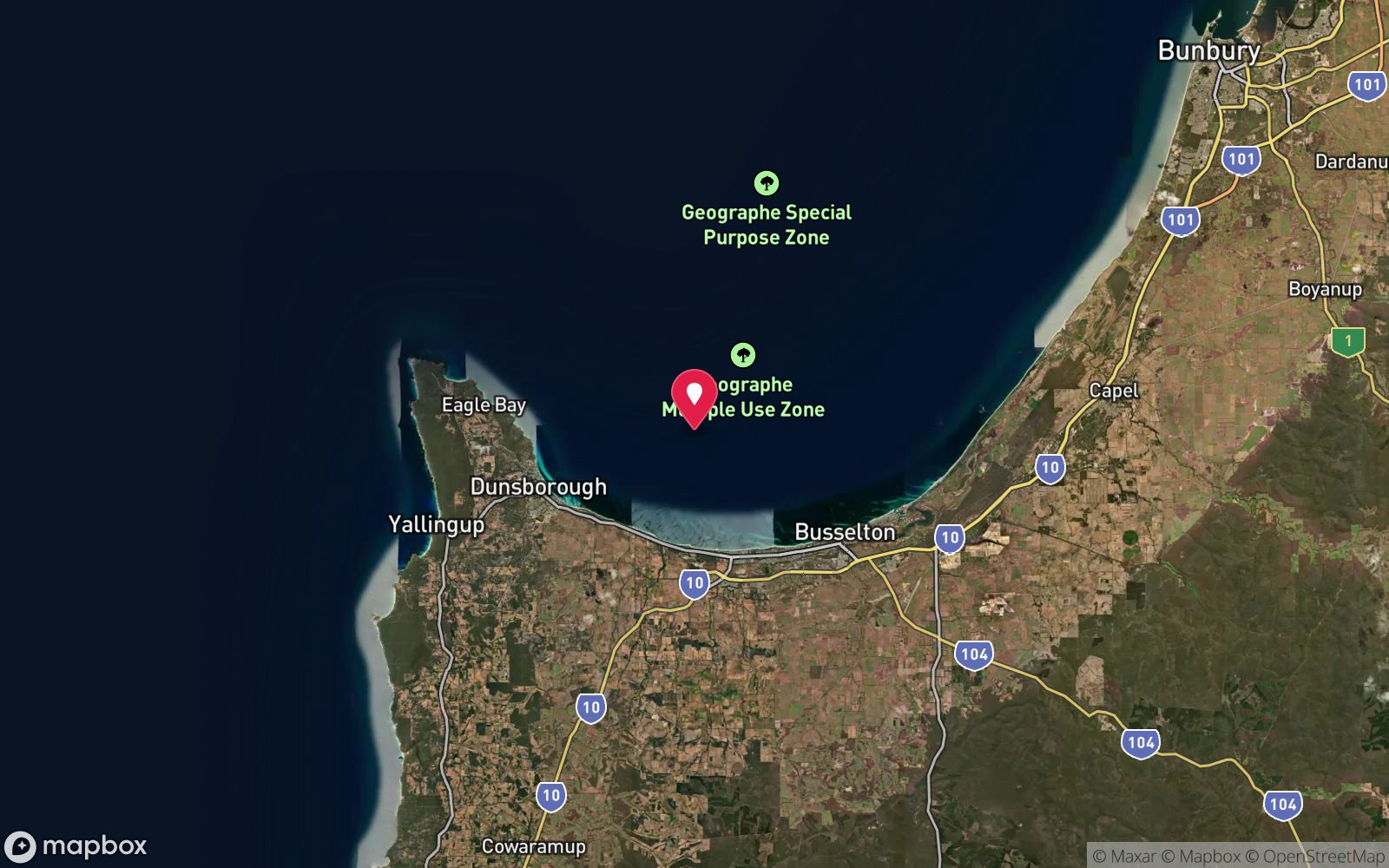
| Position | -33.56603, 115.16633 (GPS) |
| Permit | Ngari Capes Marine Park (DBCA) - check sanctuary/recreation zoning; no permit needed to dive |
| Nearest chamber | Fiona Stanley Hospital Hyperbaric Medicine Unit (Murdoch, Perth) |
| Emergency | 000 · DAN Asia-Pacific diving emergency 1800 088 200 |
Dunsborough Artificial Reef
Also known as Dunsborough fish-box reef
Six clusters of concrete fish boxes in 27 m that have become a fish magnet near the HMAS Swan.
Near Dunsborough · Geographe Bay & Busselton, Western Australia
- Depth
- 24–27 m
- Minimum level
- Advanced Open Water
- Access
- Boat (day trip)
- Boat ride
- ~15 min
- Water
- 20-23 °C
- Visibility
- 10-20 m
Dunsborough Artificial Reef24–27 m · Advanced Open Water
Dive factsDepths, conditions, location & safety
Season
Off-peak nowBest months: January, February, March, April, May, December.
Summer and autumn (December-May) with morning easterly winds
- Best months
- Now (November)
Dive facts
- Depth
- 24–27 m
- Typical depth
- 26 m
- Certification
- Advanced Open Water
- Difficulty
- Intermediate
- Depth tier
- Advanced Open Water (18–30 m)
- Access
- Boat (day trip)
- Offshore
- 5.5 km
- Dive centre needed
- Yes – boat access only
- Shore / independent
- No
- Boat ride
- ~15 min
- Current
- Mild
- Visibility
- 10-20 m
- Water temp (summer)
- 20-23 °C
- Water temp (winter)
- 16-18 °C
- Water
- Temperate
- Bottom time
- 25 min
- Dive traffic
- Rarely dived (private boat/club only)
- Night dive
- No
- Snorkel friendly
- No
Exposure suit
5 mm full wetsuit in summer and autumn; 7 mm or 5 mm with hood and vest in winter and spring
Location
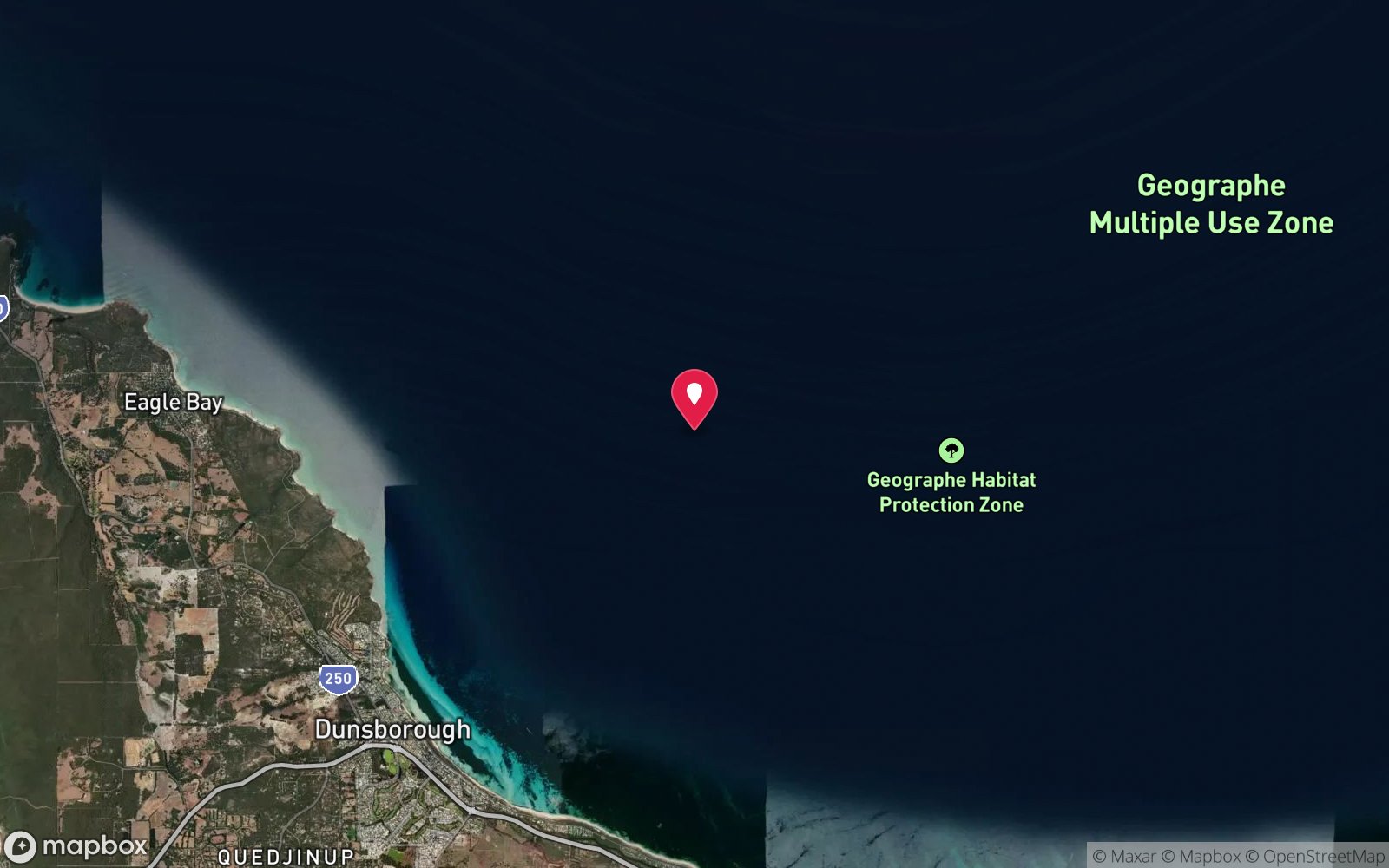
Geographe Bay (off Quindalup / Dunsborough) · South West WA - Dunsborough, Geographe Bay & Cape Naturaliste
-33.56603, 115.16633
Published GPS position.
Open in Google MapsPrimary source: madmackie.com.auMarine park & permits
Ngari Capes Marine Park (DBCA) - check sanctuary/recreation zoning; no permit needed to dive
Nearest recompression chamber
Fiona Stanley Hospital Hyperbaric Medicine Unit (Murdoch, Perth)
Diving emergency: call 000, then DAN AP 1800 088 200.
Trip planner
Build a trip around Dunsborough Artificial Reef →
A day-by-day plan for Geographe Bay & Busselton with this site locked in.
This guide is a planning aid. Conditions change daily — confirm with a local dive centre and dive within your training. Data & safety notes.
Dive profile
How this site rates
Scores are computed from the recorded data, not opinions. How?
At a glance
Dunsborough Artificial Reef is a artificial reef boat dive in Geographe Bay & Busselton, WA, 24–27 m, suited to Advanced Open Water divers, about 15 minutes by boat.
Rated intermediate because of depth beyond 18 m, an overhead environment.
Why dive here
- Six clusters of concrete fish boxes in 27 m that have become a fish magnet near the HMAS Swan.
- Rarely dived: expect to have the site to yourself, and plan your own logistics.
- Visibility often reaches 10-20 m.
About Dunsborough Artificial Reef
The Dunsborough Artificial Reef is the sister of the Bunbury reef, built for recreational fishers under the same program. Wikifishingspots and Recfishwest describe the two reefs as installed in Geographe Bay in 2013/14, each made from 30 purpose-built, 10-tonne concrete modules within 5 km of shore and roughly opposite boat ramps. Madmackie gives the Dunsborough reef's centre point as 33 33.962 S, 115 09.980 E in 27 m, 6.2 km north-east of the Old Dunsborough Town ramp and 5.7 km north-north-east of the Quindalup ramp, laid out as six clusters of fish boxes, and describes it as one of the first reefs deployed - a flagship for the program.
The hollow boxes attract pink snapper, dhufish, silver trevally, yellowtail kingfish and samson fish, which is why anglers use it, and they have become encrusted with sponges and weed. For divers, it is a deep, low-relief site that shows how quickly artificial structure becomes habitat. At 27 m, bottom time on air is limited and navigation between clusters needs a compass and good visibility.
It suits Advanced divers with their own boat looking for something different after the HMAS Swan, which lies nearby. The main hazards are fishing gear snagged in the modules and fishing boats overhead, so fly a dive flag and keep a knife or cutter handy. New demersal fishing rules for the West Coast Bioregion from December 2025 may change fishing pressure on the reef.
Geographe Bay faces north, so Cape Naturaliste blocks most of the prevailing south-westerly swell and sea breeze that close the ocean coast; that shelter and the warm Leeuwin Current make the Dunsborough shoreline one of the most reliably diveable stretches of the South West, and winter north-westerly storms are the main thing that shuts it down.
Getting there & entry
Six clusters of concrete fish-box modules on sand in 27 m about 6 km north-east of the Old Dunsborough boat ramp, deployed in 2013/14.
Launch at the Quindalup boat ramp (5.7 km to the reef, north-north-east) or the Old Dunsborough Town ramp (6.2 km north-east) and run out to the centre point. Locate the clusters on the sounder and anchor on sand clear of the modules. Boat ramps along Geographe Bay include Bunbury (Casuarina), Busselton, Port Geographe, Quindalup and Dunsborough; on the Capes coast the Canal Rocks, Gracetown and Hamelin Bay ramps are small and swell-exposed.
Check the forecast, carry a marine radio and log a trip plan with the local Marine Rescue group.
Entry: Back roll from private boat
Facilities: Quindalup and Dunsborough boat ramps; Swan Dive for fills.
Weather, swell & tides
Sheltered from south-westerly swell by Cape Naturaliste; exposed to north-westerly winds and winter storms. Morning easterlies in summer and autumn give the best conditions; the reef is heavily fished on calm weekends. General pattern in Geographe Bay: sheltered from south-westerly swell by Cape Naturaliste; summer mornings are calm before the afternoon sea breeze, while winter north-westerly fronts roll swell and chop into the bay and reduce visibility for several days.
Best season: Summer and autumn (December-May) with morning easterly winds
If it's blown out
Sheltered or shore sites within 25 km that often work when Dunsborough Artificial Reef doesn't.
- Meelup Beach · 8 km · Max 4 m
- Yallingup Lagoon · 15 km · Max 3 m
- Busselton Jetty Underwater Sculpture Park · 18 km · Max 8 m
- Busselton Jetty · 18 km · Max 9 m
How the dive is usually run
Anchor on sand beside a cluster, descend to 27 m, circuit the boxes looking inside for fish, then ascend the anchor line; bottom time is short on air at this depth. Agree a turn pressure before descending (half gas, or a third where current is likely), carry a DSMB, and make a 3-minute safety stop at 5 m.
Marine life
- Pink snapper
- dhufish
- silver trevally
- yellowtail kingfish
- samson fish
- bullseyes
- western king wrasse
- sponges
Linked species have their own page listing every site where they are recorded. All marine life →
Training required
Beyond 18 m an Advanced certification (which includes a deep dive to 30 m) is the accepted minimum. Anything past 25 m is a deep dive in practice.
At more than 25 m this counts as a deep dive: watch no-decompression limits and gas.
Courses that help here
- Enriched Air Nitrox – Longer no-decompression time at 25 m and deeper.
- Peak Performance Buoyancy – Silt and low visibility punish poor trim.
Depth tiers: 0–10 m easy · to 18 m Open Water · 18–30 m Advanced (25 m+ is a deep dive) · 30–40 m Deep specialty · 40 m+ technical. All courses
Hazards & warnings
Depth 27 m; fishing line and hooks in the modules; fishing boats overhead - fly a flag; low-relief site hard to relocate in poor visibility.
Dive centres that go here
No regular dive charter - a recreational fishing reef; private boats only. Nearest dive services: Swan Dive (Busselton/Port Geographe) for fills, hire, nitrox and charters; no dive shop in Margaret River or Augusta.
Operators recorded for Dunsborough Artificial Reef
Swan Dive
Named by sitesBusselton · Margaret River & Augusta · WA
Also operates from 310 Geographe Bay Rd, Quindalup (Dunsborough).
swandive.com.au · 0439 108 760
Dive Busselton Jetty
Named by sitesBusselton · Geographe Bay & Busselton · WA
Not operating dives or undersea walks for the 2025-26 season due to jetty redevelopment; hopes to resume Dec 2026.
divebusseltonjetty.com.au
Other dive centres in Geographe Bay & Busselton
Octopus Garden Dive Charters
Named by sitesBunbury · Geographe Bay & Busselton · WA
Operates from Bunbury (not Busselton); dive charters and dolphin cruises.
octopusgardendivecharters.com.au · 0417 794 008
Coastal Water Dive
Named by sitesEast Bunbury · Geographe Bay & Busselton · WA
Shop is in Bunbury, not Busselton.
coastalwaterdive.com.au · (08) 9721 7786
Map
7 pinned sites. Pins marked approximate on their pages show the general area only; not for navigation.
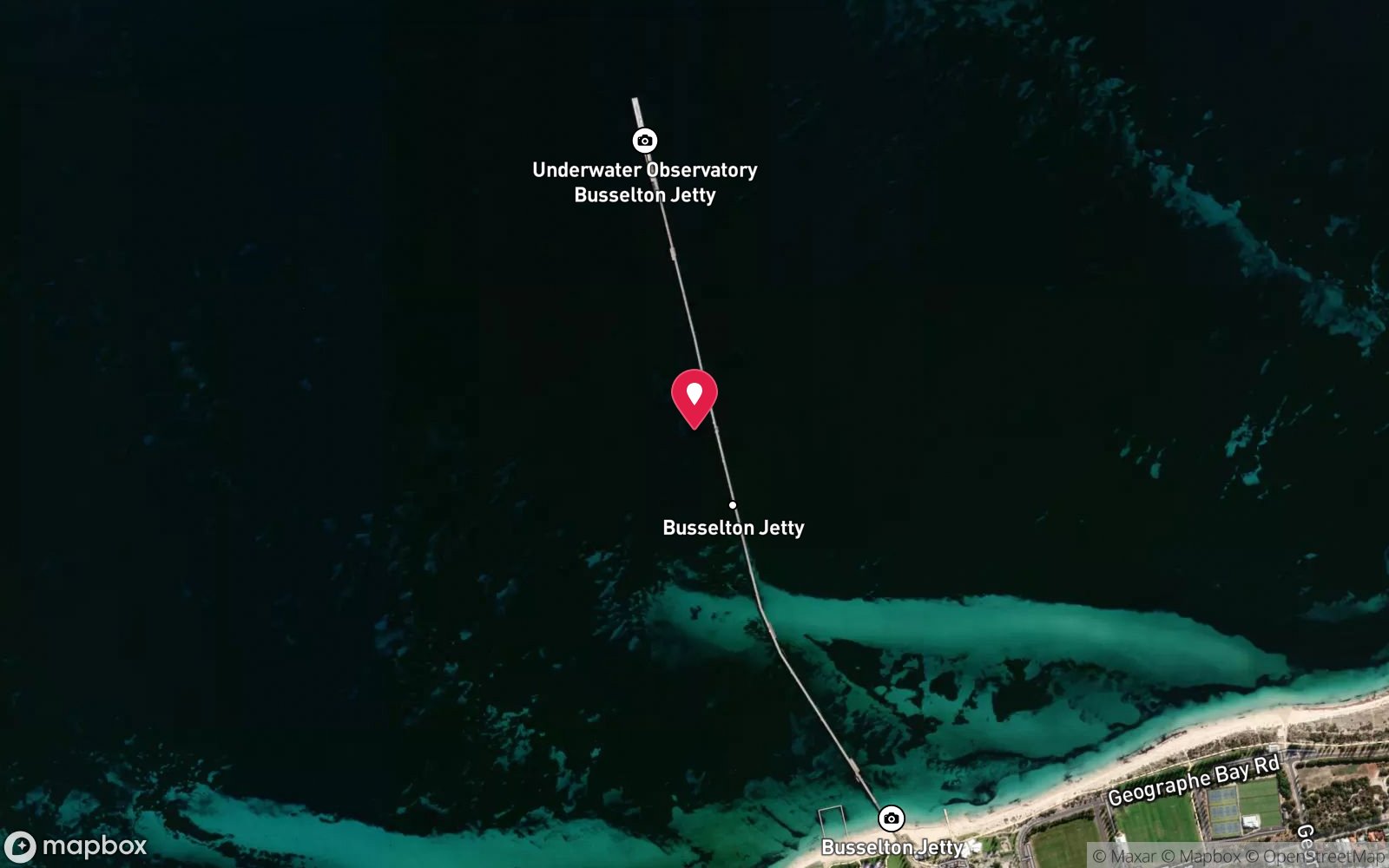
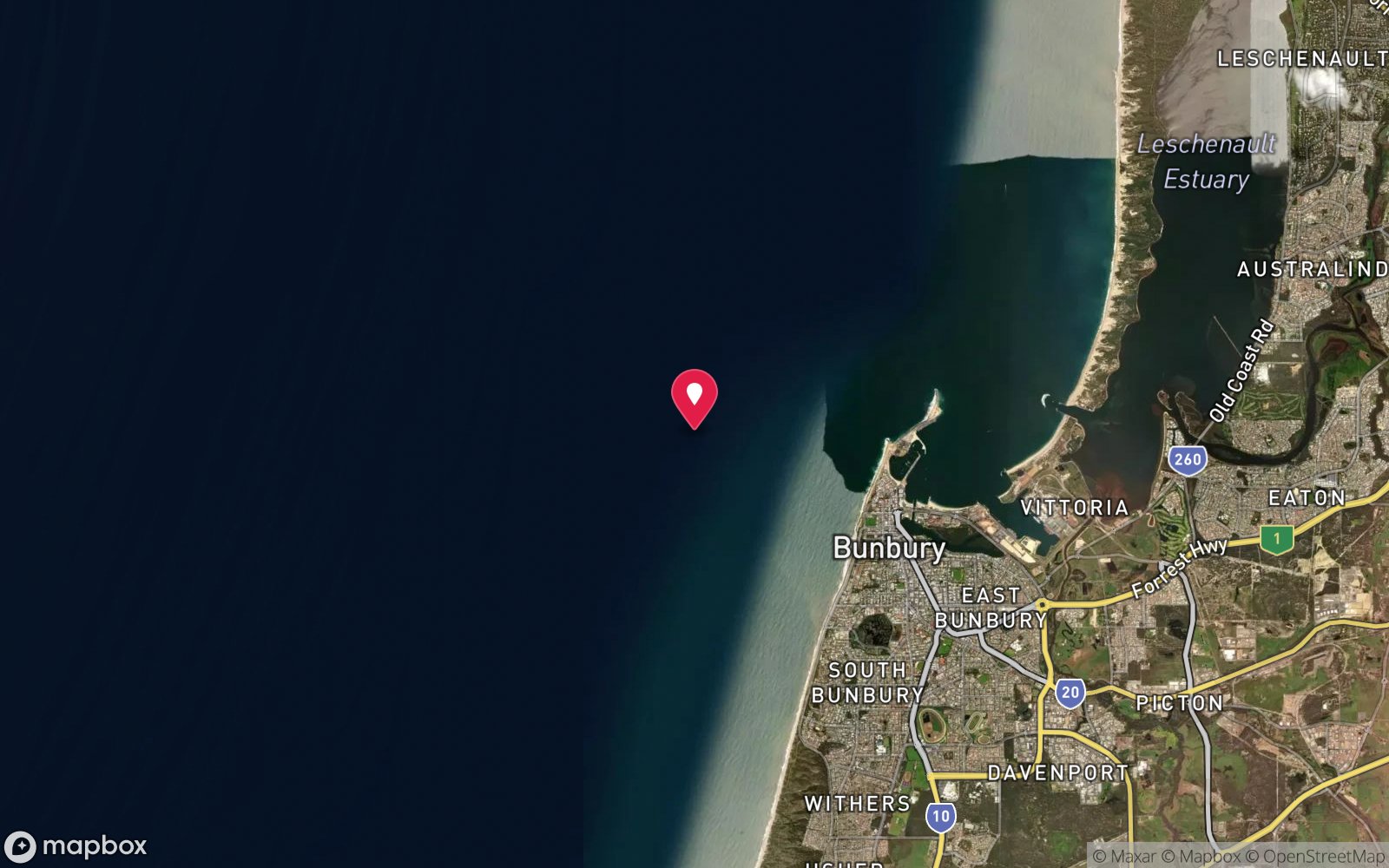
Satellite views
Dunsborough Artificial Reef: frequently asked questions
How deep is Dunsborough Artificial Reef?
Dunsborough Artificial Reef reaches a maximum depth of 27 m, with the shallowest part at about 24 m; most of the dive is spent around 26 m.
What certification do I need to dive Dunsborough Artificial Reef?
Advanced Open Water is the recommended minimum. At more than 25 m this counts as a deep dive: watch no-decompression limits and gas. Rated intermediate because of depth beyond 18 m, an overhead environment.
Can I shore dive Dunsborough Artificial Reef?
No, it is reached by boat (about 15 minutes). A dive centre is required: boat access only.
When is the best time to dive Dunsborough Artificial Reef?
Summer and autumn (December-May) with morning easterly winds.
What marine life will I see at Dunsborough Artificial Reef?
Regularly recorded: Pink snapper, dhufish, silver trevally, yellowtail kingfish, samson fish, bullseyes, western king wrasse, sponges.
What wetsuit do I need at Dunsborough Artificial Reef?
5 mm full wetsuit in summer and autumn; 7 mm or 5 mm with hood and vest in winter and spring.
How cold is the water at Dunsborough Artificial Reef?
Typically 20-23 °C in summer and 16-18 °C in winter.
What are the main hazards at Dunsborough Artificial Reef?
Depth 27 m; fishing line and hooks in the modules; fishing boats overhead - fly a flag; low-relief site hard to relocate in poor visibility. See the hazards section above for the full list.
Where is the nearest recompression chamber to Dunsborough Artificial Reef?
Fiona Stanley Hospital Hyperbaric Medicine Unit (Murdoch, Perth). In an emergency call 000, then DAN Asia-Pacific on 1800 088 200.
Diving in Geographe Bay & Busselton
Geographe Bay is sheltered from the Southern Ocean swell and has the 1.8 km Busselton Jetty with its underwater observatory, the HMAS Swan wreck off Dunsborough, the Four Mile Reef sponge gardens and easy beach dives at Meelup and Castle Rock. It is the South-West's most reliable diving.
Getting there: Two and a half hours south of Perth. Busselton Jetty is a walk-in dive (or a jetty-train ride); charters from Dunsborough run the Swan.
All Geographe Bay & Busselton dive sites and a suggested itinerary →
Sources
- madmackie.com.au/islands-and-reefs/artificial-reefs/dunsborough-artificial-reef
- wikifishingspots.com.au/bunbury-and-dunsborough-artificial-reefs-western-australia
Data confidence: Medium. Last updated September 2026. Know this site better? How to send a correction