Dive slate · divesites.com.au · printed 8 Nov 2026
Diamond Island (Bicheno)
Tasmania East Coast, Tasmania · near Bicheno
| Depth | 5–15 m |
|---|---|
| Minimum level | Open Water |
| Difficulty | Intermediate |
| Access | Boat (day trip) |
| Entry | Back roll or giant stride from a small boat (live-boat drop and pick-up is the local norm) |
| Current | Moderate |
| Visibility | 8-15 m |
| Water | summer 15-18 °C, winter 11-13 °C |
| Suit | 7 mm wetsuit with hood, gloves and boots (or semi-dry); drysuit common, especially May-October |
| Best season | Calm days year-round; winter for visibility |
| Bottom time | 45 min |
| Position | -41.85650, 148.30650 (approximate) |
| Permit | Diamond Island is a nature reserve (land). No marine permit required. |
| Nearest chamber | Royal Hobart Hospital Hyperbaric Medicine Unit (Hobart) - the only chamber in Tasmania; Launceston has none. DAN emergency hotline 1800 088 200 |
| Emergency | 000 · DAN Asia-Pacific diving emergency 1800 088 200 |
Diamond Island (Bicheno)
Also known as Diamond Island
A small island reef off Redbill Beach with large banded morwong and a former kelp forest.
Near Bicheno · Tasmania East Coast, Tasmania
- Depth
- 5–15 m
- Minimum level
- Open Water
- Access
- Boat (day trip)
- Boat ride
- ~8 min
- Water
- 15-18 °C
- Visibility
- 8-15 m
Diamond Island (Bicheno)5–15 m · Open Water
Dive factsDepths, conditions, location & safety
Season
In season nowBest months: year-round.
Dive facts
- Depth
- 5–15 m
- Typical depth
- 12 m
- Certification
- Open Water
- Difficulty
- Intermediate
- Depth tier
- Open Water (10–18 m)
- Access
- Boat (day trip)
- Offshore
- 0.3 km
- Dive centre needed
- Recommended
- Shore / independent
- No
- Boat ride
- ~8 min
- Current
- Moderate
- Visibility
- 8-15 m
- Water temp (summer)
- 15-18 °C
- Water temp (winter)
- 11-13 °C
- Water
- Cold Temperate
- Bottom time
- 45 min
- Dive traffic
- Rarely dived (private boat/club only)
- Night dive
- No
- Snorkel friendly
- Partial
Exposure suit
7 mm wetsuit with hood, gloves and boots (or semi-dry); drysuit common, especially May-October
Location
Bicheno - Diamond Island & Redbill
-41.85650, 148.30650
Approximate position — not for navigation.
Open in Google MapsPrimary source: marinelife.org.auMarine park & permits
Diamond Island is a nature reserve (land). No marine permit required.
Nearest recompression chamber
Royal Hobart Hospital Hyperbaric Medicine Unit (Hobart) - the only chamber in Tasmania; Launceston has none. DAN emergency hotline 1800 088 200
Diving emergency: call 000, then DAN AP 1800 088 200.
Trip planner
Build a trip around Diamond Island (Bicheno) →
A day-by-day plan for Tasmania East Coast with this site locked in.
This guide is a planning aid. Conditions change daily — confirm with a local dive centre and dive within your training. Data & safety notes.
Dive profile
How this site rates
Scores are computed from the recorded data, not opinions. How?
At a glance
Diamond Island (Bicheno) is a island boat dive in Tasmania East Coast, TAS, 5–15 m, suited to Open Water divers, moderate current, about 8 minutes by boat.
Rated intermediate because of cold water.
Why dive here
- A small island reef off Redbill Beach with large banded morwong and a former kelp forest.
- Rarely dived: expect to have the site to yourself, and plan your own logistics.
Conditions to avoid
- Afternoon north-easterlies
- Outgoing tide or run-off after rain (poor visibility)
About Diamond Island (Bicheno)
Diamond Island sits just off Redbill Beach at the northern end of Bicheno and is joined to the beach by a sandbar that the Marine Life Network guide warns is dangerous to cross. The guide rates the diving 5 out of 10: reef and small boulders at 10-15 m, with many large banded morwong, and a kelp forest on the north-east side.
That kelp forest is a reminder of change on the east coast. The guide notes that the kelp disappeared in the late 1980s during an El Nino event and was expected to return; since then, warming water and urchin grazing have reduced giant kelp across eastern Tasmania, so divers should not expect the dense forest described in older accounts. The small boulders and reef still support banded morwong, wrasse, leatherjackets and crayfish, and the island's little penguins may be seen in the water around dusk.
Diamond Island is not a destination dive, but it is a reasonable alternative when the Governor Island sites are unsuitable, and a way to see a different part of the Bicheno coast. It is dived mainly by locals with their own boats.
Divers should be aware that the island is a nature reserve and landing may be restricted to protect the penguins and other seabirds. Because documentation is limited and the reef condition has changed since the published description, treat the details as a guide. A depth sounder helps locate the best boulder patches on the north-east side, and the skipper should keep watch for rips near the sandbar while divers are down.
Getting there & entry
A small island north of Bicheno connected to Redbill Beach by a sandbar, with reef, small boulders and (historically) a kelp forest on its north-east side.
Launch at The Gulch ramp in Bicheno (on the Tasman Highway, 2 hr from Launceston) and run north along the coast for about 2 km, roughly 5-10 minutes, to Diamond Island off Redbill Beach. The island is also visible from the Redbill Beach car park at the northern end of town, but walking or swimming out across the sandbar is dangerous because of rips and tidal flow, so the site should be treated as a boat dive. Diamond Island is a nature reserve with a little penguin colony.
Entry: Back roll or giant stride from a small boat (live-boat drop and pick-up is the local norm)
Weather, swell & tides
Diamond Island is exposed to north-easterly and easterly swell, which also creates strong rips around the sandbar. It is diveable in westerly winds and small swell, and the north-east side gives shelter only from southerlies. Visibility drops after rain and southerly storms.
Avoid it on a strong NE sea breeze in summer afternoons; mornings are usually calmer.
Best season: Calm days year-round; winter for visibility
If it's blown out
Sheltered or shore sites within 25 km that often work when Diamond Island (Bicheno) doesn't.
- Fish Rock (Bicheno) · 2 km · Max 15 m
- Governor Island Wave Deflection Wall · 2 km · Max 6 m
- Waubs Bay · 2 km · Max 16 m
- The Boot (Freycinet) · 18 km · Max 12 m
How the dive is usually run
Drop on the north-east side of the island at 8-10 m and explore the small boulders and reef towards 15 m, then return along the island's edge to shallower water for a safety stop. Stay away from the sandbar channel.
Marine life
- Banded morwong
- wrasse
- leatherjackets
- crayfish
- small boulder reef
- remnant kelp; little penguins around the island
Linked species have their own page listing every site where they are recorded. All marine life →
Training required
Within the 18 m limit of an entry-level certification.
Courses that help here
- Drysuit Diver – Cold water; locals dive dry for much of the year.
Depth tiers: 0–10 m easy · to 18 m Open Water · 18–30 m Advanced (25 m+ is a deep dive) · 30–40 m Deep specialty · 40 m+ technical. All courses
Hazards & warnings
Rips and tidal flow across the sandbar - do not attempt to cross; exposed to NE swell; nature reserve - do not land or disturb penguins.
Dive centres that go here
No regular operator. Dived only from private or club boats launched at The Gulch in Bicheno (e.g. Tas Uni Dive Club and Combined Clubs Weekend boats); the former Bicheno Dive Centre is reported closed.
Operators recorded for Diamond Island (Bicheno)
Go Dive Tasmania
ListedHobart · Hobart & Derwent · TAS
A Tasmanian business providing training, equipment and service support for cold-water diving.
godivetas.com.au · (03) 6231 9749
Tasmanian Divers North
ListedLaunceston · Tasmania North & North-West · TAS
A northern Tasmanian operation serving the Bass Strait coastline and local diving community.
tasdivers.com.au · (03) 6229 1020
Bicheno Dive Centre
ListedBicheno · Tasmania East Coast · TAS
A Bicheno operation servicing the Governor Island Marine Reserve and east coast diving.
bichenodive.com.au · (03) 6375 1138
Tas Uni Dive Club
Named by sitesMount Nelson · Tasmania East Coast · TAS
University dive club, not a shop; gear hire Thursdays 6-6:30pm.
tudc.org.au
Other dive centres in Tasmania East Coast
Eaglehawk Dive Centre
ProfiledEaglehawk Neck · Tasman Peninsula · TAS
The principal operation at Eaglehawk Neck, servicing the Tasman Peninsula's sea caves, walls and deeper wrecks.
eaglehawkdive.com.au · 0417 013 518
Tasmanian Scuba Diving Club
Named by sitesHobart · Tasmania East Coast · TAS
Club, not a shop; postal address only.
tsdc.org.au
Map
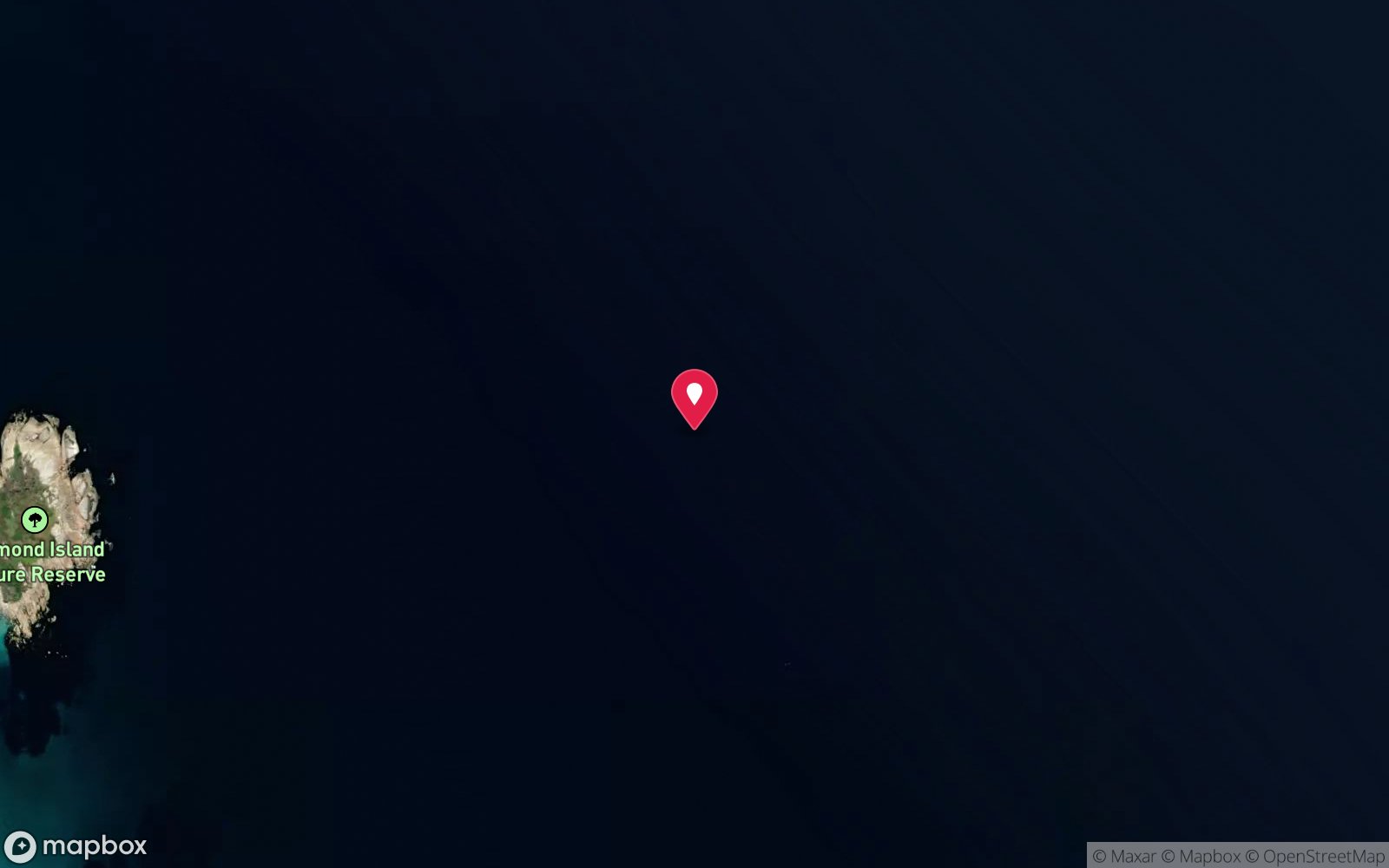
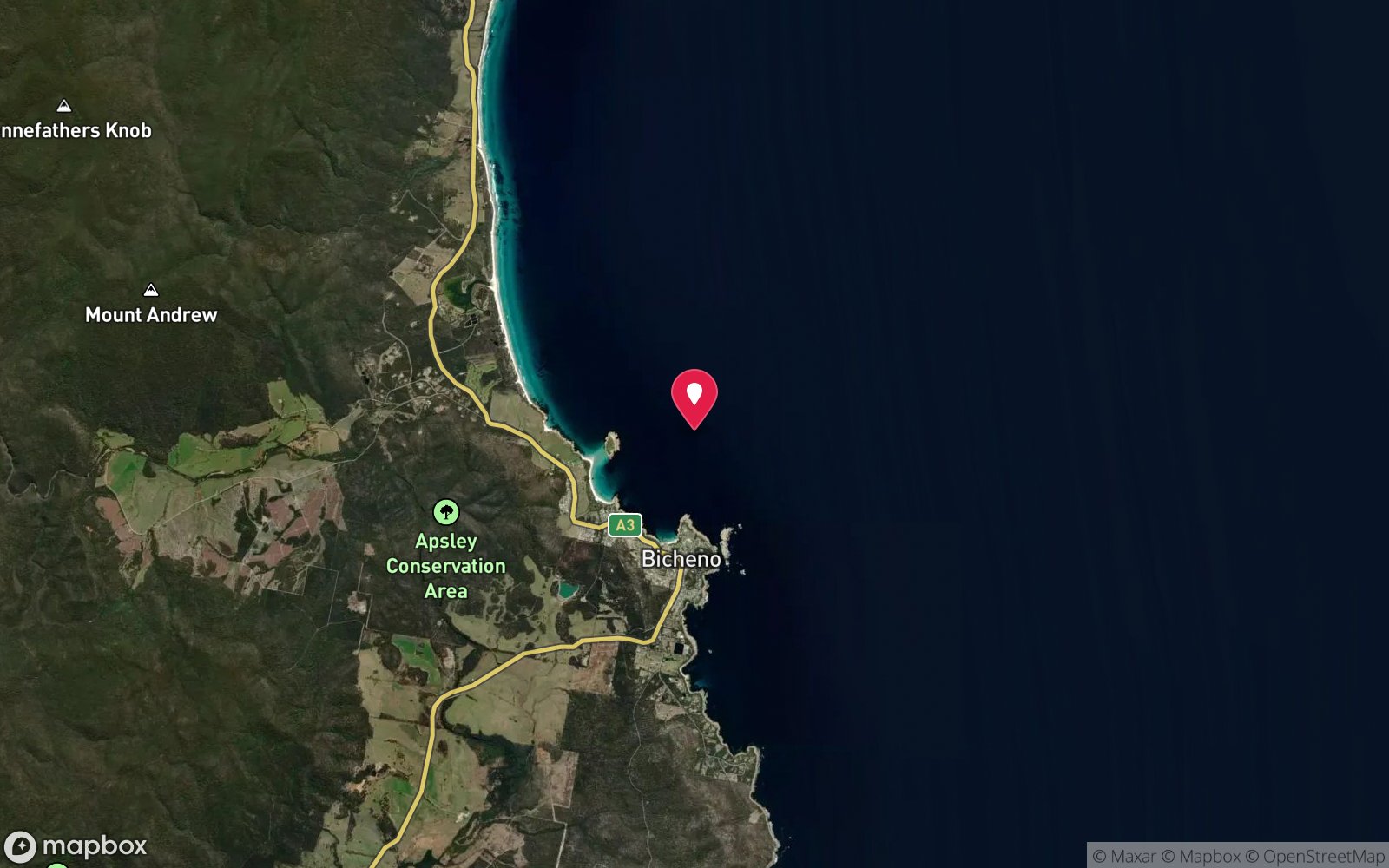
7 pinned sites. Pins marked approximate on their pages show the general area only; not for navigation.
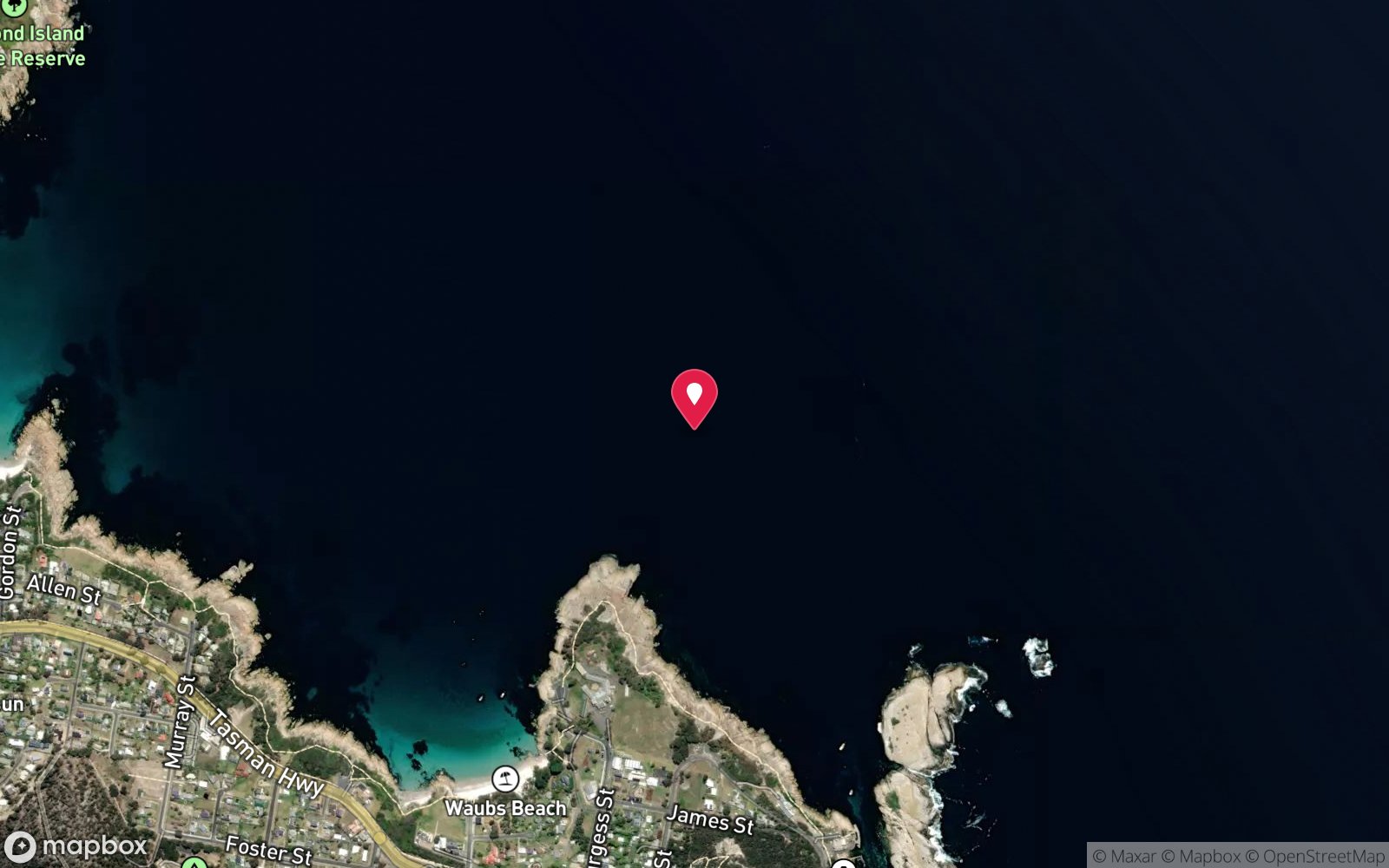
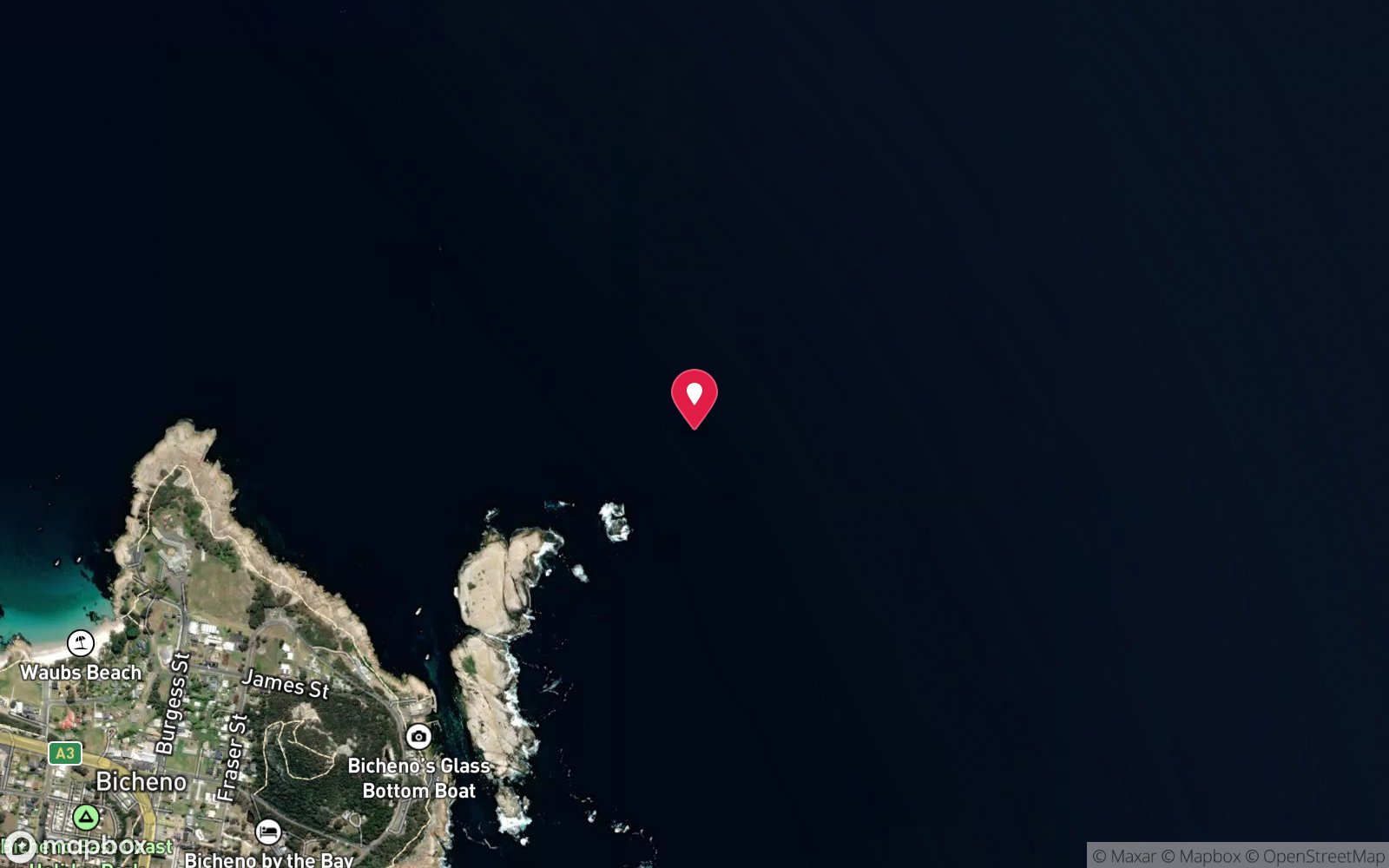
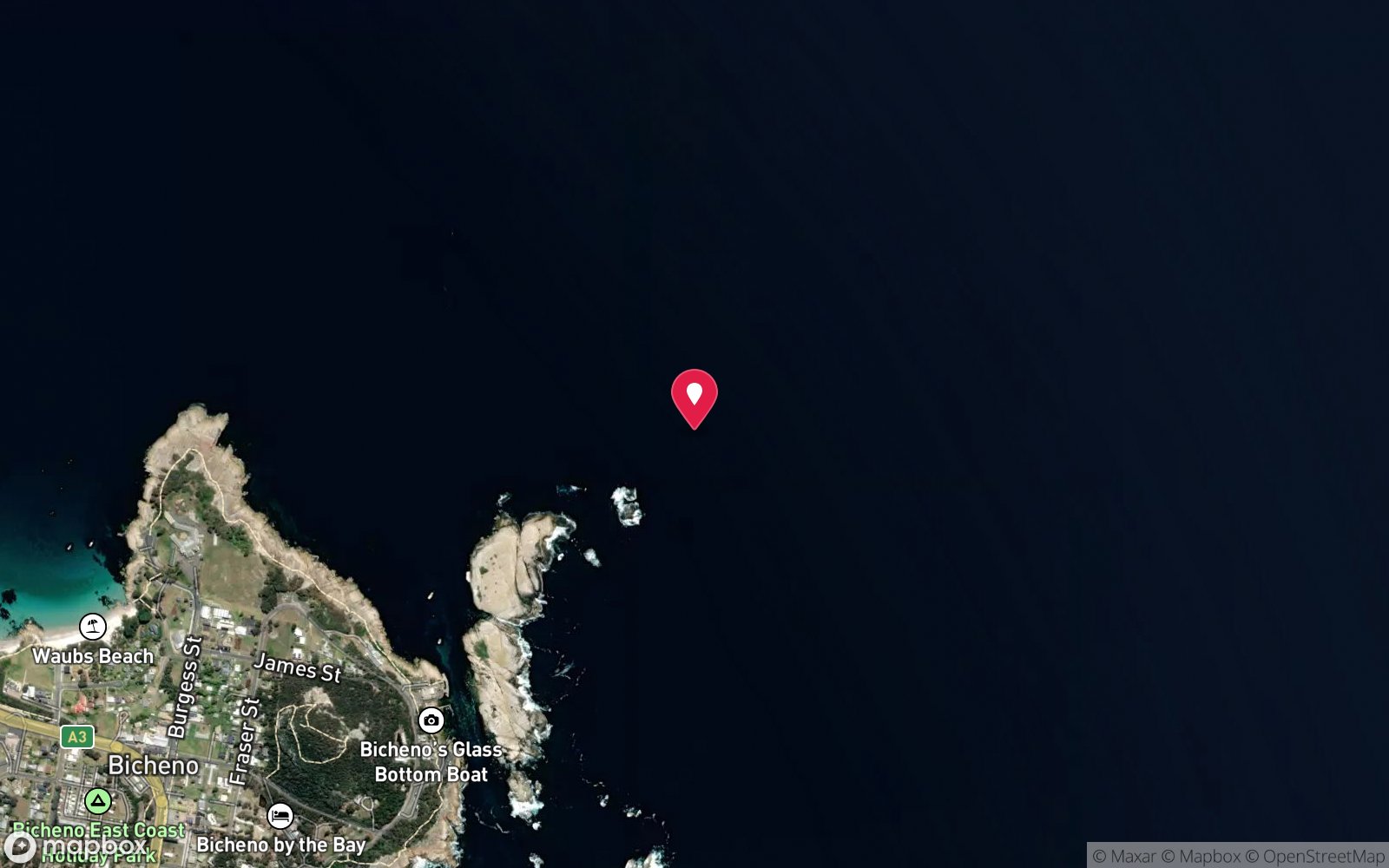
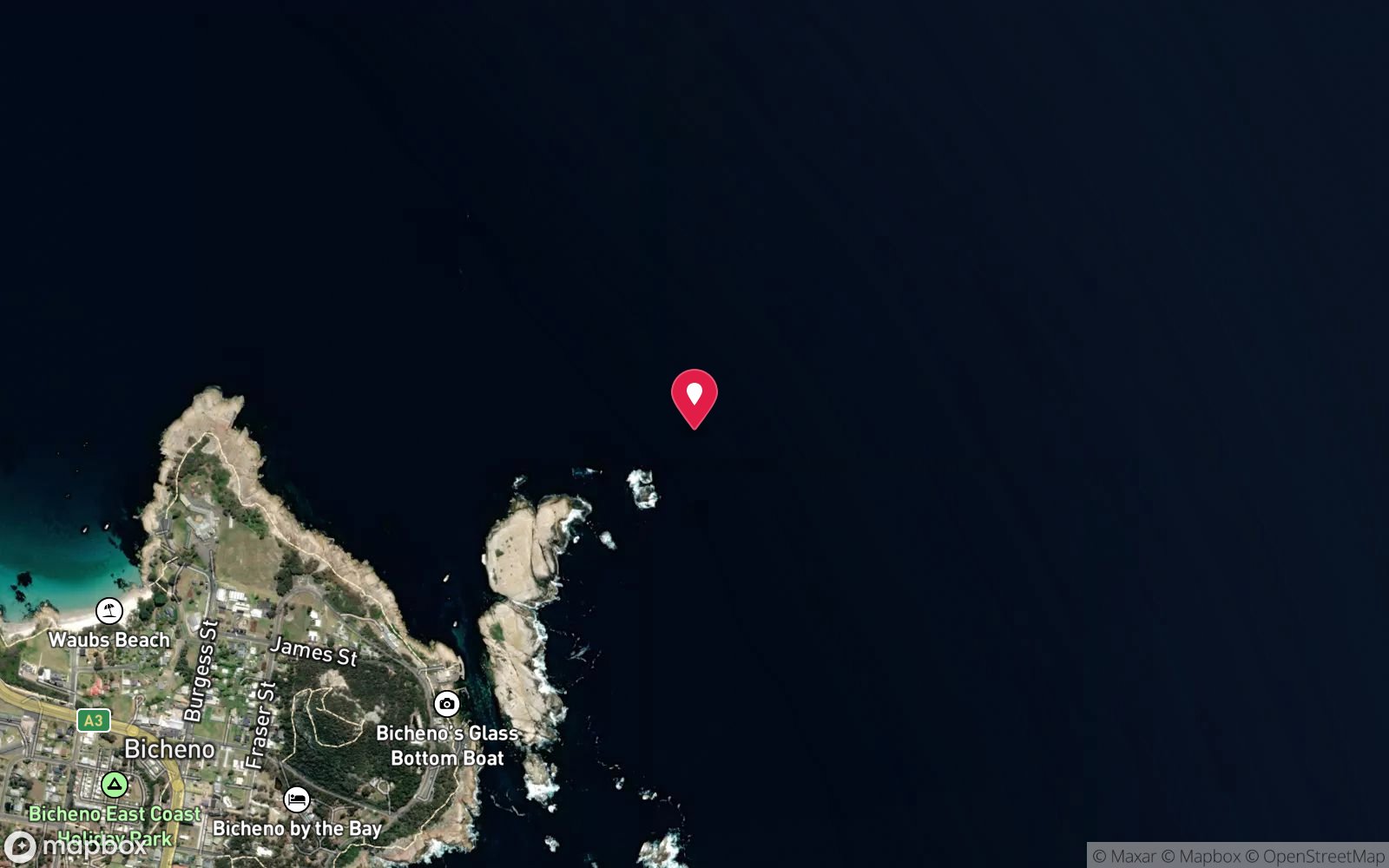
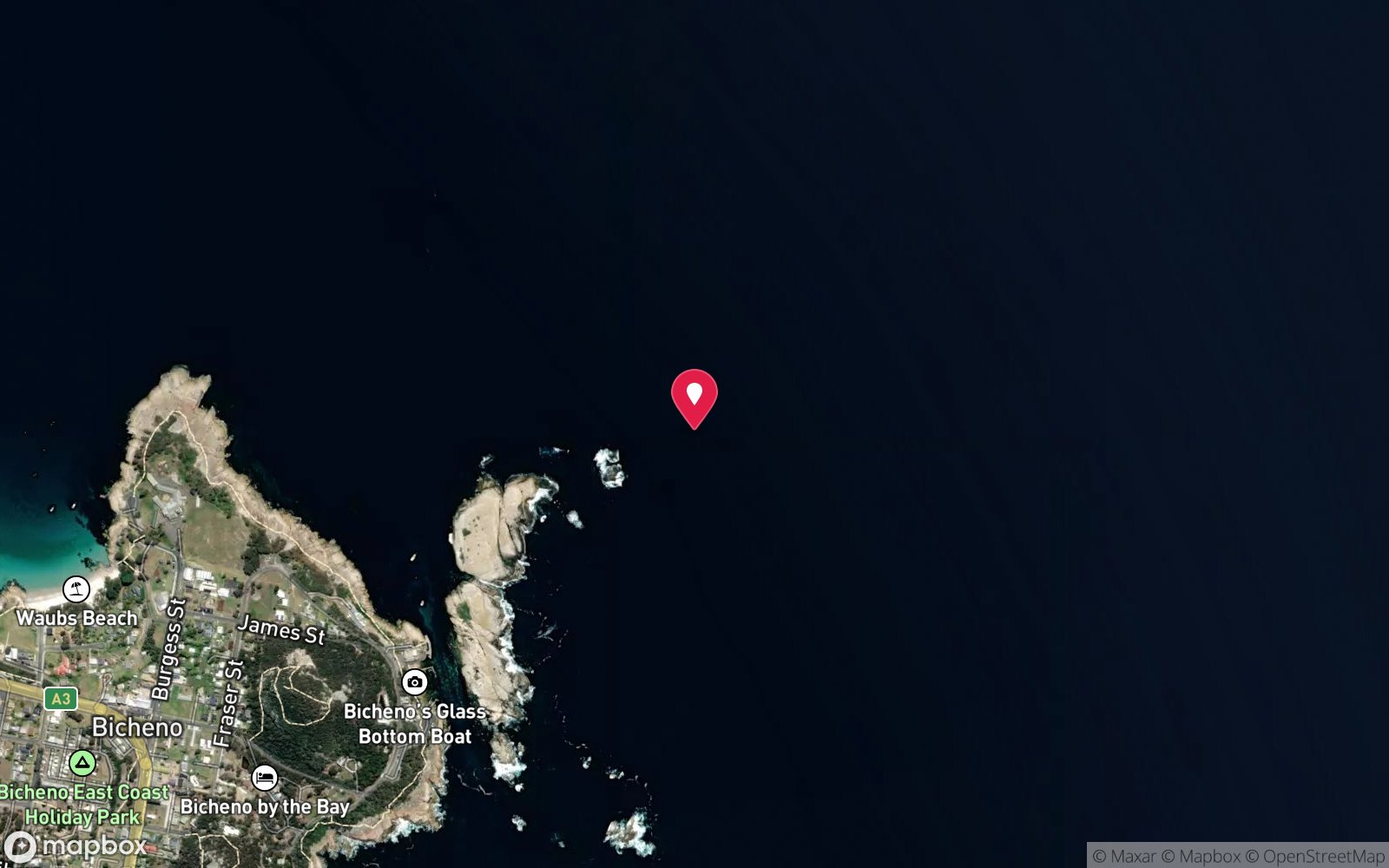
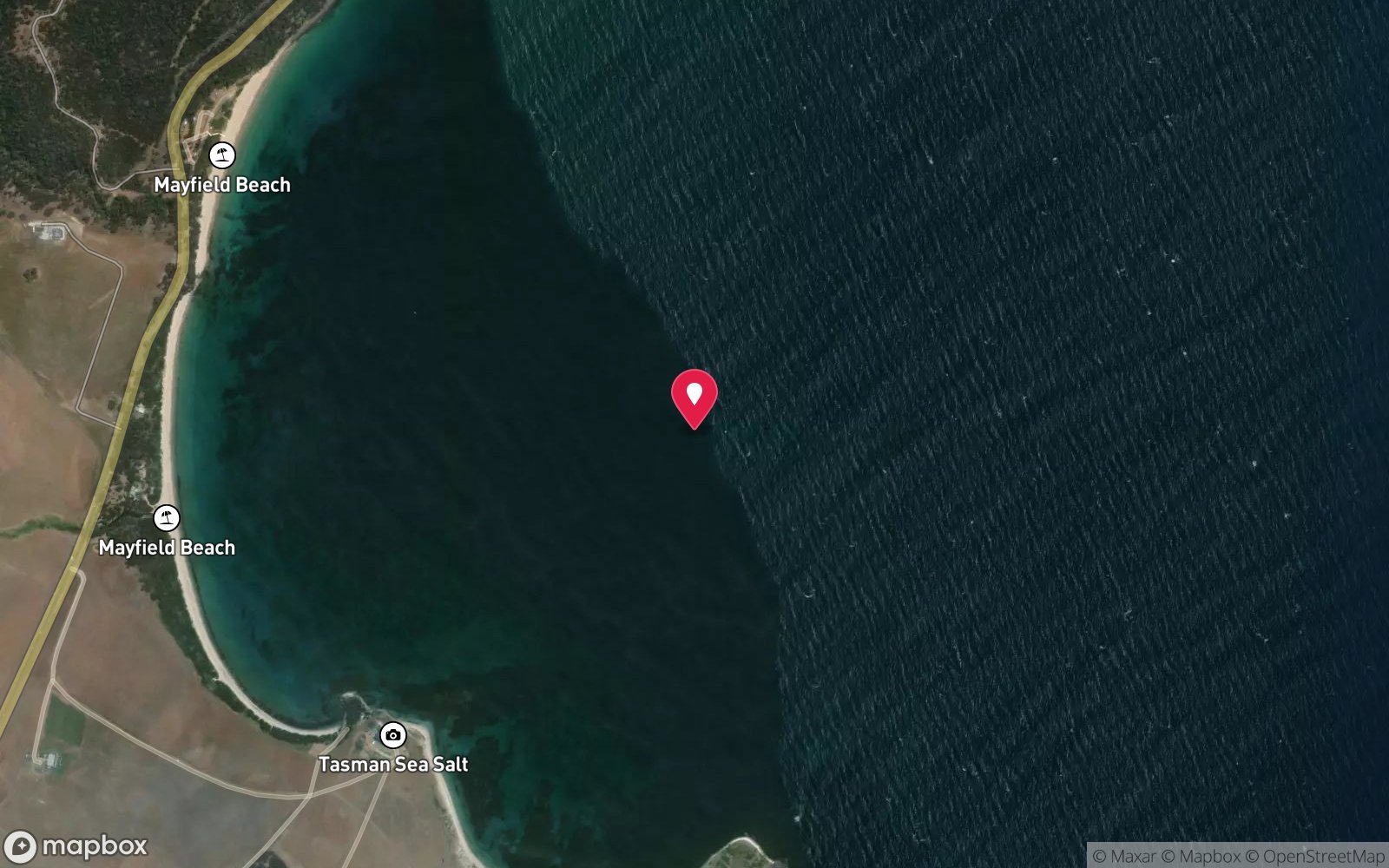
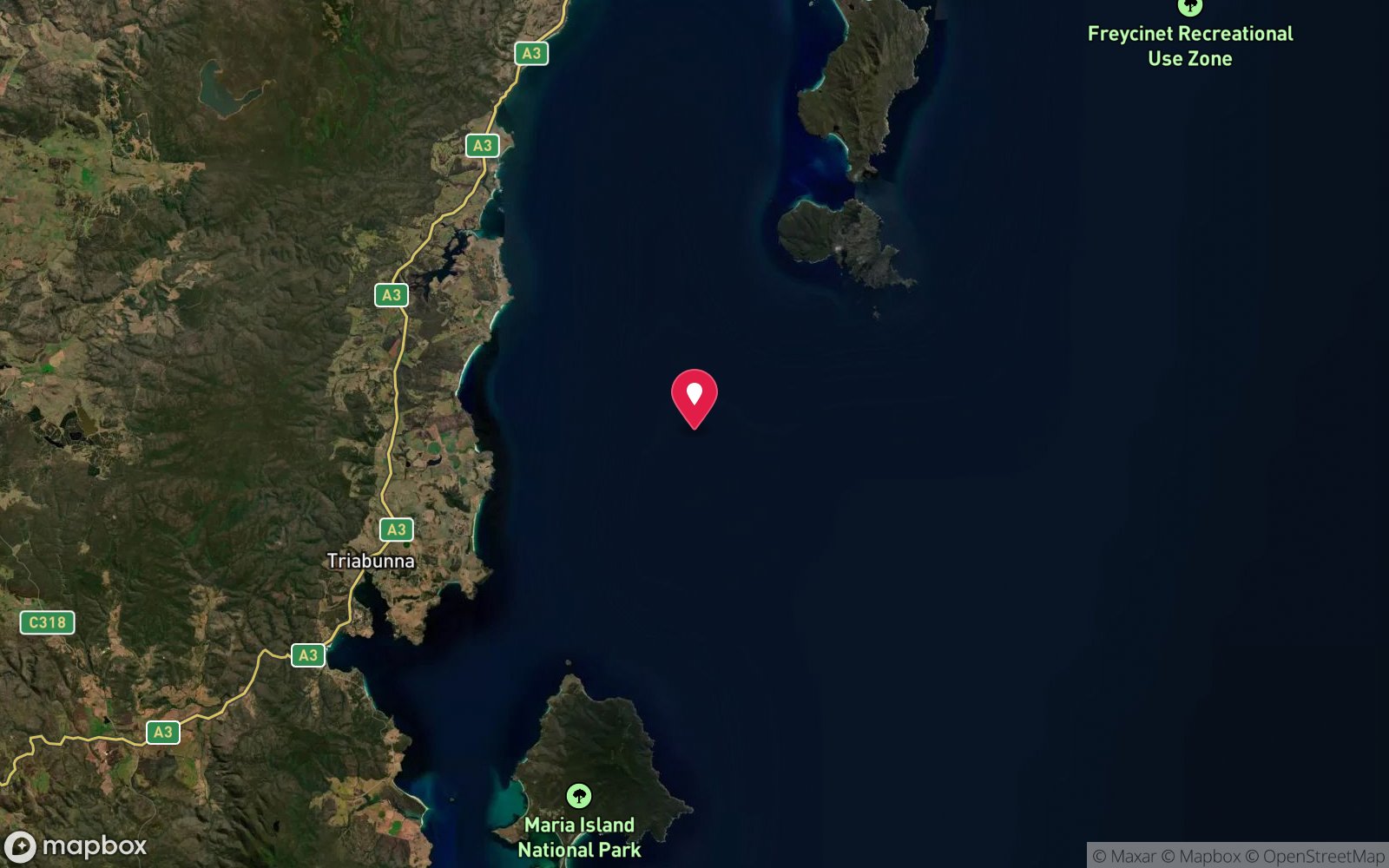
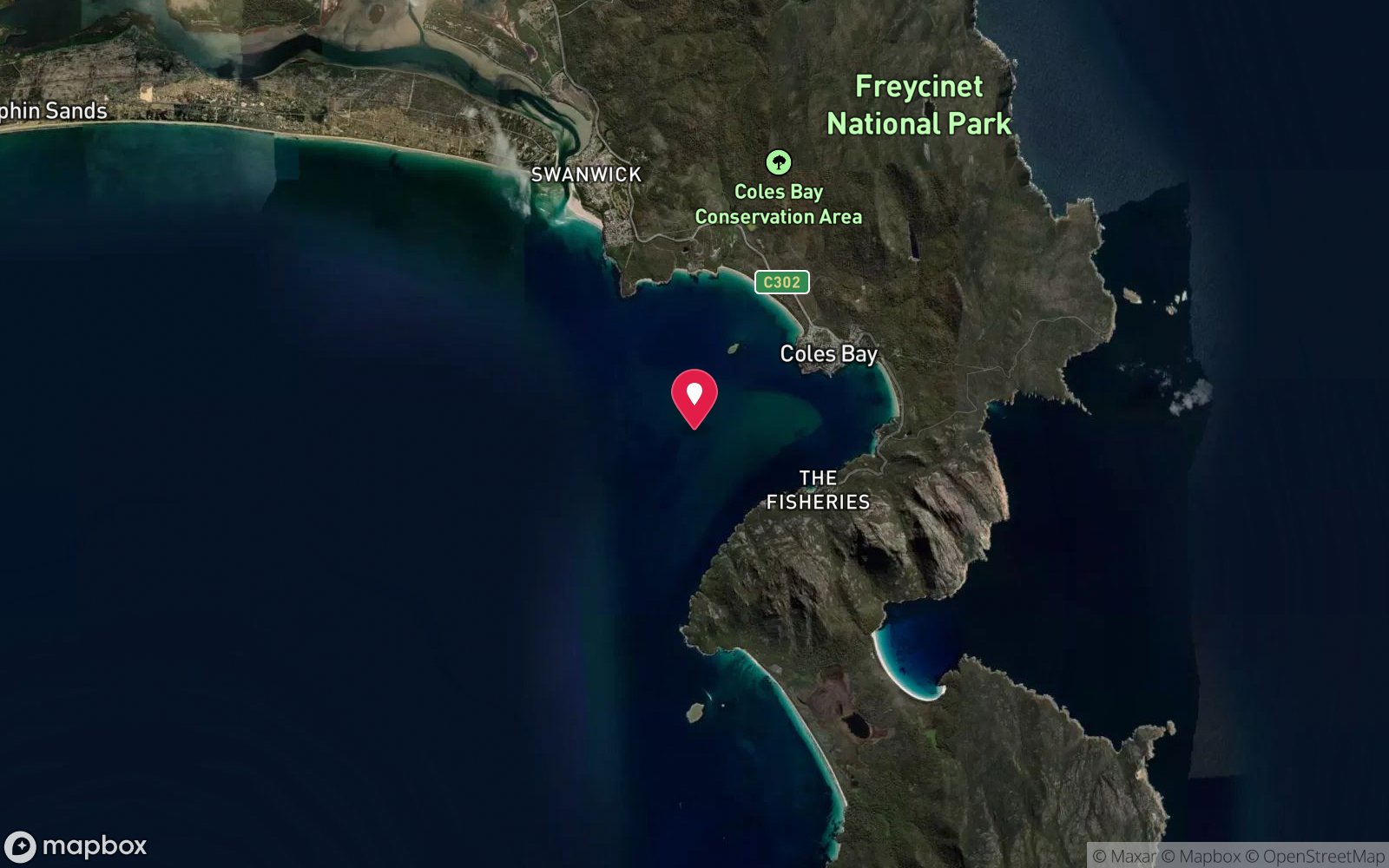
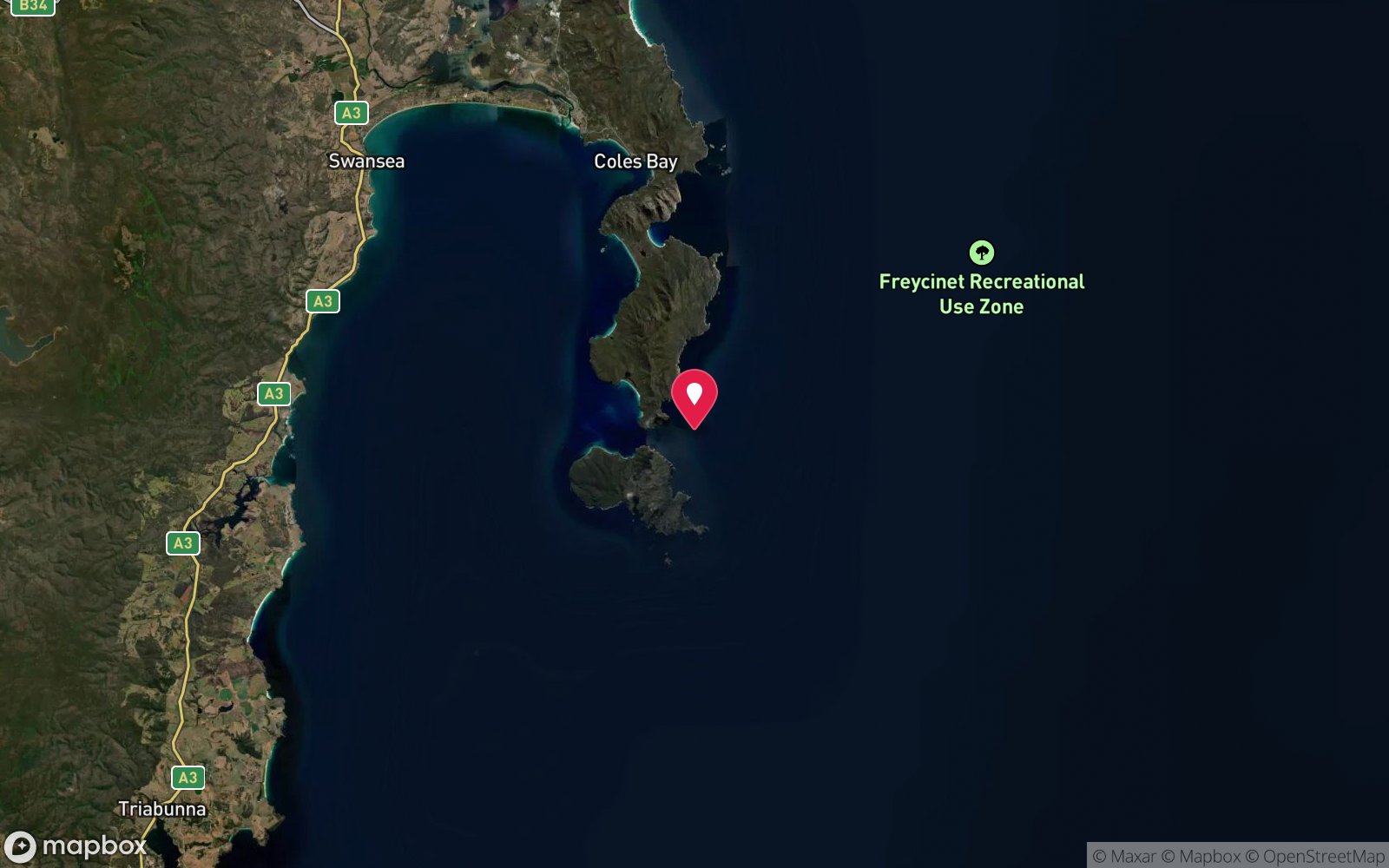
Satellite views
Diamond Island (Bicheno): frequently asked questions
How deep is Diamond Island (Bicheno)?
Diamond Island (Bicheno) reaches a maximum depth of 15 m, with the shallowest part at about 5 m; most of the dive is spent around 12 m.
What certification do I need to dive Diamond Island (Bicheno)?
Open Water is the recommended minimum. Rated intermediate because of cold water.
Can I shore dive Diamond Island (Bicheno)?
No, it is reached by boat (about 8 minutes).
When is the best time to dive Diamond Island (Bicheno)?
Calm days year-round; winter for visibility.
What marine life will I see at Diamond Island (Bicheno)?
Regularly recorded: Banded morwong, wrasse, leatherjackets, crayfish, small boulder reef, remnant kelp; little penguins around the island.
What wetsuit do I need at Diamond Island (Bicheno)?
7 mm wetsuit with hood, gloves and boots (or semi-dry); drysuit common, especially May-October.
How cold is the water at Diamond Island (Bicheno)?
Typically 15-18 °C in summer and 11-13 °C in winter.
What are the main hazards at Diamond Island (Bicheno)?
Rips and tidal flow across the sandbar - do not attempt to cross; exposed to NE swell; nature reserve - do not land or disturb penguins. See the hazards section above for the full list.
Where is the nearest recompression chamber to Diamond Island (Bicheno)?
Royal Hobart Hospital Hyperbaric Medicine Unit (Hobart) - the only chamber in Tasmania; Launceston has none. DAN emergency hotline 1800 088 200. In an emergency call 000, then DAN Asia-Pacific on 1800 088 200.
Diving in Tasmania East Coast
Bicheno is Tasmania's dive capital. Governor Island Marine Reserve, a few hundred metres offshore, has more than 20 sites in granite: the Castle, Magic Garden, the Golden Bommies, the Canyon and the Wave Deflection Wall, all covered in sponges, sea whips, jewel anemones and butterfly perch. Further afield, the Bay of Fires, Wineglass Bay and Maria Island add wrecks, kelp and seals.
Getting there: Two and a half hours from Hobart or Launceston. A dive operator in Bicheno runs daily boat dives in season; the Gulch and Waubs Bay are shore dives.
All Tasmania East Coast dive sites and a suggested itinerary →
Sources
Data confidence: Low · Being verified: Coordinates approximate; current kelp status unknown.. Last updated September 2026. Know this site better? How to send a correction