Dive slate · divesites.com.au · printed 8 Nov 2026
Eddy Reef
Mission Beach & Cassowary Coast, Queensland · near Mission Beach
| Depth | 10–25 m |
|---|---|
| Minimum level | Advanced Open Water |
| Difficulty | Intermediate |
| Access | Boat (day trip) |
| Entry | Giant stride or back-roll from the dive deck; descend the mooring line or reef slope |
| Current | Moderate |
| Visibility | 15-25 m |
| Water | summer 27-30 °C, winter 23-25 °C |
| Suit | 3 mm full wetsuit or shorty in summer (27-30 °C); 3-5 mm full wetsuit in winter (23-25 °C); full-length lycra or stinger suit strongly advised November-May and supplied free by most operators |
| Best season | Year-round. June-November gives the most reliable visibility and no box-jellyfish season, though the south-east trades can blow 20-25 knots in winter; September-December usually has the calmest seas; December-April is the warm, wet stinger and cyclone season |
| Bottom time | 45 min |
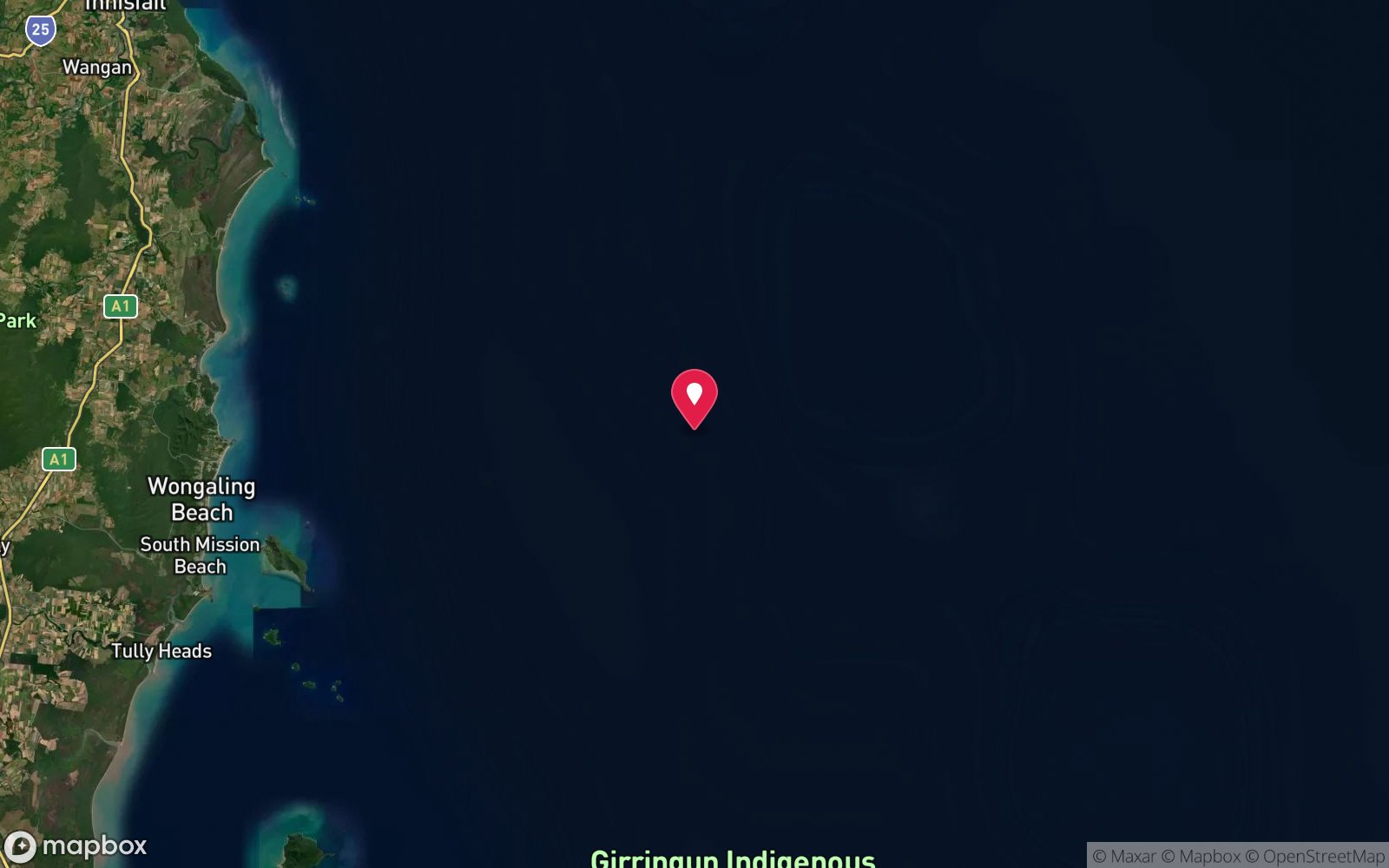
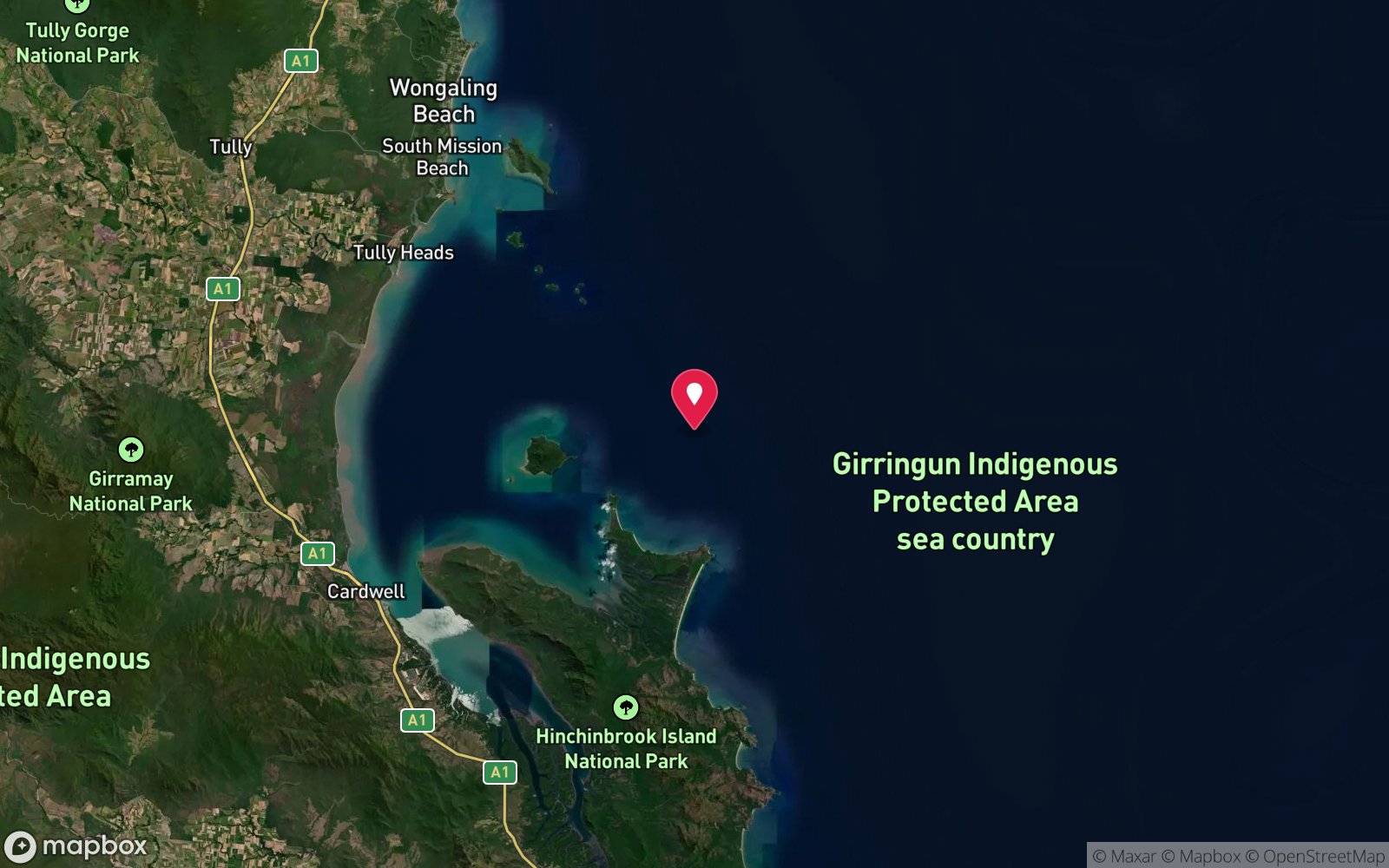
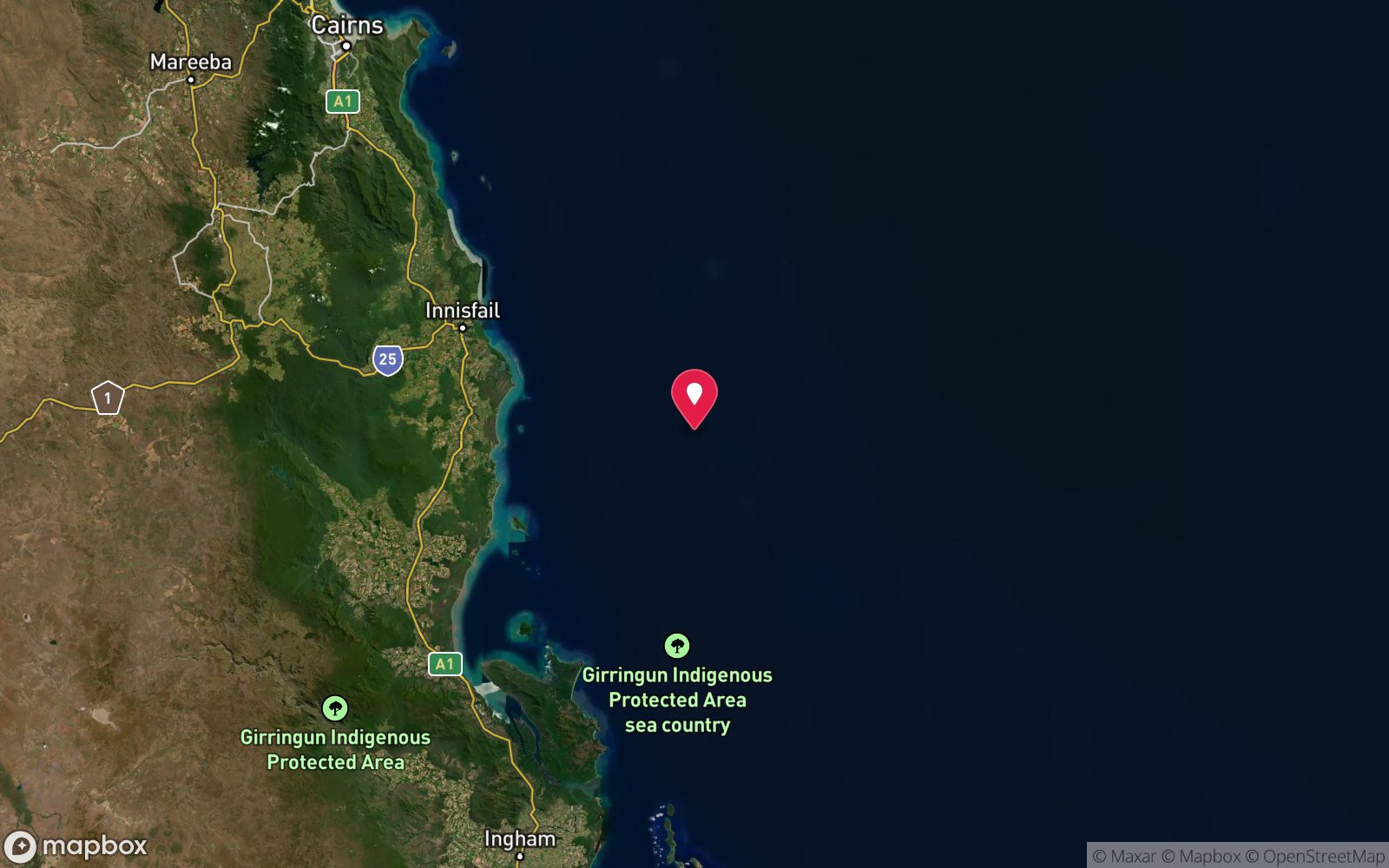
| Position | -17.95000, 146.40000 (approximate) |
| Permit | Great Barrier Reef Marine Park – Marine National Park (Green) Zone; operators hold GBRMPA permits |
| Nearest chamber | Townsville University Hospital Hyperbaric Medicine Unit (Townsville) – Cairns Hospital has no recompression chamber; divers are evacuated by RFDS/air ambulance |
| Emergency | 000 · DAN Asia-Pacific diving emergency 1800 088 200 |
Eddy Reef
Eddy currents feed dense coral and bring Napoleon wrasse, eagle rays and barracuda to terraced walls and swim-throughs.
Near Mission Beach · Mission Beach & Cassowary Coast, Queensland
- Depth
- 10–25 m
- Minimum level
- Advanced Open Water
- Access
- Boat (day trip)
- Boat ride
- ~80 min
- Water
- 27-30 °C
- Visibility
- 15-25 m
Eddy Reef10–25 m · Advanced Open Water
Dive factsDepths, conditions, location & safety
Season
In season nowBest months: January, February, March, April, June, July, August, September, October, November, December.
Year-round. June-November gives the most reliable visibility and no box-jellyfish season, though the south-east trades can blow 20-25 knots in winter; September-December usually has the calmest seas; December-April is the warm, wet stinger and cyclone season
- Best months
- Now (November)
- Stinger suit Nov–May
Dive facts
- Depth
- 10–25 m
- Typical depth
- 16 m
- Certification
- Advanced Open Water
- Difficulty
- Intermediate
- Depth tier
- Advanced Open Water (18–30 m)
- Access
- Boat (day trip)
- Offshore
- 40 km
- Dive centre needed
- Yes – boat access only
- Shore / independent
- No
- Boat ride
- ~80 min
- Current
- Moderate
- Visibility
- 15-25 m
- Water temp (summer)
- 27-30 °C
- Water temp (winter)
- 23-25 °C
- Water
- Tropical
- Bottom time
- 45 min
- Dive traffic
- Moderate (occasional charters/club dives)
- Night dive
- No
- Snorkel friendly
- Partial
Exposure suit
3 mm full wetsuit or shorty in summer (27-30 °C); 3-5 mm full wetsuit in winter (23-25 °C); full-length lycra or stinger suit strongly advised November-May and supplied free by most operators
Location
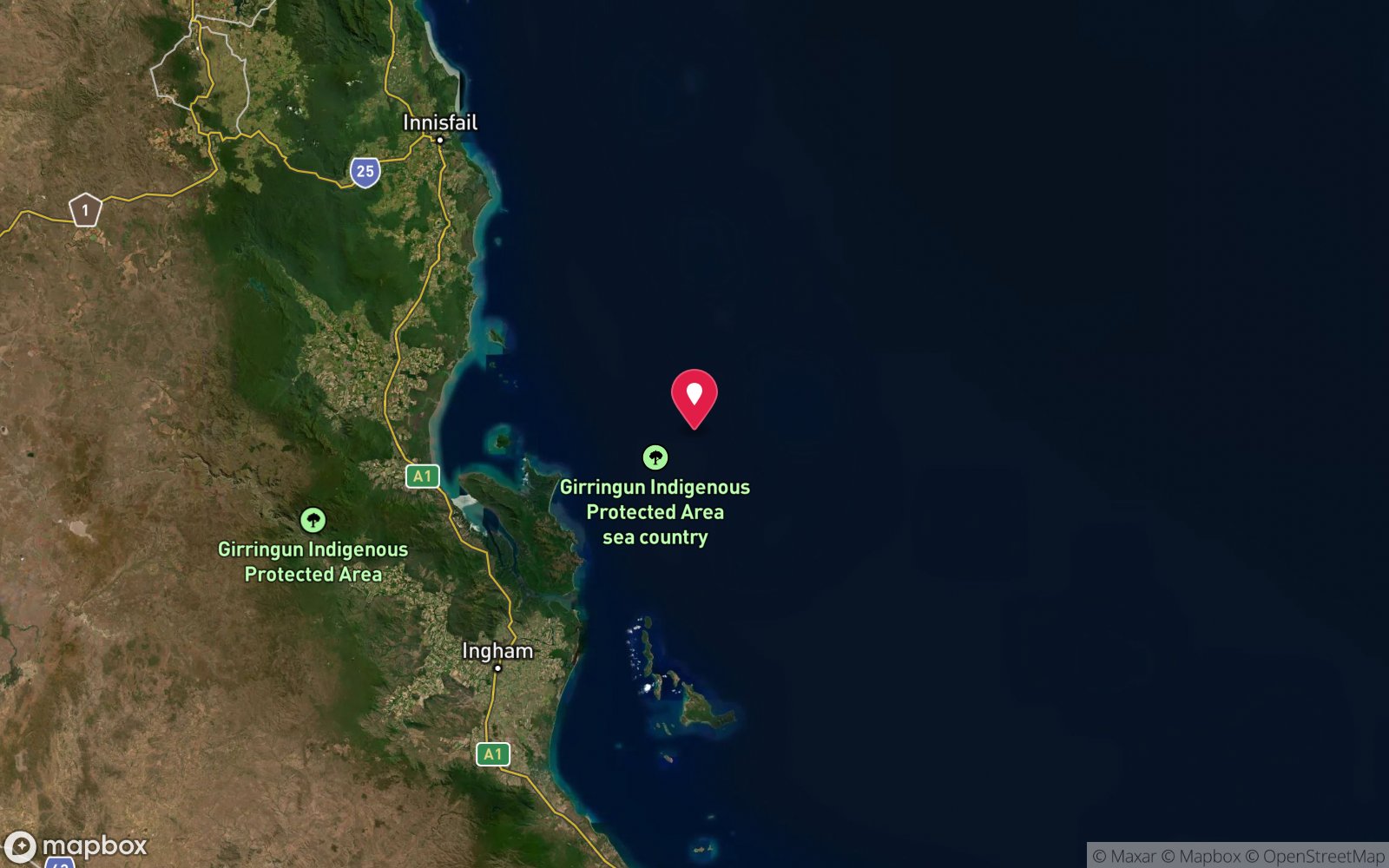
Eddy Reef · Cassowary Coast – Mission Beach, Innisfail & Hinchinbrook
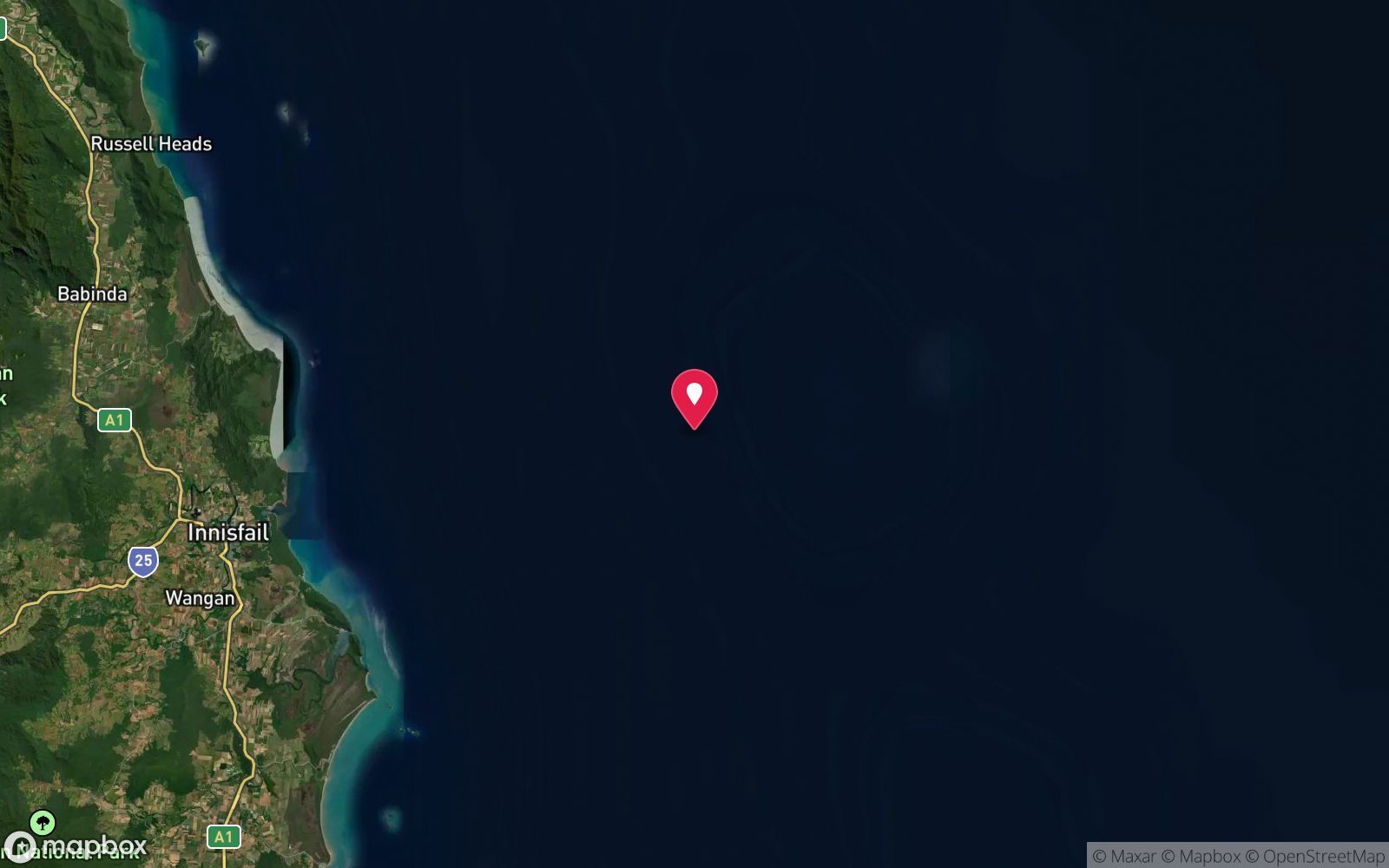
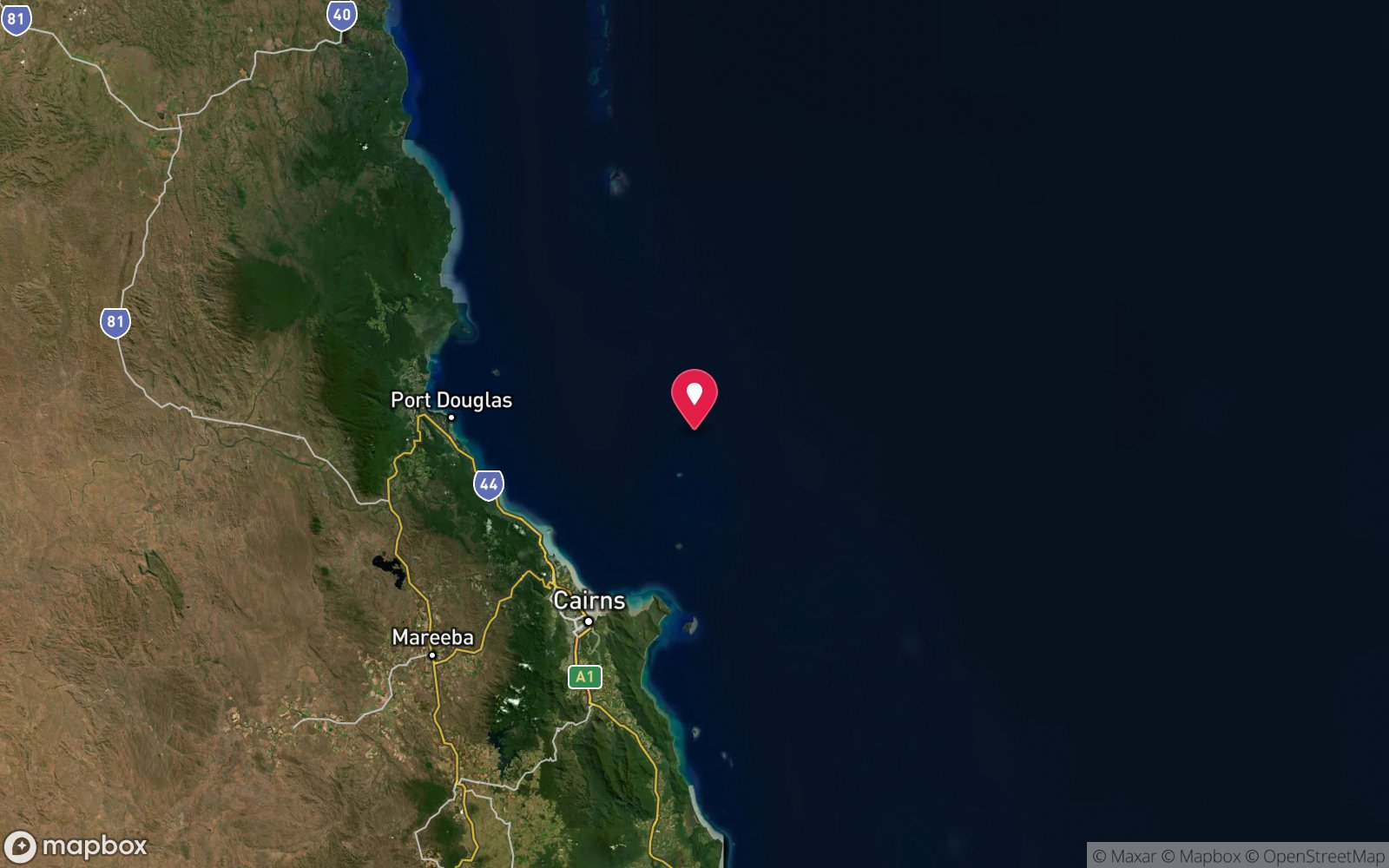
-17.95000, 146.40000
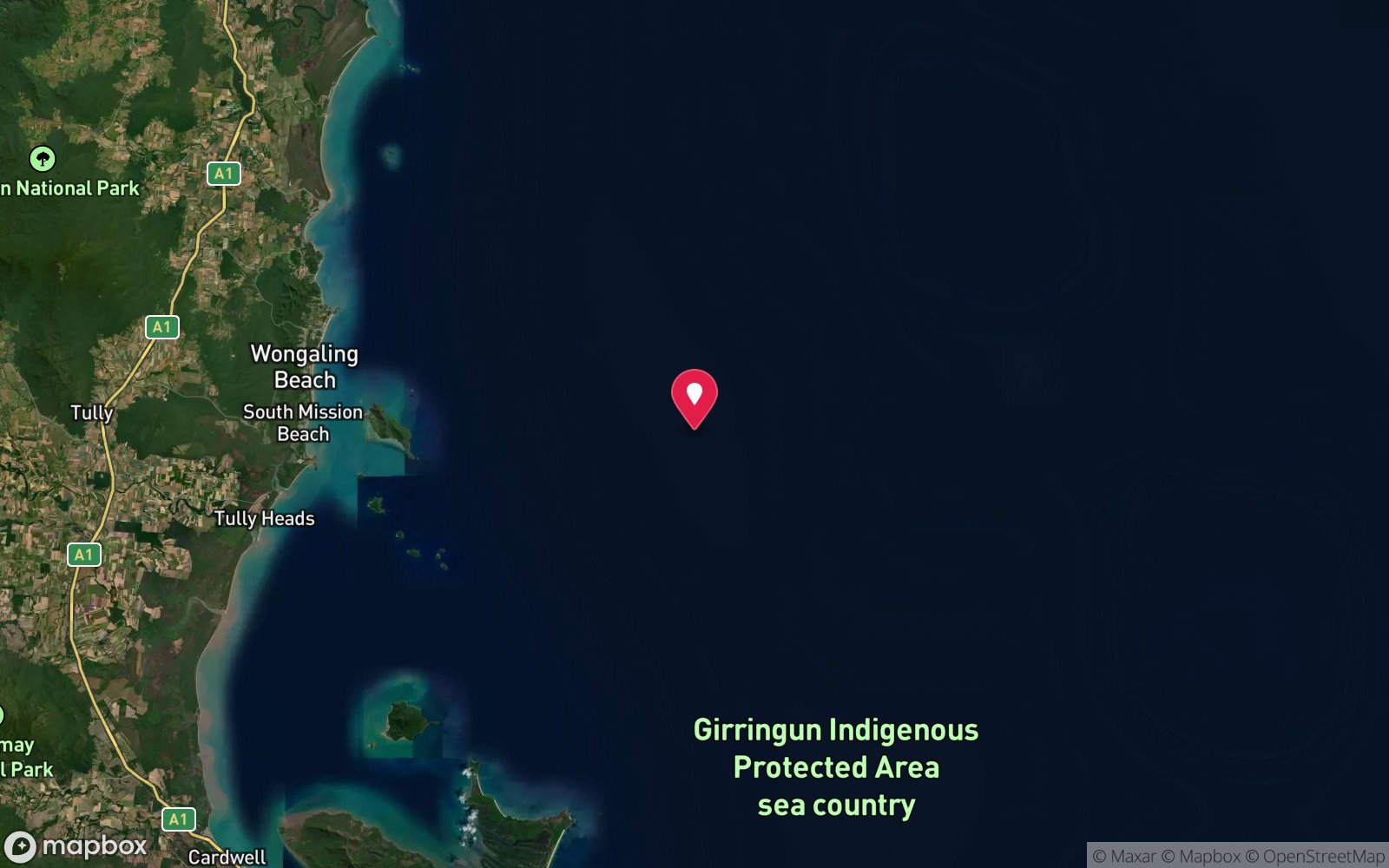
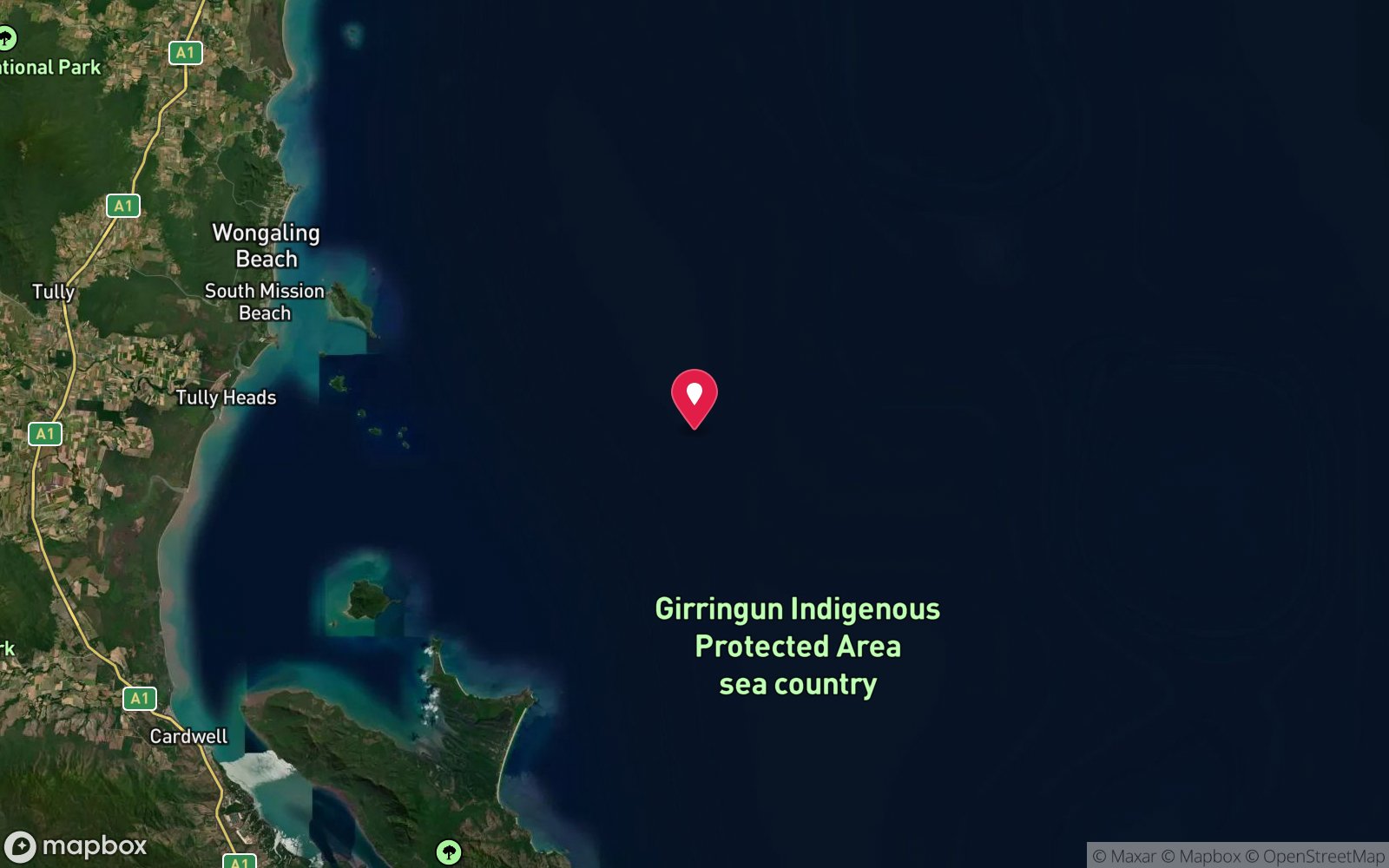
Approximate position — not for navigation.
Open in Google MapsPrimary source: missionbeachdive.com.auMarine park & permits
Great Barrier Reef Marine Park – Marine National Park (Green) Zone; operators hold GBRMPA permits
Nearest recompression chamber
Townsville University Hospital Hyperbaric Medicine Unit (Townsville) – Cairns Hospital has no recompression chamber; divers are evacuated by RFDS/air ambulance
Diving emergency: call 000, then DAN AP 1800 088 200.
Trip planner
Build a trip around Eddy Reef →
A day-by-day plan for Mission Beach & Cassowary Coast with this site locked in.
This guide is a planning aid. Conditions change daily — confirm with a local dive centre and dive within your training. Data & safety notes.
Dive profile
How this site rates
Scores are computed from the recorded data, not opinions. How?
At a glance
Eddy Reef is a reef boat dive in Mission Beach & Cassowary Coast, QLD, 10–25 m, suited to Advanced Open Water divers, moderate current, about 80 minutes by boat.
Rated intermediate because of depth beyond 18 m.
Why dive here
- Eddy currents feed dense coral and bring Napoleon wrasse, eagle rays and barracuda to terraced walls and swim-throughs.
- Visibility often reaches 15-25 m.
Conditions to avoid
- Strong southerly or south-east swell and wind
- Any time other than slack water
- Cyclone season (roughly December–April)
- Stinger season without a full suit (November–May)
About Eddy Reef
Eddy Reef is one of the four outer reefs visited by Mission Beach Dive, lying 60-90 minutes from Clump Point within a Marine National Park (Green) Zone. The operator explains that the reef takes its name from the eddy currents that circulate nutrient-rich water around it, creating a remarkably productive environment with dense coral cover and abundant fish, and rates it intermediate, with depths of 10-25 m, visibility of 15-25 m and mild to moderate current. Structurally it offers dramatic sloping walls, terraced drop-offs, overhangs and swim-throughs, so the dive is more varied and deeper than at Beaver or Ellison.
The nutrient-rich water brings bigger fish: Napoleon (humphead) wrasse, schools of barracuda, eagle rays, whitetip reef sharks, giant trevally and sea turtles are listed, and the operator says pelagic encounters are more frequent here than on typical inner-reef sites. The terraces are a pleasant feature, as each step of the reef provides a different depth band to explore, and the overhangs and swim-throughs give shelter to groupers and sweetlips. Open Water divers comfortable at mid-range depths can dive it, and snorkelling is possible on the shallower reef edges in calm conditions.
Because current is part of the reef's character, divers should stay with the guide and be prepared for gentle drift diving. Earlier listings described Eddy only as an alternative outer reef for Mission Beach trips; the operator's current description shows it to be one of the more rewarding sites in the area. Coordinates here are approximate.
Groups are limited to twelve guests.
Getting there & entry
Outer reef off Mission Beach, in a Marine National Park (Green) Zone, named for eddy currents that circulate nutrient-rich water over sloping walls, terraces and swim-throughs.
Boat access only. Mission Beach trips leave from the Clump Point jetty and marina at the northern end of Mission Beach, about 25 km east of the Bruce Highway at El Arish or Tully and roughly 1 hour 45 minutes' drive south of Cairns; there is free parking at Clump Point and most operators collect guests from Mission Beach accommodation. Check-in is usually around 8:00 am.
The run out to Eddy Reef takes about 80 minutes, passing Dunk Island and the Family Islands, and is noticeably quicker than reaching the outer reef from Cairns. Trips do not run every day, so book ahead.
Entry: Giant stride or back-roll from the dive deck; descend the mooring line or reef slope
Facilities: Departs Clump Point jetty/marina, Mission Beach
Weather, swell & tides
The Mission Beach reefs are exposed to the south-east trade winds, which blow 15-25 knots for much of April-September and can cancel trips; the calmest months are usually September-December. Box jellyfish and Irukandji are present from about October-November to May, most dangerously close to the coast, so wear a full stinger suit. The cyclone season runs November-April, and Mission Beach has been hit hard by cyclones Larry (2006) and Yasi (2011).
Heavy wet-season rain and river flood plumes from the Tully and Johnstone rivers reduce visibility on the inner reefs. Eddy Reef carries mild to moderate current, so it is best near slack water or on neap tides and in light to moderate winds.
Best season: Year-round. June-November gives the most reliable visibility and no box-jellyfish season, though the south-east trades can blow 20-25 knots in winter; September-December usually has the calmest seas; December-April is the warm, wet stinger and cyclone season
How the dive is usually run
Descend onto the upper terraces at 10-12 m, then drop down the sloping wall to 18-22 m, working along it with the current. Explore the overhangs and swim-throughs on the way back up the terraces, and finish with a safety stop on the reef top. Typical dive time is 45-55 minutes.
Marine life
- Napoleon (humphead) wrasse
- barracuda schools
- eagle rays
- whitetip reef sharks →
- giant trevally
- sea turtles →
- groupers
- sweetlips
- dense hard and soft corals
Linked species have their own page listing every site where they are recorded. All marine life →
Training required
Beyond 18 m an Advanced certification (which includes a deep dive to 30 m) is the accepted minimum. Anything past 25 m is a deep dive in practice.
Open Water divers can dive the shallower section (typical depth 16 m); the full site to 25 m needs Advanced Open Water. Operators often quote Open Water.
Operators' own listing: Open Water.
Depth tiers: 0–10 m easy · to 18 m Open Water · 18–30 m Advanced (25 m+ is a deep dive) · 30–40 m Deep specialty · 40 m+ technical. All courses
Hazards & warnings
Marine stingers (box jellyfish, Irukandji) October-May – full stinger suit essential; estuarine crocodiles along the Mission Beach coast, creeks and islands – do not swim near river mouths or mangroves; surface chop and current on the outer reefs in trade winds; coral cuts; nearest recompression chamber is Townsville University Hospital (about 3 hours by road; evacuation by air); mild to moderate current – stay with the guide
Dive centres that go here
Mission Beach Dive – small-group day trips (max 12) from Clump Point Marina, not daily; Reef Goddess day tours; Eddy Reef on selected trips
Operators recorded for Eddy Reef
Map
7 pinned sites. Pins marked approximate on their pages show the general area only; not for navigation.
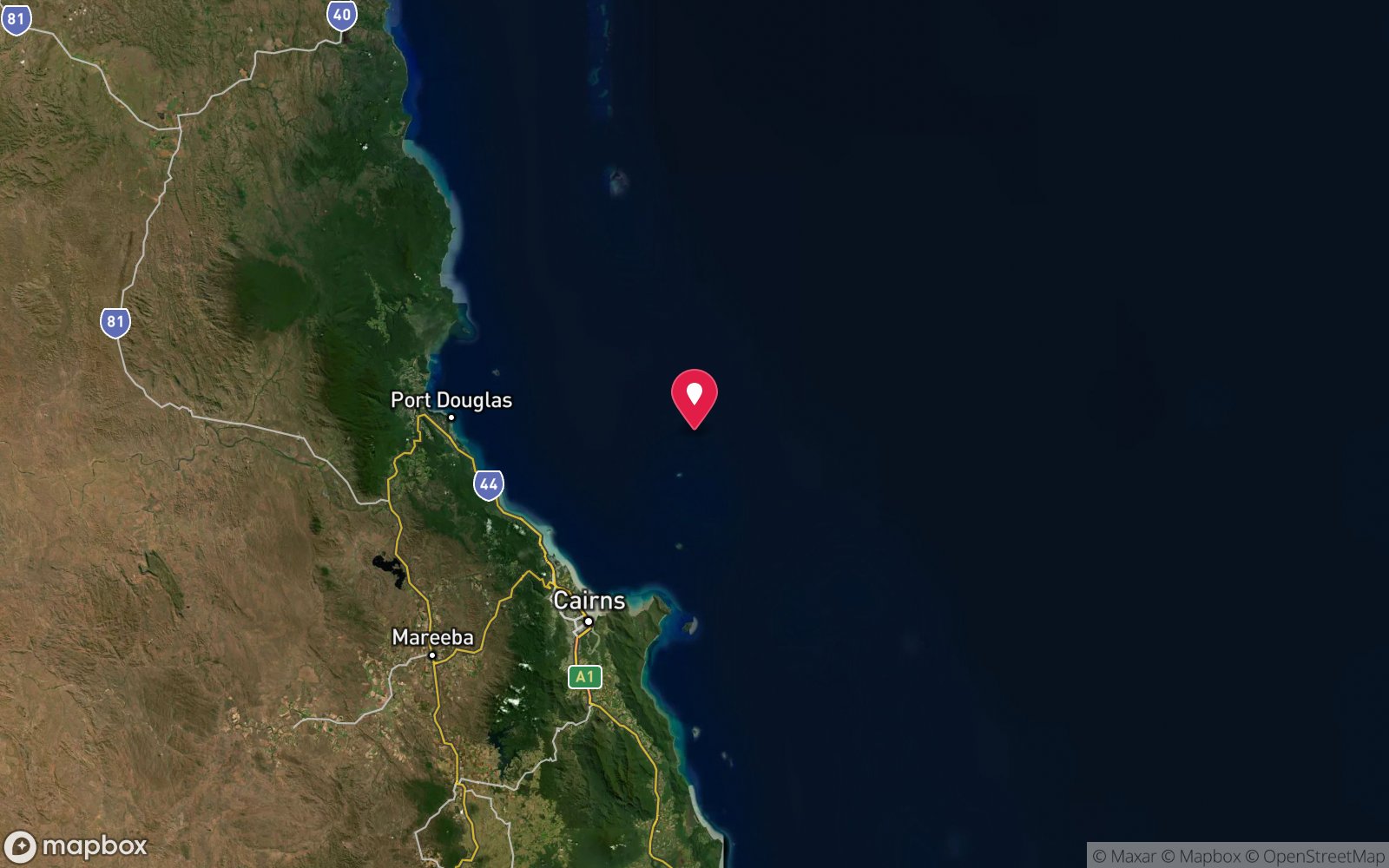
Satellite views
Eddy Reef: frequently asked questions
How deep is Eddy Reef?
Eddy Reef reaches a maximum depth of 25 m, with the shallowest part at about 10 m; most of the dive is spent around 16 m.
What certification do I need to dive Eddy Reef?
Advanced Open Water is the recommended minimum. Open Water divers can dive the shallower section (typical depth 16 m); the full site to 25 m needs Advanced Open Water. Operators often quote Open Water. Rated intermediate because of depth beyond 18 m.
Can I shore dive Eddy Reef?
No, it is reached by boat (about 80 minutes). A dive centre is required: boat access only.
When is the best time to dive Eddy Reef?
Year-round. June-November gives the most reliable visibility and no box-jellyfish season, though the south-east trades can blow 20-25 knots in winter; September-December usually has the calmest seas; December-April is the warm, wet stinger and cyclone season.
What marine life will I see at Eddy Reef?
Regularly recorded: Napoleon (humphead) wrasse, barracuda schools, eagle rays, whitetip reef sharks, giant trevally, sea turtles, groupers, sweetlips, dense hard and soft corals.
What wetsuit do I need at Eddy Reef?
3 mm full wetsuit or shorty in summer (27-30 °C); 3-5 mm full wetsuit in winter (23-25 °C); full-length lycra or stinger suit strongly advised November-May and supplied free by most operators.
How cold is the water at Eddy Reef?
Typically 27-30 °C in summer and 23-25 °C in winter.
What are the main hazards at Eddy Reef?
Marine stingers (box jellyfish, Irukandji) October-May – full stinger suit essential; estuarine crocodiles along the Mission Beach coast, creeks and islands – do not swim near river mouths or mangroves; surface chop and current on the outer reefs in trade winds; coral cuts; nearest recompression chamber is Townsville University Hospital (about 3 hours by road; evacuation by air); mild to moderate current – stay with the guide. See the hazards section above for the full list.
Where is the nearest recompression chamber to Eddy Reef?
Townsville University Hospital Hyperbaric Medicine Unit (Townsville) – Cairns Hospital has no recompression chamber; divers are evacuated by RFDS/air ambulance. In an emergency call 000, then DAN Asia-Pacific on 1800 088 200.
Diving in Mission Beach & Cassowary Coast
Mission Beach is the closest mainland point to the Great Barrier Reef, and day boats reach Beaver Reef, Eddy Reef and the Dunk Island fringing reefs in under an hour. The diving is quiet coral gardens and bommies with turtles and reef fish, without the Cairns crowds.
Getting there: Two hours south of Cairns. Small operators run reef trips from Mission Beach and Dunk Island.
All Mission Beach & Cassowary Coast dive sites and a suggested itinerary →
Sources
Data confidence: Medium · Being verified: Coordinates approximate (v1). Last updated September 2026. Know this site better? How to send a correction
Nearby dive sites
More reef dives in Queensland
Explore more
This region