Dive slate · divesites.com.au · printed 8 Nov 2026
Egg Rock
Capricorn Coast & Keppel Islands, Queensland · near Yeppoon (Rosslyn Bay) / Great Keppel Island
| Depth | 8–30 m |
|---|---|
| Minimum level | Advanced Open Water |
| Difficulty | Advanced |
| Access | Boat (day trip) |
| Entry | Giant stride from boat |
| Current | Variable/Tidal |
| Visibility | 8-15 m |
| Water | summer 25-28 °C, winter 19-22 °C |
| Suit | 3 mm full suit in summer; 5 mm full suit (hood optional) June-September |
| Best season | Year-round; July-October for the best visibility (15 m+) and humpback whales; summer (Dec-Mar) warmer but prone to northerlies, storms and Fitzroy River run-off |
| Bottom time | 35 min |
| Position | -23.20000, 151.03000 (approximate) |
| Permit | Great Barrier Reef Marine Park – Marine National Park (Green) Zone, no take; no permit needed to dive |
| Nearest chamber | Royal Brisbane and Women's Hospital (Brisbane) – roughly equidistant with Townsville University Hospital (Townsville); evacuation via Rockhampton Hospital and RFDS/aeromedical retrieval |
| Emergency | 000 · DAN Asia-Pacific diving emergency 1800 088 200 |
Egg Rock
The Keppels' signature advanced dive: walls, crevices and swim-throughs to 30 m inside a long-standing green zone, so the fish are big and unafraid.
Near Yeppoon (Rosslyn Bay) / Great Keppel Island · Capricorn Coast & Keppel Islands, Queensland
- Depth
- 8–30 m
- Minimum level
- Advanced Open Water
- Access
- Boat (day trip)
- Boat ride
- ~20 min
- Water
- 25-28 °C
- Visibility
- 8-15 m
Egg Rock8–30 m · Advanced Open Water
Dive factsDepths, conditions, location & safety
Season
Off-peak nowBest months: January, February, March, July, August, September, October, December.
Year-round; July-October for the best visibility (15 m+) and humpback whales; summer (Dec-Mar) warmer but prone to northerlies, storms and Fitzroy River run-off
- Best months
- Now (November)
- Stinger suit Nov–May
Dive facts
- Depth
- 8–30 m
- Typical depth
- 18 m
- Certification
- Advanced Open Water
- Difficulty
- Advanced
- Depth tier
- Advanced Open Water (18–30 m)
- Access
- Boat (day trip)
- Offshore
- 20 km
- Dive centre needed
- Yes – boat access only
- Shore / independent
- No
- Boat ride
- ~20 min
- Current
- Variable/Tidal
- Visibility
- 8-15 m
- Water temp (summer)
- 25-28 °C
- Water temp (winter)
- 19-22 °C
- Water
- Subtropical
- Bottom time
- 35 min
- Dive traffic
- Popular (weekly charters)
- Night dive
- No
- Snorkel friendly
- No
Exposure suit
3 mm full suit in summer; 5 mm full suit (hood optional) June-September
Location
Great Keppel Island – eastern side · Capricorn Coast – Keppel Islands & Yeppoon
-23.20000, 151.03000
Approximate position — not for navigation.
Open in Google MapsPrimary source: marinelife.org.auMarine park & permits
Great Barrier Reef Marine Park – Marine National Park (Green) Zone, no take; no permit needed to dive
Nearest recompression chamber
Royal Brisbane and Women's Hospital (Brisbane) – roughly equidistant with Townsville University Hospital (Townsville); evacuation via Rockhampton Hospital and RFDS/aeromedical retrieval
Diving emergency: call 000, then DAN AP 1800 088 200.
Trip planner
Build a trip around Egg Rock →
A day-by-day plan for Capricorn Coast & Keppel Islands with this site locked in.
This guide is a planning aid. Conditions change daily — confirm with a local dive centre and dive within your training. Data & safety notes.
Dive profile
How this site rates
Scores are computed from the recorded data, not opinions. How?
At a glance
Egg Rock is a wall boat dive in Capricorn Coast & Keppel Islands, QLD, 8–30 m, suited to Advanced Open Water divers, variable/tidal current, about 20 minutes by boat.
Rated advanced because of depth beyond 18 m, tidal current that must be timed.
Why dive here
- The Keppels' signature advanced dive: walls, crevices and swim-throughs to 30 m inside a long-standing green zone, so the fish are big and unafraid.
Conditions to avoid
- Outgoing tide or run-off after rain (poor visibility)
- Spring tides (strong current)
- Cyclone season (roughly December–April)
About Egg Rock
Egg Rock is the Keppels' flagship advanced dive and the site local instructors talk about when they want to sell the area. The rock itself is a modest granite islet, but underwater its seaward face falls away in steep walls, ledges and cracked boulders to about 30 m, with a field of bommies on the sand at around 20 m. Because it sits inside a Marine National Park (Green) Zone and has been protected from fishing for decades, the fish are noticeably bigger and less wary than elsewhere in Keppel Bay: large coral trout, estuary cod, sweetlips and red emperor hang around the bommies, barramundi cod and hussar shelter under ledges, and schools of hump-headed batfish drift off the wall.
The rock is known for its crevices and short swim-throughs, many lined with soft corals, sponges and small gorgonians. Olive sea snakes are regular and inquisitive, bull rays rest on the sand at the base of the wall, and turtles feed along the shallower edges. Clownfish anemones grow down to about 10 m, making a colourful end to the dive.
This is inshore Great Barrier Reef, so do not expect Coral Sea visibility; 10-15 m is typical and 20 m is a good day in winter. What Egg Rock offers instead is structure, fish biomass and the feeling of a genuinely wild site within a short run of a resort island. It is the site that shows how well the Keppels' green zones work, and it is a good contrast with the shallower fringing reefs around Great Keppel that most visitors snorkel.
Egg Rock suits divers with Advanced certification and some current experience, comfortable with drift entries and descending without a fixed line. Newer divers are better served by Man & Wife Rocks or Big Peninsula and can build up to Egg Rock later in a trip if the weather holds.
Getting there & entry
A small egg-shaped rock islet off the eastern side of Great Keppel Island, inside a Marine National Park (Green) Zone; walls drop to 30 m on its seaward face with scattered bommies at about 20 m.
Drive 40 km (about 40 minutes) from Rockhampton to Yeppoon, then 7 km south along the Scenic Highway to Keppel Bay Marina at Rosslyn Bay Harbour, where there is free and paid parking. Freedom Fast Cats and Keppel Konnections ferries run to Great Keppel Island (Fisherman's Beach) in about 30 minutes; Keppel Dive & Water Sports picks up certified divers from the island. Egg Rock is roughly 15-20 minutes by dive boat from the Keppel Dive hut on the Spit, or about 45 minutes by private boat from Rosslyn Bay; there is no public mooring, so boats drift-drop or anchor carefully on sand clear of coral.
It is only visited when wind and swell are low.
Entry: Giant stride from boat
Weather, swell & tides
Keppel Bay is exposed to the prevailing south-east trades (strongest April-September) and to summer northerlies. Egg Rock is the most exposed of the regular Keppel sites and needs light winds (under about 10-12 knots) and minimal swell; any sustained south-easterly or a northerly over 15 knots rules it out. Currents run hard around the rock on spring tides, so dives are planned near slack or on neap tides.
Visibility is best July-October (15 m+) and drops for several days after strong winds or heavy rain, when Fitzroy River run-off discolours Keppel Bay. Summer storms and cyclones (November-April) can close the site for extended periods.
Best season: Year-round; July-October for the best visibility (15 m+) and humpback whales; summer (Dec-Mar) warmer but prone to northerlies, storms and Fitzroy River run-off
If it's blown out
Sheltered or shore sites within 25 km that often work when Egg Rock doesn't.
- Shelving Beach (Great Keppel Island) · 9 km · Max 5 m
- Monkey Beach (Great Keppel Island) · 9 km · Max 6 m
- Wreck Beach (Great Keppel Island) · 6 km · Max 12 m
- Halfway Island (Keppels) · 6 km · Max 10 m
How the dive is usually run
Descend on the sheltered side of the rock and follow the wall down its seaward face to 20-25 m, working through the crevices and swim-throughs with the current on your shoulder. After 15-20 minutes turn back up-current along a shallower contour (10-15 m), visit the anemone patches above 10 m, and complete the safety stop in the lee of the rock where the boat can pick you up.
Marine life
- Large coral trout
- estuary cod
- barramundi cod
- sweetlips
- red emperor
- hussar
- hump-headed batfish
- bull rays
- olive sea snakes
- turtles →
- clownfish in anemones
- pelagic trevally and mackerel
- soft corals and gorgonians
Linked species have their own page listing every site where they are recorded. All marine life →
Training required
Beyond 18 m an Advanced certification (which includes a deep dive to 30 m) is the accepted minimum. Anything past 25 m is a deep dive in practice.
At more than 25 m this counts as a deep dive: watch no-decompression limits and gas.
Courses that help here
- Enriched Air Nitrox – Longer no-decompression time at 25 m and deeper.
- Drift Diver – Current is a feature of the dive.
Depth tiers: 0–10 m easy · to 18 m Open Water · 18–30 m Advanced (25 m+ is a deep dive) · 30–40 m Deep specialty · 40 m+ technical. All courses
Hazards & warnings
Strong tidal currents around the rock; depth to 30 m; exposed site – abort if wind or swell rises; no mooring, so surface with an SMB for boat pick-up; olive sea snakes are curious but rarely aggressive; no fishing (green zone).
Dive centres that go here
Keppel Dive & Water Sports (PADI 5 Star, based on the Spit at Great Keppel Island next to Great Keppel Island Hideaway) runs guided boat dives to the Keppel sites most days, weather permitting, plus courses and Discover Scuba; site choice is made on the day according to wind. Private boats from Rosslyn Bay also dive here. Egg Rock is the operator's favourite advanced site but is only scheduled on calm days.
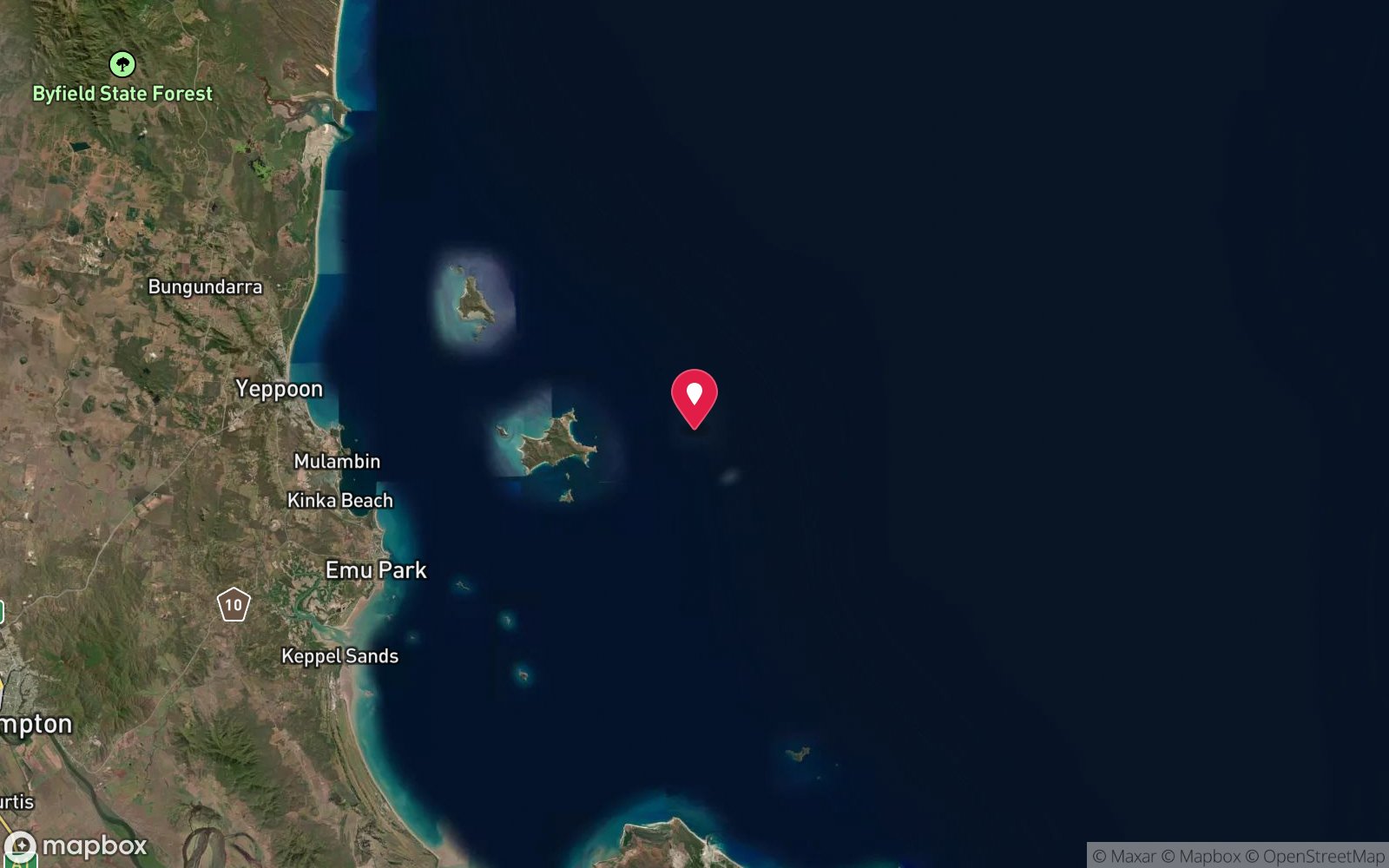
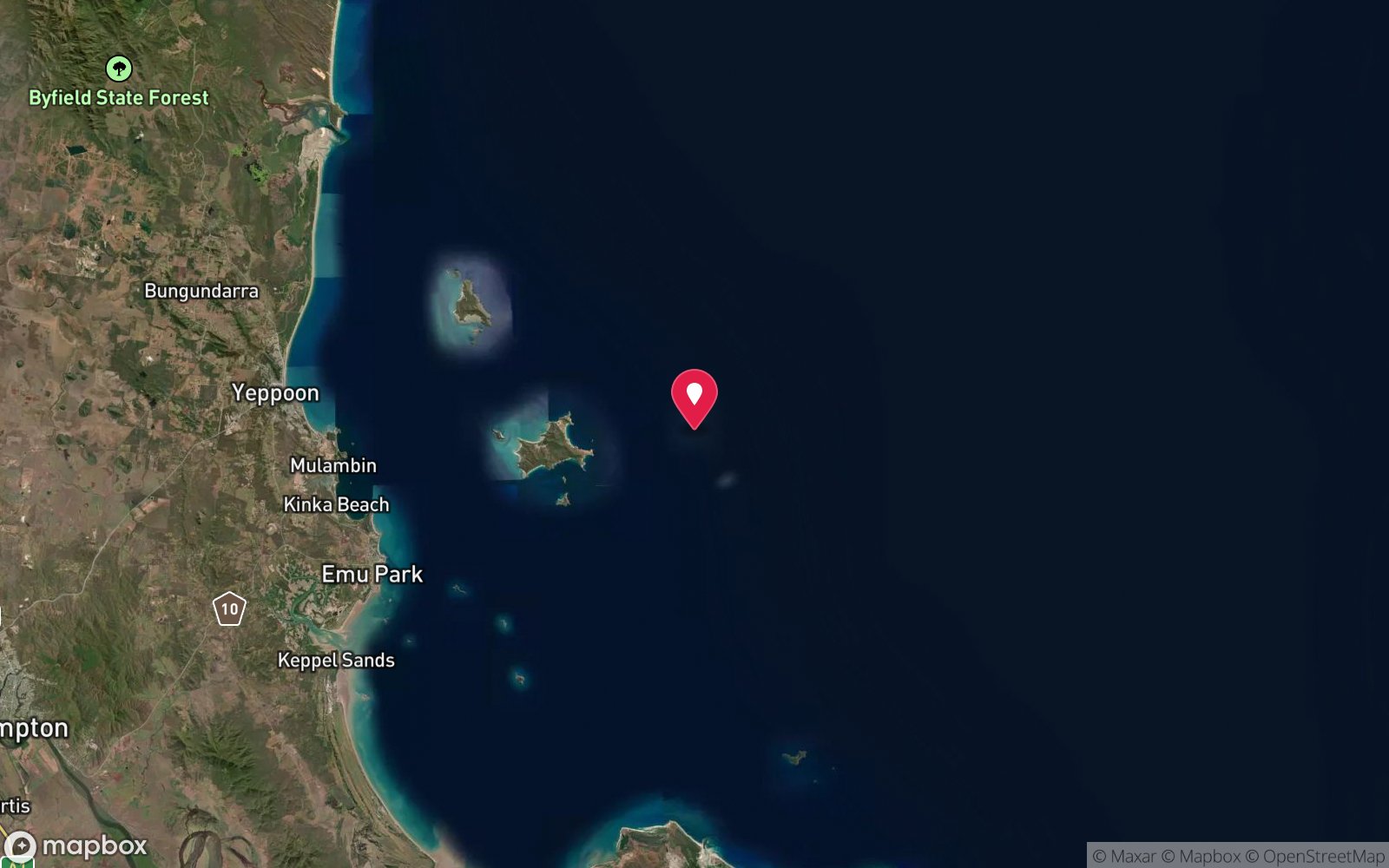
Map
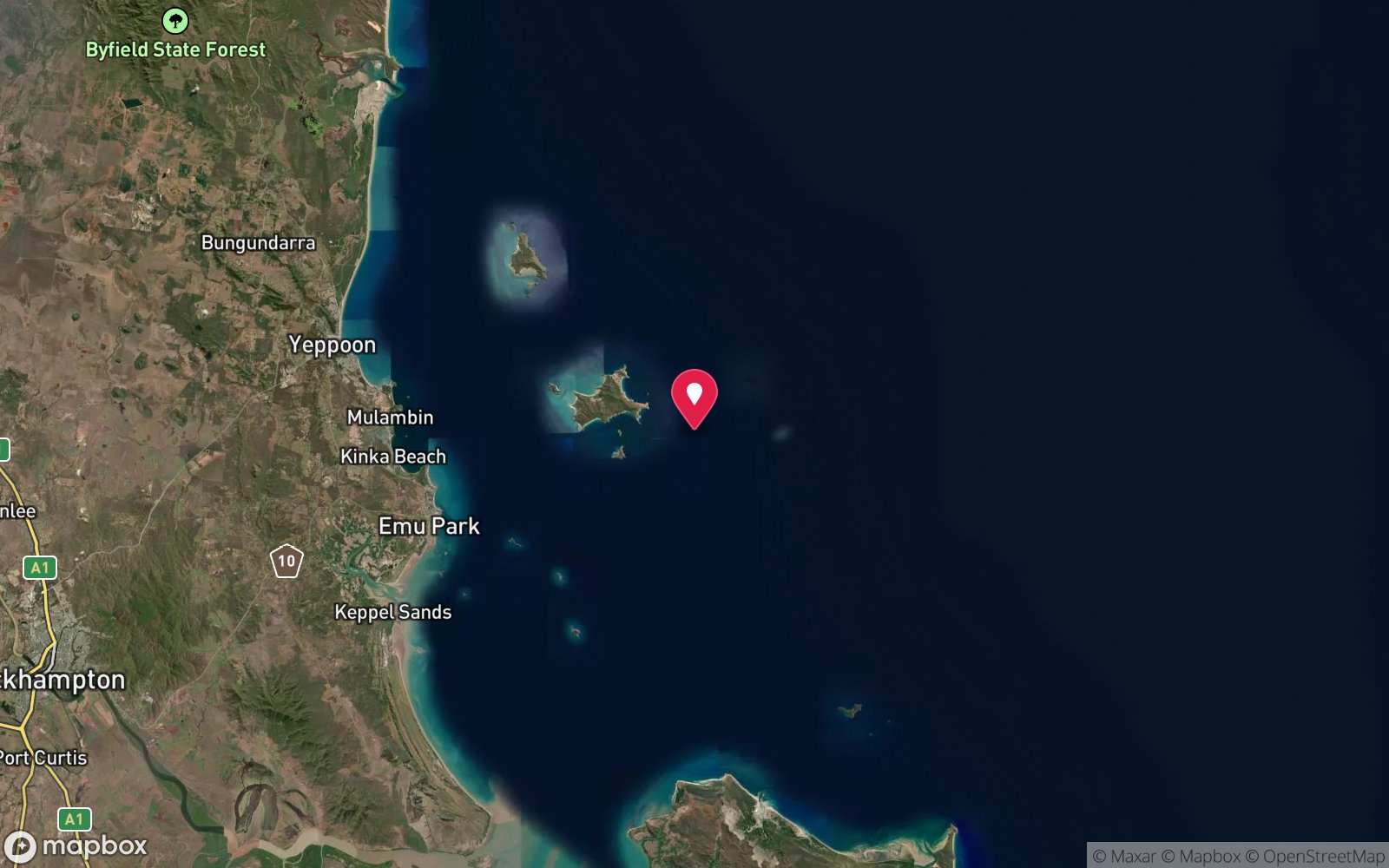
7 pinned sites. Pins marked approximate on their pages show the general area only; not for navigation.
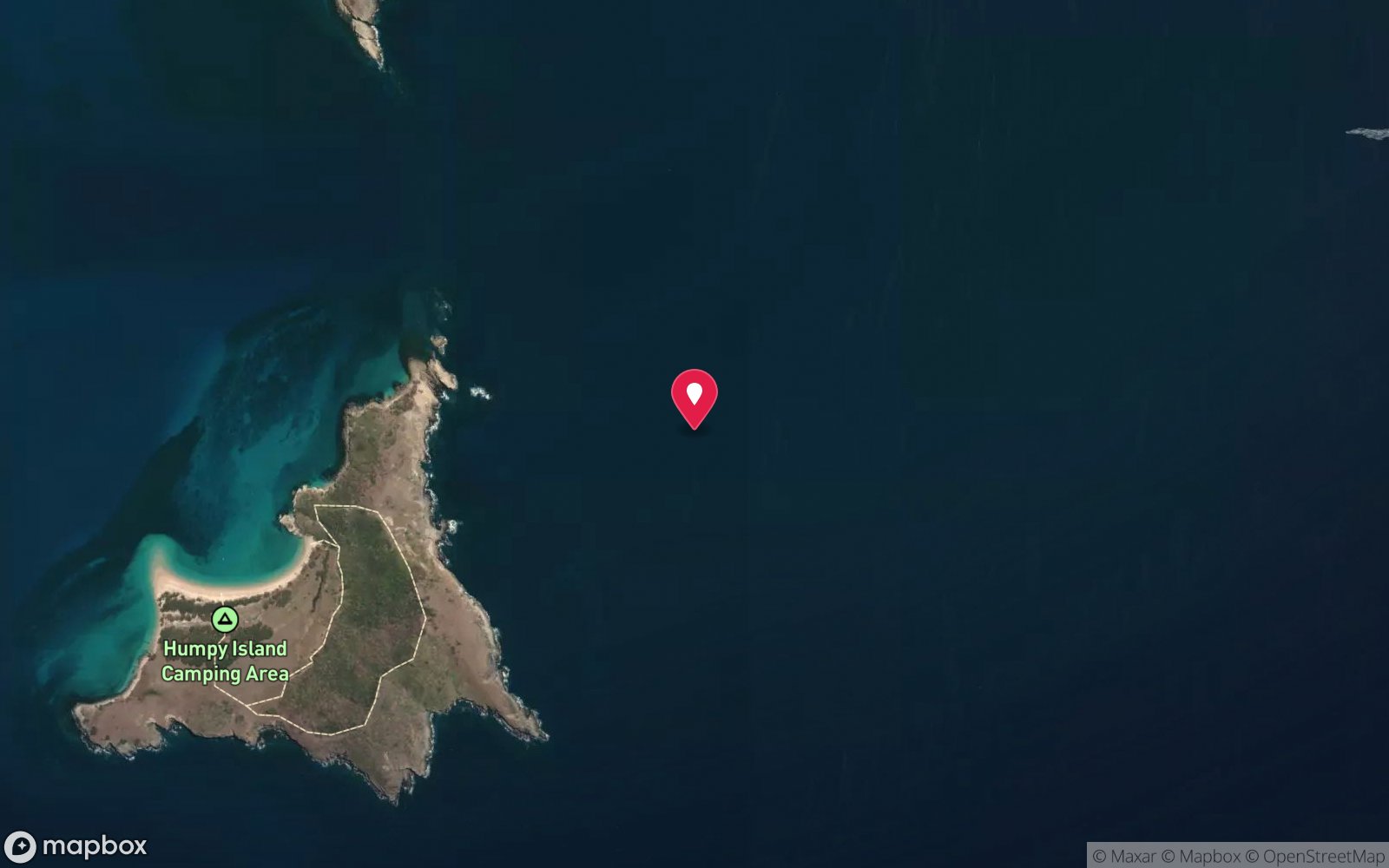
Satellite views
Egg Rock: frequently asked questions
How deep is Egg Rock?
Egg Rock reaches a maximum depth of 30 m, with the shallowest part at about 8 m; most of the dive is spent around 18 m.
What certification do I need to dive Egg Rock?
Advanced Open Water is the recommended minimum. At more than 25 m this counts as a deep dive: watch no-decompression limits and gas. Rated advanced because of depth beyond 18 m, tidal current that must be timed.
Can I shore dive Egg Rock?
No, it is reached by boat (about 20 minutes). A dive centre is required: boat access only.
When is the best time to dive Egg Rock?
Year-round; July-October for the best visibility (15 m+) and humpback whales; summer (Dec-Mar) warmer but prone to northerlies, storms and Fitzroy River run-off.
What marine life will I see at Egg Rock?
Regularly recorded: Large coral trout, estuary cod, barramundi cod, sweetlips, red emperor, hussar, hump-headed batfish, bull rays, olive sea snakes, turtles, clownfish in anemones, pelagic trevally and mackerel and more.
What wetsuit do I need at Egg Rock?
3 mm full suit in summer; 5 mm full suit (hood optional) June-September.
How cold is the water at Egg Rock?
Typically 25-28 °C in summer and 19-22 °C in winter.
What are the main hazards at Egg Rock?
Strong tidal currents around the rock; depth to 30 m; exposed site – abort if wind or swell rises; no mooring, so surface with an SMB for boat pick-up; olive sea snakes are curious but rarely aggressive; no fishing (green zone). See the hazards section above for the full list.
Where is the nearest recompression chamber to Egg Rock?
Royal Brisbane and Women's Hospital (Brisbane) – roughly equidistant with Townsville University Hospital (Townsville); evacuation via Rockhampton Hospital and RFDS/aeromedical retrieval. In an emergency call 000, then DAN Asia-Pacific on 1800 088 200.
Diving in Capricorn Coast & Keppel Islands
Great Keppel Island and its neighbours off Yeppoon have fringing coral reefs, the Barren Island walls and Man and Wife Rocks in clearer water further out, and the artificial reef of the Cementco wreck. It is a laid-back, uncrowded alternative to the big reef towns.
Getting there: Yeppoon is 40 minutes from Rockhampton airport. Charters and the island ferry leave from Rosslyn Bay.
All Capricorn Coast & Keppel Islands dive sites and a suggested itinerary →
Sources
- marinelife.org.au/?page_id=1651
- yeppooncapricorncoast.com.au/diving
- emptynestdiver.com/2023/08/28/diving-the-southern-great-barrier-reef-from-great-keppel-island
- myfavouriteescapes.com/scuba-diving-great-keppel-island
- greatkeppelwatersports.com.au/activities/diving
Data confidence: Medium · Being verified: Coordinates approximate; boat time from Keppel Dive hut estimated.. Last updated September 2026. Know this site better? How to send a correction
Nearby dive sites
More wall dives in Queensland
Explore more