Dive slate · divesites.com.au · printed 8 Nov 2026
Mutton Bird Island (Coffs Harbour)
Coffs Harbour & Solitary Islands, New South Wales · near Coffs Harbour
| Depth | 3–15 m |
|---|---|
| Minimum level | Open Water |
| Difficulty | Beginner |
| Access | Shore or Boat |
| Entry | Walk-in from the harbour breakwall or beach on the sheltered inner side; rock entry on the more exposed outer side on calm days |
| Current | Mild |
| Visibility | 4-12 m |
| Water | summer 24-26 °C, winter 18-19 °C |
| Suit | 3 mm shorty summer, 5 mm full suit winter |
| Best season | Winter and calm days for the outer side; the inner harbour side is diveable in most conditions |
| Bottom time | 45 min |
| Position | -30.30300, 153.15300 (approximate) |
| Permit | Solitary Islands Marine Park – Muttonbird Island Sanctuary Zone, no take |
| Nearest chamber | Prince of Wales Hospital (Randwick, Sydney) |
| Emergency | 000 · DAN Asia-Pacific diving emergency 1800 088 200 |
Mutton Bird Island (Coffs Harbour)
Also known as Muttonbird Island, Giidany Miirlarl
An easy, boat-free island shore dive right at the end of Coffs Harbour's breakwall, with turtles, groper and good macro life on the sheltered inner side.
Near Coffs Harbour · Coffs Harbour & Solitary Islands, New South Wales
- Depth
- 3–15 m
- Minimum level
- Open Water
- Access
- Shore or Boat
- Boat ride
- Shore entry
- Water
- 24-26 °C
- Visibility
- 4-12 m
Mutton Bird Island (Coffs Harbour)3–15 m · Open Water · Shore
Dive factsDepths, conditions, location & safety
Season
Off-peak nowBest months: June, July, August.
Winter and calm days for the outer side; the inner harbour side is diveable in most conditions
- Best months
- Now (November)
- Stinger suit Nov–May
Dive facts
- Depth
- 3–15 m
- Typical depth
- 8 m
- Certification
- Open Water
- Difficulty
- Beginner
- Depth tier
- Open Water (10–18 m)
- Access
- Shore or Boat
- Offshore
- 0 km
- Dive centre needed
- No – independently diveable
- Shore / independent
- Yes
- Current
- Mild
- Visibility
- 4-12 m
- Water temp (summer)
- 24-26 °C
- Water temp (winter)
- 18-19 °C
- Water
- Subtropical
- Bottom time
- 45 min
- Dive traffic
- Popular (weekly charters)
- Night dive
- Yes
- Snorkel friendly
- Yes
Exposure suit
3 mm shorty summer, 5 mm full suit winter
Location
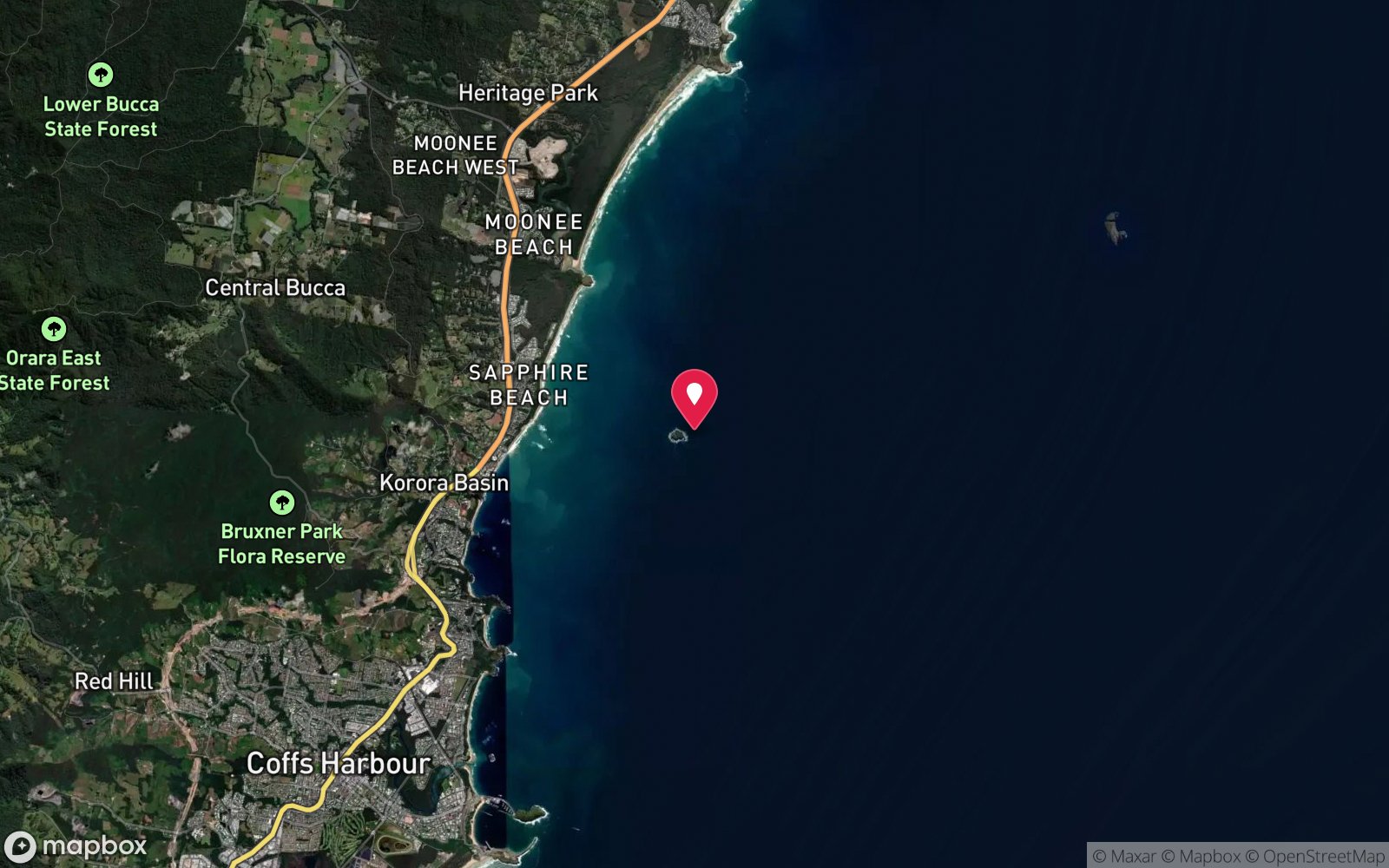
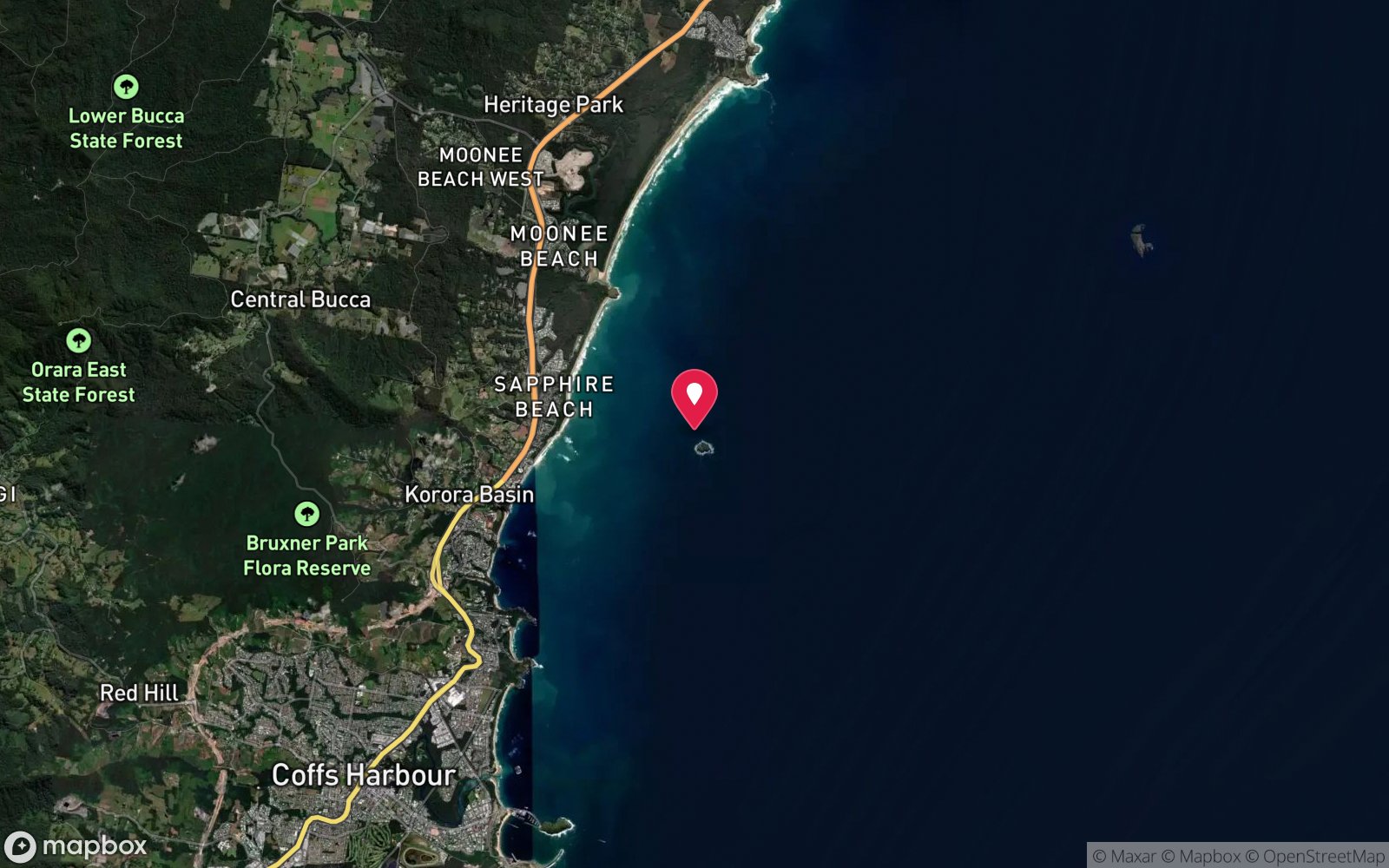
Coffs Harbour breakwall · NSW Mid North Coast – Coffs Harbour / Solitary Islands
-30.30300, 153.15300
Approximate position — not for navigation.
Open in Google MapsPrimary source: jettydive.com.auMarine park & permits
Solitary Islands Marine Park – Muttonbird Island Sanctuary Zone, no take
Nearest recompression chamber
Prince of Wales Hospital (Randwick, Sydney)
Diving emergency: call 000, then DAN AP 1800 088 200.
Trip planner
Build a trip around Mutton Bird Island (Coffs Harbour) →
A day-by-day plan for Coffs Harbour & Solitary Islands with this site locked in.
This guide is a planning aid. Conditions change daily — confirm with a local dive centre and dive within your training. Data & safety notes.
Dive profile
How this site rates
Scores are computed from the recorded data, not opinions. How?
At a glance
Mutton Bird Island (Coffs Harbour) is a shore / rock platform shore dive you can do independently in Coffs Harbour & Solitary Islands, NSW, 3–15 m, suited to Open Water divers.
Rated beginner: sheltered, shallow and manageable for a newly certified diver on a normal day, though note surge on the entry or in the shallows and boat traffic overhead.
Why dive here
- An easy, boat-free island shore dive right at the end of Coffs Harbour's breakwall, with turtles, groper and good macro life on the sheltered inner side.
- Commonly dived at night, when octopus, cuttlefish and crustaceans are out.
- Snorkel-friendly, so non-diving companions can join at the surface.
Conditions to avoid
- Outgoing tide or run-off after rain (poor visibility)
About Mutton Bird Island (Coffs Harbour)
Mutton Bird Island — known by its Gumbaynggirr name Giidany Miirlarl — is the small headland at the end of Coffs Harbour's northern breakwall, and the shore dive around its base is one of the most convenient and popular in the whole Coffs region, requiring no boat and offering something worthwhile in almost any conditions thanks to its two very different faces. The sheltered inner side, inside the harbour breakwall, is a gentle, current-free dive in 3 to 10 m that can be entered in almost any weather, while the more exposed outer, ocean-facing side offers slightly deeper ledges to about 15 m for divers waiting for a calm day. Marine life on the inner side leans toward the muck and macro end of the spectrum typical of a sheltered harbour habitat: nudibranchs, moray eels and juvenile tropical fish recruit into the calmer water, and cuttlefish are a regular sighting through the cooler months.
Around the island's base more generally, turtles are common, blue groper patrol the rocky sections, and wobbegong sharks tuck into any available overhang, giving the site a genuinely good chance of the marquee species divers travel to the Solitary Islands for, at a fraction of the cost and effort of a boat trip. Because it sits inside a working harbour, boat traffic is a real and constant consideration here, and divers should stay close to the rocks and well clear of the marked channel, ideally with a dive flag or float when working the more open sections. The site is also a popular local night dive, when the muck and macro life on the sheltered side becomes considerably more active, and it doubles as a training venue for local instructors thanks to its easy access and gentle depth range.
For anyone based in Coffs Harbour without a boat, or simply looking for an easy dive between more demanding trips to the islands, Mutton Bird Island is hard to beat for convenience.
Getting there & entry
Shore dive from the northern breakwall of Coffs Harbour around the base of Mutton Bird Island (Giidany Miirlarl), a small headland connected to the mainland by the harbour breakwall, with an easy inner-harbour side and a more exposed outer ocean side.
From central Coffs Harbour, walk or drive to the Mutton Bird Island car park at the end of the breakwall (Marina Drive), from which a short walking track leads over the island — divers instead follow the breakwall itself down to the water. Gear up at the car park and carry equipment a short distance to the harbour-side rocks for the easiest entry, or continue around to the ocean side on a calm day for a more exposed dive. No boat is needed for the inner-harbour side; the outer side can also be reached by a short boat trip.
Entry: Walk-in from the harbour breakwall or beach on the sheltered inner side; rock entry on the more exposed outer side on calm days
Facilities: Car parking at the Mutton Bird Island car park; toilets nearby in the Coffs Harbour marina precinct; air fills at Jetty Dive Centre in town.
Weather, swell & tides
Conditions at Coffs Harbour's shore sites depend mostly on swell direction and the state of the local river/creek systems; sheltered harbour sites like Mutton Bird Island's inner face are usable more often than the exposed outer coast. Visibility drops for several days after the Coffs Creek, Bellinger or Nambucca systems flood following heavy rain. Winter (May-Oct) gives cooler but generally clearer water; summer (Nov-Apr) is warmer with more tropical vagrants.
The inner (harbour) side of Mutton Bird Island is sheltered from ocean swell and can be dived in most weather; the outer, ocean-facing side is exposed and only sensible in small swell.
Best season: Winter and calm days for the outer side; the inner harbour side is diveable in most conditions
If it's blown out
Sheltered or shore sites within 25 km that often work when Mutton Bird Island (Coffs Harbour) doesn't.
- Diggers Beach (Coffs Harbour) · 4 km · Max 6 m
- Boambee Beach reef · 11 km · Max 12 m
How the dive is usually run
Enter from the breakwall on the sheltered inner side and work along the base of the rocks at 3-10 m looking for turtles and macro life, or, on a calm day, continue around to the outer side for slightly deeper ledges to 15 m, keeping clear of the boat channel throughout.
Marine life
- Wobbegongs →
- turtles →
- blue groper →
- nudibranchs →
- moray eels
- juvenile tropical fish
- cuttlefish (winter) →
Linked species have their own page listing every site where they are recorded. All marine life →
Training required
Within the 18 m limit of an entry-level certification.
Courses that help here
- Night Diver – Commonly dived at night.
Depth tiers: 0–10 m easy · to 18 m Open Water · 18–30 m Advanced (25 m+ is a deep dive) · 30–40 m Deep specialty · 40 m+ technical. All courses
Hazards & warnings
Boat traffic in the harbour channel — keep close to the rocks and use a dive flag/float; surge on the outer, ocean-facing side; visibility drops after rain.
Dive centres that go here
No boat required for the harbour side; Jetty Dive Centre runs guided shore and night dives here for students and photography groups, and it is popular with local snorkellers and freedivers.
Operators recorded for Mutton Bird Island (Coffs Harbour)
Other dive centres in Coffs Harbour & Solitary Islands
Map
7 pinned sites. Pins marked approximate on their pages show the general area only; not for navigation.
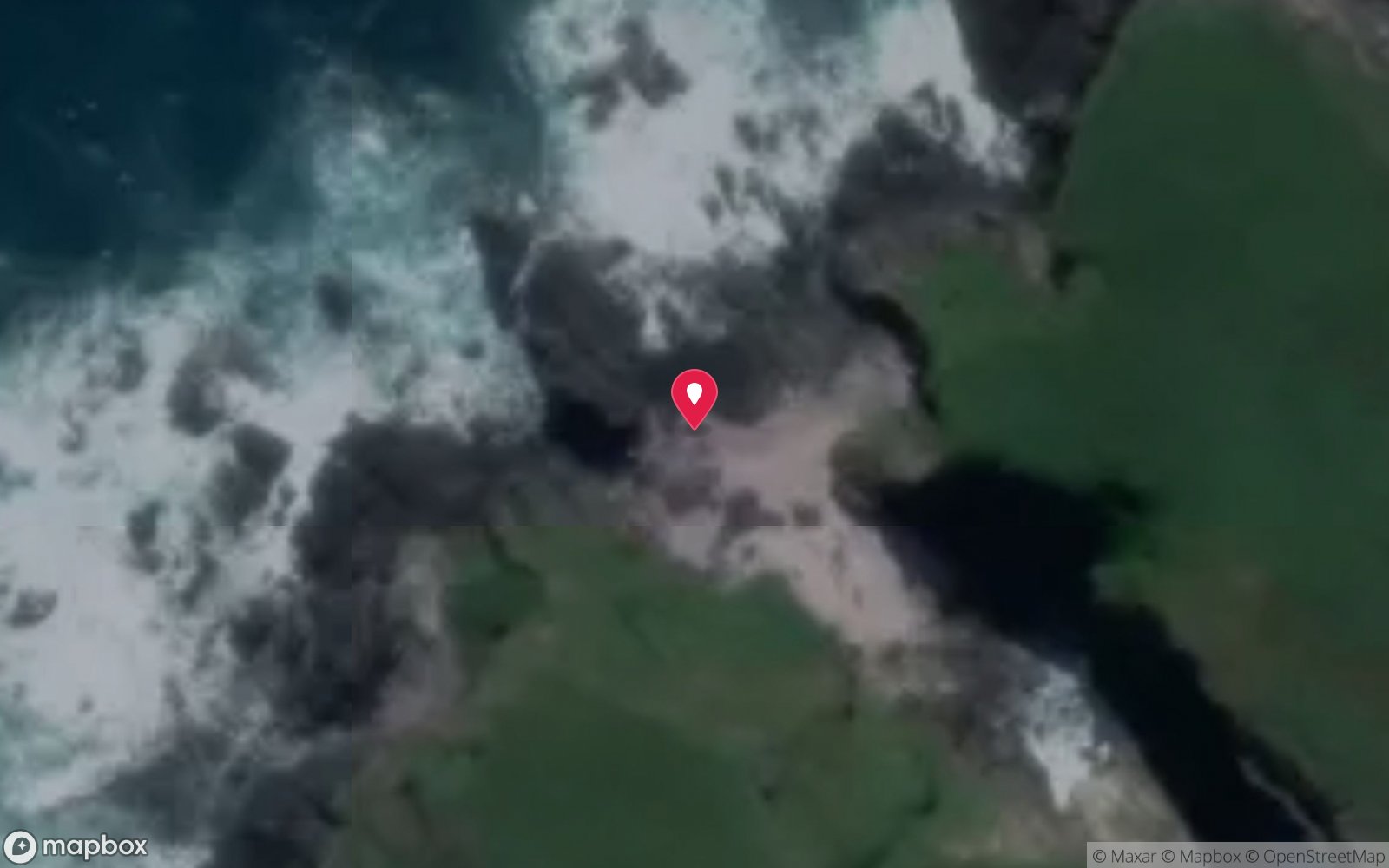
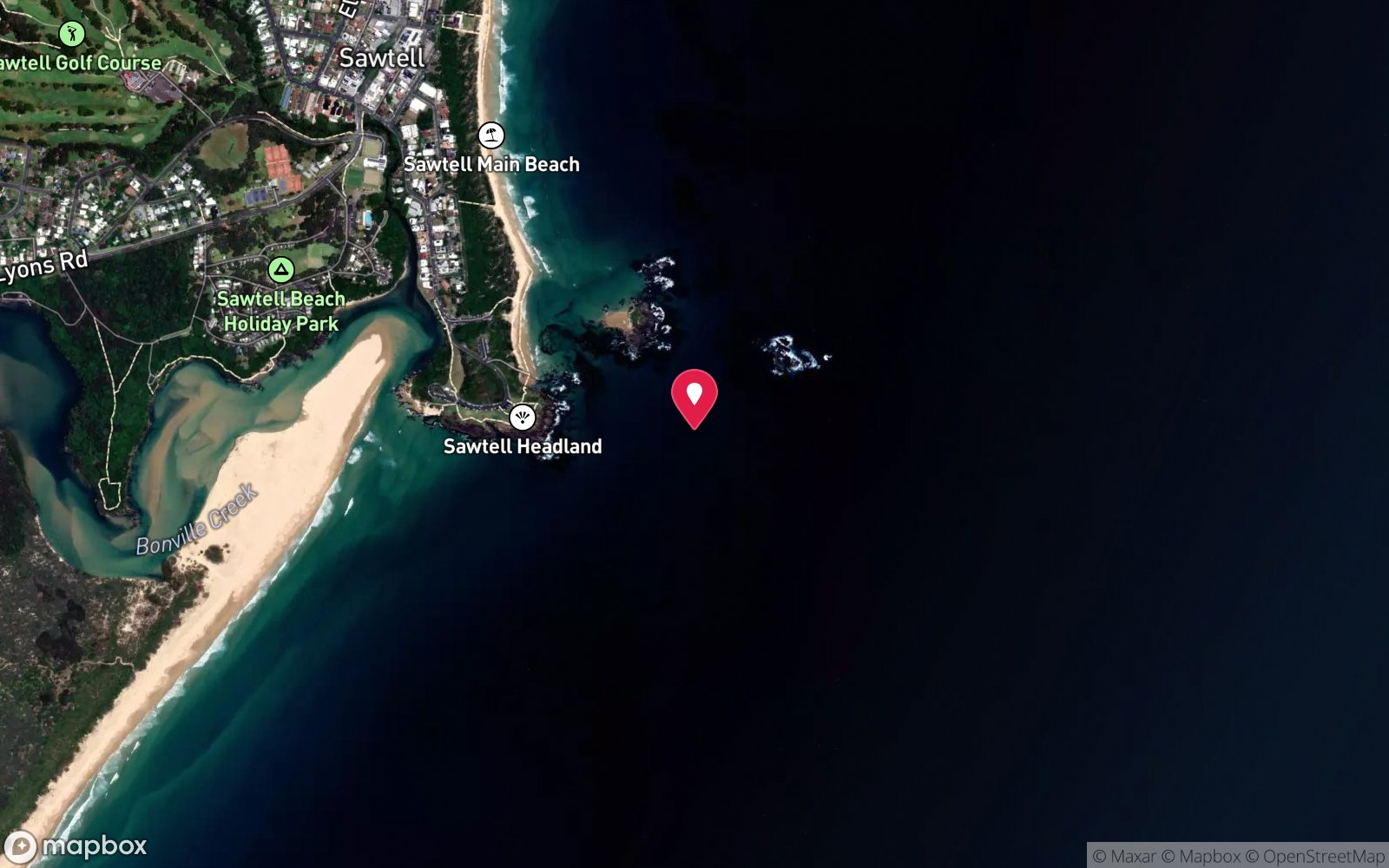
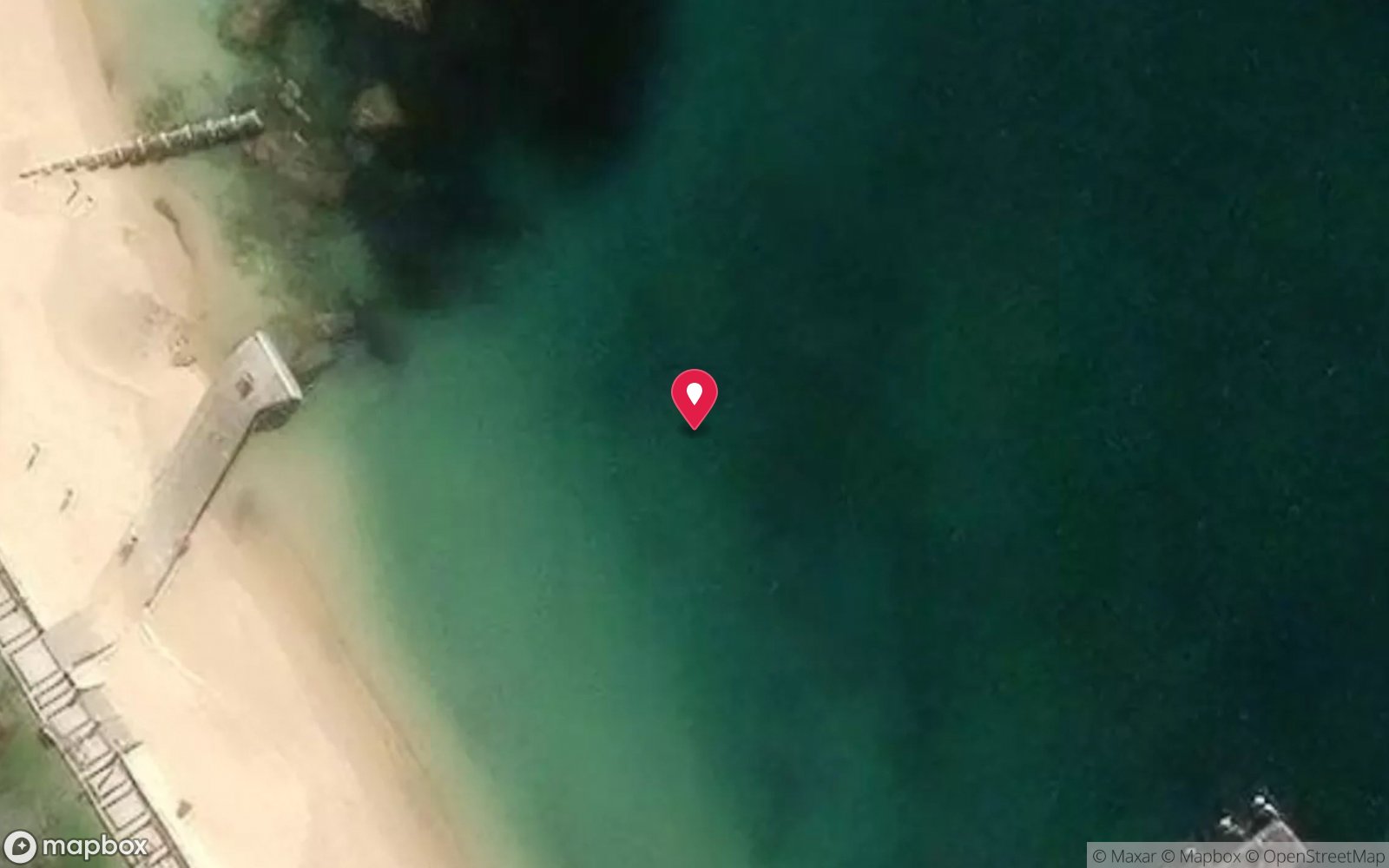
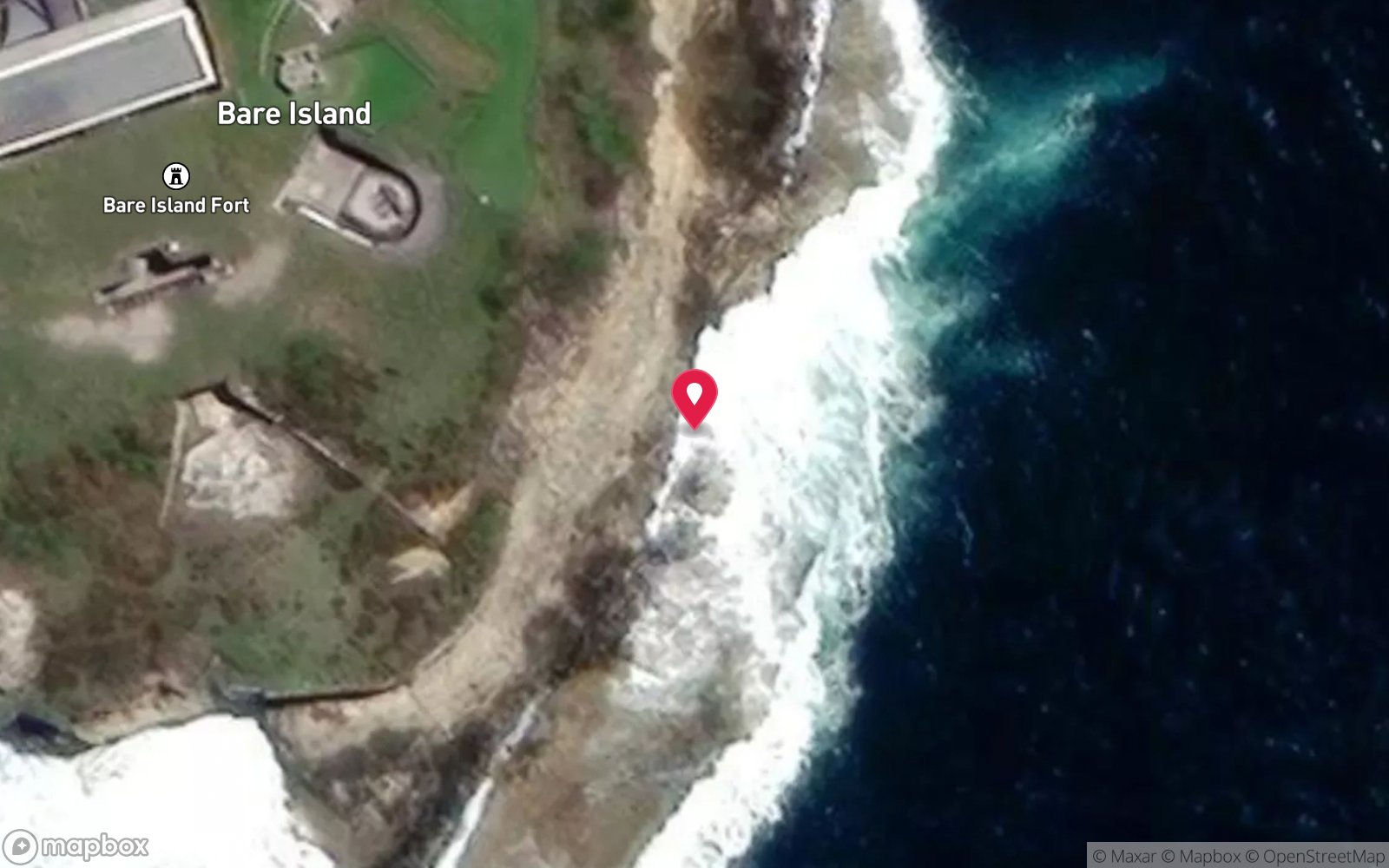
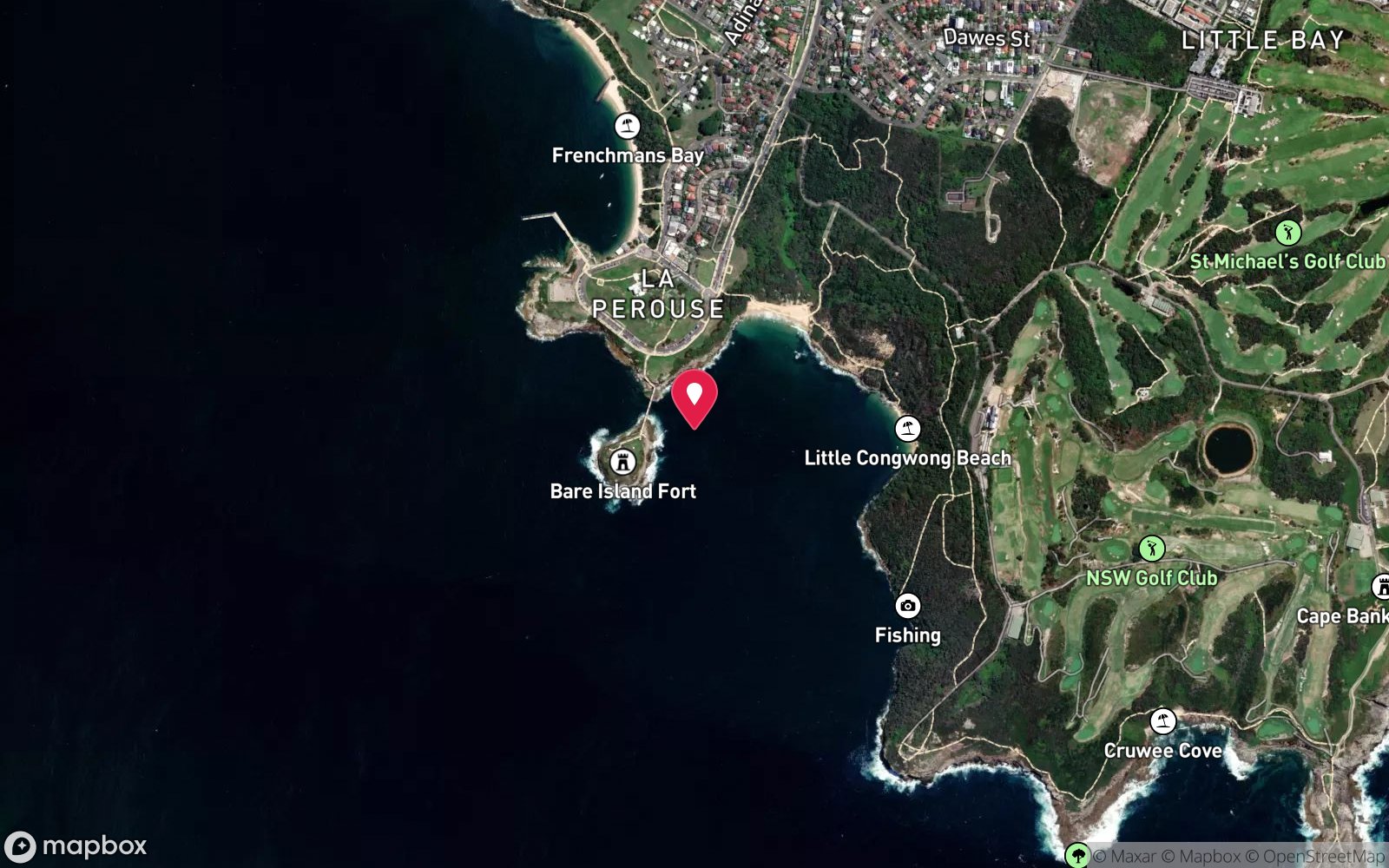
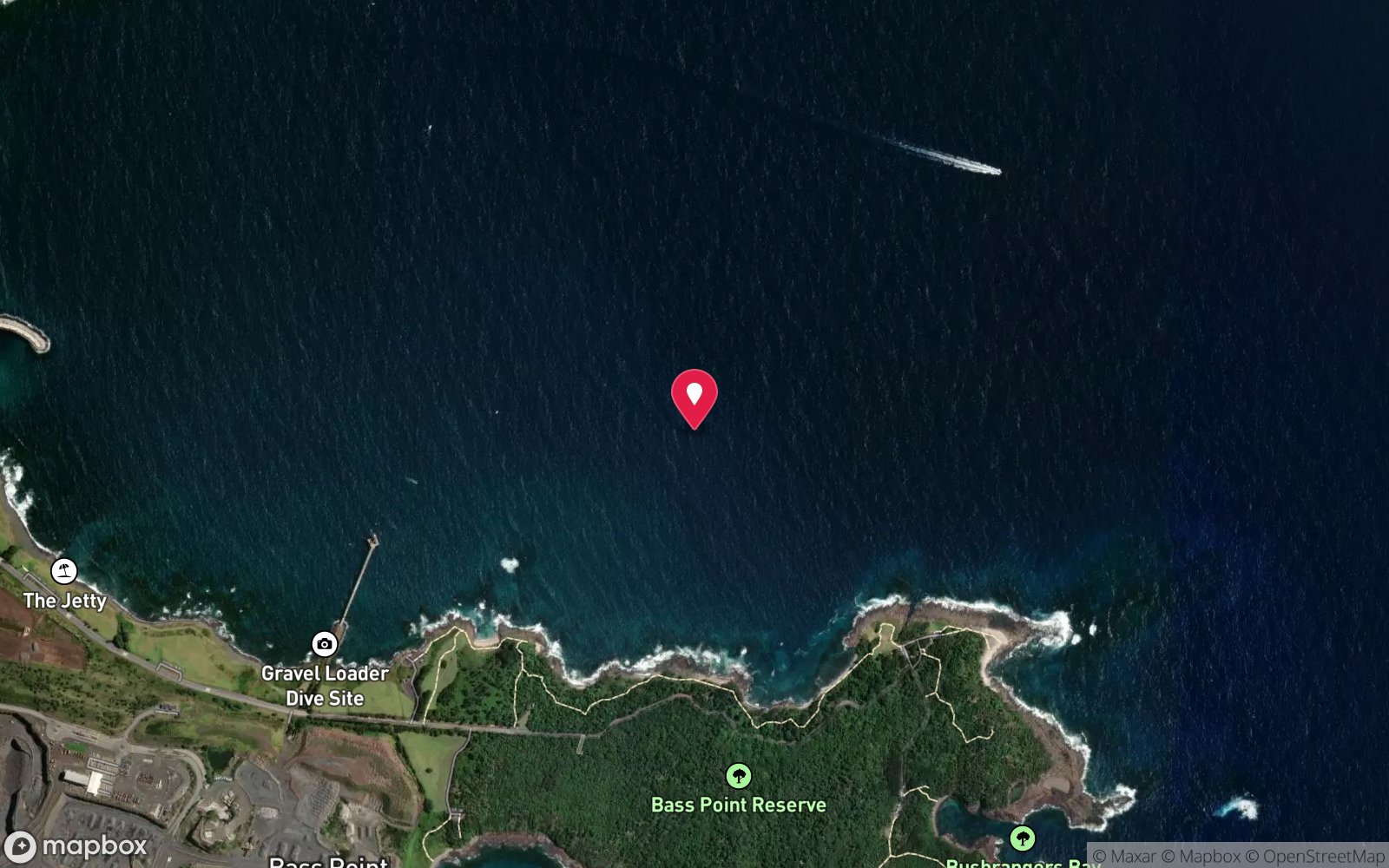
Satellite views
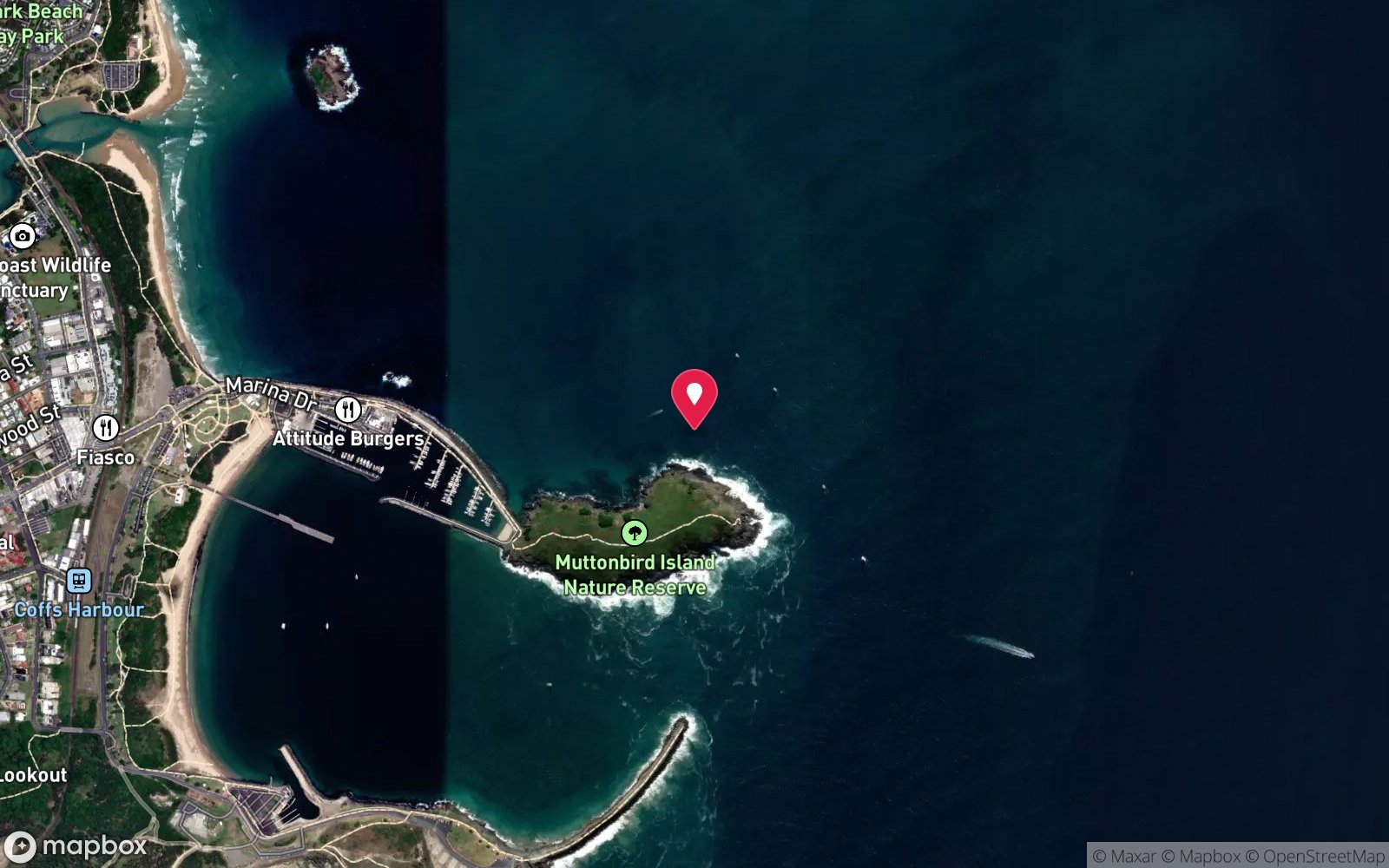
Mutton Bird Island (Coffs Harbour): frequently asked questions
How deep is Mutton Bird Island (Coffs Harbour)?
Mutton Bird Island (Coffs Harbour) reaches a maximum depth of 15 m, with the shallowest part at about 3 m; most of the dive is spent around 8 m.
What certification do I need to dive Mutton Bird Island (Coffs Harbour)?
Open Water is the recommended minimum. Rated beginner: sheltered, shallow and manageable for a newly certified diver on a normal day, though note surge on the entry or in the shallows and boat traffic overhead.
Can I shore dive Mutton Bird Island (Coffs Harbour)?
Yes. Mutton Bird Island (Coffs Harbour) is a shore dive that can be done independently: walk-in from the harbour breakwall or beach on the sheltered inner side; rock entry on the more exposed outer side on calm days.
When is the best time to dive Mutton Bird Island (Coffs Harbour)?
Winter and calm days for the outer side; the inner harbour side is diveable in most conditions.
What marine life will I see at Mutton Bird Island (Coffs Harbour)?
Regularly recorded: Wobbegongs, turtles, blue groper, nudibranchs, moray eels, juvenile tropical fish, cuttlefish (winter).
What wetsuit do I need at Mutton Bird Island (Coffs Harbour)?
3 mm shorty summer, 5 mm full suit winter.
How cold is the water at Mutton Bird Island (Coffs Harbour)?
Typically 24-26 °C in summer and 18-19 °C in winter.
What are the main hazards at Mutton Bird Island (Coffs Harbour)?
Boat traffic in the harbour channel — keep close to the rocks and use a dive flag/float; surge on the outer, ocean-facing side; visibility drops after rain. See the hazards section above for the full list.
Can you night dive Mutton Bird Island (Coffs Harbour)?
Yes, Mutton Bird Island (Coffs Harbour) is commonly dived at night.
Diving in Coffs Harbour & Solitary Islands
The Solitary Islands Marine Park is where the tropics meet the temperate zone: hard corals grow alongside kelp, anemonefish share ledges with blue gropers, and grey nurse sharks, turtles, mantas and leopard sharks all pass through. North Solitary's Anemone Bay has the densest carpet of anemones and clownfish in the country; South Solitary has the lighthouse, Manta Arch and Buchanan's Wall. Split Solitary and North West Solitary are closer in and quieter.
Getting there: Coffs Harbour is a six-hour drive or a one-hour flight from Sydney. Charters leave from Coffs Harbour marina; North Solitary trips run from Wooli or Coffs and take 40–60 minutes each way.
All Coffs Harbour & Solitary Islands dive sites and a suggested itinerary →
Sources
Data confidence: Medium. Last updated September 2026. Know this site better? How to send a correction
Nearby dive sites
More shore dives in New South Wales
Explore more
This region
Similar dives
Marine life