Dive slate · divesites.com.au · printed 8 Nov 2026
Split Solitary Island – Coral Corner
Coffs Harbour & Solitary Islands, New South Wales · near Coffs Harbour
| Depth | 10–18 m |
|---|---|
| Minimum level | Open Water |
| Difficulty | Beginner |
| Access | Boat (day trip) |
| Entry | Giant stride from a Jetty Dive Centre RIB onto a mooring |
| Current | Mild |
| Visibility | 5-15 m |
| Water | summer 24-26 °C, winter 18-19 °C |
| Suit | 3 mm shorty/full suit summer, 5-7 mm winter |
| Best season | Year-round |
| Bottom time | 50 min |
| Position | -30.23800, 153.17900 (approximate) |
| Permit | Solitary Islands Marine Park – Split Solitary Island Sanctuary Zone, no take |
| Nearest chamber | Prince of Wales Hospital (Randwick, Sydney) |
| Emergency | 000 · DAN Asia-Pacific diving emergency 1800 088 200 |
Split Solitary Island – Coral Corner
A rare, close overlap of kelp forest and plate coral growth in a single easy dive, illustrating the tropical/temperate transition unique to this coast.
Near Coffs Harbour · Coffs Harbour & Solitary Islands, New South Wales
- Depth
- 10–18 m
- Minimum level
- Open Water
- Access
- Boat (day trip)
- Boat ride
- ~20 min
- Water
- 24-26 °C
- Visibility
- 5-15 m
Split Solitary Island – Coral Corner10–18 m · Open Water
Dive factsDepths, conditions, location & safety
Season
In season nowBest months: year-round.
Dive facts
- Depth
- 10–18 m
- Typical depth
- 13 m
- Certification
- Open Water
- Difficulty
- Beginner
- Depth tier
- Open Water (10–18 m)
- Access
- Boat (day trip)
- Offshore
- 9 km
- Dive centre needed
- Yes – boat access only
- Shore / independent
- No
- Boat ride
- ~20 min
- Current
- Mild
- Visibility
- 5-15 m
- Water temp (summer)
- 24-26 °C
- Water temp (winter)
- 18-19 °C
- Water
- Subtropical
- Bottom time
- 50 min
- Dive traffic
- Popular (weekly charters)
- Night dive
- Possible
- Snorkel friendly
- Partial
Exposure suit
3 mm shorty/full suit summer, 5-7 mm winter
Location
Split Solitary Island · NSW Mid North Coast – Coffs Harbour / Solitary Islands
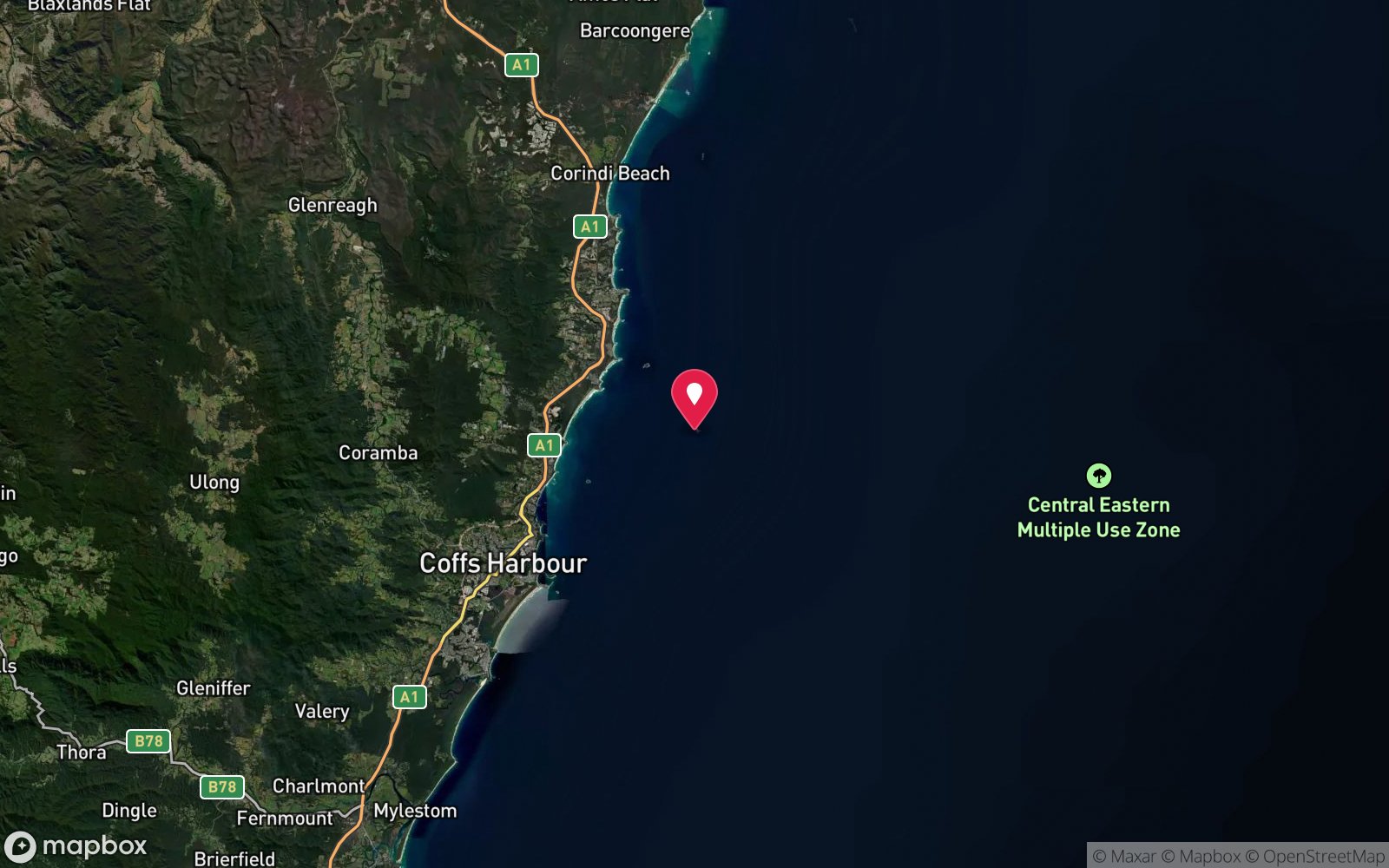
-30.23800, 153.17900
Approximate position — not for navigation.
Open in Google MapsDive site map (external) →Primary source: jettydive.com.auMarine park & permits
Solitary Islands Marine Park – Split Solitary Island Sanctuary Zone, no take
Nearest recompression chamber
Prince of Wales Hospital (Randwick, Sydney)
Diving emergency: call 000, then DAN AP 1800 088 200.
Trip planner
Build a trip around Split Solitary Island – Coral Corner →
A day-by-day plan for Coffs Harbour & Solitary Islands with this site locked in.
This guide is a planning aid. Conditions change daily — confirm with a local dive centre and dive within your training. Data & safety notes.
Dive profile
How this site rates
Scores are computed from the recorded data, not opinions. How?
At a glance
Split Solitary Island – Coral Corner is a reef boat dive in Coffs Harbour & Solitary Islands, NSW, 10–18 m, suited to Open Water divers, about 20 minutes by boat.
Rated beginner: sheltered, shallow and manageable for a newly certified diver on a normal day, though note boat traffic overhead.
Why dive here
- A rare, close overlap of kelp forest and plate coral growth in a single easy dive, illustrating the tropical/temperate transition unique to this coast.
Conditions to avoid
- Outgoing tide or run-off after rain (poor visibility)
About Split Solitary Island – Coral Corner
Coral Corner, on the north-western tip of Split Solitary Island, is often cited as the clearest single demonstration in the whole Solitary Islands Marine Park of the overlap between tropical and temperate marine ecosystems that makes this stretch of the NSW coast so unusual. The terrain here is generally flatter than the rest of the island, shaped into a series of small bays separated by rocky headlands, with depths running a gentle 10-15 m and occasional deeper pockets to about 18 m. What makes the site distinctive is the close juxtaposition of kelp beds — a distinctly temperate, cool-water habitat — growing in water as shallow as 18 m alongside profuse growths of plate coral, in places only a few metres apart, a combination that would be unusual almost anywhere else on the Australian coast.
Coral life is abundant within the sheltered bays themselves, while the rocky headlands separating them support a denser invertebrate community, and turtles are commonly found resting in the shallows between dives. Because the terrain is gentle and current is generally mild, Coral Corner is an easy, approachable dive suited to less experienced divers, and its combination of coral gardens and kelp forest in a single dive gives it genuine interest for anyone curious about the biogeography of this transition zone between the tropical Great Barrier Reef province to the north and the cooler temperate reefs of southern NSW. It is regularly worked into a day's diving at Split Solitary Island alongside the more turtle- and macro-focused southern sites.
Getting there & entry
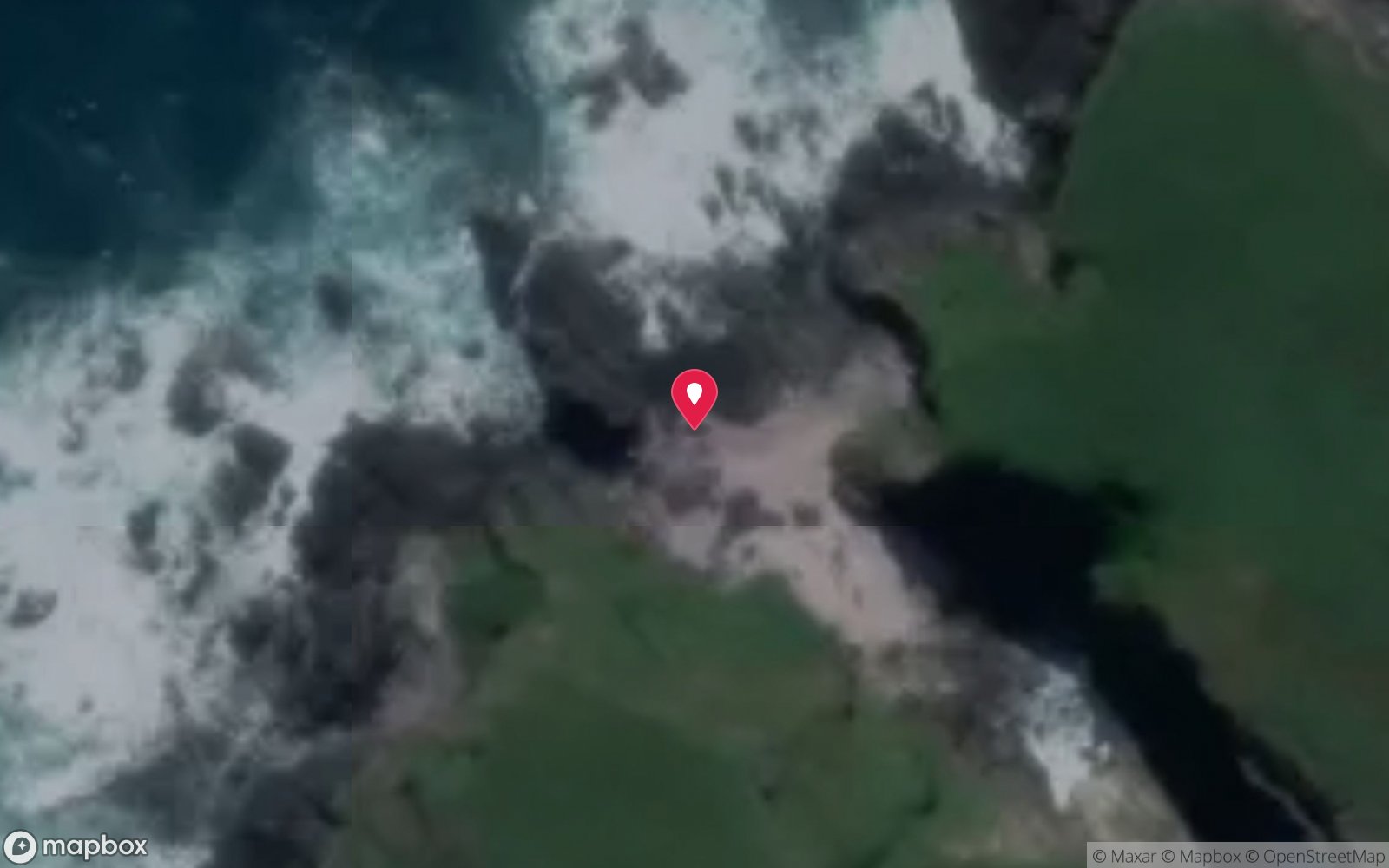
North-western corner of Split Solitary Island; flatter terrain shaped like a series of bays separated by rocky headlands, in 10-15 m with kelp beds and profuse plate coral growth out to about 18 m — a striking overlap of temperate kelp and tropical coral in one dive.
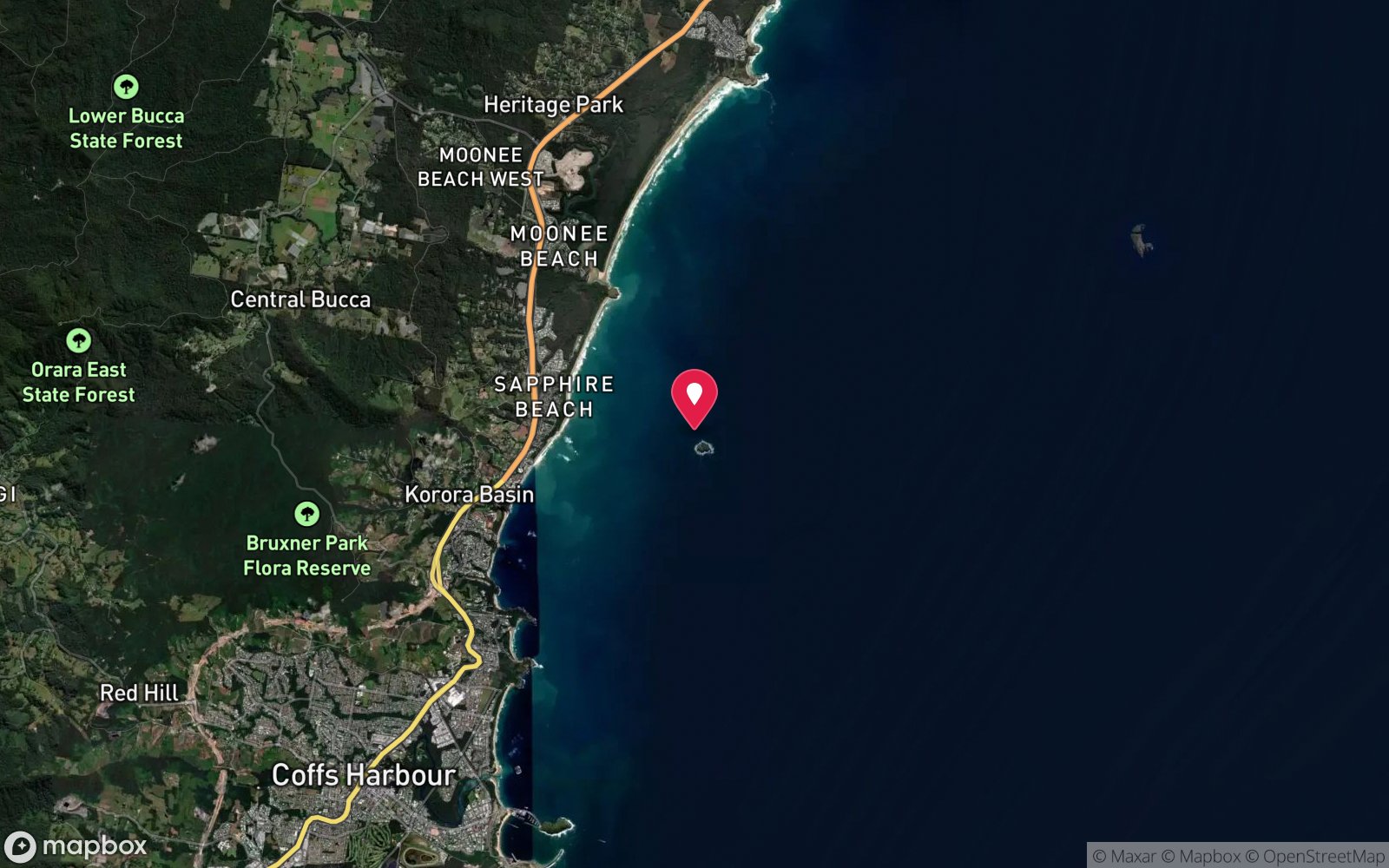
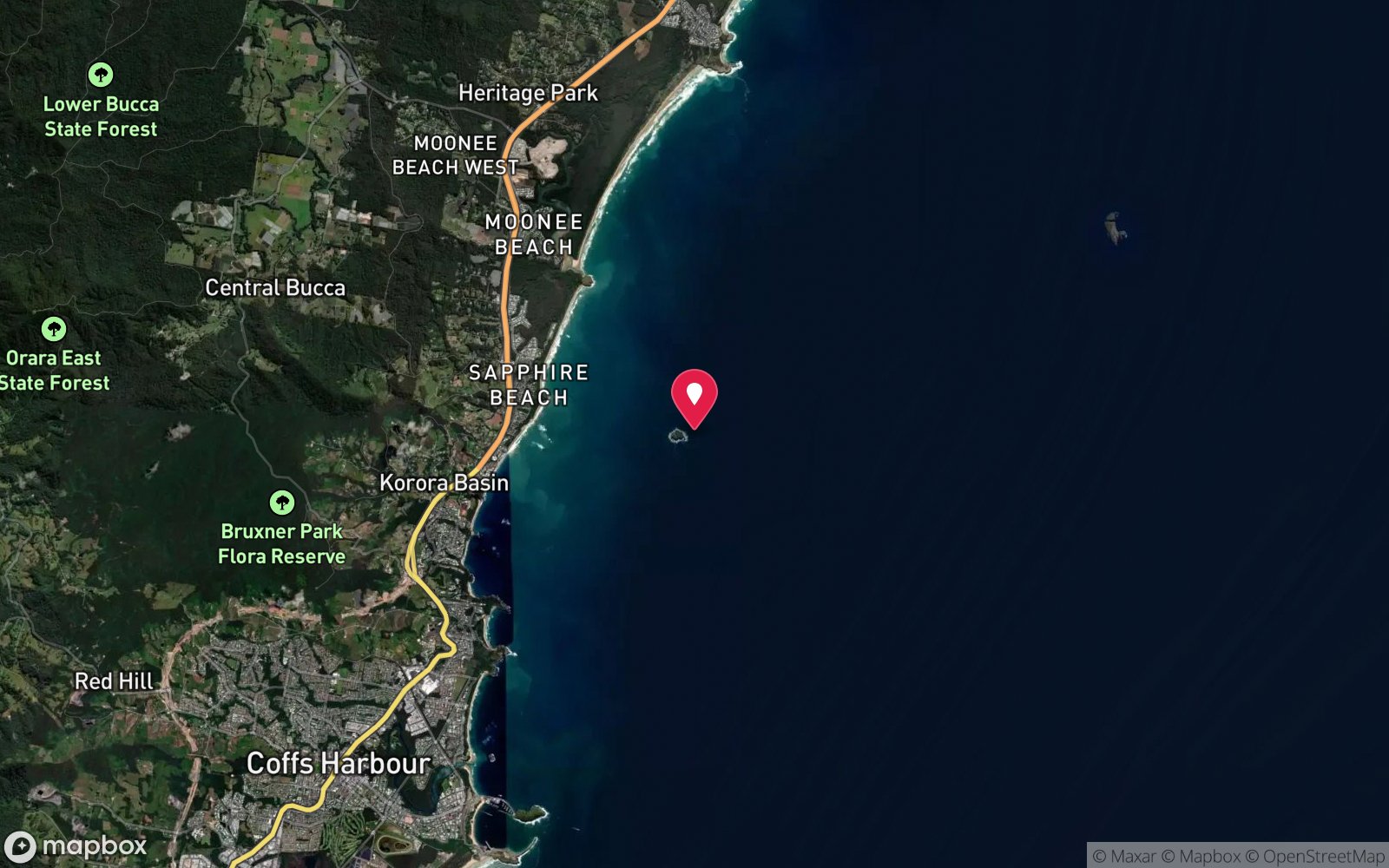
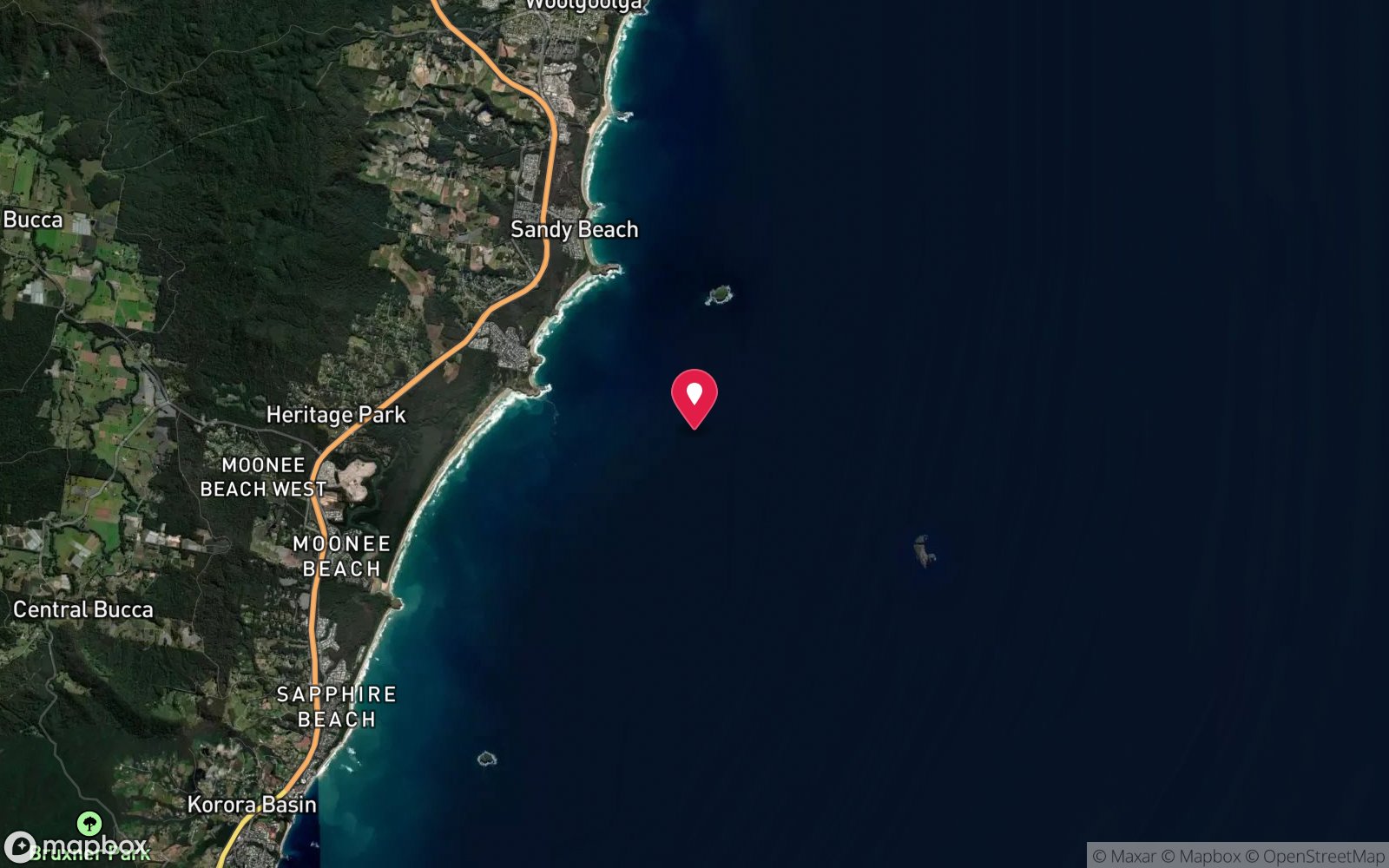
Jetty Dive Centre departs from the public floating pontoon wharf in Coffs Harbour boat harbour, opposite the Attitude Burgers building (check in at 398 Harbour Drive). Private boats use the public ramp inside the harbour breakwall. Split Solitary Island is the closest of the group, about 9 km east-north-east of Coffs Harbour, roughly a 20-minute run — the standard backup site when weather rules out South Solitary Island.
Entry: Giant stride from a Jetty Dive Centre RIB onto a mooring
Weather, swell & tides
Conditions off Coffs Harbour depend heavily on which island is being run: North West Solitary and Split Solitary sit closer inshore and are usable in more marginal weather, while South Solitary and any northern sites need a bigger settled window. Visibility across the group is generally 8-25 m and best away from river influence; the Coffs, Bellinger, Nambucca and Clarence systems all periodically dirty inshore water for a few days after heavy rain. Summer (Nov-Apr) is warmest with tropical vagrants and mantas; winter (May-Oct) is cooler with grey nurse sharks and giant cuttlefish.
Humpback whales pass April-November. Being the closest and most sheltered island, Split Solitary is the most reliably diveable site in the group, though visibility is often lower than at South Solitary Island since it sits closer to the mainland's influence.
Best season: Year-round
If it's blown out
Sheltered or shore sites within 25 km that often work when Split Solitary Island – Coral Corner doesn't.
- Mutton Bird Island (Coffs Harbour) · 8 km · Max 15 m
- Diggers Beach (Coffs Harbour) · 5 km · Max 6 m
- Boambee Beach reef · 19 km · Max 12 m
How the dive is usually run
Descend onto the flatter terrain at 10-12 m, move between the small bays separated by rocky headlands looking for plate coral growths only a few metres apart, check the deeper kelp beds around 18 m, and shallow up over the headlands to the ascent point.
Marine life
- Plate corals
- kelp
- turtles (resting in shallows) →
- invertebrates
- nudibranchs →
- resident reef fish
Linked species have their own page listing every site where they are recorded. All marine life →
Training required
Within the 18 m limit of an entry-level certification.
Depth tiers: 0–10 m easy · to 18 m Open Water · 18–30 m Advanced (25 m+ is a deep dive) · 30–40 m Deep specialty · 40 m+ technical. All courses
Hazards & warnings
Boat traffic; generally low risk given the gentle terrain and mild current.
Dive centres that go here
Jetty Dive Centre runs Split Solitary Island daily as either the main destination on rougher days or a second dive after South Solitary Island; also used extensively for training and check-out dives.
Operators recorded for Split Solitary Island – Coral Corner
Other dive centres in Coffs Harbour & Solitary Islands
Map
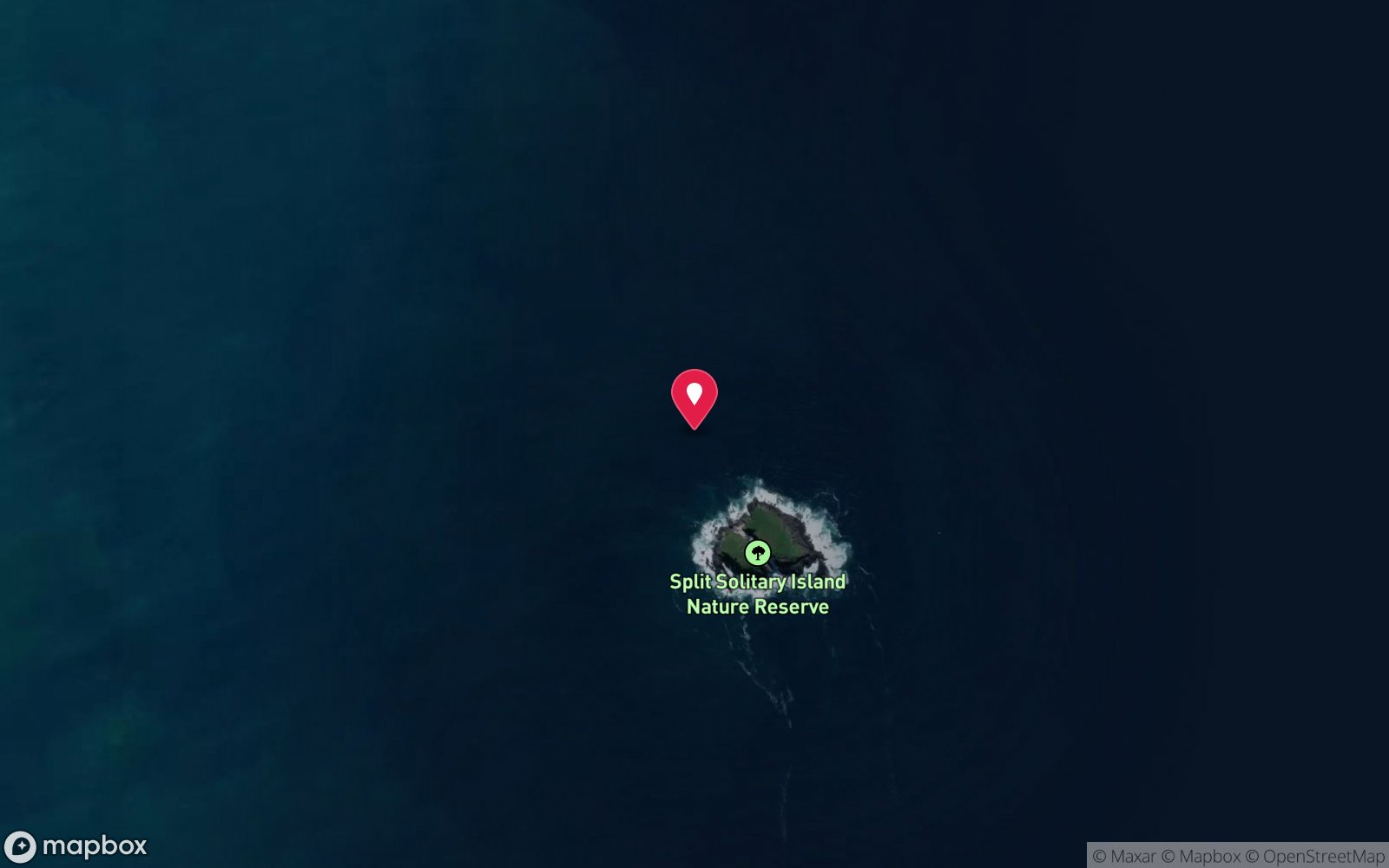
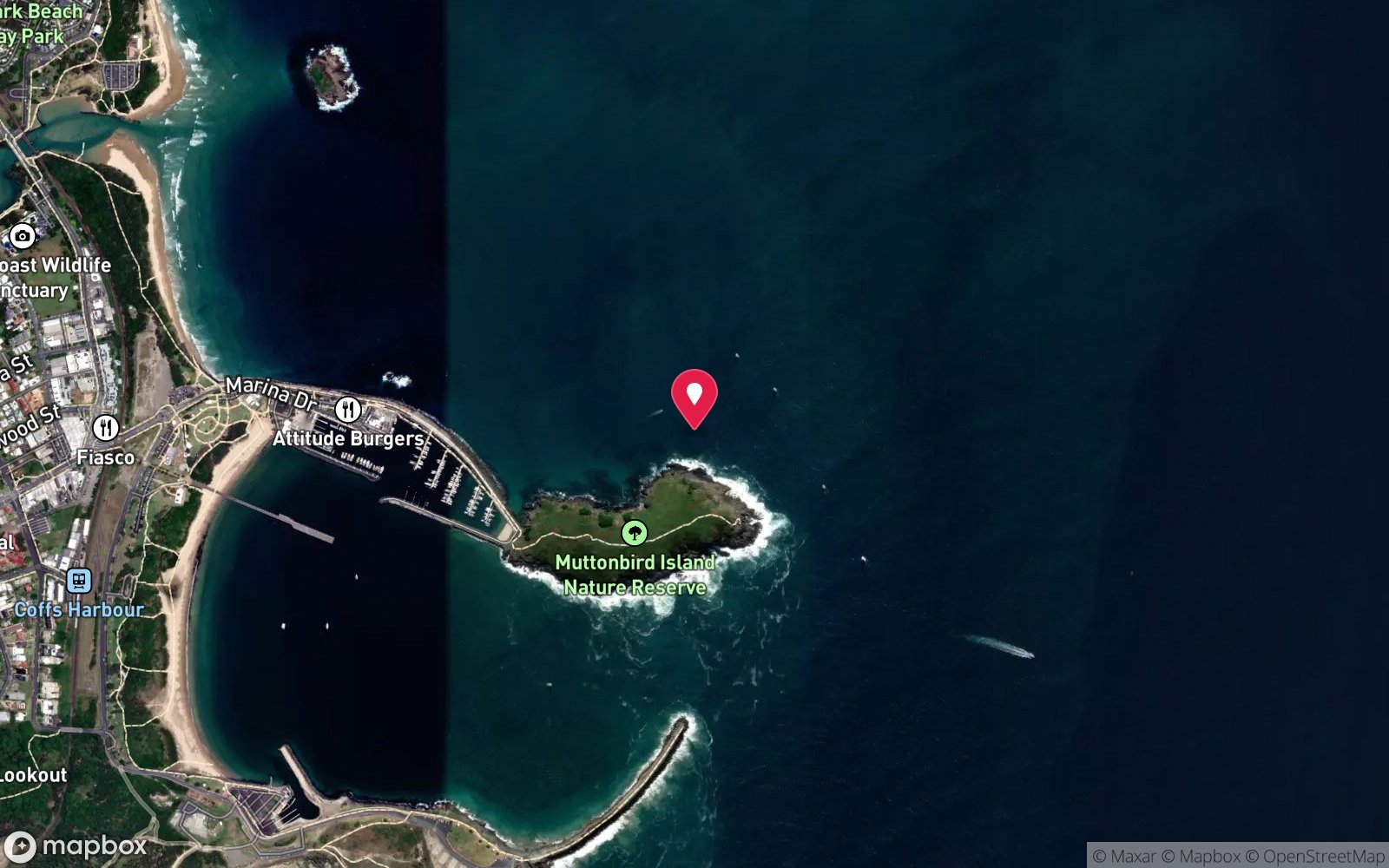
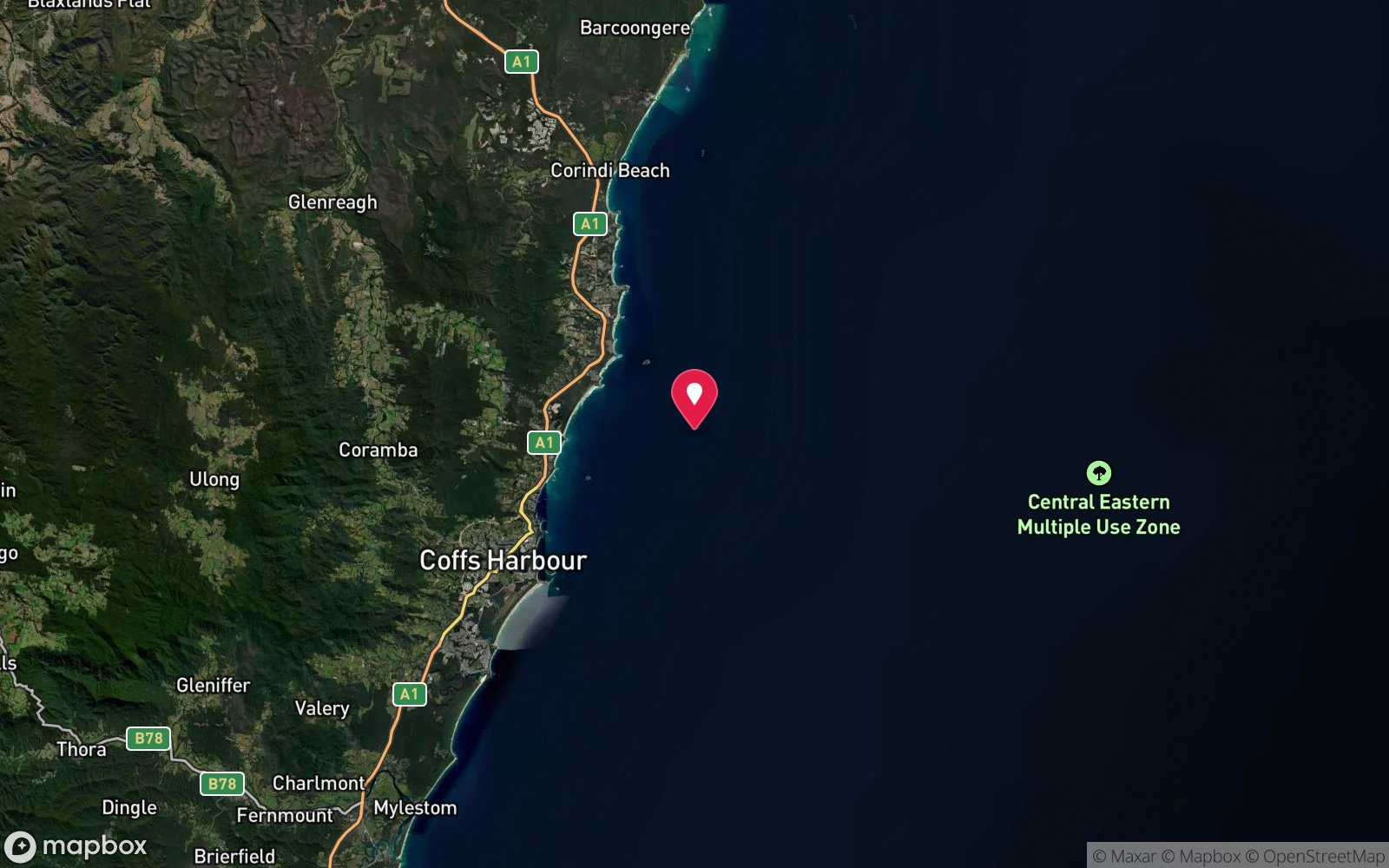
7 pinned sites. Pins marked approximate on their pages show the general area only; not for navigation.
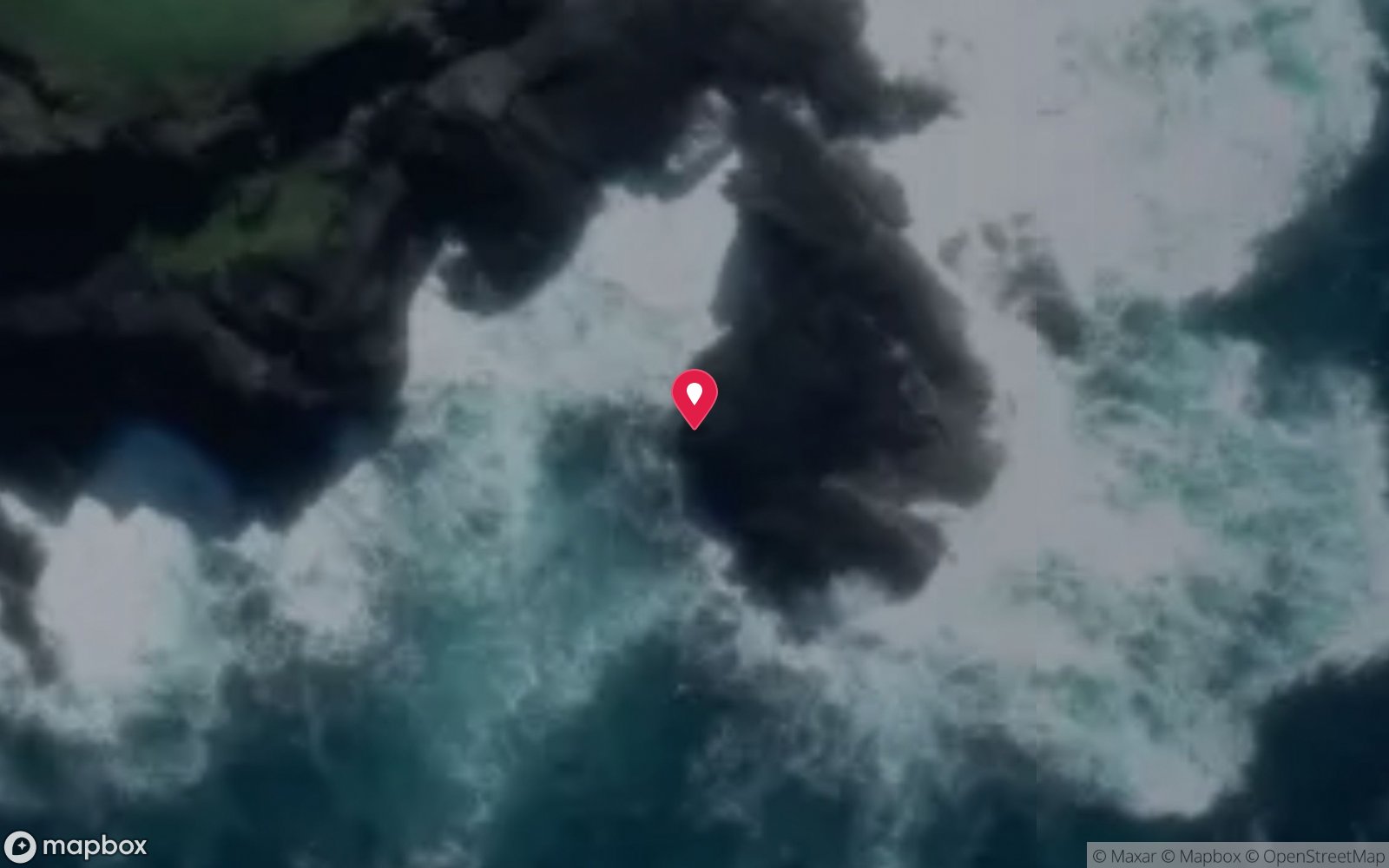
Satellite views
Split Solitary Island – Coral Corner: frequently asked questions
How deep is Split Solitary Island – Coral Corner?
Split Solitary Island – Coral Corner reaches a maximum depth of 18 m, with the shallowest part at about 10 m; most of the dive is spent around 13 m.
What certification do I need to dive Split Solitary Island – Coral Corner?
Open Water is the recommended minimum. Rated beginner: sheltered, shallow and manageable for a newly certified diver on a normal day, though note boat traffic overhead.
Can I shore dive Split Solitary Island – Coral Corner?
No, it is reached by boat (about 20 minutes). A dive centre is required: boat access only.
When is the best time to dive Split Solitary Island – Coral Corner?
Year-round.
What marine life will I see at Split Solitary Island – Coral Corner?
Regularly recorded: Plate corals, kelp, turtles (resting in shallows), invertebrates, nudibranchs, resident reef fish.
What wetsuit do I need at Split Solitary Island – Coral Corner?
3 mm shorty/full suit summer, 5-7 mm winter.
How cold is the water at Split Solitary Island – Coral Corner?
Typically 24-26 °C in summer and 18-19 °C in winter.
What are the main hazards at Split Solitary Island – Coral Corner?
Boat traffic; generally low risk given the gentle terrain and mild current. See the hazards section above for the full list.
Where is the nearest recompression chamber to Split Solitary Island – Coral Corner?
Prince of Wales Hospital (Randwick, Sydney). In an emergency call 000, then DAN Asia-Pacific on 1800 088 200.
Diving in Coffs Harbour & Solitary Islands
The Solitary Islands Marine Park is where the tropics meet the temperate zone: hard corals grow alongside kelp, anemonefish share ledges with blue gropers, and grey nurse sharks, turtles, mantas and leopard sharks all pass through. North Solitary's Anemone Bay has the densest carpet of anemones and clownfish in the country; South Solitary has the lighthouse, Manta Arch and Buchanan's Wall. Split Solitary and North West Solitary are closer in and quieter.
Getting there: Coffs Harbour is a six-hour drive or a one-hour flight from Sydney. Charters leave from Coffs Harbour marina; North Solitary trips run from Wooli or Coffs and take 40–60 minutes each way.
All Coffs Harbour & Solitary Islands dive sites and a suggested itinerary →
Sources
Nearby dive sites
More reef dives in New South Wales
Explore more
This region
Similar dives