Dive slate · divesites.com.au · printed 9 Nov 2026
Saumarez Reef
Coral Sea, External Territories · near Gladstone / Hervey Bay (expedition vessel)
| Depth | 2–30 m |
|---|---|
| Minimum level | Advanced Open Water |
| Difficulty | Intermediate |
| Access | Boat (multi-day/liveaboard) |
| Entry | Giant stride from liveaboard dive deck; descend mooring or line |
| Current | Variable/Tidal |
| Visibility | 25-40 m |
| Water | summer 27-29 °C, winter 23-25 °C |
| Suit | 3 mm full wetsuit or lycra Nov–Apr (27–29°C); 5 mm full wetsuit Jun–Sep (23–25°C); full-length lycra or stinger suit recommended Nov–May |
| Best season | Year-round when weather allows; Sep–Dec usually calmest and clearest (visibility can exceed 40 m); Jun–Aug stronger SE trades make the open-ocean crossing rough; Dec–Apr cyclone season |
| Bottom time | 50 min |
| Position | -21.63700, 153.75900 (approximate) |
| Permit | Coral Sea Marine Park (Parks Australia). Scuba/snorkel tourism in all zones requires Parks Australia authorisation (held by the operator); recreational fishing is prohibited in National Park Zones. Saumarez Reefs are zoned Habitat Protection Zone (Reefs) with Special Purpose Zone (Trawl) nearby; fishing permitted. |
| Nearest chamber | Townsville University Hospital hyperbaric unit (Townsville) or the Wesley Centre for Hyperbaric Medicine (Brisbane) – long-range aeromedical evacuation (AMSA/RFDS) only; more than a day's steaming from the coast |
| Emergency | 000 · DAN Asia-Pacific diving emergency 1800 088 200 |
Saumarez Reef
Also known as Saumarez Reefs
A remote crescent reef with vast coral meadows, turtles and a Second World War Liberty ship wreck.
Near Gladstone / Hervey Bay (expedition vessel) · Coral Sea, External Territories
- Depth
- 2–30 m
- Minimum level
- Advanced Open Water
- Access
- Boat (multi-day/liveaboard)
- Boat ride
- —
- Water
- 27-29 °C
- Visibility
- 25-40 m
Saumarez Reef2–30 m · Advanced Open Water
Dive factsDepths, conditions, location & safety
Season
In season nowBest months: January, February, March, April, June, July, August, September, October, November, December.
Year-round when weather allows; Sep–Dec usually calmest and clearest (visibility can exceed 40 m); Jun–Aug stronger SE trades make the open-ocean crossing rough; Dec–Apr cyclone season
- Best months
- Now (November)
- Stinger suit Nov–May
Dive facts
- Depth
- 2–30 m
- Typical depth
- 10 m
- Certification
- Advanced Open Water
- Difficulty
- Intermediate
- Depth tier
- Advanced Open Water (18–30 m)
- Access
- Boat (multi-day/liveaboard)
- Offshore
- 330 km
- Dive centre needed
- Yes – boat access only
- Shore / independent
- No
- Current
- Variable/Tidal
- Visibility
- 25-40 m
- Water temp (summer)
- 27-29 °C
- Water temp (winter)
- 23-25 °C
- Water
- Tropical
- Bottom time
- 50 min
- Dive traffic
- Remote/expedition only
- Night dive
- Possible
- Snorkel friendly
- Yes
Exposure suit
3 mm full wetsuit or lycra Nov–Apr (27–29°C); 5 mm full wetsuit Jun–Sep (23–25°C); full-length lycra or stinger suit recommended Nov–May
Location
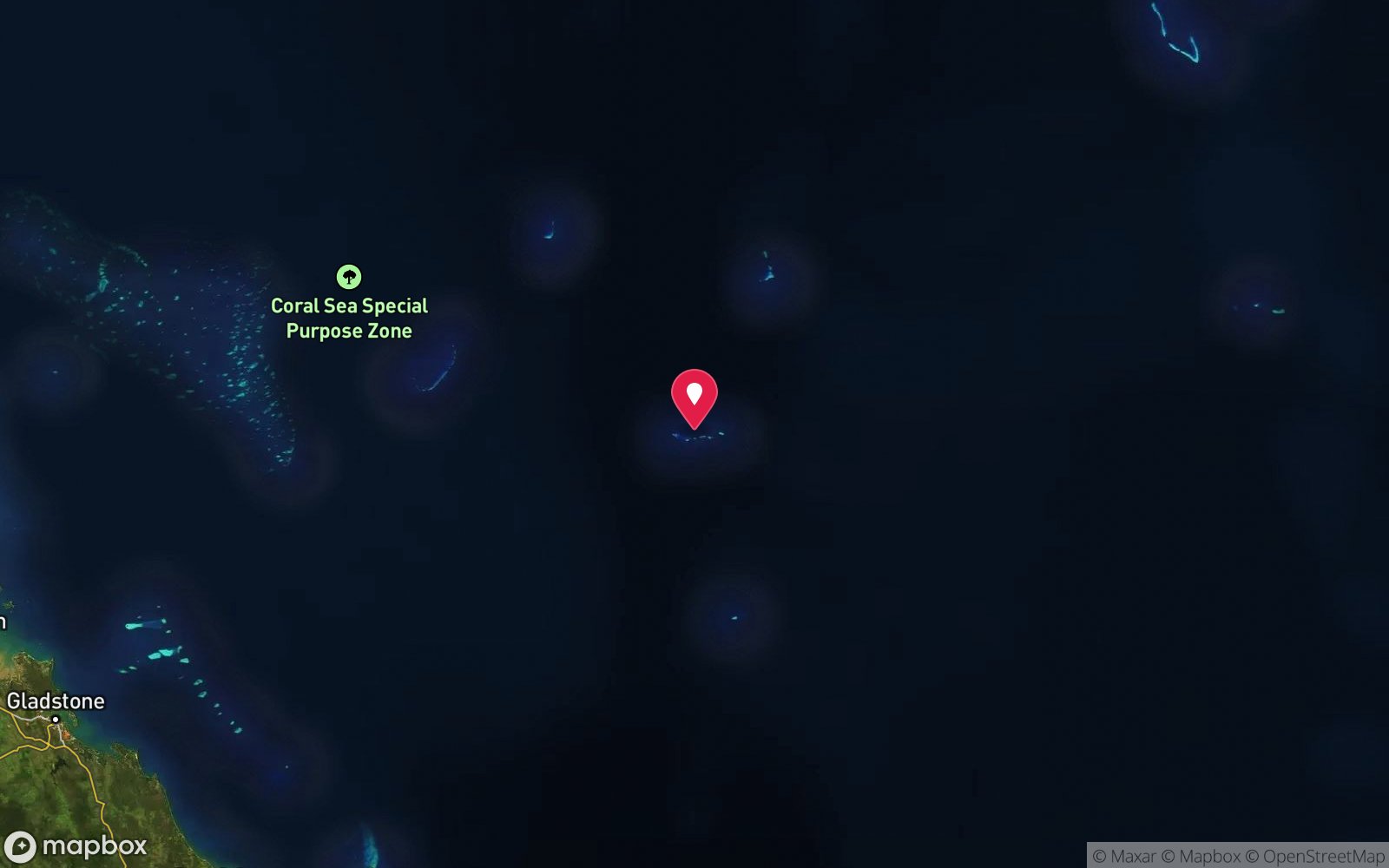
Saumarez Reefs · Coral Sea – remote reefs and cays
-21.63700, 153.75900
Approximate position — not for navigation.
Open in Google MapsDive site map (external) →Primary source: sv-anui.comMarine park & permits
Coral Sea Marine Park (Parks Australia). Scuba/snorkel tourism in all zones requires Parks Australia authorisation (held by the operator); recreational fishing is prohibited in National Park Zones. Saumarez Reefs are zoned Habitat Protection Zone (Reefs) with Special Purpose Zone (Trawl) nearby; fishing permitted.
Nearest recompression chamber
Townsville University Hospital hyperbaric unit (Townsville) or the Wesley Centre for Hyperbaric Medicine (Brisbane) – long-range aeromedical evacuation (AMSA/RFDS) only; more than a day's steaming from the coast
Diving emergency: call 000, then DAN AP 1800 088 200.
Trip planner
Build a trip around Saumarez Reef →
A day-by-day plan for Coral Sea with this site locked in.
This guide is a planning aid. Conditions change daily — confirm with a local dive centre and dive within your training. Data & safety notes.
Dive profile
How this site rates
Scores are computed from the recorded data, not opinions. How?
At a glance
Saumarez Reef is a reef liveaboard-only site in Coral Sea, Australia's external territories, 2–30 m, suited to Advanced Open Water divers, variable/tidal current.
Rated intermediate because of depth beyond 18 m, tidal current that must be timed.
Why dive here
- A remote crescent reef with vast coral meadows, turtles and a Second World War Liberty ship wreck.
- Snorkel-friendly, so non-diving companions can join at the surface.
- Rarely dived: expect to have the site to yourself, and plan your own logistics.
- Visibility often reaches 25-40 m.
About Saumarez Reef
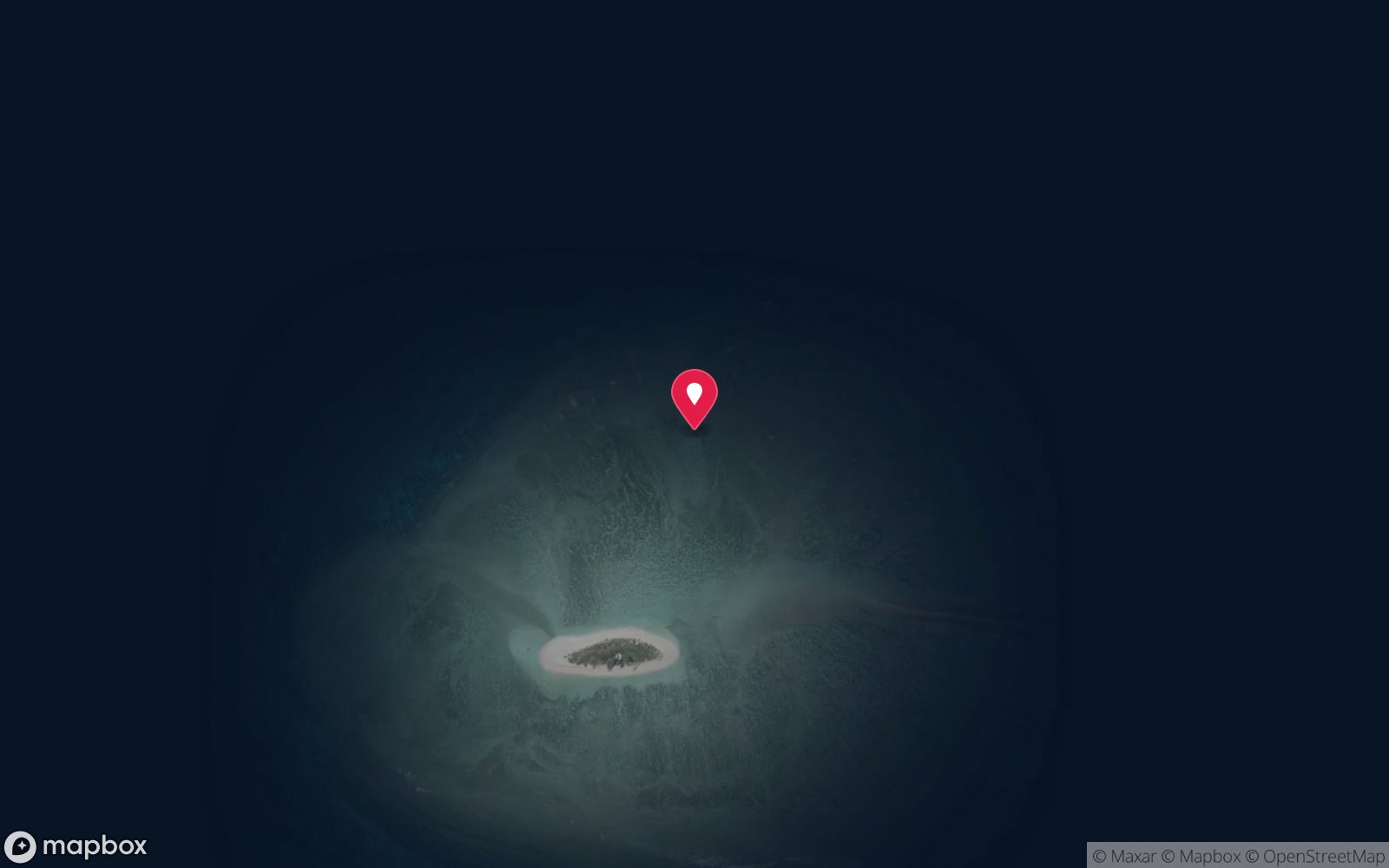
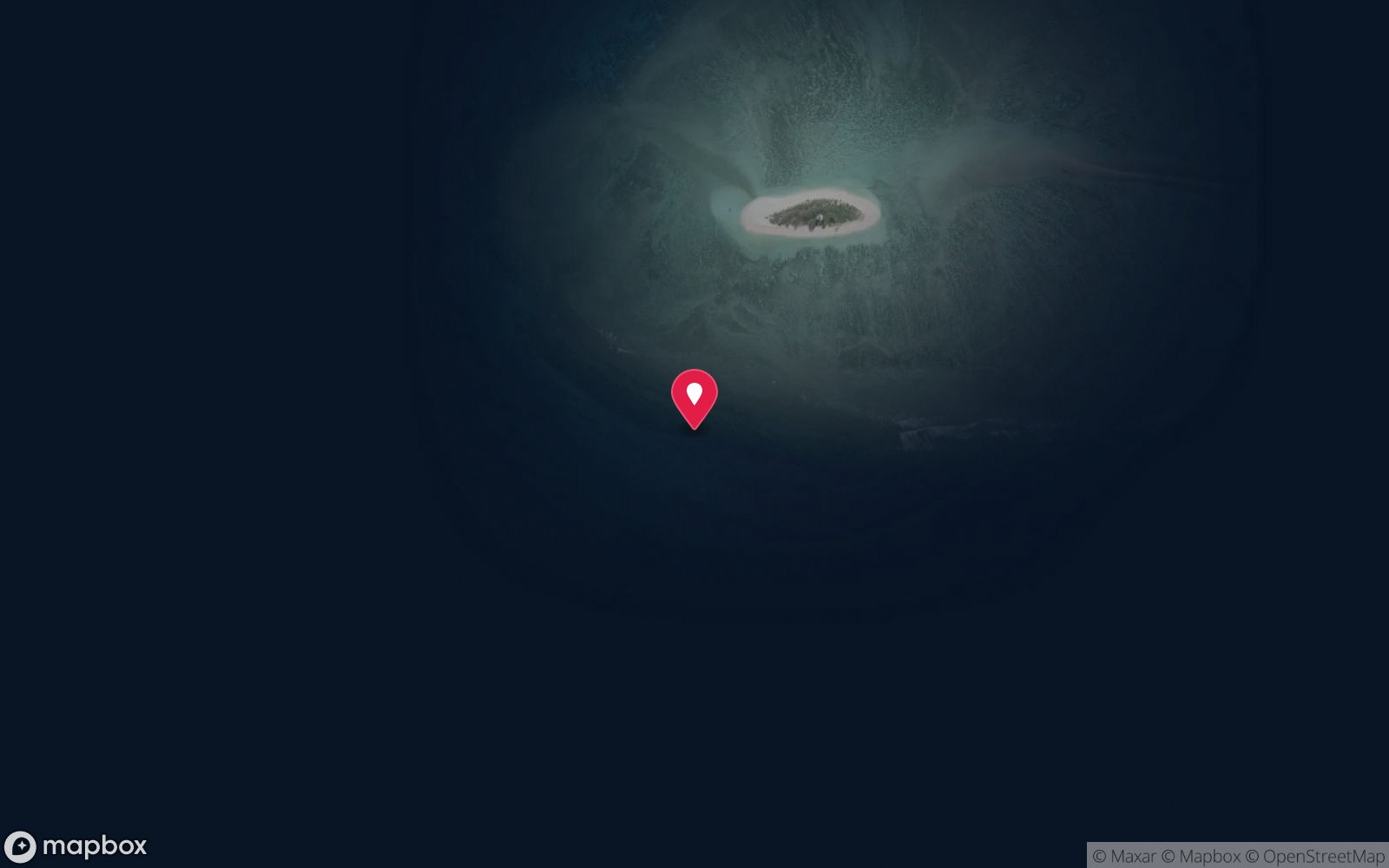
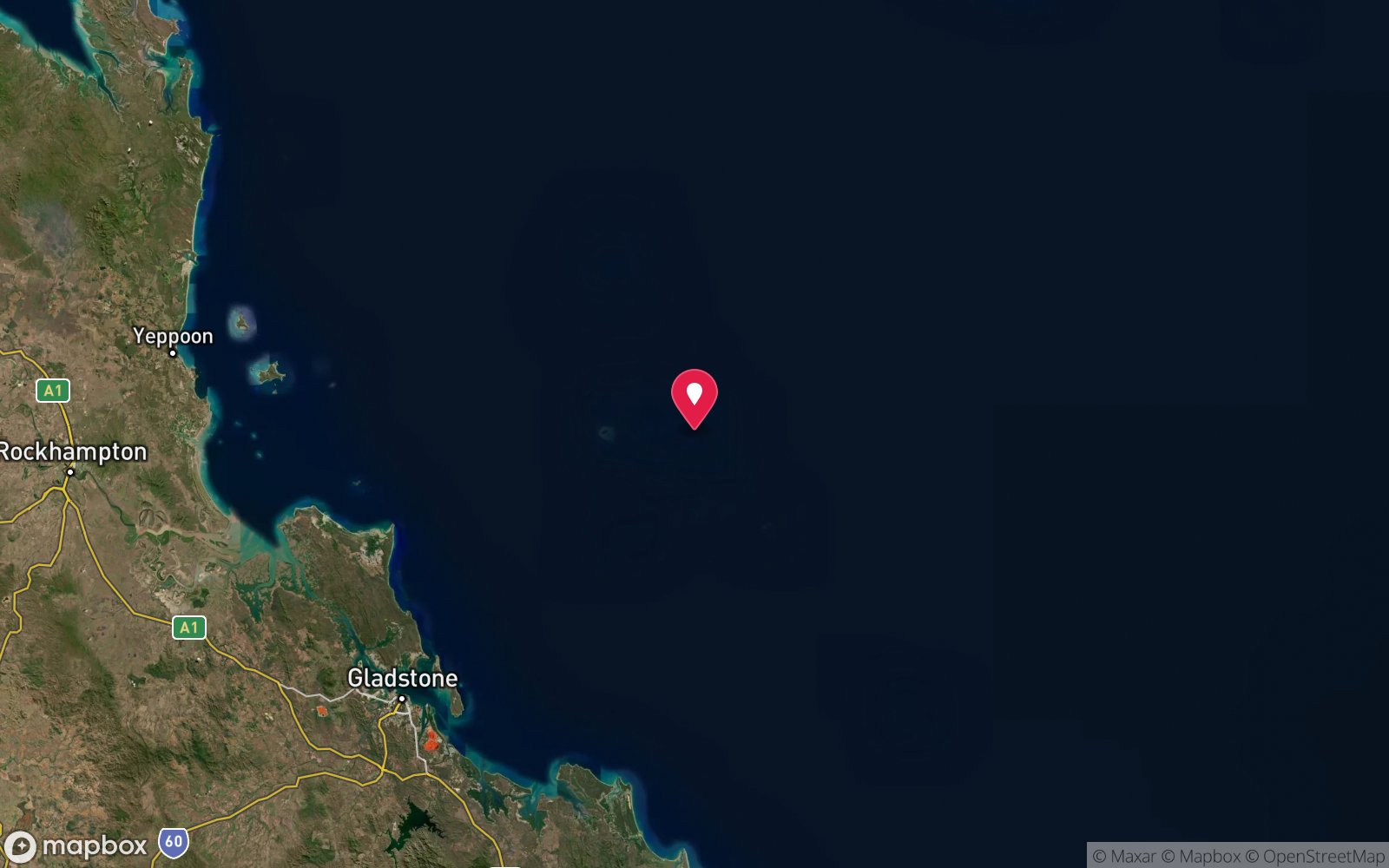
Saumarez Reefs lie in the southern Coral Sea about 330 km north-east of Gladstone and 85 km east of the Swain Reefs, the outer edge of the southern Great Barrier Reef. Wikipedia describes a crescent-shaped reef system about 27 by 14 km, open to the north-west, with three main reefs and many smaller ones, and two sand cays, North East Cay, which carries a light, and South West Cay.
Diving here is by private vessel only. The crew of the cruising yacht Anui, who visited in 2024, describe a thin rim of reef that nevertheless gives adequate protection, anchoring in about 10 m over sand near the wreck of the Francis Preston Blair and later at a shallower anchorage to the south-west. They found coral like undulating meadows as far as the eye could see, bleached but still alive, with colourful reef fish, blue tangs, surgeonfish, giant clams, sea turtles and olive sea snakes. Snorkelling was better near the reef edge by the wreck than at the south-west anchorage. A Reef Life Survey expedition in the same region had to abandon plans to dive Saumarez and the Swains when winds rose above 30 knots with 3 m swells, a reminder of how exposed the area is.
The reef's main historical feature is the Liberty ship Francis Preston Blair, wrecked on the eastern edge in July 1945, which has its own row in this database.
Saumarez suits self-sufficient cruising divers and snorkellers. It is zoned Habitat Protection Zone (Reefs), with a Special Purpose (Trawl) zone around it, so fishing is permitted and fishing boats may be encountered.
Getting there & entry
A crescent-shaped reef system about 27 by 14 km open to the north-west, with sand cays at each end, 330 km north-east of Gladstone and 85 km east of the Swain Reefs.
There is no scheduled dive operator. Access is by private expedition charter, research voyage or cruising yacht with Coral Sea experience, self-sufficient for several days and carrying compressor, oxygen and satellite communications. From Gladstone the passage is about 330 km; cruising yachts report about 210 nautical miles from Hervey Bay.
Anchorage is inside the crescent over sand in about 10 m, including near the wreck of the Francis Preston Blair; a second, shallower anchorage lies further south-west. Commercial tours need Parks Australia authorisation, and some islands are closed to landing.
Entry: Giant stride from liveaboard dive deck; descend mooring or line
Weather, swell & tides
These are remote oceanic reefs with no shelter from the south-east trades beyond their own reef rims, which blow 15–25 knots for much of April to October and make the multi-day open-ocean passage rough. Expeditions target calm windows, most often September to December; the lagoon anchorages give protection in moderate trades but the outer walls are dived only in light winds. December to April is cyclone season and trips are rarely scheduled then.
Currents on the walls and through passes can be strong; visibility is usually 30 m or more.
Best season: Year-round when weather allows; Sep–Dec usually calmest and clearest (visibility can exceed 40 m); Jun–Aug stronger SE trades make the open-ocean crossing rough; Dec–Apr cyclone season
How the dive is usually run
Snorkel or dive the reef edge near the wreck anchorage and the coral meadows inside the crescent, keeping to the lagoon in trade-wind weather. Outer-reef dives only in calm conditions with tender cover.
Marine life
- Blue tangs
- surgeonfish
- giant clams
- sea turtles →
- olive sea snakes
- reef fish; extensive coral meadows (bleaching observed 2024)
Linked species have their own page listing every site where they are recorded. All marine life →
Training required
Beyond 18 m an Advanced certification (which includes a deep dive to 30 m) is the accepted minimum. Anything past 25 m is a deep dive in practice.
Open Water divers can dive the shallower section (typical depth 10 m); the full site to 30 m needs Advanced Open Water. Operators often quote Open Water. At more than 25 m this counts as a deep dive: watch no-decompression limits and gas.
Operators' own listing: Open Water.
Courses that help here
- Enriched Air Nitrox – Longer no-decompression time at 25 m and deeper.
Depth tiers: 0–10 m easy · to 18 m Open Water · 18–30 m Advanced (25 m+ is a deep dive) · 30–40 m Deep specialty · 40 m+ technical. All courses
Hazards & warnings
Extreme remoteness – more than a day from medical help; exposed to strong SE trades; sea snakes; coral bleaching events; wreck hazards near anchorage.
Dive centres that go here
No regular operator – occasional private expedition charters, research voyages and cruising yachts only; any commercial tour requires Parks Australia authorisation.
Other dive centres in Coral Sea
Mike Ball Dive Expeditions
ListedCairns · Cairns · QLD
A long-running expedition liveaboard operation associated with Ribbon Reefs and Coral Sea itineraries, including minke whale season trips.
mikeball.com · (07) 4053 0500
Spirit of Freedom
ListedCairns · Cairns · QLD
An expedition liveaboard associated with Ribbon Reefs, Osprey Reef and Coral Sea itineraries.
spiritoffreedom.com.au · (07) 4047 9150
Passions of Paradise
ListedCairns · Cairns · QLD
A Cairns sailing catamaran day trip combining reef diving and snorkelling.
passions.com.au · (07) 4041 1600
Divers Den
ListedCairns · Cairns · QLD
A Cairns operation running both day-boat and liveaboard products alongside a training business and retail presence.
diversden.com.au · (07) 4046 7333
Down Under Cruise & Dive
ListedCairns · Cairns · QLD
A Cairns day-boat operator offering reef diving, snorkelling and introductory diving.
downundercruiseanddive.com.au · (07) 4052 8300
Reef Encounter
ListedCairns · Cairns · QLD
A Cairns-based liveaboard vessel offering multi-day reef stays with day-boat transfers.
reefencounter.com.au · (07) 4037 2700
All dive centres in External Territories →
Operators mentioned: None regular (expedition charters only)
Map
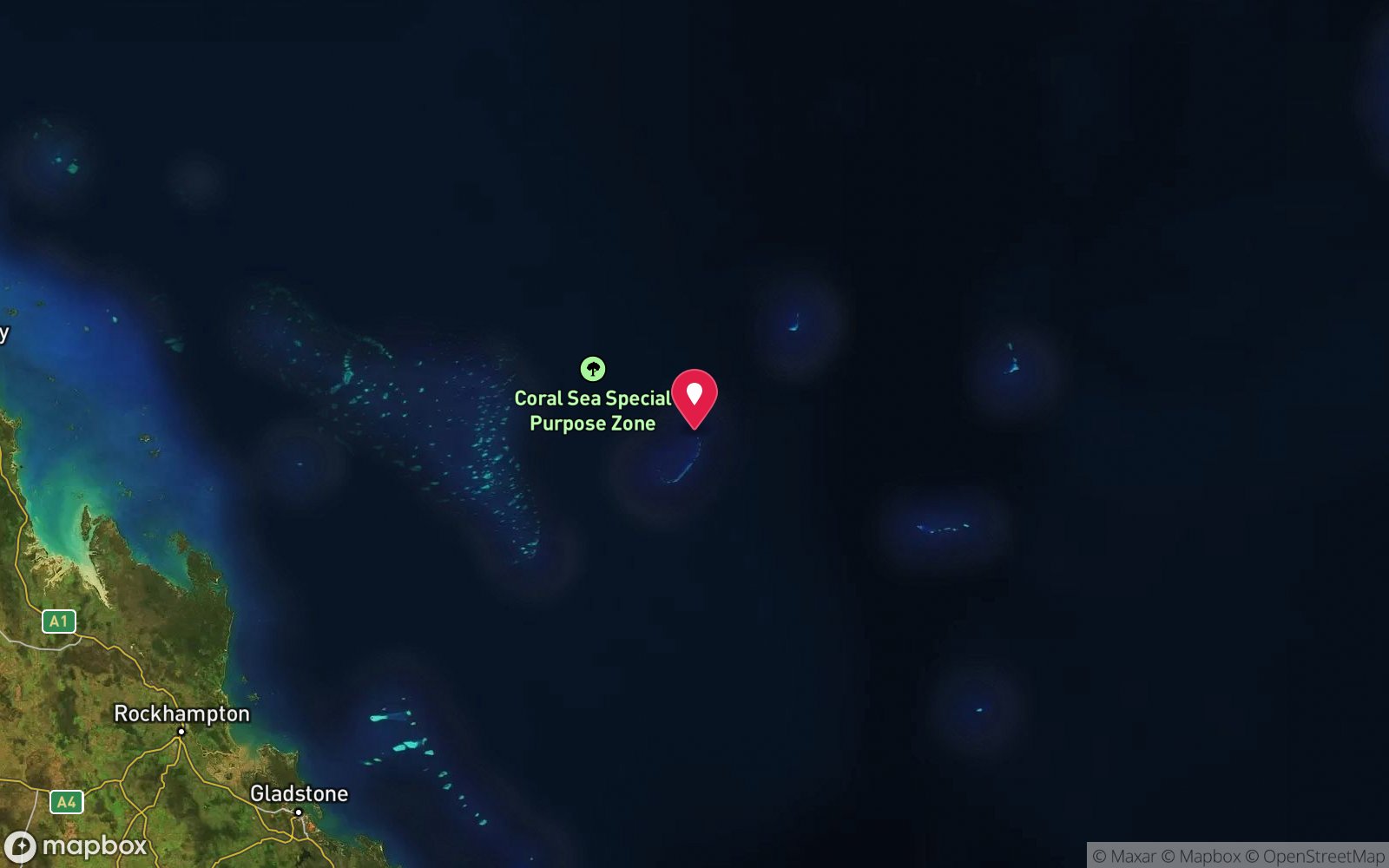
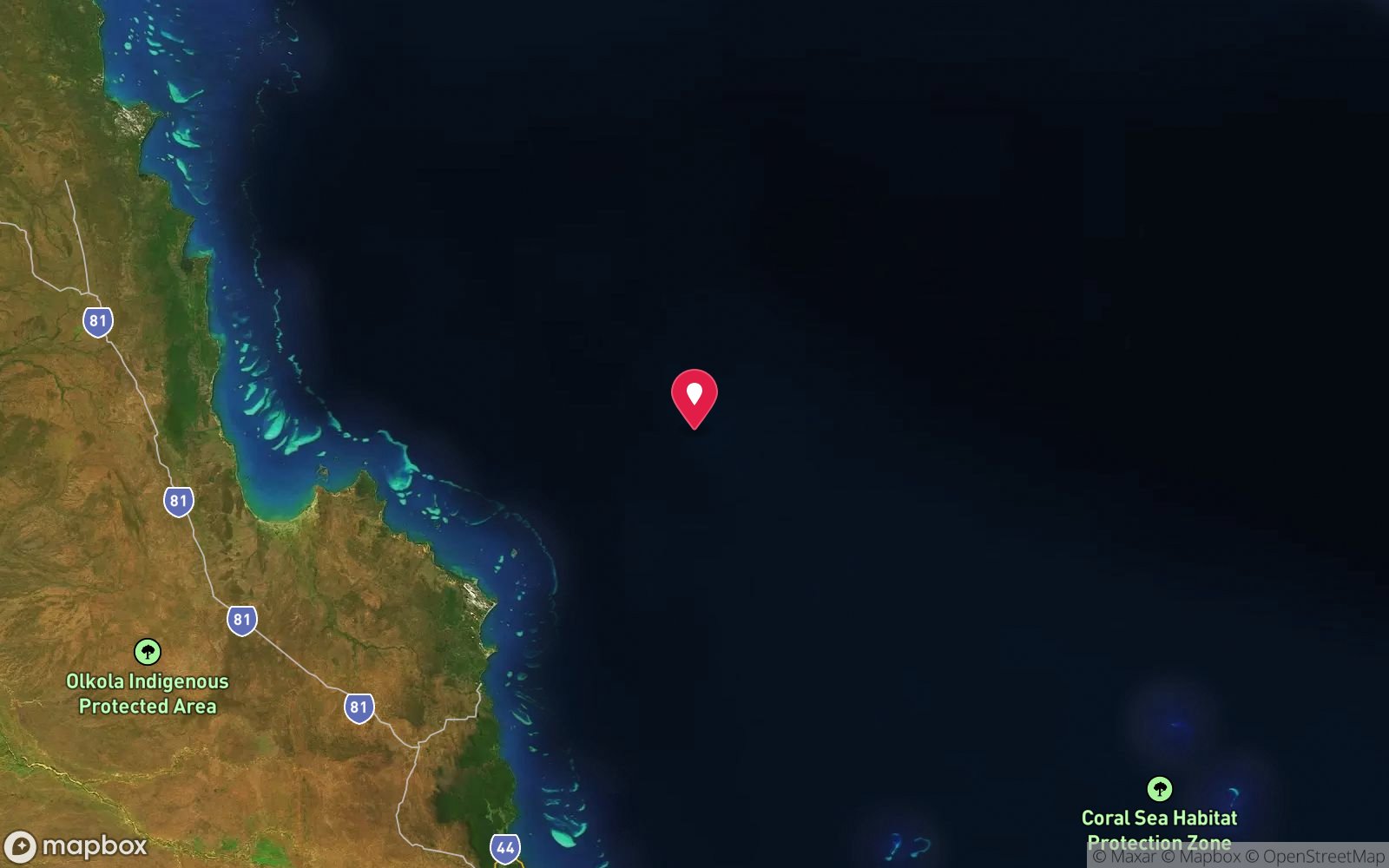
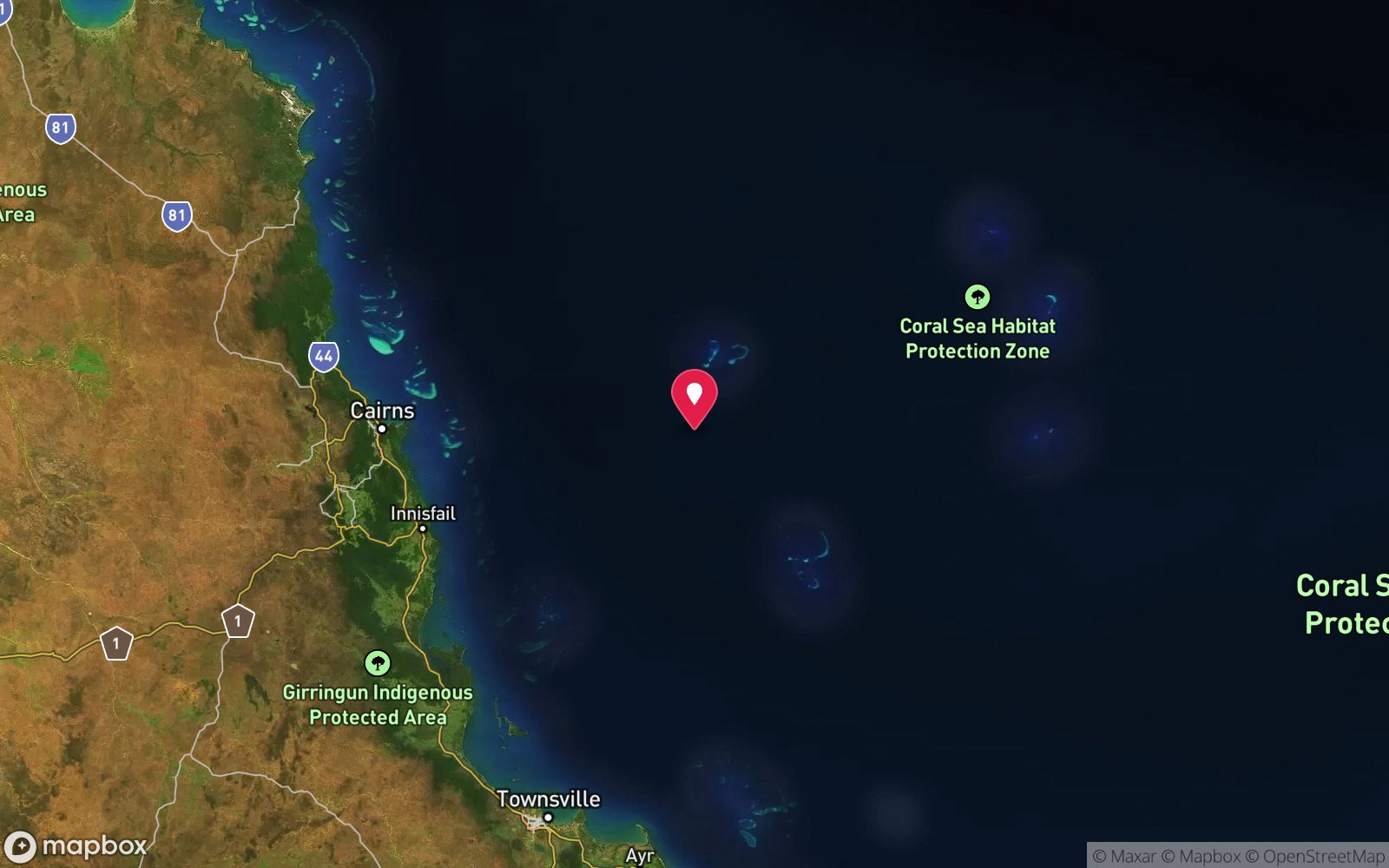
7 pinned sites. Pins marked approximate on their pages show the general area only; not for navigation.
Satellite views
Saumarez Reef: frequently asked questions
How deep is Saumarez Reef?
Saumarez Reef reaches a maximum depth of 30 m, with the shallowest part at about 2 m; most of the dive is spent around 10 m.
What certification do I need to dive Saumarez Reef?
Advanced Open Water is the recommended minimum. Open Water divers can dive the shallower section (typical depth 10 m); the full site to 30 m needs Advanced Open Water. Operators often quote Open Water. At more than 25 m this counts as a deep dive: watch no-decompression limits and gas. Rated intermediate because of depth beyond 18 m, tidal current that must be timed.
Can I shore dive Saumarez Reef?
No, it is reached by boat. A dive centre is required: boat access only.
When is the best time to dive Saumarez Reef?
Year-round when weather allows; Sep–Dec usually calmest and clearest (visibility can exceed 40 m); Jun–Aug stronger SE trades make the open-ocean crossing rough; Dec–Apr cyclone season.
What marine life will I see at Saumarez Reef?
Regularly recorded: Blue tangs, surgeonfish, giant clams, sea turtles, olive sea snakes, reef fish; extensive coral meadows (bleaching observed 2024).
What wetsuit do I need at Saumarez Reef?
3 mm full wetsuit or lycra Nov–Apr (27–29°C); 5 mm full wetsuit Jun–Sep (23–25°C); full-length lycra or stinger suit recommended Nov–May.
How cold is the water at Saumarez Reef?
Typically 27-29 °C in summer and 23-25 °C in winter.
What are the main hazards at Saumarez Reef?
Extreme remoteness – more than a day from medical help; exposed to strong SE trades; sea snakes; coral bleaching events; wreck hazards near anchorage. See the hazards section above for the full list.
Where is the nearest recompression chamber to Saumarez Reef?
Townsville University Hospital hyperbaric unit (Townsville) or the Wesley Centre for Hyperbaric Medicine (Brisbane) – long-range aeromedical evacuation (AMSA/RFDS) only; more than a day's steaming from the coast. In an emergency call 000, then DAN Asia-Pacific on 1800 088 200.
Diving in Coral Sea
Beyond the outer Great Barrier Reef the continental shelf drops away and a scatter of isolated oceanic reefs rises from 1,000 m or more of water. Osprey, Bougainville, Holmes, Flinders and Lihou reefs have vertical walls, 40 m-plus visibility, and shark populations that were never fished down. North Horn at Osprey is the best-known shark dive in Australia; the southern reefs are visited by a handful of boats a year.
Getting there: Liveaboard only, 4–7 nights from Cairns or Port Douglas for Osprey and the northern reefs; expedition trips from Cairns or Townsville for Flinders and Lihou. Overnight crossings of open sea are part of the deal.
Sources
- sv-anui.com/2024/07/05/fourth-coral-sea-atoll-the-saumarez-reefs
- en.wikipedia.org/wiki/Saumarez_Reefs
- reeflifesurvey.com/into-the-coral-sea-by-bill-barker
- australianmarineparks.gov.au/static/da2eb022d30f942b8c51ac3be7fe8a01/amp-document-fnl-mp-2018-cs-map-saumarez-reefs.pdf
- oceans1.customer.netspace.net.au/coralsea-wrecks.html
Data confidence: Medium · Being verified: Coordinates are those of the reef system (Wikipedia); no named dive sites.. Last updated September 2026. Know this site better? How to send a correction
Nearby dive sites
More wrecks in External Territories
Explore more
This region
Marine life