Dive slate · divesites.com.au · printed 9 Nov 2026
Stoney Creek
Jervis Bay, New South Wales · near Jervis Bay Village / Huskisson
| Depth | 34–55 m |
|---|---|
| Minimum level | Technical (decompression) |
| Difficulty | Expert/Technical |
| Access | Boat |
| Entry | Back roll from boat; often run as a live-boat drift |
| Current | Strong |
| Visibility | 25-35 m |
| Water | summer 18-22 °C, winter 15-17 °C |
| Suit | 5–7 mm wetsuit with hood in summer–autumn; 7 mm semi-dry or drysuit June–October |
| Best season | Rare calm days with weak current |
| Bottom time | 15 min |
| Position | -35.16537, 150.76728 (GPS) |
| Permit | Booderee National Park (Commonwealth) – park entry pass required for vehicles; waters within the park are no-take for most species and Booderee sanctuary zones apply; Jervis Bay Marine Park rules apply to adjoining NSW waters. |
| Nearest chamber | Prince of Wales Hospital (Randwick, Sydney) – approx. 3 h by road from Jervis Bay; call 000 and DAN Asia-Pacific hotline (evacuation usually by air) |
| Emergency | 000 · DAN Asia-Pacific diving emergency 1800 088 200 |
Stoney Creek
Also known as Stony Creek Wall
A deep sea-whip and gorgonian garden at 37–50 m in 25–35 m visibility – one of NSW's finest deep dives.
Near Jervis Bay Village / Huskisson · Jervis Bay, New South Wales
- Depth
- 34–55 m
- Minimum level
- Technical (decompression)
- Access
- Boat
- Boat ride
- ~35 min
- Water
- 18-22 °C
- Visibility
- 25-35 m
Stoney Creek34–55 m · Technical (decompression)
Dive factsDepths, conditions, location & safety
Season
In season nowBest months: year-round.
Dive facts
- Depth
- 34–55 m
- Typical depth
- 42 m
- Certification
- Technical (decompression)
- Difficulty
- Expert/Technical
- Depth tier
- Technical (40 m +)
- Access
- Boat
- Offshore
- 1.8 km
- Dive centre needed
- Yes – boat access only
- Shore / independent
- No
- Boat ride
- ~35 min
- Current
- Strong
- Visibility
- 25-35 m
- Water temp (summer)
- 18-22 °C
- Water temp (winter)
- 15-17 °C
- Water
- Temperate
- Bottom time
- 15 min
- Dive traffic
- Rarely dived (private boat/club only)
- Night dive
- No
- Snorkel friendly
- No
Exposure suit
5–7 mm wetsuit with hood in summer–autumn; 7 mm semi-dry or drysuit June–October
Location
Southern headland (Booderee coast) · Shoalhaven – Jervis Bay
-35.16537, 150.76728
Published GPS position.
Open in Google MapsPrimary source: michaelmcfadyenscuba.infoMarine park & permits
Booderee National Park (Commonwealth) – park entry pass required for vehicles; waters within the park are no-take for most species and Booderee sanctuary zones apply; Jervis Bay Marine Park rules apply to adjoining NSW waters.
Nearest recompression chamber
Prince of Wales Hospital (Randwick, Sydney) – approx. 3 h by road from Jervis Bay; call 000 and DAN Asia-Pacific hotline (evacuation usually by air)
Diving emergency: call 000, then DAN AP 1800 088 200.
Trip planner
Build a trip around Stoney Creek →
A day-by-day plan for Jervis Bay with this site locked in.
This guide is a planning aid. Conditions change daily — confirm with a local dive centre and dive within your training. Data & safety notes.
Dive profile
How this site rates
Scores are computed from the recorded data, not opinions. How?
At a glance
Stoney Creek is a wall boat dive in Jervis Bay, NSW, 34–55 m, suited to Technical (decompression) divers, strong current, about 35 minutes by boat.
Rated expert/technical because of depth to 55 m, strong current, cold water.
Why dive here
- A deep sea-whip and gorgonian garden at 37–50 m in 25–35 m visibility – one of NSW's finest deep dives.
- Rarely dived: expect to have the site to yourself, and plan your own logistics.
- Visibility often reaches 25-35 m.
Conditions to avoid
- Strong southerly or south-east swell and wind
- Afternoon north-easterlies
About Stoney Creek
Stoney Creek is regarded by many as one of the best deep dives in New South Wales. The Marine Life Network calls it an extraordinary dive, and McFadyen describes the colours as superior to many coral reefs. It lies 1.5–2 km offshore about 4 km south of Bowen Island, where a reef rises to a top at about 37 m and drops as walls past 50 m in its main zone and to 40 m in secondary areas. In the southern section a flat area at 38 m meets a wall rising to 34 m.
The reef is flattish and covered entirely in sea whips, sponges, sea squirts, gorgonians and other colourful life, with tiger anemones and feather stars adding to the display. Because it lies in clear oceanic water, visibility consistently exceeds 25 m and often reaches 30–35 m, so the scale and colour of the reef are unusually apparent at depth. Pelagic fish pass over the wall, and the invertebrate life is outstanding.
The site is nearly always subject to strong, variable currents, which is why Deep 6 describes it as a dive not for the faint-hearted and notes it is often done as a twin-tank or technical dive, sometimes as a drift. With the reef top at 37 m, any meaningful bottom time involves decompression on air or nitrox, and trimix is the sensible choice for the wall. Teams need a competent boat crew to follow drifting divers, good current awareness and conservative planning. When conditions allow, it rewards qualified divers with one of the finest deep temperate reef scenes in Australia.
Getting there & entry
Deep reef 1.5–2 km offshore about 4 km south of Bowen Island; reef top at 37 m with walls dropping past 50 m, covered in sea whips and gorgonians, almost always current-swept.
Charters depart Huskisson (Dive Jervis Bay; boats in Currambene Creek). Private boats can launch at Murrays Beach ramp in Booderee National Park (park pass required), which is the closest ramp to the southern headland. From Murrays run out through the entrance between Bowen Island and the mainland only in flat seas at high tide (boats under 6.5 m), otherwise go around the north of Bowen Island; Stoney Creek is about 4 km south of the southern end of Bowen Island and 1.5–2 km offshore, at 35° 09.922' S 150° 46.037' E (30–35 minutes from Huskisson).
Run perpendicular to the coast from the GPS position and the reef shows clearly on the sounder. Assess the current before anyone enters the water.
Entry: Back roll from boat; often run as a live-boat drift
Facilities: Departure from Huskisson (Dive Jervis Bay shop, air/nitrox, cafés) or Murrays Beach ramp (Booderee; toilets, parking, park pass required).
Weather, swell & tides
The southern headland of Jervis Bay (Booderee National Park's ocean coast) faces east and south-east and takes the full force of southerly and south-easterly swell. These sites need swell under about 1–1.5 m and are best in westerly or north-westerly winds – typically winter – when the cliffs give a lee. North-easterly winds are generally fine on this coast but make the run back across the bay choppy.
Visibility is usually good (15–25 m) in oceanic water; currents can be strong further offshore. Stoney Creek is nearly always subject to strong currents – check before entry and abort if excessive. Visibility consistently exceeds 25 m and often reaches 30–35 m.
Best season: Rare calm days with weak current
If it's blown out
Sheltered or shore sites within 25 km that often work when Stoney Creek doesn't.
- Murrays Beach · 5 km · Max 12 m
- Scottish Rocks · 4 km · Depth not published
- Hyams Beach · 10 km · Max 10 m
- Hole in the Wall (Booderee) · 5 km · Depth not published
How the dive is usually run
Descend to the reef top at 37 m and explore the sea-whip-covered flat reef, optionally dropping the wall towards 50 m. In current, drift south from the mark and ascend westward towards the southern wall, where a 38 m flat rises to a wall at 34 m, then carry out planned decompression on a DSMB with the boat following.
Marine life
- Sea whips
- gorgonians
- sponges
- sea squirts
- tiger anemones
- feather stars
- kingfish and other pelagics
- leatherjackets
- butterfly perch
Linked species have their own page listing every site where they are recorded. All marine life →
Training required
Beyond recreational limits: decompression, mixed gas or full cave/wreck training is required.
Courses that help here
- Enriched Air Nitrox – Longer no-decompression time at 25 m and deeper.
- Drift Diver – Current is a feature of the dive.
- Drysuit Diver – Cold water; locals dive dry for much of the year.
Depth tiers: 0–10 m easy · to 18 m Open Water · 18–30 m Advanced (25 m+ is a deep dive) · 30–40 m Deep specialty · 40 m+ technical. All courses
Hazards & warnings
Strong variable currents – abort if excessive; depth 34–55 m, decompression; offshore open-water ascent – DSMB and boat cover essential; remote from the chamber.
Technical notes
Technical dive: trimix (e.g. 21/35 or 18/45) for the wall, EAN50/oxygen deco; twin tanks or CCR; drift deco on a DSMB with boat pick-up.
Dive centres that go here
Deep 6 Diving Jervis Bay and Dive Jervis Bay run it occasionally for experienced/technical divers, often as twin-tank or technical dives; also private technical groups.
Operators recorded for Stoney Creek
Dive Jervis Bay
ProfiledHuskisson · Jervis Bay · NSW
A Huskisson operation with two dive boats and on-site accommodation, diving the walls, sponge gardens and seal sites of Jervis Bay Marine Park.
(02) 4441 5255
Deep 6 Diving Jervis Bay
Reported closedHuskisson · Jervis Bay · NSW
Former domain deep6divingjervisbay.com.au now serves unrelated SEO content; only stale directory listings remain.
Other dive centres in Jervis Bay
Indepth Scuba
ProfiledBelconnen · Jervis Bay · NSW
A Canberra operation that functions as both a training school and a life-support service facility, with cylinder testing and a full range of gas fills.
indepthscuba.com.au · (02) 6251 1070
Lady of the Sea Diving Academy
ProfiledTuggeranong (Canberra, ACT) · Jervis Bay · NSW
A Canberra operation with an unusually complete set of facilities for an inland centre, including an onsite pool, classroom, retail shop and dive boat.
ladyofthesea.com.au · +61 407 487 735
Crest Diving
Named by sitesJervis Bay · Jervis Bay · NSW
Escorted shore dive tours; no shopfront address published.
crestdiving.com.au · 0414 787 281
Woebegone Freedive
Named by sitesHuskisson · Jervis Bay · NSW
Freediving school; official site live (Unit 3/1 Erina Rd Huskisson) with online bookings and a TripAdvisor Travellers' Choice 2026 award.
woebegone.com.au
Map
7 pinned sites. Pins marked approximate on their pages show the general area only; not for navigation.
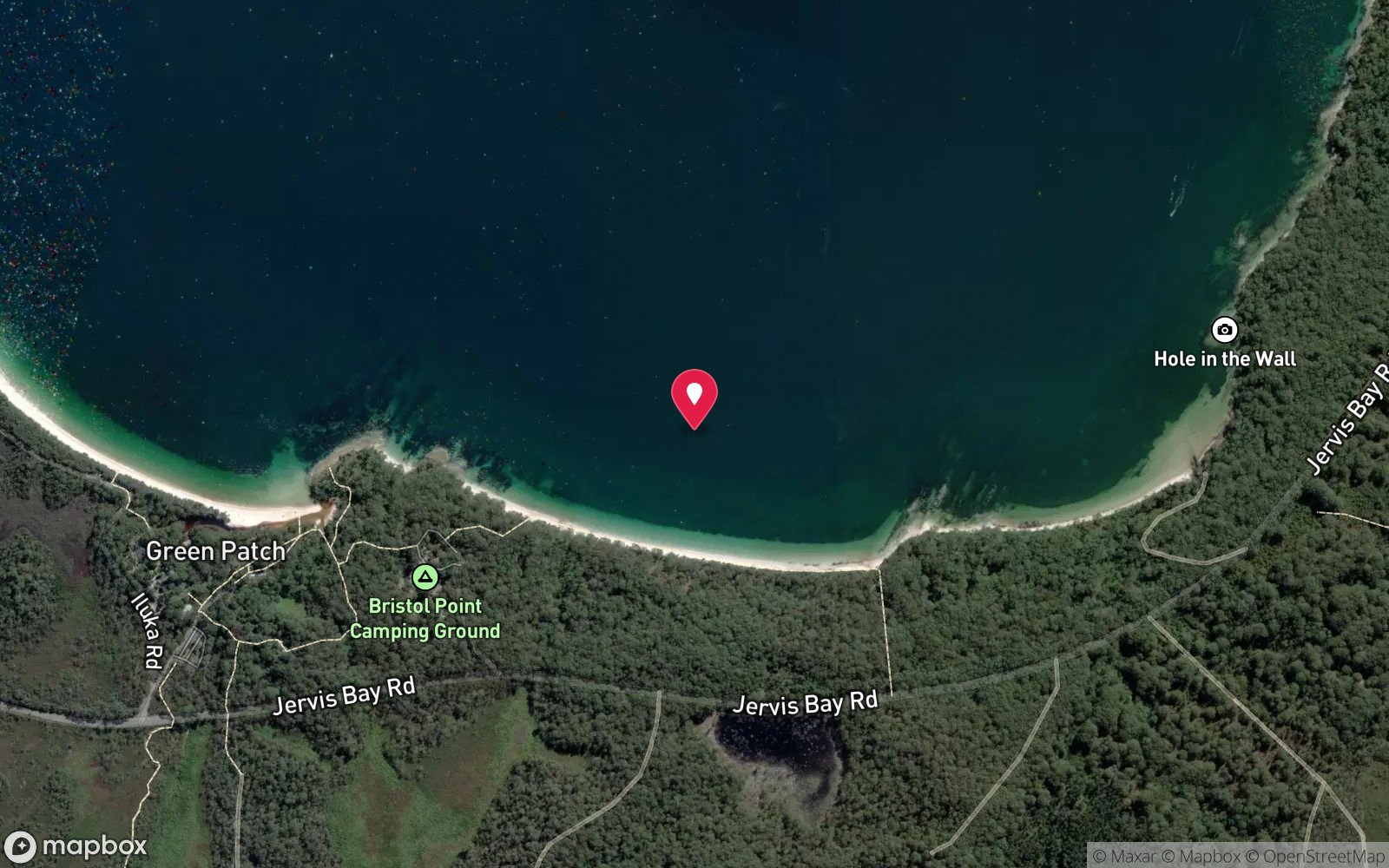
Satellite views
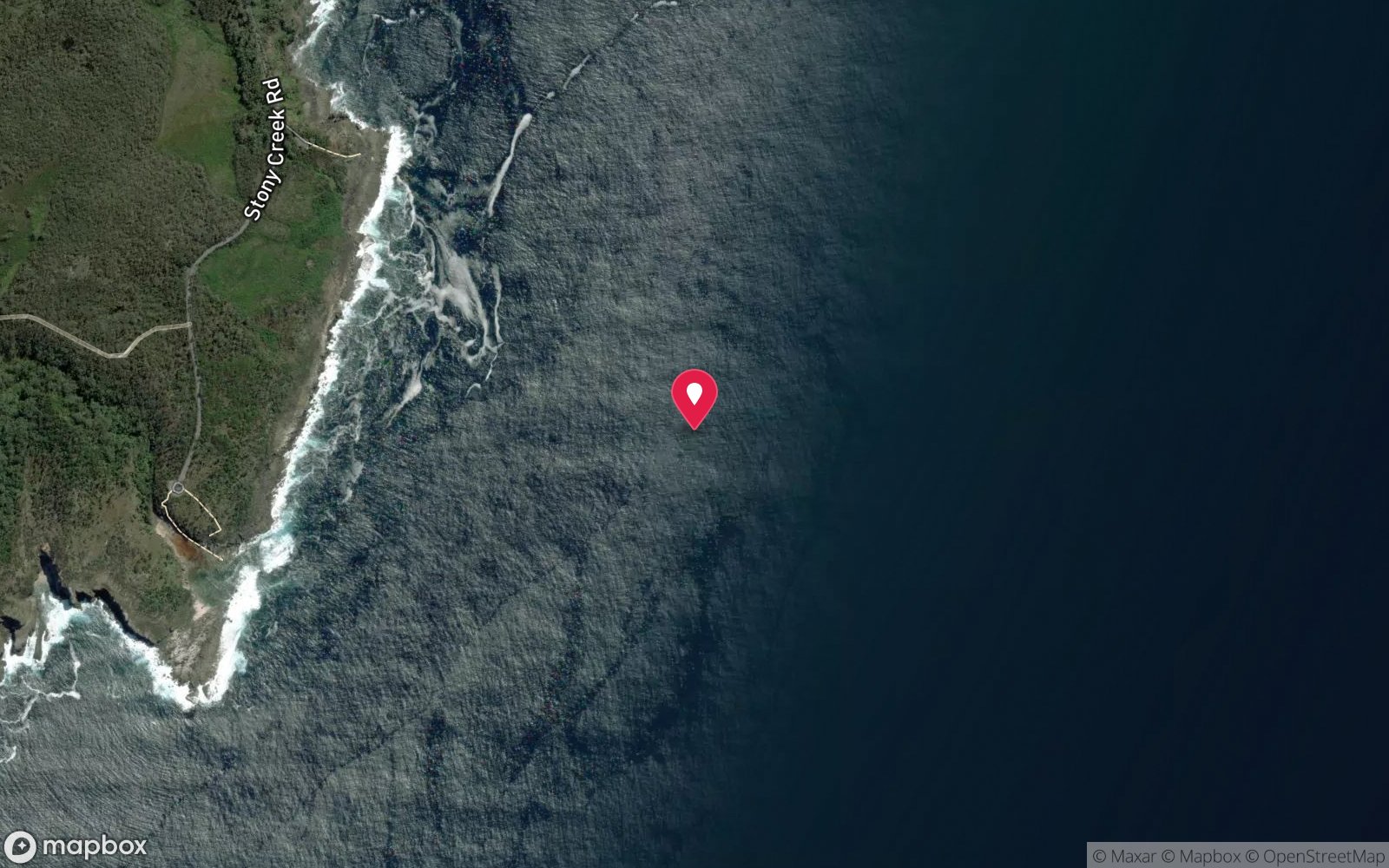
Stoney Creek: frequently asked questions
How deep is Stoney Creek?
Stoney Creek reaches a maximum depth of 55 m, with the shallowest part at about 34 m; most of the dive is spent around 42 m.
What certification do I need to dive Stoney Creek?
Technical (decompression) is the recommended minimum. Rated expert/technical because of depth to 55 m, strong current, cold water.
Can I shore dive Stoney Creek?
No, it is reached by boat (about 35 minutes). A dive centre is required: boat access only.
When is the best time to dive Stoney Creek?
Rare calm days with weak current.
What marine life will I see at Stoney Creek?
Regularly recorded: Sea whips, gorgonians, sponges, sea squirts, tiger anemones, feather stars, kingfish and other pelagics, leatherjackets, butterfly perch.
What wetsuit do I need at Stoney Creek?
5–7 mm wetsuit with hood in summer–autumn; 7 mm semi-dry or drysuit June–October.
How cold is the water at Stoney Creek?
Typically 18-22 °C in summer and 15-17 °C in winter.
What are the main hazards at Stoney Creek?
Strong variable currents – abort if excessive; depth 34–55 m, decompression; offshore open-water ascent – DSMB and boat cover essential; remote from the chamber. See the hazards section above for the full list.
Where is the nearest recompression chamber to Stoney Creek?
Prince of Wales Hospital (Randwick, Sydney) – approx. 3 h by road from Jervis Bay; call 000 and DAN Asia-Pacific hotline (evacuation usually by air). In an emergency call 000, then DAN Asia-Pacific on 1800 088 200.
Diving in Jervis Bay
Jervis Bay's white sand and clear water make it the best-known dive destination on the NSW south coast. The Docks, Stoney Creek and the Arch on the northern headland, and Cabbage Tree Point on the south, are boat dives with sponge gardens, grey nurse sharks in season and fur seals from Drum and Drumsticks. Inside the bay, Hyams Beach, Murrays Beach and the Green Patch reefs are gentle shore dives with seadragons and octopus.
Getting there: Two and a half hours south of Sydney. Dive shops in Huskisson run daily charters; shore dives inside the bay have car parks at Hyams, Murrays and Green Patch (Booderee National Park entry fee applies).
Sources
- michaelmcfadyenscuba.info/viewpage.php?page_id=115
- deep6divingjervisbay.com.au/jervis_bay_dive_sites.htm
- marinelife.org.au/?page_id=1657
Data confidence: High. Last updated September 2026. Know this site better? How to send a correction