Dive slate · divesites.com.au · printed 9 Nov 2026
Stony Point – Giant Cuttlefish Aggregation
Whyalla & Upper Spencer Gulf, South Australia · near Whyalla
| Depth | 1–8 m |
|---|---|
| Minimum level | Snorkel/Any |
| Difficulty | Beginner |
| Access | Shore |
| Entry | Boardwalk with chain handrail down to the rocky foreshore, then walk/wade in over slippery rock; snorkellers can float within metres of shore |
| Current | Mild |
| Visibility | 5-20 m |
| Water | summer 22-26 °C, winter 11-15 °C |
| Suit | 7 mm full wetsuit with hood, gloves and boots, or drysuit (water 11-15°C in season) |
| Best season | May to early August; peak June-July; mornings best |
| Bottom time | 60 min |
| Position | -32.99564, 137.75167 (GPS) |
| Permit | The aggregation area lies within the Upper Spencer Gulf Marine Park, and the rocky coast from Stony Point to Point Lowly is the Cuttlefish Coast Sanctuary Zone (no take of any marine life), inscribed on the National Heritage List in February 2023. A year-round closure also prohibits taking giant cuttlefish across the northern gulf spawning area; protections were strengthened again in 2026, so check PIRSA/DEW for current boundaries. No permits, park passes or entry fees are required to snorkel or dive. Do not touch, chase or handle cuttlefish or disturb eggs under ledges. |
| Nearest chamber | Royal Adelaide Hospital hyperbaric medicine unit (Adelaide) |
| Emergency | 000 · DAN Asia-Pacific diving emergency 1800 088 200 |
Stony Point – Giant Cuttlefish Aggregation
Also known as Cuttlefish Coast, Stony Point Whyalla, Point Lowly cuttlefish
The world's only mass aggregation of giant Australian cuttlefish – tens to hundreds of thousands of displaying, mating animals in 1-6 m within metres of an easy boardwalk entry, May to August.
Near Whyalla · Whyalla & Upper Spencer Gulf, South Australia
- Depth
- 1–8 m
- Minimum level
- Snorkel/Any
- Access
- Shore
- Boat ride
- Shore entry
- Water
- 22-26 °C
- Visibility
- 5-20 m
Stony Point – Giant Cuttlefish Aggregation1–8 m · Snorkel/Any · Shore
Dive factsDepths, conditions, location & safety
Season
Off-peak nowBest months: May, June, July, August.
May to early August; peak June-July; mornings best
- Best months
- Now (November)
Dive facts
- Depth
- 1–8 m
- Typical depth
- 3 m
- Certification
- Snorkel/Any
- Difficulty
- Beginner
- Depth tier
- Easy (0–10 m)
- Access
- Shore
- Dive centre needed
- No – independently diveable
- Shore / independent
- Yes
- Current
- Mild
- Visibility
- 5-20 m
- Water temp (summer)
- 22-26 °C
- Water temp (winter)
- 11-15 °C
- Water
- Temperate
- Bottom time
- 60 min
- Dive traffic
- Very popular (dived daily)
- Night dive
- Possible
- Snorkel friendly
- Yes
Exposure suit
7 mm full wetsuit with hood, gloves and boots, or drysuit (water 11-15°C in season)
Location
Cuttlefish Coast Sanctuary Zone · Upper Spencer Gulf – Whyalla / Cuttlefish Coast
-32.99564, 137.75167
Published GPS position.
Open in Google MapsPrimary source: curiouscampers.com.auTags
Marine park & permits
The aggregation area lies within the Upper Spencer Gulf Marine Park, and the rocky coast from Stony Point to Point Lowly is the Cuttlefish Coast Sanctuary Zone (no take of any marine life), inscribed on the National Heritage List in February 2023. A year-round closure also prohibits taking giant cuttlefish across the northern gulf spawning area; protections were strengthened again in 2026, so check PIRSA/DEW for current boundaries. No permits, park passes or entry fees are required to snorkel or dive. Do not touch, chase or handle cuttlefish or disturb eggs under ledges.
Nearest recompression chamber
Royal Adelaide Hospital hyperbaric medicine unit (Adelaide)
Diving emergency: call 000, then DAN AP 1800 088 200.
Trip planner
Build a trip around Stony Point – Giant Cuttlefish Aggregation →
A day-by-day plan for Whyalla & Upper Spencer Gulf with this site locked in.
This guide is a planning aid. Conditions change daily — confirm with a local dive centre and dive within your training. Data & safety notes.
Dive profile
How this site rates
Scores are computed from the recorded data, not opinions. How?
At a glance
Stony Point – Giant Cuttlefish Aggregation is a shore / rock platform shore dive you can do independently in Whyalla & Upper Spencer Gulf, SA, 1–8 m, suitable for snorkellers and first-time divers.
Rated beginner: sheltered, shallow and manageable for a newly certified diver on a normal day, though note boat traffic overhead and cold water.
Why dive here
- The world's only mass aggregation of giant Australian cuttlefish – tens to hundreds of thousands of displaying, mating animals in 1-6 m within metres of an easy boardwalk entry, May to August.
- A photographer's site: bring a macro lens or a wide-angle depending on the season.
- Snorkel-friendly, so non-diving companions can join at the surface.
- Visibility often reaches 5-20 m.
Conditions to avoid
- Strong southerly or south-east swell and wind
- Strong westerlies
- Strong northerlies
- Any time other than slack water
About Stony Point – Giant Cuttlefish Aggregation
Every winter the rocky coast north-east of Whyalla hosts one of the world's great marine wildlife spectacles. Giant Australian cuttlefish (Sepia apama), the largest cuttlefish species – males grow to about 50 cm and 5 kg – migrate into the shallow reefs between Stony Point, Point Lowly and Black Point to breed. The aggregation is the only known mass spawning of the species anywhere, and the national heritage listing records numbers fluctuating from a low of 13,492 in 2013 to a peak of 247,146 in 2020.
The attraction is the habitat. The shore is a fringing reef of fragmented bedrock slabs, giving thousands of crevices and overhangs where females attach their eggs, and the cold winter water (about 12°C) is needed for incubation. Males outnumber females, and the reef becomes a stage of competition: big males flash rippling bands of colour, extend their arms and spar with rivals, while smaller 'sneaker' males mimic females to slip past the guards.
It all happens in 1-6 m, within a few metres of shore, and the animals are indifferent to snorkellers and divers who stay calm and still. Stony Point is the main access point, with a boardwalk, handrail, change rooms and toilets. Snorkellers see nearly everything in 1-2 m, while divers can settle on the bottom in 4-6 m and watch courtship at eye level; photographers often spend hours in the water over several days.
The aggregation nearly collapsed in the early 2010s, prompting fishing closures, the sanctuary zone and heritage listing, and numbers have since recovered. Visiting requires a thick wetsuit or drysuit, patience with the cold, and respect for the animals. For anyone diving in Australia in winter, it is a must-do: an encounter with tens of thousands of intelligent, colour-changing animals in water shallow enough to stand up in.
Getting there & entry
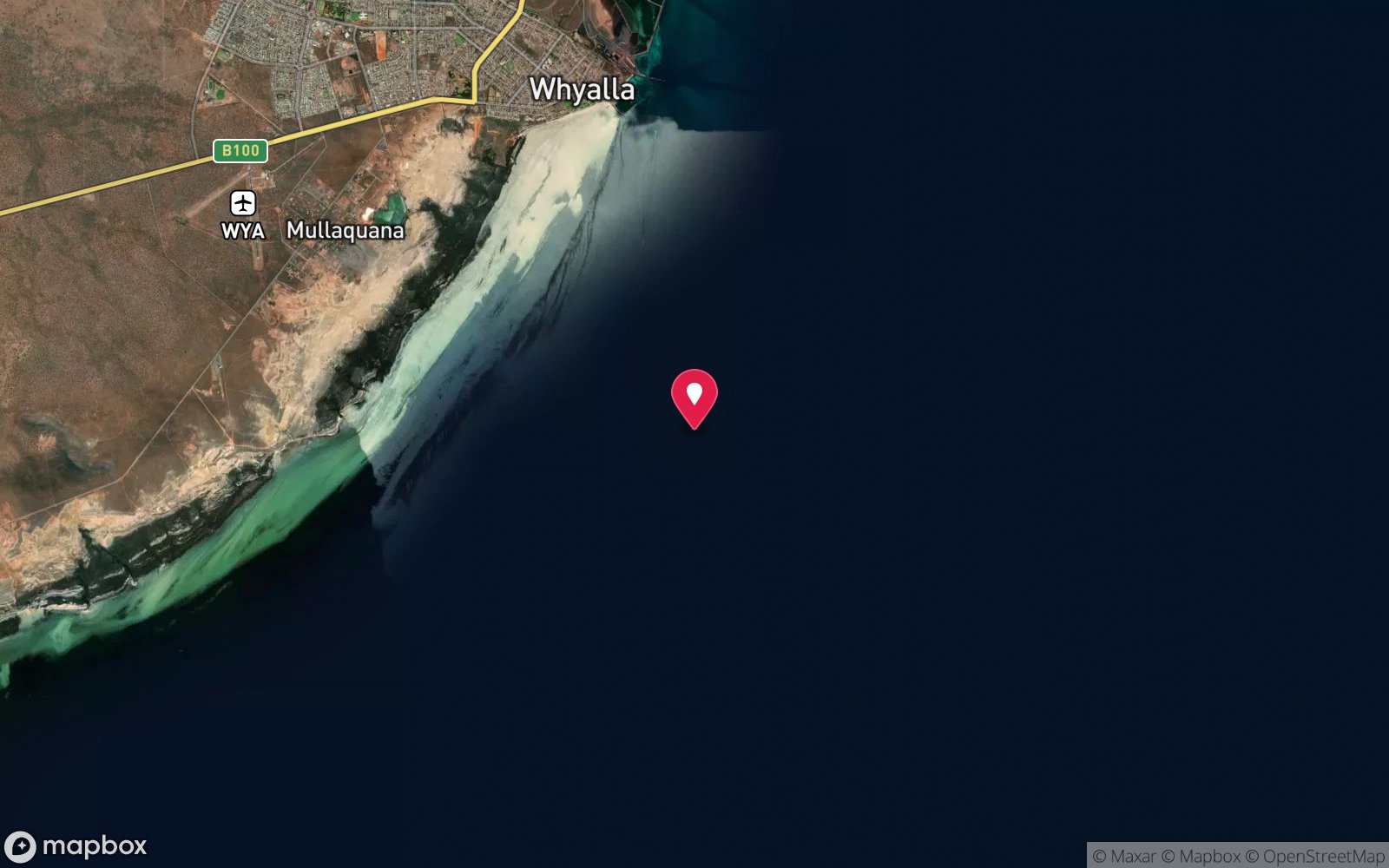
Rocky shore about 25 km north-east of Whyalla near Point Lowly and the Port Bonython industrial area, where each winter (May-August) tens to hundreds of thousands of giant Australian cuttlefish gather on shallow ledges in 1-6 m to breed – the only known mass aggregation of the species in the world.
Whyalla is about 390 km (4-4.5 hours) from Adelaide via Port Wakefield, Port Augusta and the Lincoln Highway, or a 45-minute flight. From Whyalla take the Lincoln Highway north, then Port Bonython Road east towards Point Lowly; Stony Point is signposted on the right about 30 minutes (roughly 25 km) from town, just before the Port Bonython facility. There is a large car park, change rooms, toilets and a shelter, and a boardwalk with a chain handrail leads to the water.
The rocks at the water's edge are uneven and slippery with weed – wear boots and enter carefully. Cuttlefish are often in water under 2 m within a few metres of the entry.
Entry: Boardwalk with chain handrail down to the rocky foreshore, then walk/wade in over slippery rock; snorkellers can float within metres of shore
Facilities: Large car park, change rooms, toilets, shelter, boardwalk with handrail at Stony Point; air fills, gear hire and accommodation in Whyalla (Whyalla Dive Shop). Cuttlefest events in Whyalla during the season.
Weather, swell & tides
The aggregation runs in winter, when the water is 11-15°C and mornings are often still and clear. Strong southerly or south-westerly winds push chop onto the Stony Point shore and stir the shallows, reducing visibility and making the rocky entry hazardous; northerly and north-westerly winds blow offshore and give the flattest water. Tidal state matters: an incoming tide is said to push cuttlefish closer to shore, and visibility is best around slack water (often 20 m+), while a running tide can make it murky.
Morning sessions usually have less wind and clearer water. There is no swell.
Best season: May to early August; peak June-July; mornings best
If it's blown out
Sheltered or shore sites within 25 km that often work when Stony Point – Giant Cuttlefish Aggregation doesn't.
- Point Lowly · 3 km · Max 12 m
- Fitzgerald Bay / Black Point · 4 km · Max 8 m
- Whyalla Old Jetty · 15 km · Max 10 m
- Whyalla Jetty (Foreshore) · 16 km · Max 5 m
How the dive is usually run
Enter at the boardwalk, then drift slowly along the shallow ledges parallel to shore in 2-6 m, looking under overhangs for females laying eggs and watching males display. Stay low and still – the animals approach to within arm's length. Turn at half gas or when cold and return along the same ledge line; snorkellers do the same on the surface.
Marine life
- Giant Australian cuttlefish (tens of thousands in season) →
- cuttlefish eggs under ledges →
- southern calamari
- blue swimmer crabs
- leatherjackets
- magpie perch
- wrasse
- dolphins (occasional)
- brown algae
Linked species have their own page listing every site where they are recorded. All marine life →
Training required
Shallow enough for snorkellers and for a first dive under supervision. Any certified diver can dive it.
Courses that help here
- Drysuit Diver – Cold water; locals dive dry for much of the year.
Depth tiers: 0–10 m easy · to 18 m Open Water · 18–30 m Advanced (25 m+ is a deep dive) · 30–40 m Deep specialty · 40 m+ technical. All courses
Hazards & warnings
Cold water (11-15°C) – hypothermia risk on long snorkels; slippery, uneven rocks at the water's edge; tidal flow increases towards Point Lowly; industrial shipping near Port Bonython; sanctuary zone – no take of any marine life, do not touch cuttlefish or disturb eggs.
Technical notes
Shallow shore site; drysuit or 7 mm with hood recommended for long photography dives. Weight belts help snorkellers stay down for photos.
Dive centres that go here
During the season: Whyalla Dive Shop (Why Dive) runs daily guided snorkels and dives with wetsuit/gear hire; Diving Adelaide runs multi-day cuttlefish trips from Adelaide (often with Tumby Bay jetty); local guide Tony Bramley pioneered cuttlefish tourism and guided tours. Many visitors go independently.
Operators recorded for Stony Point – Giant Cuttlefish Aggregation
Diving Adelaide
ListedMarleston · Adelaide Metro · SA
An Adelaide training and guided diving operation serving local sites and organised trips.
divingadelaide.com.au · (08) 8122 5003
Tony Bramley cuttlefish tours
Reported closedWhyalla · Whyalla & Upper Spencer Gulf · SA
Tony Bramley's Whyalla Diving Services; he has since sold the Whyalla Dive Shop (whydive.com.au), which now runs cuttlefish tours under new owners.
Other dive centres in Whyalla & Upper Spencer Gulf
Map
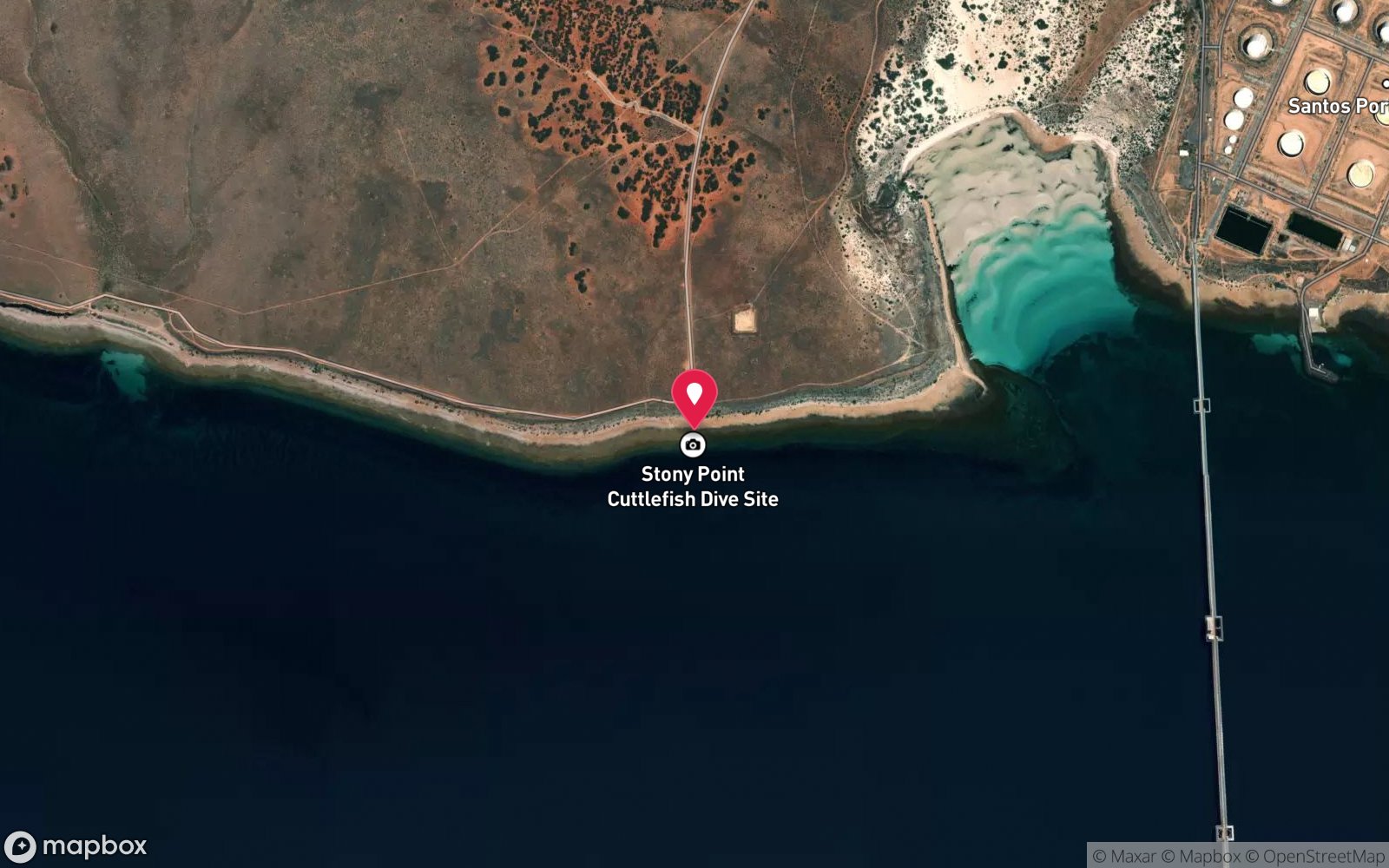
7 pinned sites. Pins marked approximate on their pages show the general area only; not for navigation.
Satellite views
Stony Point – Giant Cuttlefish Aggregation: frequently asked questions
How deep is Stony Point – Giant Cuttlefish Aggregation?
Stony Point – Giant Cuttlefish Aggregation reaches a maximum depth of 8 m, with the shallowest part at about 1 m; most of the dive is spent around 3 m.
What certification do I need to dive Stony Point – Giant Cuttlefish Aggregation?
No certification is needed to snorkel it, and it suits introductory dives. Rated beginner: sheltered, shallow and manageable for a newly certified diver on a normal day, though note boat traffic overhead and cold water.
Can I shore dive Stony Point – Giant Cuttlefish Aggregation?
Yes. Stony Point – Giant Cuttlefish Aggregation is a shore dive that can be done independently: boardwalk with chain handrail down to the rocky foreshore, then walk/wade in over slippery rock; snorkellers can float within metres of shore.
When is the best time to dive Stony Point – Giant Cuttlefish Aggregation?
May to early August; peak June-July; mornings best.
What marine life will I see at Stony Point – Giant Cuttlefish Aggregation?
Regularly recorded: Giant Australian cuttlefish (tens of thousands in season), cuttlefish eggs under ledges, southern calamari, blue swimmer crabs, leatherjackets, magpie perch, wrasse, dolphins (occasional), brown algae.
What wetsuit do I need at Stony Point – Giant Cuttlefish Aggregation?
7 mm full wetsuit with hood, gloves and boots, or drysuit (water 11-15°C in season).
How cold is the water at Stony Point – Giant Cuttlefish Aggregation?
Typically 22-26 °C in summer and 11-15 °C in winter.
What are the main hazards at Stony Point – Giant Cuttlefish Aggregation?
Cold water (11-15°C) – hypothermia risk on long snorkels; slippery, uneven rocks at the water's edge; tidal flow increases towards Point Lowly; industrial shipping near Port Bonython; sanctuary zone – no take of any marine life, do not touch cuttlefish or disturb eggs. See the hazards section above for the full list.
Where is the nearest recompression chamber to Stony Point – Giant Cuttlefish Aggregation?
Royal Adelaide Hospital hyperbaric medicine unit (Adelaide). In an emergency call 000, then DAN Asia-Pacific on 1800 088 200.
Diving in Whyalla & Upper Spencer Gulf
Every winter tens of thousands of giant Australian cuttlefish gather on the rocky reef between Point Lowly and Stony Point to breed, in 2–6 m of water a few metres from the shore. It is the only mass aggregation of its kind in the world and one of the great wildlife dives anywhere. The Whyalla jetties and the Point Lowly reefs are worthwhile the rest of the year.
Getting there: Four hours north of Adelaide. Stony Point and Black Point have car parks and steps to the water; local dive shops hire gear in season.
All Whyalla & Upper Spencer Gulf dive sites and a suggested itinerary →
Sources
- curiouscampers.com.au/whyalla-cuttlefish
- dcceew.gov.au/parks-heritage/heritage/places/national/cuttlefish-coast-sanctuary-zone
- marinelife.org.au/?page_id=142
- sdfsa.net/sa-dive-sites/eyre-peninsula
- whydive.com.au
- divingadelaide.com.au/whyalla-cuttlefish-migration
- en.wikipedia.org/wiki/Tony_Bramley
Data confidence: High. Last updated September 2026. Know this site better? How to send a correction
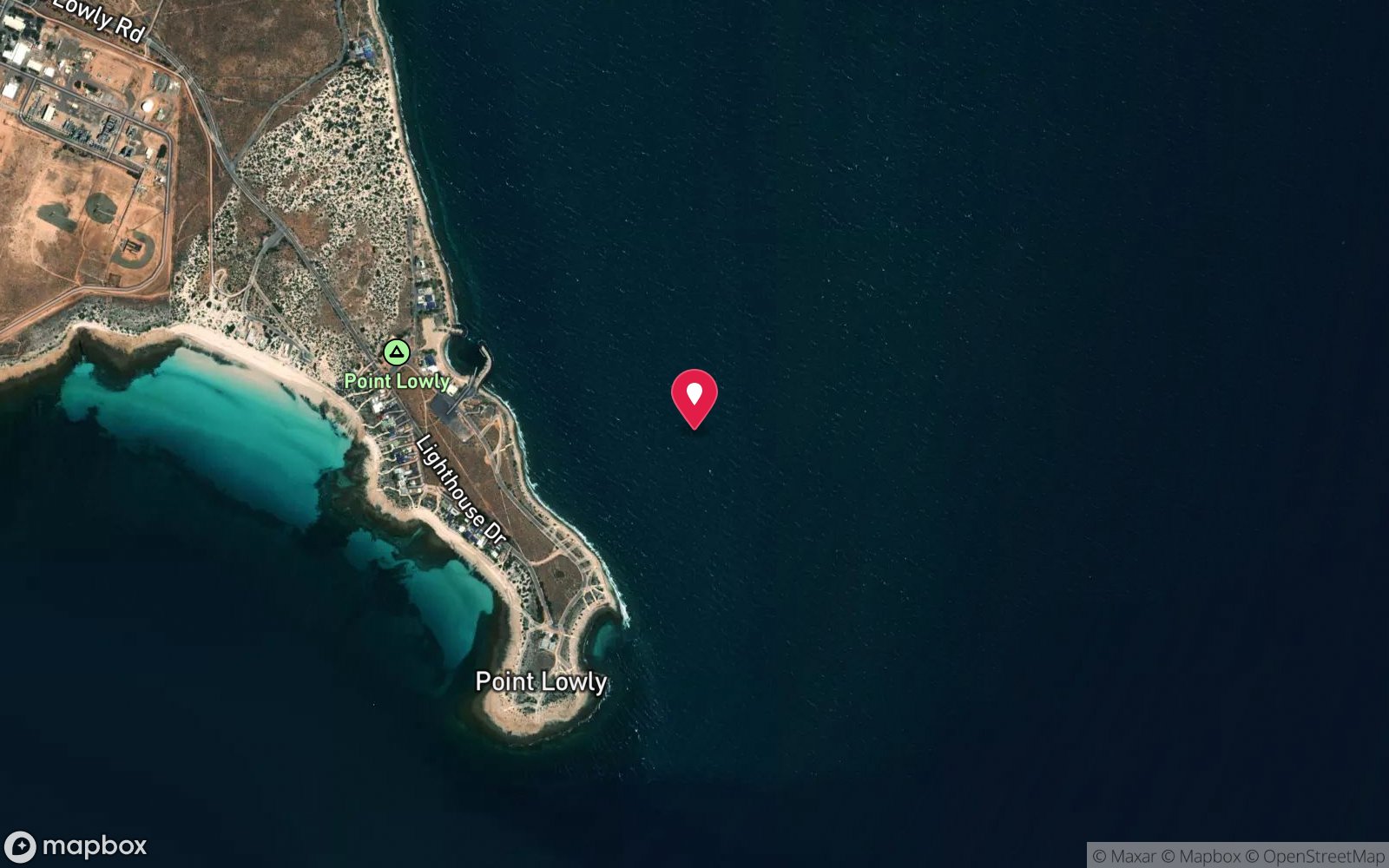
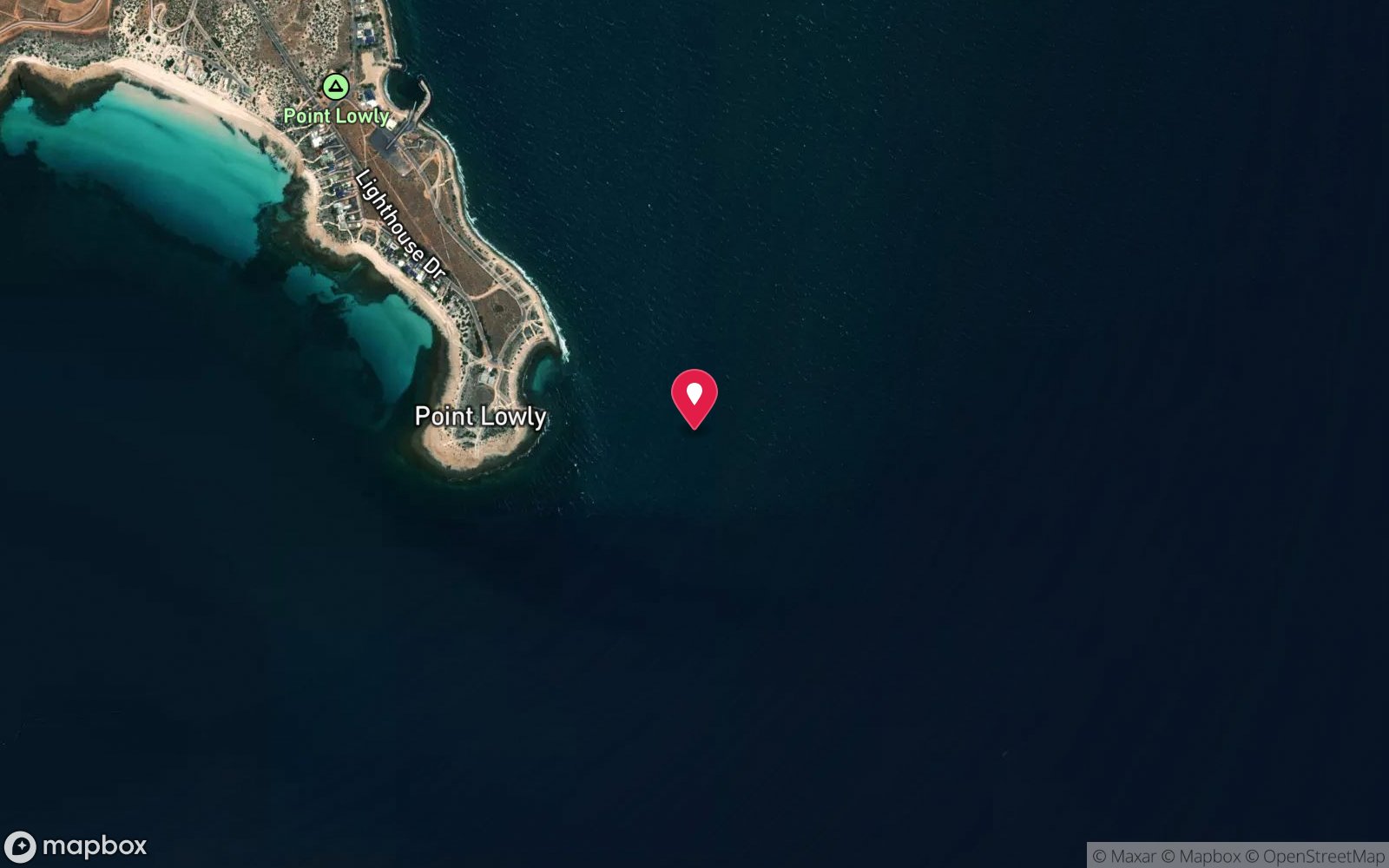
Nearby dive sites
More shore dives in South Australia
Explore more
This region
Similar dives
Marine life