Giant Australian cuttlefish
The world's largest cuttlefish, and the star of the Whyalla winter aggregation, where tens of thousands breed in a few metres of water.
Sepia apama
Up to a metre long including the arms, the giant Australian cuttlefish is found across the southern half of the continent and is common on temperate reefs and under piers, where its colour changes and hovering curiosity make it a favourite of night divers. The extraordinary event is at Point Lowly near Whyalla, at the top of Spencer Gulf, where from May to August tens of thousands of cuttlefish gather on a few kilometres of rocky reef to mate and lay eggs in 2–6 m of water. Males flash waves of colour, small males disguise themselves as females to sneak past larger rivals, and divers and snorkellers can float among hundreds of animals at a time. It is the only mass aggregation of its kind known anywhere.
Field notes
How to find giant australian cuttlefish on the dive
- Depth
- 2–10 m at the aggregation; 5–20 m elsewhere.
- Habitat
- Rocky reef with ledges to lay eggs under. The mass aggregation is at Point Lowly and Stony Point near Whyalla, May to August; individuals are on every temperate reef from Sydney to Perth.
- The tell
- At Whyalla you cannot miss them: hundreds of animals per hundred metres of reef in a metre or two of water. Elsewhere, look under ledges for the pale, rippling body and the two large eyes; a cuttlefish will often hold a colour-changing 'zebra' display as you approach.
- Behaviour
- Males compete with rippling colour displays and body flattening; smaller males impersonate females to sneak matings. They are curious and will hover in front of a diver, changing pattern. Most die after the breeding season, which is why the aggregation is a single winter event.
- Etiquette
- No touching, no lifting ledges, no blocking a male from a female. At Whyalla a marine park and fishing closure protects the aggregation; stay on the sand side of the reef and let the animals approach.
- Photographing them
- Wide or mid-range in the aggregation, video for the colour changes; keep strobes low to preserve the natural patterning.
Season heat map
When giant australian cuttlefish sites are in season
Share of the 70 giant australian cuttlefish sites with a stated best season that includes each month.
Stated season: Whyalla aggregation May–August (peak June–July). Elsewhere year-round, with breeding colour in late winter and spring.
Best sites for giant australian cuttlefish102 sites
Ordered by how regularly the site is dived and how well it is documented. The species is listed in each site's recorded marine life; sightings are never guaranteed.
All other sites recording giant australian cuttlefish
- Edithburgh Jetty · Max 9 m · Yorke Peninsula
- Rapid Bay Jetty · Max 10 m · Fleurieu Peninsula & Victor Harbor
- Stony Point – Giant Cuttlefish Aggregation · Max 8 m · Whyalla & Upper Spencer Gulf
- Blairgowrie Pier · Max 7 m · Mornington Peninsula
- ex-HMAS Canberra · Max 32 m · Port Phillip Heads
- Flinders Pier · Max 6 m · Mornington Peninsula
- Mornington Pier · Max 12 m · Mornington Peninsula
- Party Point · Max 45 m · Port Phillip Heads
- Popes Eye · Max 14 m · Port Phillip Heads
- Portsea Hole · Max 33 m · Port Phillip Heads
- Portsea Pier · Max 7 m · Mornington Peninsula
- Rye Pier · Max 7 m · Mornington Peninsula
- Ammo Jetty · Max 9 m · Perth
- Roe Reef · Max 18 m · Rottnest Island
- Bluefish Valley · Max 16 m · Sydney Northern Beaches
- Dee Why Wide (Advanced) · Max 30 m · Sydney Northern Beaches
- Long Reef Wall · Max 24 m · Sydney Northern Beaches
- South Solitary Island – Manta Arch · Max 30 m · Coffs Harbour & Solitary Islands
- South Solitary Island – North Boulder Wall · Max 18 m · Coffs Harbour & Solitary Islands
- South Solitary Island – South Boulder Wall · Max 18 m · Coffs Harbour & Solitary Islands
- The Apartments (Long Reef) · Max 21 m · Sydney Northern Beaches
- Kingscote Jetty · Max 8 m · Kangaroo Island
- Dromana Pier · Max 5 m · Mornington Peninsula
- Eliza Ramsden · Max 22 m · Port Phillip Heads
- Lady Cheryl · Max 14 m · Port Phillip Heads
- Lonsdale Arches · Max 18 m · Port Phillip Heads
- Lonsdale Bommies · Max 18 m · Port Phillip Heads
- Middle Island, Warrnambool · Max 15 m · Shipwreck Coast & Warrnambool
- Nepean Bay · Max 12 m · Port Phillip Heads
- Popes Eye Anchor Farm · Max 11 m · Port Phillip Heads
- Sorrento Pier · Max 7 m · Mornington Peninsula
- South Channel Fort · Max 12 m · Mornington Peninsula
- SS Coogee · Max 35 m · Port Phillip Heads
- St Leonards Pier · Max 6 m · Geelong & Bellarine
- Stingray Bay · Max 12 m · Shipwreck Coast & Warrnambool
- The Mall · Max 45 m · Port Phillip Heads
- Twin Bommies · Max 18 m · Port Phillip Heads
- Robb Jetty · Max 8.5 m · Perth
- Point Lowly · Max 12 m · Whyalla & Upper Spencer Gulf
- Gorgonia Grove (North Head) · Max 26 m · Sydney Northern Beaches
- Ray Alley (North Head) · Max 20 m · Sydney Northern Beaches
- Runway 36 (North Head) · Max 27 m · Sydney Northern Beaches
- Bombora Reef · Max 24 m · Jervis Bay
- Darts Point · Max 20 m · Jervis Bay
- La Perouse Point (Larpa) · Max 14 m · Sydney South & Botany Bay
- Pig Island – South East · Max 25 m · Wollongong & Kiama
- SS Tuggerah wreck · Max 49 m · Sydney South & Botany Bay
- Songvaar Wreck · Max 10 m · Yorke Peninsula
- Cottage by the Sea Reef · Max 10 m · Port Phillip Heads
- Deep Pinnacles · Max 25 m · Port Phillip Heads
- Empress of the Sea · Max 7 m · Port Phillip Heads
- HMAS Goorangai · Max 15 m · Port Phillip Heads
- Rosebud Pier · Max 8 m · Mornington Peninsula
- Spot G · Max 40 m · Port Phillip Heads
- Dee Why Wide (Deep) · Max 37 m · Sydney Northern Beaches
- The Boulders (Norah Head) · Max 21 m · Central Coast
- The Bull / Bull Rocks (Norah Head) · Max 22 m · Central Coast
- Beachport Jetty · Max 7 m · Limestone Coast
- Emu Bay Jetty · Max 7 m · Kangaroo Island
- Fitzgerald Bay / Black Point · Max 8 m · Whyalla & Upper Spencer Gulf
- Cattle Jetty Drift · Max 18 m · Port Phillip Heads
- Nepean Bay Inner East – Radar · Max 5 m · Port Phillip Heads
- Nepean Bay Inner West · Max 5 m · Port Phillip Heads
- Blue Devil Cave · Depth not published · Wollongong & Kiama
- Blue Moon (North Head) · Max 28 m · Sydney Northern Beaches
- Checkpoint Charlie (North Head) · Max 26 m · Sydney Northern Beaches
- Manly Bommie · Max 14 m · Sydney Northern Beaches
- The Streets · Depth not published · Jervis Bay
- Portsea Cray Reef · Max 12 m · Port Phillip Heads
- Quarantine Station Anchor · Max 12 m · Port Phillip Heads
- Anchor Reef (Kurnell) · Max 23 m · Sydney South & Botany Bay
- Hump Wall · Max 34 m · Wollongong & Kiama
- Jibbon Bombora (Fish Reef) · Max 22 m · Sydney South & Botany Bay
- Middle Ground (Cronulla) · Max 33 m · Sydney South & Botany Bay
- Mistral Point · Max 23 m · Sydney South & Botany Bay
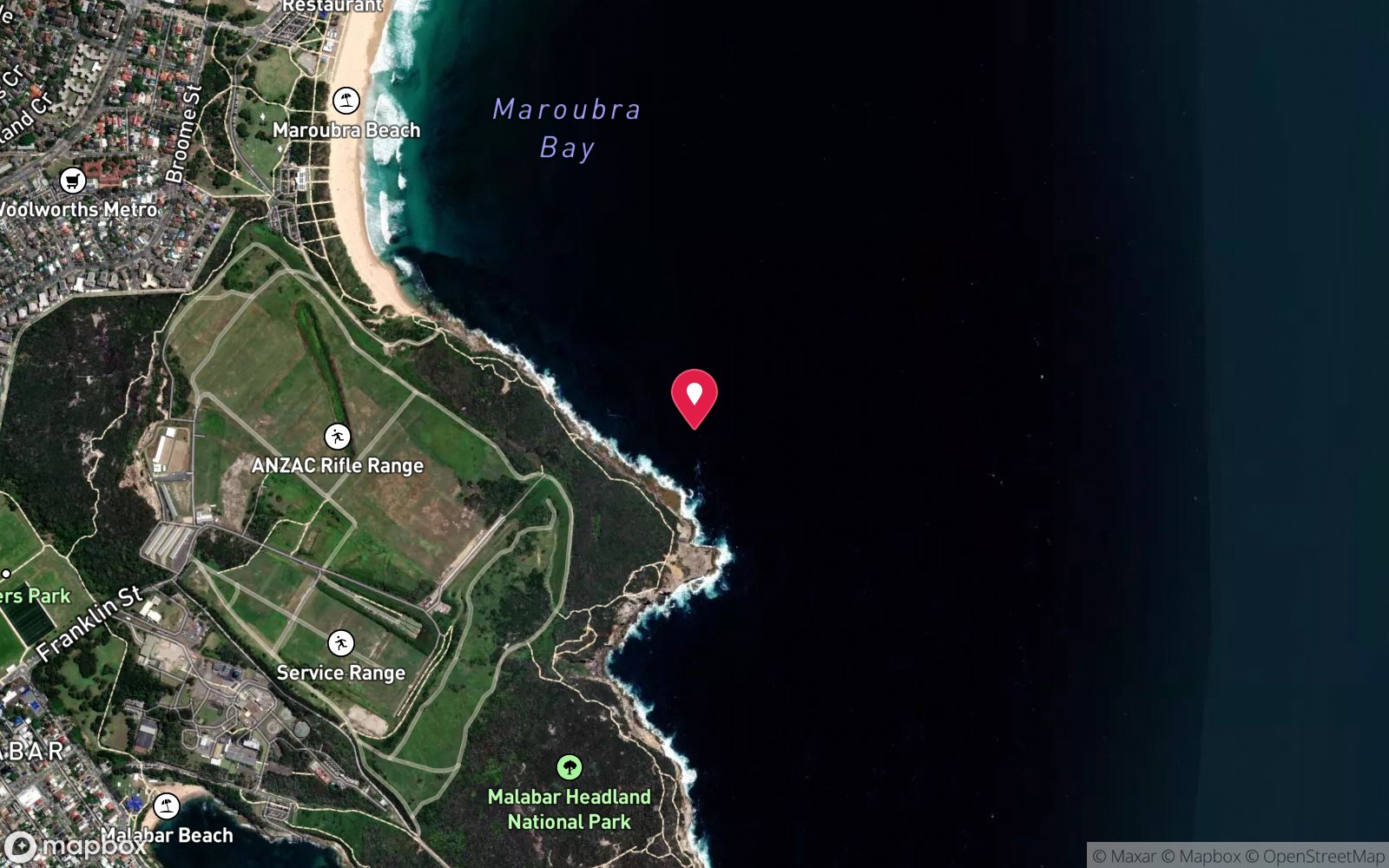
- Rifle Range Reef (Malabar) · Max 25 m · Sydney South & Botany Bay
- The Titan (Camden Haven wreck) · Max 40 m · Port Macquarie & Camden Haven
- Balnarring Reef · Max 8 m · Mornington Peninsula
- Coral Cove, Mornington · Max 8 m · Mornington Peninsula
- Fossil Beach, Mornington · Max 8 m · Mornington Peninsula
- Pelican Point Reef, Daveys Bay · Max 5 m · Mornington Peninsula
- Point Leo · Max 8 m · Mornington Peninsula
- Ranelagh Beach, Mount Eliza · Max 6 m · Mornington Peninsula
- Royal Beach, Mornington · Max 10 m · Mornington Peninsula
- Jervoise Bay Groyne & Boat Ramps · Max 10 m · Perth
- Fosters Beach, Mornington · Max 8 m · Mornington Peninsula
- Frankston Reef, Olivers Hill · Max 6 m · Mornington Peninsula
- Mount Martha, Burdoo Way · Max 5 m · Mornington Peninsula
- Mount Martha, Deakin Drive · Max 5 m · Mornington Peninsula
- Mount Martha, Hearn Road · Max 5 m · Mornington Peninsula
- Mount Martha, Ian Road · Max 5 m · Mornington Peninsula
- Mount Martha, Stanley Crescent · Max 5 m · Mornington Peninsula
- Sorrento Boat Moorings · Max 15 m · Mornington Peninsula
Frequently asked questions
How do I find giant australian cuttlefish on a dive?
Rocky reef with ledges to lay eggs under. The mass aggregation is at Point Lowly and Stony Point near Whyalla, May to August; individuals are on every temperate reef from Sydney to Perth. At Whyalla you cannot miss them: hundreds of animals per hundred metres of reef in a metre or two of water. Elsewhere, look under ledges for the pale, rippling body and the two large eyes; a cuttlefish will often hold a colour-changing 'zebra' display as you approach.
Where is the best place to see giant australian cuttlefish in Australia?
Whyalla (Point Lowly, Stony Point and Black Point) for the aggregation. Mornington Peninsula piers, Sydney's Harbour and Botany Bay sites, the Yorke Peninsula jetties and the Tasmanian east coast year-round.
When is the best time to see giant australian cuttlefish?
Whyalla aggregation May–August (peak June–July). Elsewhere year-round, with breeding colour in late winter and spring.
How should I approach giant australian cuttlefish?
At Whyalla, hire a 7 mm suit or drysuit (water is 12–14 °C), enter from the Stony Point steps and stay shallow. Do not touch the eggs under the ledges.