Dive slate · divesites.com.au · printed 9 Nov 2026
ex-HMAS Canberra
Port Phillip Heads, Victoria · near Ocean Grove
| Depth | 5–32 m |
|---|---|
| Minimum level | Deep/Advanced + experience |
| Difficulty | Intermediate |
| Access | Boat (day trip) |
| Entry | Giant stride from a charter boat tied to the commercial mooring (No. 1) or private boat on the public mooring (No. 2); descend the mooring line to the superstructure |
| Current | Mild |
| Visibility | 8-20 m |
| Water | summer 17-20 °C, winter 11-13 °C |
| Suit | 7 mm semi-dry with hood and gloves in summer; drysuit in winter |
| Best season | Year-round; late summer to autumn for the calmest seas and best visibility, light northerlies ideal |
| Bottom time | 40 min |
| Position | -38.29978, 144.54350 (GPS) |
| Permit | ex-HMAS Canberra Recreation Reserve managed by Parks Victoria – vessel mooring booking required (Parkstay, $30 per 2-hour slot for public mooring 2); no anchoring; diving and snorkelling only; no scavenging. Outside the marine national park. |
| Nearest chamber | The Alfred (Melbourne) |
| Emergency | 000 · DAN Asia-Pacific diving emergency 1800 088 200 |
ex-HMAS Canberra
Also known as HMAS Canberra (FFG 02), Canberra wreck, ex-HMAS Canberra Recreation Reserve
A 138 m guided-missile frigate scuttled in 2009 and sitting almost upright in 28–32 m with the bridge at 8 m – bridge, galley, messes and ops room open for penetration; Victoria's most-dived wreck.
Near Ocean Grove · Port Phillip Heads, Victoria
- Depth
- 5–32 m
- Minimum level
- Deep/Advanced + experience
- Access
- Boat (day trip)
- Boat ride
- ~25 min
- Water
- 17-20 °C
- Visibility
- 8-20 m
ex-HMAS Canberra5–32 m · Deep/Advanced + experience
Dive factsDepths, conditions, location & safety
Season
Off-peak nowBest months: January, February, March, April, May, December.
Year-round; late summer to autumn for the calmest seas and best visibility, light northerlies ideal
- Best months
- Now (November)
Dive facts
- Depth
- 5–32 m
- Typical depth
- 20 m
- Certification
- Deep/Advanced + experience
- Difficulty
- Intermediate
- Depth tier
- Deep / Advanced + experience (30–40 m)
- Access
- Boat (day trip)
- Offshore
- 2.5 km
- Dive centre needed
- Recommended
- Shore / independent
- No
- Boat ride
- ~25 min
- Current
- Mild
- Visibility
- 8-20 m
- Water temp (summer)
- 17-20 °C
- Water temp (winter)
- 11-13 °C
- Water
- Cold Temperate
- Bottom time
- 40 min
- Dive traffic
- Very popular (dived daily)
- Night dive
- Yes
- Snorkel friendly
- No
Exposure suit
7 mm semi-dry with hood and gloves in summer; drysuit in winter
Location
Bass Strait – Ocean Grove · Port Phillip Heads & Bass Strait
-38.29978, 144.54350
Published GPS position.
Open in Google MapsDive site map (external) →Primary source: scubadoctor.com.auMarine park & permits
ex-HMAS Canberra Recreation Reserve managed by Parks Victoria – vessel mooring booking required (Parkstay, $30 per 2-hour slot for public mooring 2); no anchoring; diving and snorkelling only; no scavenging. Outside the marine national park.
Nearest recompression chamber
The Alfred (Melbourne)
Diving emergency: call 000, then DAN AP 1800 088 200.
Trip planner
Build a trip around ex-HMAS Canberra →
A day-by-day plan for Port Phillip Heads with this site locked in.
This guide is a planning aid. Conditions change daily — confirm with a local dive centre and dive within your training. Data & safety notes.
Dive profile
How this site rates
Scores are computed from the recorded data, not opinions. How?
At a glance
ex-HMAS Canberra is a artificial reef boat dive in Port Phillip Heads, VIC, 5–32 m, suited to Deep/Advanced + experience divers, about 25 minutes by boat.
Rated intermediate because of depth to 32 m, an overhead environment, surge on the entry or in the shallows, boat traffic overhead, wreck penetration options that need training, cold water.
Why dive here
- A 138 m guided-missile frigate scuttled in 2009 and sitting almost upright in 28–32 m with the bridge at 8 m – bridge, galley, messes and ops room open for penetration; Victoria's most-dived wreck.
- Sunk in 2009 (Adelaide-class guided-missile frigate, 138.1 m, 4,200 t).
- Commonly dived at night, when octopus, cuttlefish and crustaceans are out.
- Visibility often reaches 8-20 m.
Conditions to avoid
- Strong westerlies
- Strong northerlies
- Outgoing tide or run-off after rain (poor visibility)
About ex-HMAS Canberra
HMAS Canberra was an Adelaide-class (US FFG-7 Oliver Hazard Perry design) guided-missile frigate, 138.1 m long, 4,200 tonnes, built by Todd Pacific Shipyards in Seattle, launched on 1 December 1978 and commissioned on 21 March 1981. She served the Royal Australian Navy for 24 years from Sydney and then Fleet Base West, including Gulf deployments and border protection work, and was decommissioned on 12 November 2005. Handed to the Victorian Government for an artificial reef, she was stripped of her gas turbines, missile launcher, propeller, rudder and part of the mast, cleaned to strict environmental standards and cut with access holes, and at 2 pm on Sunday 4 October 2009 was scuttled in front of thousands of spectators off Ocean Grove.
She sits on a sand bottom at 28–32 m heading 210° with a starboard list of about 25°, remarkably intact and level. Depths on the wreck are generous for a ship this size: the bridge roof is 7.7 m, the mid and aft mast bases 7 m, the bow 15 m, the stern and flight deck around 20 m and the sand 28–32 m, so a whole dive can be spent between 10 and 20 m. The bridge, captain's cabin, galley, mess decks, junior sailors' mess with its mural and the operations room are all accessible through the pre-cut openings, and multiple X-marked hull breaches from the scuttling charges open decks 3 and 4 to the light.
Penetration was designed to be relatively safe but the ship is enormous and disorienting; local guides reckon twenty dives to know her. Sixteen years of colonisation have turned an alloy-and-steel warship into a reef: the superstructure is furred with sponges, hydroids, jewel anemones and zoanthids, and the wreck holds dense schools of bullseyes, butterfly perch, sweep and old wives, with boarfish, leatherjackets, wrasse, nudibranchs and cuttlefish inside, and seals and dolphins on the surface. The Canberra is the most-dived site in Victoria and the centrepiece of the state's wreck diving.
It suits everyone from freshly certified divers on a guided tour of the upper decks to wreck-specialty and technical-penetration divers, and it is the natural first Bass Strait dive before the Graveyard.
The ship and the sinking
HMAS Canberra (FFG 02) was an Adelaide-class guided-missile frigate, the Australian version of the American Oliver Hazard Perry design, built by Todd Pacific Shipyards in Seattle, launched in December 1978 and commissioned in March 1981. She was 138 m long and 4,200 tonnes, with a helicopter hangar aft, a single 76 mm gun and a missile launcher forward.
Over 24 years she deployed to the Persian Gulf, took part in border-protection patrols and fisheries operations in the Southern Ocean, and was decommissioned in November 2005. The Victorian Government took her for an artificial reef off the Bellarine Peninsula, the state's first purpose-sunk warship.
She was prepared over three years: gas turbines, missile launcher, propeller, rudder and part of the mast removed, hundreds of tonnes of wiring and insulation stripped, access holes cut, and the whole hull cleaned to an environmental standard set after the earlier scuttlings. On 4 October 2009 she was scuttled 2 km off Ocean Grove and settled almost upright in 28–32 m.
What is there today
The bridge is at about 8 m, the flight deck at 20 m and the sand at 30 m. She is dived on slack water because the Port Phillip Heads tide streams across the site, and visibility runs from 8 to 20 m depending on the season. The hangar, bridge, galley and messes are open on guided dives; the ship has colonised quickly with bullseyes, leatherjackets and soft growth on every rail.
Wrecks older than 75 years, and several younger ones, are protected under the Underwater Cultural Heritage Act 2018: look, photograph, take nothing. Australia's oldest wreck dives →
Wreck details
Adelaide-class guided-missile frigate, 138.1 m, 4,200 t · Sunk 2009
Era: modern, mostly scuttled as artificial reefs. Oldest wrecks · Wartime wrecks · Scuttled warships
Other wrecks of the same era
- Lady Cheryl · Max 14 m · Port Phillip Heads
- HMAS Bayonet · Max 82 m · Port Phillip Heads
- Pel-Air Westwind wreck · Max 54 m · Norfolk Island
- Harry Atkinson Artificial Reef · Max 21 m · Brisbane & Moreton Bay
- Van Bruggen · Max 14 m · Darwin Harbour
- ex-HMAS Adelaide · Max 32 m · Central Coast
Getting there & entry
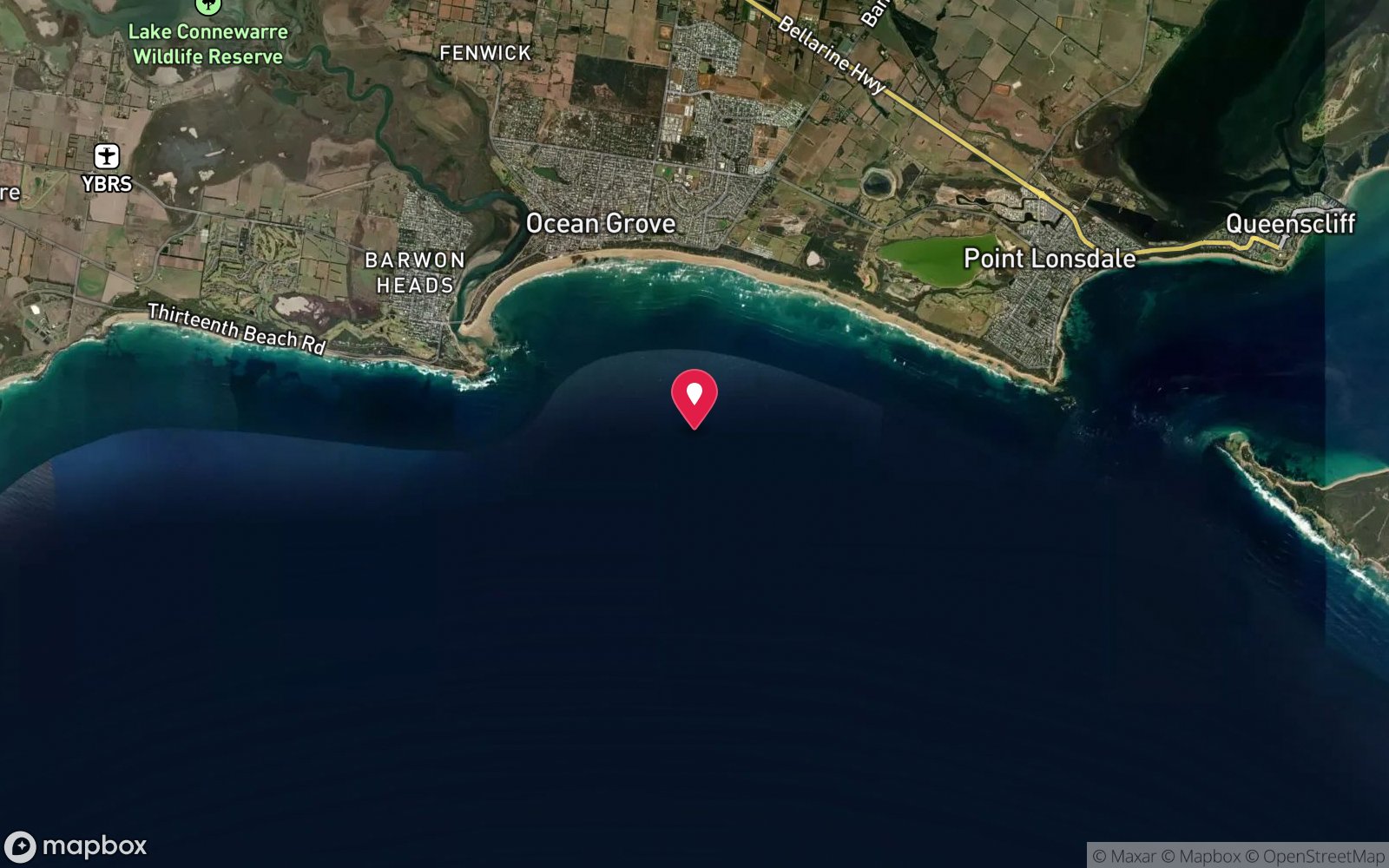
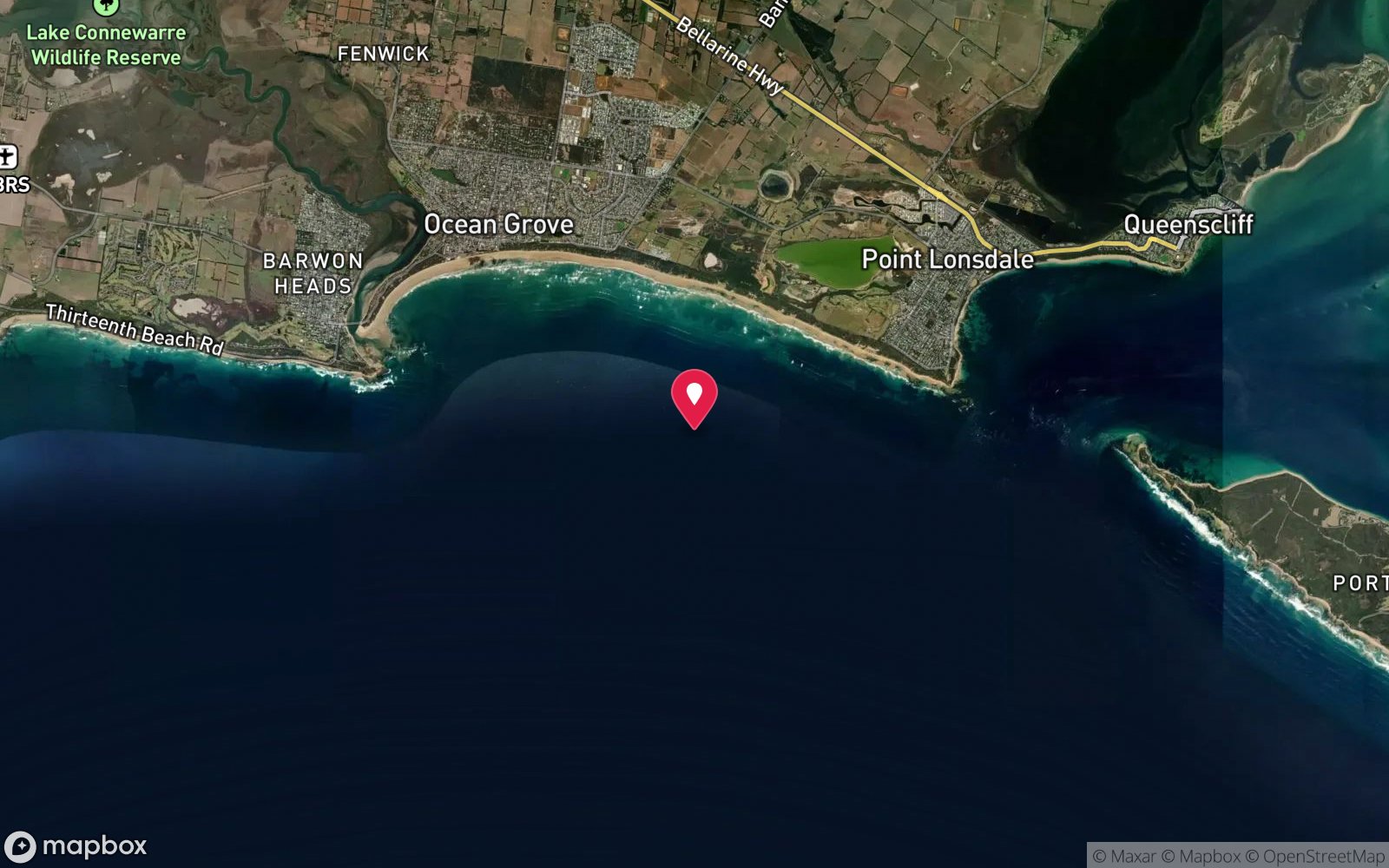
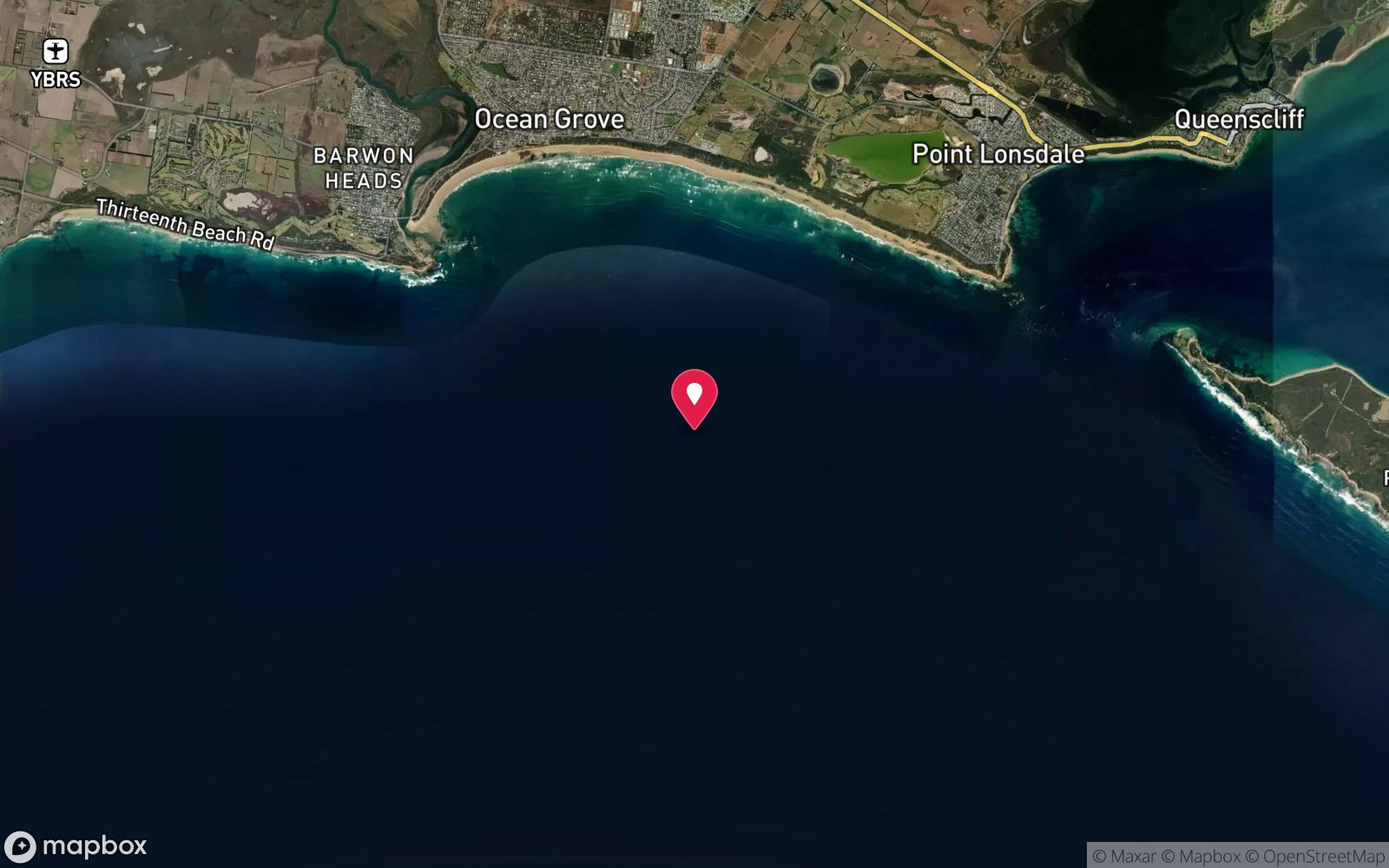
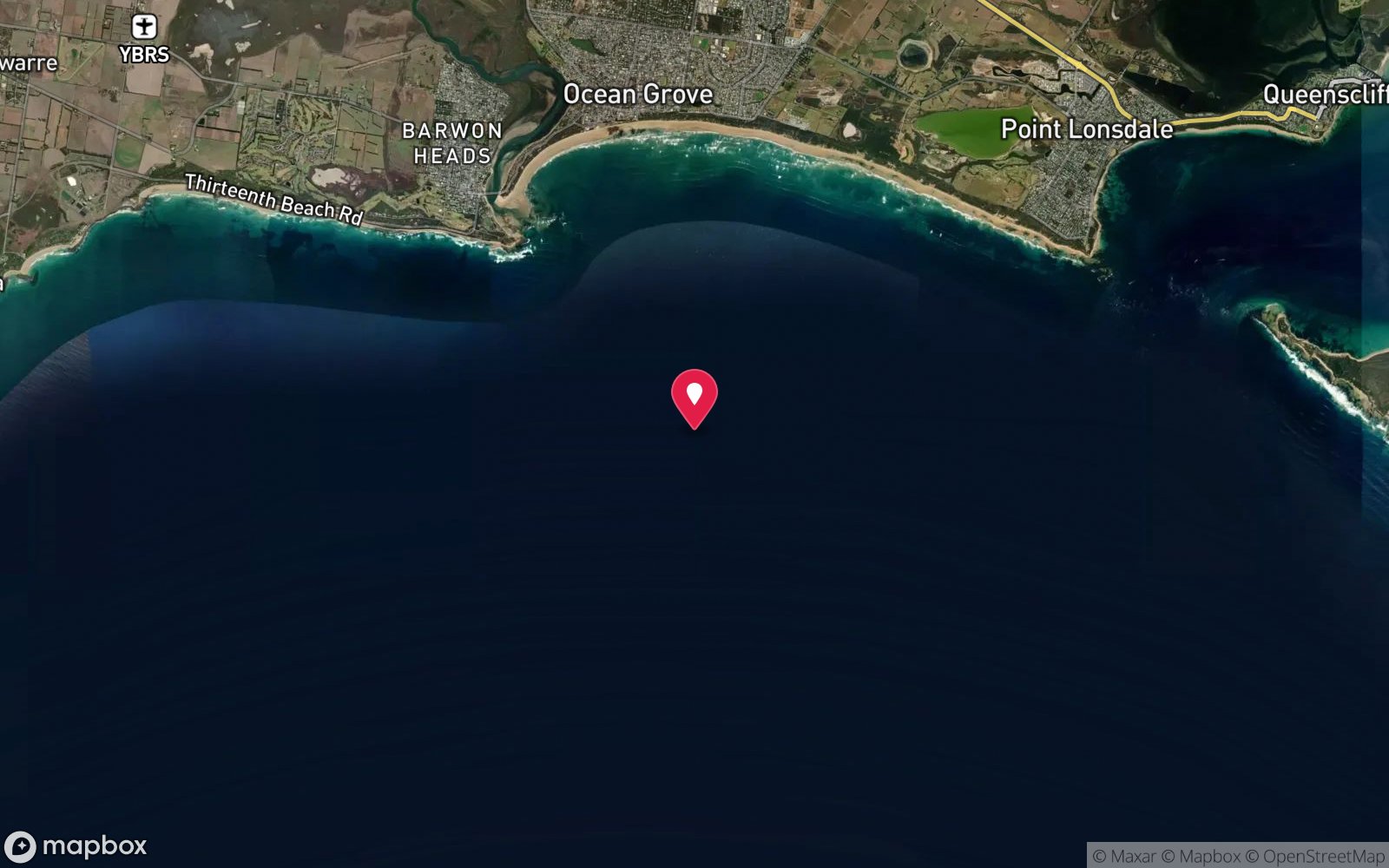
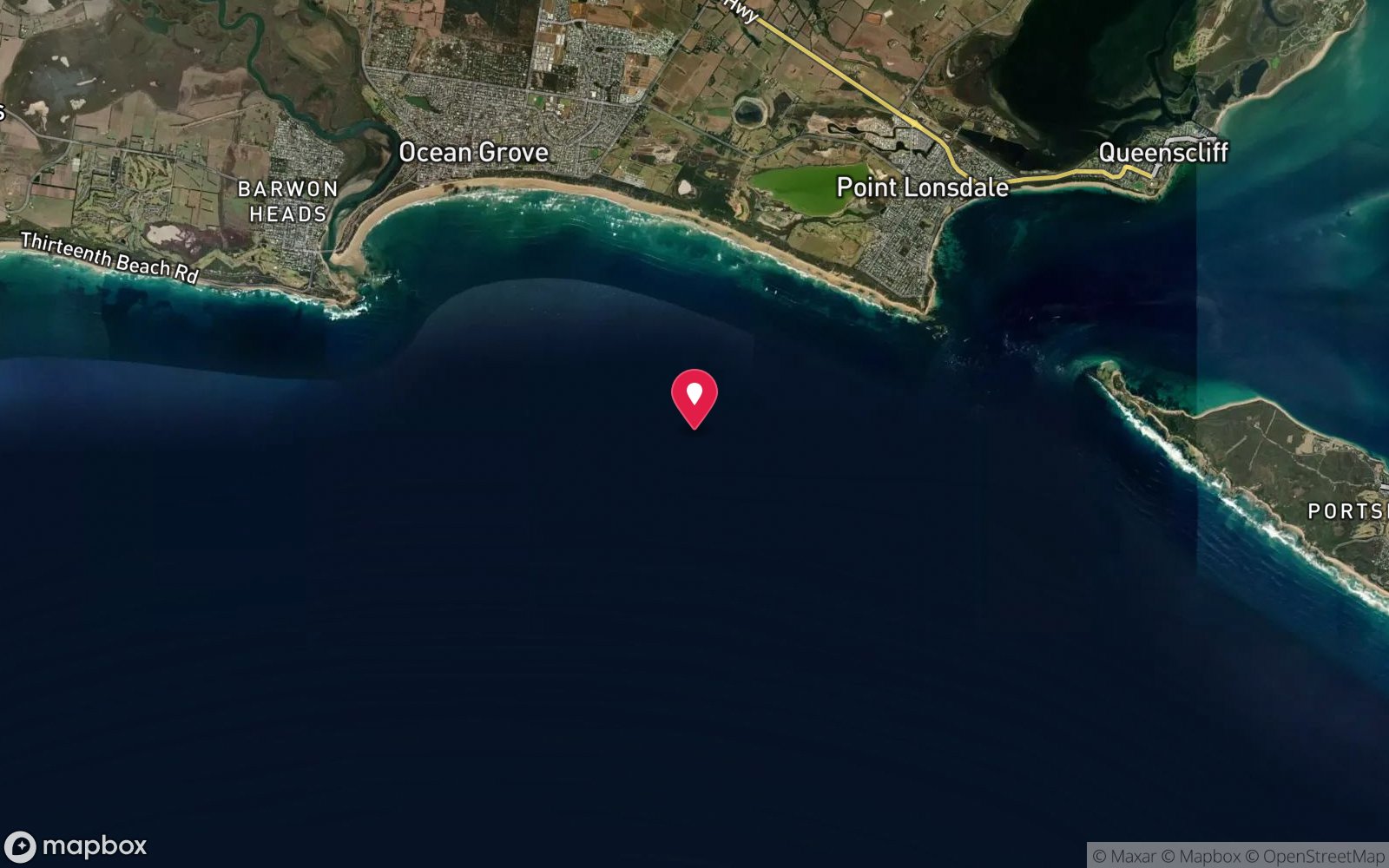
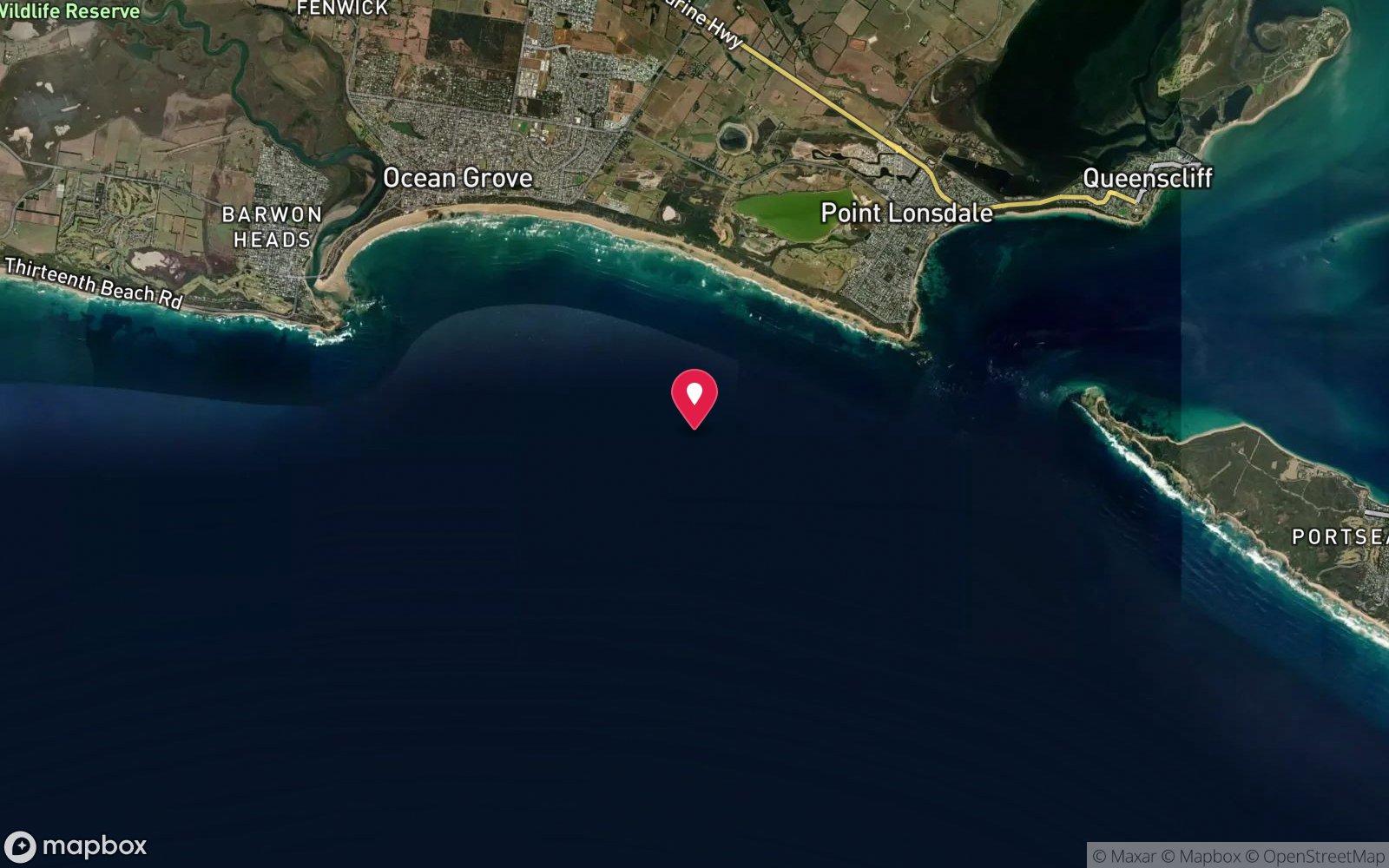
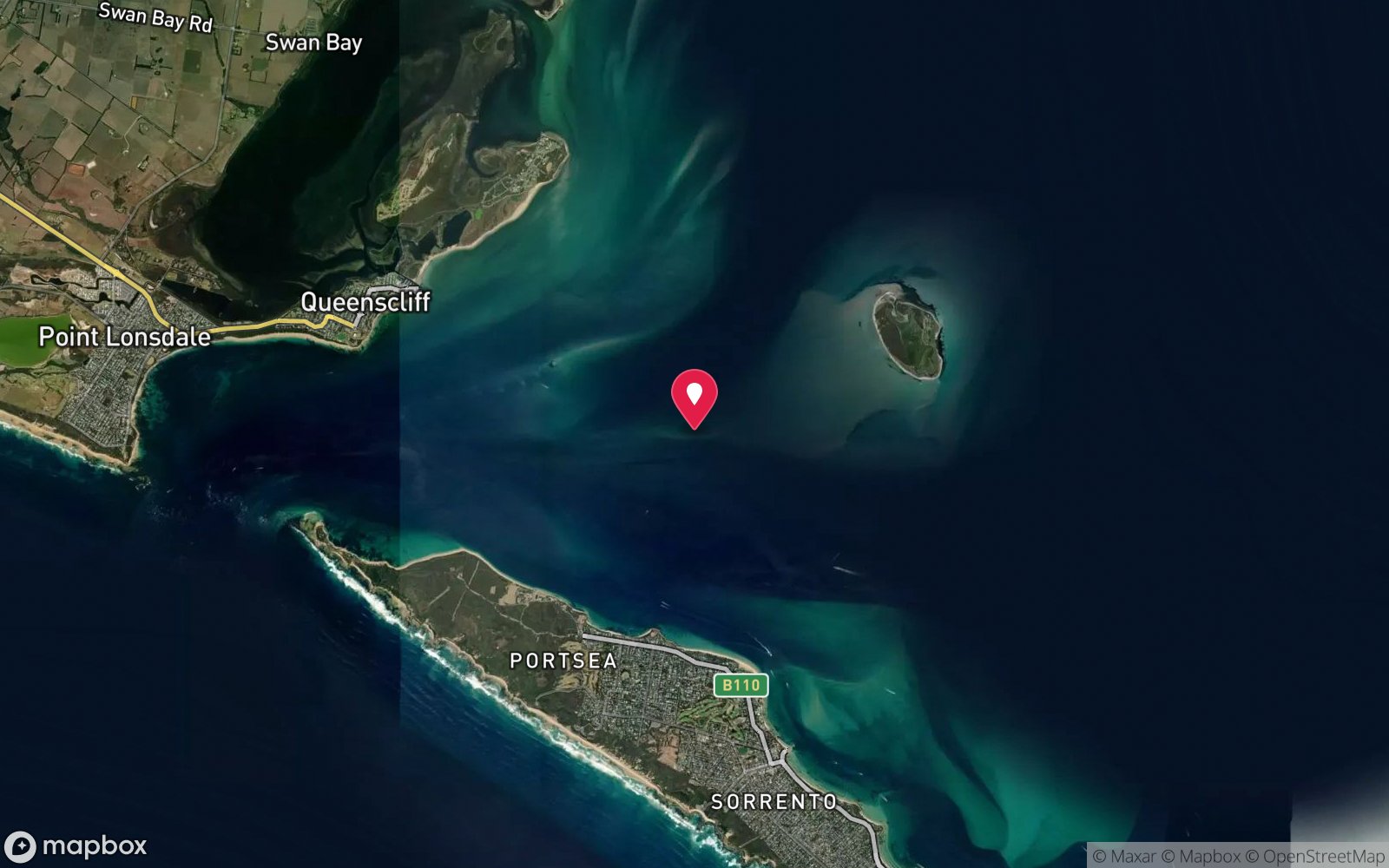
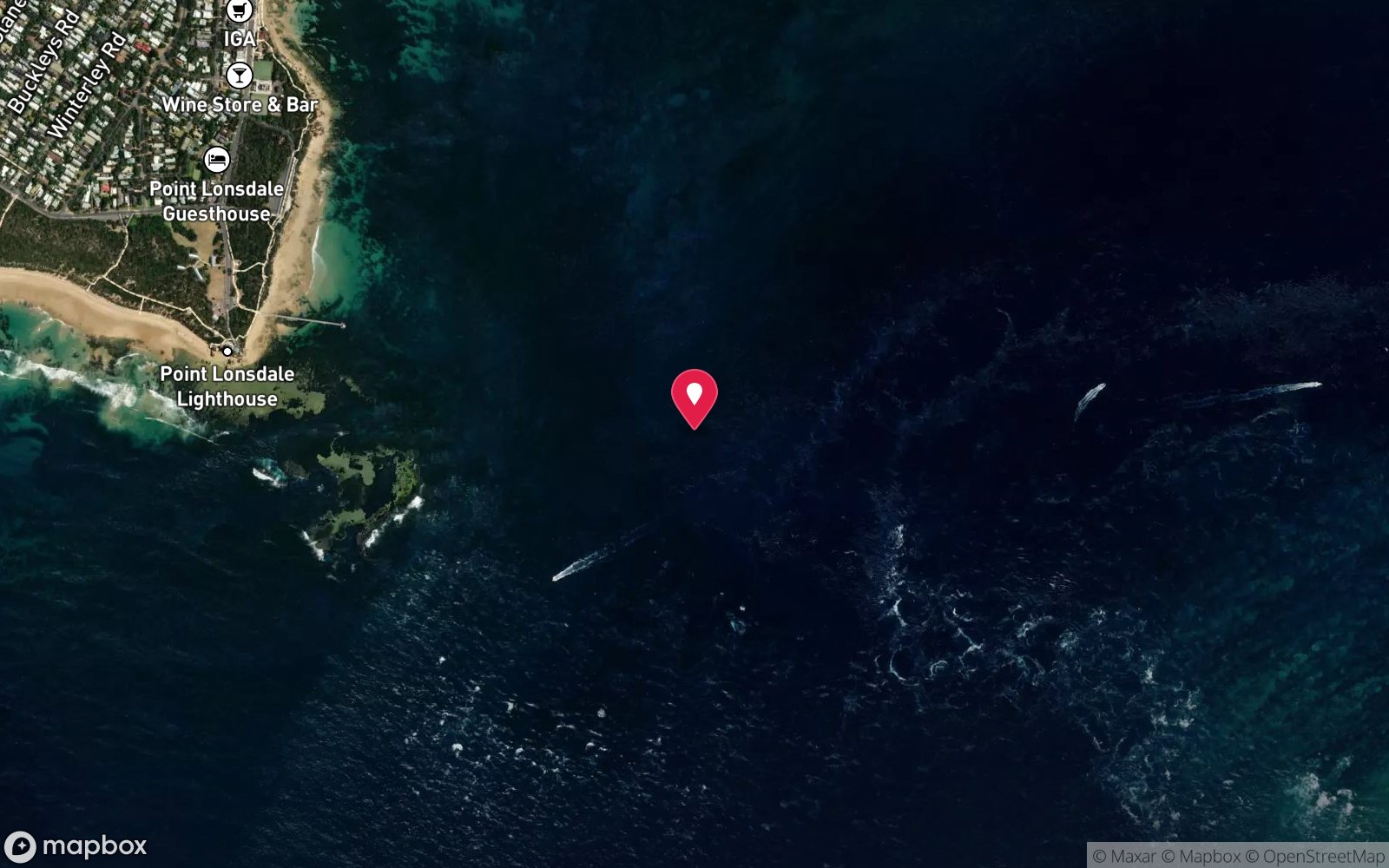
Scuttled artificial reef in Bass Strait about 2–3 km off Ocean Grove beach on the Bellarine Peninsula, 4.2 km from the Barwon River mouth and 6.2 km east of Point Lonsdale.
Boat only. Charters run from Queenscliff Harbour – about 25 minutes by boat – and from Portsea Pier (35–45 minutes through The Rip): Dive Victoria Group, Red Boats, Bay City Charters and Chimney Rock Charters all schedule it. Drive Melbourne–Queenscliff via the Geelong Ring Road and Bellarine Highway (1 h 40 min).
Private boats launch at Queenscliff or, when the bar is safe, the Barwon Heads river ramp (4 km), and must pre-book the public mooring No. 2 through Parks Victoria's Parkstay site ($30 per vessel for a 2-hour slot); anchoring on the wreck is prohibited and licensed operators use mooring No. 1. Both moorings are marked by special buoys at the bow end. Divers need to show an entry-level certification (AS4005.1) and are strongly advised to do an orientation dive with a guide first.
Entry: Giant stride from a charter boat tied to the commercial mooring (No. 1) or private boat on the public mooring (No. 2); descend the mooring line to the superstructure
Facilities: Queenscliff Harbour and Portsea Pier departures (parking, toilets, cafes, fills); Barwon Heads ramp for private boats
Weather, swell & tides
Sits in open Bass Strait 2.5 km off a surf beach, so swell is the issue: charters generally cancel above about 1.5–2 m of south-west swell, and even at 1 m the shallow superstructure (7–8 m at the bridge) is surgey – Diveline warns the site can be quite surgey and dangerous and should be dived only in favourable conditions. Light northerly winds give flat water and the best visibility (15–20 m in autumn); strong westerlies and south-westerlies close it. Tidal stream is slight here compared with The Heads and the wreck can be dived at any tide, but the passage from Portsea through The Rip is planned around slack.
Visibility drops after heavy rain when the Barwon River plume drifts east. Winter closures of a week or more are normal.
Best season: Year-round; late summer to autumn for the calmest seas and best visibility, light northerlies ideal
If it's blown out
Sheltered or shore sites within 25 km that often work when ex-HMAS Canberra doesn't.
- Portsea Pier · 15 km · Max 7 m
- Chinamans Hat · 16 km · Max 12 m
- Blairgowrie Pier · 21 km · Max 7 m
- Nepean Bay · 10 km · Max 12 m
How the dive is usually run
First dive: descend the mooring to the bridge roof (about 8 m), drop to the main deck and swim aft along the high (port) side past the funnel and hangar to the flight deck and stern (20 m), return along the starboard side at 24–28 m past the hull openings and up over the bow (15 m) to the mooring. Second dive: penetrate with a guide through the cut access holes into the bridge, captain's cabin, galley, mess decks and operations room, staying in the daylight zone. Safety stop on the mooring line or the mast at 5 m.
Marine life
- Bullseyes
- butterfly perch
- sweep
- old wives
- boarfish
- leatherjackets
- wrasse
- nudibranchs →
- giant cuttlefish →
- jewel anemones
- sponges
- hydroids
- zoanthids
- Australian fur seals →
- dolphins
Linked species have their own page listing every site where they are recorded. All marine life →
Training required
The recreational limit. Operators expect a Deep Diver specialty or Advanced plus a log of similar dives, and most recommend nitrox.
Operators often quote Advanced Open Water, but the site reaches 32 m, which is beyond that level's depth limit; Deep/Advanced + experience is the appropriate minimum for the full dive. This is a deep dive: plan gas, bottom time and a safety stop accordingly, and consider nitrox.
Operators' own listing: Advanced Open Water.
Courses that help here
- Enriched Air Nitrox – Longer no-decompression time at 25 m and deeper.
- Deep Diver – The site reaches 32 m.
- Wreck Diver – The wreck has penetration options.
- Night Diver – Commonly dived at night.
Depth tiers: 0–10 m easy · to 18 m Open Water · 18–30 m Advanced (25 m+ is a deep dive) · 30–40 m Deep specialty · 40 m+ technical. All courses
Hazards & warnings
Open Bass Strait swell and surge on the upper works; disorienting penetration – overhead training and a guide for first visits; loose items, sharp edges and silt inside; boat traffic and anglers; mooring booking required for private boats, no anchoring; depth 32 m on the sand; cold water.
Technical notes
Recreational with extensive penetration; EAN32 recommended. Wreck-penetration courses and CCR training use the lower decks; run lines from the access holes. Parks Victoria entry-level certification requirement applies to all divers.
Dive centres that go here
Dive Victoria Group (Queenscliff and Portsea) – daily double dives in season and most days year-round, plus night dives; Red Boats (Queenscliff) – several charters a week; Bay City Charters and Chimney Rock Charters (Queenscliff) – regular weekend and midweek trips; Bayplay (Portsea) and Diveline (Frankston) run Advanced and Wreck courses on it. The most-dived wreck in Victoria.
Operators recorded for ex-HMAS Canberra
Diveline Scuba Centre
ListedFrankston · Melbourne & Port Phillip Bay · VIC
A Victorian business associated with technical training and gas support alongside recreational courses.
diveline.com.au · (03) 9783 7166
Scubabo Dive Victoria (Queenscliff)
ListedQueenscliff · Geelong & Bellarine · VIC
A Queenscliff operation, strategically located for access toward Port Phillip Heads.
dive.scubabo.com · (03) 5258 1188
Ocean Divers
ListedBentleigh East · Melbourne & Port Phillip Bay · VIC
A Victorian operation associated with recreational and technical training and access to Port Phillip diving.
oceandivers.com.au · (03) 9579 2600
Scubabo Dive Victoria (Dive Victoria Group)
Named by sitesQueenscliff · Port Phillip Heads · VIC
Rebranded as Scubabo Dive Victoria, Queenscliff; dive.scubabo.com is live for 2026 with active charter bookings.
dive.scubabo.com · (03) 5258 1188
Bayplay
Named by sitesPortsea · Port Phillip Heads · VIC
PADI dive resort and adventure tours.
bayplay.com.au · (03) 5984 0888
Bay City Charters
Named by sitesQueenscliff · Port Phillip Heads · VIC
Dive charter boat operating from Queenscliff Harbour.
baycitycharters.com · 1300 933 483
Chimney Rock Charters
Named by sitesQueenscliff · Port Phillip Heads · VIC
Dive charter boat from Queenscliff Harbour; bookings via netbookings; Facebook only.
Red Boats
Reported closedPortsea · Port Phillip Heads · VIC
TripAdvisor marks RedBoats Portsea as permanently closed (last review November 2021) and the domain is now an unrelated boating blog.
Other dive centres in Port Phillip Heads
The Scuba Doctor
ProfiledRye · Melbourne & Port Phillip Bay · VIC
A Victorian equipment and service business with an extensive retail presence, located to serve both Melbourne and Mornington Peninsula divers.
scubadoctor.com.au · (03) 5985 3322
Aquability
ListedMordialloc · Melbourne & Port Phillip Bay · VIC
A Victorian operation associated with technical diving training. Exact agency, course levels and gas support require verification.
aquability.com.au · (03) 9587 1811
Bay City Scuba
ListedEast Geelong · Melbourne & Port Phillip Bay · VIC
A Victorian business associated with recreational and technical training alongside equipment and gas services.
baycityscuba.com · (03) 5248 1488
Scuba Culture
ListedBurwood · Melbourne & Port Phillip Bay · VIC
A Melbourne business providing training and equipment support for local divers.
scubaculture.com.au · (03) 9808 0033
Divein2Scuba (Geelong Dive Centre)
ListedGeelong · Geelong & Bellarine · VIC
A Geelong business providing training, equipment and local diving support.
divein2scuba.com · (03) 5221 3342
Academy of Scuba
ListedRye · Melbourne & Port Phillip Bay · VIC
A Melbourne training business offering recreational courses with technical pathways.
academyofscuba.com.au · (03) 9889 9952
Map
7 pinned sites. Pins marked approximate on their pages show the general area only; not for navigation.
Satellite views
ex-HMAS Canberra: frequently asked questions
How deep is ex-HMAS Canberra?
ex-HMAS Canberra reaches a maximum depth of 32 m, with the shallowest part at about 5 m; most of the dive is spent around 20 m.
What certification do I need to dive ex-HMAS Canberra?
Deep/Advanced + experience is the recommended minimum. Operators often quote Advanced Open Water, but the site reaches 32 m, which is beyond that level's depth limit; Deep/Advanced + experience is the appropriate minimum for the full dive. This is a deep dive: plan gas, bottom time and a safety stop accordingly, and consider nitrox. Rated intermediate because of depth to 32 m, an overhead environment, surge on the entry or in the shallows, boat traffic overhead, wreck penetration options that need training, cold water.
Can I shore dive ex-HMAS Canberra?
No, it is reached by boat (about 25 minutes).
When is the best time to dive ex-HMAS Canberra?
Year-round; late summer to autumn for the calmest seas and best visibility, light northerlies ideal.
What marine life will I see at ex-HMAS Canberra?
Regularly recorded: Bullseyes, butterfly perch, sweep, old wives, boarfish, leatherjackets, wrasse, nudibranchs, giant cuttlefish, jewel anemones, sponges, hydroids and more.
What wetsuit do I need at ex-HMAS Canberra?
7 mm semi-dry with hood and gloves in summer; drysuit in winter.
How cold is the water at ex-HMAS Canberra?
Typically 17-20 °C in summer and 11-13 °C in winter.
What are the main hazards at ex-HMAS Canberra?
Open Bass Strait swell and surge on the upper works; disorienting penetration – overhead training and a guide for first visits; loose items, sharp edges and silt inside; boat traffic and anglers; mooring booking required for private boats, no anchoring; depth 32 m on the sand; cold water. See the hazards section above for the full list.
Can you night dive ex-HMAS Canberra?
Yes, ex-HMAS Canberra is commonly dived at night.
Diving in Port Phillip Heads
The entrance to Port Phillip Bay is a 3 km gap through which the whole bay drains and fills twice a day, and the currents have carved walls, canyons and caves in the limestone: Lonsdale Wall, Nepean Wall, the Boulders, the Cave, the Canyons and Popes Eye. Outside the Heads lies the Ships' Graveyard, with more than 40 scuttled vessels including the J1, J2, J4 and J5 submarines, the SS Coogee and the Eliza Ramsden. Every dive here is on slack water and every dive is from a charter.
Getting there: Charters from Queenscliff, Portsea and Sorrento, timed to the slack. Ninety minutes from Melbourne.
All Port Phillip Heads dive sites and a suggested itinerary →
Sources
- scubadoctor.com.au/ex-hmas-canberra-wreck-dive.htm
- parks.vic.gov.au/places-to-see/parks/Ex-HMAS-Canberra-Recreation-Reserve/things-to-do/ex-hmas-canberra
- diveline.com.au/ex-hmas-canberra
- divernet.com/scuba-diving/general-wrecks/victoria-wreck-diving-australia
- baycitycharters.com/boat-diving
Data confidence: High · Being verified: Mooring fee current as of Scuba Doctor page; confirm with Parkstay. Last updated September 2026. Know this site better? How to send a correction
Nearby dive sites
More wrecks in Victoria
Explore more
This region
Similar dives
Marine life