Dive slate · divesites.com.au · printed 9 Nov 2026
SS Tuggerah wreck
Sydney South & Botany Bay, New South Wales · near Cronulla / Bundeena
| Depth | 40–49 m |
|---|---|
| Minimum level | Technical (decompression) |
| Difficulty | Expert/Technical |
| Access | Boat |
| Entry | Giant stride onto a shot line dropped on the wreck |
| Current | Strong |
| Visibility | 15-25 (3-40) m |
| Water | summer 21-24 °C, winter 15-18 °C |
| Suit | 5 mm full suit in summer; 7 mm semi-dry or drysuit May–October |
| Best season | Autumn–winter; any calm day with low current |
| Bottom time | 18 min |
| Position | -34.13723, 151.15184 (GPS) |
| Permit | None required |
| Nearest chamber | Prince of Wales Hospital (Randwick, Sydney) |
| Emergency | 000 · DAN Asia-Pacific diving emergency 1800 088 200 |
SS Tuggerah wreck
Also known as Tuggerah
The most intact engine room of any Sydney wreck, buried in schooling fish, at 45 m off Royal National Park.
Near Cronulla / Bundeena · Sydney South & Botany Bay, New South Wales
- Depth
- 40–49 m
- Minimum level
- Technical (decompression)
- Access
- Boat
- Boat ride
- ~35 min
- Water
- 21-24 °C
- Visibility
- 15-25 (3-40) m
SS Tuggerah wreck40–49 m · Technical (decompression)
Dive factsDepths, conditions, location & safety
Season
Off-peak nowBest months: March, April, May, June, July, August.
Dive facts
- Depth
- 40–49 m
- Typical depth
- 45 m
- Certification
- Technical (decompression)
- Difficulty
- Expert/Technical
- Depth tier
- Technical (40 m +)
- Access
- Boat
- Offshore
- 2.2 km
- Dive centre needed
- Yes – boat access only
- Shore / independent
- No
- Boat ride
- ~35 min
- Current
- Strong
- Visibility
- 15-25 (3-40) m
- Water temp (summer)
- 21-24 °C
- Water temp (winter)
- 15-18 °C
- Water
- Temperate
- Bottom time
- 18 min
- Dive traffic
- Moderate (occasional charters/club dives)
- Night dive
- No
- Snorkel friendly
- No
Exposure suit
5 mm full suit in summer; 7 mm semi-dry or drysuit May–October
Location
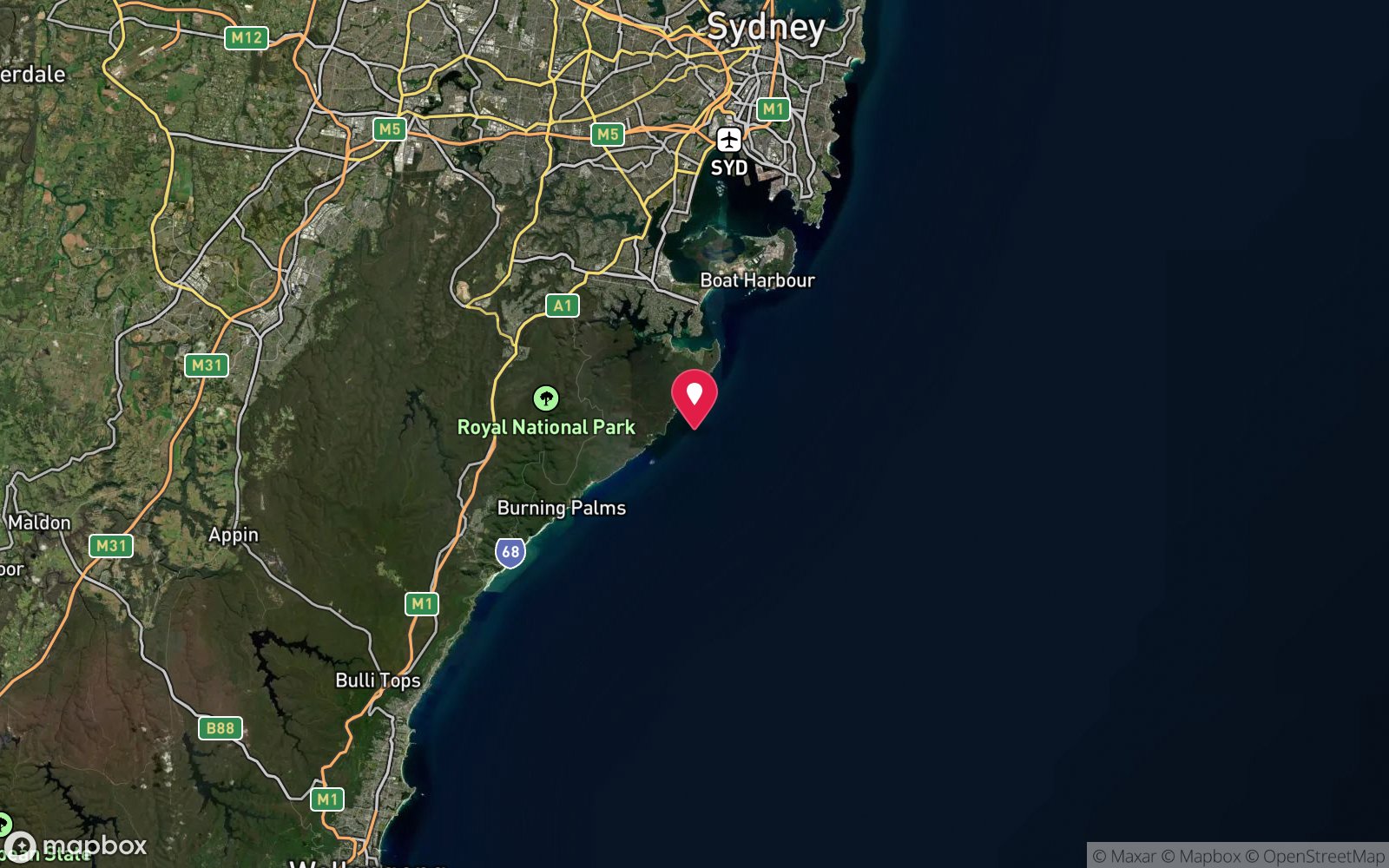
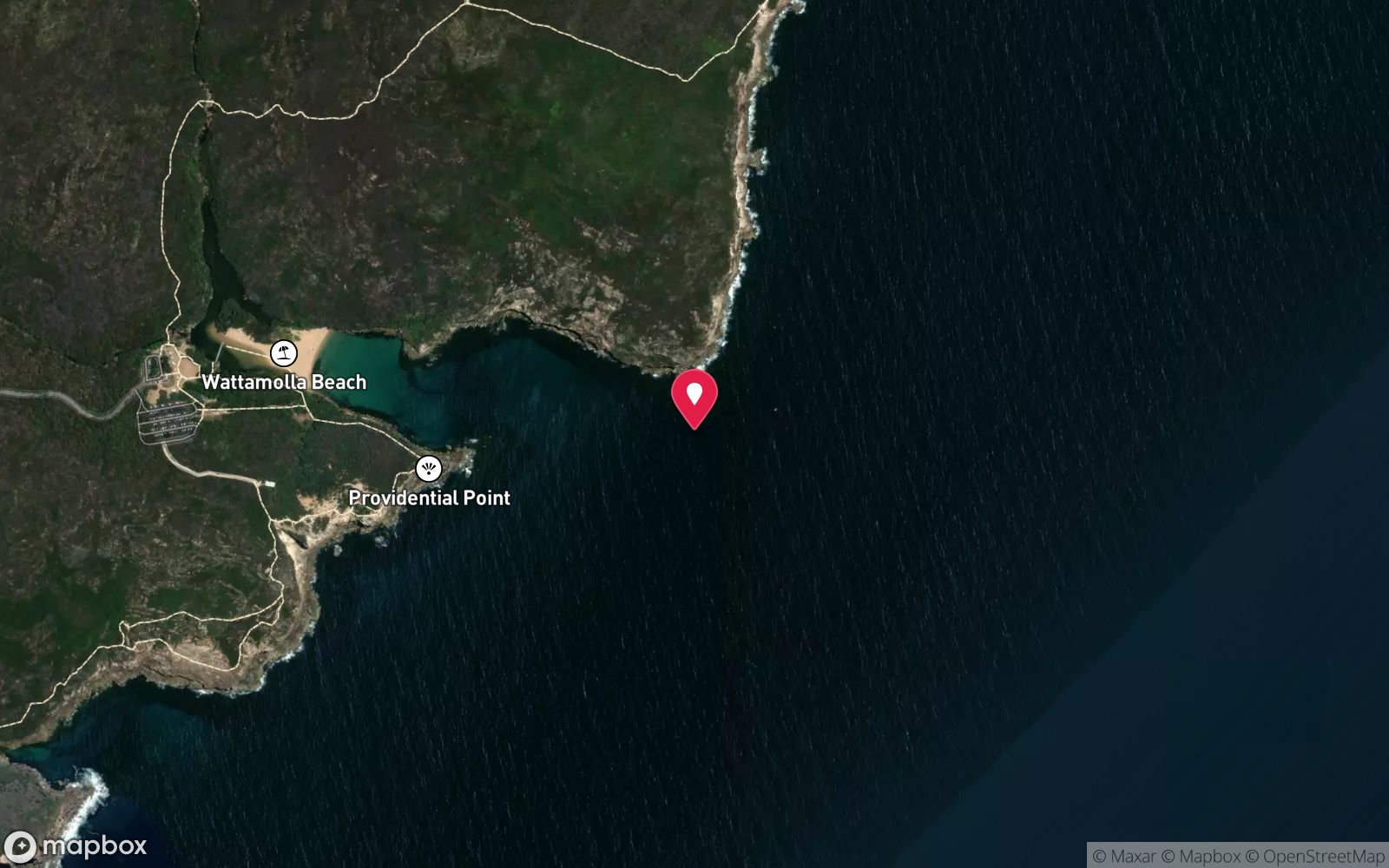
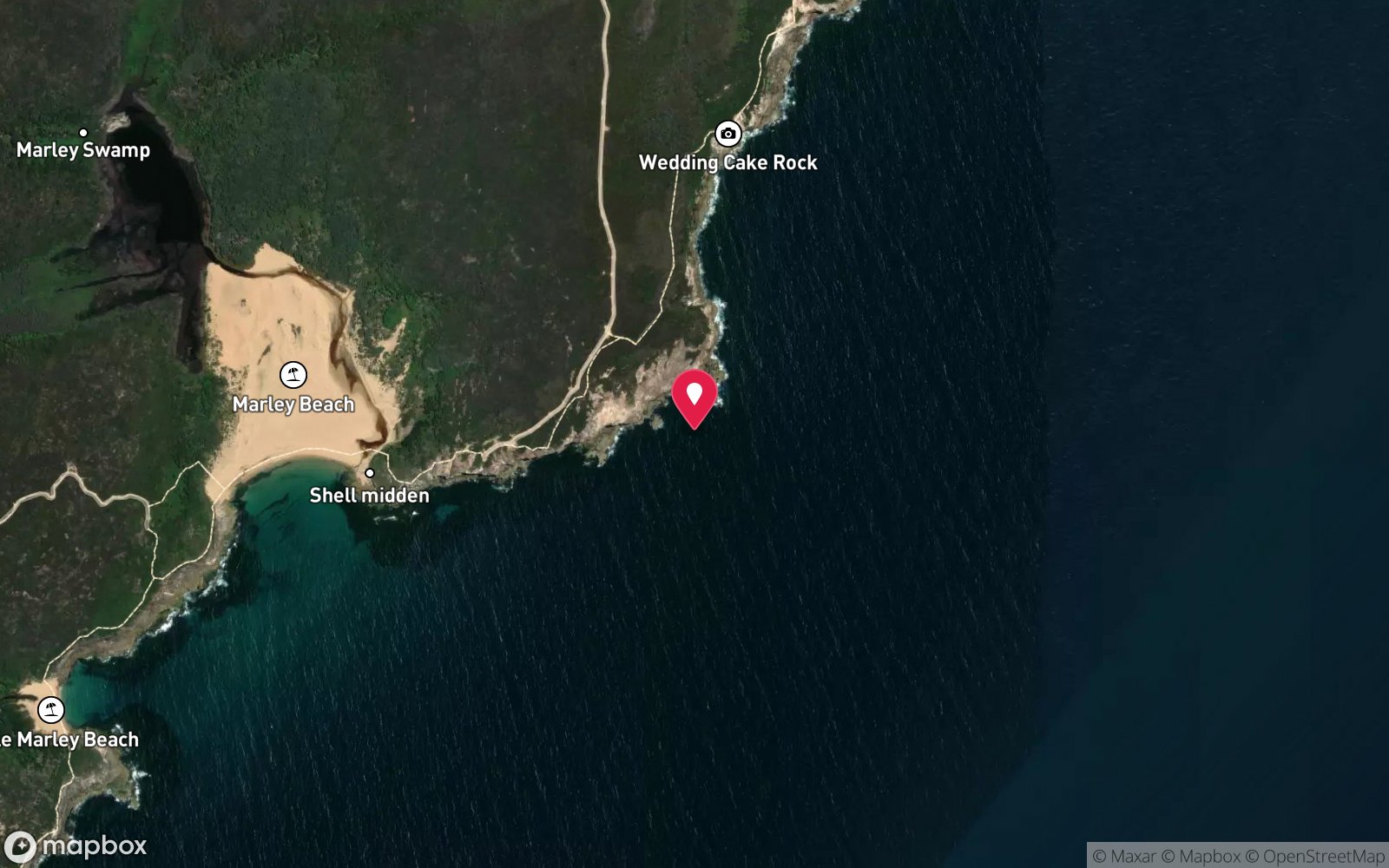
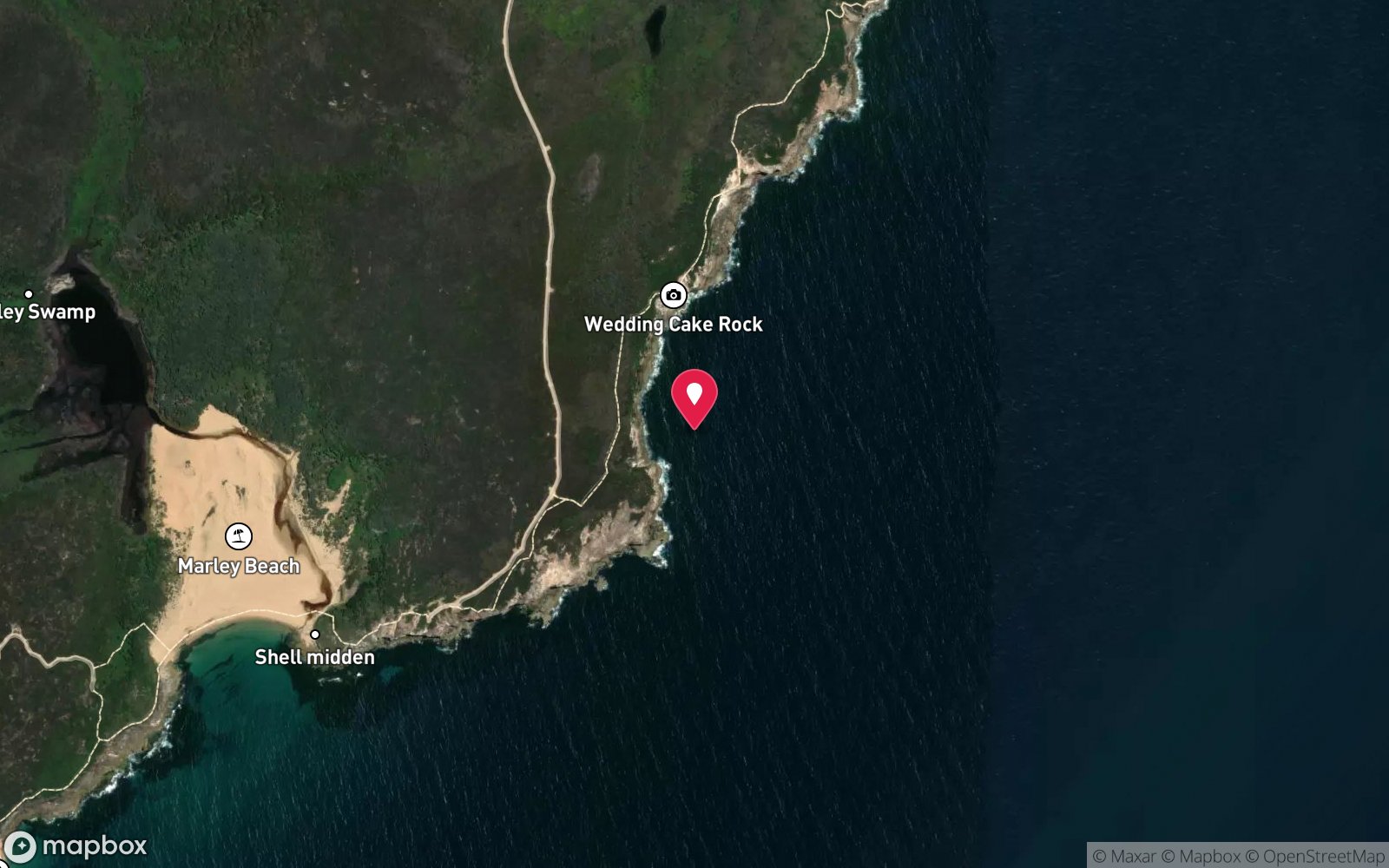
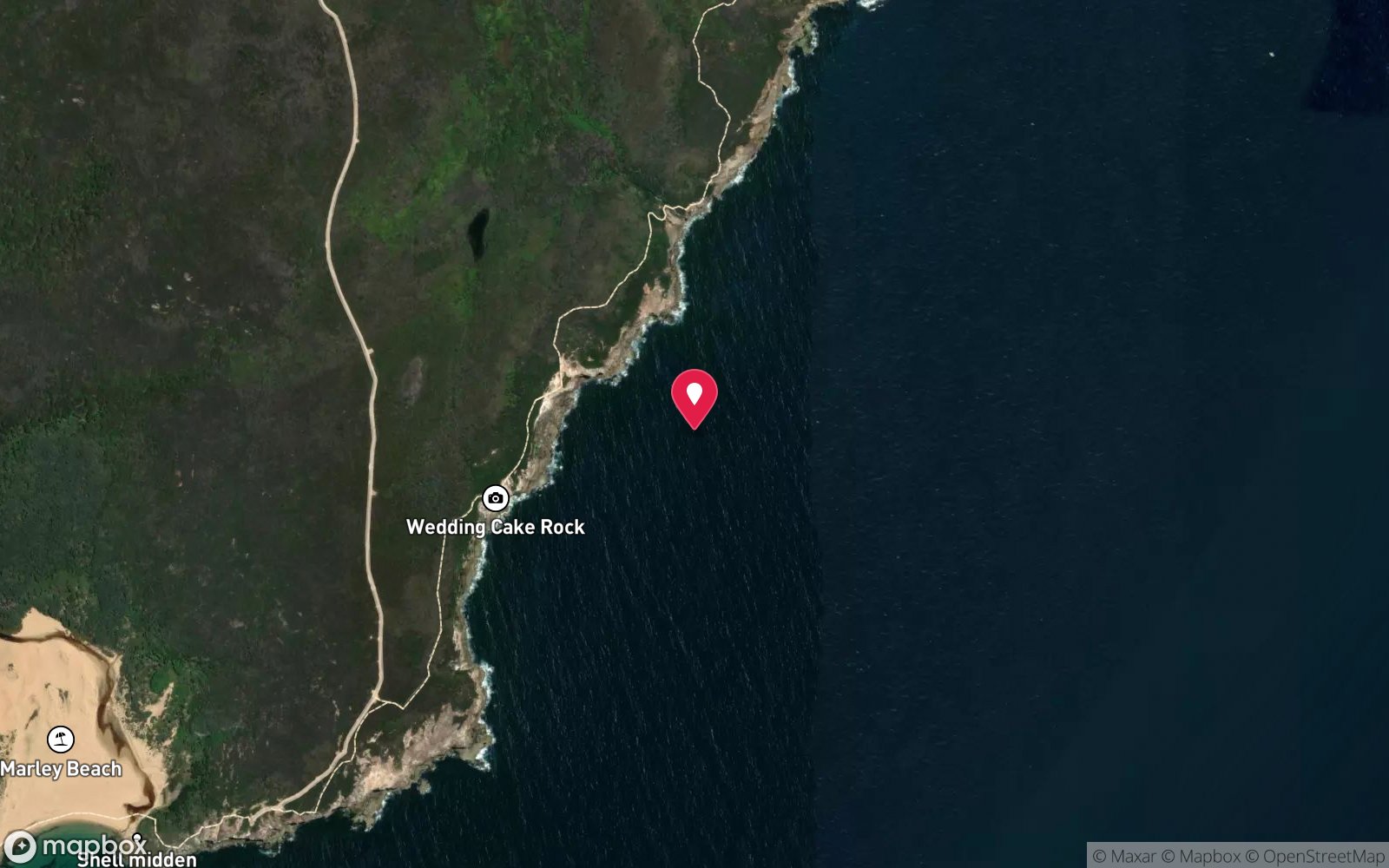
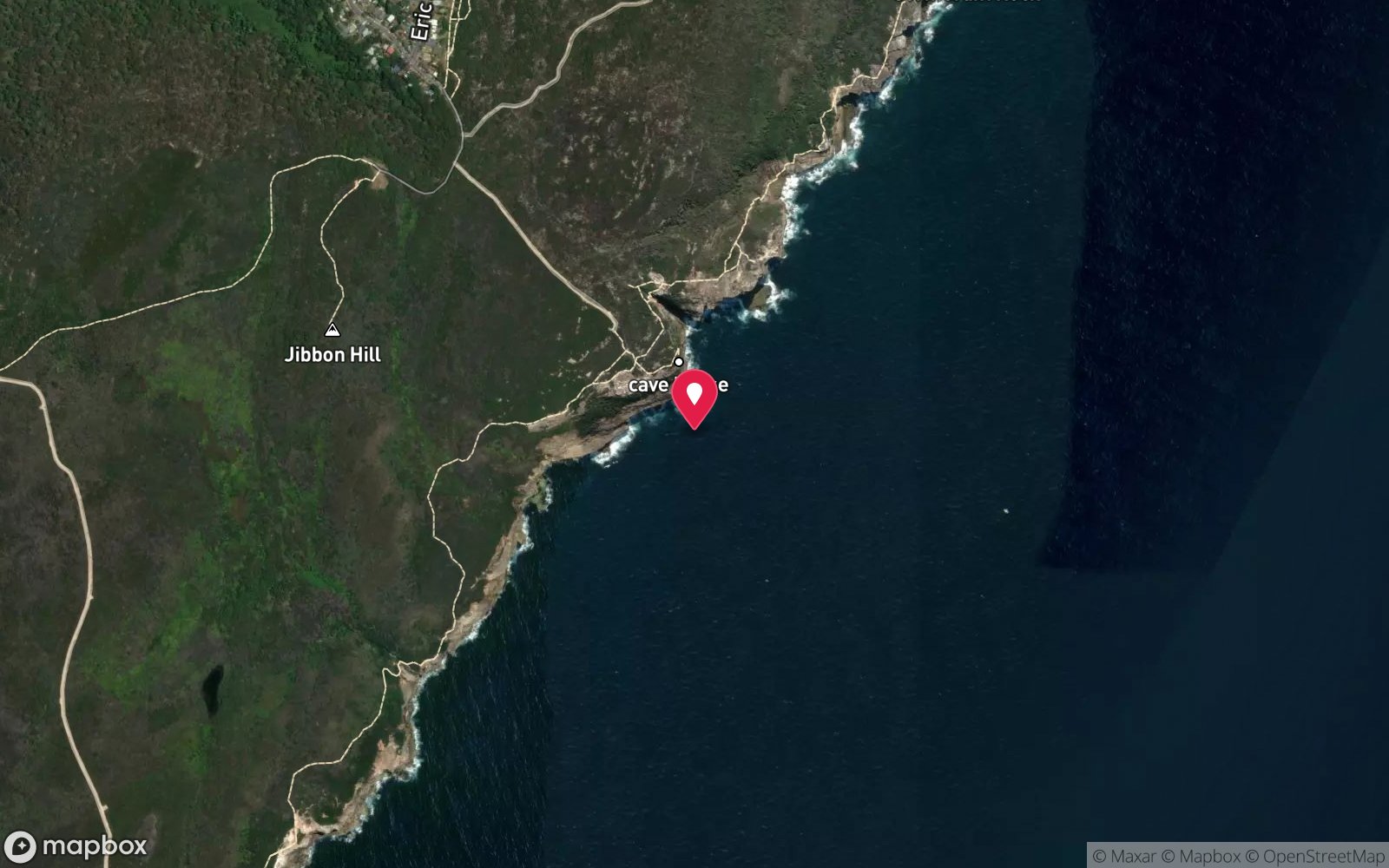
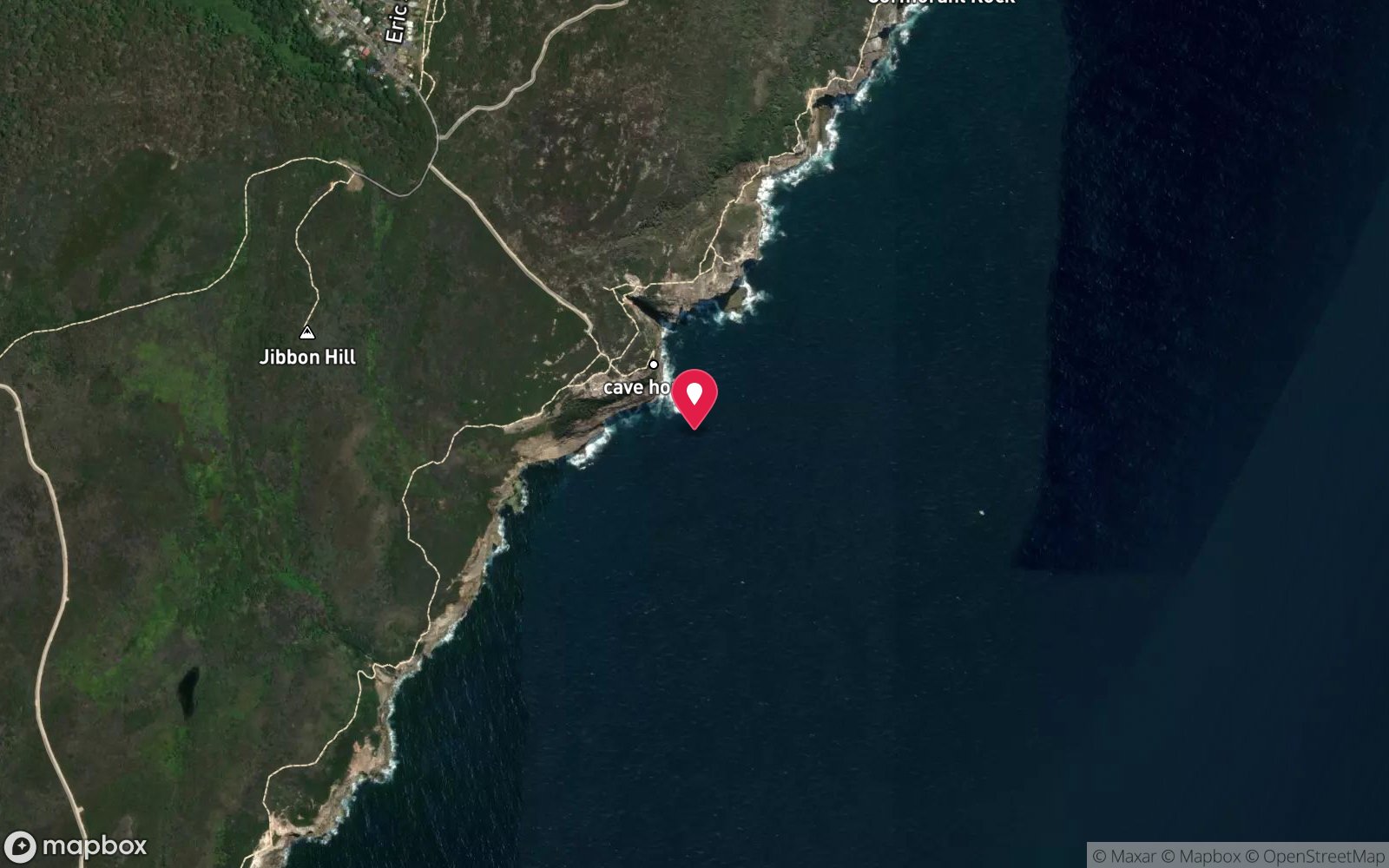
Marley / Wattamolla offshore · Sydney – South (Royal National Park)
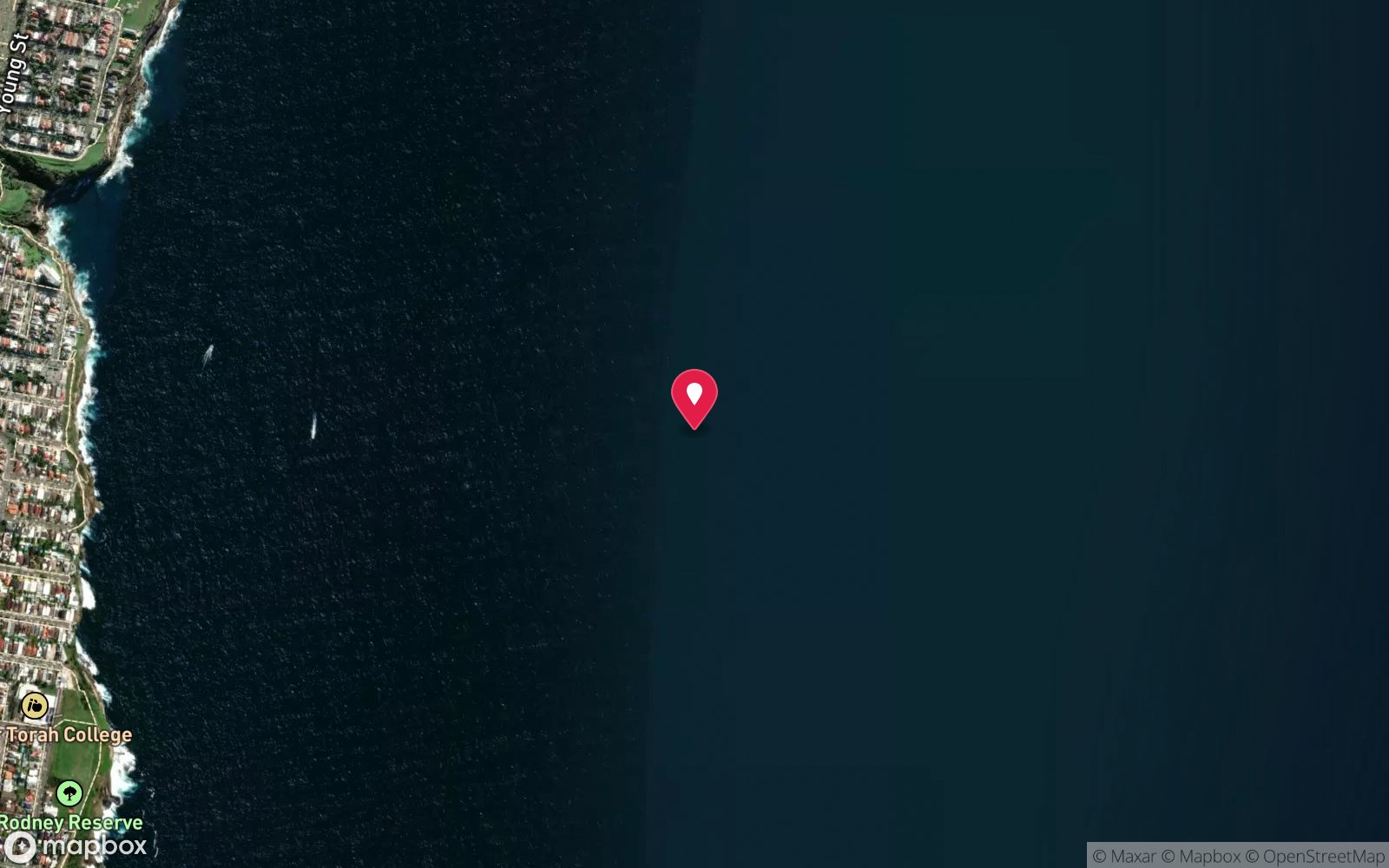
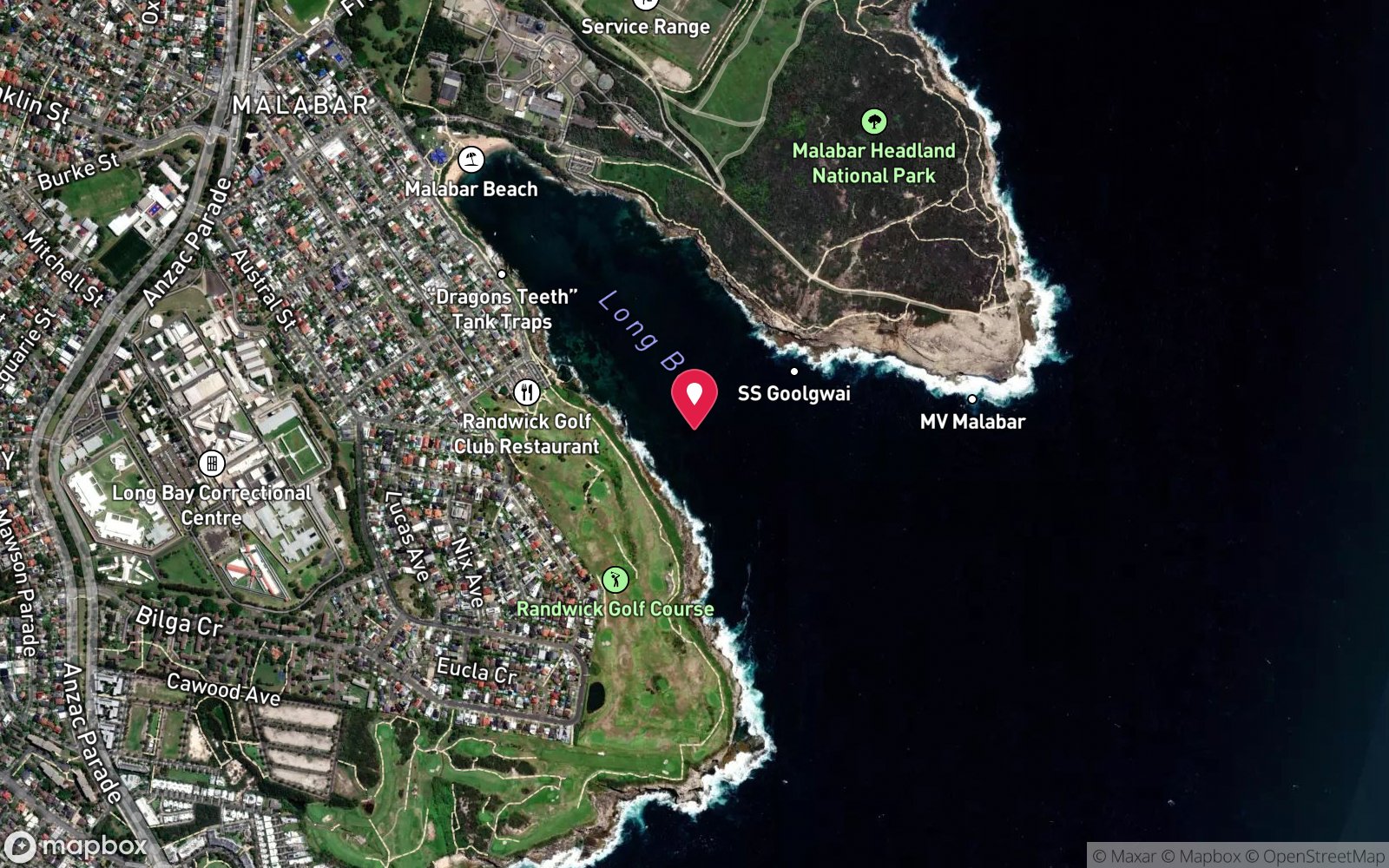
-34.13723, 151.15184
Published GPS position.
Open in Google MapsPrimary source: michaelmcfadyenscuba.infoMarine park & permits
None required
Nearest recompression chamber
Prince of Wales Hospital (Randwick, Sydney)
Diving emergency: call 000, then DAN AP 1800 088 200.
Trip planner
Build a trip around SS Tuggerah wreck →
A day-by-day plan for Sydney South & Botany Bay with this site locked in.
This guide is a planning aid. Conditions change daily — confirm with a local dive centre and dive within your training. Data & safety notes.
Dive profile
How this site rates
Scores are computed from the recorded data, not opinions. How?
At a glance
SS Tuggerah wreck is a wreck boat dive in Sydney South & Botany Bay, NSW, 40–49 m, suited to Technical (decompression) divers, strong current, about 35 minutes by boat.
Rated expert/technical because of depth to 49 m, strong current, cold water.
Why dive here
- The most intact engine room of any Sydney wreck, buried in schooling fish, at 45 m off Royal National Park.
- Sunk in 1919 (Steam collier, 56 m, 749 tons); protected as underwater cultural heritage, so look but do not touch.
- Visibility often reaches 15-25 (3-40) m.
Conditions to avoid
- Outgoing tide or run-off after rain (poor visibility)
About SS Tuggerah wreck
The Tuggerah is Sydney's most dived technical wreck and, by common consent, its fishiest. Built by Clyde Shipbuilding in Scotland and launched on 31 August 1912, she was a 56 m, 749-ton steam collier with a 927 hp triple-expansion engine and two Scotch boilers, working coal from the Illawarra to Sydney. On 17 May 1919, having loaded at Bulli jetty in rough weather with the cargo not properly trimmed, her master chose to sail rather than wait; off Marley Beach a six-metre wave struck her port side, the coal shifted, and she rolled and sank within minutes.
Six men died, including Captain McConachie; eleven survived after hours in the water. Coming six weeks after the Myola, the loss hastened reforms to collier loading practice. She lies on her port side on sand at 45–49 m.
The bow has collapsed, but from the boilers aft the ship is remarkably complete: divers pass between the boilers and the hull plating into the engine room where the three cylinders and their con-rods stand as they were, visit the workshop, and follow the hull to the propeller and rudder at the deepest point under the stern. A thick trawl rope now lies across the boilers, apparently from a 2024 trawler snag, and the wreck continues to deteriorate under the heavy seas of this open stretch. The marine life is what brings people back.
The hull is enveloped in bullseyes, nannygai and yellowtail so dense that the structure disappears inside the school; wobbegongs occupy every crevice; grey nurse sharks, Port Jackson sharks in extraordinary numbers (120 counted in one dive), giant cuttlefish, serpent eels, numbrays and stargazers are all recorded, and Australian fur seals frequently drop in. Visibility is usually better than 15 m.
Wreck details
Steam collier, 56 m, 749 tons · Sunk 1919 · Protected historic shipwreck
Era: early 20th century. Oldest wrecks · Wartime wrecks · Scuttled warships
Other wrecks of the same era
- SS Myola wreck · Max 50 m · Sydney Northern Beaches
- SS Undola wreck · Max 45 m · Sydney South & Botany Bay
- SS Yambacoomba wreck · Max 24 m · Central Coast
- TSS Nerong wreck · Max 45 m · Central Coast
- SS Commonwealth wreck (Foggy Reef) · Max 42 m · Central Coast
- TSS Wandra · Max 28 m · Jervis Bay
Getting there & entry
Collier that capsized and sank in a gale on 17 May 1919 with six lives lost, about 2.2 km off Marley Beach in Royal National Park; lies on its port side in 45–49 m.
Boat only, 2.2 km off Marley Beach, roughly 8 km south of the Port Hacking entrance. Technical charters leave from Cronulla public wharf or the Port Hacking ramps (Gunnamatta Bay, Lilli Pilli), 25–35 minutes; Sydney Dive Charters also runs here from Cronulla or Rose Bay on request. The wreck rises several metres off the sand and is an easy sounder target, but strong northerly surface current is common and the shot must be placed on the boilers.
Drifting decompression with a following boat is the norm.
Entry: Giant stride onto a shot line dropped on the wreck
Weather, swell & tides
Exposed to all swell directions; dived in under 1.5 m seas. The defining hazard is current, usually setting north and mostly in the surface layers, strong enough to sweep divers off the shot; dives are aborted if the shot line is streaming hard. Surface conditions can look poor while the bottom is clear, and visibility ranges from 3 m to over 40 m, typically better than 15 m.
Winter gives the clearest water; run-off from Port Hacking after rain affects the inshore layer only.
Best season: Autumn–winter; any calm day with low current
If it's blown out
Sheltered or shore sites within 25 km that often work when SS Tuggerah wreck doesn't.
- Oak Park (Cronulla) · 8 km · Max 10 m
- Shiprock (Port Hacking) · 8 km · Max 18 m
- The Steps (Kurnell) · 16 km · Max 15 m
- The Monument / Sutherland Point (Kurnell) · 16 km · Max 14 m
How the dive is usually run
Descend the shot to the boilers at about 44 m. Swim between the boilers and the hull into the engine room to see the triple-expansion cylinders and con-rods, visit the workshop space, then follow the more intact stern to the propeller at 48–49 m before returning forward along the collapsed bow section. Fifteen to twenty minutes, then staged decompression on a drifting station, with about 20 minutes of stops on air tables.
Marine life
- Dense bullseye
- nannygai and yellowtail schools
- wobbegongs →
- grey nurse sharks →
- Port Jackson sharks →
- giant cuttlefish →
- Australian fur seals →
- serpent eels
- numbrays
- stargazers
- kingfish
Linked species have their own page listing every site where they are recorded. All marine life →
Training required
Beyond recreational limits: decompression, mixed gas or full cave/wreck training is required.
Courses that help here
- Enriched Air Nitrox – Longer no-decompression time at 25 m and deeper.
- Wreck Diver – The wreck has penetration options.
- Drift Diver – Current is a feature of the dive.
- Drysuit Diver – Cold water; locals dive dry for much of the year.
Depth tiers: 0–10 m easy · to 18 m Open Water · 18–30 m Advanced (25 m+ is a deep dive) · 30–40 m Deep specialty · 40 m+ technical. All courses
Hazards & warnings
45–49 m with decompression; strong and unpredictable current, mostly at the surface; risk of separation from the shot – drifting deco station and DSMB mandatory; silt in the engine room; trawl rope entanglement; protected historic wreck.
Technical notes
Trimix 18/45 or 21/35 typical; 15–20 minutes bottom time with 50%/100% deco gases; CCR friendly. Reel for engine-room penetration. Sydney Dive Charters requires Tec 40/T1 and 100 logged dives.
Dive centres that go here
Sydney Dive Charters – Tec 1 charters (Thursday/Sunday programme, Cronulla or Rose Bay departures); Abyss Scuba Diving, Frog Dive and Pro Dive Cronulla run technical trips several times a year; the busiest technical wreck in Sydney.
Operators recorded for SS Tuggerah wreck
Abyss Scuba Diving
ProfiledRamsgate · Sydney South & Botany Bay · NSW
A Sydney operation associated with training across recreational and technical levels, boat diving and equipment services.
abyss.com.au · +61 2 9583 9662
Frog Dive Sydney
ProfiledGladesville · Sydney South & Botany Bay · NSW
A Willoughby PADI 5 Star IDC founded in 1985, teaching recreational through Trimix and rebreather courses with PADI, SDI and TDI, and testing cylinders in-store.
frogdive.com.au · (02) 9958 5699
Sydney Dive Charters
Named by sitesRose Bay · Sydney Northern Beaches · NSW
Charter boat; departs Rose Bay, Little Manly, Careel Bay and Cronulla wharves.
sydneydivecharters.com.au · 0417 417 295
Pro Dive Cronulla
Reported closedCronulla · Sydney South & Botany Bay · NSW
PRO DIVE's own site lists only Alexandria, Manly/Brookvale, Cairns, Port Douglas and Port Lincoln; Cronulla was reduced to a training centre and then dropped.
Other dive centres in Sydney South & Botany Bay
Pro Dive Sydney
ProfiledSt Peters · Sydney South & Botany Bay · NSW
Pro Dive's inner-Sydney training centre at Alexandria, close to Camp Cove, Clovelly, Gordons Bay and Bare Island, with courses to Divemaster, hire and servicing.
prodive.com.au · (02) 9665 6333
Dive Centre Manly
ProfiledManly · Sydney South & Botany Bay · NSW
A Northern Beaches operation with a long-standing presence at Shelly Beach, offering recreational training, boat diving and technical pathways.
divesydney.com.au · (02) 9977 4355
Pro Dive Brookvale
ProfiledBrookvale · Sydney South & Botany Bay · NSW
Pro Dive's Northern Beaches centre at Brookvale, running the 43-foot dive boat Sea Life V alongside courses, hire, air fills and servicing.
prodive.com.au · (02) 9977 5966
Dive Centre Bondi
ProfiledBondi · Sydney South & Botany Bay · NSW
An Eastern Suburbs PADI 5 Star IDC on Bondi Road teaching through Instructor and technical levels, with air, Nitrox and Trimix fills and manufacturer-approved servicing.
divebondi.com.au · +61 2 9369 3855
ADRENO Sydney
ProfiledAlexandria · Sydney South & Botany Bay · NSW
The Sydney branch of Adreno, an 850-square-metre spearfishing, freediving and scuba store in Alexandria that also runs SSI scuba courses.
adreno.com.au · (02) 9669 6214
Geo Divers
ProfiledClyde · Sydney South & Botany Bay · NSW
A Sydney PADI 5 Star Instructor Development Centre running small-group courses with two PADI professionals, from Discover Scuba through Instructor training.
geodivers.com.au · (02) 9689 1389
Map
7 pinned sites. Pins marked approximate on their pages show the general area only; not for navigation.
Satellite views
SS Tuggerah wreck: frequently asked questions
How deep is SS Tuggerah wreck?
SS Tuggerah wreck reaches a maximum depth of 49 m, with the shallowest part at about 40 m; most of the dive is spent around 45 m.
What certification do I need to dive SS Tuggerah wreck?
Technical (decompression) is the recommended minimum. Rated expert/technical because of depth to 49 m, strong current, cold water.
Can I shore dive SS Tuggerah wreck?
No, it is reached by boat (about 35 minutes). A dive centre is required: boat access only.
When is the best time to dive SS Tuggerah wreck?
Autumn–winter; any calm day with low current.
What marine life will I see at SS Tuggerah wreck?
Regularly recorded: Dense bullseye, nannygai and yellowtail schools, wobbegongs, grey nurse sharks, Port Jackson sharks, giant cuttlefish, Australian fur seals, serpent eels, numbrays, stargazers, kingfish.
What wetsuit do I need at SS Tuggerah wreck?
5 mm full suit in summer; 7 mm semi-dry or drysuit May–October.
How cold is the water at SS Tuggerah wreck?
Typically 21-24 °C in summer and 15-18 °C in winter.
What are the main hazards at SS Tuggerah wreck?
45–49 m with decompression; strong and unpredictable current, mostly at the surface; risk of separation from the shot – drifting deco station and DSMB mandatory; silt in the engine room; trawl rope entanglement; protected historic wreck. See the hazards section above for the full list.
Where is the nearest recompression chamber to SS Tuggerah wreck?
Prince of Wales Hospital (Randwick, Sydney). In an emergency call 000, then DAN Asia-Pacific on 1800 088 200.
Diving in Sydney South & Botany Bay
Sydney's southern beaches and Botany Bay hold the city's biggest cluster of dive sites, and most of them are shore dives. Bare Island, on the northern side of Botany Bay, is the most-dived site in the state, with a dozen named reefs around one small island; Kurnell's Steps and Monument on the southern side are famous for weedy seadragons and sea horses. Magic Point at Maroubra has resident grey nurse sharks, and the offshore reefs off Coogee and Cronulla have wrecks and sponge gardens in 20–40 m.
Getting there: All the shore sites are within 30 minutes of the CBD with car parks and beach or rock entries. Boat charters leave from Botany Bay, Rose Bay and Cronulla for the offshore reefs and Magic Point.
All Sydney South & Botany Bay dive sites and a suggested itinerary →
Sources
- michaelmcfadyenscuba.info/viewpage.php?page_id=75
- sydneydivecharters.com.au/dives/technical-diving-sydney
Data confidence: High · Being verified: Region assignment: physically in Sydney South; de-duplicate against the southern agent's file.. Last updated September 2026. Know this site better? How to send a correction
Nearby dive sites
More wrecks in New South Wales
Explore more
This region
Marine life