Dive slate · divesites.com.au · printed 9 Nov 2026
Jibbon Bombora (Fish Reef)
Sydney South & Botany Bay, New South Wales · near Bundeena
| Depth | 2–22 m |
|---|---|
| Minimum level | Advanced Open Water |
| Difficulty | Intermediate |
| Access | Boat |
| Entry | Giant stride or back roll from anchored boat |
| Current | Mild |
| Visibility | 10–15 m m |
| Water | summer 21–24 °C °C, winter 15–18 °C °C |
| Suit | 7 mm wetsuit or semi-dry year round; 5 mm adequate Jan–Apr; hood and gloves in winter; drysuit optional Jul–Oct |
| Best season | Calm days year round, especially westerlies |
| Bottom time | 40 min |
| Position | -34.08133, 151.17603 (GPS) |
| Permit | None required (adjacent Royal National Park) |
| Nearest chamber | Prince of Wales Hospital Hyperbaric Unit (Randwick, Sydney) |
| Emergency | 000 · DAN Asia-Pacific diving emergency 1800 088 200 |
Jibbon Bombora (Fish Reef)
Also known as Jibbon Bommie, Jibbon Bombora South East, Fish Reef, Jibbon Point
The reef that shelters Port Hacking: overhangs, a canyon and a huge overhang on the south-east side with giant cuttlefish, big wobbegongs and seals.
Near Bundeena · Sydney South & Botany Bay, New South Wales
- Depth
- 2–22 m
- Minimum level
- Advanced Open Water
- Access
- Boat
- Boat ride
- ~8 min
- Water
- 21–24 °C
- Visibility
- 10–15 m
Jibbon Bombora (Fish Reef)2–22 m · Advanced Open Water
Dive factsDepths, conditions, location & safety
Season
In season nowBest months: year-round.
Dive facts
- Depth
- 2–22 m
- Typical depth
- 15 m
- Certification
- Advanced Open Water
- Difficulty
- Intermediate
- Depth tier
- Advanced Open Water (18–30 m)
- Access
- Boat
- Offshore
- 0.8 km
- Dive centre needed
- No – independently diveable
- Shore / independent
- No
- Boat ride
- ~8 min
- Current
- Mild
- Visibility
- 10–15 m
- Water temp (summer)
- 21–24 °C
- Water temp (winter)
- 15–18 °C
- Water
- Temperate
- Bottom time
- 40 min
- Dive traffic
- Rarely dived (private boat/club only)
- Night dive
- No
- Snorkel friendly
- No
Exposure suit
7 mm wetsuit or semi-dry year round; 5 mm adequate Jan–Apr; hood and gloves in winter; drysuit optional Jul–Oct
Location
Royal National Park coast · Sydney South
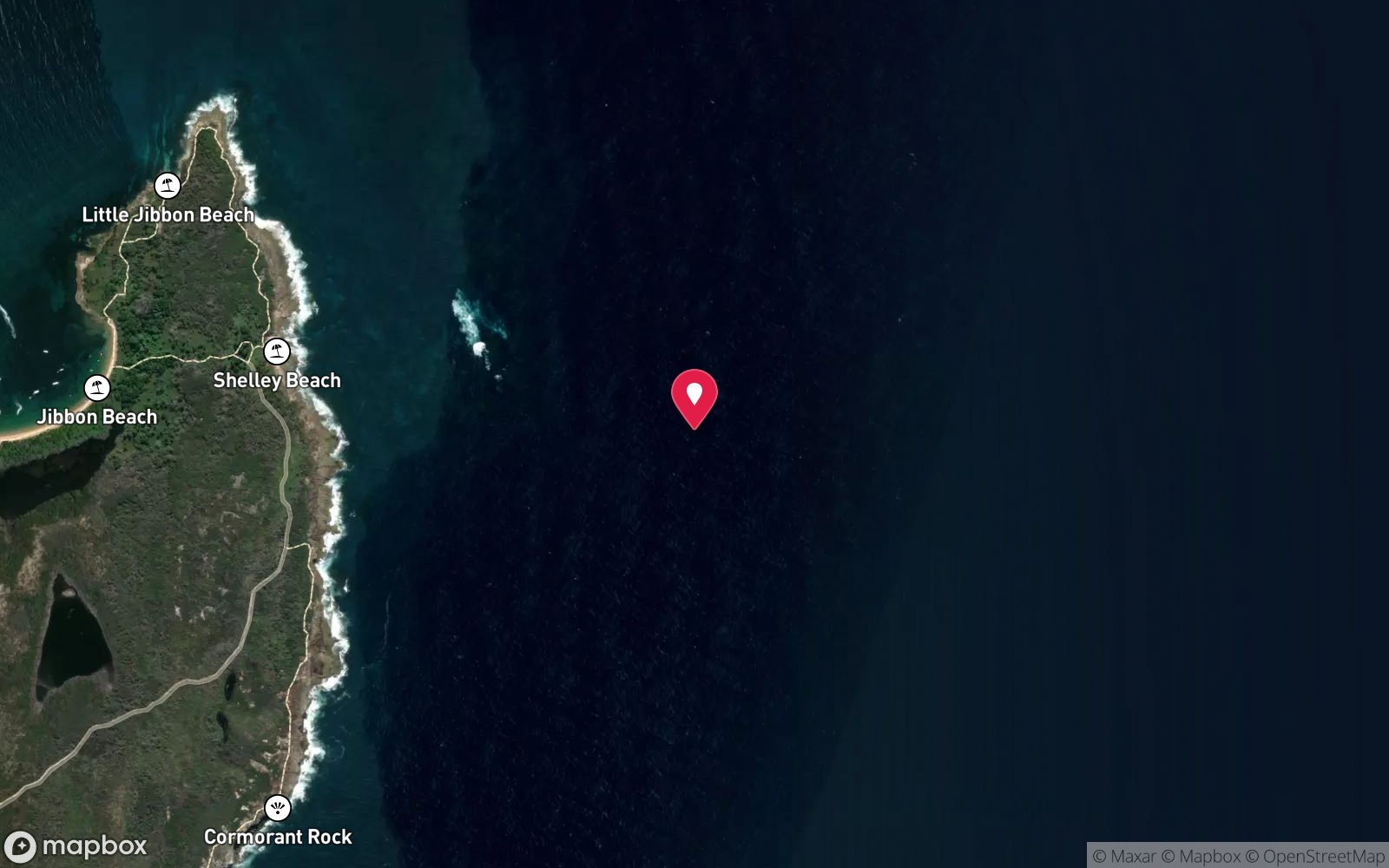
-34.08133, 151.17603
Published GPS position.
Open in Google MapsPrimary source: michaelmcfadyenscuba.infoMarine park & permits
None required (adjacent Royal National Park)
Nearest recompression chamber
Prince of Wales Hospital Hyperbaric Unit (Randwick, Sydney)
Diving emergency: call 000, then DAN AP 1800 088 200.
Trip planner
Build a trip around Jibbon Bombora (Fish Reef) →
A day-by-day plan for Sydney South & Botany Bay with this site locked in.
This guide is a planning aid. Conditions change daily — confirm with a local dive centre and dive within your training. Data & safety notes.
Dive profile
How this site rates
Scores are computed from the recorded data, not opinions. How?
At a glance
Jibbon Bombora (Fish Reef) is a pinnacle / bommie boat dive in Sydney South & Botany Bay, NSW, 2–22 m, suited to Advanced Open Water divers, about 8 minutes by boat.
Rated intermediate because of depth beyond 18 m, surge on the entry or in the shallows, boat traffic overhead, cold water.
Why dive here
- The reef that shelters Port Hacking: overhangs, a canyon and a huge overhang on the south-east side with giant cuttlefish, big wobbegongs and seals.
- Rarely dived: expect to have the site to yourself, and plan your own logistics.
About Jibbon Bombora (Fish Reef)
Jibbon Bombora is the reef that protects the mouth of Port Hacking from the southerly swell, lying just off Jibbon Point in Royal National Park about 25 km south of Sydney. It has two peaks, a larger northern one and a smaller southern one, which come to within 2 m of the surface at low tide; the surrounding reef is about 4 m deep and slopes gently to 9 m before dropping away more steeply. In calm seas it is invisible from the surface, but in big swell waves break along its full length – which is why local boaties treat it with great respect.
The best diving is on the south-east side, known as Fish Reef, which McFadyen revisited in 2026. Here the depth at the anchor is about 17.5 m, dropping to sand at more than 22 m. A small kelp-covered ledge leads to walls with overhangs and holes, and to the south a large rock stands apart from the main reef, separated by a small canyon with a huge overhang.
Eastern blue devils and giant cuttlefish live under the overhangs, very large wobbegongs rest on the ledges, and seals visit. Big bream, yellowtail, many different leatherjackets and wrasse, and nudibranchs round out the list, and older records mention resident grey nurse sharks – a reminder of how widely the species once ranged in southern Sydney. The western slopes are less interesting.
Because the bombora is only minutes from the ramps, it is a convenient dive, but it needs the right conditions: small seas but not so flat that skippers head elsewhere. It suits Advanced divers comfortable at 20 m and competent boat handlers who understand breaking reefs.
Getting there & entry
Two-peaked bombora just outside Port Hacking off Jibbon Point, Royal National Park; peaks 2 m at low tide, slopes to 9 m then drops to sand at about 22 m on the south-east side.
Boat only. From the Port Hacking ramps (Gunnamatta Bay, Lilli Pilli, Bundeena) run out through the entrance – the bombora is just outside, off Jibbon Point, about 5–10 minutes. McFadyen's recommended anchor position for the south-east (Fish Reef) site is 34° 04.880' S 151° 10.562' E, where the depth is about 17.5 m.
In calm seas the reef is invisible from the surface; in any swell it breaks along its whole length – do not approach the peaks.
Entry: Giant stride or back roll from anchored boat
Facilities: Departure only: Port Hacking ramps (Gunnamatta Bay, Lilli Pilli, Bundeena); air/nitrox at Pro Dive Cronulla (Gerrale Street, Cronulla) and Abyss (Ramsgate).
Weather, swell & tides
Jibbon Bombora shelters the Port Hacking entrance from the south, so it takes the full southerly and south-easterly swell itself: in large seas waves break over the entire reef and diving is not just difficult but dangerous. In very flat seas skippers tend to go to other sites, so it is mostly dived on small-swell days. Stormwater from Port Hacking affects visibility only after extended very heavy rain and clears within a couple of days.
Westerly winds give the best conditions.
Best season: Calm days year round, especially westerlies
If it's blown out
Sheltered or shore sites within 25 km that often work when Jibbon Bombora (Fish Reef) doesn't.
- Oak Park (Cronulla) · 2 km · Max 10 m
- Shiprock (Port Hacking) · 5 km · Max 18 m
- The Steps (Kurnell) · 10 km · Max 15 m
- The Monument / Sutherland Point (Kurnell) · 10 km · Max 14 m
How the dive is usually run
Descend at the south-east anchor (17.5 m) and head west to a small kelp-covered ledge, then follow the walls north past overhangs and holes. Return south to the large separate rock and the small canyon between it and the wall, with its huge overhang, and finish back at the anchor. Stay well away from the breaking peaks.
Marine life
- Eastern blue devil →
- giant cuttlefish →
- wobbegong (very large) →
- Australian fur seal →
- bream
- yellowtail
- leatherjackets
- wrasse
- nudibranchs →
- grey nurse shark (historical) →
Linked species have their own page listing every site where they are recorded. All marine life →
Training required
Beyond 18 m an Advanced certification (which includes a deep dive to 30 m) is the accepted minimum. Anything past 25 m is a deep dive in practice.
Courses that help here
- Drysuit Diver – Cold water; locals dive dry for much of the year.
Depth tiers: 0–10 m easy · to 18 m Open Water · 18–30 m Advanced (25 m+ is a deep dive) · 30–40 m Deep specialty · 40 m+ technical. All courses
Hazards & warnings
Breaking waves over the peaks in any swell – dangerous for boats and divers; boat traffic at the Port Hacking entrance; surge near the shallow peaks; ascend on the anchor line.
Dive centres that go here
No regular charter – private boat or dive-club (St George Scuba Club) only; no charter currently operates out of Port Hacking.
Operators recorded for Jibbon Bombora (Fish Reef)
Abyss Scuba Diving
ProfiledRamsgate · Sydney South & Botany Bay · NSW
A Sydney operation associated with training across recreational and technical levels, boat diving and equipment services.
abyss.com.au · +61 2 9583 9662
St George Scuba Club
Named by sitesRamsgate · Sydney South & Botany Bay · NSW
Club, not a shop; meets third Tuesday monthly at Ramsgate RSL.
stgeorgescubaclub.org.au
Pro Dive Cronulla
Reported closedCronulla · Sydney South & Botany Bay · NSW
PRO DIVE's own site lists only Alexandria, Manly/Brookvale, Cairns, Port Douglas and Port Lincoln; Cronulla was reduced to a training centre and then dropped.
Sydney Dive Academy
Reported closedMatraville · Sydney South & Botany Bay · NSW
Marked closed on Yelp.
Other dive centres in Sydney South & Botany Bay
Frog Dive Sydney
ProfiledGladesville · Sydney South & Botany Bay · NSW
A Willoughby PADI 5 Star IDC founded in 1985, teaching recreational through Trimix and rebreather courses with PADI, SDI and TDI, and testing cylinders in-store.
frogdive.com.au · (02) 9958 5699
Pro Dive Sydney
ProfiledSt Peters · Sydney South & Botany Bay · NSW
Pro Dive's inner-Sydney training centre at Alexandria, close to Camp Cove, Clovelly, Gordons Bay and Bare Island, with courses to Divemaster, hire and servicing.
prodive.com.au · (02) 9665 6333
Dive Centre Manly
ProfiledManly · Sydney South & Botany Bay · NSW
A Northern Beaches operation with a long-standing presence at Shelly Beach, offering recreational training, boat diving and technical pathways.
divesydney.com.au · (02) 9977 4355
Pro Dive Brookvale
ProfiledBrookvale · Sydney South & Botany Bay · NSW
Pro Dive's Northern Beaches centre at Brookvale, running the 43-foot dive boat Sea Life V alongside courses, hire, air fills and servicing.
prodive.com.au · (02) 9977 5966
Dive Centre Bondi
ProfiledBondi · Sydney South & Botany Bay · NSW
An Eastern Suburbs PADI 5 Star IDC on Bondi Road teaching through Instructor and technical levels, with air, Nitrox and Trimix fills and manufacturer-approved servicing.
divebondi.com.au · +61 2 9369 3855
ADRENO Sydney
ProfiledAlexandria · Sydney South & Botany Bay · NSW
The Sydney branch of Adreno, an 850-square-metre spearfishing, freediving and scuba store in Alexandria that also runs SSI scuba courses.
adreno.com.au · (02) 9669 6214
Map
7 pinned sites. Pins marked approximate on their pages show the general area only; not for navigation.
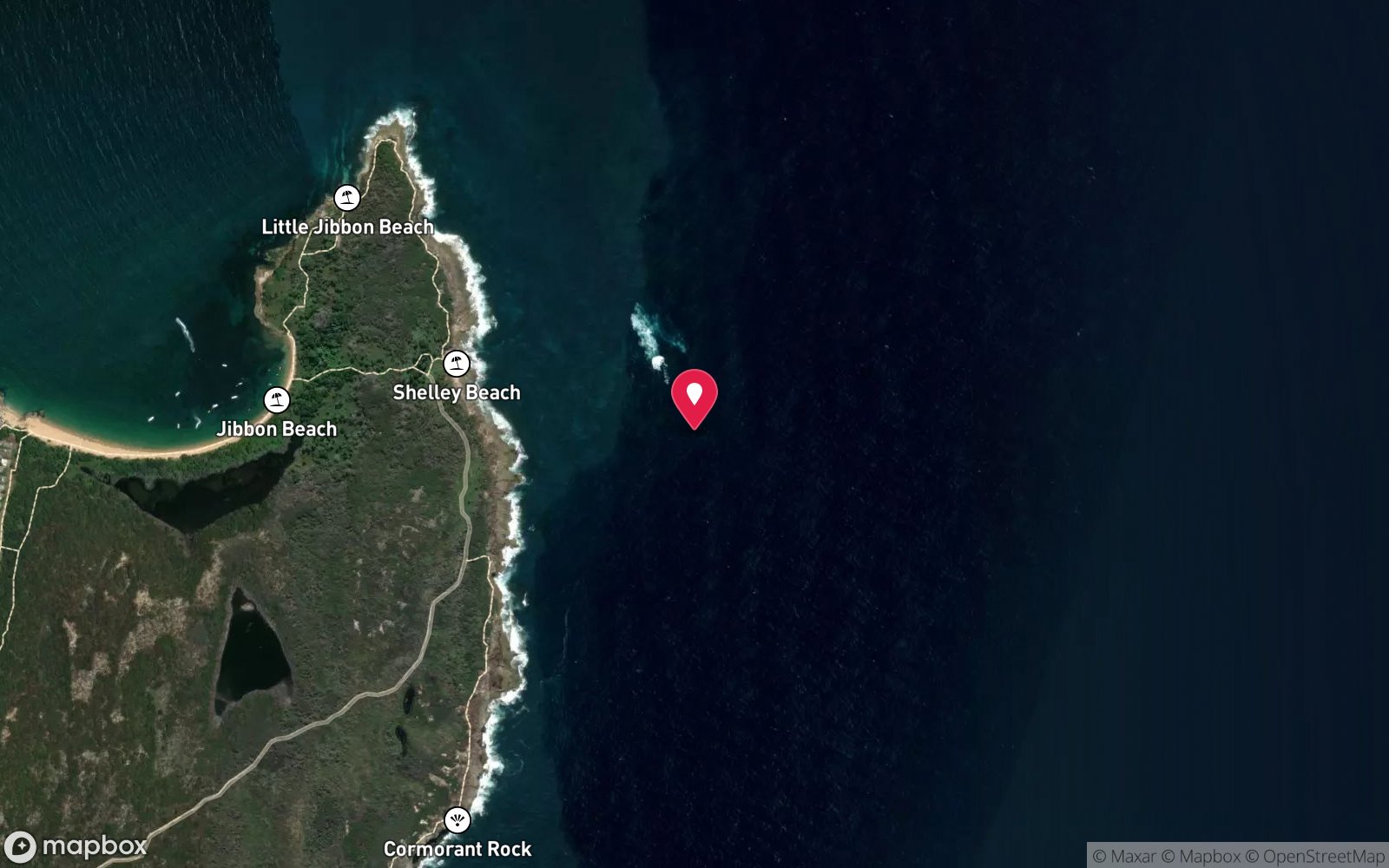
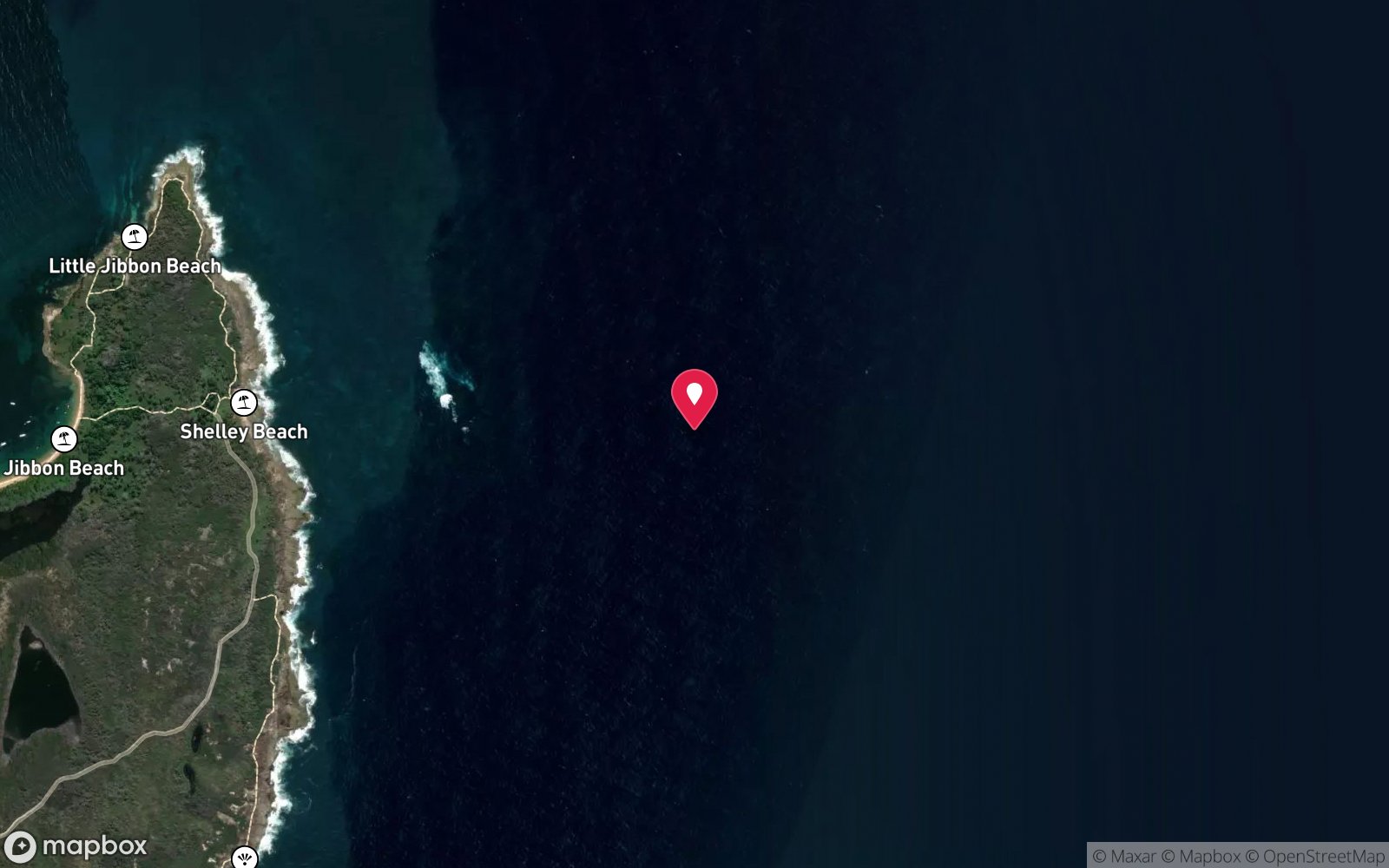
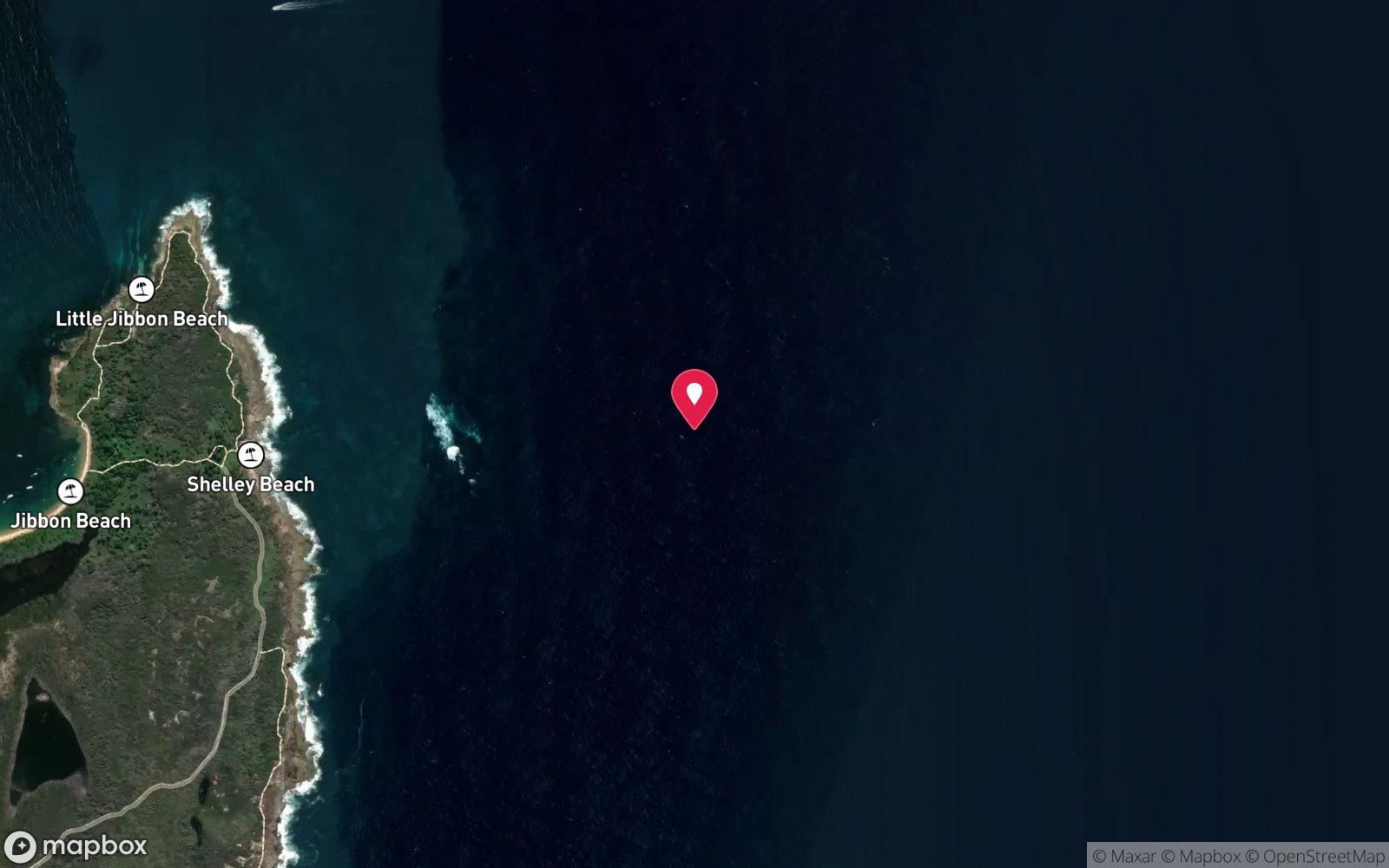
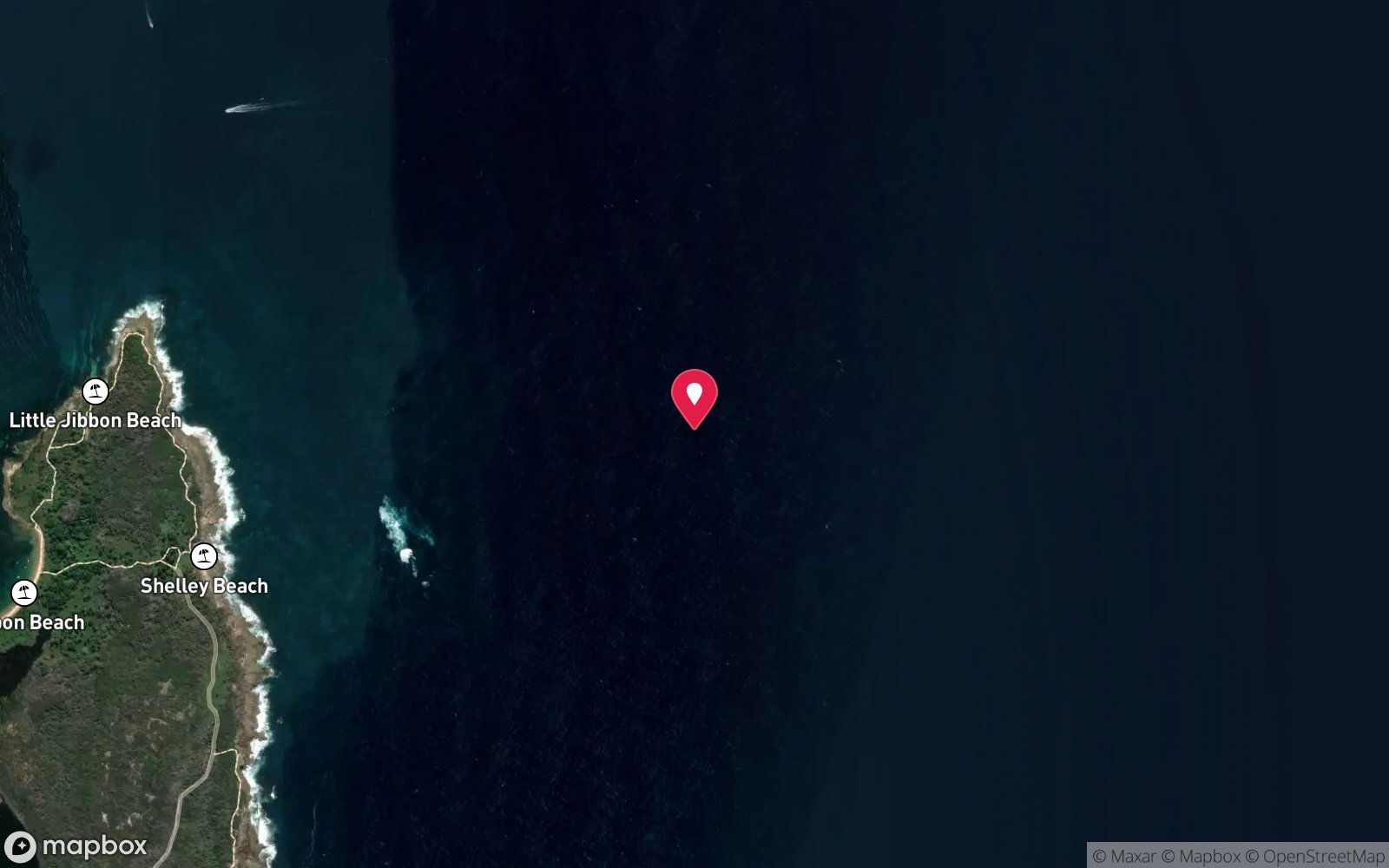
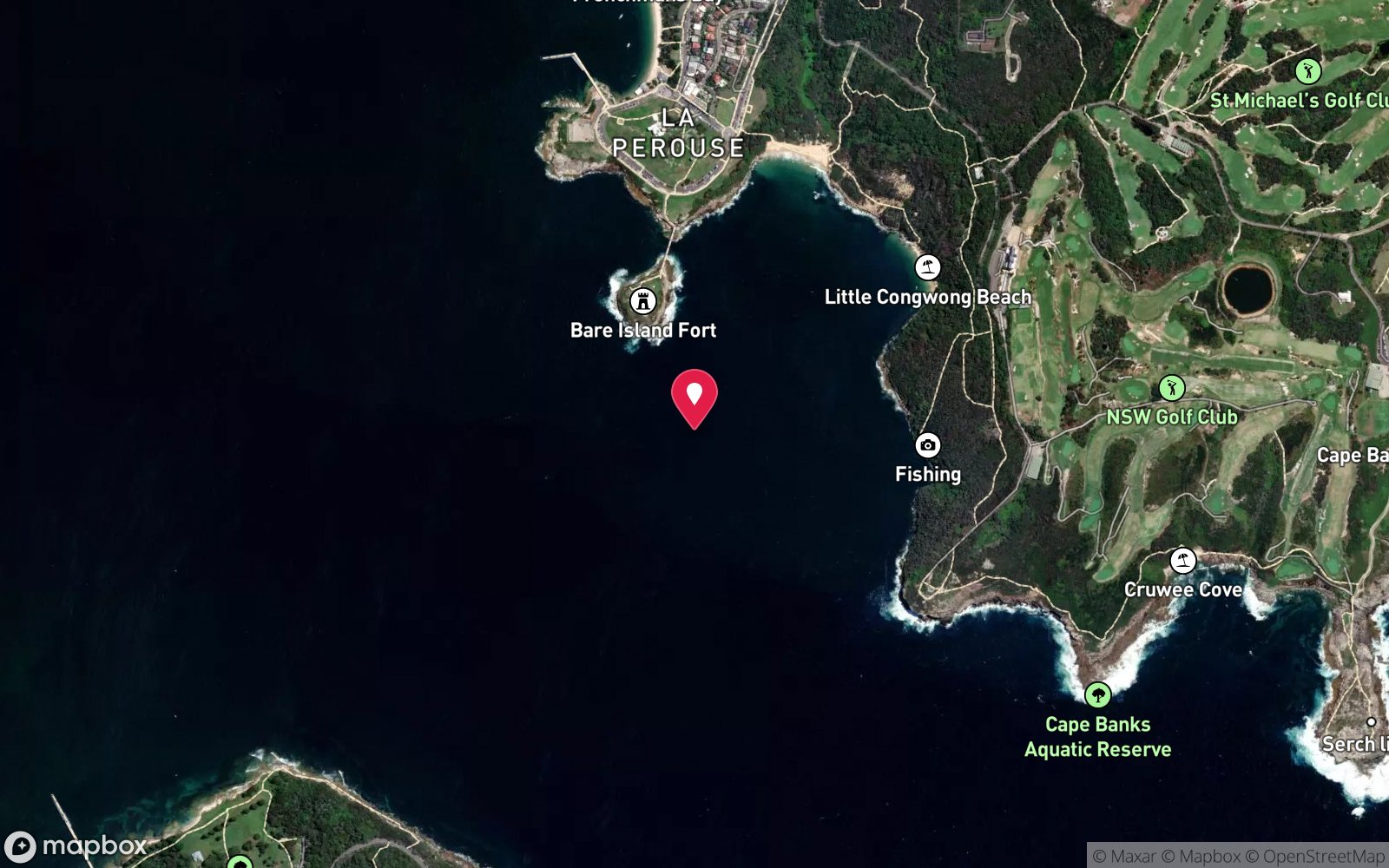
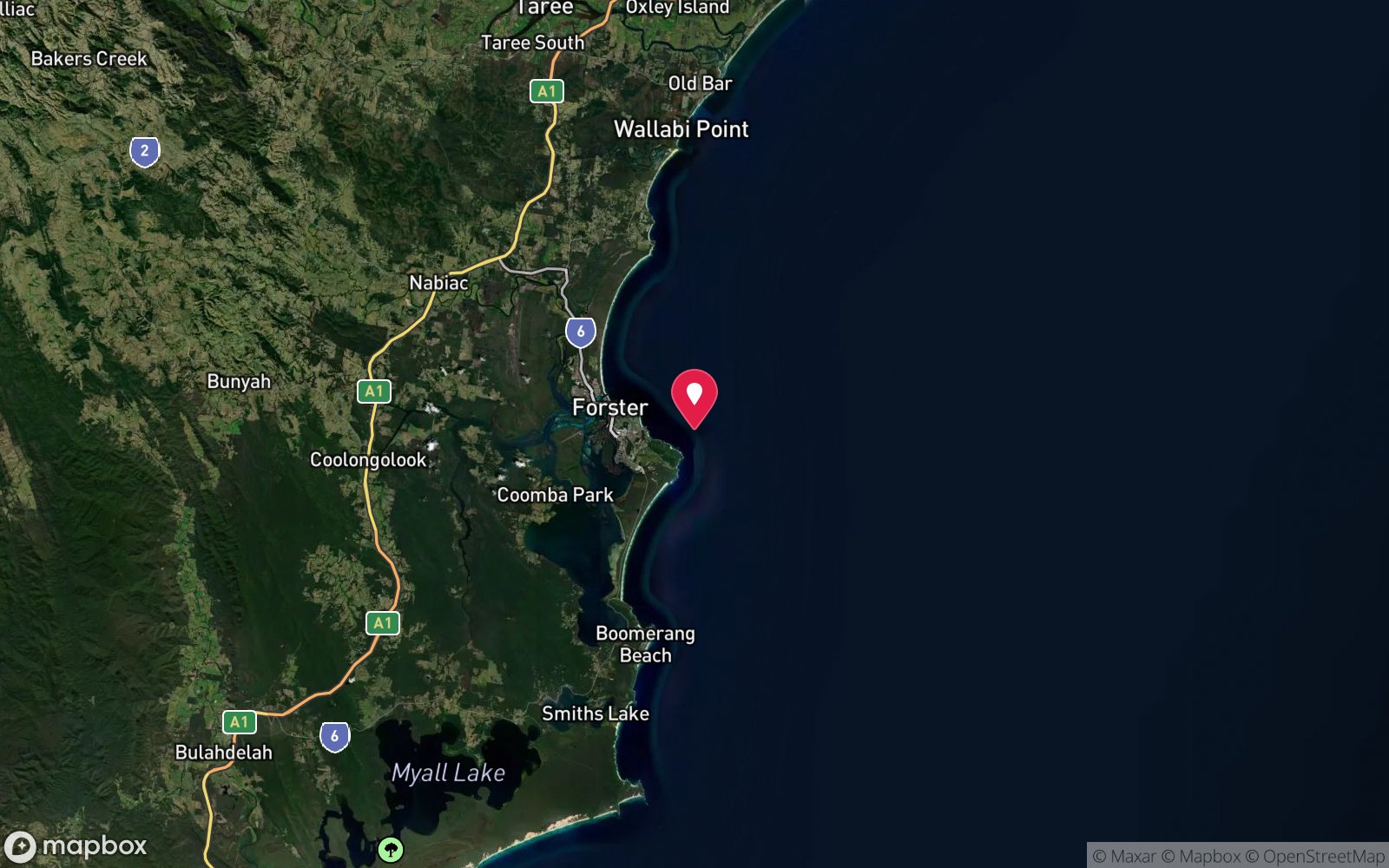
Satellite views
Jibbon Bombora (Fish Reef): frequently asked questions
How deep is Jibbon Bombora (Fish Reef)?
Jibbon Bombora (Fish Reef) reaches a maximum depth of 22 m, with the shallowest part at about 2 m; most of the dive is spent around 15 m.
What certification do I need to dive Jibbon Bombora (Fish Reef)?
Advanced Open Water is the recommended minimum. Rated intermediate because of depth beyond 18 m, surge on the entry or in the shallows, boat traffic overhead, cold water.
Can I shore dive Jibbon Bombora (Fish Reef)?
No, it is reached by boat (about 8 minutes).
When is the best time to dive Jibbon Bombora (Fish Reef)?
Calm days year round, especially westerlies.
What marine life will I see at Jibbon Bombora (Fish Reef)?
Regularly recorded: Eastern blue devil, giant cuttlefish, wobbegong (very large), Australian fur seal, bream, yellowtail, leatherjackets, wrasse, nudibranchs, grey nurse shark (historical).
What wetsuit do I need at Jibbon Bombora (Fish Reef)?
7 mm wetsuit or semi-dry year round; 5 mm adequate Jan–Apr; hood and gloves in winter; drysuit optional Jul–Oct.
How cold is the water at Jibbon Bombora (Fish Reef)?
Typically 21–24 °C in summer and 15–18 °C in winter.
What are the main hazards at Jibbon Bombora (Fish Reef)?
Breaking waves over the peaks in any swell – dangerous for boats and divers; boat traffic at the Port Hacking entrance; surge near the shallow peaks; ascend on the anchor line. See the hazards section above for the full list.
Where is the nearest recompression chamber to Jibbon Bombora (Fish Reef)?
Prince of Wales Hospital Hyperbaric Unit (Randwick, Sydney). In an emergency call 000, then DAN Asia-Pacific on 1800 088 200.
Diving in Sydney South & Botany Bay
Sydney's southern beaches and Botany Bay hold the city's biggest cluster of dive sites, and most of them are shore dives. Bare Island, on the northern side of Botany Bay, is the most-dived site in the state, with a dozen named reefs around one small island; Kurnell's Steps and Monument on the southern side are famous for weedy seadragons and sea horses. Magic Point at Maroubra has resident grey nurse sharks, and the offshore reefs off Coogee and Cronulla have wrecks and sponge gardens in 20–40 m.
Getting there: All the shore sites are within 30 minutes of the CBD with car parks and beach or rock entries. Boat charters leave from Botany Bay, Rose Bay and Cronulla for the offshore reefs and Magic Point.
All Sydney South & Botany Bay dive sites and a suggested itinerary →
Sources
Data confidence: High. Last updated September 2026. Know this site better? How to send a correction
Nearby dive sites
More pinnacle/bommie dives in New South Wales
Explore more
This region
Marine life