Dive slate · divesites.com.au · printed 9 Nov 2026
Fish Rock Cave
South West Rocks, New South Wales · near South West Rocks
| Depth | 7–25 m |
|---|---|
| Minimum level | Advanced Open Water |
| Difficulty | Advanced |
| Access | Boat |
| Entry | Giant stride/backward roll from charter boat onto the southern mooring, then swim to the shallow or deep cave entrance |
| Current | Variable/Tidal |
| Visibility | 15-40 m |
| Water | summer 22-25 °C, winter 17-20 °C |
| Suit | 3-5 mm steamer summer; 5-7 mm full suit or semi-dry winter |
| Best season | May–September for grey nurse sharks; year-round for the cave itself |
| Bottom time | 40 min |
| Position | -30.94080, 153.09920 (approximate) |
| Permit | Fish Rock is grey nurse shark critical habitat — Code of Conduct applies (no touching/feeding/blocking, max group size, no night diving on the aggregation) |
| Nearest chamber | Prince of Wales Hospital (Randwick, Sydney) — John Hunter Hospital Newcastle has no recompression chamber |
| Emergency | 000 · DAN Asia-Pacific diving emergency 1800 088 200 |
Fish Rock Cave
Also known as Fish Rock Tunnel
A true 120 m ocean tunnel through Fish Rock with resident grey nurse sharks in the entrance gutter and two air pockets inside where divers can surface and talk underground.
Near South West Rocks · South West Rocks, New South Wales
- Depth
- 7–25 m
- Minimum level
- Advanced Open Water
- Access
- Boat
- Boat ride
- ~20 min
- Water
- 22-25 °C
- Visibility
- 15-40 m
Fish Rock Cave7–25 m · Advanced Open Water
Dive factsDepths, conditions, location & safety
Season
In season nowBest months: year-round.
May–September for grey nurse sharks; year-round for the cave itself
- Best months
- Now (November)
- Stinger suit Nov–May
Dive facts
- Depth
- 7–25 m
- Typical depth
- 15 m
- Certification
- Advanced Open Water
- Difficulty
- Advanced
- Depth tier
- Advanced Open Water (18–30 m)
- Access
- Boat
- Offshore
- 2 km
- Dive centre needed
- Yes – boat access only
- Shore / independent
- No
- Boat ride
- ~20 min
- Current
- Variable/Tidal
- Visibility
- 15-40 m
- Water temp (summer)
- 22-25 °C
- Water temp (winter)
- 17-20 °C
- Water
- Subtropical
- Bottom time
- 40 min
- Dive traffic
- Very popular (dived daily)
- Night dive
- No
- Snorkel friendly
- No
Exposure suit
3-5 mm steamer summer; 5-7 mm full suit or semi-dry winter
Location
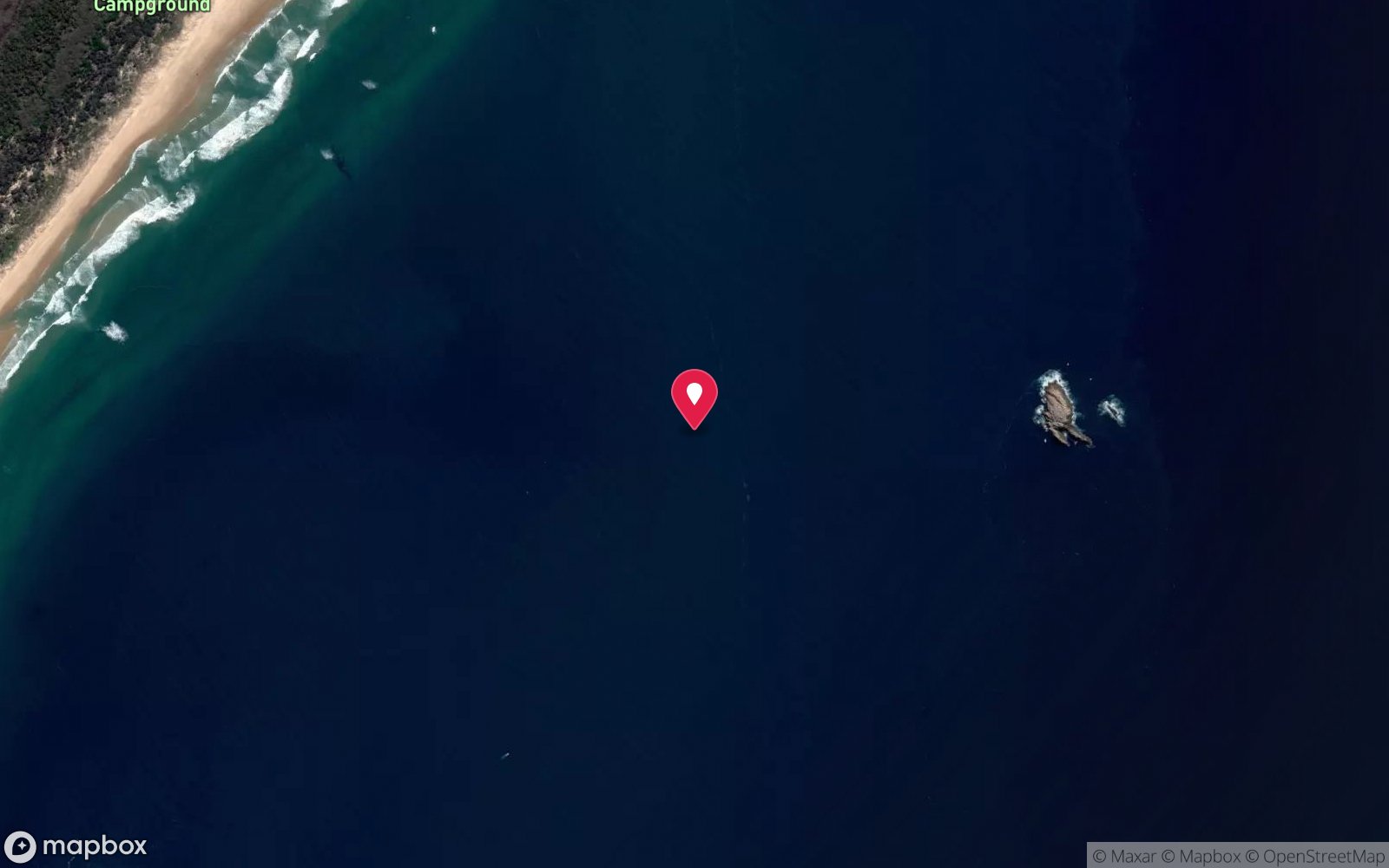
Fish Rock · NSW Mid North Coast — South West Rocks
-30.94080, 153.09920
Approximate position — not for navigation.
Open in Google MapsPrimary source: michaelmcfadyenscuba.infoMarine park & permits
Fish Rock is grey nurse shark critical habitat — Code of Conduct applies (no touching/feeding/blocking, max group size, no night diving on the aggregation)
Nearest recompression chamber
Prince of Wales Hospital (Randwick, Sydney) — John Hunter Hospital Newcastle has no recompression chamber
Diving emergency: call 000, then DAN AP 1800 088 200.
Trip planner
Build a trip around Fish Rock Cave →
A day-by-day plan for South West Rocks with this site locked in.
This guide is a planning aid. Conditions change daily — confirm with a local dive centre and dive within your training. Data & safety notes.
Dive profile
How this site rates
Scores are computed from the recorded data, not opinions. How?
At a glance
Fish Rock Cave is a cave / cavern boat dive in South West Rocks, NSW, 7–25 m, suited to Advanced Open Water divers, variable/tidal current, about 20 minutes by boat.
Rated advanced because of depth beyond 18 m, tidal current that must be timed, an overhead environment, surge on the entry or in the shallows.
Why dive here
- A true 120 m ocean tunnel through Fish Rock with resident grey nurse sharks in the entrance gutter and two air pockets inside where divers can surface and talk underground.
- Regarded as one of the iconic dives of the region.
- Visibility often reaches 15-40 m.
Conditions to avoid
- Wind over about 20 knots
- Outgoing tide or run-off after rain (poor visibility)
About Fish Rock Cave
Fish Rock Cave is the reason South West Rocks appears on every Australian diver's list. The cave is a genuine tunnel — not a cavern with one mouth — running about 120 m clean through the base of Fish Rock from an eastern entrance at roughly 10 m to a western entrance at about 25 m, two to four metres wide and seven to fifteen metres deep along its length. Most first dives enter the shallow eastern mouth, swim through the darkening tunnel past thousands of ladder-finned pomfret hanging in the entrance light, and turn back before two vertical chimneys near the western end; more experienced groups do the full circuit, entering the deep western end and exiting the shallow end, or vice versa.
Inside, the walls are carpeted with sea cucumbers and small invertebrates, wobbegongs lie in the sand on the floor, hundreds of painted crayfish and slipper lobsters shelter under ledges, and there are two air pockets — one at each end — where divers can put their heads above water and talk, the air fizzing faintly from pressure changes. A resident population of anemones and clownfish has held a patch on the western wall since the early 1990s. Outside both entrances the famous gorgonian fan gardens are some of the most photographed in NSW.
The dive is built around the grey nurse shark gutter that runs off the southern side of the rock: on a good day with little current, a dozen or more sharks hang motionless in the gutter, and divers descend the mooring straight into the middle of the aggregation before heading into the cave. Visibility inside is often exceptional — 30 m plus — even when the open water outside is average, because the tunnel is sheltered from surge and the current that so often runs past the rock. That current is the site's real challenge: for around 80% of the year it runs from the north and can be dangerous, so charter skippers pick their day and briefing carefully, and it is not a site for divers still building buoyancy and navigation skills in an overhead environment.
The combination of a swim-through tunnel, resident critically endangered sharks, turtles, wobbegongs and clear water in one dive is what has made this NSW's most internationally recognised shore-adjacent dive site, despite the boat-only access.
Getting there & entry
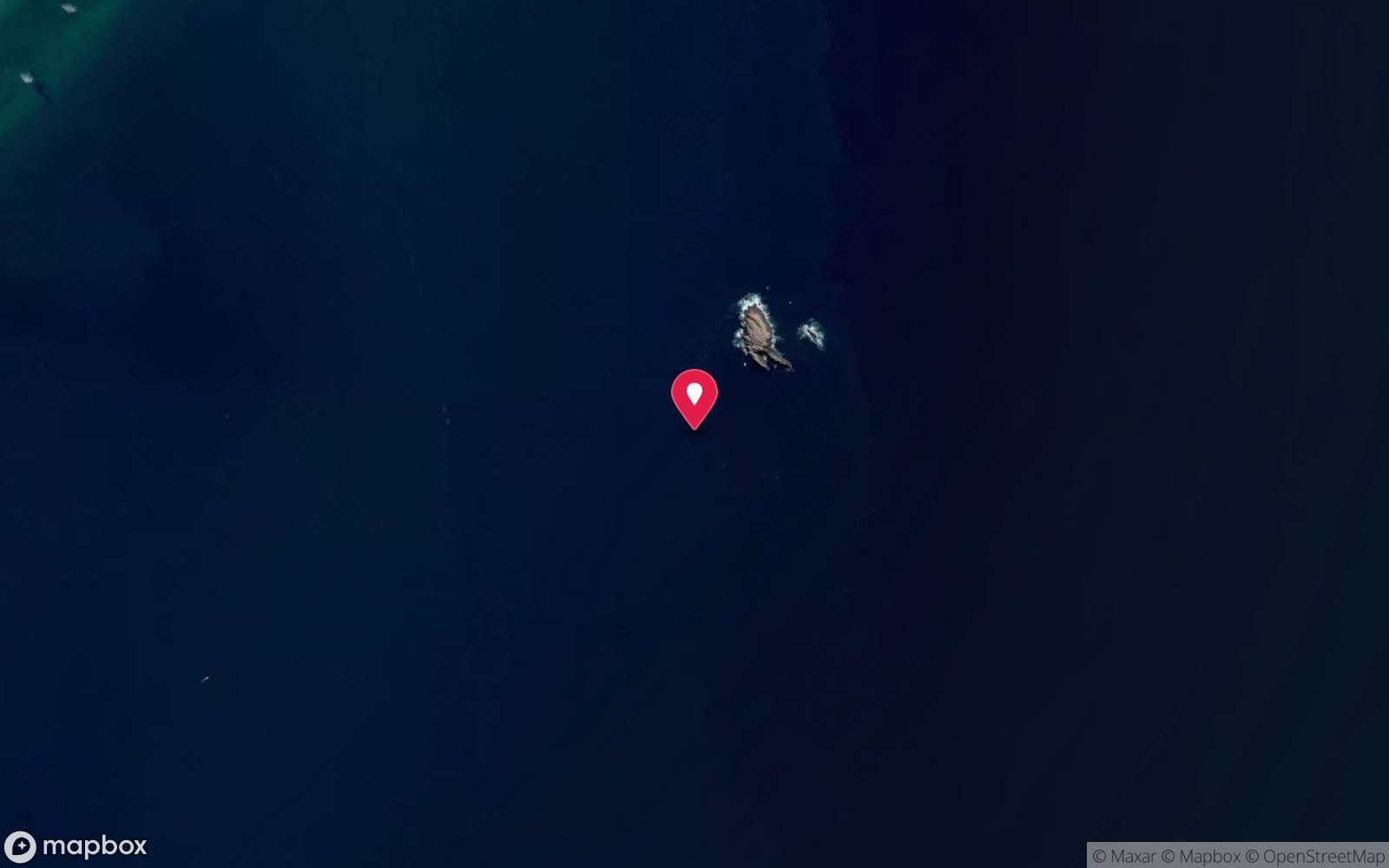
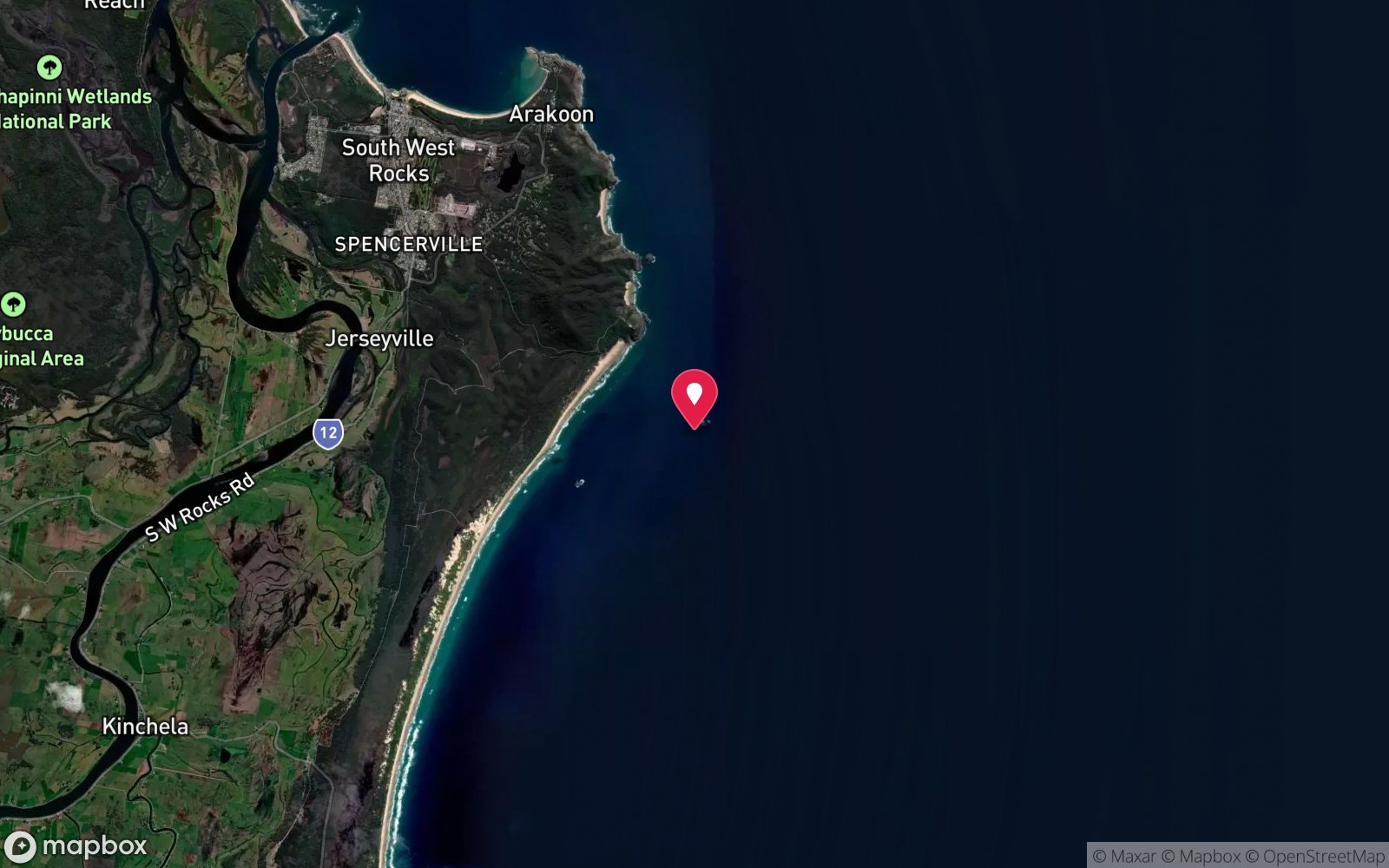
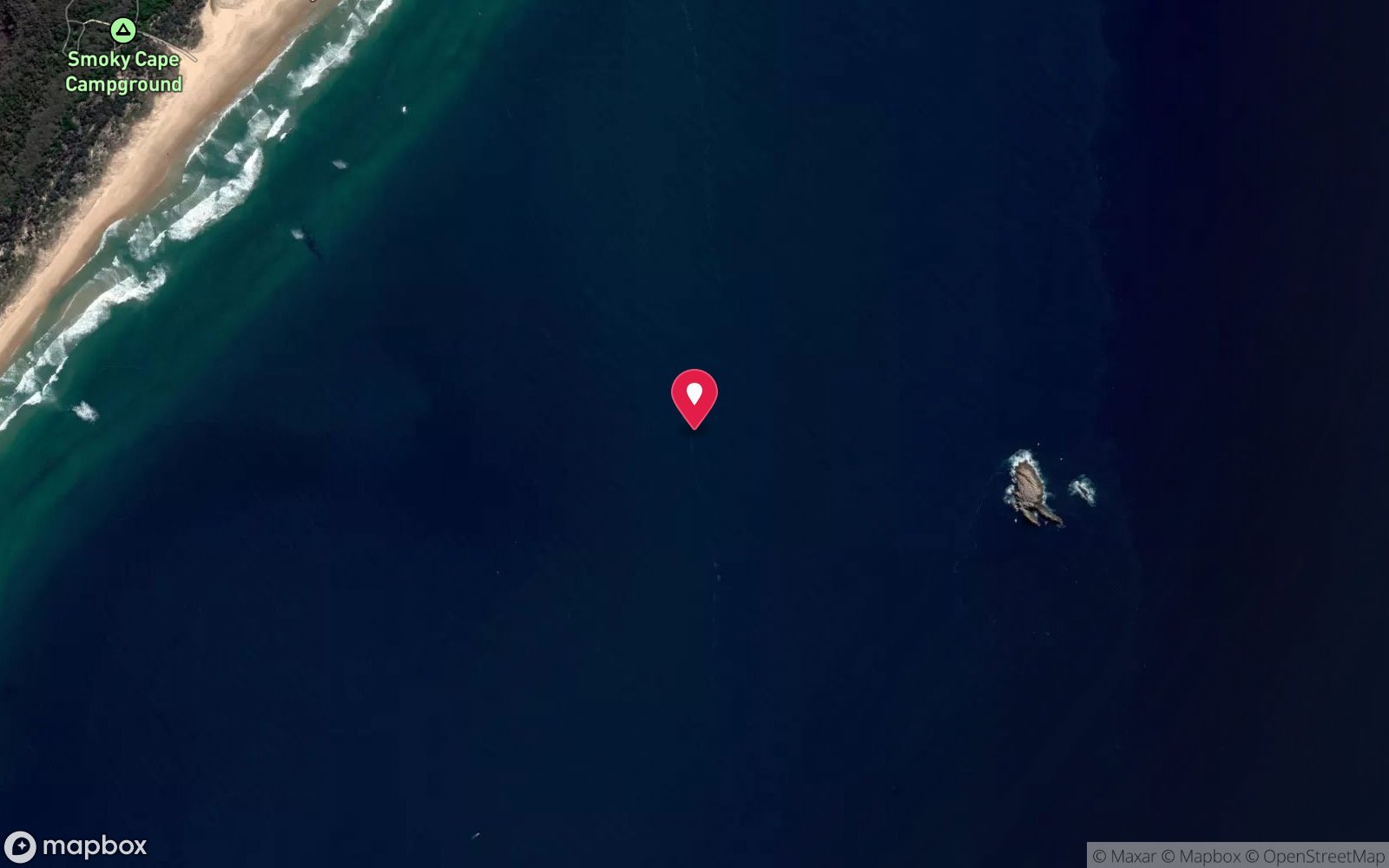
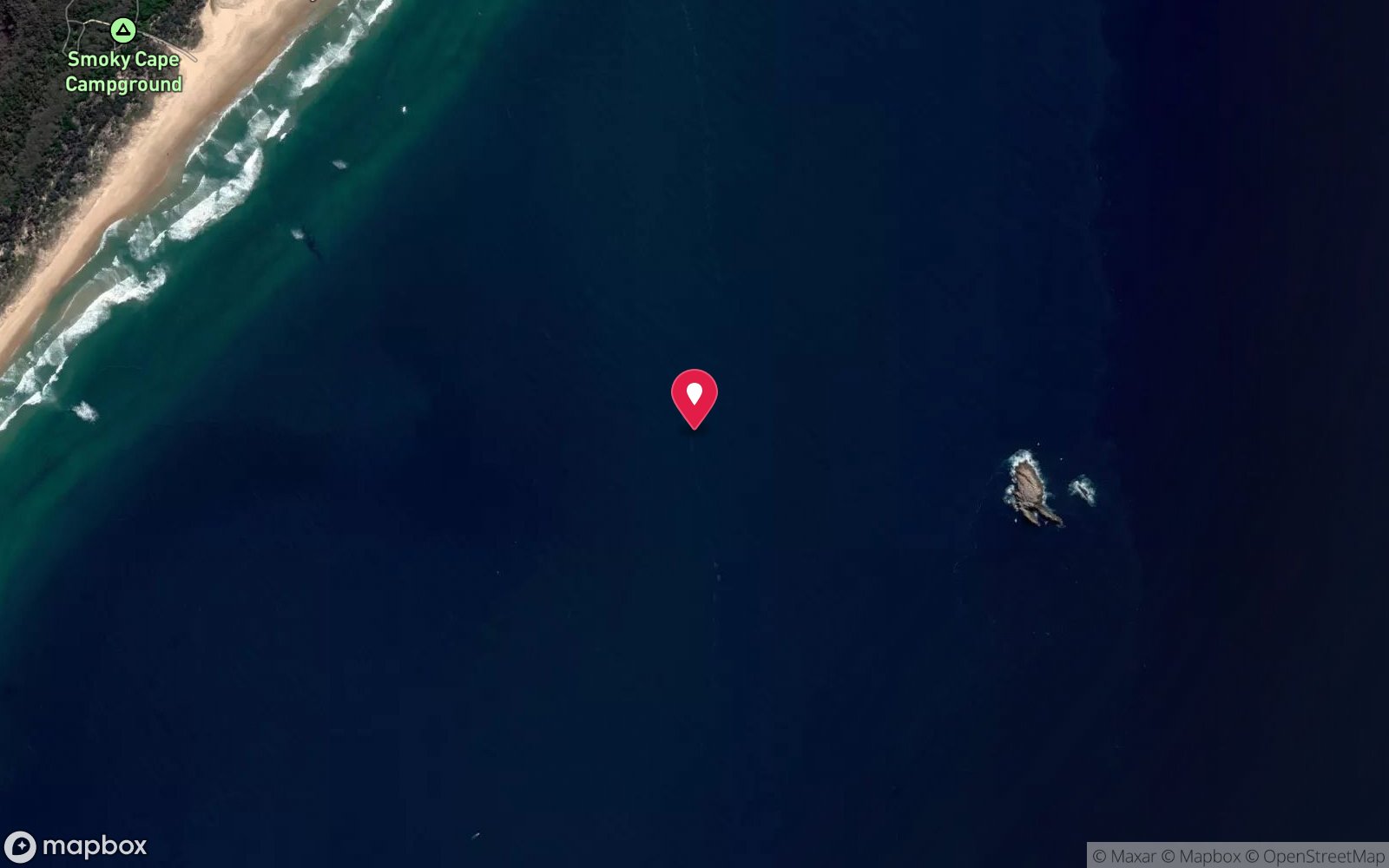
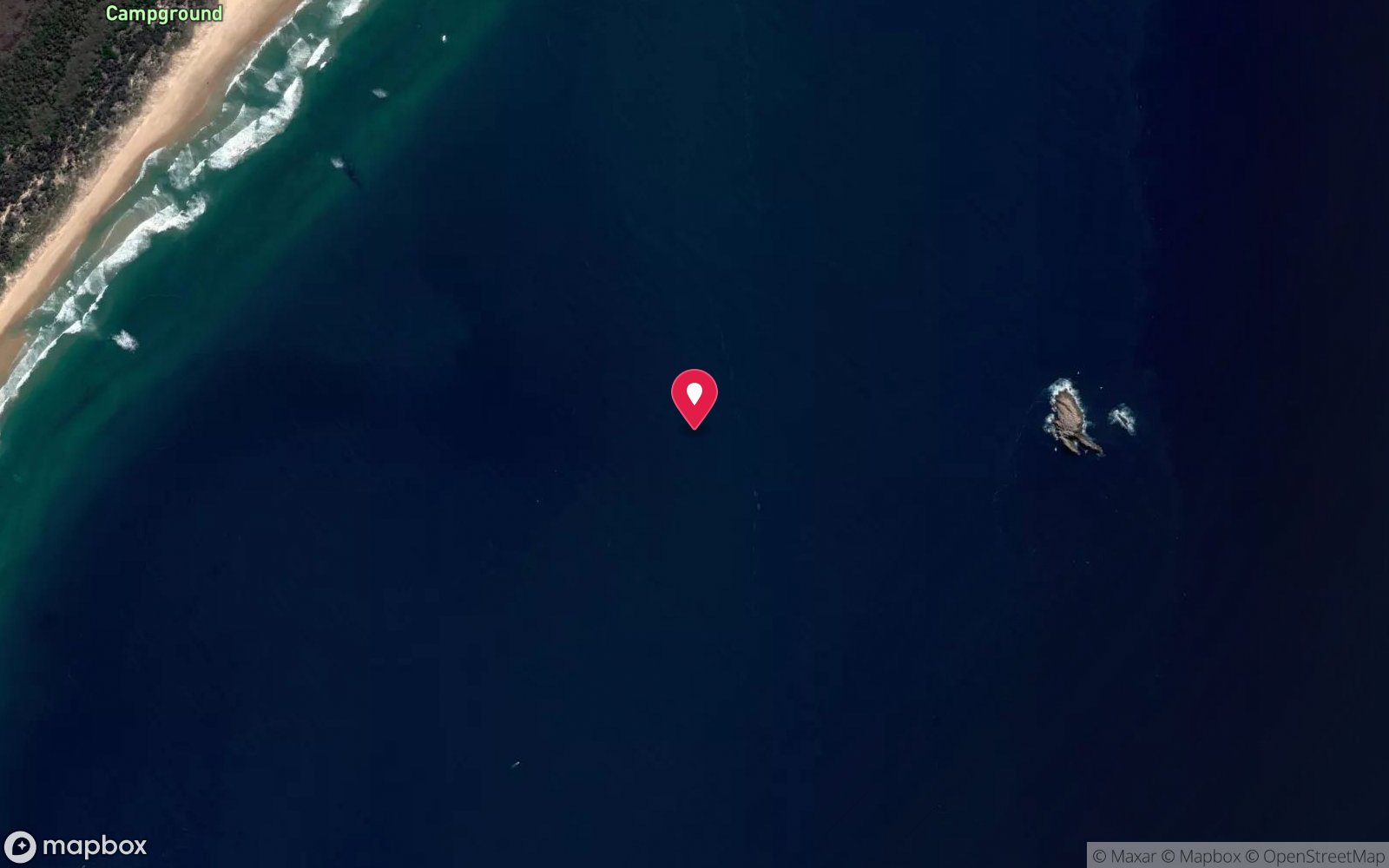
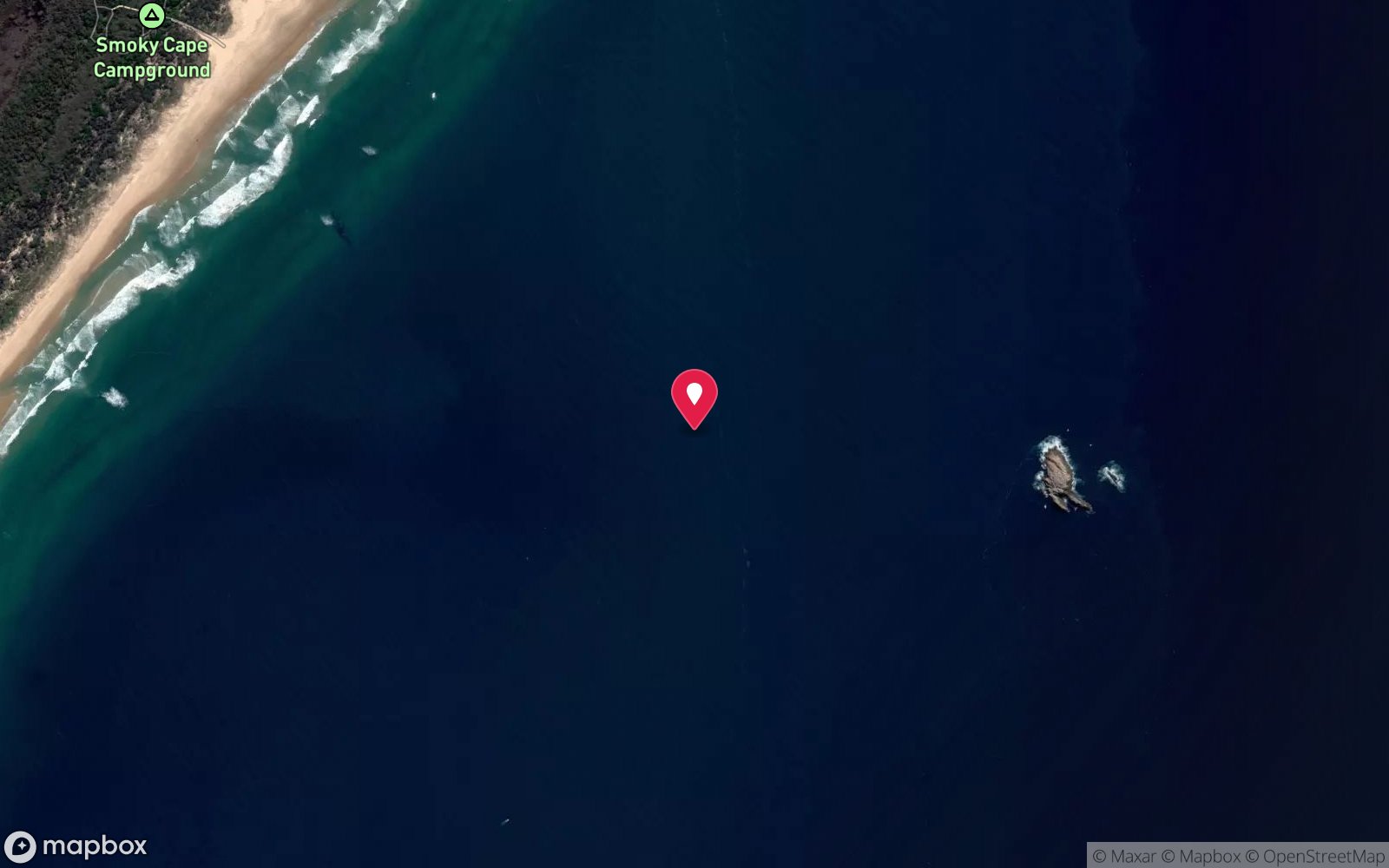
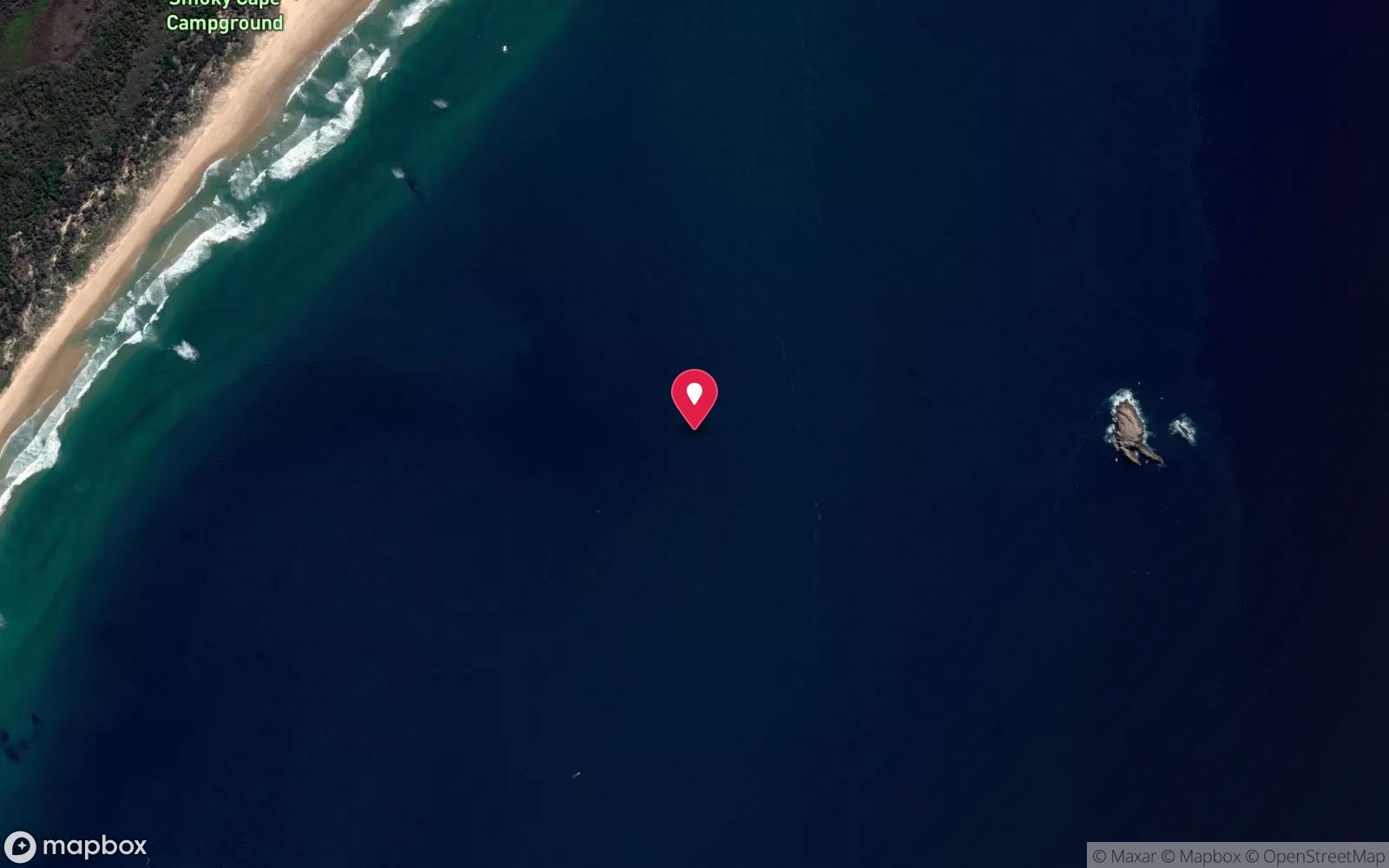
A natural rock tunnel roughly 120 m long running east-west clean through Fish Rock, an offshore islet 2 km off Smoky Cape near South West Rocks; regarded as Australia's only true ocean cave dive.
All Fish Rock sites are boat access only, departing from the boat ramp/marina at South West Rocks (Fish Rock Dive Centre and South West Rocks Dive Centre both operate from the town, 4 New Entrance Road area). The run out to Fish Rock, off Smoky Cape about 2 km offshore, takes roughly 15-25 minutes depending on the vessel and sea state. Boats moor directly on the site — there is a southern mooring near the cave/shark gutters and a northern mooring near The Pinnacle — so there is no surface swim; divers descend the mooring line straight onto the reef.
Double boat dive trips (two dives, roughly 5 hours total) run most days when weather allows; book ahead as Fish Rock is a signature Australian dive and trips fill, especially in the May-November grey nurse season.
Entry: Giant stride/backward roll from charter boat onto the southern mooring, then swim to the shallow or deep cave entrance
Weather, swell & tides
Fish Rock sits in open ocean off Smoky Cape with no shelter, so trips are cancelled on any strong onshore swell or wind over about 20 knots; operators want under 1.5-2 m swell to run safely. The site is affected by a north-setting current for roughly 80% of the time, and it can run strong enough to make the cave and Pinnacle undiveable — the best conditions are the day after the current has dropped out or during a brief slack. Visibility is usually 15-30 m and can be exceptional (30-40 m) inside the cave itself; it drops after east coast lows and heavy rain runoff from the Macleay River.
Grey nurse sharks are present year-round but peak May-September, with leopard (zebra) sharks more likely February-April. Dived year-round; winter mornings before the sea breeze are usually calmest.
Best season: May–September for grey nurse sharks; year-round for the cave itself
If it's blown out
Sheltered or shore sites within 25 km that often work when Fish Rock Cave doesn't.
- Gaol Reef / Turtle Wall (Trial Bay) · 8 km · Max 10 m
- Bait Reef (Trial Bay) · 8 km · Max 10 m
- Ladies Reef (South West Rocks) · 8 km · Max 10 m
- Trial Bay shore sites — Little Bay, Gap Beach, Horseshoe Bay & Front Beach · 8 km · Max 8 m
How the dive is usually run
Descend the southern mooring into the main shark gutter, check the current, then swim into the tunnel via the shallow eastern entrance (about 10 m, dropping to 17-20 m from the mooring) or, on the second dive, the deep western entrance (about 25 m). Follow the 120 m passage through at 7-15 m depth, noting the two vertical chimneys and air pockets around the 90 m mark, and turn back before the western dead-end unless doing the full deep-entrance circuit. Exit the way you entered and finish on the wall or gutters outside for the safety stop.
Marine life
- Grey nurse sharks →
- wobbegongs →
- painted crayfish
- green and loggerhead turtles →
- giant cuttlefish →
- clownfish and anemones
- kingfish
- bullrays
- gorgonian fan corals
- moray eels
Linked species have their own page listing every site where they are recorded. All marine life →
Training required
Beyond 18 m an Advanced certification (which includes a deep dive to 30 m) is the accepted minimum. Anything past 25 m is a deep dive in practice.
Courses that help here
- Cavern Diver – An overhead environment.
Depth tiers: 0–10 m easy · to 18 m Open Water · 18–30 m Advanced (25 m+ is a deep dive) · 30–40 m Deep specialty · 40 m+ technical. All courses
Hazards & warnings
Overhead environment — no direct surface access along most of the tunnel; strong north-setting current runs roughly 80% of the time and can make entrances dangerous; surge in larger swells; keep well clear of grey nurse sharks (Code of Conduct site — no touching, blocking entrances or groups over 10 divers); torch recommended for the darker mid-section.
Technical notes
Recreational depth (max ~25 m) but treat as an overhead environment: maintain buoyancy, do not touch the walls or disturb crayfish/sea cucumbers, and brief the chimney route before entering if doing the deep-to-shallow circuit.
Dive centres that go here
Fish Rock Dive Centre (South West Rocks) — double boat dives most days, year-round; South West Rocks Dive Centre — daily boat trips to Fish Rock.
Operators recorded for Fish Rock Cave
Fish Rock Dive Centre
ProfiledSouth West Rocks · South West Rocks · NSW
A South West Rocks operation running regular Fish Rock and Fish Rock Cave trips from a 12-metre purpose-built vessel, with Nitrox supplied and PADI training.
fishrock.com.au · 0432 050 409
South West Rocks Dive Centre
ProfiledSouth West Rocks · South West Rocks · NSW
A family-run South West Rocks operation that has run daily charters to Fish Rock since 1980, including the 125-metre cave traverse.
swrdive.com.au · (02) 6566 6474
Map
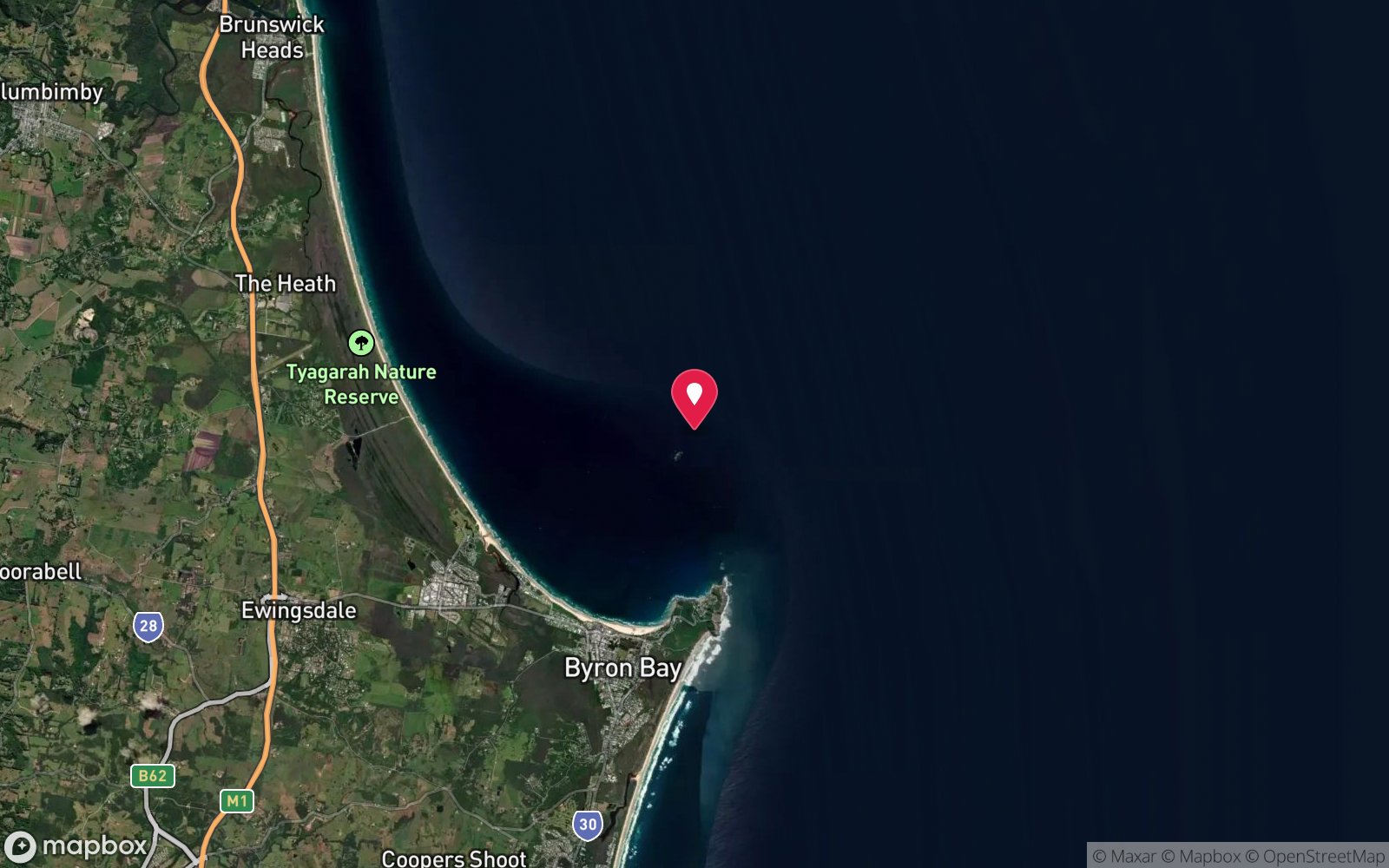
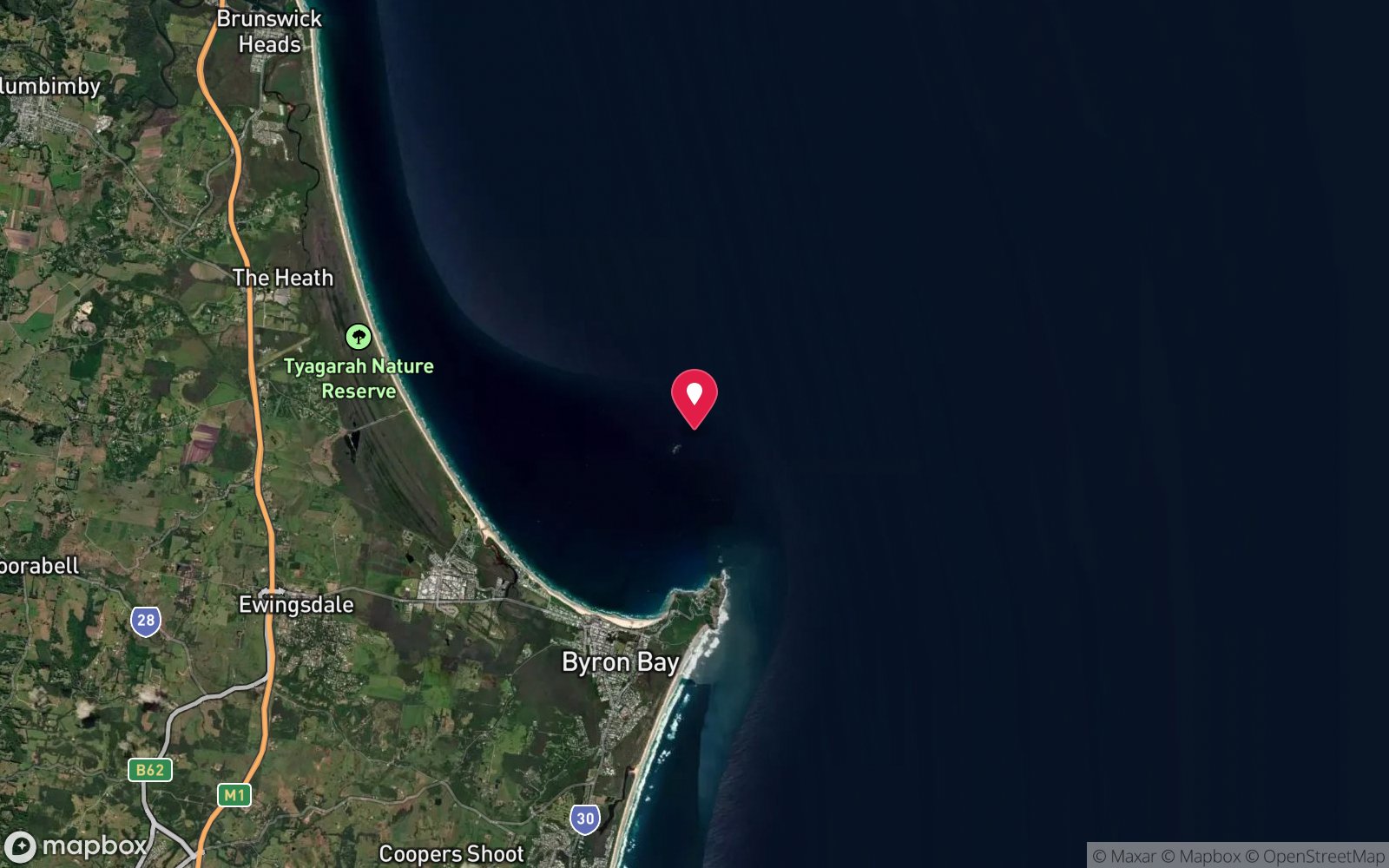
7 pinned sites. Pins marked approximate on their pages show the general area only; not for navigation.
Satellite views
Fish Rock Cave: frequently asked questions
How deep is Fish Rock Cave?
Fish Rock Cave reaches a maximum depth of 25 m, with the shallowest part at about 7 m; most of the dive is spent around 15 m.
What certification do I need to dive Fish Rock Cave?
Advanced Open Water is the recommended minimum. Rated advanced because of depth beyond 18 m, tidal current that must be timed, an overhead environment, surge on the entry or in the shallows.
Can I shore dive Fish Rock Cave?
No, it is reached by boat (about 20 minutes). A dive centre is required: boat access only.
When is the best time to dive Fish Rock Cave?
May–September for grey nurse sharks; year-round for the cave itself.
What marine life will I see at Fish Rock Cave?
Regularly recorded: Grey nurse sharks, wobbegongs, painted crayfish, green and loggerhead turtles, giant cuttlefish, clownfish and anemones, kingfish, bullrays, gorgonian fan corals, moray eels.
What wetsuit do I need at Fish Rock Cave?
3-5 mm steamer summer; 5-7 mm full suit or semi-dry winter.
How cold is the water at Fish Rock Cave?
Typically 22-25 °C in summer and 17-20 °C in winter.
What are the main hazards at Fish Rock Cave?
Overhead environment — no direct surface access along most of the tunnel; strong north-setting current runs roughly 80% of the time and can make entrances dangerous; surge in larger swells; keep well clear of grey nurse sharks (Code of Conduct site — no touching, blocking entrances or groups over 10 divers); torch recommended for the darker mid-section. See the hazards section above for the full list.
Where is the nearest recompression chamber to Fish Rock Cave?
Prince of Wales Hospital (Randwick, Sydney) — John Hunter Hospital Newcastle has no recompression chamber. In an emergency call 000, then DAN Asia-Pacific on 1800 088 200.
Diving in South West Rocks
Fish Rock is on every serious Australian diver's list. A 125 m cave runs right through the island, opening in 24 m on one side and 12 m on the other, and both entrances are grey nurse shark gutters; outside are walls, pinnacles and turtles. Black Rock and Green Island are the other regulars, and the deep reefs off Smoky Cape reach 87 m for technical divers.
Getting there: Five hours north of Sydney. Two dive operators in South West Rocks run Fish Rock most days from the Back Creek boat ramp; it is a 15-minute ride in open water.
Sources
- michaelmcfadyenscuba.info/viewpage.php?page_id=198
- michaelmcfadyenscuba.info/viewpage.php?page_id=197
- fishrock.com.au/dive-sites
- swrdive.com.au/pages/dive-sites
Data confidence: High · Being verified: Exact GPS approximate — mooring listed as 30°56'27"S 153°05'57"E AUS66 datum on McFadyen's page, converted approximately to WGS84 here.. Last updated September 2026. Know this site better? How to send a correction
Nearby dive sites
More cave/cavern dives in New South Wales
Explore more
This region
Similar dives
Marine life