Dive slate · divesites.com.au · printed 9 Nov 2026
The New Blue Hole (Pompey Complex)
Swain Reefs, Queensland · near Mackay
| Depth | 1–40 m |
|---|---|
| Minimum level | Technical (decompression) |
| Difficulty | Expert/Technical |
| Access | Boat (multi-day/liveaboard) |
| Entry | Giant stride from the liveaboard or back-roll from a tender |
| Current | Variable/Tidal |
| Visibility | 20-40 m |
| Water | summer 26-29 °C, winter 21-23 °C |
| Suit | 3 mm full suit year-round (5 mm for multiple dives per day in winter) |
| Best season | September-December and March-May for the lightest winds; winter trade winds (June-August) often too strong for the crossing; cyclone season November-April |
| Bottom time | 25 min |
| Position | not published |
| Permit | Great Barrier Reef Marine Park – Swain Reefs mix Marine National Park (Green), Conservation Park and Habitat Protection zones; Swain Reefs National Park cays are closed to landing (Bacchi, Bell, Bylund, Frigate, Gannet, Price, Thomas year-round; Distant and Riptide 1 Oct-1 Apr) |
| Nearest chamber | Townsville University Hospital (Townsville) – requires aeromedical evacuation from a remote reef; Mackay Base Hospital for stabilisation |
| Emergency | 000 · DAN Asia-Pacific diving emergency 1800 088 200 |
The New Blue Hole (Pompey Complex)
Also known as New Blue Hole
A 100 m-wide blue hole with sheer walls reported to plunge to 90 m – an expedition-only dive.
Near Mackay · Swain Reefs, Queensland
- Depth
- 1–40 m
- Minimum level
- Technical (decompression)
- Access
- Boat (multi-day/liveaboard)
- Boat ride
- —
- Water
- 26-29 °C
- Visibility
- 20-40 m
The New Blue Hole (Pompey Complex)1–40 m · Technical (decompression)
Dive factsDepths, conditions, location & safety
Season
In season nowBest months: year-round.
September-December and March-May for the lightest winds; winter trade winds (June-August) often too strong for the crossing; cyclone season November-April
- Best months
- Now (November)
- Stinger suit Nov–May
Dive facts
- Depth
- 1–40 m
- Typical depth
- 25 m
- Certification
- Technical (decompression)
- Difficulty
- Expert/Technical
- Depth tier
- Deep / Advanced + experience (30–40 m)
- Access
- Boat (multi-day/liveaboard)
- Offshore
- 200 km
- Dive centre needed
- Yes – boat access only
- Shore / independent
- No
- Current
- Variable/Tidal
- Visibility
- 20-40 m
- Water temp (summer)
- 26-29 °C
- Water temp (winter)
- 21-23 °C
- Water
- Tropical
- Bottom time
- 25 min
- Dive traffic
- Remote/expedition only
- Night dive
- No
- Snorkel friendly
- No
Exposure suit
3 mm full suit year-round (5 mm for multiple dives per day in winter)
Location
Pompey Complex · Swain Reefs & Pompey Complex
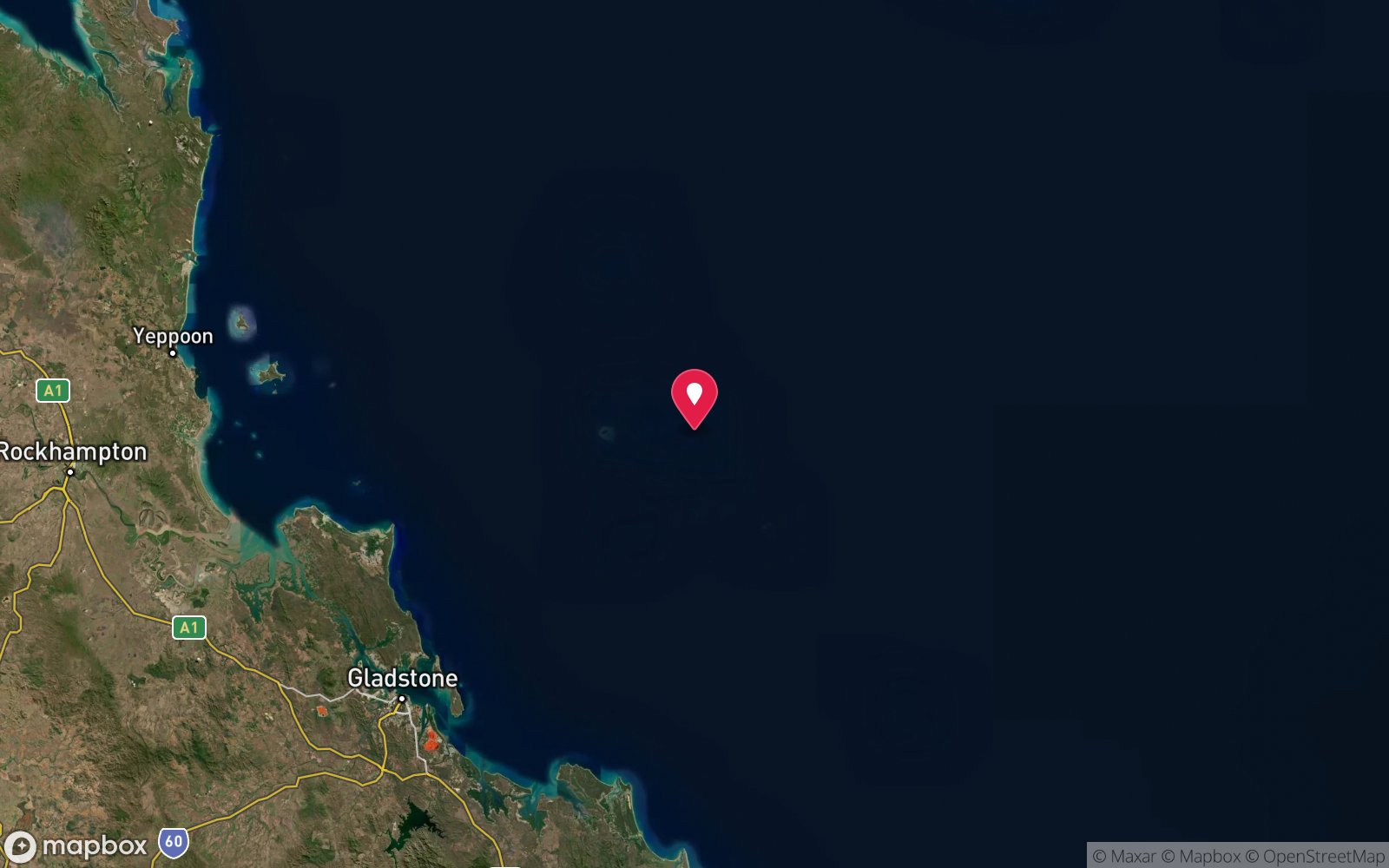
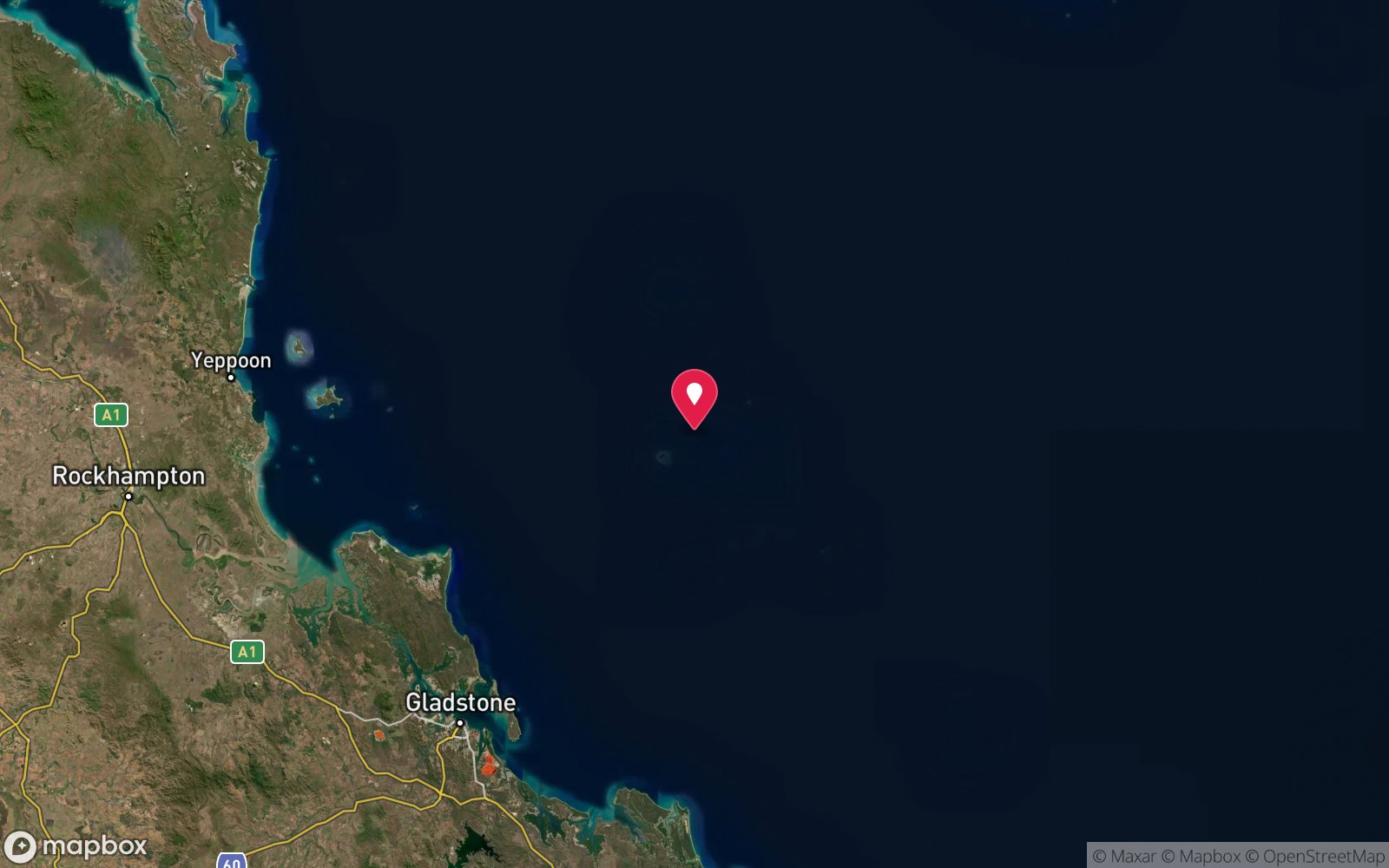
No published coordinates. The map above shows the general area, estimated from the Swain Reefs region centre.
Primary source: marinelife.org.auMarine park & permits
Great Barrier Reef Marine Park – Swain Reefs mix Marine National Park (Green), Conservation Park and Habitat Protection zones; Swain Reefs National Park cays are closed to landing (Bacchi, Bell, Bylund, Frigate, Gannet, Price, Thomas year-round; Distant and Riptide 1 Oct-1 Apr)
Nearest recompression chamber
Townsville University Hospital (Townsville) – requires aeromedical evacuation from a remote reef; Mackay Base Hospital for stabilisation
Diving emergency: call 000, then DAN AP 1800 088 200.
Trip planner
Build a trip around The New Blue Hole (Pompey Complex) →
A day-by-day plan for Swain Reefs with this site locked in.
This guide is a planning aid. Conditions change daily — confirm with a local dive centre and dive within your training. Data & safety notes.
Dive profile
How this site rates
Scores are computed from the recorded data, not opinions. How?
At a glance
The New Blue Hole (Pompey Complex) is a sinkhole / cenote liveaboard-only site in Swain Reefs, QLD, 1–40 m, suited to Technical (decompression) divers, variable/tidal current.
Rated expert/technical because of depth to 40 m, tidal current that must be timed, an overhead environment.
Why dive here
- A 100 m-wide blue hole with sheer walls reported to plunge to 90 m – an expedition-only dive.
- Rarely dived: expect to have the site to yourself, and plan your own logistics.
- Visibility often reaches 20-40 m.
Conditions to avoid
- Strong southerly or south-east swell and wind
- Spring tides (strong current)
- Any time other than slack water
- Cyclone season (roughly December–April)
About The New Blue Hole (Pompey Complex)
The New Blue Hole is listed by the Marine Life Network as a recently discovered feature in the Pompey Complex, about 100 m in diameter, with sheer walls reported to go down as far as 90 m. It is recommended for experienced divers only, in contrast to the shallower Cockatoo Reef blue hole nearby. Little else is published about the site.
The sheer walls and great depth suggest a dramatic dive into deep blue water from a shallow rim, with the upper walls likely covered in coral and the deeper sections dim and sparsely populated. The depth range listed for recreational diving is 1-40 m. Because it is remote, tidal and deep, it should be approached as an expedition dive: recreational divers should stay within 30 m and remain on the wall, while any deeper exploration requires full technical training, equipment and support.
Research on the Pompey blue holes identifies holes at Cockatoo and Molar reefs; whether the 'New Blue Hole' corresponds to one of these or is a separate feature is not clear from available sources.
Getting there & entry
A more recently located blue hole in the Pompey Complex, about 100 m in diameter with sheer walls reported to drop as far as 90 m; experienced divers only.
The Pompey Complex is a line of 'hard line' reefs on the outer edge of the shelf roughly 150-200 km north-east of Mackay. Access is by expedition charter or capable private vessel from Mackay Marina (Mackay Harbour) or Hay Point; allow most of a day for the crossing in good weather. Navigation in the Pompeys requires great care: the complex has some of the fastest tidal streams on the Great Barrier Reef, and passages between reefs run hard on the tide.
The New Blue Hole's position is not published; it is visited only by expedition charters with local knowledge.
Entry: Giant stride from the liveaboard or back-roll from a tender
Weather, swell & tides
The Pompey reefs are completely exposed to south-east trade winds and to the very strong tidal streams that sweep through the complex; spring tides can produce currents of several knots in the passages. Plan visits for neap tides and calm spells (typically September-December), and time dives inside the lagoon for the high-water slack when the reef is covered. At low water the lagoon rim is exposed.
Cyclone season November-April.
Best season: September-December and March-May for the lightest winds; winter trade winds (June-August) often too strong for the crossing; cyclone season November-April
How the dive is usually run
Descend the sheer wall to a planned depth within certification (recreational divers no deeper than 30 m), stay close to the wall for reference, turn early and ascend slowly along it to the rim for an extended safety stop.
Marine life
- Wall corals near the rim
- pelagic fish
- reef sharks (details not documented) →
Linked species have their own page listing every site where they are recorded. All marine life →
Training required
The recreational limit. Operators expect a Deep Diver specialty or Advanced plus a log of similar dives, and most recommend nitrox.
This is a deep dive: plan gas, bottom time and a safety stop accordingly, and consider nitrox.
Courses that help here
- Enriched Air Nitrox – Longer no-decompression time at 25 m and deeper.
- Deep Diver – The site reaches 40 m.
- Cavern Diver – An overhead environment.
Depth tiers: 0–10 m easy · to 18 m Open Water · 18–30 m Advanced (25 m+ is a deep dive) · 30–40 m Deep specialty · 40 m+ technical. All courses
Hazards & warnings
Extreme depth potential – strict depth discipline; very strong Pompey tidal streams; extremely remote; position not published.
Technical notes
Walls reportedly reach 90 m: any dive beyond 40 m requires technical training, trimix, decompression planning and full redundancy, with the added risk of a very remote location far from a chamber. Recreational divers should treat 30 m as a hard floor.
Dive centres that go here
No regular operator – expedition charters and private vessels only; occasional Mackay-based charters by arrangement.
Other dive centres in Swain Reefs
Eastern Voyager
Named by sitesGladstone · Swain Reefs · QLD
Extended fishing and dive charter vessel departing Gladstone to the Swain Reefs.
easternvoyager.com.au · 0436 640 197
Kanimbla Charters
Named by sitesGladstone · Swain Reefs · QLD
Official site live with a booking form for 7–10 day Swains and Coral Sea charters ex-Gladstone for certified divers; Facebook page active.
kanimblacharters.net.au · 0429 159 233
All dive centres in Queensland →
Operators mentioned: No regular operator (expedition charters from Mackay)
General area
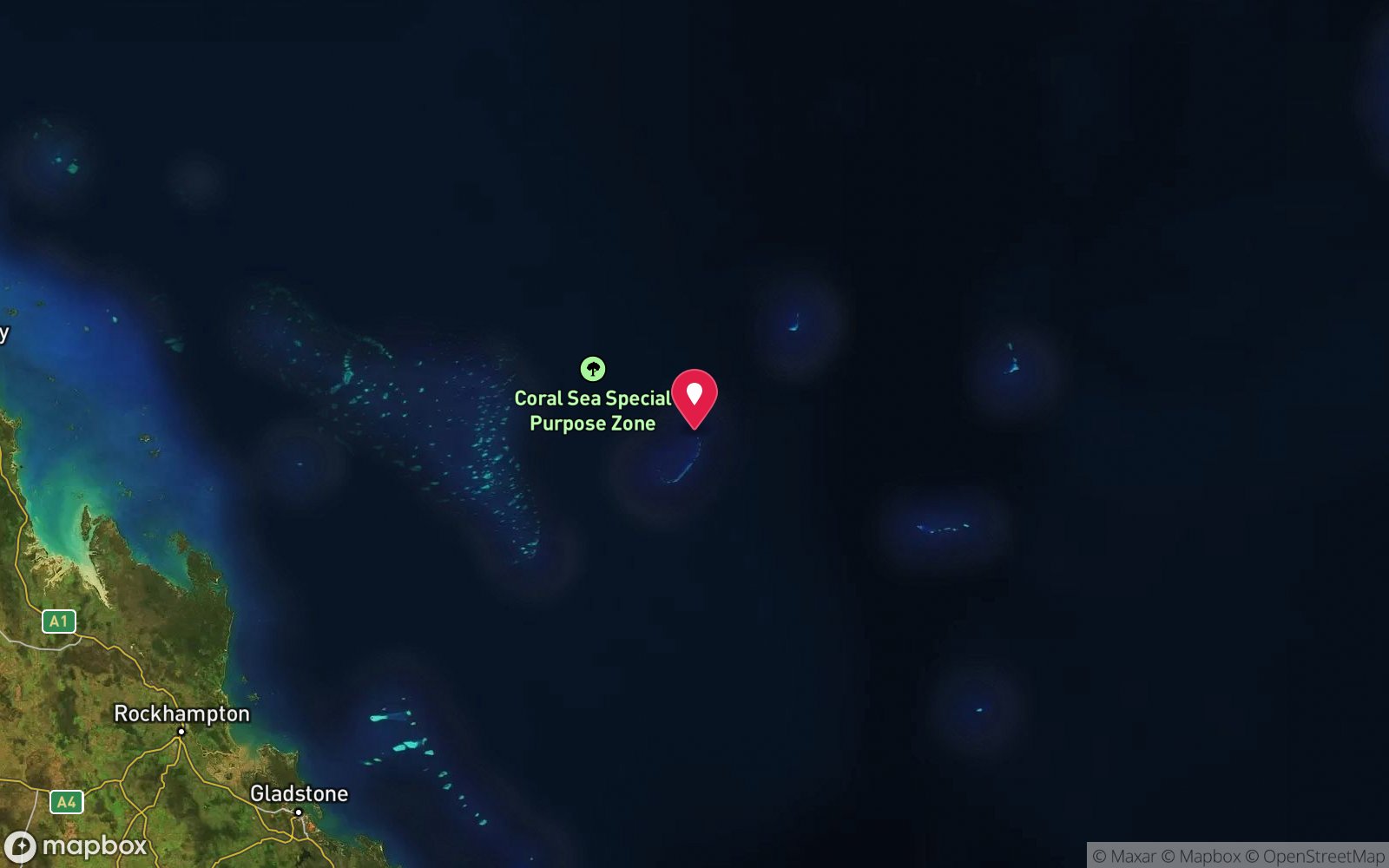
No position has been published for The New Blue Hole (Pompey Complex). The circle shows where it is likely to be, worked out from the Swain Reefs region centre. Ask a local operator for the exact site.
Dashed circle: general area (about 40 km), from the Swain Reefs region centre. 6 pinned sites. Pins marked approximate on their pages show the general area only; not for navigation.
The New Blue Hole (Pompey Complex): frequently asked questions
How deep is The New Blue Hole (Pompey Complex)?
The New Blue Hole (Pompey Complex) reaches a maximum depth of 40 m, with the shallowest part at about 1 m; most of the dive is spent around 25 m.
What certification do I need to dive The New Blue Hole (Pompey Complex)?
Technical (decompression) is the recommended minimum. This is a deep dive: plan gas, bottom time and a safety stop accordingly, and consider nitrox. Rated expert/technical because of depth to 40 m, tidal current that must be timed, an overhead environment.
Can I shore dive The New Blue Hole (Pompey Complex)?
No, it is reached by boat. A dive centre is required: boat access only.
When is the best time to dive The New Blue Hole (Pompey Complex)?
September-December and March-May for the lightest winds; winter trade winds (June-August) often too strong for the crossing; cyclone season November-April.
What marine life will I see at The New Blue Hole (Pompey Complex)?
Regularly recorded: Wall corals near the rim, pelagic fish, reef sharks (details not documented).
What wetsuit do I need at The New Blue Hole (Pompey Complex)?
3 mm full suit year-round (5 mm for multiple dives per day in winter).
How cold is the water at The New Blue Hole (Pompey Complex)?
Typically 26-29 °C in summer and 21-23 °C in winter.
What are the main hazards at The New Blue Hole (Pompey Complex)?
Extreme depth potential – strict depth discipline; very strong Pompey tidal streams; extremely remote; position not published. See the hazards section above for the full list.
Where is the nearest recompression chamber to The New Blue Hole (Pompey Complex)?
Townsville University Hospital (Townsville) – requires aeromedical evacuation from a remote reef; Mackay Base Hospital for stabilisation. In an emergency call 000, then DAN Asia-Pacific on 1800 088 200.
Diving in Swain Reefs
The Swains are a maze of several hundred reefs on the outer edge of the southern Great Barrier Reef, 150–250 km off Gladstone and Mackay, visited by a few liveaboards and fishing charters. Walls, drop-offs, sharks and coral that sees almost no divers.
Getting there: Multi-day liveaboard from Gladstone, Yeppoon or Mackay.
Sources
Data confidence: Low · Being verified: Identity and position unverified; may correspond to the Molar Reef blue hole.. Last updated September 2026. Know this site better? How to send a correction
Nearby dive sites
More sinkhole/cenote dives in Queensland
Explore more