Dive slate · divesites.com.au · printed 7 Nov 2026
Zodiac Rock
Groote Eylandt, Northern Territory · near Alyangula
| Depth | 3–30 m |
|---|---|
| Minimum level | Advanced Open Water |
| Difficulty | Intermediate |
| Access | Boat (day trip) |
| Entry | Backward roll from a small boat |
| Current | Variable/Tidal |
| Visibility | 8-20 m |
| Water | summer 29-31 °C, winter 24-26 °C |
| Suit | 3 mm wetsuit or lycra; full-length stinger suit October-May |
| Best season | April-November for calm mornings; the Gulf is often diveable in the wet season too, but run-off reduces inshore visibility |
| Bottom time | 50 min |
| Position | not published |
| Permit | Anindilyakwa Land Council recreation permit required to visit Groote Eylandt and its recreation areas; respect any sacred-site or sea-country restrictions. |
| Nearest chamber | Royal Darwin Hospital hyperbaric medicine unit (Tiwi, Darwin) – aeromedical evacuation from Groote Eylandt (Alyangula Health Centre) |
| Emergency | 000 · DAN Asia-Pacific diving emergency 1800 088 200 |
Zodiac Rock
A natural rock pinnacle off Groote Eylandt's west coast, reputed to be among the island's best dives.
Near Alyangula · Groote Eylandt, Northern Territory
- Depth
- 3–30 m
- Minimum level
- Advanced Open Water
- Access
- Boat (day trip)
- Boat ride
- —
- Water
- 29-31 °C
- Visibility
- 8-20 m
Zodiac Rock3–30 m · Advanced Open Water
Dive factsDepths, conditions, location & safety
Season
In season nowBest months: year-round.
April-November for calm mornings; the Gulf is often diveable in the wet season too, but run-off reduces inshore visibility
- Best months
- Now (November)
- Stinger suit Nov–May
Dive facts
- Depth
- 3–30 m
- Typical depth
- 15 m
- Certification
- Advanced Open Water
- Difficulty
- Intermediate
- Depth tier
- Advanced Open Water (18–30 m)
- Access
- Boat (day trip)
- Dive centre needed
- Recommended
- Shore / independent
- No
- Current
- Variable/Tidal
- Visibility
- 8-20 m
- Water temp (summer)
- 29-31 °C
- Water temp (winter)
- 24-26 °C
- Water
- Tropical
- Bottom time
- 50 min
- Dive traffic
- Rarely dived (private boat/club only)
- Night dive
- No
- Snorkel friendly
- Partial
Exposure suit
3 mm wetsuit or lycra; full-length stinger suit October-May
Location
Alyangula – Groote Eylandt west coast · Groote Eylandt / Gulf of Carpentaria
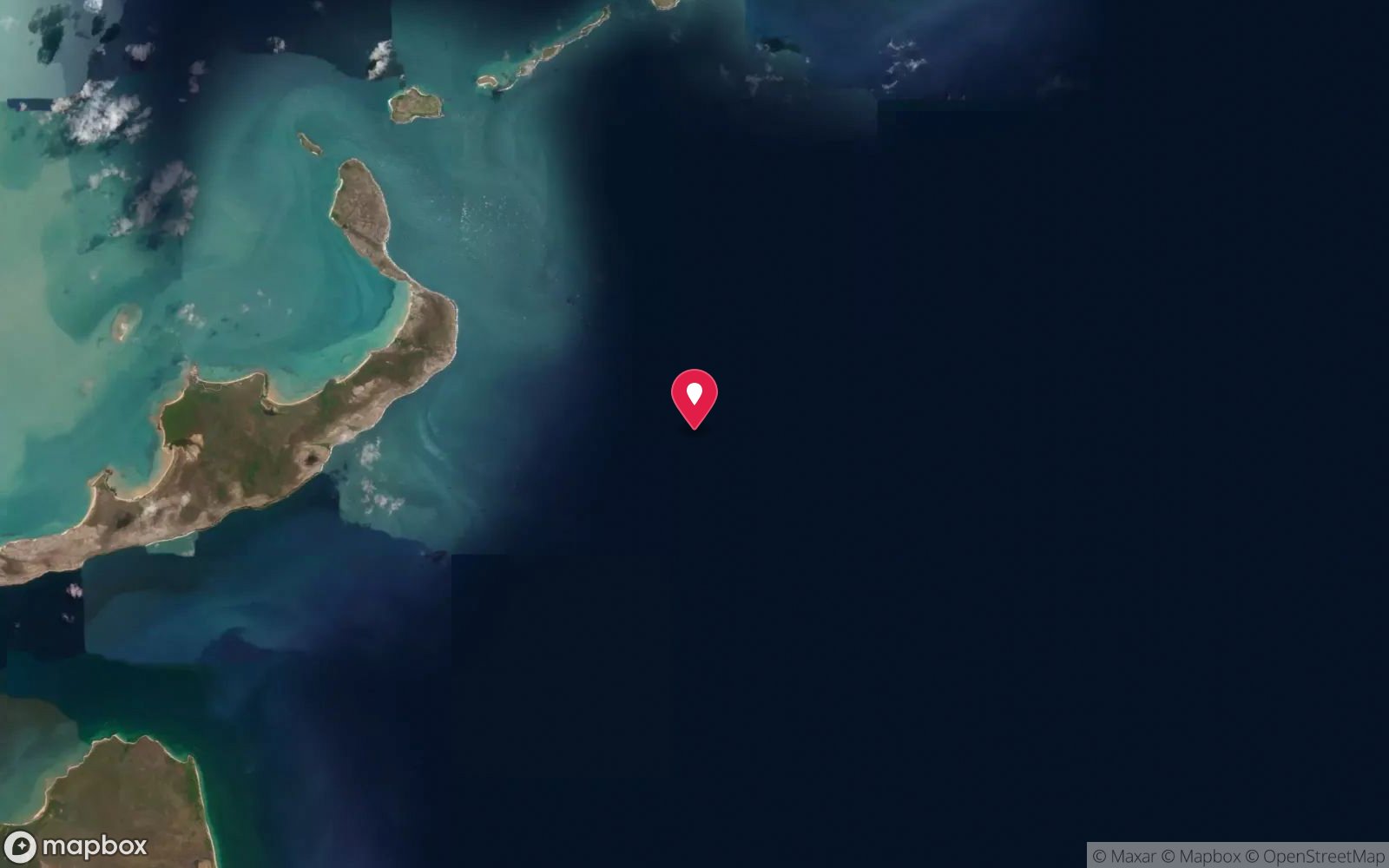
No published coordinates. The map above shows the general area, estimated from the Groote Eylandt region centre.
Primary source: marinelife.org.auMarine park & permits
Anindilyakwa Land Council recreation permit required to visit Groote Eylandt and its recreation areas; respect any sacred-site or sea-country restrictions.
Nearest recompression chamber
Royal Darwin Hospital hyperbaric medicine unit (Tiwi, Darwin) – aeromedical evacuation from Groote Eylandt (Alyangula Health Centre)
Diving emergency: call 000, then DAN AP 1800 088 200.
Trip planner
Build a trip around Zodiac Rock →
A day-by-day plan for Groote Eylandt with this site locked in.
This guide is a planning aid. Conditions change daily — confirm with a local dive centre and dive within your training. Data & safety notes.
Dive profile
How this site rates
Scores are computed from the recorded data, not opinions. How?
At a glance
Zodiac Rock is a pinnacle / bommie boat dive in Groote Eylandt, NT, 3–30 m, suited to Advanced Open Water divers, variable/tidal current.
Rated intermediate because of depth beyond 18 m, tidal current that must be timed, boat traffic overhead.
Why dive here
- A natural rock pinnacle off Groote Eylandt's west coast, reputed to be among the island's best dives.
- Rarely dived: expect to have the site to yourself, and plan your own logistics.
- Visibility often reaches 8-20 m.
Conditions to avoid
- Strong southerly or south-east swell and wind
- Outgoing tide or run-off after rain (poor visibility)
- Cyclone season (roughly December–April)
- Stinger season without a full suit (November–May)
About Zodiac Rock
Zodiac Rock is one of the three Groote Eylandt dives singled out by the Marine Life Network, together with Connexion Island and the dolphins at the Alyangula wharf. As its name suggests, it is a rock outcrop – a natural pinnacle or bommie – off the west coast of the island, reached by a short boat run from Alyangula.
No detailed dive description has been published. A rock rising from the sea floor in the Gulf of Carpentaria typically carries a dense cover of hard and soft corals, sponges and gorgonians on its flanks, and acts as a magnet for fish in otherwise flatter surrounds. Expect reef fish such as coral trout, cod, sweetlips, snapper, angelfish, butterflyfish and fusiliers around the rock, with trevally, queenfish and Spanish mackerel hunting over it. Turtles, rays and reef sharks are likely visitors. Because Groote lies far from the big rivers and tides of the western Top End, visibility is typically better than around Darwin and corals grow more prolifically in shallow water.
The rock's exposure makes it more current-prone than the sheltered island reefs, so slack-water timing and a live boat are advisable. It suits Open Water divers with some experience and advanced divers who want a structured pinnacle dive.
As with all diving on Groote Eylandt, the practical challenges are permits from the Anindilyakwa Land Council, limited accommodation, and the absence of a dive shop – visitors must arrange their own gear, air and boat, ideally through residents who know the site.
Getting there & entry
Rock and reef off the west coast of Groote Eylandt near Alyangula, listed among the island's best dives.
Groote Eylandt is about 630 km east of Darwin: fly to Groote Eylandt airport (about 1.5 hours from Darwin or 40 minutes from Nhulunbuy). A recreation permit from the Anindilyakwa Land Council is required before visiting, and commercial accommodation is limited – the Aboriginal-owned Dugong Beach Resort is the main option, as the mining company does not provide tourist accommodation. Boats launch at Alyangula on the island's west coast; sites are a short run from town.
Accessing dive gear on the island may be difficult – bring your own and arrange fills in advance.
Entry: Backward roll from a small boat
Facilities: Alyangula: boat ramp, general store, fuel; Dugong Beach Resort. No dive shop or air fills known – bring gear and arrange fills.
Weather, swell & tides
Groote sits well inside the Gulf of Carpentaria, where tidal ranges are much smaller than at Darwin and there is less river outflow, so visibility and coral life are better in shallow water. From April to September the south-east trade wind blows strongly and the west-coast sites around Alyangula are in its lee, making them diveable on most mornings. The build-up (October–December) brings the calmest seas.
In the wet season (December–March) the monsoon can bring north-westerly winds onto the west coast, cyclones form in the Gulf, and box jellyfish are present; inshore visibility drops after heavy rain.
Best season: April-November for calm mornings; the Gulf is often diveable in the wet season too, but run-off reduces inshore visibility
How the dive is usually run
Anchor in sand beside the rock at slack water, descend and circle it at 12–20 m, then spiral up to shallower coral on the top for the second half of the dive and safety stop. Watch for current on the exposed side.
Marine life
- Coral trout
- cod
- sweetlips
- snapper
- fusiliers
- angelfish
- butterflyfish
- trevally
- queenfish
- Spanish mackerel
- turtles →
- rays
- reef sharks →
- hard and soft corals (regional)
Linked species have their own page listing every site where they are recorded. All marine life →
Training required
Beyond 18 m an Advanced certification (which includes a deep dive to 30 m) is the accepted minimum. Anything past 25 m is a deep dive in practice.
At more than 25 m this counts as a deep dive: watch no-decompression limits and gas.
Courses that help here
- Enriched Air Nitrox – Longer no-decompression time at 25 m and deeper.
Depth tiers: 0–10 m easy · to 18 m Open Water · 18–30 m Advanced (25 m+ is a deep dive) · 30–40 m Deep specialty · 40 m+ technical. All courses
Hazards & warnings
Saltwater crocodiles occur around Groote Eylandt – minimise surface time and avoid creek mouths. Box jellyfish and Irukandji October–May. Remote island with no dive shop or chamber – aeromedical evacuation to Darwin; carry oxygen.
Boat traffic near the Alyangula port and manganese loading facilities.
Dive centres that go here
No commercial dive operator on Groote Eylandt. Diving is done by residents (mostly mining-community members) with private boats; Dugong Beach Resort and Groote Eylandt Sports Fishing run fishing trips and may assist by arrangement. Visitors must bring or arrange their own dive gear and air.
All dive centres in Northern Territory →
Operators mentioned: None (Dugong Beach Resort and Groote Eylandt Sports Fishing for boat support)
General area
No position has been published for Zodiac Rock. The circle shows where it is likely to be, worked out from the Groote Eylandt region centre. Ask a local operator for the exact site.
Dashed circle: general area (about 40 km), from the Groote Eylandt region centre. 6 pinned sites. Pins marked approximate on their pages show the general area only; not for navigation.
Zodiac Rock: frequently asked questions
How deep is Zodiac Rock?
Zodiac Rock reaches a maximum depth of 30 m, with the shallowest part at about 3 m; most of the dive is spent around 15 m.
What certification do I need to dive Zodiac Rock?
Advanced Open Water is the recommended minimum. At more than 25 m this counts as a deep dive: watch no-decompression limits and gas. Rated intermediate because of depth beyond 18 m, tidal current that must be timed, boat traffic overhead.
Can I shore dive Zodiac Rock?
No, it is reached by boat.
When is the best time to dive Zodiac Rock?
April-November for calm mornings; the Gulf is often diveable in the wet season too, but run-off reduces inshore visibility.
What marine life will I see at Zodiac Rock?
Regularly recorded: Coral trout, cod, sweetlips, snapper, fusiliers, angelfish, butterflyfish, trevally, queenfish, Spanish mackerel, turtles, rays and more.
What wetsuit do I need at Zodiac Rock?
3 mm wetsuit or lycra; full-length stinger suit October-May.
How cold is the water at Zodiac Rock?
Typically 29-31 °C in summer and 24-26 °C in winter.
What are the main hazards at Zodiac Rock?
Saltwater crocodiles occur around Groote Eylandt – minimise surface time and avoid creek mouths. See the hazards section above for the full list.
Where is the nearest recompression chamber to Zodiac Rock?
Royal Darwin Hospital hyperbaric medicine unit (Tiwi, Darwin) – aeromedical evacuation from Groote Eylandt (Alyangula Health Centre). In an emergency call 000, then DAN Asia-Pacific on 1800 088 200.
Diving in Groote Eylandt
Groote Eylandt's reefs are dived almost entirely by residents of the mining town of Alyangula. The water is warm and clear, with coral bommies and a few wrecks, and access requires permission from the Anindilyakwa Land Council.
Getting there: Fly from Darwin or Cairns to Alyangula; private boats only.
Sources
Data confidence: Low · Being verified: Location, depth and features unverified – based on a single regional listing.. Last updated September 2026. Know this site better? How to send a correction
Nearby dive sites
More pinnacle/bommie dives in Northern Territory
Explore more
This region