Dive slate · divesites.com.au · printed 8 Nov 2026
Bromby Islands
East Arnhem Land & Gove, Northern Territory · near Nhulunbuy
| Depth | 7–35 m |
|---|---|
| Minimum level | Deep/Advanced + experience |
| Difficulty | Intermediate |
| Access | Boat (day trip) |
| Entry | Backward roll or giant stride from charter or private boat |
| Current | Variable/Tidal |
| Visibility | 8-20 m |
| Water | summer 29-31 °C, winter 24-26 °C |
| Suit | 3 mm wetsuit or full lycra; full-length stinger suit October-May |
| Best season | April-November for calm mornings and clearest water; the Gulf side is often diveable in the wet season but inshore sites lose visibility after rain |
| Bottom time | 45 min |
| Position | -11.93000, 136.63000 (approximate) |
| Permit | Dhimurru Aboriginal Corporation On-Country Pass required to access recreation areas outside Nhulunbuy (31 days, or 12 months for residents); extra daily-rate permits for Wanuwuy (Cape Arnhem) and some other sites; camping passes for overnight stays. Northern Land Council transit permit to drive the Central Arnhem Road and permits for some ramps (e.g. Gowupu/Catalina ramp). Islands are Yolŋu land – do not land without the appropriate permit. |
| Nearest chamber | Royal Darwin Hospital hyperbaric medicine unit (Tiwi, Darwin) – aeromedical evacuation from Gove District Hospital (Nhulunbuy) |
| Emergency | 000 · DAN Asia-Pacific diving emergency 1800 088 200 |
Bromby Islands
Also known as Bromby Island
Sheltered coral gardens on one side and a steep seaward wall of gorgonians and black coral on the other, patrolled by mantas, eagle rays and reef sharks.
Near Nhulunbuy · East Arnhem Land & Gove, Northern Territory
- Depth
- 7–35 m
- Minimum level
- Deep/Advanced + experience
- Access
- Boat (day trip)
- Boat ride
- —
- Water
- 29-31 °C
- Visibility
- 8-20 m
Bromby Islands7–35 m · Deep/Advanced + experience
Dive factsDepths, conditions, location & safety
Season
In season nowBest months: year-round.
April-November for calm mornings and clearest water; the Gulf side is often diveable in the wet season but inshore sites lose visibility after rain
- Best months
- Now (November)
- Stinger suit Nov–May
Dive facts
- Depth
- 7–35 m
- Typical depth
- 18 m
- Certification
- Deep/Advanced + experience
- Difficulty
- Intermediate
- Depth tier
- Deep / Advanced + experience (30–40 m)
- Access
- Boat (day trip)
- Dive centre needed
- Recommended
- Shore / independent
- No
- Current
- Variable/Tidal
- Visibility
- 8-20 m
- Water temp (summer)
- 29-31 °C
- Water temp (winter)
- 24-26 °C
- Water
- Tropical
- Bottom time
- 45 min
- Dive traffic
- Rarely dived (private boat/club only)
- Night dive
- No
- Snorkel friendly
- Partial
Exposure suit
3 mm wetsuit or full lycra; full-length stinger suit October-May
Location
North of Gove Peninsula · Gove Peninsula / East Arnhem Land
-11.93000, 136.63000
Approximate position — not for navigation.
Open in Google MapsPrimary source: marinelife.org.auMarine park & permits
Dhimurru Aboriginal Corporation On-Country Pass required to access recreation areas outside Nhulunbuy (31 days, or 12 months for residents); extra daily-rate permits for Wanuwuy (Cape Arnhem) and some other sites; camping passes for overnight stays. Northern Land Council transit permit to drive the Central Arnhem Road and permits for some ramps (e.g. Gowupu/Catalina ramp). Islands are Yolŋu land – do not land without the appropriate permit.
Nearest recompression chamber
Royal Darwin Hospital hyperbaric medicine unit (Tiwi, Darwin) – aeromedical evacuation from Gove District Hospital (Nhulunbuy)
Diving emergency: call 000, then DAN AP 1800 088 200.
Trip planner
Build a trip around Bromby Islands →
A day-by-day plan for East Arnhem Land & Gove with this site locked in.
This guide is a planning aid. Conditions change daily — confirm with a local dive centre and dive within your training. Data & safety notes.
Dive profile
How this site rates
Scores are computed from the recorded data, not opinions. How?
At a glance
Bromby Islands is a island boat dive in East Arnhem Land & Gove, NT, 7–35 m, suited to Deep/Advanced + experience divers, variable/tidal current.
Rated intermediate because of depth to 35 m, tidal current that must be timed.
Why dive here
- Sheltered coral gardens on one side and a steep seaward wall of gorgonians and black coral on the other, patrolled by mantas, eagle rays and reef sharks.
- Rarely dived: expect to have the site to yourself, and plan your own logistics.
- Visibility often reaches 8-20 m.
Conditions to avoid
- Strong southerly or south-east swell and wind
- Outgoing tide or run-off after rain (poor visibility)
- Any time other than slack water
- Cyclone season (roughly December–April)
- Stinger season without a full suit (November–May)
About Bromby Islands
The Bromby Islands lie north of the Gove Peninsula and are known to anglers as one of the best offshore fishing grounds from Nhulunbuy. For divers they offer two contrasting environments on either side of the islands, described by the Marine Life Network across a depth range of about 7–35 m.
The leeward side has easy, shallow coral reefs: hard coral gardens with plates, branching and massive corals, reef fish such as damselfish, butterflyfish, parrotfish and wrasse, and plenty of small invertebrates. It is an ideal first dive or snorkel in the trade-wind season, when the islands provide shelter.
The seaward side drops away starkly into deeper water. The wall is covered with soft corals, gorgonians, black corals and sea whips, and it is the place for bigger animals: turtles, reef sharks, manta rays and eagle rays are regularly seen, and whale sharks have been recorded. The combination of a vertical face, current and open water makes this one of the more dramatic dives in East Arnhem Land.
Visibility is usually good by Top End standards – the Gulf of Carpentaria's smaller tides and lower run-off give 10–20 m on good days – and the black corals and gorgonians on the wall are unusual this far west. The leeward gardens suit Open Water divers and snorkellers; the wall suits advanced divers comfortable with depth, current and drift diving. The islands are Yolŋu sea country; check permit requirements with Dhimurru and the Northern Land Council before landing. Because the islands double as a fishing hotspot, expect boats working the drop-off on good days and give trolling lines a wide berth when surfacing.
Getting there & entry
Island group north of the Gove Peninsula with sheltered coral gardens on the leeward side and a seaward drop-off with soft corals and pelagics.
From Nhulunbuy launch at the Gove Boat Club ramp in Melville Bay and head north along the coast to the Bromby Islands, a longer run than Bremer Island that is best made early on a calm morning before the trade wind builds. The islands are also a popular offshore fishing destination, so local fishing charters know the way. Anchor in sand on the leeward side for the coral gardens, or drift the seaward wall with a following boat.
Entry: Backward roll or giant stride from charter or private boat
Facilities: Gove Boat Club (Drimmie Head Road, Melville Bay) – boat ramp, bar, meals, moorings; fuel and supplies in Nhulunbuy. Air fills only through the local dive business (confirm availability) – serious divers bring or arrange compressor access.
Weather, swell & tides
The Gove Peninsula sits at the north-west corner of the Gulf of Carpentaria, and tidal ranges here are much smaller than at Darwin (roughly 2–3 m), so diving is less tide-bound – but slack water still matters at channel and point sites. From April to September the south-east trade wind blows hard (often 15–25 knots), making the exposed east-facing coast and offshore islands rough by late morning; early starts and sites in the lee of islands are the norm. The build-up and early wet (October–December) bring glassy calm days and the best visibility.
In the wet season (December–March) the Gulf side is often still diveable, but inshore sites lose visibility after rain, cyclones are possible and box jellyfish are present.
Best season: April-November for calm mornings and clearest water; the Gulf side is often diveable in the wet season but inshore sites lose visibility after rain
How the dive is usually run
For the wall: drop in on the seaward side at slack or the gentle part of the tide, descend to 20–25 m along the drop-off, drift or swim with the wall on one shoulder watching the blue for mantas and sharks, then ascend to the reef edge for the safety stop under an SMB. For the leeward gardens: anchor in sand and potter at 7–12 m.
Marine life
- Manta rays →
- eagle rays
- reef sharks →
- turtles →
- whale sharks (occasional) →
- coral trout
- trevally
- soft corals
- gorgonians
- black corals
- sea whips
- hard corals
Linked species have their own page listing every site where they are recorded. All marine life →
Training required
The recreational limit. Operators expect a Deep Diver specialty or Advanced plus a log of similar dives, and most recommend nitrox.
Advanced Open Water divers can dive the shallower section (typical depth 18 m); the full site to 35 m needs Deep/Advanced + experience. Operators often quote Advanced Open Water. This is a deep dive: plan gas, bottom time and a safety stop accordingly, and consider nitrox.
Operators' own listing: Advanced Open Water.
Courses that help here
- Enriched Air Nitrox – Longer no-decompression time at 25 m and deeper.
- Deep Diver – The site reaches 35 m.
Depth tiers: 0–10 m easy · to 18 m Open Water · 18–30 m Advanced (25 m+ is a deep dive) · 30–40 m Deep specialty · 40 m+ technical. All courses
Hazards & warnings
Saltwater crocodiles are common on the Gove coast, in Melville Bay and around islands – minimise surface time and never dive near creek mouths. Box jellyfish and Irukandji, mainly October–May. Remote: nearest chamber is Royal Darwin Hospital by aeromedical evacuation; carry oxygen and a satellite device.
Trade-wind seas can build quickly on exposed sites. Sharks, including tiger and bull sharks, are present. Permit checks are carried out by police and rangers.
Dive centres that go here
Gove Diving & Fishing Charters (Nhulunbuy, ph 08 8987 3445) has provided air fills, gear hire, courses and boat trips to the offshore islands; confirm current operation before travelling. Otherwise private boats from the Gove Boat Club ramp, and local residents' informal dive groups.
Operators recorded for Bromby Islands
Map
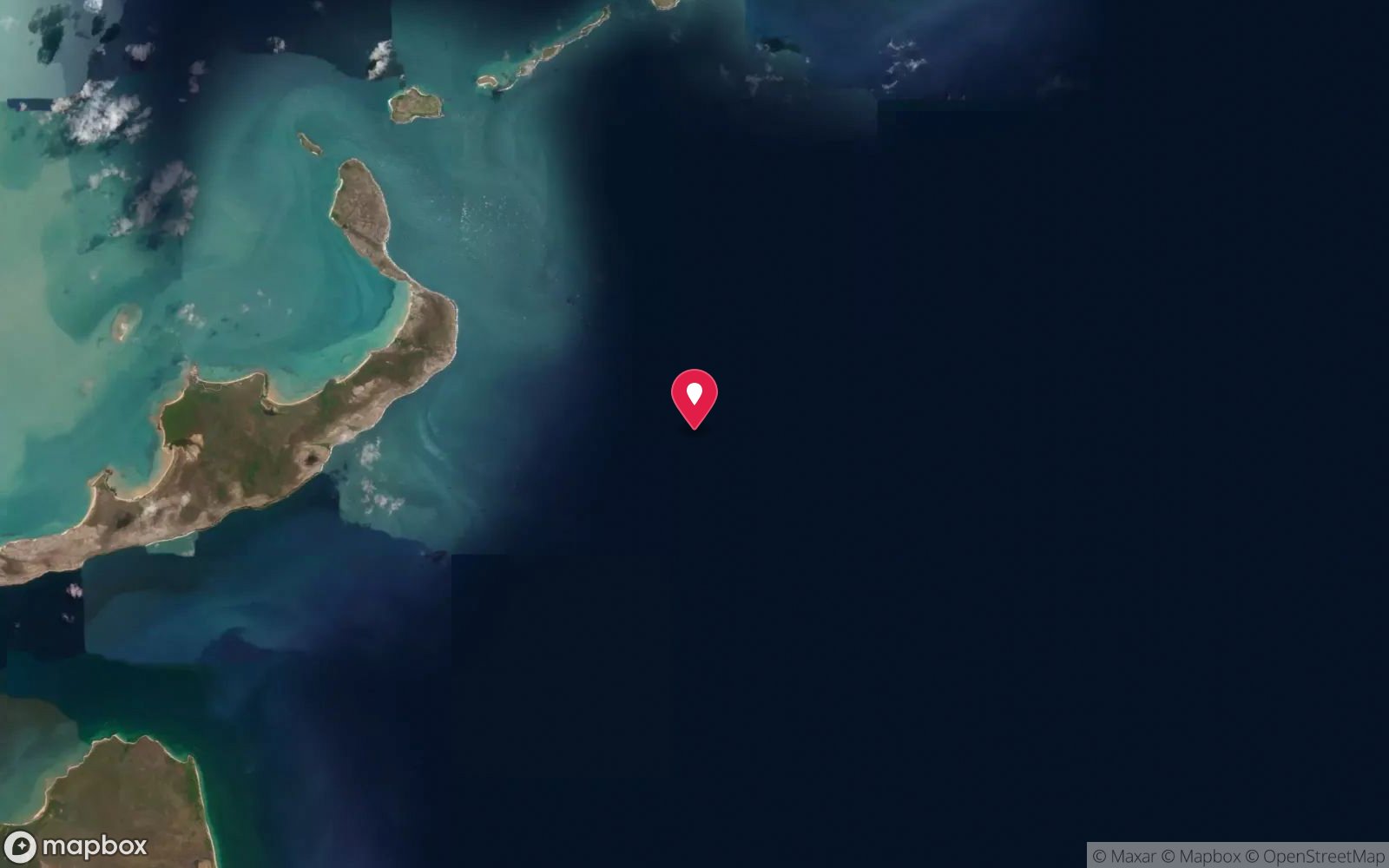
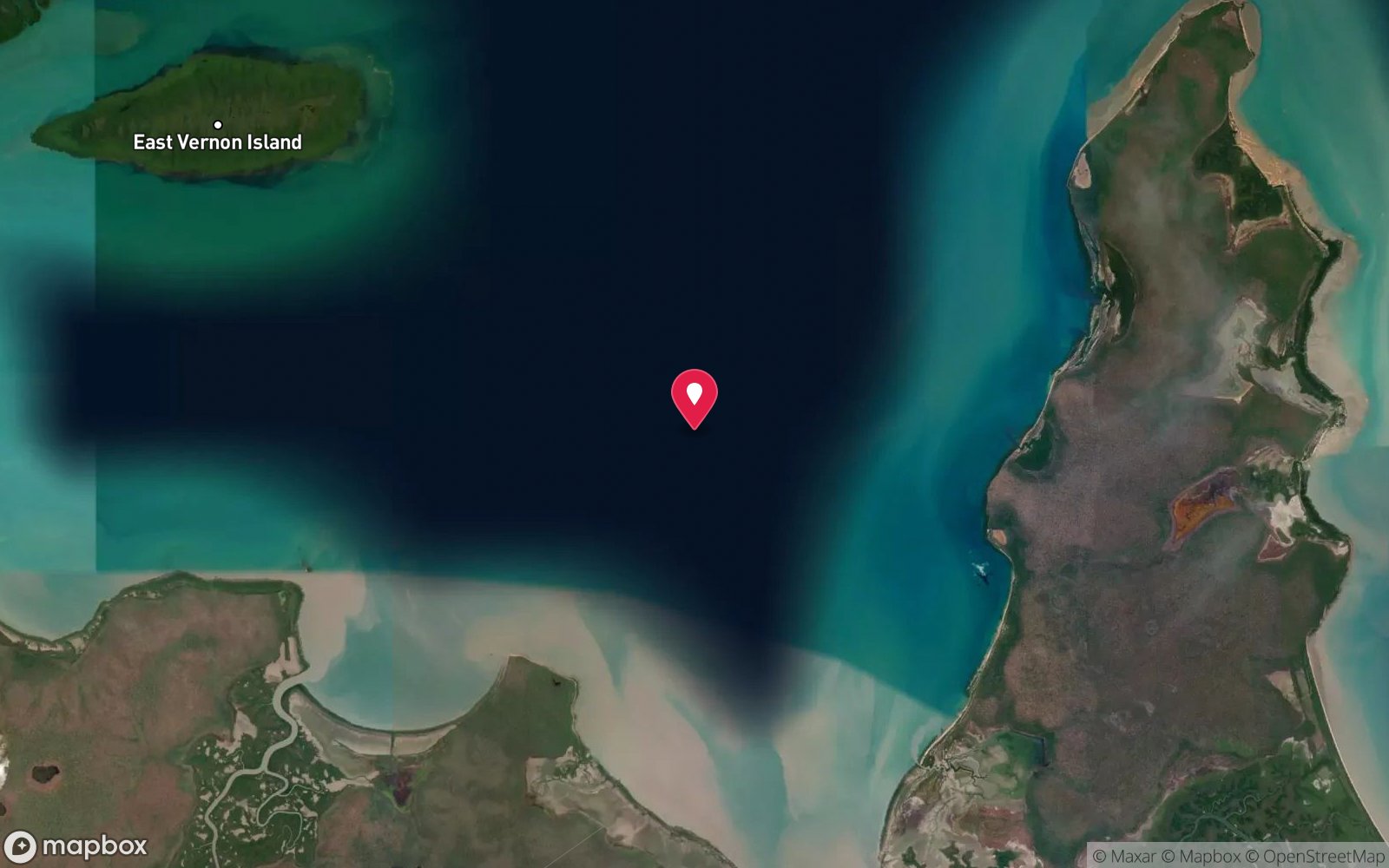
7 pinned sites. Pins marked approximate on their pages show the general area only; not for navigation.
Satellite views
Bromby Islands: frequently asked questions
How deep is Bromby Islands?
Bromby Islands reaches a maximum depth of 35 m, with the shallowest part at about 7 m; most of the dive is spent around 18 m.
What certification do I need to dive Bromby Islands?
Deep/Advanced + experience is the recommended minimum. Advanced Open Water divers can dive the shallower section (typical depth 18 m); the full site to 35 m needs Deep/Advanced + experience. Operators often quote Advanced Open Water. This is a deep dive: plan gas, bottom time and a safety stop accordingly, and consider nitrox. Rated intermediate because of depth to 35 m, tidal current that must be timed.
Can I shore dive Bromby Islands?
No, it is reached by boat.
When is the best time to dive Bromby Islands?
April-November for calm mornings and clearest water; the Gulf side is often diveable in the wet season but inshore sites lose visibility after rain.
What marine life will I see at Bromby Islands?
Regularly recorded: Manta rays, eagle rays, reef sharks, turtles, whale sharks (occasional), coral trout, trevally, soft corals, gorgonians, black corals, sea whips, hard corals.
What wetsuit do I need at Bromby Islands?
3 mm wetsuit or full lycra; full-length stinger suit October-May.
How cold is the water at Bromby Islands?
Typically 29-31 °C in summer and 24-26 °C in winter.
What are the main hazards at Bromby Islands?
Saltwater crocodiles are common on the Gove coast, in Melville Bay and around islands – minimise surface time and never dive near creek mouths. See the hazards section above for the full list.
Where is the nearest recompression chamber to Bromby Islands?
Royal Darwin Hospital hyperbaric medicine unit (Tiwi, Darwin) – aeromedical evacuation from Gove District Hospital (Nhulunbuy). In an emergency call 000, then DAN Asia-Pacific on 1800 088 200.
Diving in East Arnhem Land & Gove
The Gove Peninsula at the top of Arnhem Land has fringing coral reefs, WWII aircraft wrecks and clear Gulf of Carpentaria water dived by the local club and a few visitors. Permits from the Northern Land Council are required to travel on Aboriginal land.
Getting there: Fly to Nhulunbuy from Darwin or Cairns. Diving is arranged through the local club or by private boat.
All East Arnhem Land & Gove dive sites and a suggested itinerary →
Sources
Data confidence: Low · Being verified: Coordinates approximate; distance from Nhulunbuy and boat time not published.. Last updated September 2026. Know this site better? How to send a correction
Nearby dive sites
More island dives in Northern Territory
Explore more
This region
Marine life