Dive slate · divesites.com.au · printed 7 Nov 2026
Bynoe Harbour Entrance Reefs
Darwin Offshore & Artificial Reefs, Northern Territory · near Dundee Beach / Crab Claw Island
| Depth | Depth not published |
|---|---|
| Minimum level | Open Water |
| Difficulty | Intermediate |
| Access | Boat (day trip) |
| Entry | Backward roll from a small boat |
| Current | Strong |
| Visibility | 1-8 m |
| Water | summer 30-32 °C, winter 24-26 °C |
| Suit | 3 mm shorty or full lycra/stinger suit; full-length stinger suit essential October-May |
| Best season | May-October dry season on neap tides (smallest tidal range, best visibility, south-east trade winds are strongest mid-morning) |
| Bottom time | 45 min |
| Position | not published |
| Permit | None required; NT recreational fishing rules apply. |
| Nearest chamber | Royal Darwin Hospital hyperbaric medicine unit (Tiwi, Darwin) |
| Emergency | 000 · DAN Asia-Pacific diving emergency 1800 088 200 |
Bynoe Harbour Entrance Reefs
Also known as Bynoe Harbour reefs and islands
Tidal reefs and islands at the mouth of Bynoe Harbour – a sheltered alternative to Fog Bay for self-sufficient divers.
Near Dundee Beach / Crab Claw Island · Darwin Offshore & Artificial Reefs, Northern Territory
- Depth
- Depth not published
- Minimum level
- Open Water
- Access
- Boat (day trip)
- Boat ride
- —
- Water
- 30-32 °C
- Visibility
- 1-8 m
Bynoe Harbour Entrance ReefsDepth not published · Open Water
Dive factsDepths, conditions, location & safety
Season
Off-peak nowBest months: May, June, July, August, September, October.
May-October dry season on neap tides (smallest tidal range, best visibility, south-east trade winds are strongest mid-morning)
- Best months
- Now (November)
- Stinger suit Nov–May
Dive facts
- Depth
- Depth not published
- Typical depth
- 8 m
- Certification
- Open Water
- Difficulty
- Intermediate
- Access
- Boat (day trip)
- Dive centre needed
- Yes – boat access only
- Shore / independent
- No
- Current
- Strong
- Visibility
- 1-8 m
- Water temp (summer)
- 30-32 °C
- Water temp (winter)
- 24-26 °C
- Water
- Tropical
- Bottom time
- 45 min
- Dive traffic
- Rarely dived (private boat/club only)
- Night dive
- No
- Snorkel friendly
- No
Exposure suit
3 mm shorty or full lycra/stinger suit; full-length stinger suit essential October-May
Location
Bynoe Harbour · Dundee Beach / Fog Bay / Bynoe Harbour
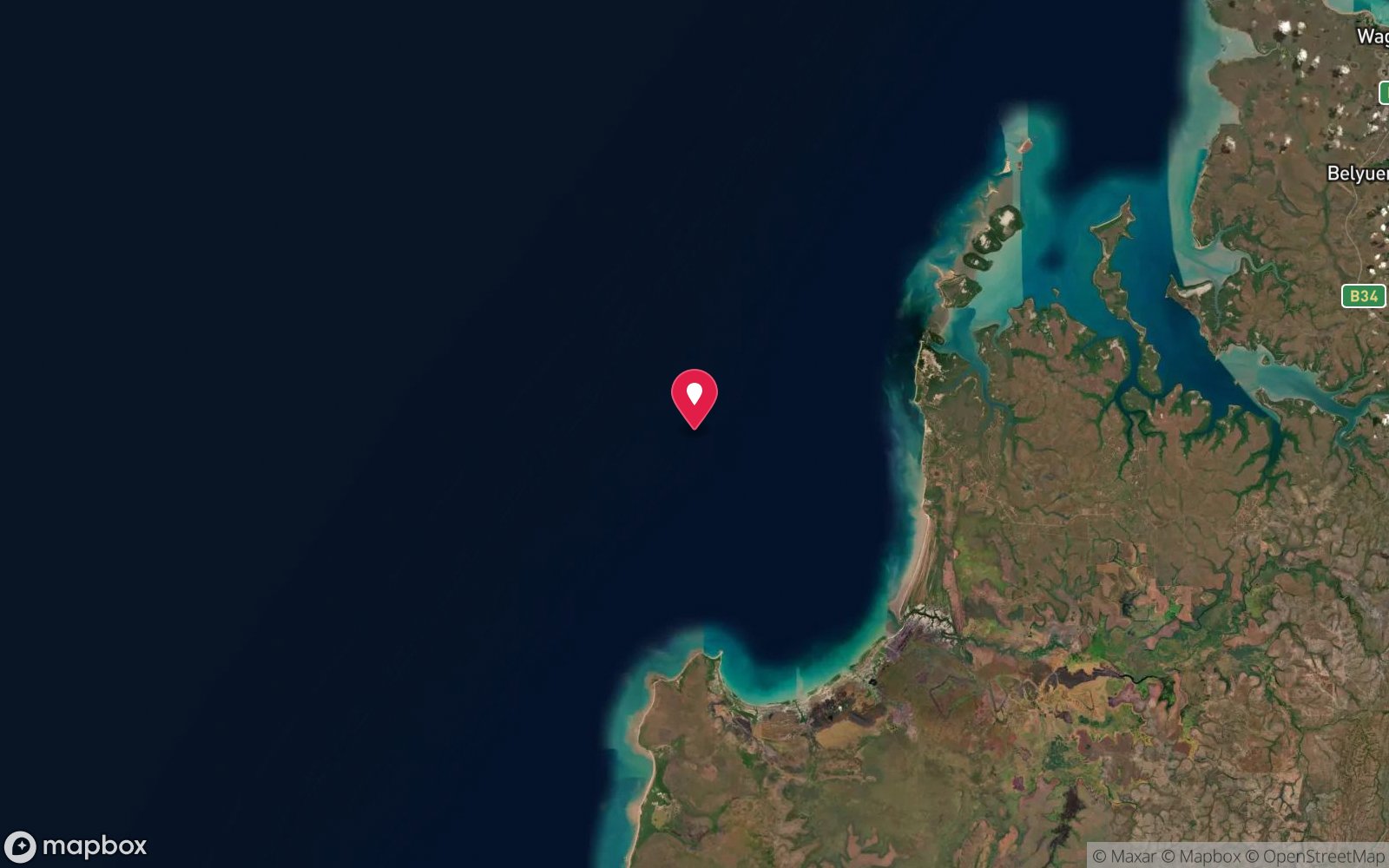
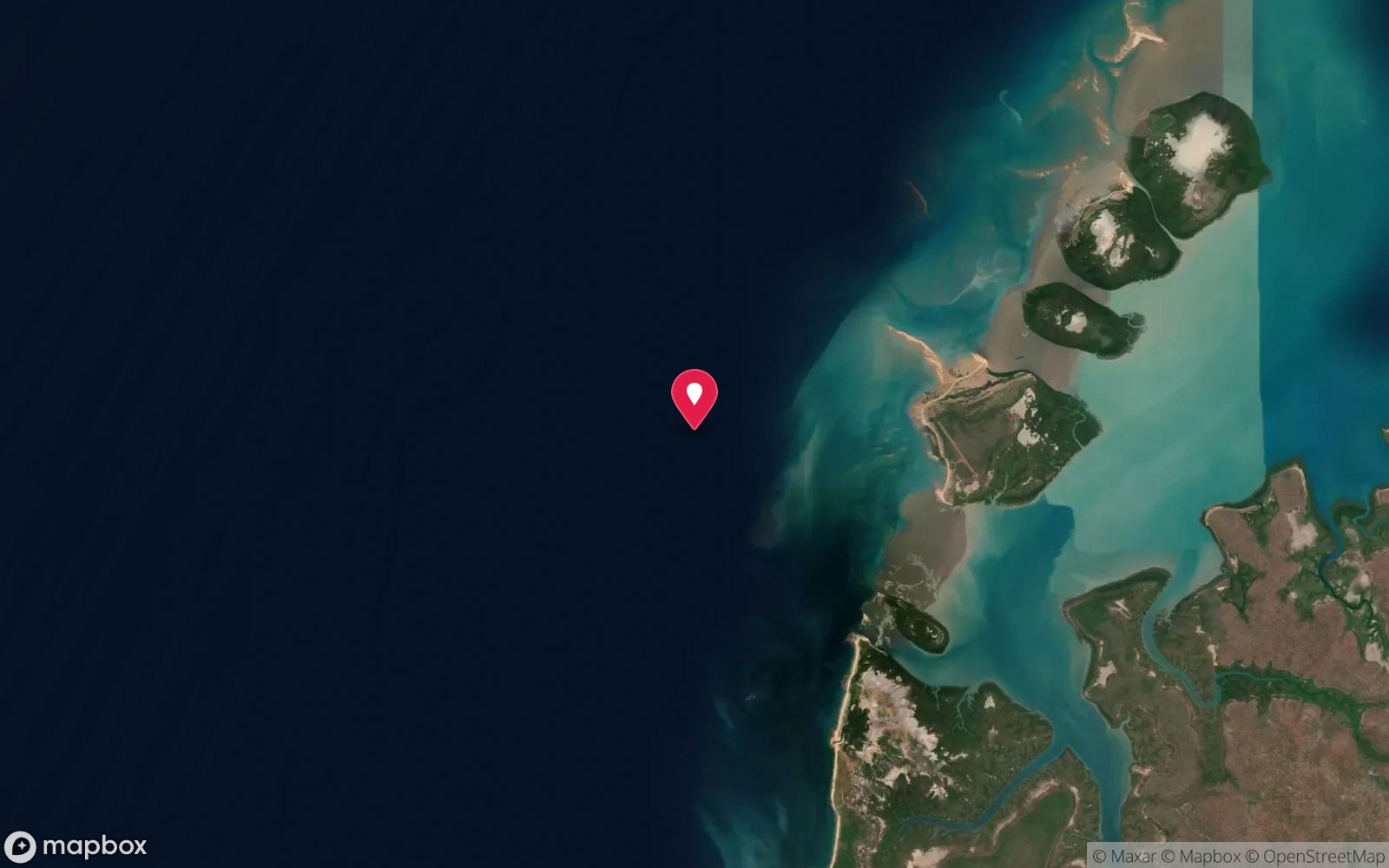
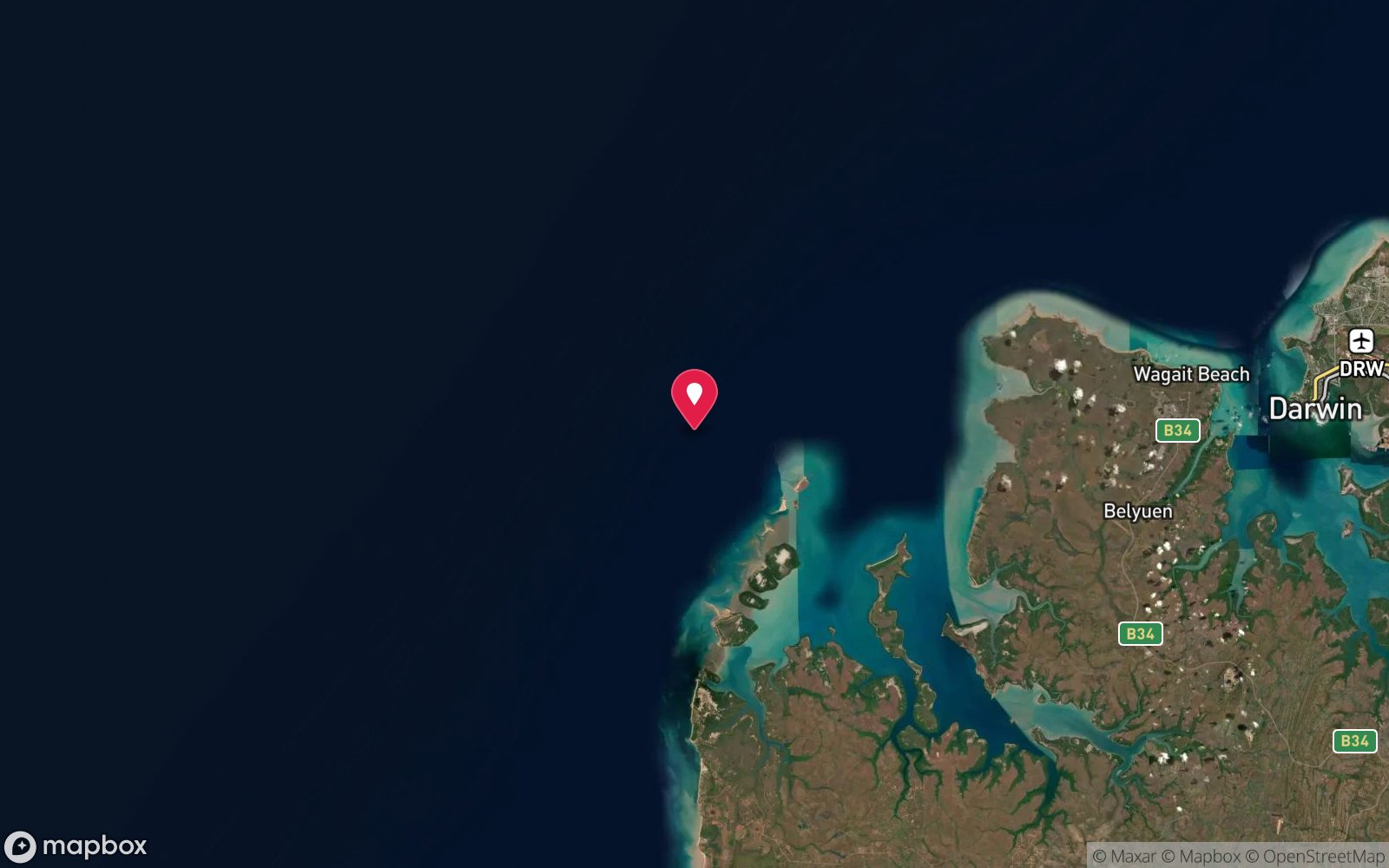
No published coordinates. The map above shows the general area, estimated from other documented sites near Dundee Beach.
Primary source: marinelife.org.auMarine park & permits
None required; NT recreational fishing rules apply.
Nearest recompression chamber
Royal Darwin Hospital hyperbaric medicine unit (Tiwi, Darwin)
Diving emergency: call 000, then DAN AP 1800 088 200.
Trip planner
Build a trip around Bynoe Harbour Entrance Reefs →
A day-by-day plan for Darwin Offshore & Artificial Reefs with this site locked in.
This guide is a planning aid. Conditions change daily — confirm with a local dive centre and dive within your training. Data & safety notes.
Dive profile
How this site rates
Scores are computed from the recorded data, not opinions. How?
At a glance
Bynoe Harbour Entrance Reefs is a reef boat dive in Darwin Offshore & Artificial Reefs, NT, suited to Open Water divers, strong current.
Rated intermediate because of strong current.
Why dive here
- Tidal reefs and islands at the mouth of Bynoe Harbour – a sheltered alternative to Fog Bay for self-sufficient divers.
- Rarely dived: expect to have the site to yourself, and plan your own logistics.
Conditions to avoid
- Strong southerly or south-east swell and wind
- Strong westerlies
- Outgoing tide or run-off after rain (poor visibility)
- Any time other than slack water
- Cyclone season (roughly December–April)
About Bynoe Harbour Entrance Reefs
Bynoe Harbour is a large, mangrove-lined inlet between the Cox Peninsula and Dundee, south-west of Darwin. The Marine Life Network describes the reefs and islands adjacent to the harbour entrance as easily accessed from Dundee, and the area is well known to anglers, crabbers and pearl farmers. It is not a mainstream dive destination, but its reefs offer an alternative when Fog Bay is too rough.
Published detail is limited. Expect fringing reefs around the entrance islands and banks, with turbid-water coral communities – massive, encrusting and plate corals, leather and soft corals, sponges and gorgonians – interspersed with rubble, sand and seagrass. Big tides flush the harbour twice a day, so currents at the entrance are strong and visibility changes rapidly through the tidal cycle.
Fish life is rich: golden snapper, fingermark, black jewfish, estuary cod, coral trout and grunter on the reefs, with queenfish, trevally and mackerel at the entrance on the run of tide. Turtles and dugong use the seagrass, and rays are common on the sand.
SS Brisbane lies on Fish Reef north of Bynoe Harbour and Quail Island, and many divers visiting the area will be doing so as part of a Brisbane trip. Bynoe itself suits self-sufficient, experienced Top End divers who can read tides and accept poor visibility. Divers who explore here are encouraged to record positions, depths and conditions and share them with Darwin Sub Aqua Club, as very little about these reefs has been written down, and the harbour's pearl leases and crab-pot lines should be given a wide berth when anchoring.
Getting there & entry
Reefs and islands at the entrance to Bynoe Harbour, the large inlet between Cox Peninsula and Dundee, south-west of Darwin.
Bynoe Harbour can be reached by launching at Dundee Beach and running north-east around the coast, or by launching inside the harbour at the Crab Claw Island ramp (off Bynoe Harbour Road, via the Cox Peninsula Road – roughly 1.5–2 hours from Darwin). Boats from Darwin can also come around the Cox Peninsula. Reefs are on the islands and banks at the harbour entrance; locate them on the chart and sounder and anchor in sand on the reef edge at slack water.
Entry: Backward roll from a small boat
Facilities: Crab Claw Island (resort, boat ramp, fuel – check current availability) and Dundee Beach services. No air fills.
Weather, swell & tides
The Dundee coast faces west into the Timor Sea. The dry season (May–October) is the diving season: the south-east trade wind blows offshore, mornings are calm and water clarity is at its best. Dive on neap tides at slack water – tidal ranges here are large, currents run hard around reefs and headlands on springs, and beach launching and retrieval at Dundee also depend on the tide.
Afternoon westerly sea breezes can chop up the sea. In the wet season (December–April) monsoon north-westerlies blow straight onshore, rivers flood with run-off, cyclones are possible and box jellyfish are present, so diving is rarely feasible.
Best season: May-October dry season on neap tides (smallest tidal range, best visibility, south-east trade winds are strongest mid-morning)
How the dive is usually run
Dive only at slack water on a neap tide. Anchor on the reef edge, follow it at 5–10 m and stay close to the anchor line; abort if visibility is below 2 m or the current starts to run.
Marine life
- Golden snapper
- fingermark
- black jewfish
- estuary cod
- coral trout
- grunter
- queenfish
- trevally
- Spanish mackerel
- turtles →
- dugong →
- rays
Linked species have their own page listing every site where they are recorded. All marine life →
Training required
Courses that help here
- Drift Diver – Current is a feature of the dive.
Depth tiers: 0–10 m easy · to 18 m Open Water · 18–30 m Advanced (25 m+ is a deep dive) · 30–40 m Deep specialty · 40 m+ technical. All courses
Hazards & warnings
Saltwater crocodiles are abundant along the Dundee, Fog Bay and Bynoe Harbour coast and in creek mouths – minimise surface time and never dive near creek mouths or mangroves. Strong tidal currents on springs. Box jellyfish and Irukandji October–May.
Heavy fishing pressure – watch for lines and boats. Remote: about two hours by road from Darwin and the chamber; carry oxygen and a satellite communication device.
Dive centres that go here
No dive operator based at Dundee. Private boats launched at Dundee Beach, occasional Darwin club trips, and fishing charters that may carry divers by arrangement.
Operators recorded for Bynoe Harbour Entrance Reefs
Dive Darwin
ProfiledDarwin · Darwin Harbour · NT
The main verified dive operation in the Northern Territory, offering recreational training through professional level alongside technical diving and a large specialty range.
divedarwin.com.au · +61 401 751 651
Darwin Sub Aqua Club
Named by sitesDarwin · Darwin Harbour · NT
Club, not a shop: official site updated August 2026 with the 2026 AGM notice; meets Thursdays at Darwin Ski Club, Fannie Bay.
dsac.com.au
Other dive centres in Darwin Offshore & Artificial Reefs
Sea Darwin
Named by sitesDarwin · Darwin Offshore & Artificial Reefs · NT
Eco tour and cruise operator; contact details not on fetched pages.
seadarwin.com
Western Blue Dive Charters
Named by sitesDarwin · Darwin Offshore & Artificial Reefs · NT
The only operator found under this name is Western Blue Dive Charters at Mindarie Marina, Perth (westernbluedive.com.au); no Darwin operator by this name could be confirmed, so the Darwin attribution is doubtful.
General area
No position has been published for Bynoe Harbour Entrance Reefs. The circle shows where it is likely to be, worked out from other documented sites near Dundee Beach. Ask a local operator for the exact site.
Dashed circle: general area (about 50 km), from other documented sites near Dundee Beach. 6 pinned sites. Pins marked approximate on their pages show the general area only; not for navigation.
Bynoe Harbour Entrance Reefs: frequently asked questions
What certification do I need to dive Bynoe Harbour Entrance Reefs?
Open Water is the recommended minimum. Rated intermediate because of strong current.
Can I shore dive Bynoe Harbour Entrance Reefs?
No, it is reached by boat. A dive centre is required: boat access only.
When is the best time to dive Bynoe Harbour Entrance Reefs?
May-October dry season on neap tides (smallest tidal range, best visibility, south-east trade winds are strongest mid-morning).
What marine life will I see at Bynoe Harbour Entrance Reefs?
Regularly recorded: Golden snapper, fingermark, black jewfish, estuary cod, coral trout, grunter, queenfish, trevally, Spanish mackerel, turtles, dugong, rays.
What wetsuit do I need at Bynoe Harbour Entrance Reefs?
3 mm shorty or full lycra/stinger suit; full-length stinger suit essential October-May.
How cold is the water at Bynoe Harbour Entrance Reefs?
Typically 30-32 °C in summer and 24-26 °C in winter.
What are the main hazards at Bynoe Harbour Entrance Reefs?
Saltwater crocodiles are abundant along the Dundee, Fog Bay and Bynoe Harbour coast and in creek mouths – minimise surface time and never dive near creek mouths or mangroves. See the hazards section above for the full list.
Where is the nearest recompression chamber to Bynoe Harbour Entrance Reefs?
Royal Darwin Hospital hyperbaric medicine unit (Tiwi, Darwin). In an emergency call 000, then DAN Asia-Pacific on 1800 088 200.
Diving in Darwin Offshore & Artificial Reefs
Outside the harbour the water clears a little and a collection of post-war wrecks, artificial reefs and natural patches (the Fenton Patches, Charles Point reef and the scuttled Song Saigon and Anchorage wrecks) give Darwin divers deeper and cleaner alternatives to the harbour war graves.
Getting there: Charters from Darwin on neap tides.
All Darwin Offshore & Artificial Reefs dive sites and a suggested itinerary →
Sources
Data confidence: Low · Being verified: Specific reef names, coordinates and depths not published; Crab Claw Island facilities to confirm.. Last updated September 2026. Know this site better? How to send a correction
Nearby dive sites
More reef dives in Northern Territory
Explore more
This region