Dive slate · divesites.com.au · printed 8 Nov 2026
Haycock Point
Merimbula, New South Wales · near Pambula
| Depth | 4–18 m |
|---|---|
| Minimum level | Open Water |
| Difficulty | Intermediate |
| Access | Boat |
| Entry | Giant stride from boat |
| Current | Mild |
| Visibility | 8–15 m m |
| Water | summer 18–20 °C °C, winter 12–14 °C °C |
| Suit | 7 mm wetsuit with hood and gloves, or drysuit, for most of the year; 5 mm only in late summer |
| Best season | Calm periods year round |
| Bottom time | 50 min |
| Position | -36.95200, 149.94200 (approximate) |
| Permit | None required – Beowa National Park shoreline (no marine park zoning); Empire Gladstone is a protected historic wreck |
| Nearest chamber | Prince of Wales Hospital Hyperbaric Unit (Randwick, Sydney) |
| Emergency | 000 · DAN Asia-Pacific diving emergency 1800 088 200 |
Haycock Point
Also known as Haystack Rock reef, Haycock Point bommie
Haystack Rock bommie and reef beside NSW's largest remaining wreck.
Near Pambula · Merimbula, New South Wales
- Depth
- 4–18 m
- Minimum level
- Open Water
- Access
- Boat
- Boat ride
- ~20 min
- Water
- 18–20 °C
- Visibility
- 8–15 m
Haycock Point4–18 m · Open Water
Dive factsDepths, conditions, location & safety
Season
In season nowBest months: year-round.
Dive facts
- Depth
- 4–18 m
- Typical depth
- 10 m
- Certification
- Open Water
- Difficulty
- Intermediate
- Depth tier
- Open Water (10–18 m)
- Access
- Boat
- Dive centre needed
- Recommended
- Shore / independent
- Possible (experienced only)
- Boat ride
- ~20 min
- Current
- Mild
- Visibility
- 8–15 m
- Water temp (summer)
- 18–20 °C
- Water temp (winter)
- 12–14 °C
- Water
- Temperate
- Bottom time
- 50 min
- Dive traffic
- Moderate (occasional charters/club dives)
- Night dive
- No
- Snorkel friendly
- No
Exposure suit
7 mm wetsuit with hood and gloves, or drysuit, for most of the year; 5 mm only in late summer
Location
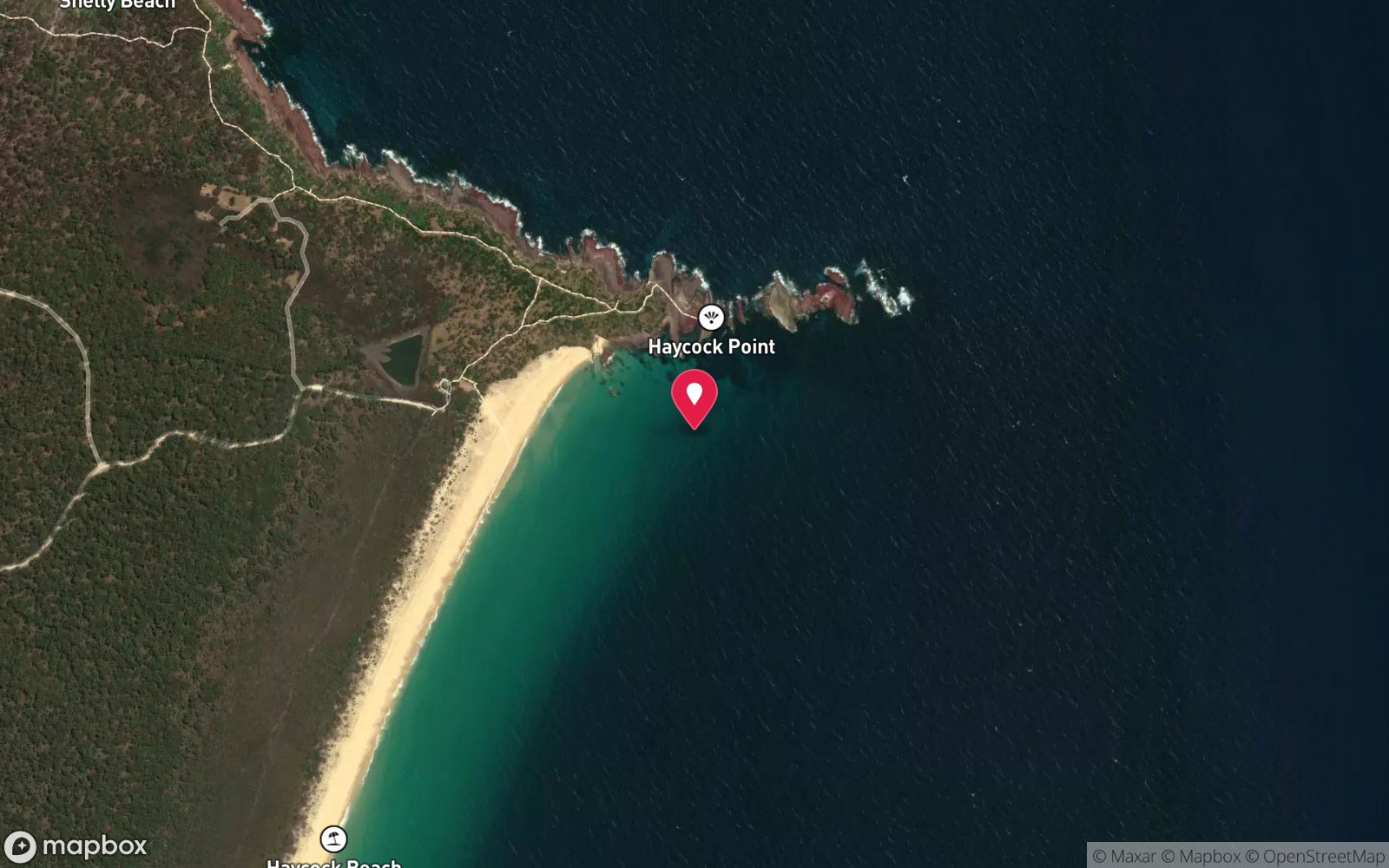
Haycock Point (Beowa NP north) · Merimbula – Sapphire Coast
-36.95200, 149.94200
Approximate position — not for navigation.
Open in Google MapsPrimary source: michaelmcfadyenscuba.infoMarine park & permits
None required – Beowa National Park shoreline (no marine park zoning); Empire Gladstone is a protected historic wreck
Nearest recompression chamber
Prince of Wales Hospital Hyperbaric Unit (Randwick, Sydney)
Diving emergency: call 000, then DAN AP 1800 088 200.
Trip planner
Build a trip around Haycock Point →
A day-by-day plan for Merimbula with this site locked in.
This guide is a planning aid. Conditions change daily — confirm with a local dive centre and dive within your training. Data & safety notes.
Dive profile
How this site rates
Scores are computed from the recorded data, not opinions. How?
At a glance
Haycock Point is a reef shore dive for experienced divers in Merimbula, NSW, 4–18 m, suited to Open Water divers, about 20 minutes by boat.
Rated intermediate because of surge on the entry or in the shallows, cold water.
Why dive here
- Haystack Rock bommie and reef beside NSW's largest remaining wreck.
Conditions to avoid
- Afternoon north-easterlies
- Outgoing tide or run-off after rain (poor visibility)
About Haycock Point
Haycock Point is the southern headland of Merimbula Bay, part of the northern section of Beowa National Park (formerly Ben Boyd). Offshore, Haystack Rock – named for the smaller rock beside it that looks like a huge haystack – is the reef that wrecked the SS Empire Gladstone in 1950. McFadyen describes a bommie off Haystack Rock as a vertical pillar that comes almost to the surface beside the bow wreckage of the Empire Gladstone.
The reef consists of boulders and rock with kelp and crayweed, sponges and sea squirts in the shade, and sand patches. The bommie and the wreckage attract fish: blue groper, blackfish, yellowtail and silver sweep in the crevices and schools of bream and leatherjackets. Wobbegongs and Port Jackson sharks shelter under ledges, and rays are common on the sand. The headland is often visited by seals and dolphins, and whales pass close in spring.
The site suits Open Water divers in calm weather, usually as part of a dive on the Empire Gladstone. Detailed description of the reef apart from the wreck is limited, and depths here are indicative. The headland is worth visiting by land too, with walking tracks and views across Merimbula Bay. The Beowa National Park shoreline has no marine park zoning, but take nothing from the wreck, which is a protected historic site. Dolphins often ride the bow of dive boats crossing the bay.
Getting there & entry
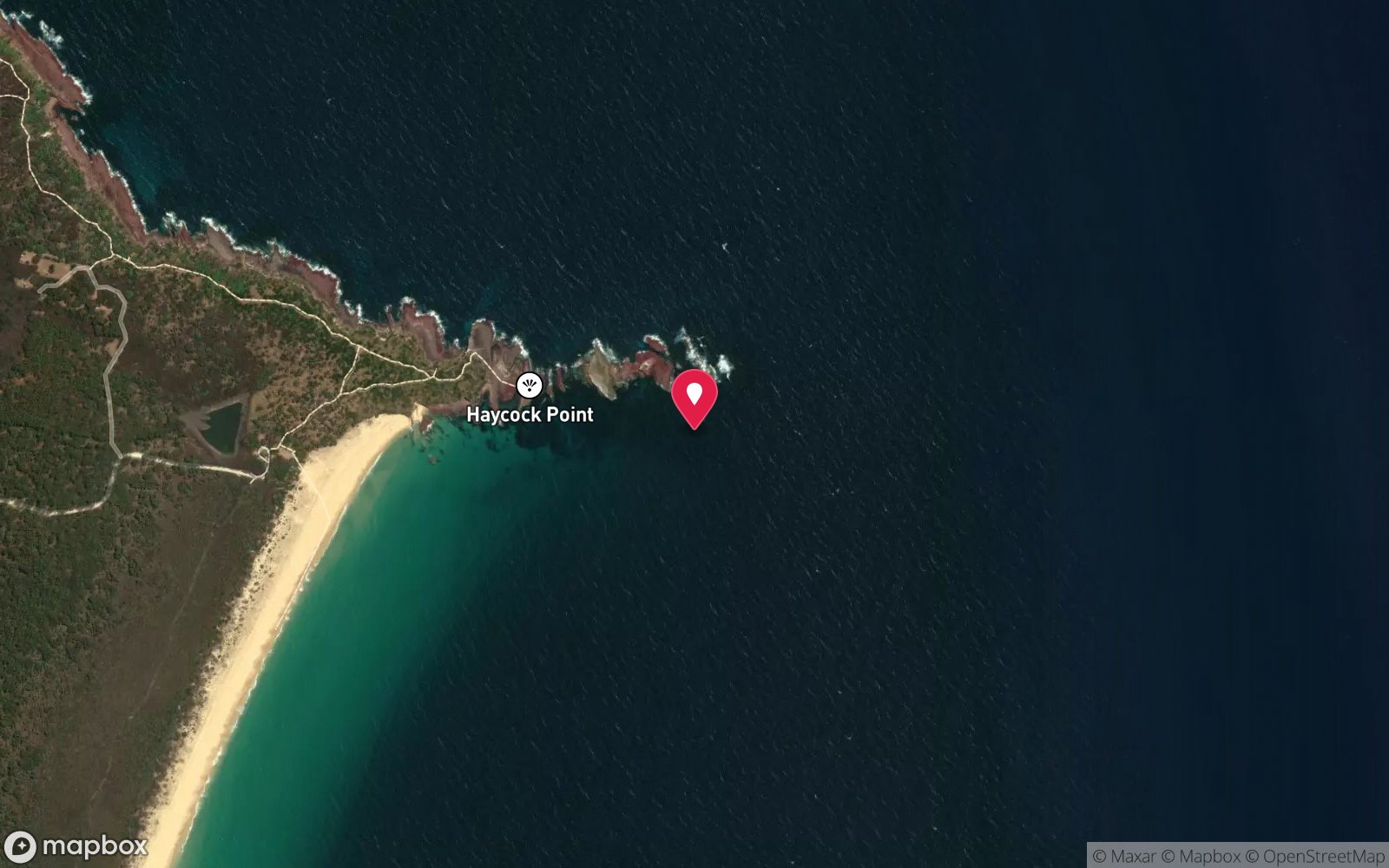
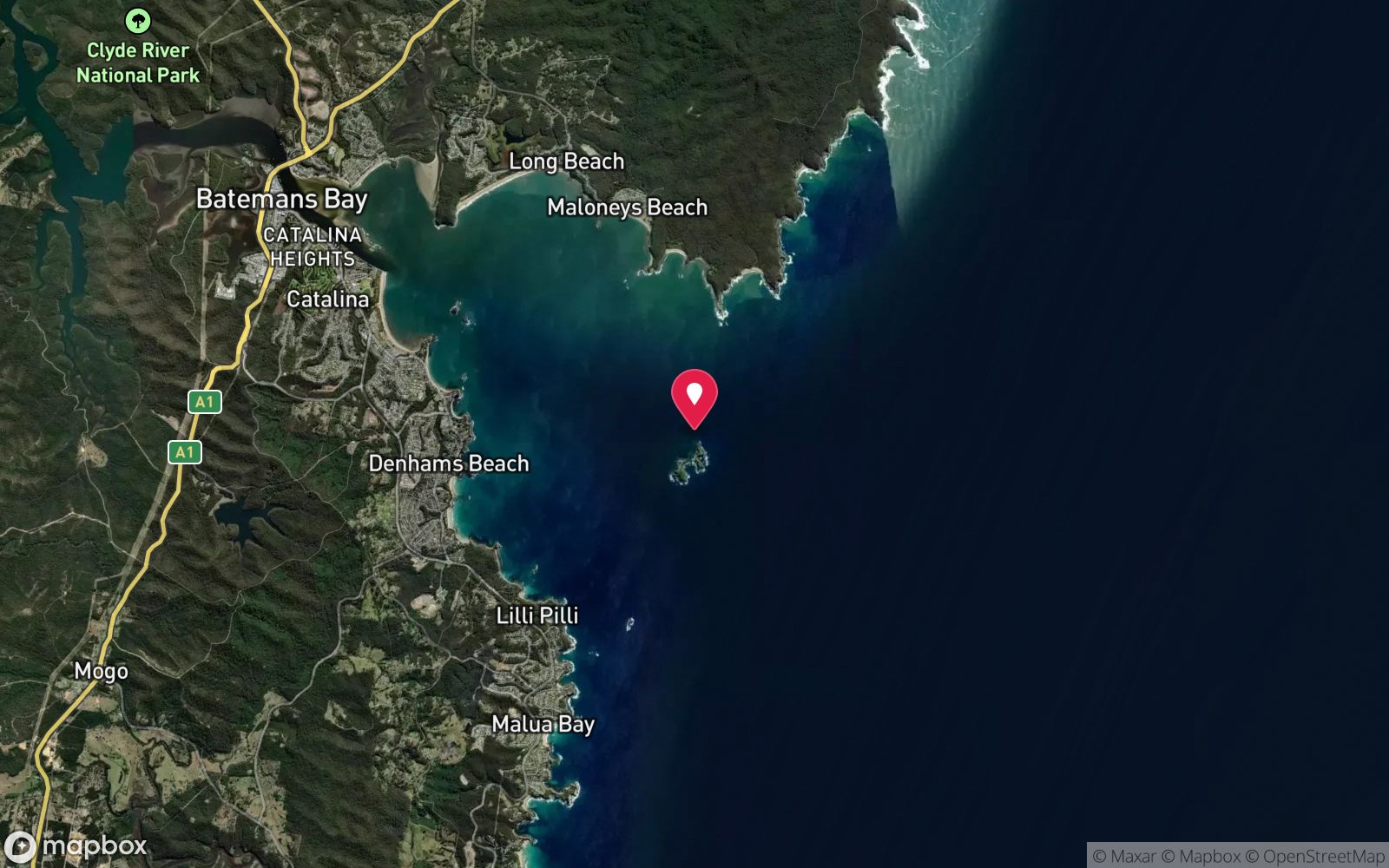
Headland at the southern end of Merimbula Bay in Beowa National Park, with Haystack Rock and its vertical bommie offshore; reef around the rock and the Empire Gladstone wreck site.
Boat access is the practical approach: from Merimbula, 20 minutes across the bay (see Empire Gladstone). By road, Haycock Point is reached from the Princes Highway south of Pambula via Haycock Road into the northern section of Beowa (formerly Ben Boyd) National Park, where there is a car park, picnic area and walking track onto the headland. Shore entry from the rock platform is only for experienced divers on flat days.
Entry: Giant stride from boat
Facilities: Beowa National Park car park and picnic area at Haycock Point (park fees); Merimbula boat ramps.
Weather, swell & tides
Haycock Point is the exposed outer headland of Merimbula Bay, open to swell from north-east through south. The Haystack Rock bommie comes almost to the surface and breaks in swell. Dive only in calm conditions with swell under about 1 m, preferably in westerly weather.
Visibility falls after rain from Pambula River and Merimbula Lake.
Best season: Calm periods year round
If it's blown out
Sheltered or shore sites within 25 km that often work when Haycock Point doesn't.
- Merimbula Wharf · 7 km · Max 16 m
- SS Empire Gladstone · 0 km · Max 12 m
- Pambula River Mouth · 3 km · Max 6 m
- Bar Beach (Merimbula) · 7 km · Max 10 m
How the dive is usually run
From an anchor near the wreck, explore the Haystack Rock bommie, a vertical pillar almost to the surface, and the surrounding reef at 6–15 m, then drift onto the wreck or back to the anchor.
Marine life
- Blue groper →
- blackfish
- yellowtail
- silver sweep
- bream
- leatherjackets
- wobbegongs →
- Port Jackson sharks →
- rays
- fur seals →
- dolphins
- kelp
- sponges
Linked species have their own page listing every site where they are recorded. All marine life →
Training required
Within the 18 m limit of an entry-level certification.
Courses that help here
- Drysuit Diver – Cold water; locals dive dry for much of the year.
Depth tiers: 0–10 m easy · to 18 m Open Water · 18–30 m Advanced (25 m+ is a deep dive) · 30–40 m Deep specialty · 40 m+ technical. All courses
Hazards & warnings
Exposed headland; bommie breaks in swell; surge. Shore entry dangerous except in flat seas.
Dive centres that go here
Merimbula Divers Lodge dives here as part of Empire Gladstone trips; the reef around Haystack Rock is often explored after the wreck. No separate scheduled trips.
Operators recorded for Haycock Point
Other dive centres in Merimbula
Dive Eden
ProfiledEden · Merimbula · NSW
An Eden operator running boat, wreck, wharf and cave dives around Twofold Bay, with Try Scuba to Advanced courses and studio accommodation near Cocora Beach.
diveeden.com.au · 0410 026 990
Sapphire Coast Scuba
ProfiledEden · Merimbula · NSW
An Eden-based operation offering PADI Open Water training, guided dives for certified divers, equipment hire and air fills.
sapphirecoastscuba.com · 0488 519 316
Wilderness Sea n' Ski
ListedLiverpool · Sydney South & Botany Bay · NSW
A far south coast business providing equipment and dive services. Range and training availability require verification.
wilderness.net.au · (02) 9822 4112
Map
7 pinned sites. Pins marked approximate on their pages show the general area only; not for navigation.
Satellite views
Haycock Point: frequently asked questions
How deep is Haycock Point?
Haycock Point reaches a maximum depth of 18 m, with the shallowest part at about 4 m; most of the dive is spent around 10 m.
What certification do I need to dive Haycock Point?
Open Water is the recommended minimum. Rated intermediate because of surge on the entry or in the shallows, cold water.
Can I shore dive Haycock Point?
Experienced divers do dive Haycock Point from the shore, but the entry or conditions make it unsuitable for newer divers without local guidance. Entry: Giant stride from boat.
When is the best time to dive Haycock Point?
Calm periods year round.
What marine life will I see at Haycock Point?
Regularly recorded: Blue groper, blackfish, yellowtail, silver sweep, bream, leatherjackets, wobbegongs, Port Jackson sharks, rays, fur seals, dolphins, kelp and more.
What wetsuit do I need at Haycock Point?
7 mm wetsuit with hood and gloves, or drysuit, for most of the year; 5 mm only in late summer.
How cold is the water at Haycock Point?
Typically 18–20 °C in summer and 12–14 °C in winter.
What are the main hazards at Haycock Point?
Exposed headland; bommie breaks in swell; surge. See the hazards section above for the full list.
Where is the nearest recompression chamber to Haycock Point?
Prince of Wales Hospital Hyperbaric Unit (Randwick, Sydney). In an emergency call 000, then DAN Asia-Pacific on 1800 088 200.
Diving in Merimbula
Merimbula has the Pinnacles, a boat dive with towering rock formations, sponges and schooling fish, and the Merimbula Wharf, a shallow, sheltered shore dive under the pier that is a local favourite for octopus, seahorses and night diving. The Empire Gladstone wreck lies just to the south near Haycock Point.
Getting there: Six hours from Sydney or a flight to Merimbula. A local dive shop runs boat dives; the wharf is a walk-in shore dive with parking.
Sources
Data confidence: Medium · Being verified: Depth range indicative.. Last updated September 2026. Know this site better? How to send a correction
Nearby dive sites
More reef dives in New South Wales
Explore more
This region
Marine life