Dive slate · divesites.com.au · printed 7 Nov 2026
SS Empire Gladstone
Merimbula, New South Wales · near Merimbula
| Depth | 4–12 m |
|---|---|
| Minimum level | Open Water |
| Difficulty | Beginner |
| Access | Boat |
| Entry | Giant stride from boat anchored near the boilers |
| Current | Mild |
| Visibility | 8–15 m m |
| Water | summer 18–20 °C °C, winter 12–14 °C °C |
| Suit | 7 mm wetsuit with hood and gloves, or drysuit, for most of the year; 5 mm only in late summer |
| Best season | Year round in calm conditions |
| Bottom time | 60 min |
| Position | -36.95066, 149.94649 (GPS) |
| Permit | None required – not in a marine park; historic shipwreck protection applies; headland is Beowa National Park |
| Nearest chamber | Prince of Wales Hospital Hyperbaric Unit (Randwick, Sydney) |
| Emergency | 000 · DAN Asia-Pacific diving emergency 1800 088 200 |
SS Empire Gladstone
Also known as Empire Gladstone wreck, Haycock Point wreck, Haystack Rock wreck
The largest remaining wreck in NSW, a 137 m wartime freighter spread across 100 m of shallow reef, with engine, boilers, flywheel and propeller.
Near Merimbula · Merimbula, New South Wales
- Depth
- 4–12 m
- Minimum level
- Open Water
- Access
- Boat
- Boat ride
- ~20 min
- Water
- 18–20 °C
- Visibility
- 8–15 m
SS Empire Gladstone4–12 m · Open Water
Dive factsDepths, conditions, location & safety
Season
In season nowBest months: year-round.
Dive facts
- Depth
- 4–12 m
- Typical depth
- 9 m
- Certification
- Open Water
- Difficulty
- Beginner
- Depth tier
- Open Water (10–18 m)
- Access
- Boat
- Offshore
- 0.2 km
- Dive centre needed
- Yes – boat access only
- Shore / independent
- No
- Boat ride
- ~20 min
- Current
- Mild
- Visibility
- 8–15 m
- Water temp (summer)
- 18–20 °C
- Water temp (winter)
- 12–14 °C
- Water
- Temperate
- Bottom time
- 60 min
- Dive traffic
- Popular (weekly charters)
- Night dive
- No
- Snorkel friendly
- No
Exposure suit
7 mm wetsuit with hood and gloves, or drysuit, for most of the year; 5 mm only in late summer
Location
Haycock Point (Beowa NP north) · Merimbula – Sapphire Coast
-36.95066, 149.94649
Published GPS position.
Open in Google MapsPrimary source: michaelmcfadyenscuba.infoMarine park & permits
None required – not in a marine park; historic shipwreck protection applies; headland is Beowa National Park
Nearest recompression chamber
Prince of Wales Hospital Hyperbaric Unit (Randwick, Sydney)
Diving emergency: call 000, then DAN AP 1800 088 200.
Trip planner
Build a trip around SS Empire Gladstone →
A day-by-day plan for Merimbula with this site locked in.
This guide is a planning aid. Conditions change daily — confirm with a local dive centre and dive within your training. Data & safety notes.
Dive profile
How this site rates
Scores are computed from the recorded data, not opinions. How?
At a glance
SS Empire Gladstone is a wreck boat dive in Merimbula, NSW, 4–12 m, suited to Open Water divers, about 20 minutes by boat.
Rated beginner: sheltered, shallow and manageable for a newly certified diver on a normal day, though note surge on the entry or in the shallows and boat traffic overhead and cold water.
Why dive here
- The largest remaining wreck in NSW, a 137 m wartime freighter spread across 100 m of shallow reef, with engine, boilers, flywheel and propeller.
- Sunk in 1950; protected as underwater cultural heritage, so look but do not touch.
Conditions to avoid
- Strong southerly or south-east swell and wind
- Outgoing tide or run-off after rain (poor visibility)
About SS Empire Gladstone
The SS Empire Gladstone was one of the hundreds of standard cargo ships built in Britain during the Second World War. Launched in 1944 at Sunderland, she was 7,090 tons, 450 feet (137 m) long and 56 feet wide, powered by a triple-expansion engine with three coal-fired boilers. In August 1944 she carried troops and vehicles of the First Belgian Brigade to Normandy. After the war she was chartered to the Adelaide Steamship Company, and on 1 September 1950 she left Whyalla for Newcastle with iron ore and 159 car bodies.
On the evening of 5 September 1950, Captain John Lennie, on his last voyage before retirement, kept close inshore to avoid the current. The fourth engineer steered for what he took to be a lighthouse, but the lights turned out to be those of Merimbula Wharf. At 7.55 pm the ship's stern struck the reef of Haystack Rock, off Haycock Point about 8 km south-east of Merimbula. She broke her back and could never be refloated. The crew stayed aboard for days while Eden trawlers took the car bodies ashore, then abandoned ship when the weather worsened. One crewman said it was his ninth shipwreck.
Today the wreck is the largest remaining in NSW, lying east–west with the stern towards shore in no more than about 12 m. McFadyen found it much more broken in 2005 than in 1989. Highlights include the raised rear accommodation area (covered in mussels, which you can swim into with light streaming through), the prop shaft tunnel, a detached stern section of the tunnel, the propeller lying on the bottom, a large double bollard, a huge flywheel, the broken engine and two boilers, and a hill of bow wreckage at 6 m beside the Haystack Rock bommie. Iron ore is scattered everywhere. Crevices are packed with fish – blackfish, blue groper, yellowtail and silver sweep. The shallow depth makes it ideal for Open Water divers.
Wreck details
British 'Empire' wartime cargo ship, 450 ft (137 m), 7,090 GRT, triple-expansion steam; built Sunderland 1944 · Sunk 1950 · Protected historic shipwreck
Era: post-war. Oldest wrecks · Wartime wrecks · Scuttled warships
Other wrecks of the same era
- MV Fairwind wreck · Max 87 m · South West Rocks
- SS Bombo · Max 32 m · Wollongong & Kiama
- SS Kiama wreck · Max 47 m · Central Coast
- SS Paterson wreck (Cabbage Tree Bay area) · Max 10 m · Central Coast
- LVT-4A amphibious tank (Stockton Beach) · Max 33 m · Newcastle & Lake Macquarie
- Olive Cam · Max 9 m · Eden & Green Cape
Getting there & entry
Broken-up remains of a 7,090-ton British wartime cargo ship wrecked in 1950 on the southern side of Haystack Rock off Haycock Point, about 8 km south-east of Merimbula; lies east–west in 4–12 m. NSW's largest remaining wreck.
Boat access only. Merimbula Divers Lodge runs its boats from Merimbula; private boats launch at the Merimbula ramps inside the lake and cross the Merimbula bar, or use the ramps at Pambula Lake or Eden (Quarantine Bay) for sites towards the south. From Merimbula it is about 20 minutes to the wreck, partly because of the 8-knot limit on the lake and bar (McFadyen).
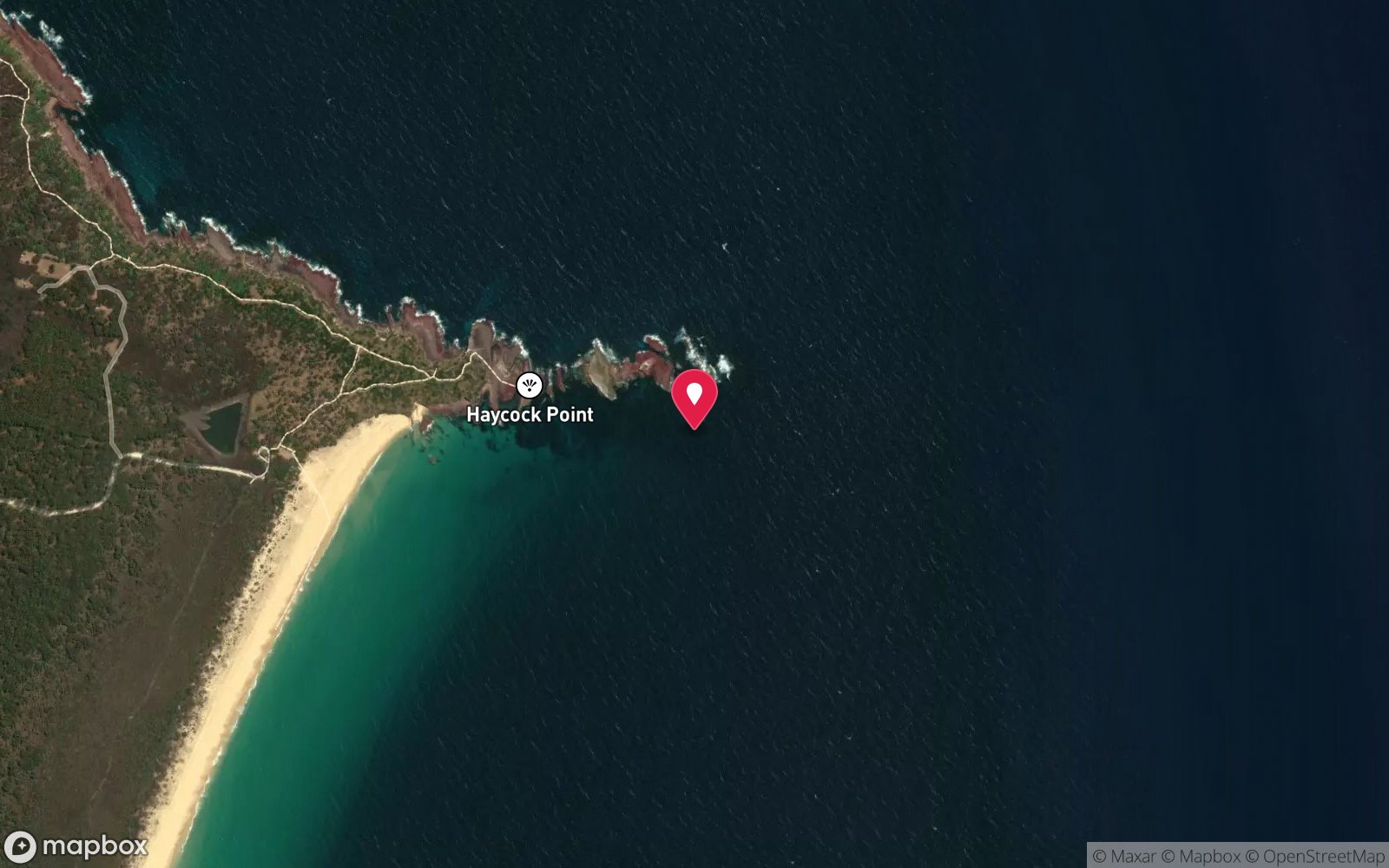
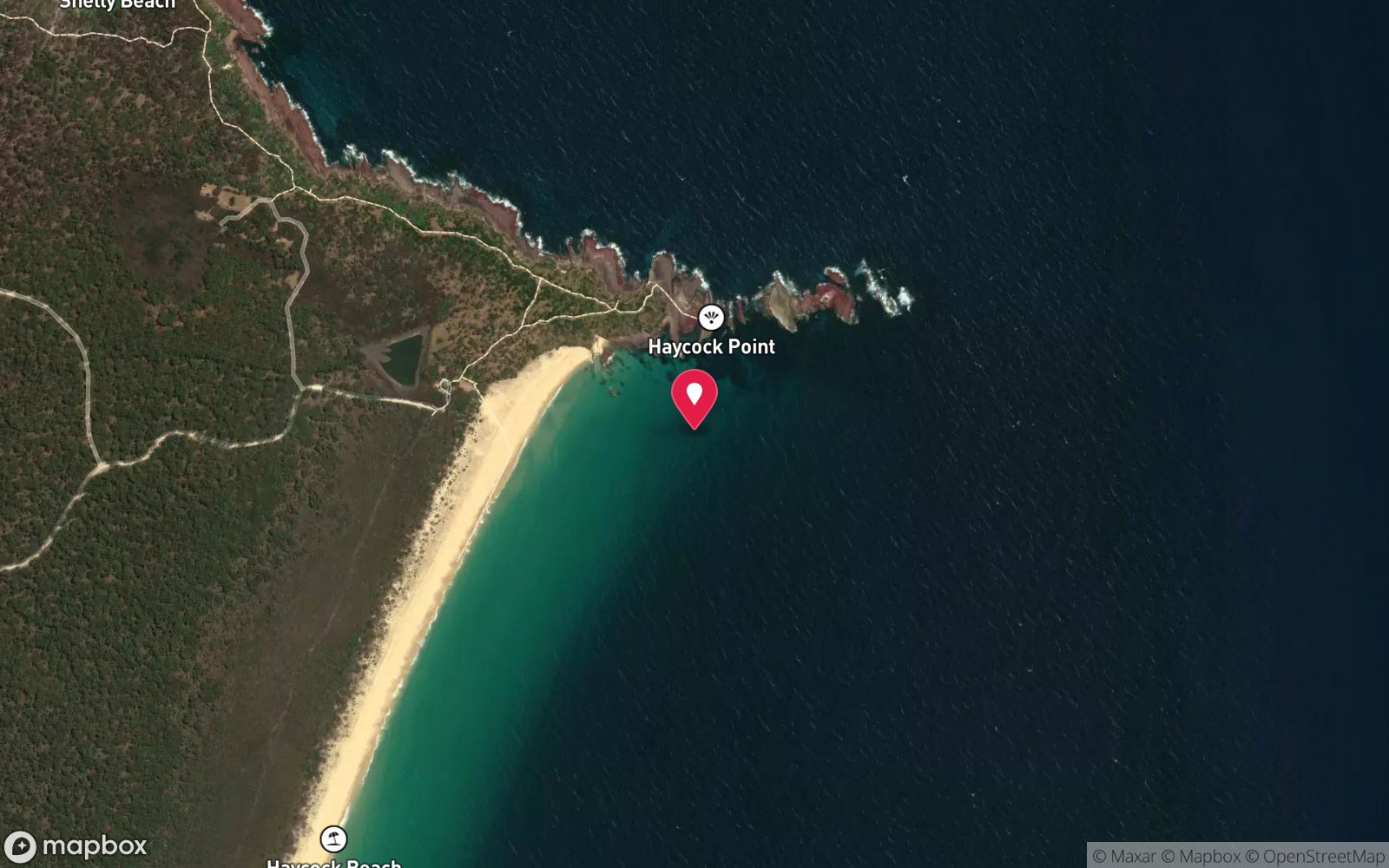
The wreck lies on the southern side of Haystack Rock, the outermost point of the southern headland of Merimbula Bay (Haycock Point in Beowa National Park). Dive boats usually anchor near the boilers at McFadyen's mark.
Entry: Giant stride from boat anchored near the boilers
Facilities: Merimbula boat ramps; Merimbula Divers Lodge for fills and hire.
Weather, swell & tides
The wreck is on an exposed headland and, being shallow, surges heavily in any significant swell; it needs calm conditions (Merimbula Divers Lodge). Southerly and easterly swell are the usual problems. Crossing the Merimbula bar also depends on swell and tide.
Visibility is often good but falls after heavy rain.
Best season: Year round in calm conditions
If it's blown out
Sheltered or shore sites within 25 km that often work when SS Empire Gladstone doesn't.
- Merimbula Wharf · 7 km · Max 16 m
- Pambula River Mouth · 3 km · Max 6 m
- Bar Beach (Merimbula) · 7 km · Max 10 m
- Short Point (Merimbula) · 8 km · Max 12 m
How the dive is usually run
From the boilers, swim west along the starboard side to the stern, through the raised rear accommodation area, out past the end of the prop shaft to the propeller lying about 10 m south-west and the double bollard. Look at the detached shaft-tunnel section 20 m north, then return east along the port side past the flywheel, broken engine and two boilers to the hill of bow wreckage at 6 m beside the Haystack Rock bommie.
Marine life
- Blue groper →
- blackfish (luderick and drummer)
- yellowtail
- silver sweep
- bream
- leatherjackets
- mussels
- sponges
- kelp
Linked species have their own page listing every site where they are recorded. All marine life →
Training required
Within the 18 m limit of an entry-level certification.
Courses that help here
- Drysuit Diver – Cold water; locals dive dry for much of the year.
Depth tiers: 0–10 m easy · to 18 m Open Water · 18–30 m Advanced (25 m+ is a deep dive) · 30–40 m Deep specialty · 40 m+ technical. All courses
Hazards & warnings
Surge in any swell; sharp, jagged steel. Swim-throughs in the accommodation area are unstable – look, don't push in. Bar crossing and boat traffic.
Technical notes
Protected historic shipwreck (over 75 years old since 2025) under the Underwater Cultural Heritage Act 2018 – no removal of artefacts.
Dive centres that go here
Merimbula Divers Lodge runs it regularly as an Open Water boat dive (max 12 m; 'perfect for Open Water divers with some boat experience'). Also dived from private boats from Merimbula and Pambula.
Operators recorded for SS Empire Gladstone
Other dive centres in Merimbula
Dive Eden
ProfiledEden · Merimbula · NSW
An Eden operator running boat, wreck, wharf and cave dives around Twofold Bay, with Try Scuba to Advanced courses and studio accommodation near Cocora Beach.
diveeden.com.au · 0410 026 990
Sapphire Coast Scuba
ProfiledEden · Merimbula · NSW
An Eden-based operation offering PADI Open Water training, guided dives for certified divers, equipment hire and air fills.
sapphirecoastscuba.com · 0488 519 316
Wilderness Sea n' Ski
ListedLiverpool · Sydney South & Botany Bay · NSW
A far south coast business providing equipment and dive services. Range and training availability require verification.
wilderness.net.au · (02) 9822 4112
Map
7 pinned sites. Pins marked approximate on their pages show the general area only; not for navigation.
Satellite views
SS Empire Gladstone: frequently asked questions
How deep is SS Empire Gladstone?
SS Empire Gladstone reaches a maximum depth of 12 m, with the shallowest part at about 4 m; most of the dive is spent around 9 m.
What certification do I need to dive SS Empire Gladstone?
Open Water is the recommended minimum. Rated beginner: sheltered, shallow and manageable for a newly certified diver on a normal day, though note surge on the entry or in the shallows and boat traffic overhead and cold water.
Can I shore dive SS Empire Gladstone?
No, it is reached by boat (about 20 minutes). A dive centre is required: boat access only.
When is the best time to dive SS Empire Gladstone?
Year round in calm conditions.
What marine life will I see at SS Empire Gladstone?
Regularly recorded: Blue groper, blackfish (luderick and drummer), yellowtail, silver sweep, bream, leatherjackets, mussels, sponges, kelp.
What wetsuit do I need at SS Empire Gladstone?
7 mm wetsuit with hood and gloves, or drysuit, for most of the year; 5 mm only in late summer.
How cold is the water at SS Empire Gladstone?
Typically 18–20 °C in summer and 12–14 °C in winter.
What are the main hazards at SS Empire Gladstone?
Surge in any swell; sharp, jagged steel. See the hazards section above for the full list.
Where is the nearest recompression chamber to SS Empire Gladstone?
Prince of Wales Hospital Hyperbaric Unit (Randwick, Sydney). In an emergency call 000, then DAN Asia-Pacific on 1800 088 200.
Diving in Merimbula
Merimbula has the Pinnacles, a boat dive with towering rock formations, sponges and schooling fish, and the Merimbula Wharf, a shallow, sheltered shore dive under the pier that is a local favourite for octopus, seahorses and night diving. The Empire Gladstone wreck lies just to the south near Haycock Point.
Getting there: Six hours from Sydney or a flight to Merimbula. A local dive shop runs boat dives; the wharf is a walk-in shore dive with parking.
Sources
- michaelmcfadyenscuba.info/viewpage.php?page_id=89
- marinelife.org.au/?page_id=1675
- merimbuladiverslodge.com.au/Dive%20sites%202008.pdf
Data confidence: High. Last updated September 2026. Know this site better? How to send a correction
Nearby dive sites
More wrecks in New South Wales
Explore more
This region
Similar dives
Marine life