Dive slate · divesites.com.au · printed 8 Nov 2026
MV Fairwind wreck
South West Rocks, New South Wales · near South West Rocks
| Depth | 72–87 m |
|---|---|
| Minimum level | Technical (decompression) |
| Difficulty | Expert/Technical |
| Access | Boat (multi-day/liveaboard) |
| Entry | Technical charter boat, shot-line descent to the wreck |
| Current | Strong |
| Visibility | 10-25 m |
| Water | summer 22-25 °C, winter 17-20 °C |
| Suit | 3-5 mm steamer summer; 5-7 mm full suit or semi-dry winter |
| Best season | Calmest offshore weather windows, typically autumn |
| Bottom time | 20 min |
| Position | not published |
| Permit | None required (outside marine park boundaries) |
| Nearest chamber | Prince of Wales Hospital (Randwick, Sydney) — John Hunter Hospital Newcastle has no recompression chamber |
| Emergency | 000 · DAN Asia-Pacific diving emergency 1800 088 200 |
MV Fairwind wreck
Also known as Fairwind, MSL251
A 1950 Army lighter lost with all hands in a cyclone, undiscovered until 2009 and now one of Australia's premier deep technical wreck dives, sitting largely intact at 87 m.
Near South West Rocks · South West Rocks, New South Wales
- Depth
- 72–87 m
- Minimum level
- Technical (decompression)
- Access
- Boat (multi-day/liveaboard)
- Boat ride
- —
- Water
- 22-25 °C
- Visibility
- 10-25 m
MV Fairwind wreck72–87 m · Technical (decompression)
Dive factsDepths, conditions, location & safety
Season
Off-peak nowBest months: March, April, May.
Calmest offshore weather windows, typically autumn
- Best months
- Now (November)
- Stinger suit Nov–May
Dive facts
- Depth
- 72–87 m
- Typical depth
- 80 m
- Certification
- Technical (decompression)
- Difficulty
- Expert/Technical
- Depth tier
- Technical (40 m +)
- Access
- Boat (multi-day/liveaboard)
- Dive centre needed
- Yes – boat access only
- Shore / independent
- No
- Current
- Strong
- Visibility
- 10-25 m
- Water temp (summer)
- 22-25 °C
- Water temp (winter)
- 17-20 °C
- Water
- Subtropical
- Bottom time
- 20 min
- Dive traffic
- Rarely dived (private boat/club only)
- Night dive
- No
- Snorkel friendly
- No
Exposure suit
3-5 mm steamer summer; 5-7 mm full suit or semi-dry winter
Location
Offshore South West Rocks · NSW Mid North Coast — South West Rocks
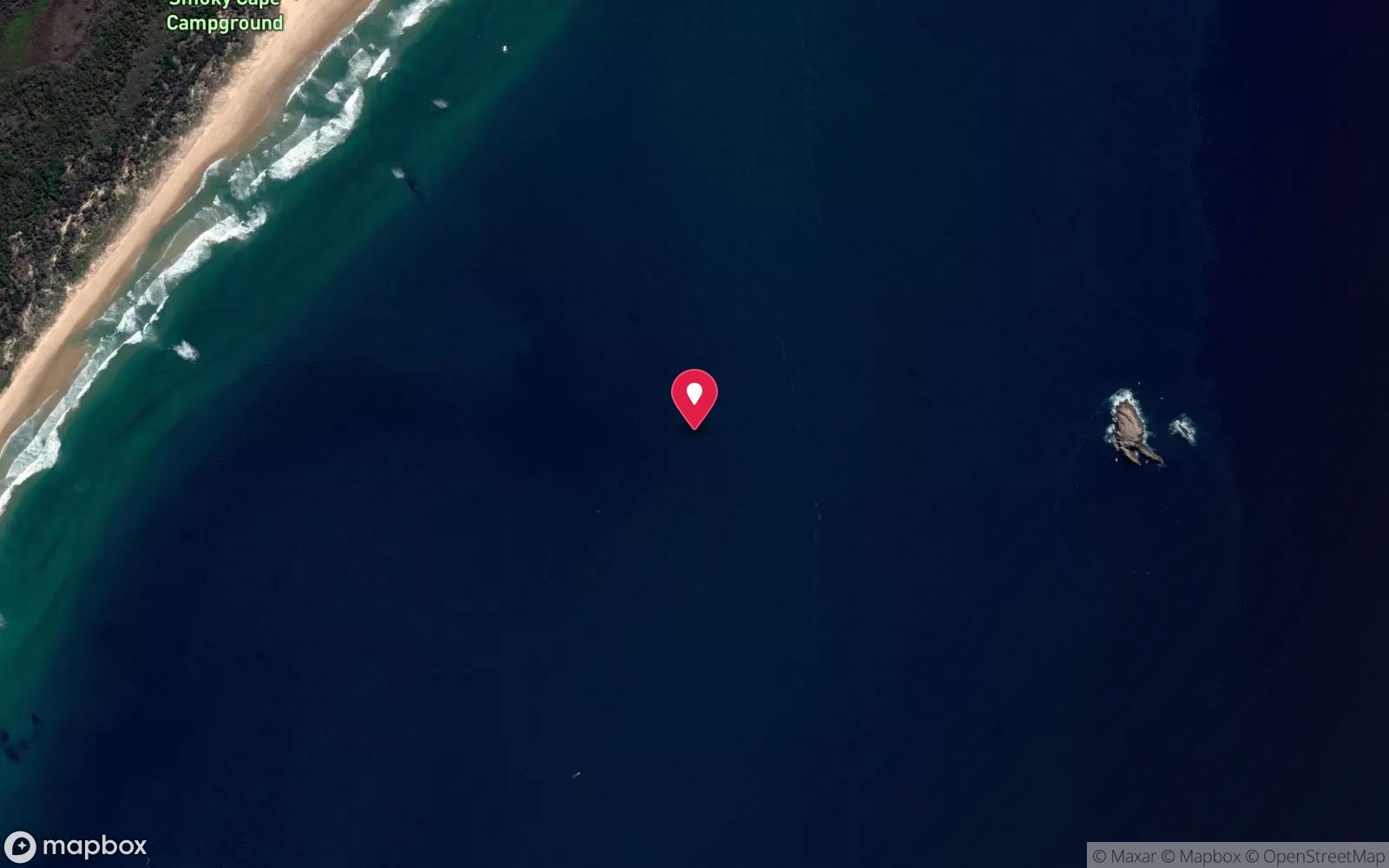
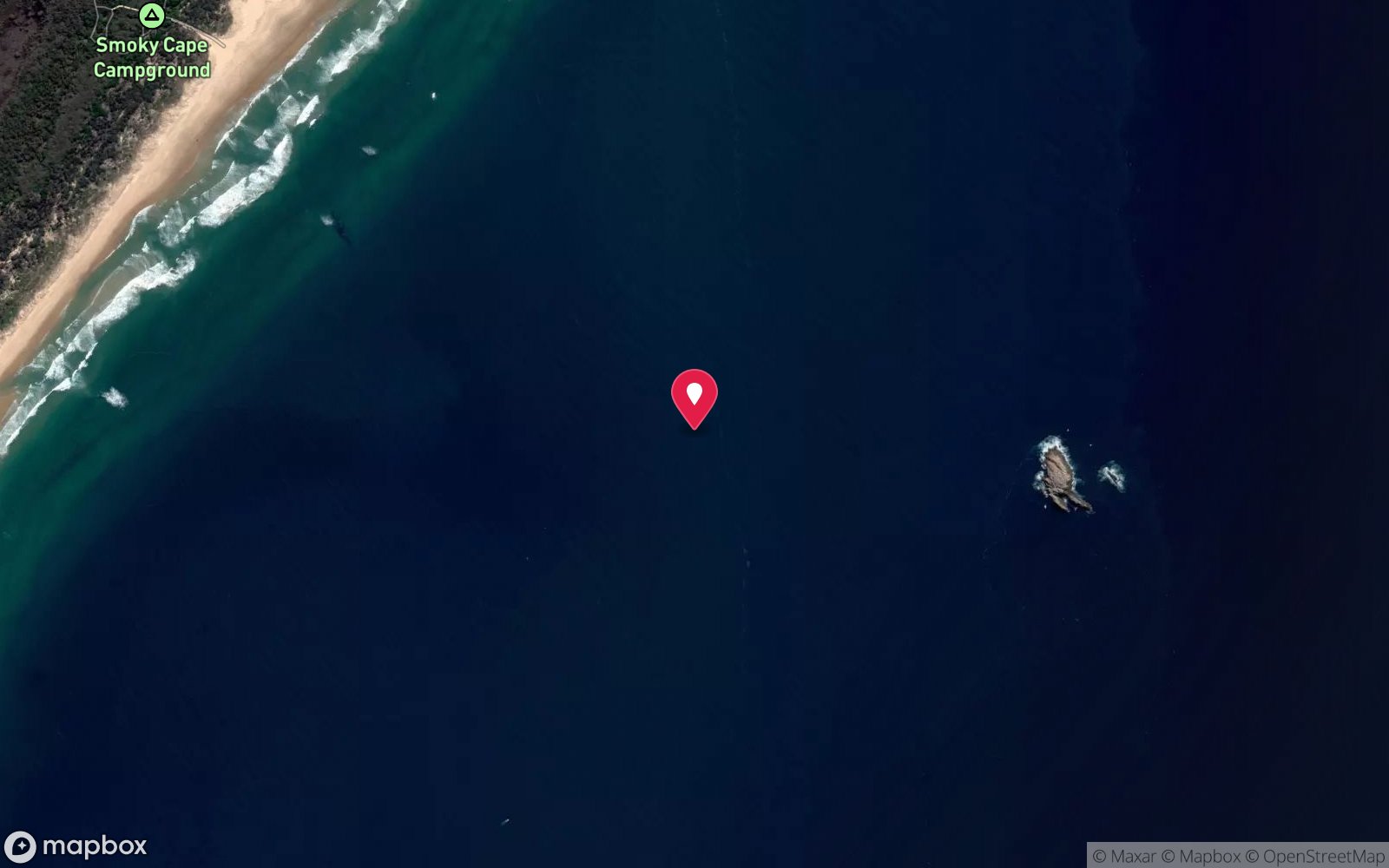
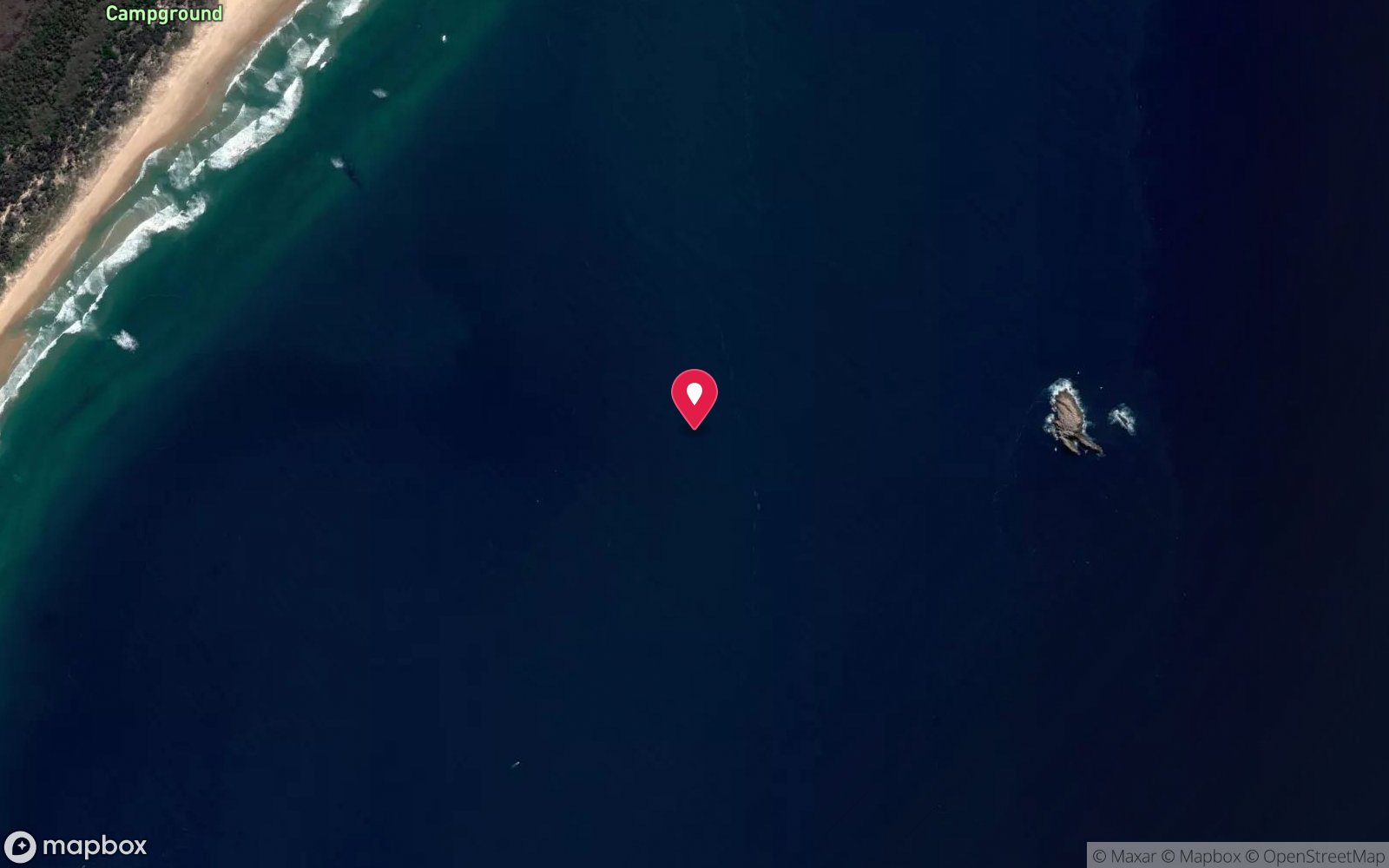
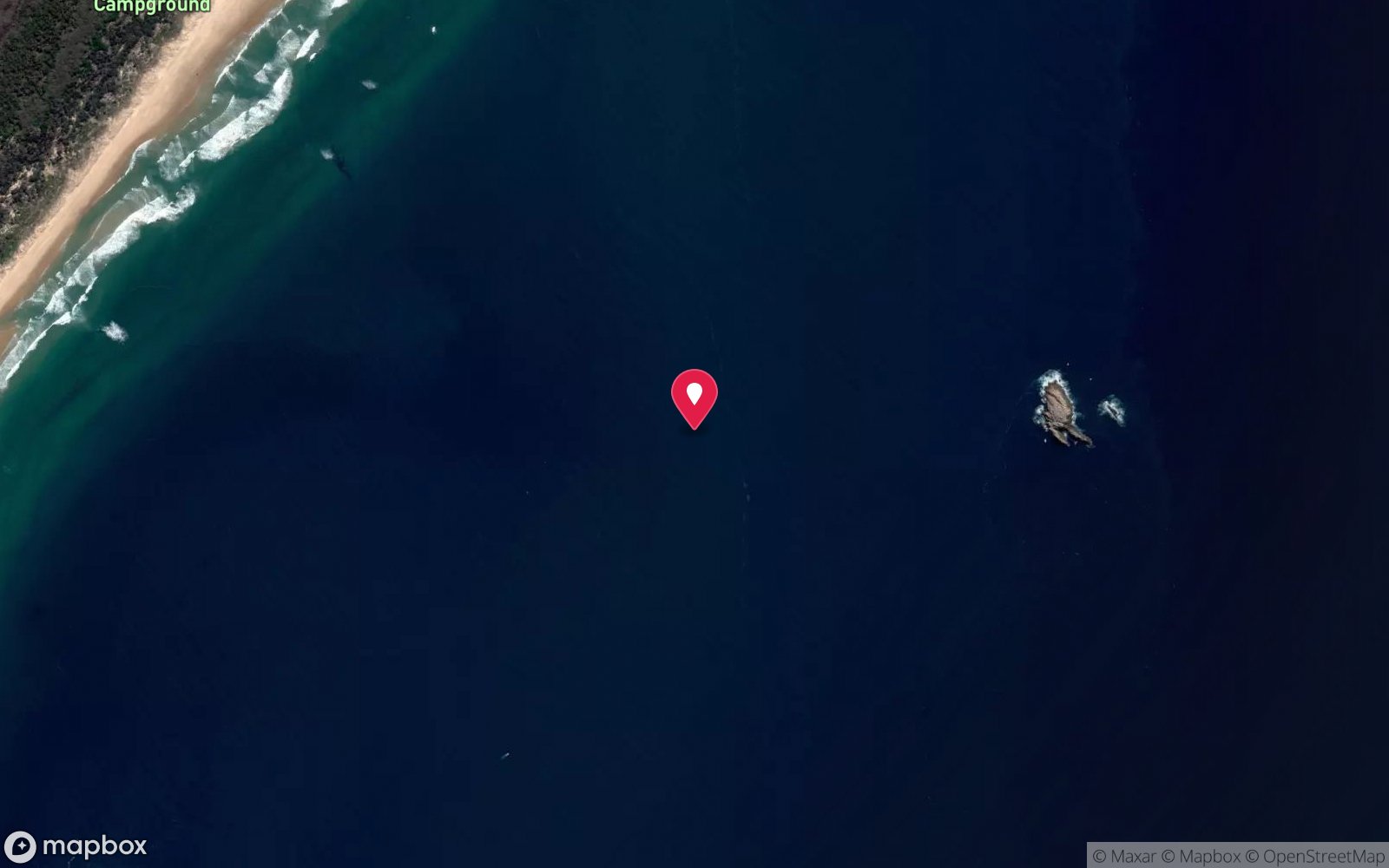
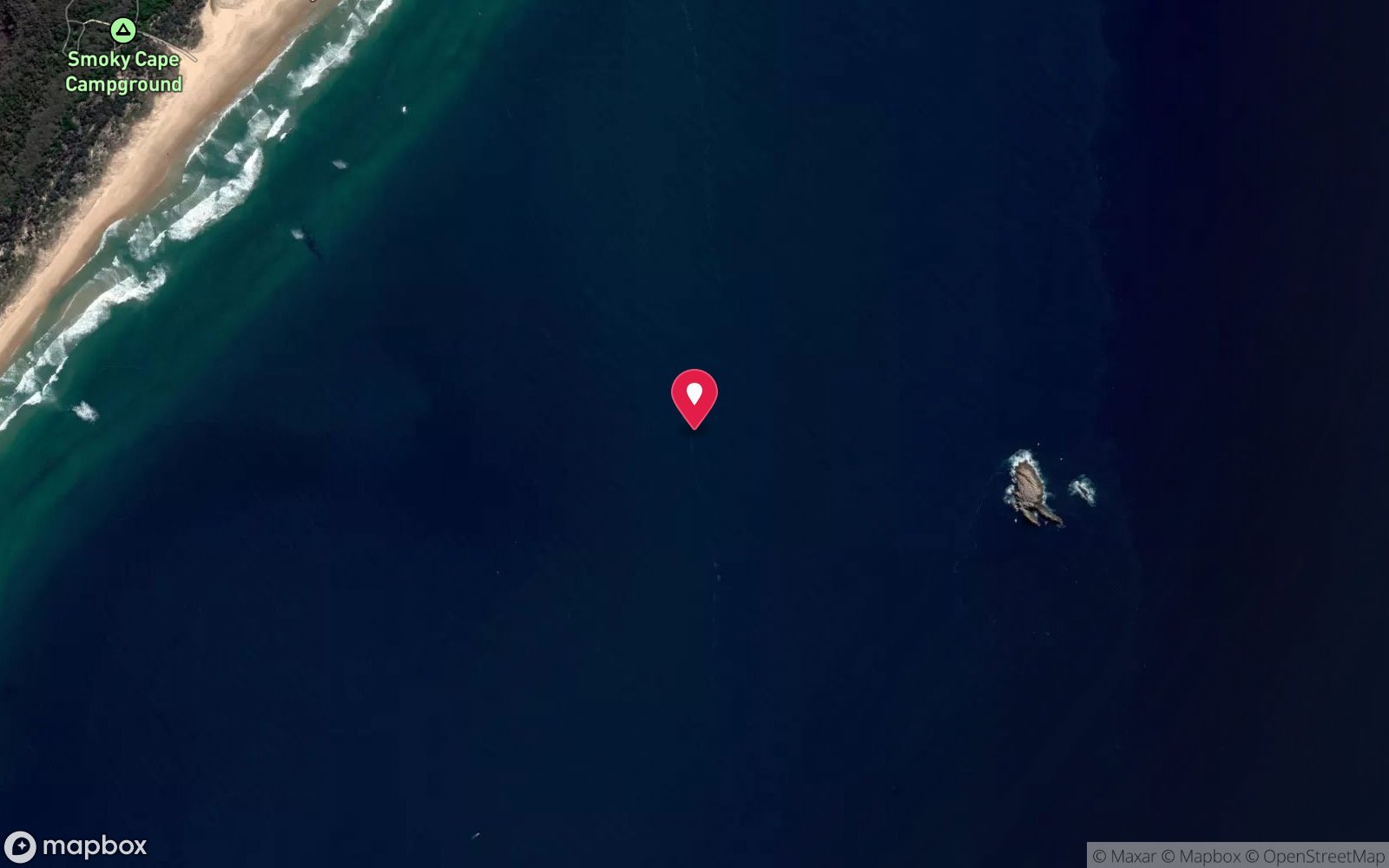
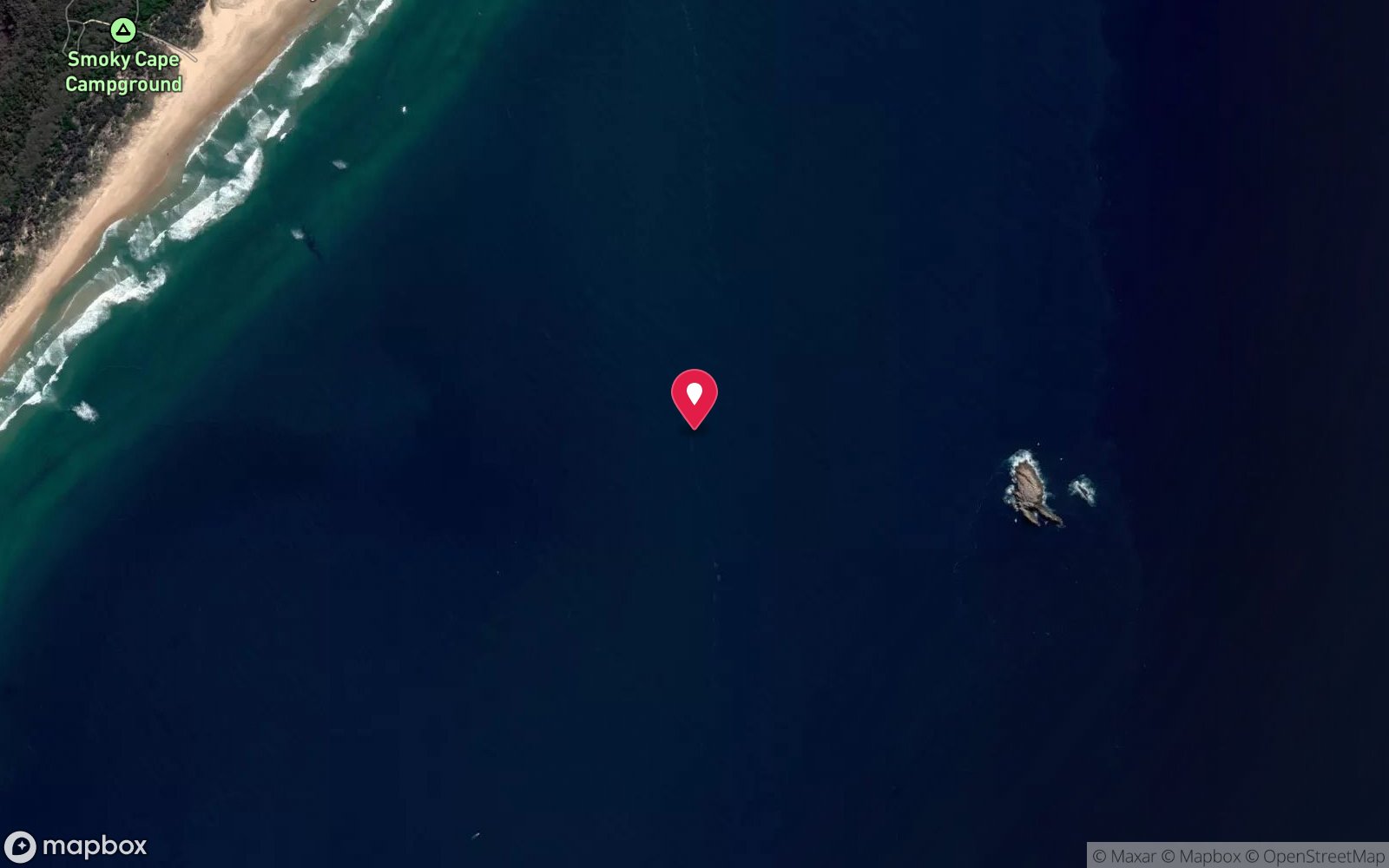
No published coordinates. The map above shows the general area, estimated from other documented sites near South West Rocks.
Primary source: en.wikipedia.orgMarine park & permits
None required (outside marine park boundaries)
Nearest recompression chamber
Prince of Wales Hospital (Randwick, Sydney) — John Hunter Hospital Newcastle has no recompression chamber
Diving emergency: call 000, then DAN AP 1800 088 200.
Trip planner
Build a trip around MV Fairwind wreck →
A day-by-day plan for South West Rocks with this site locked in.
This guide is a planning aid. Conditions change daily — confirm with a local dive centre and dive within your training. Data & safety notes.
Dive profile
How this site rates
Scores are computed from the recorded data, not opinions. How?
At a glance
MV Fairwind wreck is a wreck liveaboard-only site in South West Rocks, NSW, 72–87 m, suited to Technical (decompression) divers, strong current.
Rated expert/technical because of depth to 87 m, strong current, wreck penetration options that need training.
Why dive here
- A 1950 Army lighter lost with all hands in a cyclone, undiscovered until 2009 and now one of Australia's premier deep technical wreck dives, sitting largely intact at 87 m.
- Sunk in 1950; protected as underwater cultural heritage, so look but do not touch.
- Rarely dived: expect to have the site to yourself, and plan your own logistics.
- Visibility often reaches 10-25 m.
Conditions to avoid
- Outgoing tide or run-off after rain (poor visibility)
- Spring plankton blooms
About MV Fairwind wreck
The MV Fairwind is one of the more remarkable finds in Australian technical wreck diving: a 120-foot (37 m), 250-ton motor lighter built for the Australian Army in 1946, later loaned to the Department of External Affairs for fisheries survey work in Papua New Guinea. On 23 June 1950, while running from Port Moresby to Sydney, she was caught in a cyclone off the NSW mid-north coast; her final radio message reported she was seeking shelter behind North Solitary Island, short of fuel, and would try to make Coffs Harbour. She was never heard from again, and all 17 crew — including 12 Papuan crewmen — were lost.
The wreck went unfound for nearly sixty years until a group of amateur technical divers located her off South West Rocks in August 2009, sitting upright on the bottom in 87 metres with her forward and aft king posts still projecting 15 metres off the seabed. The wreck is described as mostly intact, an unusual state for a vessel this old at this depth, with a recognisable bow, a massive rudder and twin propellers at the stern and a collapsed superstructure and bridge area amidships that has spilled artefacts including cooking equipment and old batteries onto the surrounding wreckage. A large open section in the central hold leads to a passageway that has been penetrated by experienced technical divers, though it is tight, silty and considered genuinely dangerous rather than a casual swim-through.
The site carries obvious historical weight as a war-era loss with a confirmed death toll, and its rediscovery is a significant piece of local diving history for South West Rocks. Practically, it is one of the most demanding wreck dives on the NSW coast: unpredictable current of three to four knots, depths well into decompression territory, entangling fishing traces on the structure, and the need for meticulous planning make it suitable only for well-equipped technical divers diving with an experienced local operator who knows the wreck's exact position and current behaviour.
Wreck details
Motor lighter (Army landing craft type), 120 ft / 37 m, 250 tons · Sunk 1950 · Protected historic shipwreck
Era: post-war. Oldest wrecks · Wartime wrecks · Scuttled warships
Other wrecks of the same era
- SS Empire Gladstone · Max 12 m · Merimbula
- SS Bombo · Max 32 m · Wollongong & Kiama
- SS Kiama wreck · Max 47 m · Central Coast
- SS Paterson wreck (Cabbage Tree Bay area) · Max 10 m · Central Coast
- LVT-4A amphibious tank (Stockton Beach) · Max 33 m · Newcastle & Lake Macquarie
- Olive Cam · Max 9 m · Eden & Green Cape
Getting there & entry
A former Australian Army motor lighter lost with all 17 crew in a cyclone in June 1950 while running from Port Moresby to Sydney; found by amateur divers off South West Rocks in August 2009, sitting upright and largely intact in 87 m.
Reached only by dedicated technical charter from South West Rocks (Fish Rock Dive Centre runs occasional trips as 'Wreck MV Fairwind' for suitably qualified divers). Given the 87 m depth and offshore position, trips are infrequent, weather-dependent and require advance booking with a trimix-capable operator; there is no walk-up option. Divers travel out from the South West Rocks boat ramp on a purpose-fitted technical vessel carrying support divers, spare gas and a shot line accurately placed on the wreck via GPS.
Entry: Technical charter boat, shot-line descent to the wreck
Weather, swell & tides
A deep offshore wreck with no shelter — trips run only in a narrow window of flat seas and light wind, since the surface support and prolonged decompression hang are unworkable in any swell. Current at depth can run 3-4 knots and is unpredictable, a major factor in dive planning. Visibility is generally moderate to good but affected by regional runoff and plankton blooms.
Given the depth this is essentially a cold, dark, current-exposed technical dive regardless of season.
Best season: Calmest offshore weather windows, typically autumn
How the dive is usually run
Descend the shot line directly onto the wreck's highest structure, orient off the intact bow and massive rudder/twin props at the stern, and use the collapsed midships/bridge area as the main working zone given the tight, silty conditions inside. Plan a short bottom time (15-25 minutes) against a long staged decompression using multiple gases, with a drifting or fixed deco station and dedicated surface support for the hang.
Marine life
- Game fish (kingfish, cobia)
- coral encrusting the hull
- anemones
- schooling reef fish over the structure
Linked species have their own page listing every site where they are recorded. All marine life →
Training required
Beyond recreational limits: decompression, mixed gas or full cave/wreck training is required.
Courses that help here
- Enriched Air Nitrox – Longer no-decompression time at 25 m and deeper.
- Wreck Diver – The wreck has penetration options.
- Drift Diver – Current is a feature of the dive.
- Peak Performance Buoyancy – Silt and low visibility punish poor trim.
Depth tiers: 0–10 m easy · to 18 m Open Water · 18–30 m Advanced (25 m+ is a deep dive) · 30–40 m Deep specialty · 40 m+ technical. All courses
Hazards & warnings
Extreme depth (87 m) — decompression diving only; strong, unpredictable 3-4 knot current; Kevlar fishing trace entanglement risk; tight, silty penetration in the collapsed midships section; requires dedicated surface support.
Technical notes
Trimix required; typical plans run 15-25 minutes bottom time against long staged decompression on 50% and 100% O2. Twin cylinders or CCR with bailout, reel/line for any penetration, DSMB mandatory, drifting deco station standard. Loss of life is a real risk here — this is not a dive for casual technical certification alone.
Dive centres that go here
Fish Rock Dive Centre (South West Rocks) offers occasional guided technical charters to the wreck for qualified trimix/technical divers; otherwise private technical dive clubs only. Not a recreational-schedule site.
Operators recorded for MV Fairwind wreck
Other dive centres in South West Rocks
General area
No position has been published for MV Fairwind wreck. The circle shows where it is likely to be, worked out from other documented sites near South West Rocks. Ask a local operator for the exact site.
Dashed circle: general area (about 7 km), from other documented sites near South West Rocks. 6 pinned sites. Pins marked approximate on their pages show the general area only; not for navigation.
MV Fairwind wreck: frequently asked questions
How deep is MV Fairwind wreck?
MV Fairwind wreck reaches a maximum depth of 87 m, with the shallowest part at about 72 m; most of the dive is spent around 80 m.
What certification do I need to dive MV Fairwind wreck?
Technical (decompression) is the recommended minimum. Rated expert/technical because of depth to 87 m, strong current, wreck penetration options that need training.
Can I shore dive MV Fairwind wreck?
No, it is reached by boat. A dive centre is required: boat access only.
When is the best time to dive MV Fairwind wreck?
Calmest offshore weather windows, typically autumn.
What marine life will I see at MV Fairwind wreck?
Regularly recorded: Game fish (kingfish, cobia), coral encrusting the hull, anemones, schooling reef fish over the structure.
What wetsuit do I need at MV Fairwind wreck?
3-5 mm steamer summer; 5-7 mm full suit or semi-dry winter.
How cold is the water at MV Fairwind wreck?
Typically 22-25 °C in summer and 17-20 °C in winter.
What are the main hazards at MV Fairwind wreck?
Extreme depth (87 m) — decompression diving only; strong, unpredictable 3-4 knot current; Kevlar fishing trace entanglement risk; tight, silty penetration in the collapsed midships section; requires dedicated surface support. See the hazards section above for the full list.
Where is the nearest recompression chamber to MV Fairwind wreck?
Prince of Wales Hospital (Randwick, Sydney) — John Hunter Hospital Newcastle has no recompression chamber. In an emergency call 000, then DAN Asia-Pacific on 1800 088 200.
Diving in South West Rocks
Fish Rock is on every serious Australian diver's list. A 125 m cave runs right through the island, opening in 24 m on one side and 12 m on the other, and both entrances are grey nurse shark gutters; outside are walls, pinnacles and turtles. Black Rock and Green Island are the other regulars, and the deep reefs off Smoky Cape reach 87 m for technical divers.
Getting there: Five hours north of Sydney. Two dive operators in South West Rocks run Fish Rock most days from the Back Creek boat ramp; it is a 15-minute ride in open water.
Sources
- en.wikipedia.org/wiki/MV_Fairwind
- fishrock.com.au/dive-sites
- fishrock.com.au/products/wreck-mv-fairwind
Data confidence: Medium · Being verified: Exact GPS position of wreck not published in open sources; depth figures per Wikipedia (87 m max, king posts to 72 m) treated as most reliable published figures.. Last updated September 2026. Know this site better? How to send a correction
Nearby dive sites
More wrecks in New South Wales
Explore more
This region