Dive slate · divesites.com.au · printed 7 Nov 2026
HMAS Perth Wreck
Albany & Great Southern, Western Australia · near Albany
| Depth | 5–35 m |
|---|---|
| Minimum level | Deep/Advanced + experience |
| Difficulty | Intermediate |
| Access | Boat (day trip) |
| Entry | Giant stride or back roll from charter/private boat |
| Current | None |
| Visibility | 5-15 m |
| Water | summer 19-21 °C, winter 14-16 °C |
| Suit | 7 mm wetsuit with hood and gloves; drysuit popular in winter and for repeat dives |
| Best season | Year-round thanks to its sheltered position; February-May for the calmest seas and best visibility; June-October brings humpback and southern right whales into the sound |
| Bottom time | 25 min |
| Position | -35.07990, 117.96790 (GPS) |
| Permit | HMAS Perth dive permit required for divers on private boats (small fee, from South Coast Diving Supplies/City of Albany); covered by charter operators. Not within a marine park. |
| Nearest chamber | Fiona Stanley Hospital Hyperbaric Medicine Unit (Murdoch, Perth) – about 420 km by road; aeromedical evacuation via RFDS from Albany Regional Hospital |
| Emergency | 000 · DAN Asia-Pacific diving emergency 1800 088 200 |
HMAS Perth Wreck
Also known as Ex-HMAS Perth (D 38), HMAS Perth II, Former HMAS Perth Dive Wreck
A 133 m Vietnam-veteran destroyer sitting upright in 35 m with its bridge, gun mount and engine room intact, plus an interpretive dive trail around the hull.
Near Albany · Albany & Great Southern, Western Australia
- Depth
- 5–35 m
- Minimum level
- Deep/Advanced + experience
- Access
- Boat (day trip)
- Boat ride
- ~20 min
- Water
- 19-21 °C
- Visibility
- 5-15 m
HMAS Perth Wreck5–35 m · Deep/Advanced + experience
Dive factsDepths, conditions, location & safety
Season
Off-peak nowBest months: February, March, April, May, June, July, August, September, October.
Year-round thanks to its sheltered position; February-May for the calmest seas and best visibility; June-October brings humpback and southern right whales into the sound
- Best months
- Now (November)
Dive facts
- Depth
- 5–35 m
- Typical depth
- 25 m
- Certification
- Deep/Advanced + experience
- Difficulty
- Intermediate
- Depth tier
- Deep / Advanced + experience (30–40 m)
- Access
- Boat (day trip)
- Offshore
- 3 km
- Dive centre needed
- Recommended
- Shore / independent
- No
- Boat ride
- ~20 min
- Current
- None
- Visibility
- 5-15 m
- Water temp (summer)
- 19-21 °C
- Water temp (winter)
- 14-16 °C
- Water
- Temperate
- Bottom time
- 25 min
- Dive traffic
- Popular (weekly charters)
- Night dive
- Possible
- Snorkel friendly
- Partial
Exposure suit
7 mm wetsuit with hood and gloves; drysuit popular in winter and for repeat dives
Location
King George Sound – Seal Island · Great Southern – Albany
-35.07990, 117.96790
Published GPS position.
Open in Google MapsDive site map (external) →Primary source: divingwawrecks.comMarine park & permits
HMAS Perth dive permit required for divers on private boats (small fee, from South Coast Diving Supplies/City of Albany); covered by charter operators. Not within a marine park.
Nearest recompression chamber
Fiona Stanley Hospital Hyperbaric Medicine Unit (Murdoch, Perth) – about 420 km by road; aeromedical evacuation via RFDS from Albany Regional Hospital
Diving emergency: call 000, then DAN AP 1800 088 200.
Trip planner
Build a trip around HMAS Perth Wreck →
A day-by-day plan for Albany & Great Southern with this site locked in.
This guide is a planning aid. Conditions change daily — confirm with a local dive centre and dive within your training. Data & safety notes.
Dive profile
How this site rates
Scores are computed from the recorded data, not opinions. How?
At a glance
HMAS Perth Wreck is a wreck boat dive in Albany & Great Southern, WA, 5–35 m, suited to Deep/Advanced + experience divers, about 20 minutes by boat.
Rated intermediate because of depth to 35 m, boat traffic overhead, wreck penetration options that need training, cold water.
Why dive here
- A 133 m Vietnam-veteran destroyer sitting upright in 35 m with its bridge, gun mount and engine room intact, plus an interpretive dive trail around the hull.
- Sunk in 2001.
Conditions to avoid
- Strong southerly or south-east swell and wind
- Afternoon north-easterlies
- Outgoing tide or run-off after rain (poor visibility)
About HMAS Perth Wreck
The former HMAS Perth is Western Australia's largest purpose-scuttled dive wreck and, for many temperate-water divers, the best reason to drive to Albany. She was a Charles F. Adams-class guided-missile destroyer built by Defoe Shipbuilding in Bay City, Michigan, laid down in 1962 and commissioned into the Royal Australian Navy in July 1965. Perth made three deployments to the Vietnam War between 1967 and 1971, firing more than 30,000 five-inch rounds on the gunline and coming under fire from coastal batteries several times; some of that shell damage can still be picked out on the hull. After 34 years of service she was decommissioned in October 1999, gifted to the Western Australian government and scuttled on 24 November 2001 about 500 m south-west of Seal Island in King George Sound.
The ship sits upright on a sand bottom at about 35 m. She is 133 m long and was sunk with far more of her fittings left in place than the earlier HMAS Swan at Dunsborough: the bridge and captain's chair, radar and mast, the forward gun mount, heads and galley areas remain, and the engine room was prepared with full access. The mast was originally left breaking the surface. An interpretive dive trail with plaques leads around the hull, and the local dive shop sells slates showing suggested routes. Most of the superstructure lies between about 10 and 20 m, the main deck around 25 m and the sand at 34-35 m, so a single dive rarely covers the whole ship.
Two decades underwater have produced dense sponge, ascidian, soft-coral and mussel growth over the hull, and the wreck holds schools of yellowtail scad and old wives along with big yellowtail kingfish, samson fish and jewfish, cuttlefish, wobbegong and other carpet sharks. Visibility is modest compared with the outer islands, but on a clear day the scale of the ship is striking. It suits Advanced Open Water divers for the exterior; penetration of the interior, especially the engine room, is for wreck-trained divers only.
The ship and the sinking
HMAS Perth (D 38) was the first of the Charles F. Adams-class destroyers, commissioned in July 1965, and the RAN's first guided-missile ship. She did three tours off Vietnam, was hit by shore battery fire in 1967, and served until October 1999.
Albany won the bid to have her as an artificial reef in King George Sound. She was prepared with an interpretive trail through the bridge, gun mount and engine room, and scuttled on 24 November 2001 off Seal Island, settling upright in 35 m.
What is there today
The cold Southern Ocean water keeps her exceptionally clean and clear, often 20 m-plus visibility, and the growth is dominated by bright sponges and ascidians rather than the coral of the northern wrecks. Albany operators run her from spring to autumn between the fronts; the bridge is at about 22 m, so she is an Advanced dive.
Wrecks older than 75 years, and several younger ones, are protected under the Underwater Cultural Heritage Act 2018: look, photograph, take nothing. Australia's oldest wreck dives →
Wreck details
Charles F. Adams-class guided-missile destroyer, 133 m (134 m overall), 4,850 t full load; built Defoe Shipbuilding, Michigan, 1963-65 · Sunk 2001
Era: modern, mostly scuttled as artificial reefs. Oldest wrecks · Wartime wrecks · Scuttled warships
Other wrecks of the same era
- Lena Wreck · Max 18 m · Geographe Bay & Busselton
- South Tomi Wreck · Max 25 m · Geraldton & Abrolhos Islands
- HMAS Swan Wreck · Max 31 m · Geographe Bay & Busselton
- Two Fold Bay Wreck · Max 12 m · Perth
- Saxon Ranger Wreck · Max 20 m · Perth
- Gemini Wreck · Max 30 m · Perth
Getting there & entry
Purpose-scuttled 133 m guided-missile destroyer lying upright on sand about 500 m south-west of Seal Island, in the south-western part of King George Sound off Albany.
Albany is 418 km (about 4.5 hours) south-east of Perth via Albany Highway. Charter boats and private boats launch either from the Emu Point boat ramp (Emu Point Drive, 7 km north-east of the CBD, with a large trailer car park, toilets and a fish-cleaning station) or from the town ramp beside the Albany Waterfront marina in Princess Royal Harbour, which exits into King George Sound through the harbour entrance past Possession Point. The Perth is about 8 km (15-20 minutes) from the Princess Royal Harbour ramp and slightly further from Emu Point.
The site has public mooring buoys attached to the wreck; divers on private boats must tie to a mooring rather than anchor into the hull. Most visiting divers go with South Coast Diving Supplies, which departs from the town waterfront. A permit is required for private-boat diving and is bought cheaply over the counter at the dive shop.
Entry: Giant stride or back roll from charter/private boat
Facilities: Boat departures from the Albany Waterfront marina or Emu Point ramp (toilets, parking, fish-cleaning tables). Air, nitrox and hire gear from South Coast Diving Supplies in Albany.
Weather, swell & tides
King George Sound is sheltered from the Southern Ocean by Flinders Peninsula, Bald Head and Breaksea and Michaelmas Islands, which is why Albany can offer diving on days when the open coast is wild. The Perth is well protected from southerly and south-westerly ocean swell and is one of the few sites around Albany that is diveable in almost any season. Strong easterly and north-easterly winds put a chop across the sound that makes the moorings uncomfortable, and strong westerlies make the run out from the harbour wet.
There is generally no current on the wreck. Visibility is the main variable: it is often under 10 m and drops after winter rain when run-off from Oyster Harbour and Princess Royal Harbour spreads into the sound; the clearest water is usually in late summer and autumn after a run of settled weather.
Best season: Year-round thanks to its sheltered position; February-May for the calmest seas and best visibility; June-October brings humpback and southern right whales into the sound
If it's blown out
Sheltered or shore sites within 25 km that often work when HMAS Perth Wreck doesn't.
- Frenchman Bay & Whaling Cove · 2 km · Max 8 m
- Salmon Holes (Torndirrup) · 3 km · Max 8 m
- Mistaken Island · 4 km · Max 12 m
- Middleton Beach & Ellen Cove · 7 km · Max 5 m
How the dive is usually run
Descend a bow or stern mooring line to the upper superstructure at 10-15 m and let the first dive be an orientation along the length of the ship on the main deck (about 25-28 m), visiting the forward 5-inch gun mount, the bridge and the missile launcher area before returning along the other side. Keep an eye on no-decompression limits because the deck is deep enough to eat bottom time quickly. Finish by working up the mast and superstructure, and do the safety stop on the mooring line.
Marine life
- Yellowtail kingfish
- samson fish
- WA jewfish (mulloway)
- cuttlefish →
- wobbegong and other carpet sharks →
- schools of yellowtail scad
- old wives
- bullseyes
- blue groper →
- leatherjackets
- sponges
- ascidians
- mussels
- oysters
- scallops
- occasional sea lions; humpback and southern right whales in the sound in winter-spring →
Linked species have their own page listing every site where they are recorded. All marine life →
Training required
The recreational limit. Operators expect a Deep Diver specialty or Advanced plus a log of similar dives, and most recommend nitrox.
Operators often quote Advanced Open Water, but the site reaches 35 m, which is beyond that level's depth limit; Deep/Advanced + experience is the appropriate minimum for the full dive. This is a deep dive: plan gas, bottom time and a safety stop accordingly, and consider nitrox.
Operators' own listing: Advanced Open Water.
Courses that help here
- Enriched Air Nitrox – Longer no-decompression time at 25 m and deeper.
- Deep Diver – The site reaches 35 m.
- Wreck Diver – The wreck has penetration options.
- Drysuit Diver – Cold water; locals dive dry for much of the year.
Depth tiers: 0–10 m easy · to 18 m Open Water · 18–30 m Advanced (25 m+ is a deep dive) · 30–40 m Deep specialty · 40 m+ technical. All courses
Hazards & warnings
Depth – main deck around 25 m and sand at 35 m, so no-decompression limits come quickly; penetration hazards including silt-outs, entanglement in cables and fittings, and loss of direction inside the hull; often poor visibility; cold water; boat traffic in the sound; permit required for private boats; must use the moorings.
Technical notes
Nitrox (EAN28-32) extends bottom time usefully on the deck. Interior penetration, particularly the engine room, should only be done with wreck training, a guideline and redundant light; silt disturbs quickly. The wreck was prepared for divers (hatches removed, hazardous material stripped) but has been underwater since 2001 and fittings are deteriorating.
Dive centres that go here
South Coast Diving Supplies (Albany) – the town's dive shop; runs scheduled boat dives in King George Sound most weekends and on demand in summer/autumn, and issues HMAS Perth permits; Perth Scuba (Perth) – runs scheduled Albany dive weekends that include the Perth, Cheynes III and Breaksea sites; Perth-based clubs run occasional trips.
Operators recorded for HMAS Perth Wreck
Perth Scuba
ProfiledCanning Vale · Perth · WA
One of the most fully documented operations in Western Australia, covering recreational, professional, technical and freediving training alongside substantial equipment facilities.
perthscuba.com · (08) 9455 4448
Southcoast Diving Supplies
ListedAlbany · Albany & Great Southern · WA
An Albany business providing equipment and dive services for the southern WA coast, including HMAS Perth access support.
divealbany.com.au · (08) 9841 7176
Other dive centres in Albany & Great Southern
Bremer Bay Dive
Named by sitesBremer Bay · Albany & Great Southern · WA
Website live but last updated 2018 (1 Wellstead Rd, PADI since 1994); last TripAdvisor review March 2022 with no closure notice; Instagram as Bremer Bay Dive and Sports.
bremerbaydive.com · 0427 374 440
Geographe Maritime Charters
Named by sitesBusselton · Albany & Great Southern · WA
Site now advertises whale watching and private charters from Busselton/Dunsborough with no diving; last review 2019.
geographemaritime.com.au · 0439 626 383
Naturaliste Charters
Named by sitesDunsborough · Albany & Great Southern · WA
Whale-watching/eco charter (orca tours from Bremer Bay, whale tours from Augusta), not a dive shop.
naturalistecharters.com.au · (08) 9750 5500
Map
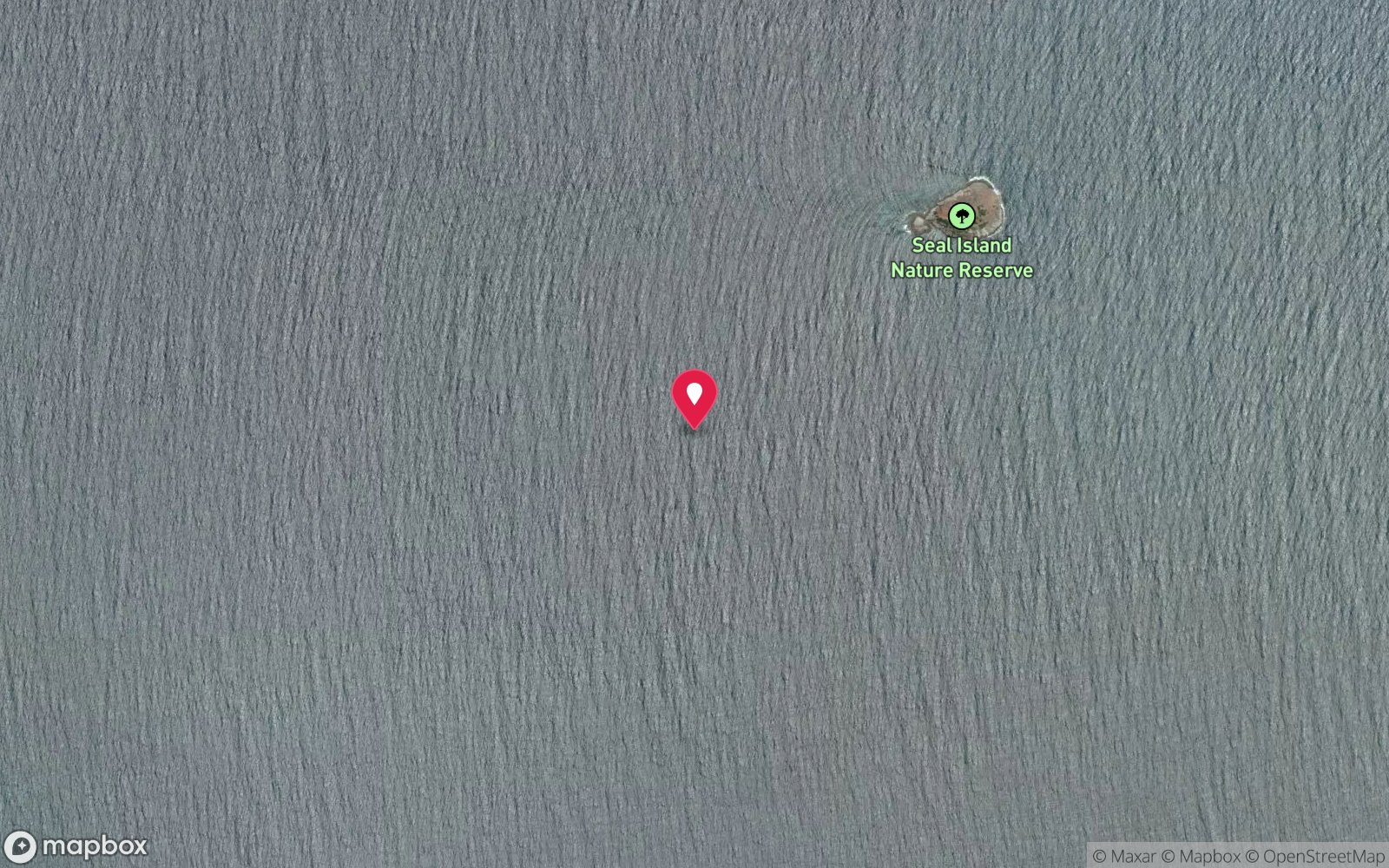
7 pinned sites. Pins marked approximate on their pages show the general area only; not for navigation.
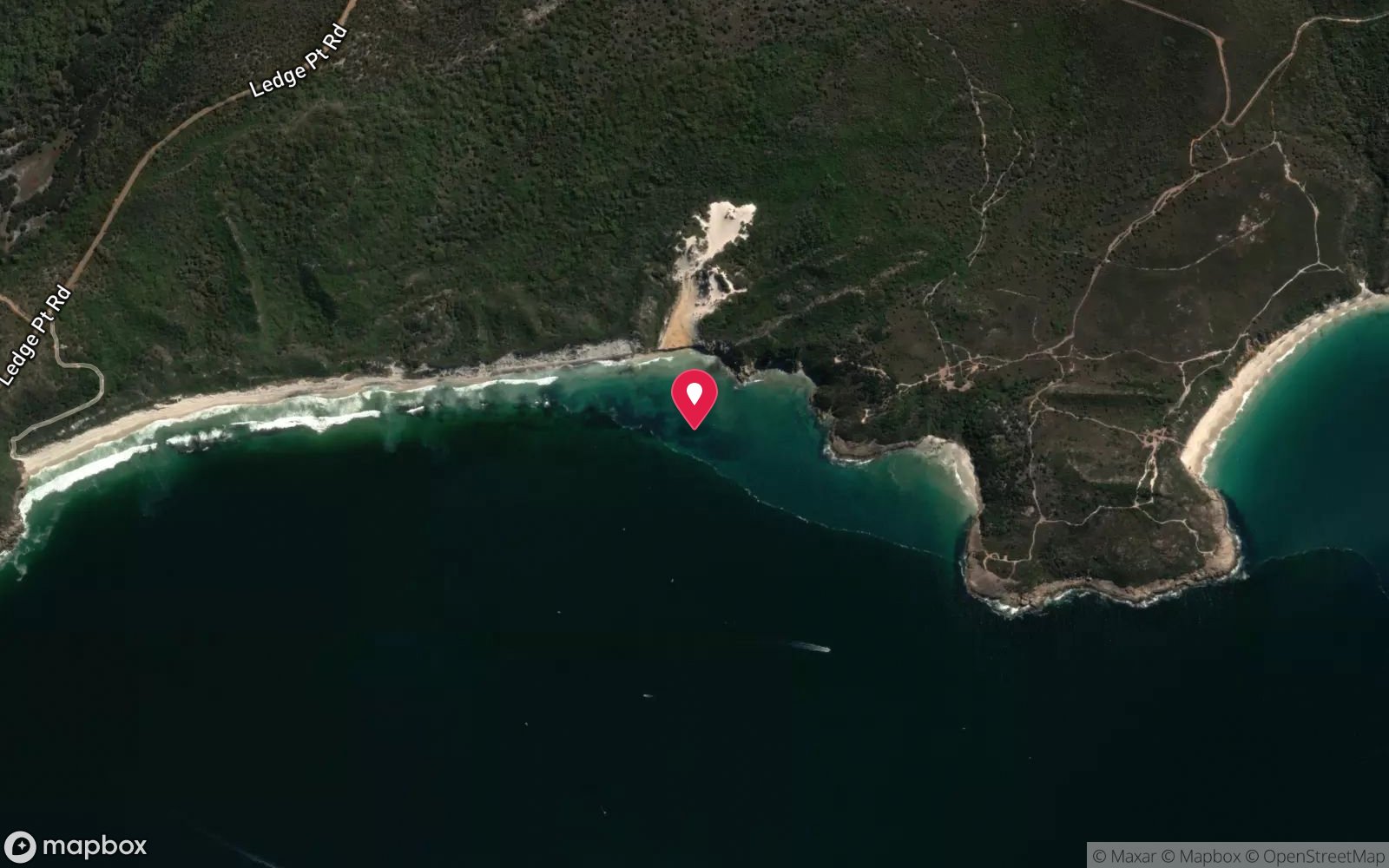
Satellite views
HMAS Perth Wreck: frequently asked questions
How deep is HMAS Perth Wreck?
HMAS Perth Wreck reaches a maximum depth of 35 m, with the shallowest part at about 5 m; most of the dive is spent around 25 m.
What certification do I need to dive HMAS Perth Wreck?
Deep/Advanced + experience is the recommended minimum. Operators often quote Advanced Open Water, but the site reaches 35 m, which is beyond that level's depth limit; Deep/Advanced + experience is the appropriate minimum for the full dive. This is a deep dive: plan gas, bottom time and a safety stop accordingly, and consider nitrox. Rated intermediate because of depth to 35 m, boat traffic overhead, wreck penetration options that need training, cold water.
Can I shore dive HMAS Perth Wreck?
No, it is reached by boat (about 20 minutes).
When is the best time to dive HMAS Perth Wreck?
Year-round thanks to its sheltered position; February-May for the calmest seas and best visibility; June-October brings humpback and southern right whales into the sound.
What marine life will I see at HMAS Perth Wreck?
Regularly recorded: Yellowtail kingfish, samson fish, WA jewfish (mulloway), cuttlefish, wobbegong and other carpet sharks, schools of yellowtail scad, old wives, bullseyes, blue groper, leatherjackets, sponges, ascidians and more.
What wetsuit do I need at HMAS Perth Wreck?
7 mm wetsuit with hood and gloves; drysuit popular in winter and for repeat dives.
How cold is the water at HMAS Perth Wreck?
Typically 19-21 °C in summer and 14-16 °C in winter.
What are the main hazards at HMAS Perth Wreck?
Depth – main deck around 25 m and sand at 35 m, so no-decompression limits come quickly; penetration hazards including silt-outs, entanglement in cables and fittings, and loss of direction inside the hull; often poor visibility; cold water; boat traffic in the sound; permit required for private boats; must use the moorings. See the hazards section above for the full list.
Where is the nearest recompression chamber to HMAS Perth Wreck?
Fiona Stanley Hospital Hyperbaric Medicine Unit (Murdoch, Perth) – about 420 km by road; aeromedical evacuation via RFDS from Albany Regional Hospital. In an emergency call 000, then DAN Asia-Pacific on 1800 088 200.
Diving in Albany & Great Southern
Albany has the HMAS Perth, a 133 m destroyer scuttled in King George Sound in 2001, the Cheynes III whale chaser wreck, and the granite islands and kelp reefs of Michaelmas and Breaksea islands with sea lions, leafy seadragons and clear cold water. Bremer Bay and Denmark add more shore and boat sites.
Getting there: Five hours south of Perth or a short flight. One or two dive operators run charters from Albany; Frenchman Bay and Whaling Station are shore dives.
All Albany & Great Southern dive sites and a suggested itinerary →
Sources
- divingwawrecks.com/ex-hmas-perth
- en.wikipedia.org/wiki/HMAS_Perth_(D_38)
- amazingalbany.com.au/experience/get-active/former-hmas-perth-ii-dive-wreck.aspx
- divezone.net/divesite/hmas-perth
- scubanautics.com.au/hmas-perth-albany
- marinelife.org.au/?page_id=156
- perthscuba.rezdy.com/709/hmas-perth-albany-boat-dives
- divernet.com/scuba-diving/diving-western-australia-ningaloo-to-albany-reefs-wrecks-wildlife
Data confidence: High · Being verified: Confirm whether the mast still breaks the surface (removed/cut for navigation in some reports); confirm current permit fee and issuing office; exact deck and bridge depths vary between sources.. Last updated September 2026. Know this site better? How to send a correction
Nearby dive sites
More wrecks in Western Australia
Explore more
This region
Similar dives
Marine life