Dive slate · divesites.com.au · printed 9 Nov 2026
West Island (Encounter Bay)
Fleurieu Peninsula & Victor Harbor, South Australia · near Victor Harbor
| Depth | 5–25 m |
|---|---|
| Minimum level | Advanced Open Water |
| Difficulty | Advanced |
| Access | Boat (day trip) |
| Entry | Boat |
| Current | Variable/Tidal |
| Visibility | 6-15 m |
| Water | summer 17-19 °C, winter 12-13 °C |
| Suit | 7 mm wetsuit with hood year-round; drysuit popular in winter (June-September) |
| Best season | Late summer to autumn (February-May) for the calmest mornings and best visibility; winter can be clear on easterly days |
| Bottom time | 35 min |
| Position | -35.60900, 138.59200 (approximate) |
| Permit | West Island Conservation Park (no landing without permission); Encounter Marine Park – check sanctuary zoning; no diving on north-west side or Abalone Cove |
| Nearest chamber | Royal Adelaide Hospital Hyperbaric Medicine Unit (Adelaide CBD); DAN emergency hotline 1800 088 200 |
| Emergency | 000 · DAN Asia-Pacific diving emergency 1800 088 200 |
West Island (Encounter Bay)
Also known as West Island Conservation Park
Huge granite boulders to 25 m around a rarely dived seal and penguin island, with gorgonians and cold-water fish.
Near Victor Harbor · Fleurieu Peninsula & Victor Harbor, South Australia
- Depth
- 5–25 m
- Minimum level
- Advanced Open Water
- Access
- Boat (day trip)
- Boat ride
- ~10 min
- Water
- 17-19 °C
- Visibility
- 6-15 m
West Island (Encounter Bay)5–25 m · Advanced Open Water
Dive factsDepths, conditions, location & safety
Season
Off-peak nowBest months: January, February, March, April, May, June, July, August, December.
Late summer to autumn (February-May) for the calmest mornings and best visibility; winter can be clear on easterly days
- Best months
- Now (November)
Dive facts
- Depth
- 5–25 m
- Typical depth
- 18 m
- Certification
- Advanced Open Water
- Difficulty
- Advanced
- Depth tier
- Advanced Open Water (18–30 m)
- Access
- Boat (day trip)
- Offshore
- 1.5 km
- Dive centre needed
- Yes – boat access only
- Shore / independent
- No
- Boat ride
- ~10 min
- Current
- Variable/Tidal
- Visibility
- 6-15 m
- Water temp (summer)
- 17-19 °C
- Water temp (winter)
- 12-13 °C
- Water
- Temperate
- Bottom time
- 35 min
- Dive traffic
- Rarely dived (private boat/club only)
- Night dive
- No
- Snorkel friendly
- No
Exposure suit
7 mm wetsuit with hood year-round; drysuit popular in winter (June-September)
Location
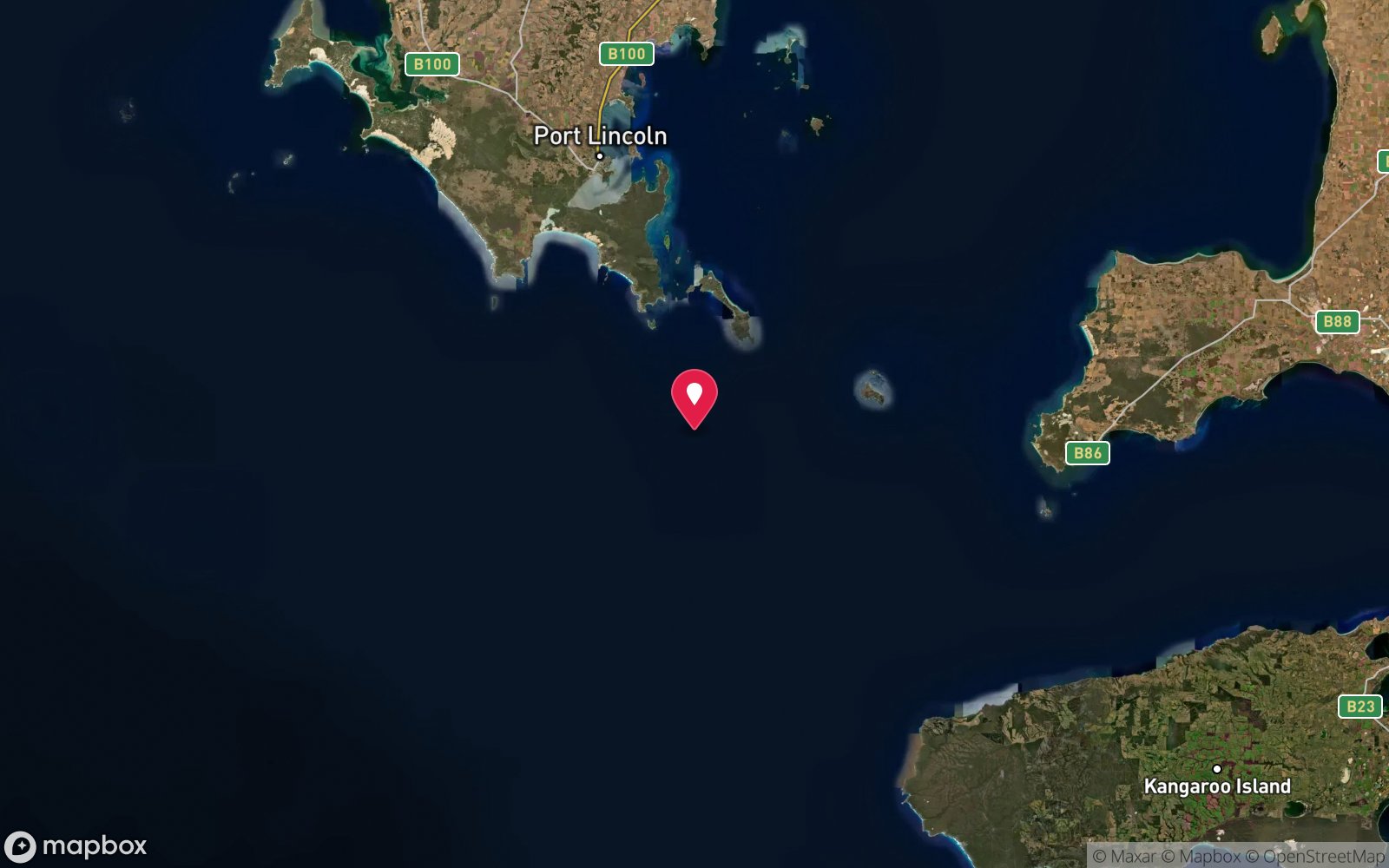
Encounter Bay islands · Victor Harbor / Encounter Bay
-35.60900, 138.59200
Approximate position — not for navigation.
Open in Google MapsPrimary source: marinelife.org.auMarine park & permits
West Island Conservation Park (no landing without permission); Encounter Marine Park – check sanctuary zoning; no diving on north-west side or Abalone Cove
Nearest recompression chamber
Royal Adelaide Hospital Hyperbaric Medicine Unit (Adelaide CBD); DAN emergency hotline 1800 088 200
Diving emergency: call 000, then DAN AP 1800 088 200.
Trip planner
Build a trip around West Island (Encounter Bay) →
A day-by-day plan for Fleurieu Peninsula & Victor Harbor with this site locked in.
This guide is a planning aid. Conditions change daily — confirm with a local dive centre and dive within your training. Data & safety notes.
Dive profile
How this site rates
Scores are computed from the recorded data, not opinions. How?
At a glance
West Island (Encounter Bay) is a island boat dive in Fleurieu Peninsula & Victor Harbor, SA, 5–25 m, suited to Advanced Open Water divers, variable/tidal current, about 10 minutes by boat.
Rated advanced because of depth beyond 18 m, tidal current that must be timed, cold water.
Why dive here
- Huge granite boulders to 25 m around a rarely dived seal and penguin island, with gorgonians and cold-water fish.
- Rarely dived: expect to have the site to yourself, and plan your own logistics.
Conditions to avoid
- Swell above about 1 m
- Strong southerly or south-east swell and wind
- Strong northerlies
- Spring tides (strong current)
About West Island (Encounter Bay)
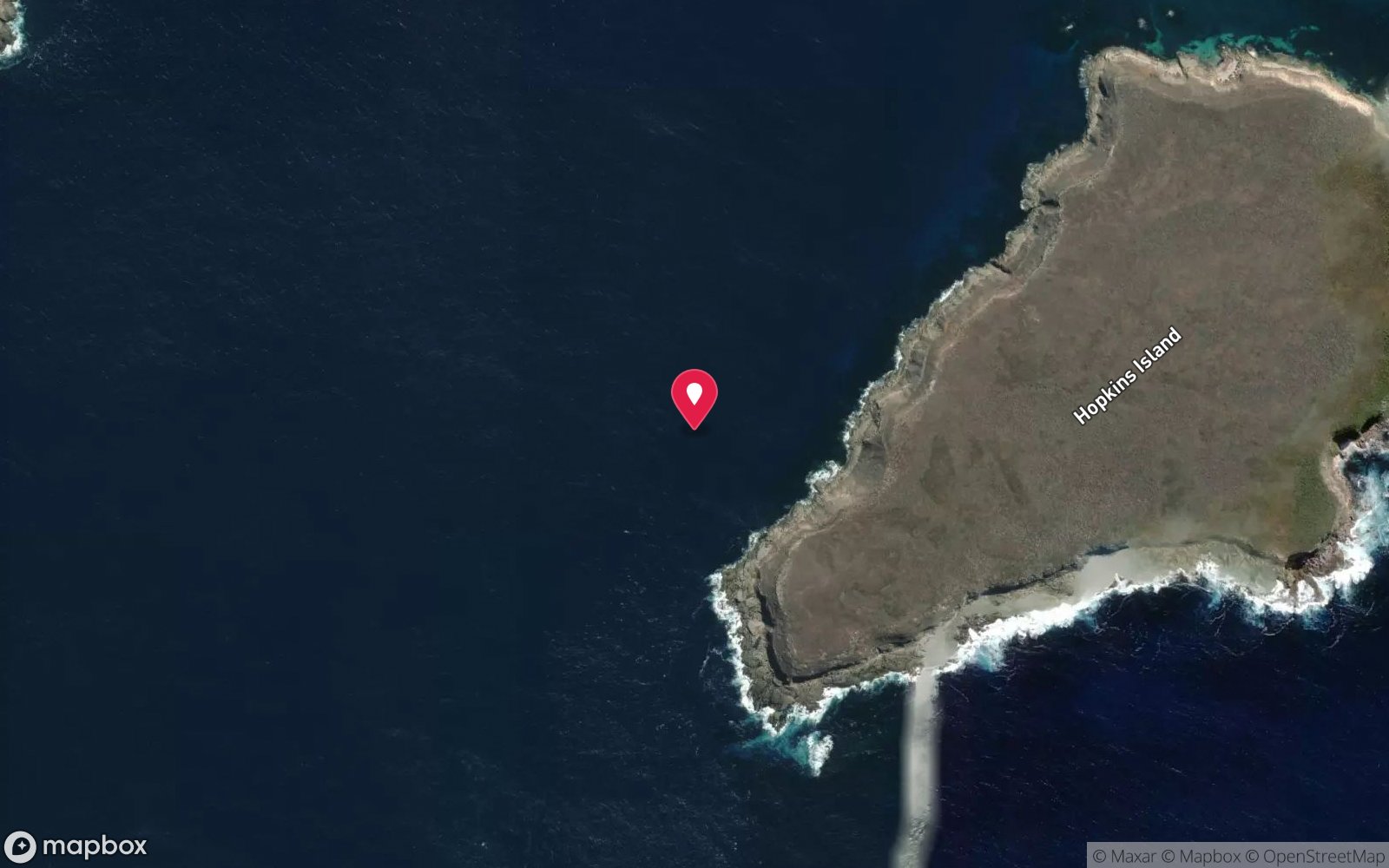
West Island is a 10-hectare island of rounded and jointed granite about 1.5 km south-west of the Bluff, the outermost island of Encounter Bay. According to the Marine Life Network, the north side is boulder-strewn, the rest of the island is ringed by 40 m cliffs, and a granite quarry operated on the northern side from 1883 until the 1960s. The island is a conservation park with a New Zealand fur seal colony, a little penguin colony, crested terns and silver gulls, and it has long been used for research, with a research jetty on the north side.
The surrounding waters became an aquatic reserve in 1983 and are now part of Encounter Marine Park. Divers must observe strict restrictions: there is no diving between Restless Point and Penguin Rock (the whole north-west side), and entry to Abalone Cove is banned because of ongoing research. The south and east sides are where the diving is.
Huge granite boulders drop to 20-25 m, carrying gorgonians, sponges, starfish and ascidians, and the Marine Life Network notes unusual fish life for the region, reflecting the colder, more oceanic water. Fur seals from the colony are likely to investigate divers. West Island is rarely visited by local divers, which adds to its appeal for experienced boat divers seeking something different.
It is exposed, deeper and colder than the inner bay, so it suits Advanced divers with their own boat on a calm northerly day. Treat the island and its wildlife with care, and check current zoning before diving.
Getting there & entry
10 ha granite island about 1.5 km south-west of the Bluff with boulder-strewn northern shore and 40 m cliffs elsewhere; huge granite boulders on its south and east sides in 20-25 m.
Boat access only. Launch at the Bluff boat ramp, Encounter Bay, and run about 1.5 km south-west (roughly 10 minutes) to the island. Dive only on the south and east sides: diving is not allowed on the whole north-west side between Restless Point and Penguin Rock, and entry to Abalone Cove is banned because of ongoing research.
There is a research jetty on the north side; do not land without permission. Anchor in sand clear of the boulders.
Entry: Boat
Facilities: Bluff boat ramp; no facilities on the island.
Weather, swell & tides
Encounter Bay faces south into the Southern Ocean swell that wraps around Kangaroo Island and Cape Jervis, so Victor Harbor sites are the reverse of the gulf coast: they need northerly (offshore) winds. The best days follow several days of northerlies with low southerly swell, when visibility improves and the swell is blown back; any southerly or south-westerly swell over about 1 m, or strong southerly winds, makes most sites undiveable and stirs up particles. Summer and autumn bring the most northerly days, but good windows also occur in winter ahead of cold fronts.
Tidal currents strengthen around the headlands and islands during large tidal movements. Southern right whales visit Encounter Bay from about June to October – keep legal approach distances. Water is a little cooler than in the gulf.
West Island is more exposed than the inner bay and its waters are generally colder than the gulf; it needs a calm day with low swell.
Best season: Late summer to autumn (February-May) for the calmest mornings and best visibility; winter can be clear on easterly days
If it's blown out
Sheltered or shore sites within 25 km that often work when West Island (Encounter Bay) doesn't.
- The Bluff (Rosetta Head) · 3 km · Max 18 m
- Kings Beach (Victor Harbor) · 2 km · Max 8 m
- Petrel Cove · 2 km · Max 8 m
- Wright Island · 3 km · Max 6 m
How the dive is usually run
Anchor off the south or east side, descend to the base of the boulders at 20-25 m and work up the boulder slope, exploring gaps and overhangs, finishing shallow. Stay well clear of the closed north-west side and Abalone Cove.
Marine life
- New Zealand fur seals →
- gorgonians
- sponges
- starfish
- ascidians
- blue groper →
- harlequin fish
- morwong
- sweep
- wrasse; little penguins and crested terns on the island
Linked species have their own page listing every site where they are recorded. All marine life →
Training required
Beyond 18 m an Advanced certification (which includes a deep dive to 30 m) is the accepted minimum. Anything past 25 m is a deep dive in practice.
Courses that help here
- Drysuit Diver – Cold water; locals dive dry for much of the year.
Depth tiers: 0–10 m easy · to 18 m Open Water · 18–30 m Advanced (25 m+ is a deep dive) · 30–40 m Deep specialty · 40 m+ technical. All courses
Hazards & warnings
Diving prohibited on the north-west side (Restless Point to Penguin Rock) and in Abalone Cove; exposed to southerly swell; colder water; seals – do not approach haul-outs; white sharks likely near seal colonies; no landing without permission.
Dive centres that go here
No regular operator; rarely visited by local divers (private boats only).
Operators recorded for West Island (Encounter Bay)
Adelaide Scuba
ListedGlenelg North · Adelaide Metro · SA
An Adelaide business providing training, equipment and local diving support, located near Glenelg.
adelaidescuba.com.au · (08) 8294 7744
Diving Adelaide
ListedMarleston · Adelaide Metro · SA
An Adelaide training and guided diving operation serving local sites and organised trips.
divingadelaide.com.au · (08) 8122 5003
Underwater Sports
ListedHolden Hill · Adelaide Metro · SA
An Adelaide equipment and service business. Retail range and servicing capability require verification.
underwatersports.com.au · (08) 8263 3337
Sea Dragon Dive Lodge
Named by sitesSecond Valley · Fleurieu Peninsula & Victor Harbor · SA
seadragondivelodge.com.au · 0499 229 053
Other dive centres in Fleurieu Peninsula & Victor Harbor
The Dive Shack
ListedGlenelg · Adelaide Metro · SA
An Adelaide business combining retail, servicing and training for South Australian divers.
thediveshack.com.au
Divers Delight
ListedStepney · Adelaide Metro · SA
An Adelaide dive business. Retail range, servicing and training availability require verification.
diversdelight.com.au · (08) 8363 7518
Adelaide Technical Diving
ListedPark Holme · Adelaide Metro · SA
An Adelaide operation specialising in technical diving training, relevant to divers preparing for deep, decompression or cave diving in South Australia.
Map
7 pinned sites. Pins marked approximate on their pages show the general area only; not for navigation.
Satellite views
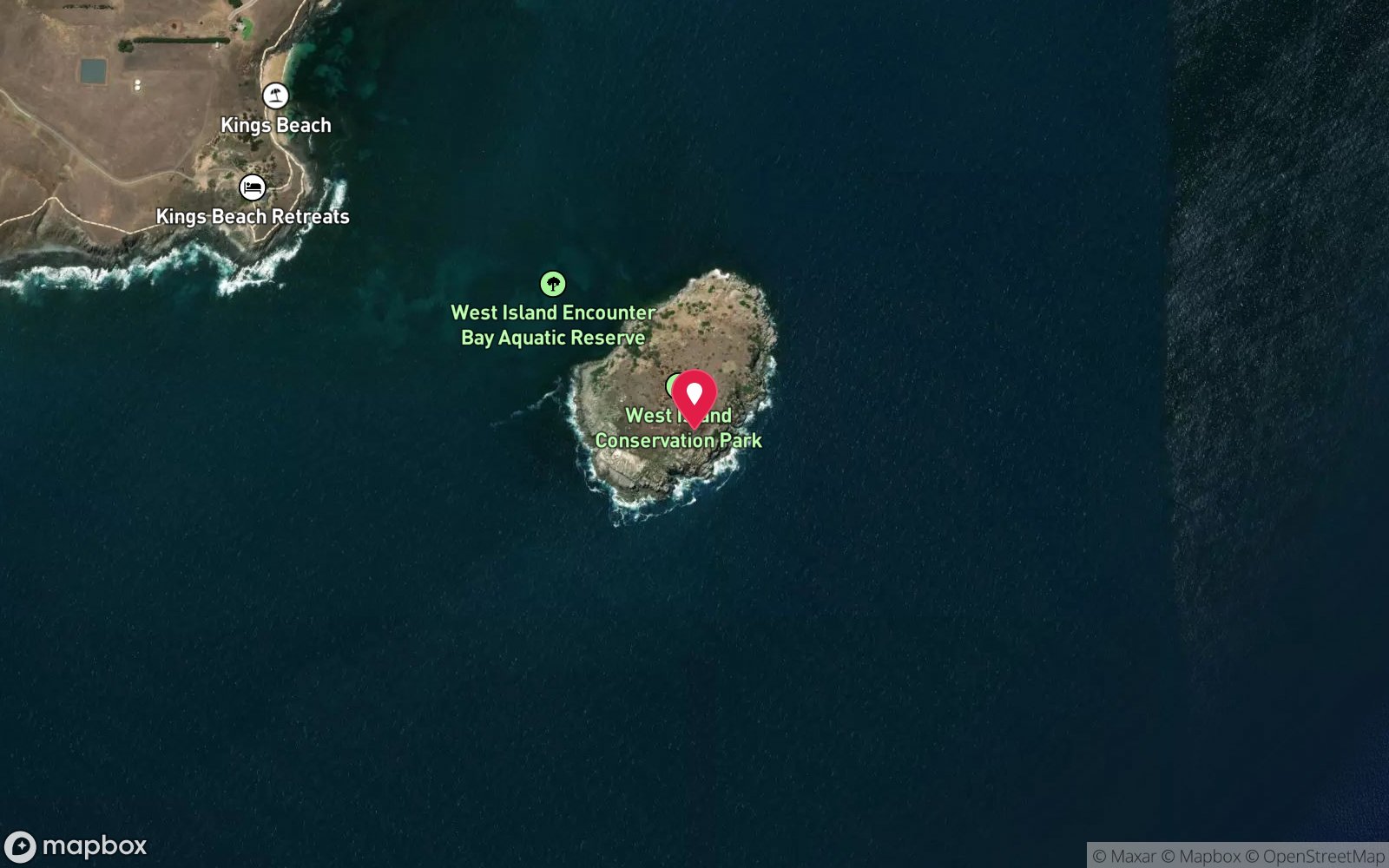
West Island (Encounter Bay): frequently asked questions
How deep is West Island (Encounter Bay)?
West Island (Encounter Bay) reaches a maximum depth of 25 m, with the shallowest part at about 5 m; most of the dive is spent around 18 m.
What certification do I need to dive West Island (Encounter Bay)?
Advanced Open Water is the recommended minimum. Rated advanced because of depth beyond 18 m, tidal current that must be timed, cold water.
Can I shore dive West Island (Encounter Bay)?
No, it is reached by boat (about 10 minutes). A dive centre is required: boat access only.
When is the best time to dive West Island (Encounter Bay)?
Late summer to autumn (February-May) for the calmest mornings and best visibility; winter can be clear on easterly days.
What marine life will I see at West Island (Encounter Bay)?
Regularly recorded: New Zealand fur seals, gorgonians, sponges, starfish, ascidians, blue groper, harlequin fish, morwong, sweep, wrasse; little penguins and crested terns on the island.
What wetsuit do I need at West Island (Encounter Bay)?
7 mm wetsuit with hood year-round; drysuit popular in winter (June-September).
How cold is the water at West Island (Encounter Bay)?
Typically 17-19 °C in summer and 12-13 °C in winter.
What are the main hazards at West Island (Encounter Bay)?
Diving prohibited on the north-west side (Restless Point to Penguin Rock) and in Abalone Cove; exposed to southerly swell; colder water; seals – do not approach haul-outs; white sharks likely near seal colonies; no landing without permission. See the hazards section above for the full list.
Where is the nearest recompression chamber to West Island (Encounter Bay)?
Royal Adelaide Hospital Hyperbaric Medicine Unit (Adelaide CBD); DAN emergency hotline 1800 088 200. In an emergency call 000, then DAN Asia-Pacific on 1800 088 200.
Diving in Fleurieu Peninsula & Victor Harbor
The Fleurieu is where you go to see a leafy seadragon. Rapid Bay Jetty is the most reliable site anywhere, and Second Valley, the Bluff at Victor Harbor and Port Noarlunga are close behind. The ex-HMAS Hobart, a 133 m destroyer scuttled off Yankalilla in 2002, is the region's flagship boat dive, and the granite coves of Second Valley and Carrickalinga are easy shore dives.
Getting there: An hour or two south of Adelaide. Rapid Bay and Second Valley are walk-in shore dives; the Hobart is a charter from Wirrina Cove or Adelaide.
All Fleurieu Peninsula & Victor Harbor dive sites and a suggested itinerary →
Sources
- marinelife.org.au/?page_id=130
- en.wikivoyage.org/wiki/Diving_in_South_Australia
- en.wikipedia.org/wiki/Encounter_Bay
Data confidence: Medium · Being verified: Restrictions quoted from Marine Life Network (may predate marine park zoning) – confirm current rules; coordinates approximate.. Last updated September 2026. Know this site better? How to send a correction
Nearby dive sites
More island dives in South Australia
Explore more
This region