Dive slate · divesites.com.au · printed 8 Nov 2026
Bait Grounds (Forster)
Forster & Seal Rocks, New South Wales · near Forster/Tuncurry
| Depth | 10–20 m |
|---|---|
| Minimum level | Advanced Open Water |
| Difficulty | Beginner |
| Access | Boat |
| Entry | Giant stride from charter boat onto a mooring |
| Current | Mild |
| Visibility | 10-25 m |
| Water | summer 22-25 °C, winter 17-20 °C |
| Suit | 3-5 mm steamer summer; 5-7 mm full suit or semi-dry winter |
| Best season | Year-round |
| Bottom time | 40 min |
| Position | not published |
| Permit | None required |
| Nearest chamber | Prince of Wales Hospital (Randwick, Sydney) — John Hunter Hospital Newcastle has no recompression chamber |
| Emergency | 000 · DAN Asia-Pacific diving emergency 1800 088 200 |
Bait Grounds (Forster)
A reef known for dense baitfish activity and the pelagic predators it attracts.
Near Forster/Tuncurry · Forster & Seal Rocks, New South Wales
- Depth
- 10–20 m
- Minimum level
- Advanced Open Water
- Access
- Boat
- Boat ride
- ~15 min
- Water
- 22-25 °C
- Visibility
- 10-25 m
Bait Grounds (Forster)10–20 m · Advanced Open Water
Dive factsDepths, conditions, location & safety
Season
In season nowBest months: year-round.
Dive facts
- Depth
- 10–20 m
- Typical depth
- 15 m
- Certification
- Advanced Open Water
- Difficulty
- Beginner
- Depth tier
- Advanced Open Water (18–30 m)
- Access
- Boat
- Offshore
- 2 km
- Dive centre needed
- Yes – boat access only
- Shore / independent
- No
- Boat ride
- ~15 min
- Current
- Mild
- Visibility
- 10-25 m
- Water temp (summer)
- 22-25 °C
- Water temp (winter)
- 17-20 °C
- Water
- Subtropical
- Bottom time
- 40 min
- Dive traffic
- Moderate (occasional charters/club dives)
- Night dive
- Possible
- Snorkel friendly
- Partial
Exposure suit
3-5 mm steamer summer; 5-7 mm full suit or semi-dry winter
Location
Forster · NSW Mid North Coast — Forster/Tuncurry & Seal Rocks
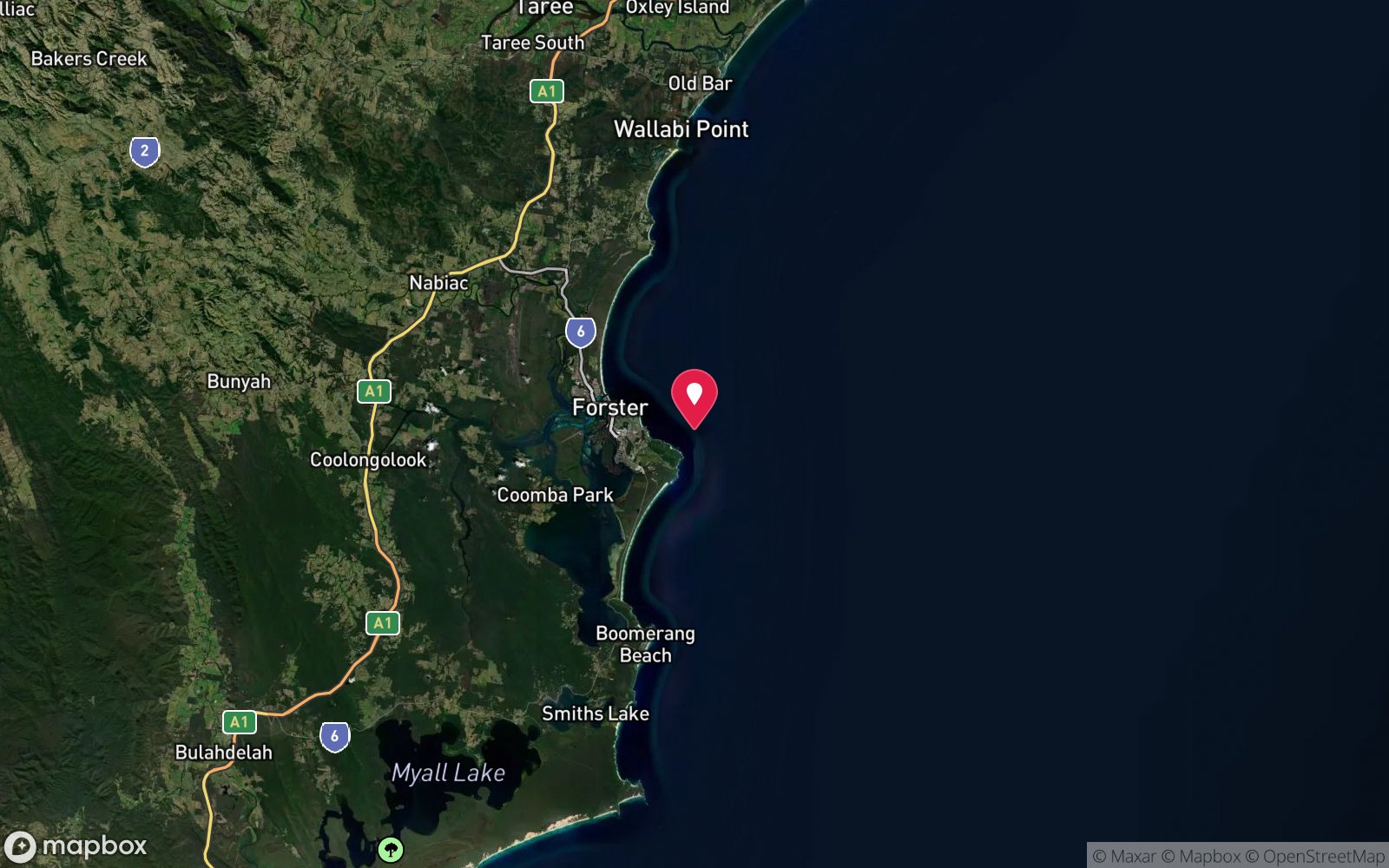
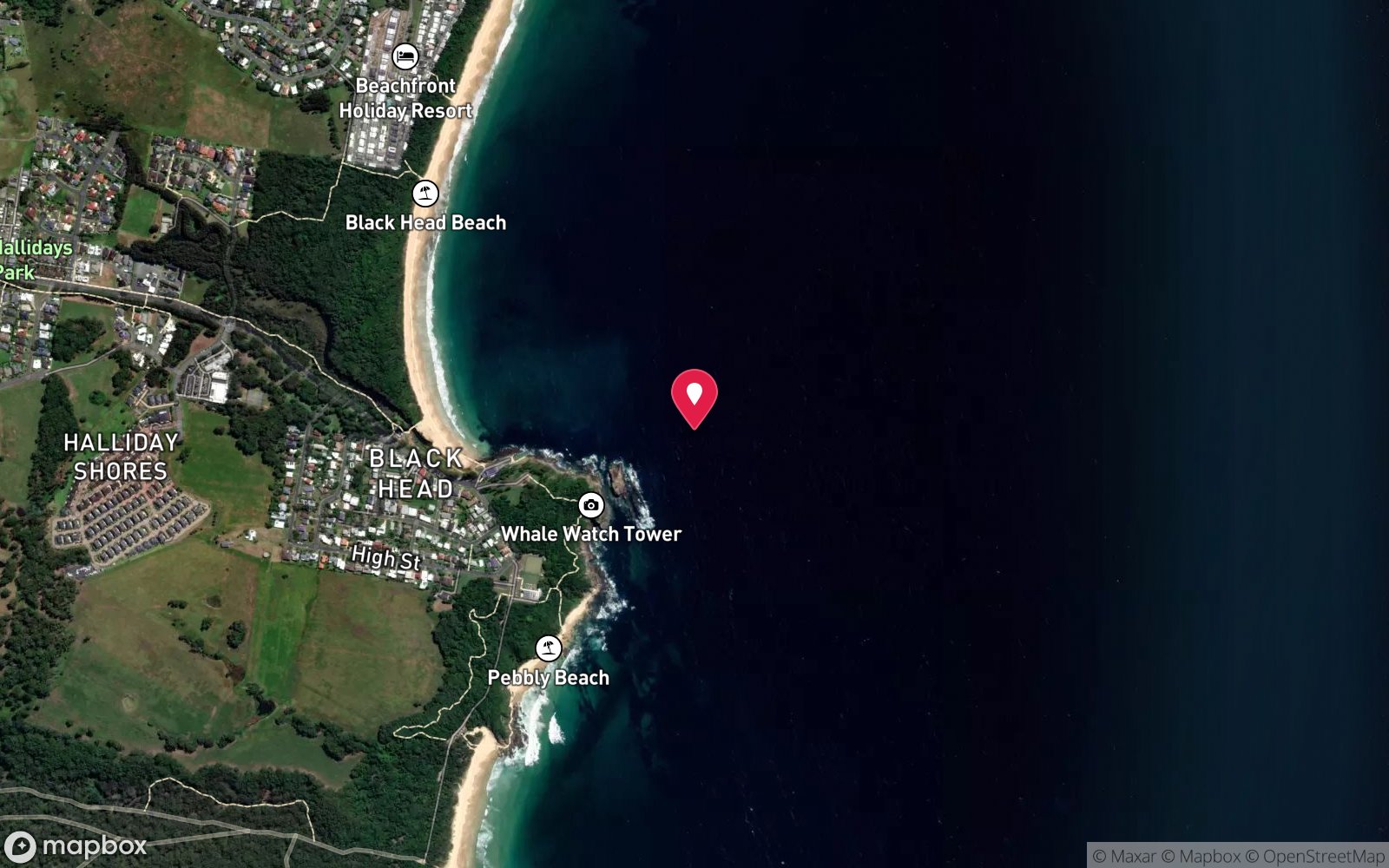
No published coordinates. The map above shows the general area, estimated from other documented sites near Forster.
Marine park & permits
None required
Nearest recompression chamber
Prince of Wales Hospital (Randwick, Sydney) — John Hunter Hospital Newcastle has no recompression chamber
Diving emergency: call 000, then DAN AP 1800 088 200.
Trip planner
Build a trip around Bait Grounds (Forster) →
A day-by-day plan for Forster & Seal Rocks with this site locked in.
This guide is a planning aid. Conditions change daily — confirm with a local dive centre and dive within your training. Data & safety notes.
Dive profile
How this site rates
Scores are computed from the recorded data, not opinions. How?
At a glance
Bait Grounds (Forster) is a reef boat dive in Forster & Seal Rocks, NSW, 10–20 m, suited to Advanced Open Water divers, about 15 minutes by boat.
Rated beginner: sheltered, shallow and manageable for a newly certified diver on a normal day, though note depth beyond 18 m.
Why dive here
- A reef known for dense baitfish activity and the pelagic predators it attracts.
- Visibility often reaches 10-25 m.
About Bait Grounds (Forster)
Bait Grounds is named, straightforwardly, for its role as a reliable spot to find dense baitfish schools off Forster — the kind of site local anglers and divers alike know as a place where pelagic activity concentrates, since predatory fish including kingfish and occasionally sharks follow the bait. As a scuba site, it offers a slightly different focus from the more purely reef- or shark-oriented dives in the Forster rotation, rewarding divers who enjoy watching schooling fish behaviour and the occasional predator strike over a slow macro-focused crawl along the substrate. Detailed published description of the underlying reef topography is limited, suggesting the site's reputation rests more on its fish activity than on any particularly dramatic underwater scenery.
Because baitfish activity can be seasonal and weather-dependent, Bait Grounds is likely offered by Forster Dive Centre on an as-conditions-allow basis rather than as a fixed daily site, and visiting divers with a specific interest in schooling fish photography or general pelagic activity should ask specifically about current conditions there. As with the area's other lightly documented reef sites, confidence in the specific depth and marine life details given here is lower than for the region's headline dives, and on-the-ground local knowledge from Forster Dive Centre will give a more accurate and current picture of what to expect. Checking with the dive centre on the day remains the best way to gauge whether conditions favour a visit.
Timing a visit around a run of calm, settled days tends to improve the odds of good bait and predator activity.
Getting there & entry
A reef area off Forster known informally for baitfish schools, part of the local dive centre's site listing.
Boats depart from Forster Dive Centre's base at Tuncurry (30 Manning Lane) or the Forster/Tuncurry boat ramp on Wallis Lake, running out through the lake entrance to the open sites. Forster-side sites (Latitude Rock, The Pinnacle, Bennetts Head Bommie) are 10-25 minutes away; Seal Rocks sites are a longer run of roughly 45-60 minutes further south, or reached by launching a boat directly from the Seal Rocks/Sugarloaf Point boat ramp for a much shorter trip.
Entry: Giant stride from charter boat onto a mooring
Weather, swell & tides
Forster and Seal Rocks sit on an open, exposed stretch of coast with limited shelter — trips are cancelled in significant easterly swell or strong wind, and operators generally want under 1.5-2 m swell to run safely, especially for the Seal Rocks sites given the longer, more exposed run. Visibility is typically best in autumn and winter (15-30 m) and can drop after East Coast Lows or heavy rain from the Wallis Lake/Myall Lakes catchments. Grey nurse sharks are present through most of the year with the largest aggregations typically reported over the cooler months.
Best season: Year-round
How the dive is usually run
Descend onto the reef and watch the water column as much as the substrate, since the site's main interest is the baitfish schools and the pelagic activity they attract, working the structure at 10-20 m.
Marine life
- Baitfish schools (species varies seasonally)
- kingfish
- occasional pelagic predators
Linked species have their own page listing every site where they are recorded. All marine life →
Training required
Beyond 18 m an Advanced certification (which includes a deep dive to 30 m) is the accepted minimum. Anything past 25 m is a deep dive in practice.
Open Water divers can dive the shallower section (typical depth 15 m); the full site to 20 m needs Advanced Open Water. Operators often quote Open Water.
Operators' own listing: Open Water.
Depth tiers: 0–10 m easy · to 18 m Open Water · 18–30 m Advanced (25 m+ is a deep dive) · 30–40 m Deep specialty · 40 m+ technical. All courses
Hazards & warnings
Standard boat-diving precautions; specific hazards not documented.
Dive centres that go here
Forster Dive Centre (Tuncurry) — daily boat trips to Forster and Seal Rocks sites, year-round.
Operators recorded for Bait Grounds (Forster)
General area
No position has been published for Bait Grounds (Forster). The circle shows where it is likely to be, worked out from other documented sites near Forster. Ask a local operator for the exact site.
Dashed circle: general area (about 15 km), from other documented sites near Forster. 6 pinned sites. Pins marked approximate on their pages show the general area only; not for navigation.
Bait Grounds (Forster): frequently asked questions
How deep is Bait Grounds (Forster)?
Bait Grounds (Forster) reaches a maximum depth of 20 m, with the shallowest part at about 10 m; most of the dive is spent around 15 m.
What certification do I need to dive Bait Grounds (Forster)?
Advanced Open Water is the recommended minimum. Open Water divers can dive the shallower section (typical depth 15 m); the full site to 20 m needs Advanced Open Water. Operators often quote Open Water. Rated beginner: sheltered, shallow and manageable for a newly certified diver on a normal day, though note depth beyond 18 m.
Can I shore dive Bait Grounds (Forster)?
No, it is reached by boat (about 15 minutes). A dive centre is required: boat access only.
When is the best time to dive Bait Grounds (Forster)?
Year-round.
What marine life will I see at Bait Grounds (Forster)?
Regularly recorded: Baitfish schools (species varies seasonally), kingfish, occasional pelagic predators.
What wetsuit do I need at Bait Grounds (Forster)?
3-5 mm steamer summer; 5-7 mm full suit or semi-dry winter.
How cold is the water at Bait Grounds (Forster)?
Typically 22-25 °C in summer and 17-20 °C in winter.
What are the main hazards at Bait Grounds (Forster)?
Standard boat-diving precautions; specific hazards not documented. See the hazards section above for the full list.
Where is the nearest recompression chamber to Bait Grounds (Forster)?
Prince of Wales Hospital (Randwick, Sydney) — John Hunter Hospital Newcastle has no recompression chamber. In an emergency call 000, then DAN Asia-Pacific on 1800 088 200.
Diving in Forster & Seal Rocks
Forster is one of the best places in the world to dive with grey nurse sharks. The Pinnacles, Latitude Rock and the Big Seal at Seal Rocks hold aggregations of 20–60 sharks in season, and Seal Rocks' gutters are within a few hundred metres of a beach launch. The SS Satara, a 1910 steamer in 44 m, and the Pinnacle's own wrecks add deep options.
Getting there: Three and a half hours north of Sydney. Forster charters run the Pinnacles and Latitude Rock; Seal Rocks is a beach launch or a longer boat trip. Shore dives at Forster's Bennetts Head and the Tuncurry breakwall.
All Forster & Seal Rocks dive sites and a suggested itinerary →