Dive slate · divesites.com.au · printed 9 Nov 2026
Edith Breaker
Forster & Seal Rocks, New South Wales · near Seal Rocks
| Depth | 10–30 m |
|---|---|
| Minimum level | Advanced Open Water |
| Difficulty | Advanced |
| Access | Boat |
| Entry | Giant stride from charter boat onto a mooring/shot line |
| Current | Moderate |
| Visibility | 10-25 m |
| Water | summer 22-25 °C, winter 17-20 °C |
| Suit | 3-5 mm steamer summer; 5-7 mm full suit or semi-dry winter |
| Best season | Calm, low-current conditions |
| Bottom time | 35 min |
| Position | not published |
| Permit | None required |
| Nearest chamber | Prince of Wales Hospital (Randwick, Sydney) — John Hunter Hospital Newcastle has no recompression chamber |
| Emergency | 000 · DAN Asia-Pacific diving emergency 1800 088 200 |
Edith Breaker
The historic reef that wrecked the SS Satara in 1910 — dived both for its natural reef structure and its maritime history.
Near Seal Rocks · Forster & Seal Rocks, New South Wales
- Depth
- 10–30 m
- Minimum level
- Advanced Open Water
- Access
- Boat
- Boat ride
- ~18 min
- Water
- 22-25 °C
- Visibility
- 10-25 m
Edith Breaker10–30 m · Advanced Open Water
Dive factsDepths, conditions, location & safety
Season
In season nowBest months: year-round.
Calm, low-current conditions
- Best months
- Now (November)
- Stinger suit Nov–May
Dive facts
- Depth
- 10–30 m
- Typical depth
- 20 m
- Certification
- Advanced Open Water
- Difficulty
- Advanced
- Depth tier
- Advanced Open Water (18–30 m)
- Access
- Boat
- Offshore
- 1.5 km
- Dive centre needed
- Yes – boat access only
- Shore / independent
- No
- Boat ride
- ~18 min
- Current
- Moderate
- Visibility
- 10-25 m
- Water temp (summer)
- 22-25 °C
- Water temp (winter)
- 17-20 °C
- Water
- Subtropical
- Bottom time
- 35 min
- Dive traffic
- Moderate (occasional charters/club dives)
- Night dive
- No
- Snorkel friendly
- No
Exposure suit
3-5 mm steamer summer; 5-7 mm full suit or semi-dry winter
Location
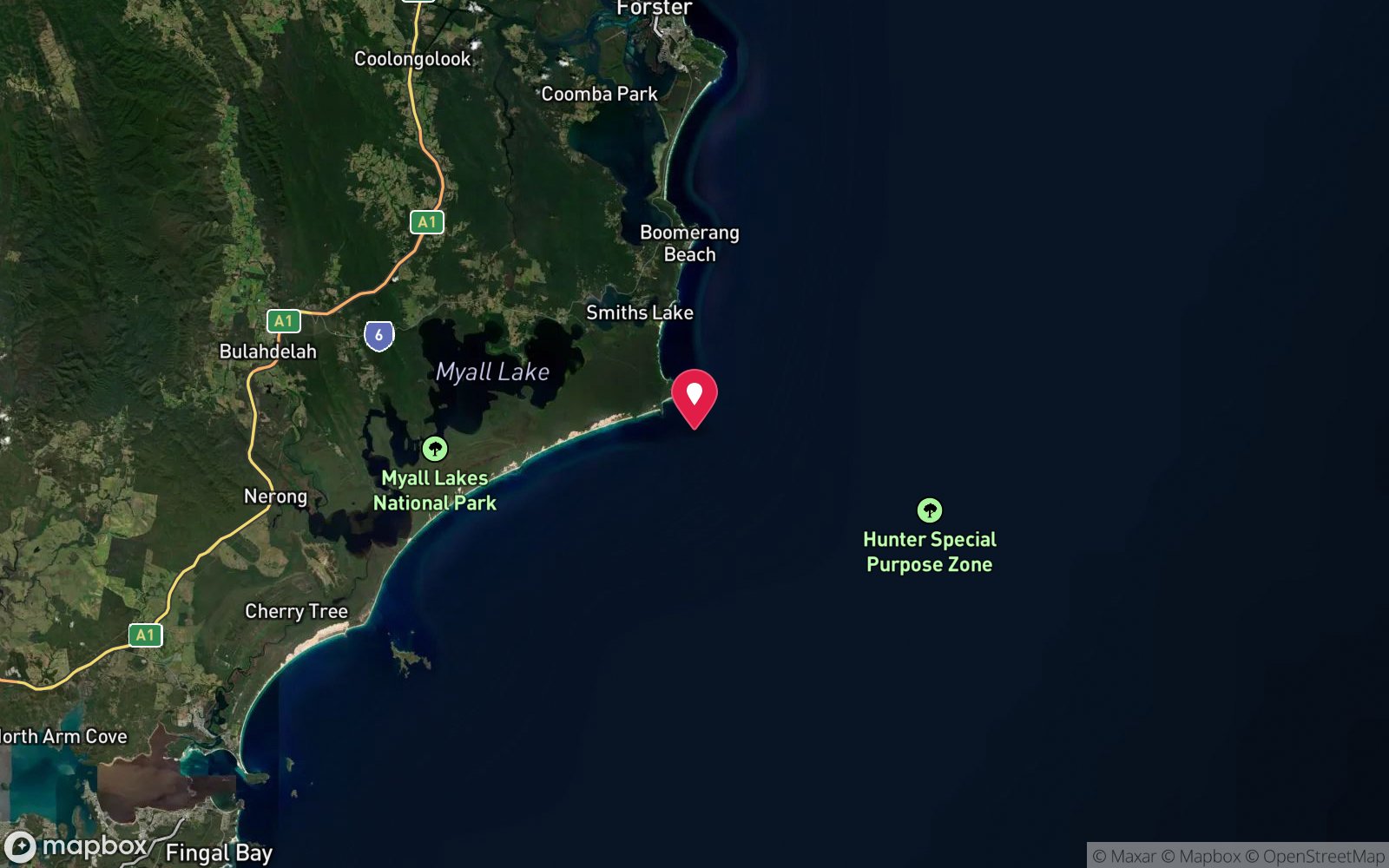
Seal Rocks · NSW Mid North Coast — Forster/Tuncurry & Seal Rocks
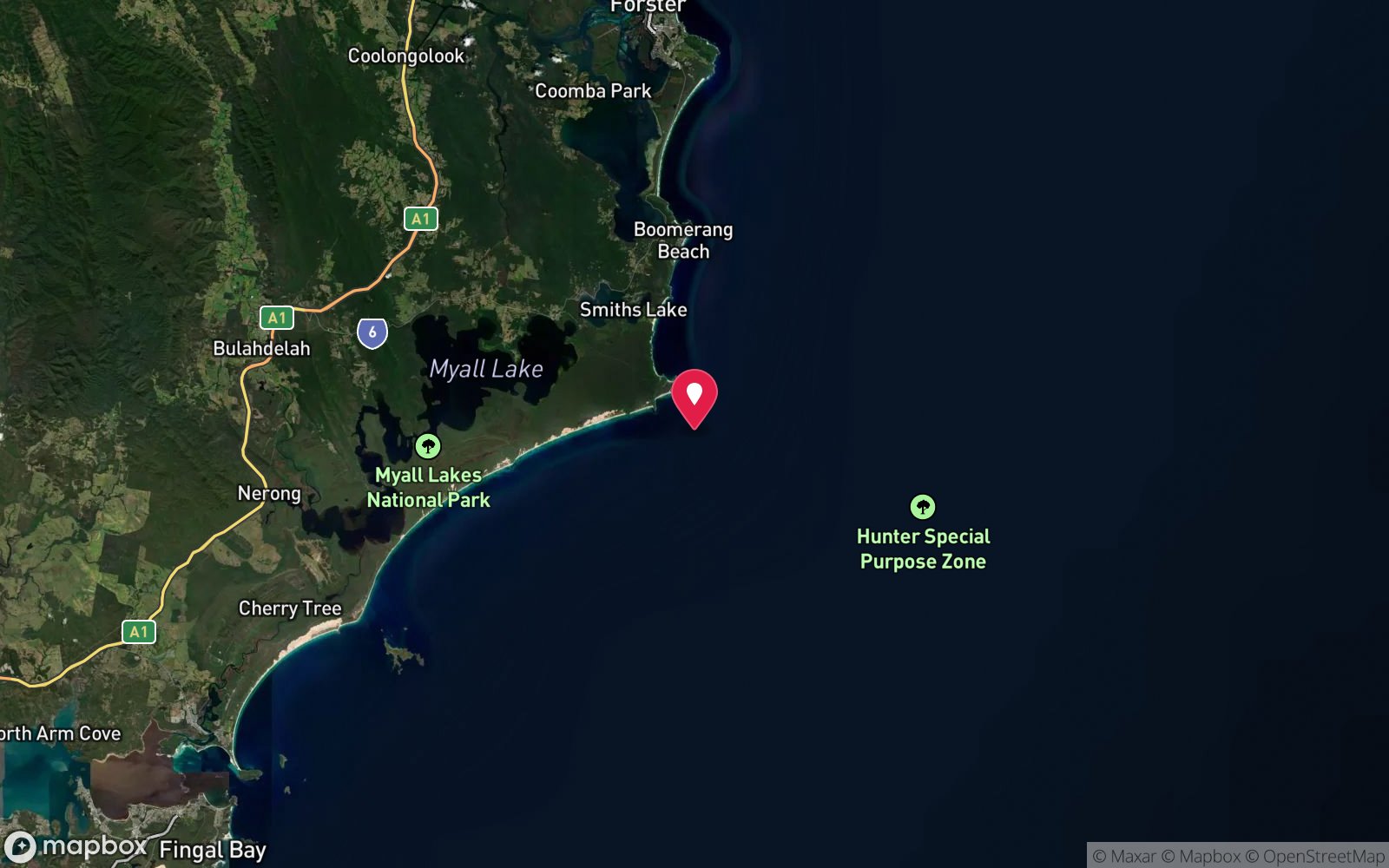
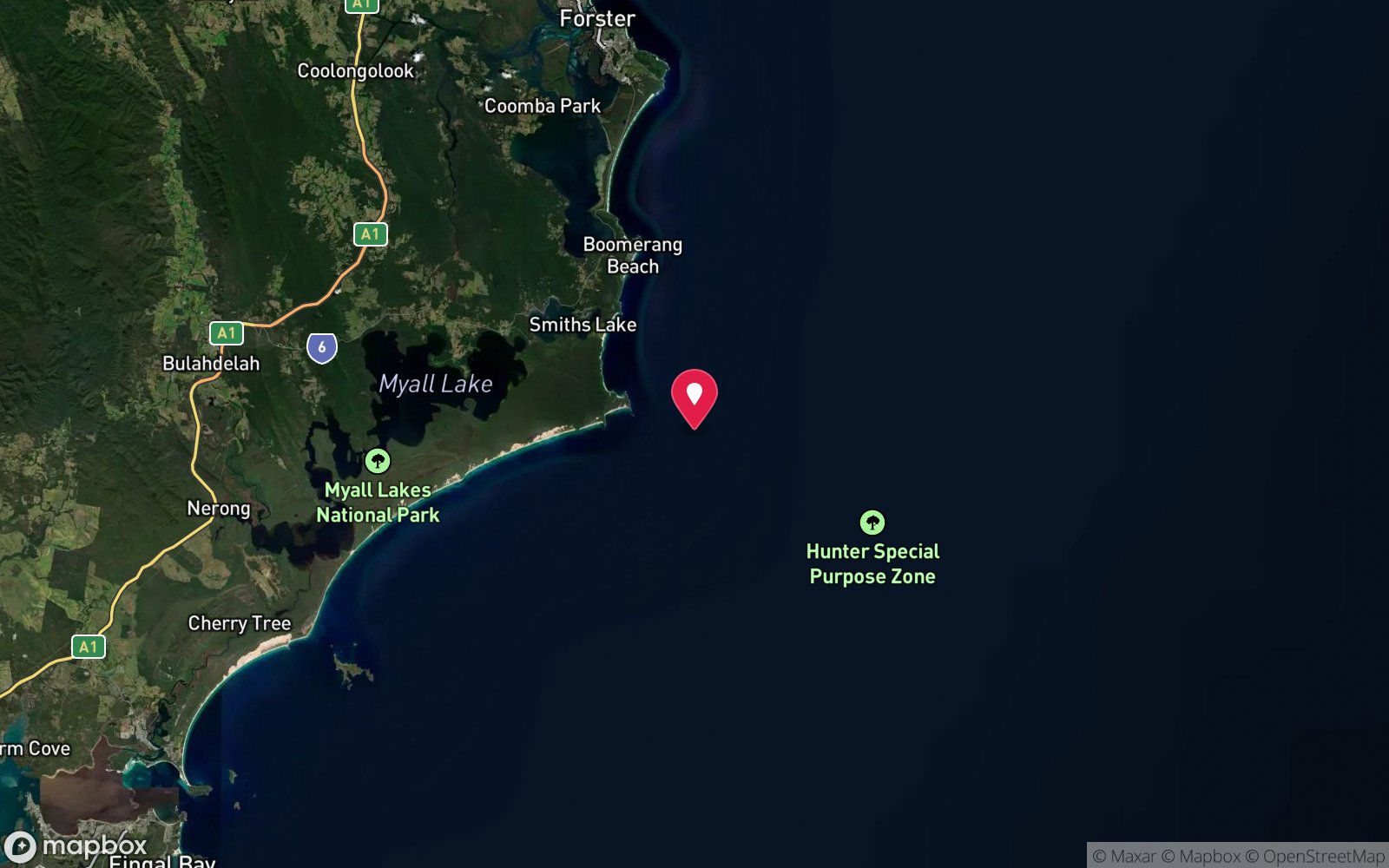
No published coordinates. The map above shows the general area, estimated from other documented sites near Seal Rocks.
Primary source: environment.nsw.gov.auMarine park & permits
None required
Nearest recompression chamber
Prince of Wales Hospital (Randwick, Sydney) — John Hunter Hospital Newcastle has no recompression chamber
Diving emergency: call 000, then DAN AP 1800 088 200.
Trip planner
Build a trip around Edith Breaker →
A day-by-day plan for Forster & Seal Rocks with this site locked in.
This guide is a planning aid. Conditions change daily — confirm with a local dive centre and dive within your training. Data & safety notes.
Dive profile
How this site rates
Scores are computed from the recorded data, not opinions. How?
At a glance
Edith Breaker is a reef boat dive in Forster & Seal Rocks, NSW, 10–30 m, suited to Advanced Open Water divers, moderate current, about 18 minutes by boat.
Rated advanced because of depth beyond 18 m, boat traffic overhead.
Why dive here
- The historic reef that wrecked the SS Satara in 1910 — dived both for its natural reef structure and its maritime history.
- Visibility often reaches 10-25 m.
About Edith Breaker
Edith Breaker sits south-west of Big Seal Rock near Treachery Head and holds a grim distinction in local maritime history: this is the reef that the 5,272-ton steamship SS Satara struck at quarter past midnight on 20 August 1910, holing the vessel fatally and sending her to the bottom in twenty minutes accompanied by a large explosion, though remarkably only two of the 89 people aboard were lost. As a submerged, largely unmarked hazard close to the main shipping route past Sugarloaf Point, the breaker has claimed other vessels too over the decades, and it is dived today both as a reef in its own right and as a piece of maritime history — a reminder of just how dangerous this stretch of coast was to shipping before modern navigation aids. As a dive site, Edith Breaker offers rocky reef structure in a depth range of roughly 10 to 30 metres, with gutters and gullies typical of the broader Seal Rocks reef system, and divers exploring its shallower margins may encounter scattered wreckage or debris associated with its history as a ship-breaker rather than expecting to find the main Satara wreck itself, which lies deeper and further away near Treachery Head.
The site's genuine current exposure and depth range mean it suits experienced divers, and it is usually offered by Forster Dive Centre as a variation for repeat Seal Rocks visitors or those with a specific interest in the area's shipwreck history, rather than as the default site for a first Seal Rocks trip.
Getting there & entry
A submerged reef south-west of Big Seal Rock, near Treachery Head, notorious as the reef that wrecked the SS Satara in 1910; a hazard to shipping and now a dive site in its own right.
Boats for the Seal Rocks sites either run the longer distance down from Forster/Tuncurry (about 45-60 minutes) or launch locally from the small boat ramp at Seal Rocks village itself, near Sugarloaf Point, cutting the run to Big and Little Seal Rock down to 10-20 minutes. Seal Rocks is a small, remote settlement reached via Lakes Way/Mungo Brush Road through Myall Lakes National Park; there is no dedicated dive shop in the village itself, so most Seal Rocks charter diving is booked through Forster Dive Centre, with divers sometimes meeting the boat locally rather than travelling from Forster.
Entry: Giant stride from charter boat onto a mooring/shot line
Weather, swell & tides
Seal Rocks sits on an exposed headland with Sugarloaf Point taking the full force of easterly and south-easterly swell — trips are cancelled in anything beyond about 1.5 m swell, and the site is often diveable when more sheltered locations further north are blown out, or vice versa, so conditions should always be checked specifically for Seal Rocks rather than assumed from Forster. Visibility is typically 15-30 m and can be excellent in settled autumn and winter weather; it drops after the Myall Lakes and Wallis Lake systems discharge following heavy rain. Grey nurse sharks are present at almost any time of year here, with numbers varying seasonally, and the wrecks (Satara, Catterthun) require calm, low-current conditions for safe deep/technical diving.
Best season: Calm, low-current conditions
How the dive is usually run
Descend onto the breaker's reef structure and work its gutters and gullies at 10-30 m, being aware this is the same reef that claimed the SS Satara — watch for scattered wreckage or debris fields at the shallower margins in addition to the natural reef life.
Marine life
Linked species have their own page listing every site where they are recorded. All marine life →
Training required
Beyond 18 m an Advanced certification (which includes a deep dive to 30 m) is the accepted minimum. Anything past 25 m is a deep dive in practice.
At more than 25 m this counts as a deep dive: watch no-decompression limits and gas.
Courses that help here
- Enriched Air Nitrox – Longer no-decompression time at 25 m and deeper.
Depth tiers: 0–10 m easy · to 18 m Open Water · 18–30 m Advanced (25 m+ is a deep dive) · 30–40 m Deep specialty · 40 m+ technical. All courses
Hazards & warnings
Moderate current and depth to 30 m; possible wreckage/debris on the shallower margins; known hazard to shipping historically, reflecting genuinely rough, current-exposed conditions.
Dive centres that go here
Forster Dive Centre (Tuncurry) — regular boat trips to Seal Rocks, year-round, weather permitting.
Operators recorded for Edith Breaker
General area
No position has been published for Edith Breaker. The circle shows where it is likely to be, worked out from other documented sites near Seal Rocks. Ask a local operator for the exact site.
Dashed circle: general area (about 4 km), from other documented sites near Seal Rocks. 6 pinned sites. Pins marked approximate on their pages show the general area only; not for navigation.
Edith Breaker: frequently asked questions
How deep is Edith Breaker?
Edith Breaker reaches a maximum depth of 30 m, with the shallowest part at about 10 m; most of the dive is spent around 20 m.
What certification do I need to dive Edith Breaker?
Advanced Open Water is the recommended minimum. At more than 25 m this counts as a deep dive: watch no-decompression limits and gas. Rated advanced because of depth beyond 18 m, boat traffic overhead.
Can I shore dive Edith Breaker?
No, it is reached by boat (about 18 minutes). A dive centre is required: boat access only.
When is the best time to dive Edith Breaker?
Calm, low-current conditions.
What marine life will I see at Edith Breaker?
Regularly recorded: General Seal Rocks reef fish, invertebrates, occasional grey nurse sharks.
What wetsuit do I need at Edith Breaker?
3-5 mm steamer summer; 5-7 mm full suit or semi-dry winter.
How cold is the water at Edith Breaker?
Typically 22-25 °C in summer and 17-20 °C in winter.
What are the main hazards at Edith Breaker?
Moderate current and depth to 30 m; possible wreckage/debris on the shallower margins; known hazard to shipping historically, reflecting genuinely rough, current-exposed conditions. See the hazards section above for the full list.
Where is the nearest recompression chamber to Edith Breaker?
Prince of Wales Hospital (Randwick, Sydney) — John Hunter Hospital Newcastle has no recompression chamber. In an emergency call 000, then DAN Asia-Pacific on 1800 088 200.
Diving in Forster & Seal Rocks
Forster is one of the best places in the world to dive with grey nurse sharks. The Pinnacles, Latitude Rock and the Big Seal at Seal Rocks hold aggregations of 20–60 sharks in season, and Seal Rocks' gutters are within a few hundred metres of a beach launch. The SS Satara, a 1910 steamer in 44 m, and the Pinnacle's own wrecks add deep options.
Getting there: Three and a half hours north of Sydney. Forster charters run the Pinnacles and Latitude Rock; Seal Rocks is a beach launch or a longer boat trip. Shore dives at Forster's Bennetts Head and the Tuncurry breakwall.
All Forster & Seal Rocks dive sites and a suggested itinerary →
Sources
- environment.nsw.gov.au/maritimeheritageapp/ViewSiteDetail.aspx?siteid=527
- forsterdivecentre.com.au/SS-Satara.html
Data confidence: Medium · Being verified: Depth range for the reef itself (as distinct from the deeper Satara wreck site) is estimated from general Seal Rocks reef topography; confirm with Forster Dive Centre.. Last updated September 2026. Know this site better? How to send a correction
Nearby dive sites
More reef dives in New South Wales
Explore more
This region