Dive slate · divesites.com.au · printed 8 Nov 2026
British Motorist
Darwin Harbour, Northern Territory · near Darwin
| Depth | Max 20 m |
|---|---|
| Minimum level | Advanced Open Water |
| Difficulty | Intermediate |
| Access | Boat (day trip) |
| Entry | Giant stride or backward roll from the boat; descend the shot or anchor line |
| Current | Variable/Tidal |
| Visibility | 2-8 m |
| Water | summer 29-32 °C, winter 24-26 °C |
| Suit | 3 mm wetsuit or skin in the dry season; full-length Lycra stinger suit (with hood and gloves) October-May |
| Best season | May-October (dry season), on neap tides only |
| Bottom time | 35 min |
| Position | -12.48267, 130.83883 (approximate) |
| Permit | Protected under the NT Heritage Act 2011 and the Commonwealth Underwater Cultural Heritage Act 2018 (wreck over 75 years old): look but do not touch, no artefact removal or disturbance. Check with the NT Heritage Branch (08 8999 5039, heritage.branch@nt.gov.au) for any current permit or protected-zone conditions. |
| Nearest chamber | Royal Darwin Hospital hyperbaric medicine unit (Tiwi, Darwin) |
| Emergency | 000 · DAN Asia-Pacific diving emergency 1800 088 200 |
British Motorist
Also known as MV British Motorist
Engine-room remains of the tanker that was refuelling USS Peary when the 1942 raid began.
Near Darwin · Darwin Harbour, Northern Territory
- Depth
- Max 20 m
- Minimum level
- Advanced Open Water
- Access
- Boat (day trip)
- Boat ride
- —
- Water
- 29-32 °C
- Visibility
- 2-8 m
British MotoristMax 20 m · Advanced Open Water
Dive factsDepths, conditions, location & safety
Season
Off-peak nowBest months: May, June, July, August, September, October.
May-October (dry season), on neap tides only
- Best months
- Now (November)
- Stinger suit Nov–May
Dive facts
- Depth
- Max 20 m
- Typical depth
- 18 m
- Certification
- Advanced Open Water
- Difficulty
- Intermediate
- Depth tier
- Advanced Open Water (18–30 m)
- Access
- Boat (day trip)
- Dive centre needed
- Yes – boat access only
- Shore / independent
- No
- Current
- Variable/Tidal
- Visibility
- 2-8 m
- Water temp (summer)
- 29-32 °C
- Water temp (winter)
- 24-26 °C
- Water
- Tropical
- Bottom time
- 35 min
- Dive traffic
- Rarely dived (private boat/club only)
- Night dive
- Possible
- Snorkel friendly
- No
Exposure suit
3 mm wetsuit or skin in the dry season; full-length Lycra stinger suit (with hood and gloves) October-May
Location
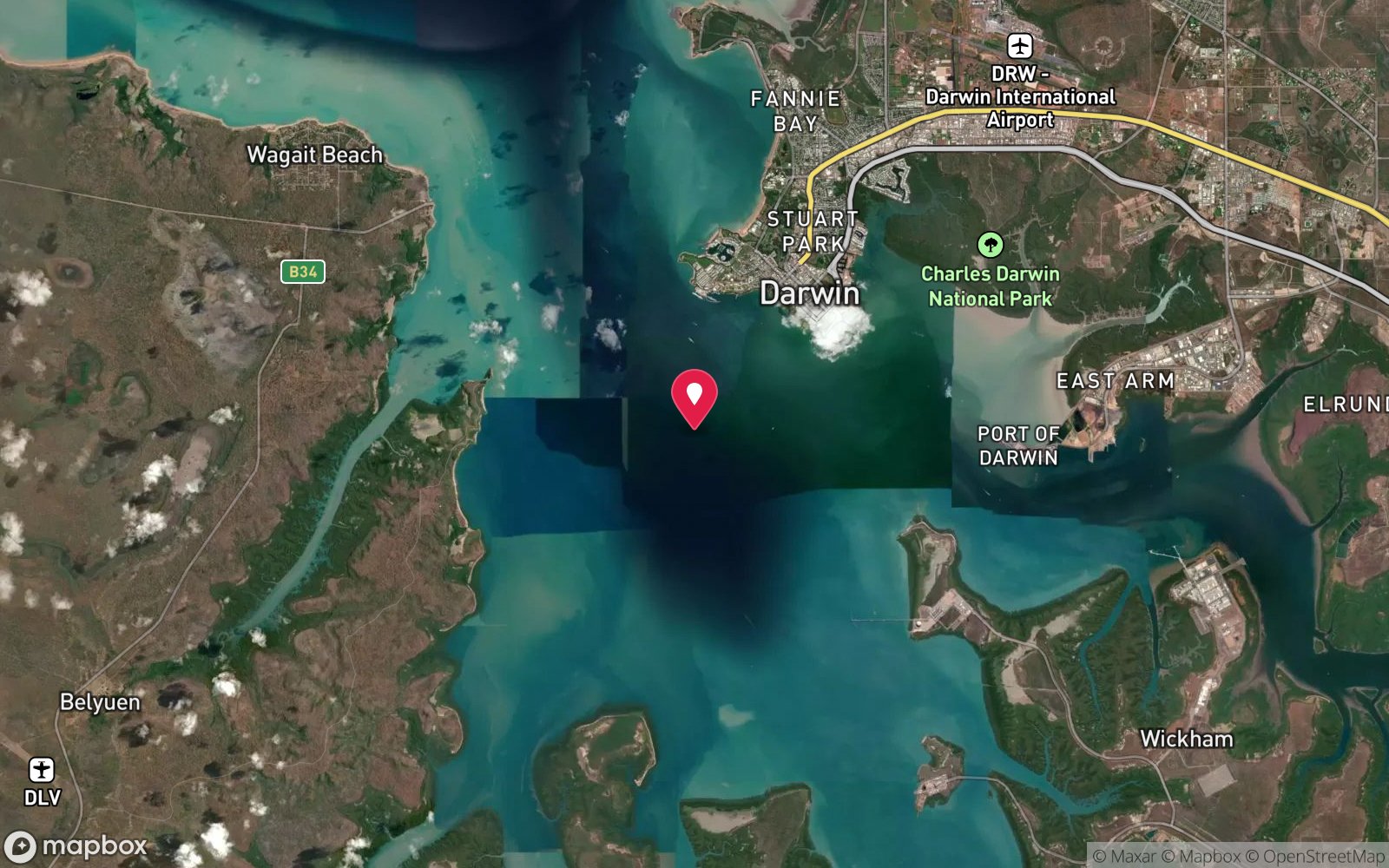
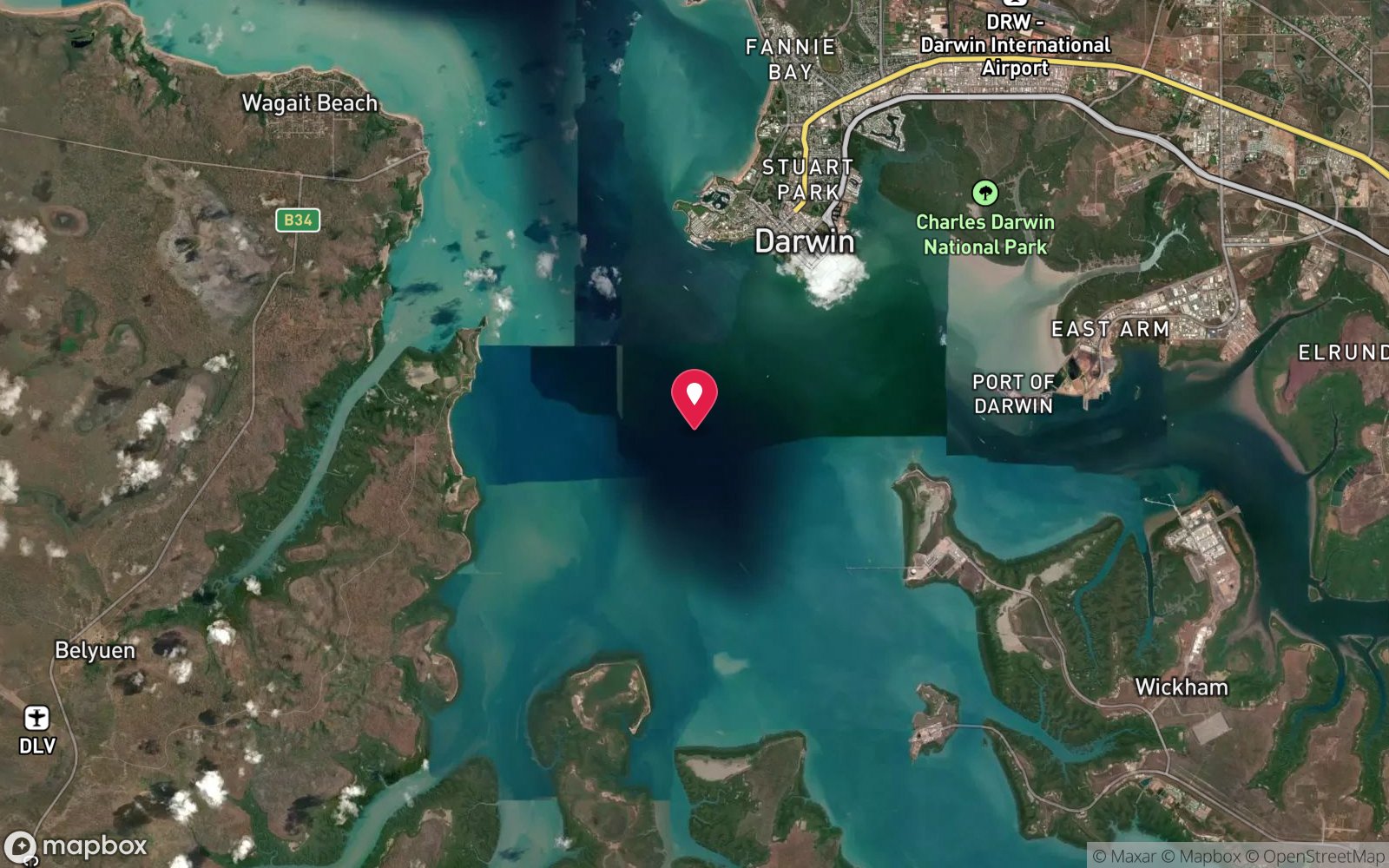
Inner harbour - near Darwin wharf
-12.48267, 130.83883
Approximate position — not for navigation.
Open in Google MapsDive site map (external) →Primary source: dsac.com.auMarine park & permits
Protected under the NT Heritage Act 2011 and the Commonwealth Underwater Cultural Heritage Act 2018 (wreck over 75 years old): look but do not touch, no artefact removal or disturbance. Check with the NT Heritage Branch (08 8999 5039, heritage.branch@nt.gov.au) for any current permit or protected-zone conditions.
Nearest recompression chamber
Royal Darwin Hospital hyperbaric medicine unit (Tiwi, Darwin)
Diving emergency: call 000, then DAN AP 1800 088 200.
Trip planner
Build a trip around British Motorist →
A day-by-day plan for Darwin Harbour with this site locked in.
This guide is a planning aid. Conditions change daily — confirm with a local dive centre and dive within your training. Data & safety notes.
Dive profile
How this site rates
Scores are computed from the recorded data, not opinions. How?
At a glance
British Motorist is a wreck boat dive in Darwin Harbour, NT, to a maximum of 20 m, suited to Advanced Open Water divers, variable/tidal current.
Rated intermediate because of depth beyond 18 m, tidal current that must be timed, boat traffic overhead.
Why dive here
- Engine-room remains of the tanker that was refuelling USS Peary when the 1942 raid began.
- Sunk in 1942 (Steel motor tanker, 134 m (440 ft), 6,891 GRT); protected as underwater cultural heritage, so look but do not touch.
- Rarely dived: expect to have the site to yourself, and plan your own logistics.
Conditions to avoid
- Strong southerly or south-east swell and wind
- Outgoing tide or run-off after rain (poor visibility)
- Spring tides (strong current)
- Any time other than slack water
- Cyclone season (roughly December–April)
About British Motorist
The British Motorist was a 6,891-ton steel tanker built in 1924 by Swan, Hunter and Wigham Richardson in Newcastle upon Tyne for the British Tanker Company - a 134 m, single-funnel motor ship with an eight-cylinder oil engine good for 11 knots. On the morning of 19 February 1942 she was in port refuelling the destroyer USS Peary when the raid began. Two bombs hit her: one destroyed the bridge and a second struck forward.
She listed to port, caught fire amidships and capsized, sinking on her side. Her master, Captain Gilbert Bates, and the second radio officer were killed out of a crew of 61. For years half of the hull was exposed at low water.
The 19 February 1942 raids - two waves of Japanese carrier and land-based aircraft, the first and heaviest attack ever made on mainland Australia - sank eight ships in the harbour and killed more than 230 people. In 1959-60 the Japanese firm Fujita Salvage cut most of the wrecks down to or below the waterline for scrap, so what divers find today is usually the lower hull, machinery that was too heavy to lift, and the cargo that the salvors were not permitted to remove. The British Motorist was the first ship Fujita raised.
The salvors cut her into sections, welded the fore and aft parts together and towed them to Japan for breaking, and in the meantime she served as storage and living quarters for the Japanese salvage crews working the other wrecks. The engine room was too heavy to lift and was left behind, so today's dive is a compact block of machinery and a jumble of artefacts spread over a silty bottom in 18-20 m. It is the least visited of the big raid wrecks because there is less structure to follow, but it is close to the wharf, easy to reach, and holds good numbers of snapper and rock cod around the machinery.
It suits divers who have already done the Meigs and Zealandia and want to complete the set of 1942 sites.
Wreck details
Steel motor tanker, 134 m (440 ft), 6,891 GRT · Sunk 1942 · Protected historic shipwreck
Era: Second World War. Oldest wrecks · Wartime wrecks · Scuttled warships
Other wrecks of the same era
- SS Mauna Loa · Max 20 m · Darwin Harbour
- SS Zealandia · Max 22 m · Darwin Harbour
- USAT Meigs · Max 18 m · Darwin Harbour
- Don Isidro · Depth not published · Tiwi Islands
- Florence D · Max 16 m · Tiwi Islands
- Japanese Submarine I-124 · Max 45 m · Darwin Offshore & Artificial Reefs
Getting there & entry
A short distance off the Darwin wharf precinct in the inner harbour; only the engine-room section and debris remain.
Boat only. Darwin's charter operators leave from Cullen Bay Marina or the Darwin Waterfront precinct and run across the harbour to the site in well under half an hour on a calm neap-tide morning. Private boats can launch at the Cullen Bay public ramp (west of the CBD off Marina Boulevard), the Stokes Hill / Frances Bay ramp beside the Waterfront, or the East Arm ramp for the southern anchorage.
Mark the position on GPS before the dive - the wrecks lie in open water with no surface marker - and drop a shot rather than anchoring into protected structure. Parking and trailer bays are at all three ramps; air fills and hire through the Darwin dive shops.
Entry: Giant stride or backward roll from the boat; descend the shot or anchor line
Weather, swell & tides
Tide is everything in Darwin Harbour: the spring range is 7-8 m and tidal streams run hard through the harbour, so diving is generally only possible on neap tides (range under about 3-4 m), timed to the slack at high water when clearer ocean water sits over the site. Spring tides bring strong currents and silt-laden water with near-zero visibility. The dry season (May-October) gives the most consistent conditions; the south-east trade winds can chop up exposed water in the afternoon, so mornings are best.
In the wet season (November-April) run-off from the rivers and creeks drops visibility, afternoon storms build quickly, and the harbour is in cyclone season; box jellyfish are present October-May.
Best season: May-October (dry season), on neap tides only
If it's blown out
Sheltered or shore sites within 25 km that often work when British Motorist doesn't.
- NR Diemen · 10 km · Max 12 m
- Stokes Hill Wharf Artificial Reef · 2 km · Max 10 m
- MV Neptuna remnants · 2 km · Max 10 m
- East Point Reef · 9 km · Max 8 m
How the dive is usually run
Drop the shot on the engine-room remains at neap slack, circle the machinery block first, then make short excursions out into the surrounding debris, always keeping the main structure in sight in the poor visibility. Hold 16-20 m, return to the shot and ascend with an SMB.
Marine life
- Golden snapper
- rock cod (estuary cod)
- jewfish
- batfish
- sponges and soft corals on the machinery
Linked species have their own page listing every site where they are recorded. All marine life →
Training required
Beyond 18 m an Advanced certification (which includes a deep dive to 30 m) is the accepted minimum. Anything past 25 m is a deep dive in practice.
Open Water divers can dive the shallower section (typical depth 18 m); the full site to 20 m needs Advanced Open Water. Operators often quote Open Water.
Operators' own listing: Open Water.
Courses that help here
- Peak Performance Buoyancy – Silt and low visibility punish poor trim.
Depth tiers: 0–10 m easy · to 18 m Open Water · 18–30 m Advanced (25 m+ is a deep dive) · 30–40 m Deep specialty · 40 m+ technical. All courses
Hazards & warnings
Darwin's tidal range reaches 7-8 m on springs: dive only on neap tides at slack water or currents become unswimmable and visibility collapses. Saltwater crocodiles live throughout the harbour - keep surface intervals short, no dangling legs, keep a lookout at entry and exit. Box jellyfish (Chironex) and Irukandji October-May - full-length stinger suit, hood and gloves, vinegar on board.
Silt is fine and easily stirred. Commercial shipping, ferries and tugs use the harbour: fly the dive flag, use an SMB on ascent and keep a boat cover. Close to the wharves and berthing areas - check with harbour control for vessel movements.
Sharp debris.
Dive centres that go here
Darwin Dive Centre and Dive Darwin run harbour wreck charters only on neap-tide windows (typically a few days either side of each neap, weekends favoured); Darwin Sub Aqua Club dives it on club neap-tide days (members plan dives at Thursday meetings at the Darwin Ski Club). No daily schedule.
Operators recorded for British Motorist
Dive Darwin
ProfiledDarwin · Darwin Harbour · NT
The main verified dive operation in the Northern Territory, offering recreational training through professional level alongside technical diving and a large specialty range.
divedarwin.com.au · +61 401 751 651
Darwin Sub Aqua Club
Named by sitesDarwin · Darwin Harbour · NT
Club, not a shop: official site updated August 2026 with the 2026 AGM notice; meets Thursdays at Darwin Ski Club, Fannie Bay.
dsac.com.au
Map
7 pinned sites. Pins marked approximate on their pages show the general area only; not for navigation.
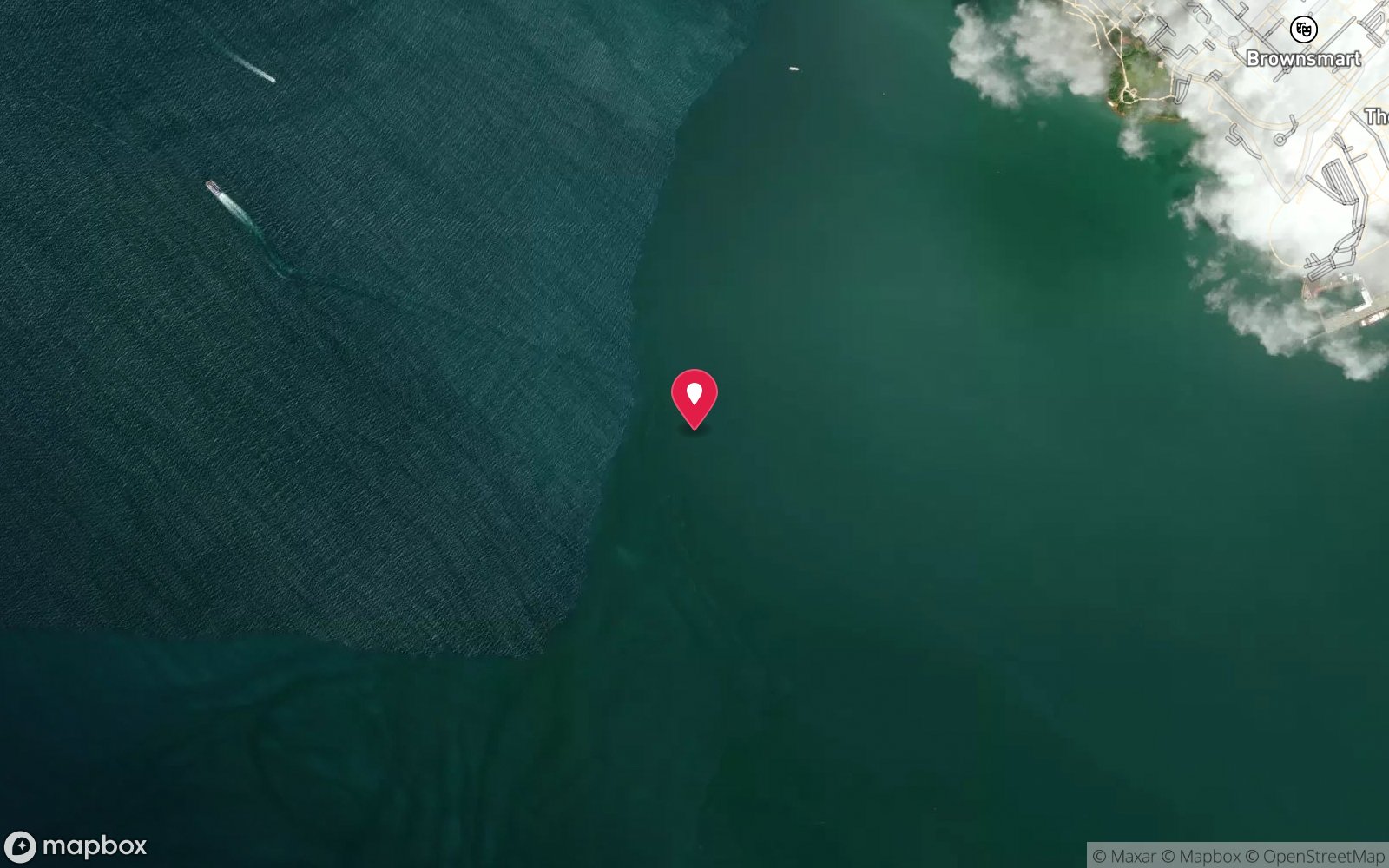
Satellite views
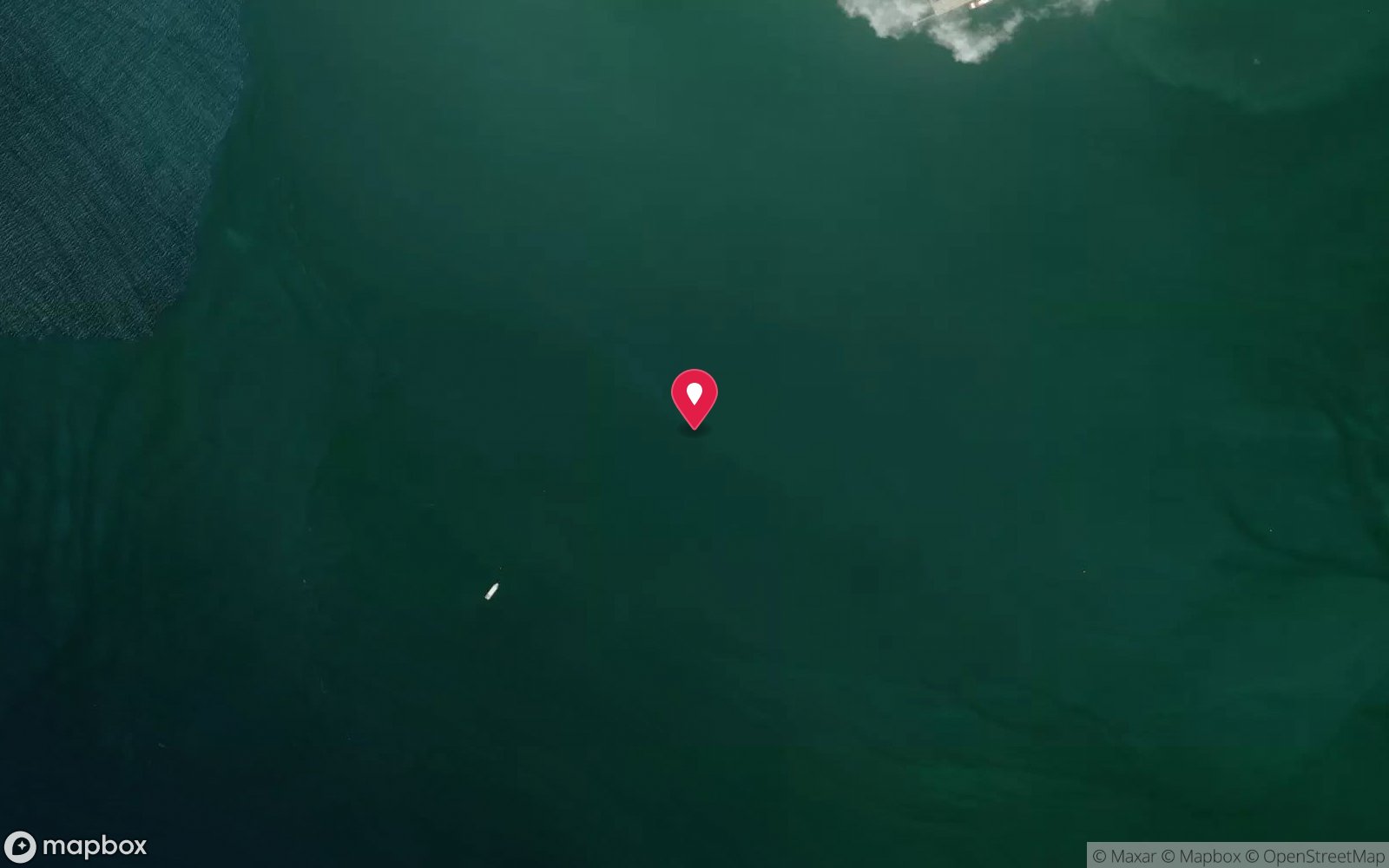
British Motorist: frequently asked questions
How deep is British Motorist?
British Motorist reaches a maximum depth of 20 m; most of the dive is spent around 18 m.
What certification do I need to dive British Motorist?
Advanced Open Water is the recommended minimum. Open Water divers can dive the shallower section (typical depth 18 m); the full site to 20 m needs Advanced Open Water. Operators often quote Open Water. Rated intermediate because of depth beyond 18 m, tidal current that must be timed, boat traffic overhead.
Can I shore dive British Motorist?
No, it is reached by boat. A dive centre is required: boat access only.
When is the best time to dive British Motorist?
May-October (dry season), on neap tides only.
What marine life will I see at British Motorist?
Regularly recorded: Golden snapper, rock cod (estuary cod), jewfish, batfish, sponges and soft corals on the machinery.
What wetsuit do I need at British Motorist?
3 mm wetsuit or skin in the dry season; full-length Lycra stinger suit (with hood and gloves) October-May.
How cold is the water at British Motorist?
Typically 29-32 °C in summer and 24-26 °C in winter.
What are the main hazards at British Motorist?
Darwin's tidal range reaches 7-8 m on springs: dive only on neap tides at slack water or currents become unswimmable and visibility collapses. See the hazards section above for the full list.
Where is the nearest recompression chamber to British Motorist?
Royal Darwin Hospital hyperbaric medicine unit (Tiwi, Darwin). In an emergency call 000, then DAN Asia-Pacific on 1800 088 200.
Diving in Darwin Harbour
Darwin Harbour is Australia's most historic wreck-diving location. The Japanese air raid of 19 February 1942 sank the USAT Meigs, SS Mauna Loa, British Motorist, Zealandia, Kelat and others, and they remain as protected war graves in 15–25 m, along with the Song Saigon refugee boat and a scatter of barges and aircraft. Visibility is low (3–8 m) and the tidal range reaches 8 m, so every dive is planned around slack water on the neap tides.
Getting there: Charters from Darwin, generally advertised weeks ahead for the neap-tide windows. No shore diving.
Sources
- dsac.com.au/Divesite_files/B%20Motorist.htm
- marinelife.org.au/?page_id=58
- en.wikipedia.org/wiki/MV_British_Motorist
- en.wikipedia.org/wiki/Fujita_salvage_operation
- nt.gov.au/leisure/arts-culture-heritage/visit-a-cultural-or-heritage-site/maritime-heritage
Data confidence: High · Being verified: Coordinates from Wikipedia (12°28.96'S 130°50.33'E). Marinelife gives length as 145 m; DSAC 440.2 ft (134 m).. Last updated September 2026. Know this site better? How to send a correction