Dive slate · divesites.com.au · printed 7 Nov 2026
Japanese Submarine I-124
Darwin Offshore & Artificial Reefs, Northern Territory · near Darwin
| Depth | Max 45 m |
|---|---|
| Minimum level | Technical (decompression) |
| Difficulty | Expert/Technical |
| Access | Boat (day trip) |
| Entry | Not permitted without Heritage Branch permission |
| Current | Variable/Tidal |
| Water | summer 30-32 °C, winter 24-26 °C |
| Suit | 3 mm shorty or full lycra/stinger suit; full-length stinger suit essential October-May |
| Best season | May-October dry season on neap tides (smallest tidal range, best visibility, south-east trade winds are strongest mid-morning) |
| Position | not published |
| Permit | Declared protected zone with closed-water order; war grave. NT Heritage Branch permission required. |
| Nearest chamber | Royal Darwin Hospital hyperbaric medicine unit (Tiwi, Darwin) |
| Emergency | 000 · DAN Asia-Pacific diving emergency 1800 088 200 |
Japanese Submarine I-124
Also known as I-124, HIJMS I-124
Australia's first protected war grave – a WWII Japanese minelaying submarine in 45 m, closed to divers; viewable through a 2022 virtual-reality survey model.
Near Darwin · Darwin Offshore & Artificial Reefs, Northern Territory
- Depth
- Max 45 m
- Minimum level
- Technical (decompression)
- Access
- Boat (day trip)
- Boat ride
- —
- Water
- 30-32 °C
- Visibility
- —
Japanese Submarine I-124Max 45 m · Technical (decompression)
Dive factsDepths, conditions, location & safety
Season
Off-peak nowBest months: May, June, July, August, September, October.
May-October dry season on neap tides (smallest tidal range, best visibility, south-east trade winds are strongest mid-morning)
- Best months
- Now (November)
- Stinger suit Nov–May
Dive facts
- Depth
- Max 45 m
- Typical depth
- 45 m
- Certification
- Technical (decompression)
- Difficulty
- Expert/Technical
- Depth tier
- Technical (40 m +)
- Access
- Boat (day trip)
- Dive centre needed
- Yes – permit/guide required
- Shore / independent
- No
- Current
- Variable/Tidal
- Water temp (summer)
- 30-32 °C
- Water temp (winter)
- 24-26 °C
- Water
- Tropical
- Dive traffic
- Remote/expedition only
- Night dive
- No
- Snorkel friendly
- No
Exposure suit
3 mm shorty or full lycra/stinger suit; full-length stinger suit essential October-May
Location
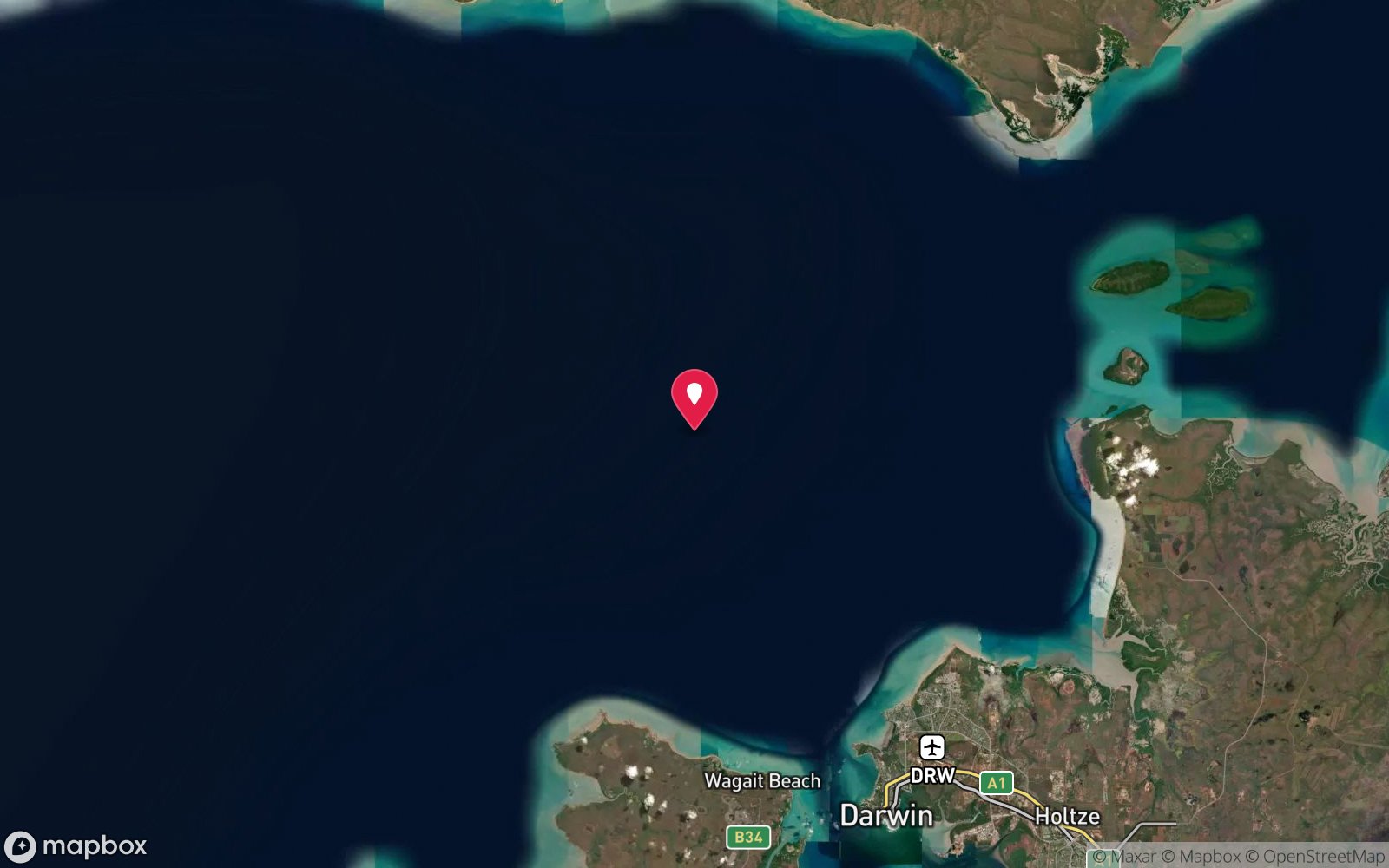
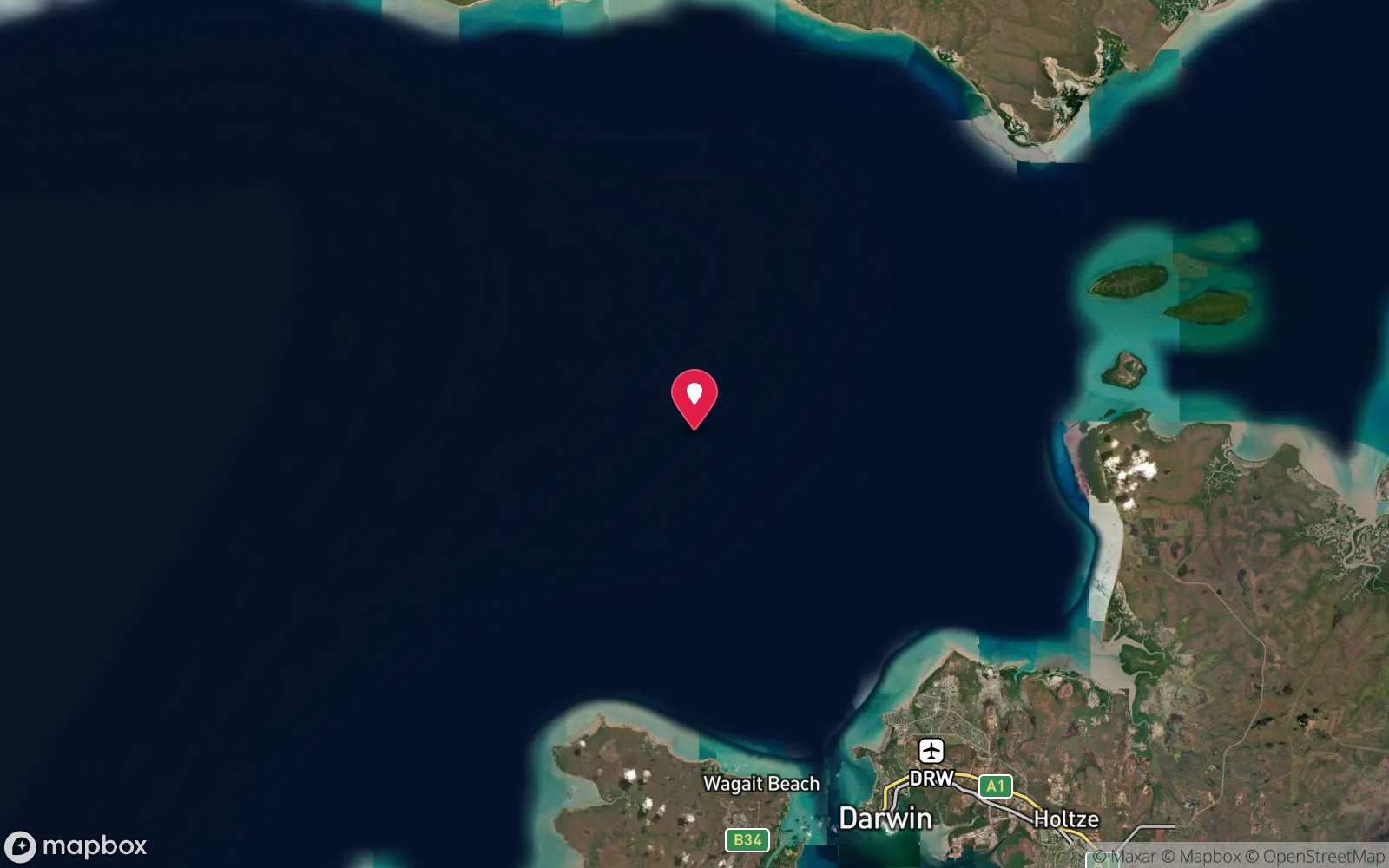
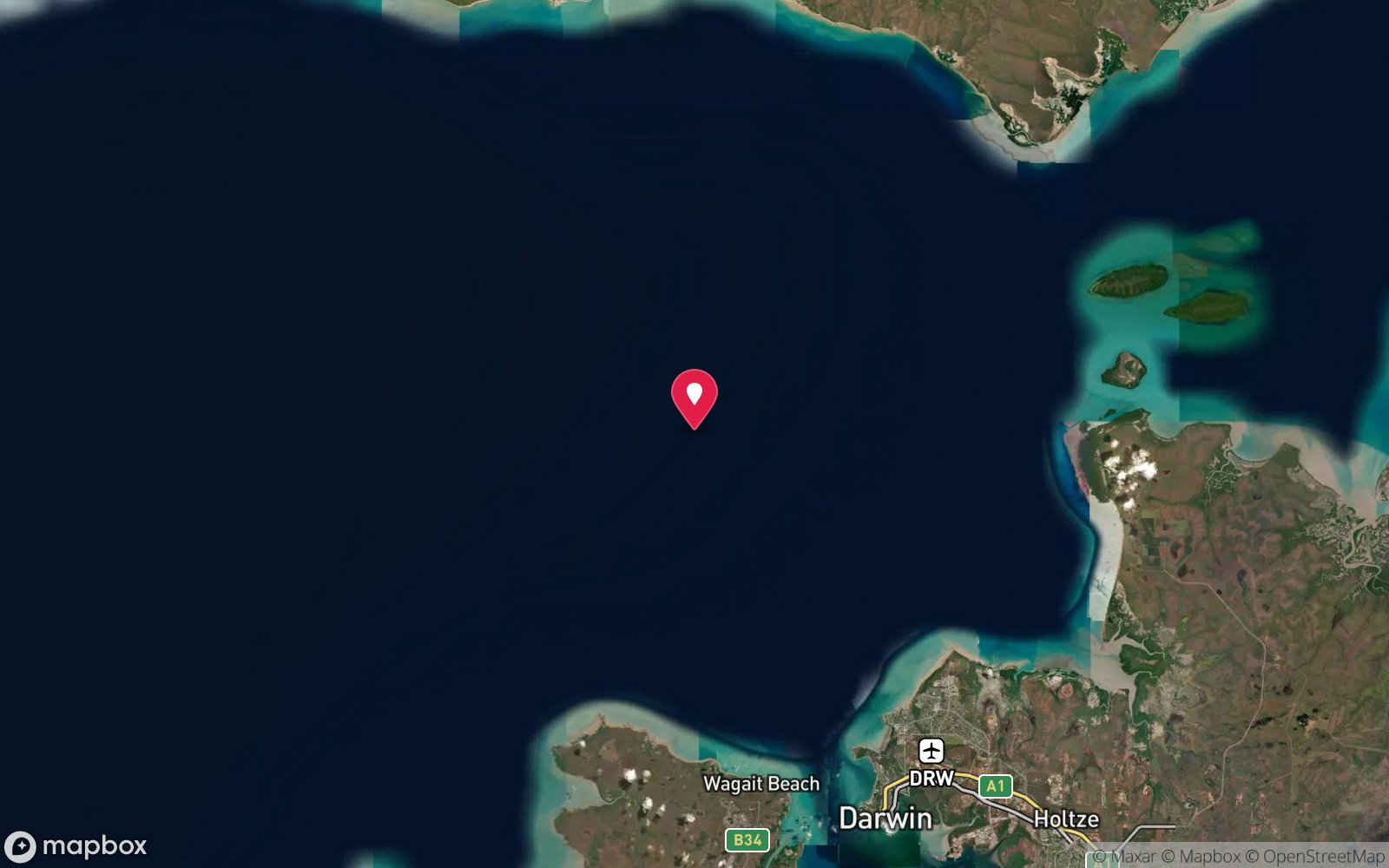
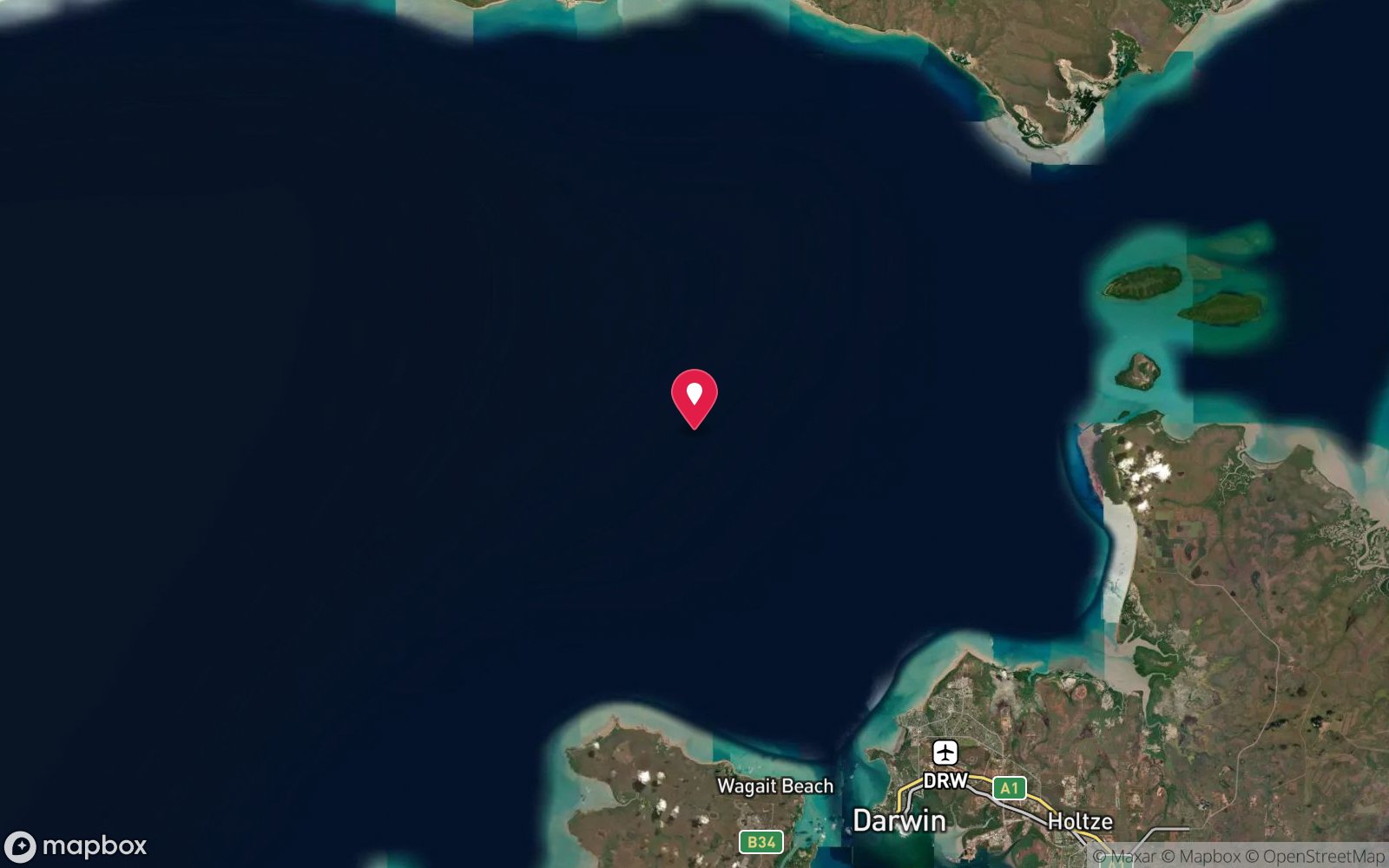
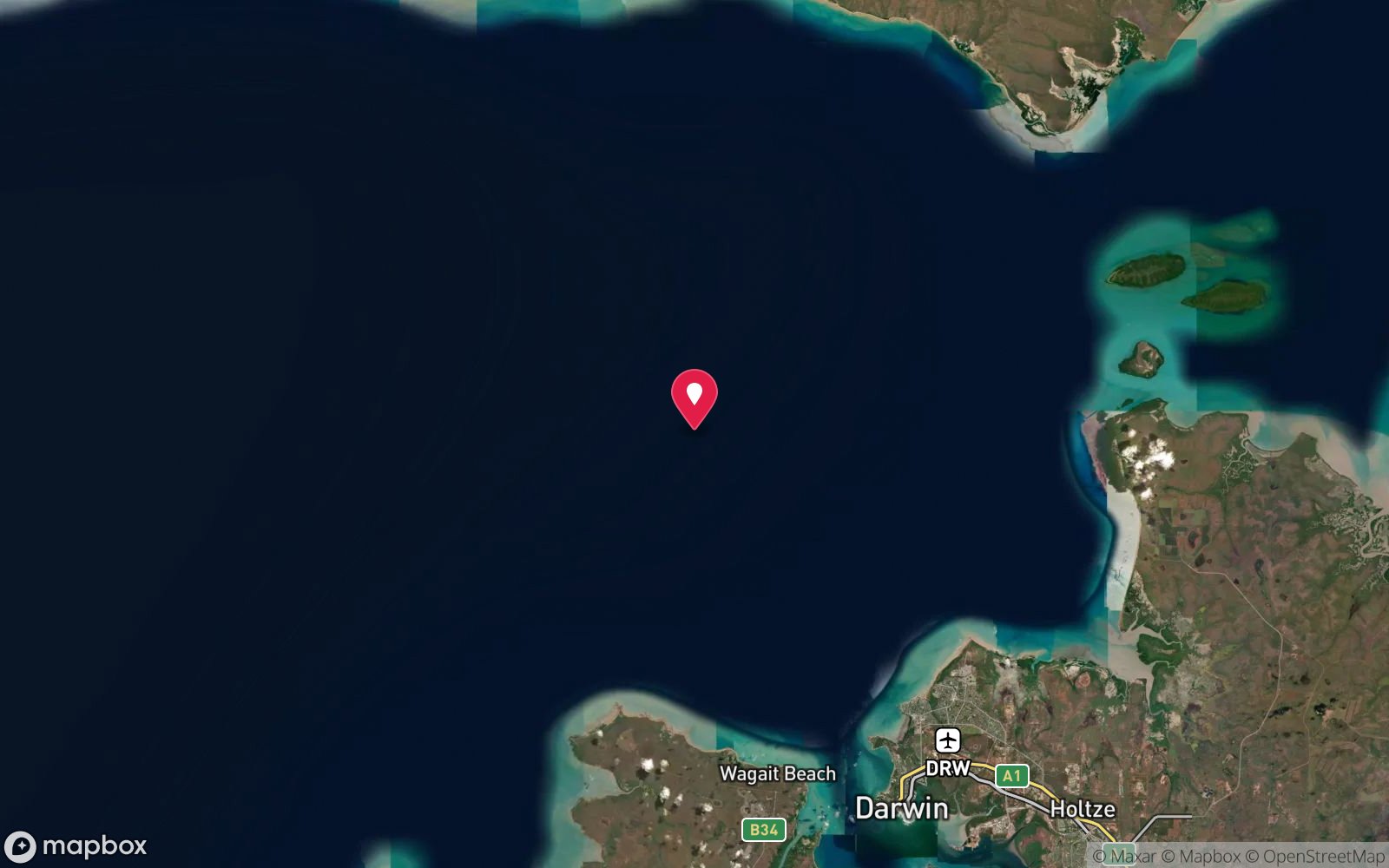
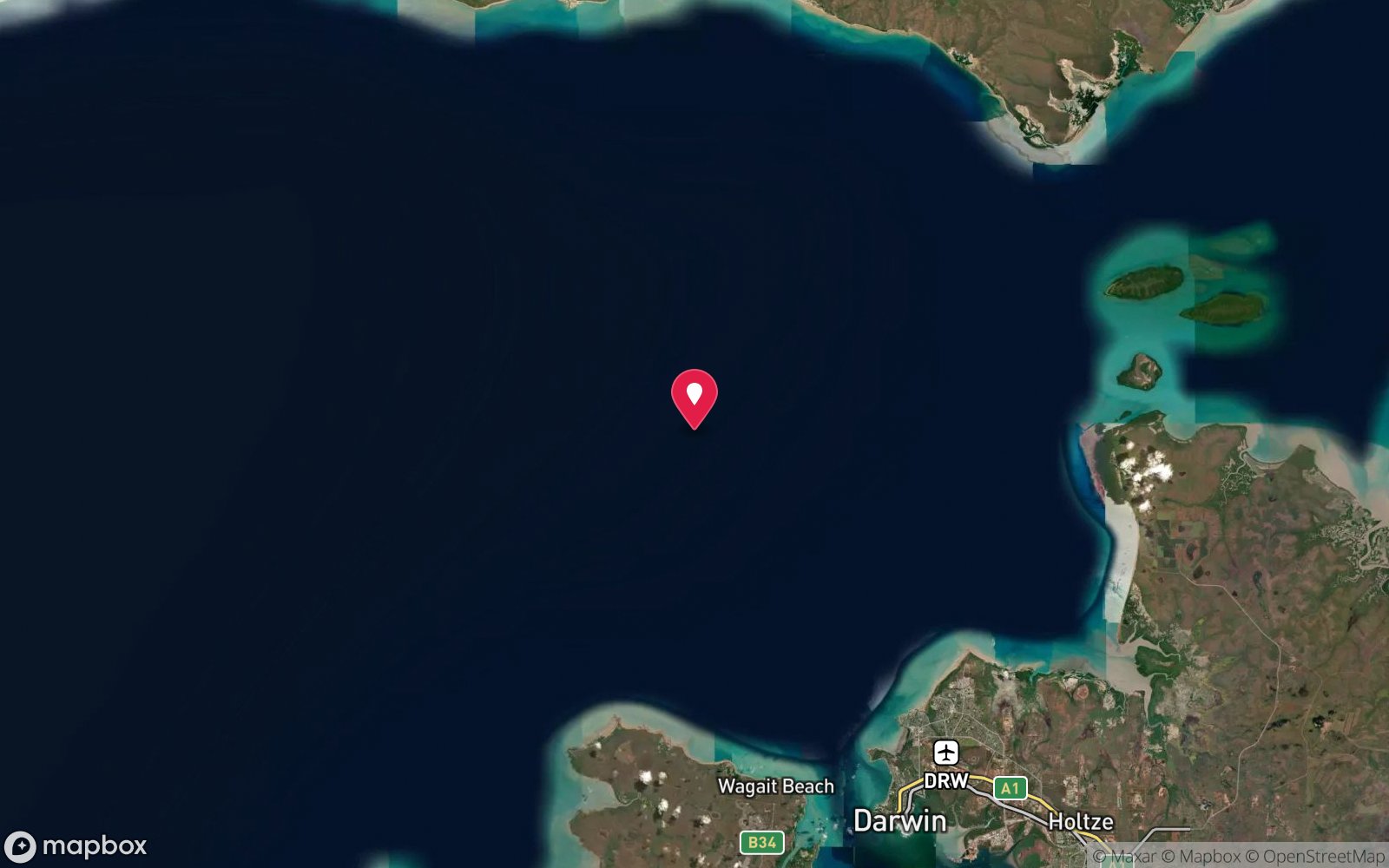
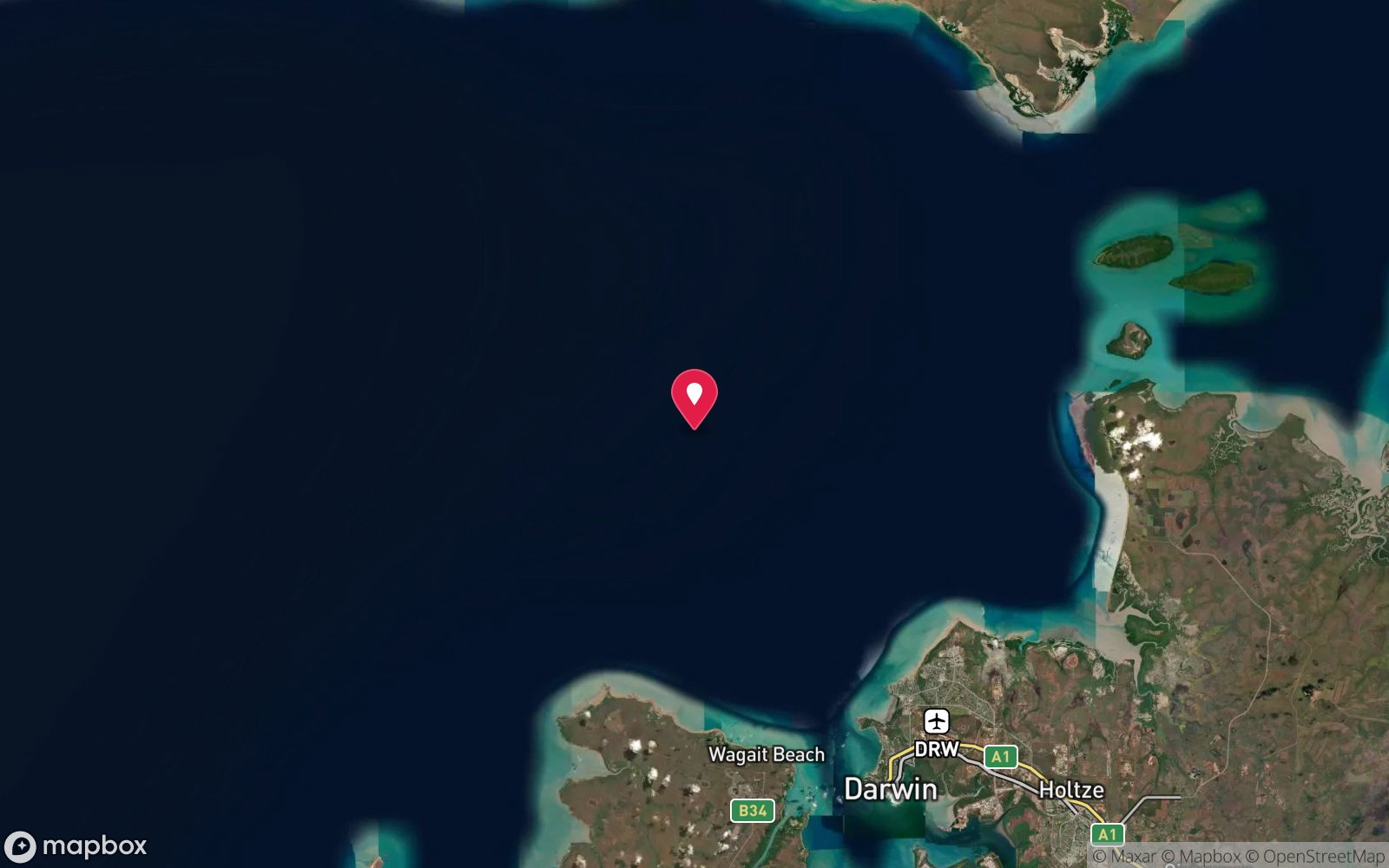
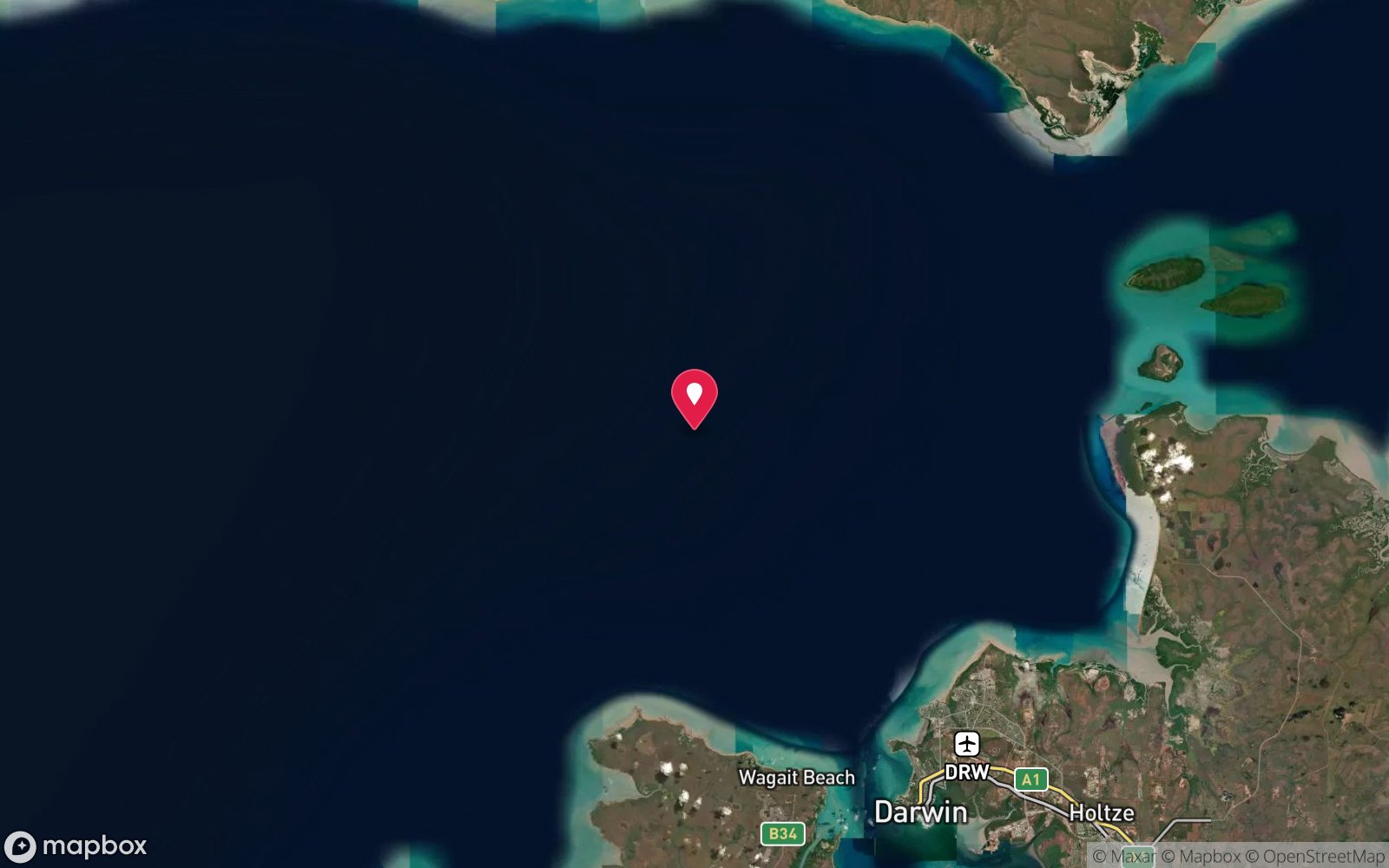
Approaches to Darwin · Darwin offshore – Beagle Gulf
No published coordinates. The map above shows the general area, estimated from other documented sites near Darwin.
Primary source: livescience.comMarine park & permits
Declared protected zone with closed-water order; war grave. NT Heritage Branch permission required.
Nearest recompression chamber
Royal Darwin Hospital hyperbaric medicine unit (Tiwi, Darwin)
Diving emergency: call 000, then DAN AP 1800 088 200.
Trip planner
Build a trip around Japanese Submarine I-124 →
A day-by-day plan for Darwin Offshore & Artificial Reefs with this site locked in.
This guide is a planning aid. Conditions change daily — confirm with a local dive centre and dive within your training. Data & safety notes.
Dive profile
How this site rates
Scores are computed from the recorded data, not opinions. How?
At a glance
Japanese Submarine I-124 is a wreck boat dive in Darwin Offshore & Artificial Reefs, NT, to a maximum of 45 m, suited to Technical (decompression) divers, variable/tidal current.
Rated expert/technical because of depth to 45 m, tidal current that must be timed.
Why dive here
- Australia's first protected war grave – a WWII Japanese minelaying submarine in 45 m, closed to divers; viewable through a 2022 virtual-reality survey model.
- Sunk in 1942; protected as underwater cultural heritage, so look but do not touch.
- Rarely dived: expect to have the site to yourself, and plan your own logistics.
Conditions to avoid
- Cyclone season (roughly December–April)
- Stinger season without a full suit (November–May)
About Japanese Submarine I-124
I-124 was one of four large minelaying submarines built for the Imperial Japanese Navy in the late 1920s, based on the German Type UB III design obtained after World War I. In January 1942, as Japanese forces pushed south, she laid mines off Darwin and waited to attack Allied shipping. On 20 January 1942 she was detected and sunk off Darwin by the corvette HMAS Deloraine, supported by other Australian warships, US destroyers and aircraft, using depth charges and bombs. About 80 crew went down with her. She was the first enemy submarine sunk by the Royal Australian Navy and the first full-size submarine sunk in Australian waters.
The wreck lies in about 45 m roughly 50 nautical miles north-west of Darwin. In 1972 salvagers located her, hoping to recover scrap metal and supposedly valuable cargo; Japan objected to disturbance of the war grave, and in 1977 a salvager detonated explosives at the site, severely damaging the conning tower, in an attempt to force negotiations. The Navy secured the site, and it became Australia's first protected war grave. A Flinders University and NT Heritage survey released a virtual-reality model in 2022 showing the hull still mostly intact, with some degradation of the outer hull.
The site is a declared protected zone with a closed-water order and entry requires Heritage Branch permission. Given its depth, it would in any case be a technical decompression dive. It is included here because it is often asked about and to make clear that it is not open to recreational divers; the VR model is the way most people can see it.
Wreck details
Imperial Japanese Navy I-121-class minelaying submarine (based on German UB III design) · Sunk 1942 · Protected historic shipwreck
Era: Second World War. Oldest wrecks · Wartime wrecks · Scuttled warships
Other wrecks of the same era
- SS Mauna Loa · Max 20 m · Darwin Harbour
- SS Zealandia · Max 22 m · Darwin Harbour
- USAT Meigs · Max 18 m · Darwin Harbour
- British Motorist · Max 20 m · Darwin Harbour
- Don Isidro · Depth not published · Tiwi Islands
- Florence D · Max 16 m · Tiwi Islands
Getting there & entry
Japanese minelaying submarine sunk on 20 January 1942, lying about 50 nm (90 km) north-west of Darwin in a declared protected zone and war grave.
The wreck lies about 50 nautical miles north-west of Darwin in open water in the approaches to the harbour. It is a declared protected zone with a closed-water order and is treated as a war grave: vessels may not enter the zone and divers may not visit without permission from the NT Heritage Branch, which is granted only for approved research and management. There is no recreational access.
Entry: Not permitted without Heritage Branch permission
Weather, swell & tides
Open water in Beagle Gulf, fully exposed; research visits are made in the dry season (May–October) on calm neap-tide days. At 45 m in the approaches to Darwin the tidal stream runs strongly for most of the cycle, so even permitted teams work only short slack windows on neap tides. The wet season (December–April) brings monsoon north-westerlies, storms, cyclone risk and box jellyfish.
The site is closed to recreational divers regardless of conditions.
Best season: May-October dry season on neap tides (smallest tidal range, best visibility, south-east trade winds are strongest mid-morning)
How the dive is usually run
Not applicable – closed site.
Marine life
- Not documented for recreational purposes
Linked species have their own page listing every site where they are recorded. All marine life →
Training required
Beyond recreational limits: decompression, mixed gas or full cave/wreck training is required.
Courses that help here
- Enriched Air Nitrox – Longer no-decompression time at 25 m and deeper.
Depth tiers: 0–10 m easy · to 18 m Open Water · 18–30 m Advanced (25 m+ is a deep dive) · 30–40 m Deep specialty · 40 m+ technical. All courses
Hazards & warnings
CLOSED WATER and war grave – entry without NT Heritage Branch permission is an offence. 45 m depth; unexploded ordnance and mines possible; open-water currents.
Technical notes
If ever accessed under permit: trimix/decompression dive at 45 m in open water with strong tidal streams.
Dive centres that go here
None – closed-water protected zone and war grave; access restricted to permitted research teams.
Other dive centres in Darwin Offshore & Artificial Reefs
Dive Darwin
ProfiledDarwin · Darwin Harbour · NT
The main verified dive operation in the Northern Territory, offering recreational training through professional level alongside technical diving and a large specialty range.
divedarwin.com.au · +61 401 751 651
Darwin Sub Aqua Club
Named by sitesDarwin · Darwin Harbour · NT
Club, not a shop: official site updated August 2026 with the 2026 AGM notice; meets Thursdays at Darwin Ski Club, Fannie Bay.
dsac.com.au
Sea Darwin
Named by sitesDarwin · Darwin Offshore & Artificial Reefs · NT
Eco tour and cruise operator; contact details not on fetched pages.
seadarwin.com
Western Blue Dive Charters
Named by sitesDarwin · Darwin Offshore & Artificial Reefs · NT
The only operator found under this name is Western Blue Dive Charters at Mindarie Marina, Perth (westernbluedive.com.au); no Darwin operator by this name could be confirmed, so the Darwin attribution is doubtful.
All dive centres in Northern Territory →
Operators mentioned: None (permit holders only)
General area
No position has been published for Japanese Submarine I-124. The circle shows where it is likely to be, worked out from other documented sites near Darwin. Ask a local operator for the exact site.
Dashed circle: general area (about 24 km), from other documented sites near Darwin. 6 pinned sites. Pins marked approximate on their pages show the general area only; not for navigation.
Japanese Submarine I-124: frequently asked questions
How deep is Japanese Submarine I-124?
Japanese Submarine I-124 reaches a maximum depth of 45 m; most of the dive is spent around 45 m.
What certification do I need to dive Japanese Submarine I-124?
Technical (decompression) is the recommended minimum. Rated expert/technical because of depth to 45 m, tidal current that must be timed.
Can I shore dive Japanese Submarine I-124?
No, it is reached by boat. A dive centre is required: permit/guide required.
When is the best time to dive Japanese Submarine I-124?
May-October dry season on neap tides (smallest tidal range, best visibility, south-east trade winds are strongest mid-morning).
What marine life will I see at Japanese Submarine I-124?
Regularly recorded: Not documented for recreational purposes.
What wetsuit do I need at Japanese Submarine I-124?
3 mm shorty or full lycra/stinger suit; full-length stinger suit essential October-May.
How cold is the water at Japanese Submarine I-124?
Typically 30-32 °C in summer and 24-26 °C in winter.
What are the main hazards at Japanese Submarine I-124?
CLOSED WATER and war grave – entry without NT Heritage Branch permission is an offence. See the hazards section above for the full list.
Where is the nearest recompression chamber to Japanese Submarine I-124?
Royal Darwin Hospital hyperbaric medicine unit (Tiwi, Darwin). In an emergency call 000, then DAN Asia-Pacific on 1800 088 200.
Diving in Darwin Offshore & Artificial Reefs
Outside the harbour the water clears a little and a collection of post-war wrecks, artificial reefs and natural patches (the Fenton Patches, Charles Point reef and the scuttled Song Saigon and Anchorage wrecks) give Darwin divers deeper and cleaner alternatives to the harbour war graves.
Getting there: Charters from Darwin on neap tides.
All Darwin Offshore & Artificial Reefs dive sites and a suggested itinerary →
Sources
- livescience.com/wwii-submarine-wreck-vr-tour
- nt.gov.au/leisure/arts-culture-heritage/visit-a-cultural-or-heritage-site/maritime-heritage
Data confidence: Medium · Being verified: Class name and sinking ships (HMAS Deloraine etc.) from general historical knowledge – verify; coordinates intentionally not published.. Last updated September 2026. Know this site better? How to send a correction
Nearby dive sites
More wrecks in Northern Territory
Explore more
This region