Dive slate · divesites.com.au · printed 9 Nov 2026
Merindah Pearl
Darwin Offshore & Artificial Reefs, Northern Territory · near Darwin
| Depth | 18–28 m |
|---|---|
| Minimum level | Advanced Open Water |
| Difficulty | Intermediate |
| Access | Boat (day trip) |
| Entry | Giant stride or backward roll from the boat; descend the shot or anchor line |
| Current | Variable/Tidal |
| Visibility | 5-15 m |
| Water | summer 30-32 °C, winter 24-26 °C |
| Suit | 3 mm shorty or full lycra/stinger suit; full-length stinger suit essential October-May |
| Best season | May-October dry season on neap tides (smallest tidal range, best visibility, south-east trade winds are strongest mid-morning) |
| Bottom time | 25 min |
| Position | -12.16350, 130.69015 (approximate) |
| Permit | None required. NT recreational fishing rules apply on the reef; heritage rules do not apply to scuttled artificial-reef vessels. |
| Nearest chamber | Royal Darwin Hospital hyperbaric medicine unit (Tiwi, Darwin) |
| Emergency | 000 · DAN Asia-Pacific diving emergency 1800 088 200 |
Merindah Pearl
Also known as Marindah Pearl
A 25 m ex-pearling vessel prepared by DSAC volunteers and scuttled in 2013 at the northern end of the Fenton wreck cluster.
Near Darwin · Darwin Offshore & Artificial Reefs, Northern Territory
- Depth
- 18–28 m
- Minimum level
- Advanced Open Water
- Access
- Boat (day trip)
- Boat ride
- —
- Water
- 30-32 °C
- Visibility
- 5-15 m
Merindah Pearl18–28 m · Advanced Open Water
Dive factsDepths, conditions, location & safety
Season
Off-peak nowBest months: May, June, July, August, September, October.
May-October dry season on neap tides (smallest tidal range, best visibility, south-east trade winds are strongest mid-morning)
- Best months
- Now (November)
- Stinger suit Nov–May
Dive facts
- Depth
- 18–28 m
- Typical depth
- 24 m
- Certification
- Advanced Open Water
- Difficulty
- Intermediate
- Depth tier
- Advanced Open Water (18–30 m)
- Access
- Boat (day trip)
- Offshore
- 31 km
- Dive centre needed
- Yes – boat access only
- Shore / independent
- No
- Current
- Variable/Tidal
- Visibility
- 5-15 m
- Water temp (summer)
- 30-32 °C
- Water temp (winter)
- 24-26 °C
- Water
- Tropical
- Bottom time
- 25 min
- Dive traffic
- Moderate (occasional charters/club dives)
- Night dive
- No
- Snorkel friendly
- No
Exposure suit
3 mm shorty or full lycra/stinger suit; full-length stinger suit essential October-May
Location
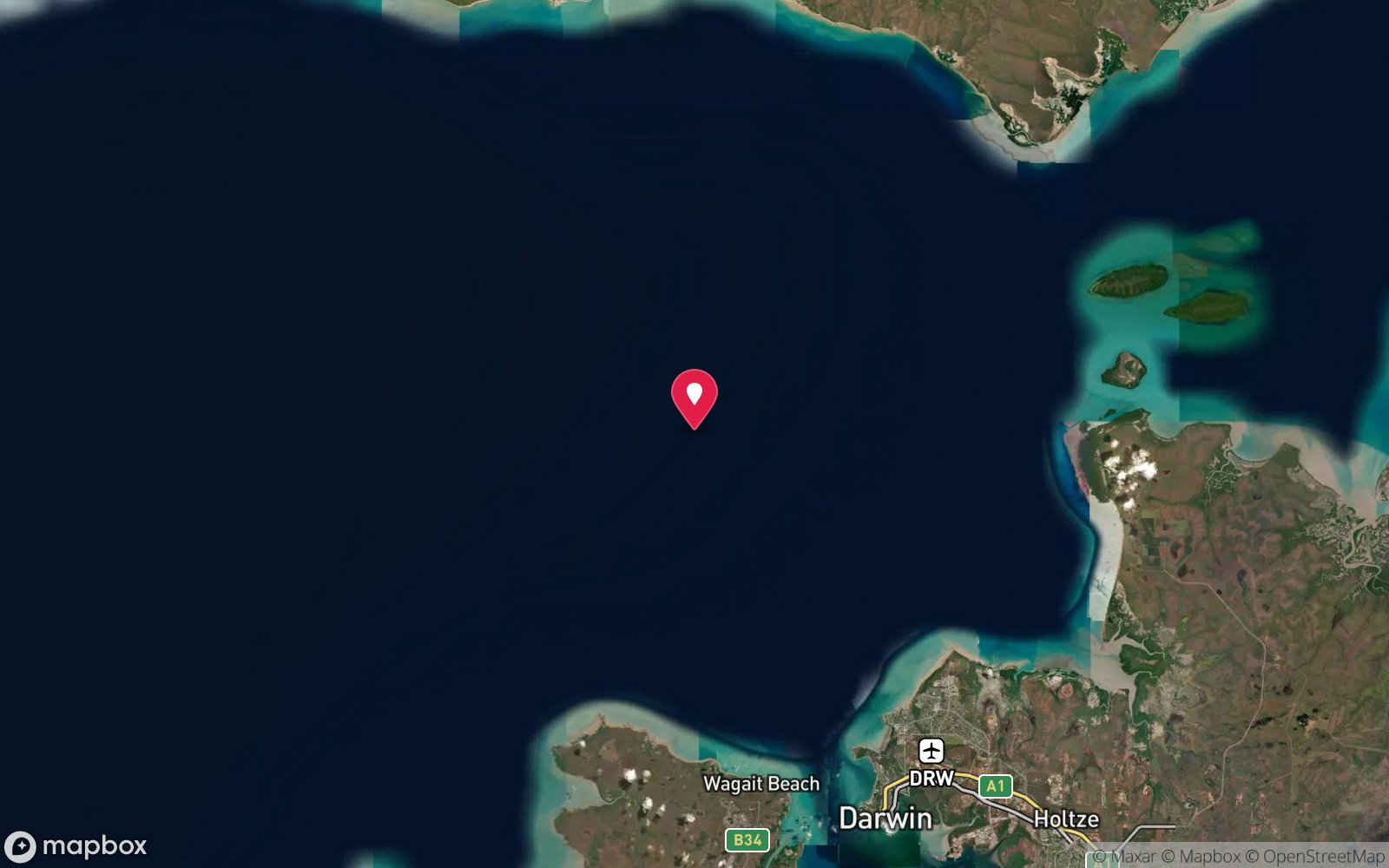
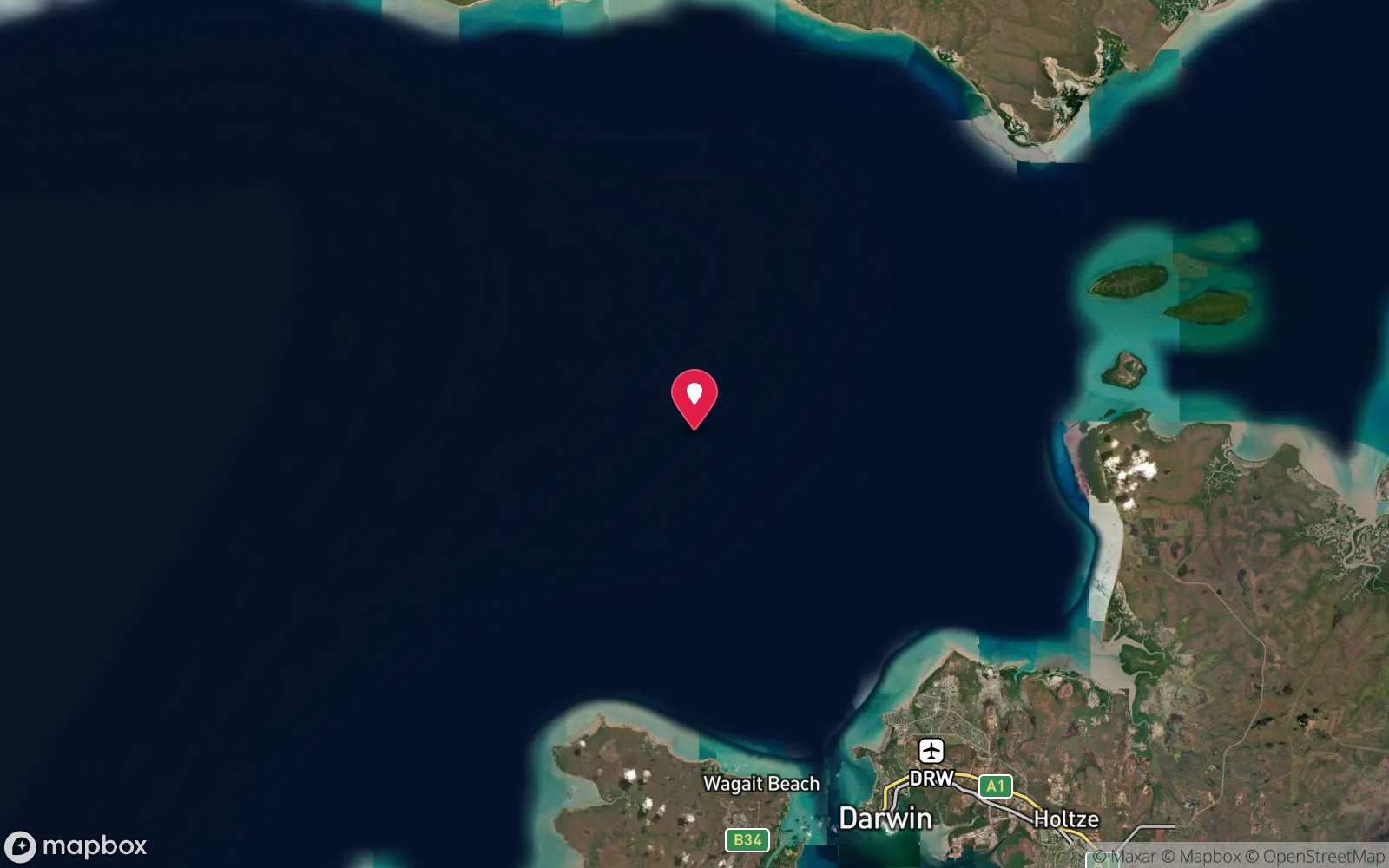
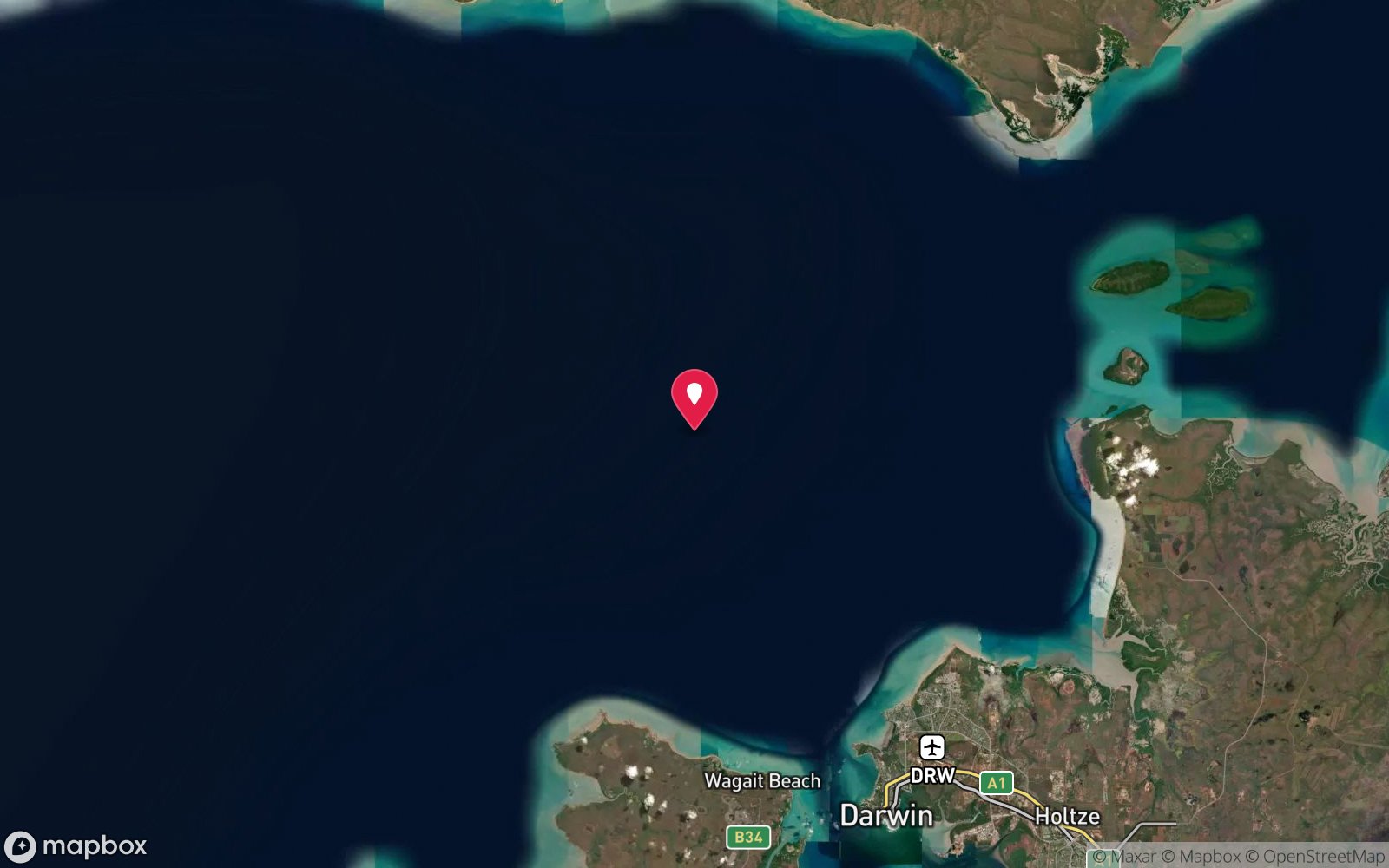
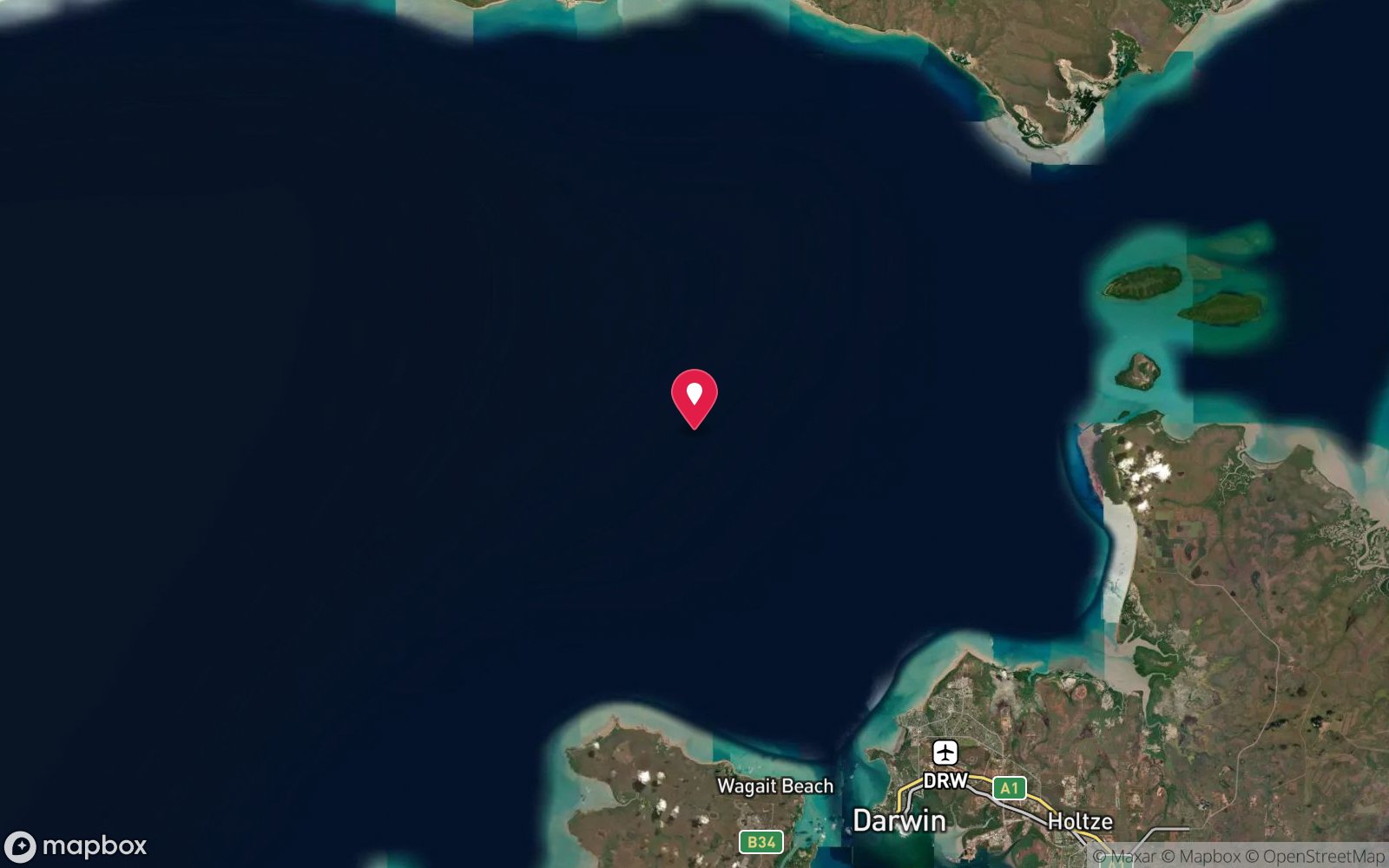
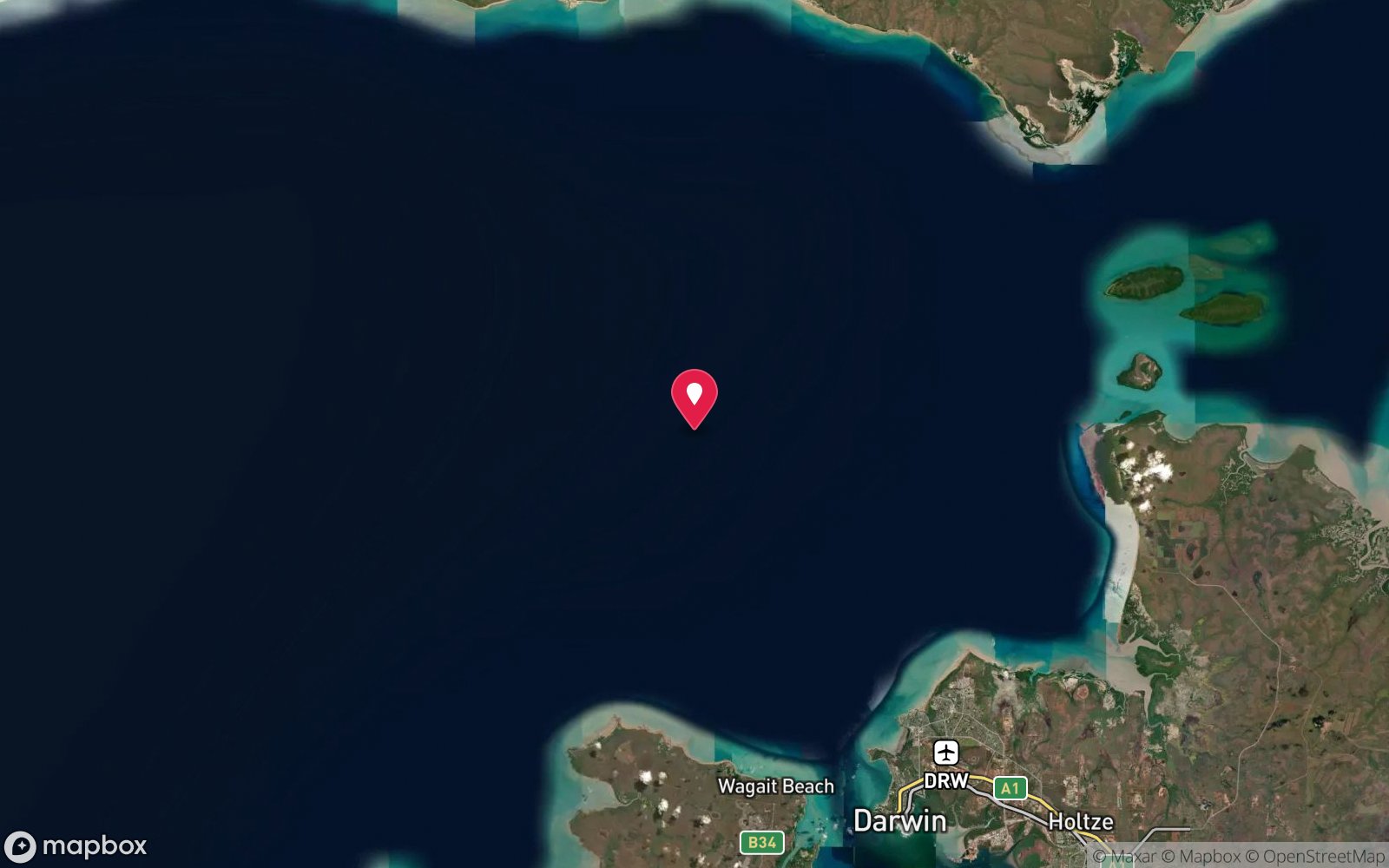
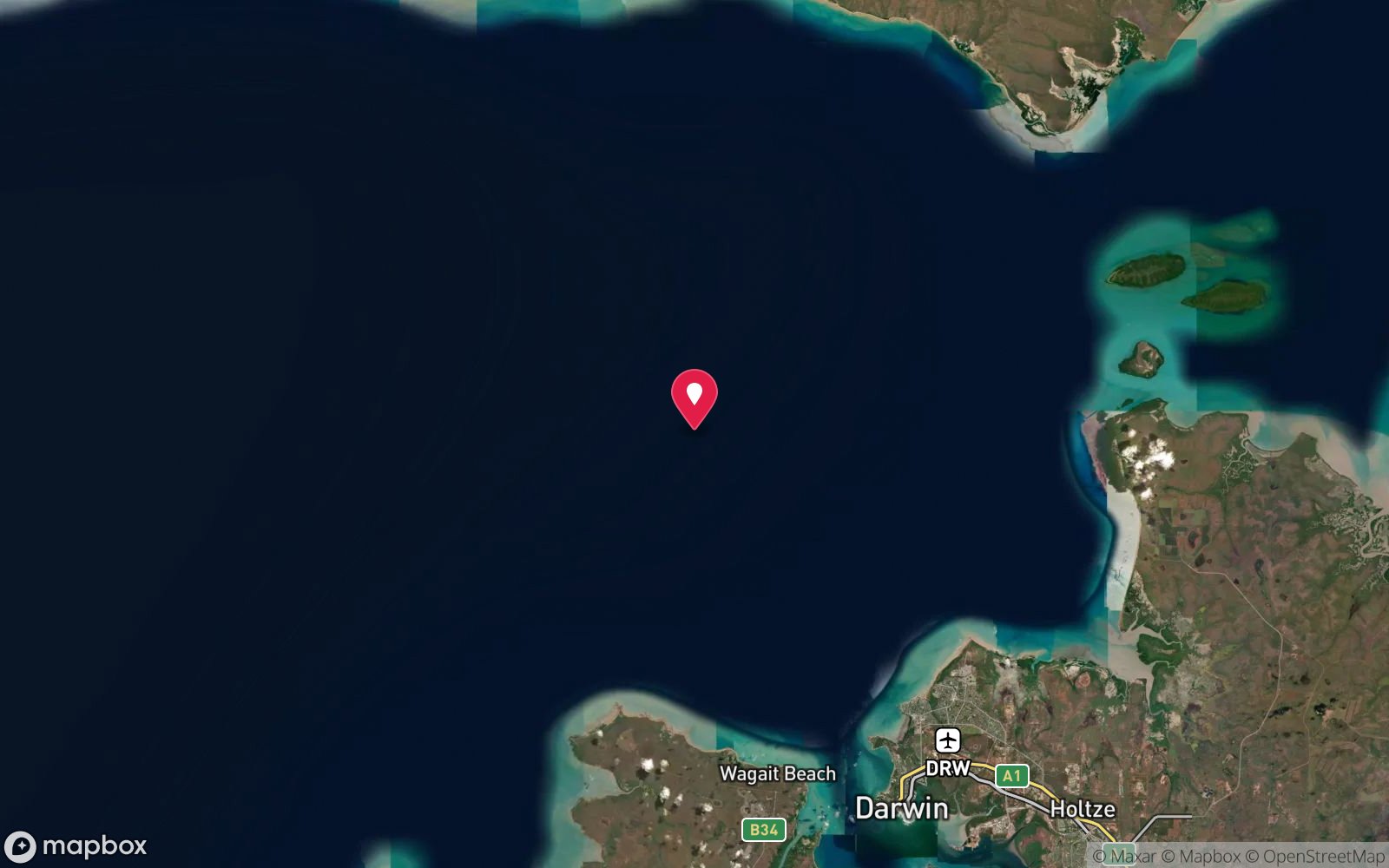
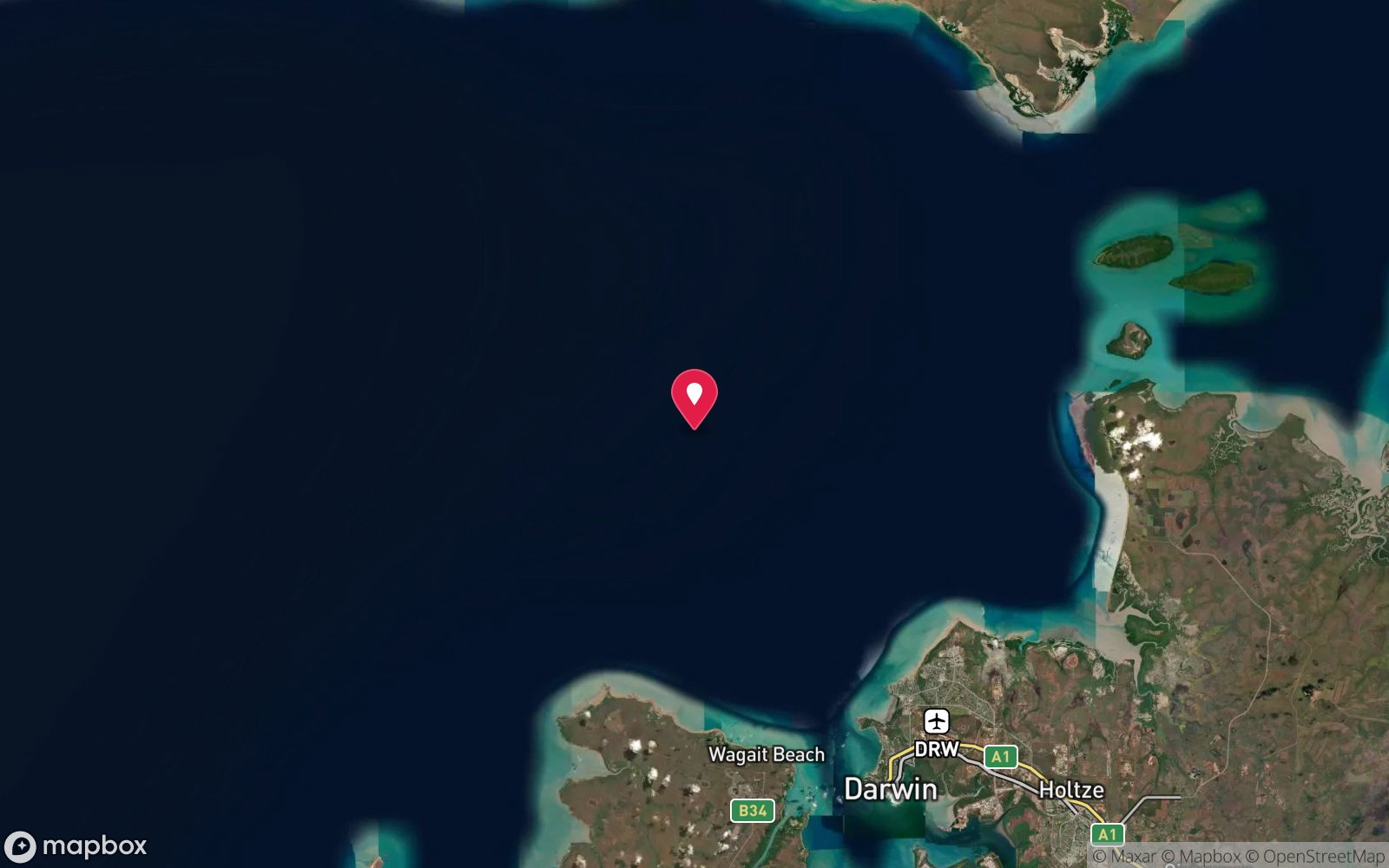
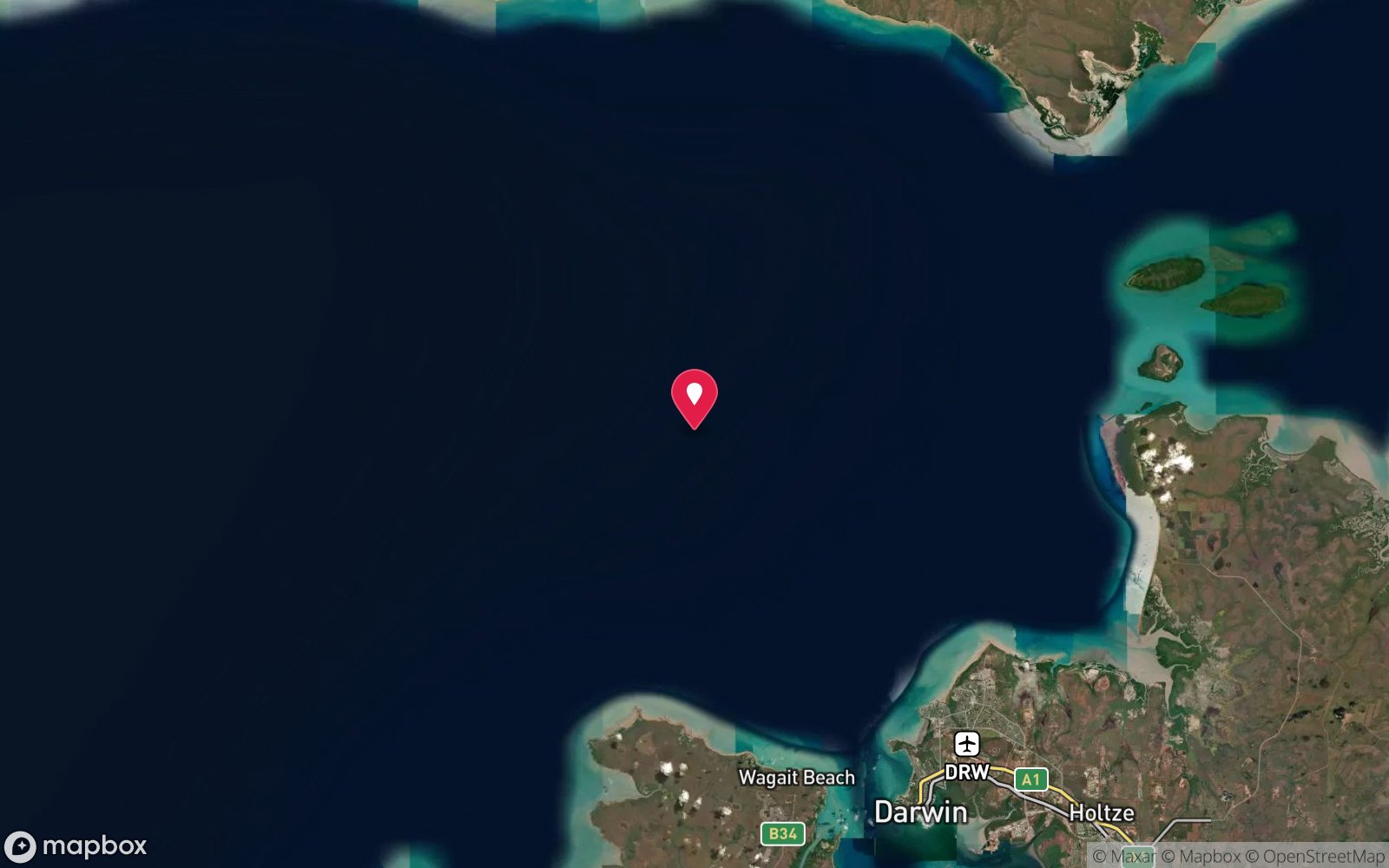
Fenton Patches artificial reef field · Darwin offshore – Fenton Patches
-12.16350, 130.69015
Approximate position — not for navigation.
Open in Google MapsDive site map (external) →Primary source: dsac.com.auMarine park & permits
None required. NT recreational fishing rules apply on the reef; heritage rules do not apply to scuttled artificial-reef vessels.
Nearest recompression chamber
Royal Darwin Hospital hyperbaric medicine unit (Tiwi, Darwin)
Diving emergency: call 000, then DAN AP 1800 088 200.
Trip planner
Build a trip around Merindah Pearl →
A day-by-day plan for Darwin Offshore & Artificial Reefs with this site locked in.
This guide is a planning aid. Conditions change daily — confirm with a local dive centre and dive within your training. Data & safety notes.
Dive profile
How this site rates
Scores are computed from the recorded data, not opinions. How?
At a glance
Merindah Pearl is a wreck boat dive in Darwin Offshore & Artificial Reefs, NT, 18–28 m, suited to Advanced Open Water divers, variable/tidal current.
Rated intermediate because of depth beyond 18 m, tidal current that must be timed.
Why dive here
- A 25 m ex-pearling vessel prepared by DSAC volunteers and scuttled in 2013 at the northern end of the Fenton wreck cluster.
- Sunk in 2013 (Steel pearl-meat (pearling) vessel, c. 25 m).
Conditions to avoid
- Outgoing tide or run-off after rain (poor visibility)
- Any time other than slack water
- Cyclone season (roughly December–April)
- Stinger season without a full suit (November–May)
About Merindah Pearl
The Merindah Pearl was a pearl-meat vessel – one of the workboats used in the northern Australian pearling industry to harvest and process pearl oysters – before being retired and donated to the artificial reef program. Darwin Sub Aqua Club members cleaned and prepared her for scuttling, and she was sunk at Fenton Patches in 2013, the same year as the Amelia C. The DSAC page places her about 100 m north of the Antares and Amelia C pair and near the 10 m x 10 m steel barge, making her the northern end of the Fenton wreck cluster.
She is a steel vessel of about 25 m lying on sand in 25–28 m of water. The hull has the long, low working deck typical of pearling boats, with the wheelhouse and accommodation forward or amidships and open deck space where oyster panels were once handled. Hatches and doorways were opened during preparation, so the interior can be seen with a torch, but silt settles quickly and nobody should go inside without training and a line.
In the decade since scuttling the hull has grown a mantle of sponges, soft corals, sea whips, hydroids and oysters. Resident fish include golden snapper, saddletail snapper, estuary cod and black jewfish, while trevally, queenfish, Spanish mackerel and cobia move through when the tide begins to run. Batfish and small reef fish crowd the superstructure, and the sand around the hull is worth a look for rays and flathead.
As a dive, the Merindah Pearl is a compact, easily covered wreck that works well either as a stand-alone dive or as the start of a navigated tour of the cluster. It is also a reminder of the pearling industry that shaped the Top End's coastal history. It suits advanced divers used to open-water descents on a shot line in limited visibility, with depth and slack-water timing the main constraints. On a clear neap-tide morning it is one of the easier Fenton wrecks to enjoy.
Wreck details
Steel pearl-meat (pearling) vessel, c. 25 m · Sunk 2013
Era: modern, mostly scuttled as artificial reefs. Oldest wrecks · Wartime wrecks · Scuttled warships
Other wrecks of the same era
- Amelia C · Max 28 m · Darwin Offshore & Artificial Reefs
- Amanda Lee · Max 28 m · Darwin Offshore & Artificial Reefs
- Antares and Steel Barge · Max 28 m · Darwin Offshore & Artificial Reefs
- Van Bruggen · Max 14 m · Darwin Harbour
- Kay Lee · Max 14 m · Darwin Harbour
- Lady Cheryl · Max 14 m · Port Phillip Heads
Getting there & entry
Ex-pearl-meat vessel scuttled 2013 at Fenton Patches, about 100 m north of the Antares/Amelia C (NT Government position 12°09.810'S 130°41.409'E, shared with Amelia C).
Fenton Patches lies about 17 nautical miles (roughly 31 km) north-west of Darwin in open water beyond the harbour mouth, so it is a boat-only site. Club and charter boats usually launch from the Cullen Bay ramp and marina (Marina Boulevard, Larrakeyah – ample trailer parking) or from Dinah Beach / Sadgroves Creek ramps inside the harbour, then run out past East Point and across Beagle Gulf. In a fast 6–7 m trailer boat allow roughly an hour each way in trade-wind chop; slower in a southeasterly above 15 knots.
There are no public moorings: the site is found on GPS and sounder, and a shot line or grapnel is dropped on the structure. Private boats need a competent skipper who can work the tide and keep a boat cover on the surface while divers are down.
Entry: Giant stride or backward roll from the boat; descend the shot or anchor line
Facilities: Departure facilities at Cullen Bay Marina (fuel, ramp, toilets, cafes) and Dinah Beach; air fills in Darwin only.
Weather, swell & tides
Fenton Patches is open water in Beagle Gulf with no shelter. Dive it only on neap tides and time the dive for slack water (typically a window of 30–60 minutes around the turn; Darwin's tidal range reaches 7–8 m on springs and currents at Fenton run hard outside slack). The dry season (May–October) brings the south-east trades: mornings are usually calm, but a 15–20 knot south-easterly by late morning makes the run back uncomfortable, so plan an early start.
The build-up (October–December) brings glassy days but storms in the afternoon; the wet season (December–April) brings north-westerly monsoon winds, heavy run-off that cuts visibility, cyclone risk (November–April) and box jellyfish in the water. Visibility is best after several days of neaps and no rain.
Best season: May-October dry season on neap tides (smallest tidal range, best visibility, south-east trade winds are strongest mid-morning)
How the dive is usually run
Shot the hull, descend and circuit the vessel at 22–25 m from the upstream end. Inspect the working deck and open hatches from outside, look under the bow and stern for jewfish, then finish around the wheelhouse at 18–20 m. Experienced divers with good visibility can navigate about 100 m south to the Antares/Amelia C using a compass and reel.
Return to the shot for the ascent before the tide turns.
Marine life
- Golden snapper
- saddletail snapper
- estuary cod
- black jewfish
- trevally
- queenfish
- Spanish mackerel
- cobia
- batfish
- rays
- sponges
- soft corals
- sea whips
Linked species have their own page listing every site where they are recorded. All marine life →
Training required
Beyond 18 m an Advanced certification (which includes a deep dive to 30 m) is the accepted minimum. Anything past 25 m is a deep dive in practice.
At more than 25 m this counts as a deep dive: watch no-decompression limits and gas.
Courses that help here
- Enriched Air Nitrox – Longer no-decompression time at 25 m and deeper.
- Underwater Navigation – Navigation is part of the dive plan.
- Peak Performance Buoyancy – Silt and low visibility punish poor trim.
Depth tiers: 0–10 m easy · to 18 m Open Water · 18–30 m Advanced (25 m+ is a deep dive) · 30–40 m Deep specialty · 40 m+ technical. All courses
Hazards & warnings
Strong tidal currents outside slack water – dive neap tides only and carry an SMB and reel; boat must stay live on the surface. Depth 25–28 m with short no-deco limits. Silt inside hulls and holds destroys visibility instantly.
Fishing line, lures and snagged anchors on all structures – carry a cutting tool. Box jellyfish and Irukandji October–May (full stinger suit). Saltwater crocodiles occur offshore in the Top End – do not linger on the surface.
Large groper and bull or tiger sharks may investigate divers. Remote from help: ~1 hour by boat to Darwin.
Dive centres that go here
No daily operator. Darwin Sub Aqua Club (DSAC) runs member boat dives to Fenton Patches on suitable neap-tide weekends in the dry season; Dive Darwin (learntodivedarwin.com.au) and Western Blue Dive Charters offer outer-harbour/offshore wreck trips on demand when tides and weather line up. Otherwise private boat only.
Operators recorded for Merindah Pearl
Dive Darwin
ProfiledDarwin · Darwin Harbour · NT
The main verified dive operation in the Northern Territory, offering recreational training through professional level alongside technical diving and a large specialty range.
divedarwin.com.au · +61 401 751 651
Darwin Sub Aqua Club
Named by sitesDarwin · Darwin Harbour · NT
Club, not a shop: official site updated August 2026 with the 2026 AGM notice; meets Thursdays at Darwin Ski Club, Fannie Bay.
dsac.com.au
Western Blue Dive Charters
Named by sitesDarwin · Darwin Offshore & Artificial Reefs · NT
The only operator found under this name is Western Blue Dive Charters at Mindarie Marina, Perth (westernbluedive.com.au); no Darwin operator by this name could be confirmed, so the Darwin attribution is doubtful.
Other dive centres in Darwin Offshore & Artificial Reefs
Map
7 pinned sites. Pins marked approximate on their pages show the general area only; not for navigation.
Satellite views
Merindah Pearl: frequently asked questions
How deep is Merindah Pearl?
Merindah Pearl reaches a maximum depth of 28 m, with the shallowest part at about 18 m; most of the dive is spent around 24 m.
What certification do I need to dive Merindah Pearl?
Advanced Open Water is the recommended minimum. At more than 25 m this counts as a deep dive: watch no-decompression limits and gas. Rated intermediate because of depth beyond 18 m, tidal current that must be timed.
Can I shore dive Merindah Pearl?
No, it is reached by boat. A dive centre is required: boat access only.
When is the best time to dive Merindah Pearl?
May-October dry season on neap tides (smallest tidal range, best visibility, south-east trade winds are strongest mid-morning).
What marine life will I see at Merindah Pearl?
Regularly recorded: Golden snapper, saddletail snapper, estuary cod, black jewfish, trevally, queenfish, Spanish mackerel, cobia, batfish, rays, sponges, soft corals and more.
What wetsuit do I need at Merindah Pearl?
3 mm shorty or full lycra/stinger suit; full-length stinger suit essential October-May.
How cold is the water at Merindah Pearl?
Typically 30-32 °C in summer and 24-26 °C in winter.
What are the main hazards at Merindah Pearl?
Strong tidal currents outside slack water – dive neap tides only and carry an SMB and reel; boat must stay live on the surface. See the hazards section above for the full list.
Where is the nearest recompression chamber to Merindah Pearl?
Royal Darwin Hospital hyperbaric medicine unit (Tiwi, Darwin). In an emergency call 000, then DAN Asia-Pacific on 1800 088 200.
Diving in Darwin Offshore & Artificial Reefs
Outside the harbour the water clears a little and a collection of post-war wrecks, artificial reefs and natural patches (the Fenton Patches, Charles Point reef and the scuttled Song Saigon and Anchorage wrecks) give Darwin divers deeper and cleaner alternatives to the harbour war graves.
Getting there: Charters from Darwin on neap tides.
All Darwin Offshore & Artificial Reefs dive sites and a suggested itinerary →
Sources
- dsac.com.au/Divesite_files/Merindah%20pearl.htm
- nt.gov.au/marine/recreational-fishing/when-and-where-to-fish/artificial-reefs
Data confidence: Medium · Being verified: NT Gov gives one position for Amelia C and Merindah Pearl together; exact separate coordinates not published.. Last updated September 2026. Know this site better? How to send a correction
Nearby dive sites
More wrecks in Northern Territory
Explore more
This region
Similar dives