Dive slate · divesites.com.au · printed 8 Nov 2026
Cemetery Bay
Norfolk Island, External Territories · near Kingston / Burnt Pine
| Depth | Depth not published |
|---|---|
| Minimum level | Snorkel/Any |
| Difficulty | Beginner |
| Access | Shore |
| Entry | Walk in from the beach |
| Current | Mild |
| Visibility | 10-20 m |
| Water | summer 22-25 °C, winter 18-19 °C |
| Suit | 5 mm full suit year-round; add a hood or vest June–October |
| Best season | November–April for warmer water and lighter winds; winter can give 40 m visibility but more days lost to wind |
| Position | -29.06200, 167.97200 (approximate) |
| Permit | Norfolk Marine Park – Cemetery Bay no-take for echinoderms (from February 2023); finfish fishing permitted |
| Nearest chamber | Prince of Wales Hospital (Randwick, Sydney) – about 1,700 km; no chamber on Norfolk Island, aeromedical evacuation from Norfolk Island Airport via the Norfolk Island Health service (Auckland may be used – confirm) |
| Emergency | 000 · DAN Asia-Pacific diving emergency 1800 088 200 |
Cemetery Bay
Also known as Cemetery Beach, Bumboras
Quieter Kingston snorkel beside the convict cemetery; best at mid to high tide on calm days.
Near Kingston / Burnt Pine · Norfolk Island, External Territories
- Depth
- Depth not published
- Minimum level
- Snorkel/Any
- Access
- Shore
- Boat ride
- Shore entry
- Water
- 22-25 °C
- Visibility
- 10-20 m
Cemetery BayDepth not published · Snorkel/Any · Shore
Dive factsDepths, conditions, location & safety
Season
In season nowBest months: January, February, March, April, June, July, August, November, December.
November–April for warmer water and lighter winds; winter can give 40 m visibility but more days lost to wind
- Best months
- Now (November)
- Stinger suit Nov–May
Dive facts
- Depth
- Depth not published
- Typical depth
- 3 m
- Certification
- Snorkel/Any
- Difficulty
- Beginner
- Access
- Shore
- Offshore
- 0 km
- Dive centre needed
- No – independently diveable
- Shore / independent
- Yes
- Current
- Mild
- Visibility
- 10-20 m
- Water temp (summer)
- 22-25 °C
- Water temp (winter)
- 18-19 °C
- Water
- Subtropical
- Dive traffic
- Popular (weekly charters)
- Night dive
- Possible
- Snorkel friendly
- Yes
Exposure suit
5 mm full suit year-round; add a hood or vest June–October
Location
Kingston – Cemetery Bay
-29.06200, 167.97200
Approximate position — not for navigation.
Open in Google MapsPrimary source: norfolkisland.com.auMarine park & permits
Norfolk Marine Park – Cemetery Bay no-take for echinoderms (from February 2023); finfish fishing permitted
Nearest recompression chamber
Prince of Wales Hospital (Randwick, Sydney) – about 1,700 km; no chamber on Norfolk Island, aeromedical evacuation from Norfolk Island Airport via the Norfolk Island Health service (Auckland may be used – confirm)
Diving emergency: call 000, then DAN AP 1800 088 200.
Trip planner
Build a trip around Cemetery Bay →
A day-by-day plan for Norfolk Island with this site locked in.
This guide is a planning aid. Conditions change daily — confirm with a local dive centre and dive within your training. Data & safety notes.
Dive profile
How this site rates
Scores are computed from the recorded data, not opinions. How?
At a glance
Cemetery Bay is a reef shore dive you can do independently in Norfolk Island, Australia's external territories, suitable for snorkellers and first-time divers.
Rated beginner: sheltered, shallow and manageable for a newly certified diver on a normal day.
Why dive here
- Quieter Kingston snorkel beside the convict cemetery; best at mid to high tide on calm days.
- Snorkel-friendly, so non-diving companions can join at the surface.
- Visibility often reaches 10-20 m.
About Cemetery Bay
Cemetery Bay is the small bay at the eastern end of Kingston, named for the historic convict-era cemetery that sits above it. Norfolk Island's tourism body lists 'Cemetery Bay & Bumboras' among its top snorkelling sites, with the best conditions at mid to high tide when the water is calm; Bumboras is the adjacent stretch of coast and reserve to the east.
The bay has a reef close to shore and the same Norfolk reef fauna that makes Emily Bay popular – wrasses, cardinalfish, marblefish, morays and a range of subtropical reef fish. It is less sheltered than Emily Bay because it lies outside the main Kingston lagoon and faces the prevailing south-east trades, so the tide and swell matter more here.
The bay's management under the Norfolk Marine Park differs from its neighbours. From February 2023, Cemetery Bay became a no-take area for echinoderms – sea urchins, sea cucumbers and sea stars – while finfish fishing remains permitted; Emily and Slaughter Bays became complete no-take areas at the same time. The rules support herbivores that control algal growth on the reef, which has been under pressure from run-off.
It suits competent snorkellers on calm days at the right tide, and is a quieter alternative to Emily Bay. The historic cemetery, with headstones dating from the convict settlements, is worth a walk before or after. Check conditions with the Visitor Information Centre, as the beach is unpatrolled and can have surf. Depth fields are estimates or left blank.
Getting there & entry
A small bay east of Emily Bay beside the historic Kingston cemetery, with reef snorkelling; the Bumboras Reserve coast lies adjacent.
Norfolk Island is about 1,450 km east of Brisbane; flights run from Sydney and Brisbane (about 2.5 h; check the current carrier). A hire car is essential. Cemetery Bay is at the eastern end of Kingston beside the historic cemetery, about 10 minutes' drive from Burnt Pine.
Park at the cemetery or beach car park and walk a few metres to the sand. Hire snorkel gear and get a same-day conditions report from the Visitor Information Centre in Burnt Pine.
Entry: Walk in from the beach
Facilities: Parking near the cemetery and beach; toilets at Emily Bay; shops and cafes in Burnt Pine.
Weather, swell & tides
Cemetery Bay faces south-east and is more exposed than Emily Bay, taking the prevailing south-east trades and southerly swell. The tourism body advises snorkelling at mid to high tide when the water is calm. Avoid it when a south-east swell is breaking on the reef or when surf is running onto the beach.
Visibility is typically 10–20 m. It is unpatrolled.
Best season: November–April for warmer water and lighter winds; winter can give 40 m visibility but more days lost to wind
If it's blown out
Sheltered or shore sites within 25 km that often work when Cemetery Bay doesn't.
- Emily Bay · 1 km · Max 6 m
- Slaughter Bay · 2 km · Max 6 m
- Kingston Pier · 1 km · Max 12 m
- HMS Sirius wreck site · 2 km · Max 8 m
How the dive is usually run
Enter from the beach at mid to high tide on a calm day and snorkel over the reef close to shore, staying well inside any breaking water.
Marine life
- Norfolk reef fish (wrasses, cardinalfish, marblefish, morays)
- echinoderms (protected)
- corals
Linked species have their own page listing every site where they are recorded. All marine life →
Training required
Depth tiers: 0–10 m easy · to 18 m Open Water · 18–30 m Advanced (25 m+ is a deep dive) · 30–40 m Deep specialty · 40 m+ technical. All courses
Hazards & warnings
Unpatrolled; exposed to south-east swell and surf; currents near the reef; no chamber on Norfolk Island.
Dive centres that go here
No operator needed – independent snorkel or shore dive. Snorkel gear hire from the Visitor Information Centre in Burnt Pine (same-day condition reports); glass-bottom boat tours of the lagoon; Norfolk Island Diving can arrange guided shore dives and air.
Operators recorded for Cemetery Bay
Other dive centres in Norfolk Island
Map
7 pinned sites. Pins marked approximate on their pages show the general area only; not for navigation.
Satellite views
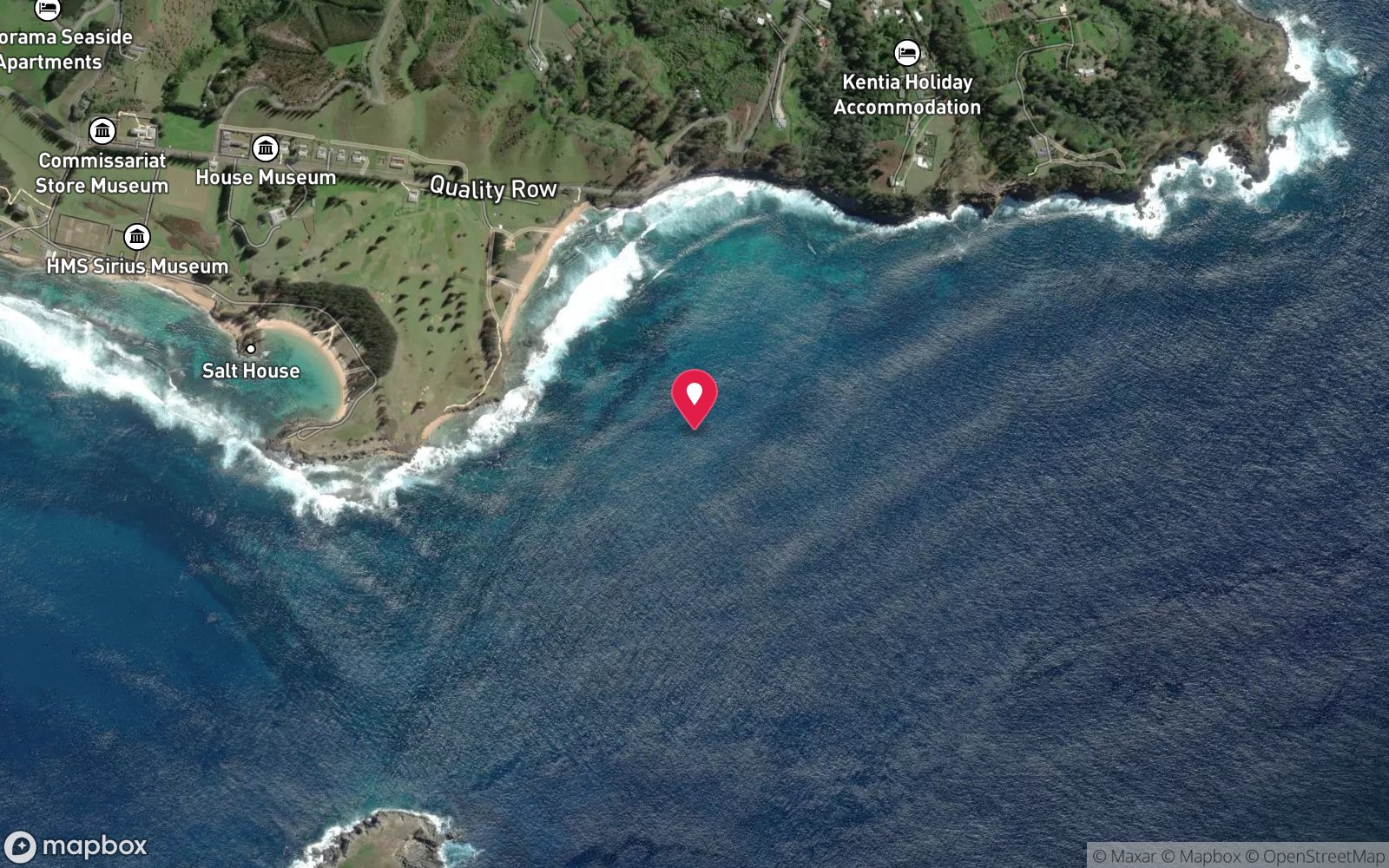
Cemetery Bay: frequently asked questions
What certification do I need to dive Cemetery Bay?
No certification is needed to snorkel it, and it suits introductory dives. Rated beginner: sheltered, shallow and manageable for a newly certified diver on a normal day.
Can I shore dive Cemetery Bay?
Yes. Cemetery Bay is a shore dive that can be done independently: walk in from the beach.
When is the best time to dive Cemetery Bay?
November–April for warmer water and lighter winds; winter can give 40 m visibility but more days lost to wind.
What marine life will I see at Cemetery Bay?
Regularly recorded: Norfolk reef fish (wrasses, cardinalfish, marblefish, morays), echinoderms (protected), corals.
What wetsuit do I need at Cemetery Bay?
5 mm full suit year-round; add a hood or vest June–October.
How cold is the water at Cemetery Bay?
Typically 22-25 °C in summer and 18-19 °C in winter.
What are the main hazards at Cemetery Bay?
Unpatrolled; exposed to south-east swell and surf; currents near the reef; no chamber on Norfolk Island. See the hazards section above for the full list.
Where is the nearest recompression chamber to Cemetery Bay?
Prince of Wales Hospital (Randwick, Sydney) – about 1,700 km; no chamber on Norfolk Island, aeromedical evacuation from Norfolk Island Airport via the Norfolk Island Health service (Auckland may be used – confirm). In an emergency call 000, then DAN Asia-Pacific on 1800 088 200.
Diving in Norfolk Island
Norfolk Island sits on its own in the Tasman Sea, and its reefs feel like it: subtropical coral and kelp together, arches and swim-throughs in volcanic rock, 20–40 m visibility and endemic fish found nowhere else. Slaughter Bay and Emily Bay inside the lagoon are easy shore dives; the outer sites around Nepean and Phillip islands are boat dives in clear blue water.
Getting there: Fly from Sydney or Brisbane (about two and a half hours). One dive operator on the island runs boat and shore dives depending on the wind.
Sources
- norfolkisland.com.au/experiences/outdoor-activities/snorkelling-diving
- australianmarineparks.gov.au/parks/temperate-east-marine-parks-network/norfolk-marine-park
Data confidence: Low · Being verified: Underwater terrain, depths and position approximate.. Last updated September 2026. Know this site better? How to send a correction
Nearby dive sites
More shore dives in External Territories
Explore more
This region
Similar dives