Dive slate · divesites.com.au · printed 7 Nov 2026
Hive Wreck Site
Shoalhaven Coast, New South Wales · near Wreck Bay / Sussex Inlet
| Depth | 1–2 m |
|---|---|
| Minimum level | Snorkel/Any |
| Difficulty | Beginner |
| Access | Shore |
| Entry | Beach entry (remains are buried – nothing normally visible) |
| Current | Mild |
| Visibility | 1-5 m |
| Water | summer 19-23 °C, winter 15-17 °C |
| Suit | 5–7 mm wetsuit with hood in summer–autumn; 7 mm semi-dry or drysuit June–October |
| Best season | N/A – remains buried |
| Position | -35.16861, 150.63528 (approximate) |
| Permit | Booderee National Park (Commonwealth) – park entry pass required for vehicles; waters within the park are no-take for most species and Booderee sanctuary zones apply; Jervis Bay Marine Park rules apply to adjoining NSW waters. Heritage-listed shipwreck – no disturbance. |
| Nearest chamber | Prince of Wales Hospital (Randwick, Sydney) – approx. 3 h by road from Jervis Bay; call 000 and DAN Asia-Pacific hotline (evacuation usually by air) |
| Emergency | 000 · DAN Asia-Pacific diving emergency 1800 088 200 |
Hive Wreck Site
Also known as Hive (1835), convict ship Hive
Site of an 1835 convict-ship wreck from which 250 convicts survived; heritage-listed buried remains.
Near Wreck Bay / Sussex Inlet · Shoalhaven Coast, New South Wales
- Depth
- 1–2 m
- Minimum level
- Snorkel/Any
- Access
- Shore
- Boat ride
- —
- Water
- 19-23 °C
- Visibility
- 1-5 m
Hive Wreck Site1–2 m · Snorkel/Any · Shore
Dive factsDepths, conditions, location & safety
Season
In season nowBest months: year-round.
Dive facts
- Depth
- 1–2 m
- Typical depth
- 2 m
- Certification
- Snorkel/Any
- Difficulty
- Beginner
- Depth tier
- Easy (0–10 m)
- Access
- Shore
- Dive centre needed
- No – independently diveable
- Shore / independent
- Possible (experienced only)
- Current
- Mild
- Visibility
- 1-5 m
- Water temp (summer)
- 19-23 °C
- Water temp (winter)
- 15-17 °C
- Water
- Temperate
- Dive traffic
- Rarely dived (private boat/club only)
- Night dive
- No
- Snorkel friendly
- No
Exposure suit
5–7 mm wetsuit with hood in summer–autumn; 7 mm semi-dry or drysuit June–October
Location
Wreck Bay – Bherwerre Beach · Shoalhaven – Wreck Bay, Sussex Inlet & Bendalong
-35.16861, 150.63528
Approximate position — not for navigation.
Open in Google MapsPrimary source: en.wikipedia.orgMarine park & permits
Booderee National Park (Commonwealth) – park entry pass required for vehicles; waters within the park are no-take for most species and Booderee sanctuary zones apply; Jervis Bay Marine Park rules apply to adjoining NSW waters. Heritage-listed shipwreck – no disturbance.
Nearest recompression chamber
Prince of Wales Hospital (Randwick, Sydney) – approx. 3 h by road from Jervis Bay; call 000 and DAN Asia-Pacific hotline (evacuation usually by air)
Diving emergency: call 000, then DAN AP 1800 088 200.
Trip planner
Build a trip around Hive Wreck Site →
A day-by-day plan for Shoalhaven Coast with this site locked in.
This guide is a planning aid. Conditions change daily — confirm with a local dive centre and dive within your training. Data & safety notes.
Dive profile
How this site rates
Scores are computed from the recorded data, not opinions. How?
At a glance
Hive Wreck Site is a wreck shore dive for experienced divers in Shoalhaven Coast, NSW, 1–2 m, suitable for snorkellers and first-time divers.
Rated beginner: sheltered, shallow and manageable for a newly certified diver on a normal day, though note cold water.
Why dive here
- Site of an 1835 convict-ship wreck from which 250 convicts survived; heritage-listed buried remains.
- Sunk in 1835; protected as underwater cultural heritage, so look but do not touch.
- Rarely dived: expect to have the site to yourself, and plan your own logistics.
About Hive Wreck Site
The Hive was a ship-rigged vessel built at Deptford, Kent, in 1820 – about 37 m long and 440 tonnes, with two decks, a square stern, quarter galleries and a female bust figurehead. On her second voyage as a convict transport, carrying 250 Irish male convicts, she ran onto the sand at Wreck Bay near midnight on 10 December 1835, after Captain John Nutting ignored warnings from his chief officer that the ship was too close to land. She ran through the sand on a gently shelving beach rather than striking rocks, and the convicts, crew and guards were landed – one of the more remarkable survival stories of the convict era.
The wreck lies about 40 m offshore at Bherwerre Beach, now in Jervis Bay Territory within Booderee National Park, at approximately 35° 10' 07" S 150° 38' 07" E. In 1994 heritage archaeologists detected remains 1.8–2.5 m below the sand in about 2 m of water, over an area of roughly 15 by 8 m; probing found buried British oak timbers and suggested that part of the lower hull and possibly deck levels survive. The site was added to the NSW State Heritage Register in 2010.
It is included because it is one of the nine known shipwrecks in and around the Jervis Bay area and one of the most historically significant on the NSW coast. The Wreck Bay coastline and the museum in Huskisson tell the story better than the water does.
Wreck details
Ship-rigged convict transport, 37 m, 440 tonnes, built 1820 Deptford · Sunk 1835 · Protected historic shipwreck
Era: early colonial. Oldest wrecks · Wartime wrecks · Scuttled warships
Other wrecks of the same era
- Sterile Island (Wallace wreck) · Max 9 m · Huon & Far South
- The Pineapples (Cape Bruny) · Max 15 m · Bruny Island & D'Entrecasteaux Channel
- Isabella, Cape Nelson · Max 10 m · Portland & the West
- Thistle, Port Fairy · Max 3 m · Shipwreck Coast & Warrnambool
- Children · Max 3 m · Shipwreck Coast & Warrnambool
- William Salthouse · Max 12 m · Port Phillip Heads
Getting there & entry
Buried remains of the convict transport Hive (wrecked 1835) about 40 m offshore at Bherwerre Beach, Jervis Bay Territory, in about 2 m of water under 1.8–2.5 m of sand.
Bherwerre Beach runs along Wreck Bay on the southern side of Booderee National Park (Jervis Bay Territory), accessed via Wreck Bay Road and Cave Beach Road from Jervis Bay Road (park pass required); the western end is reached from Sussex Inlet. The site is about 40 m offshore in the surf zone, but the remains lie beneath up to 2.5 m of sand and are not normally visible.
Entry: Beach entry (remains are buried – nothing normally visible)
Facilities: Booderee National Park day-use areas; no facilities on Bherwerre Beach itself.
Weather, swell & tides
Bherwerre Beach is an exposed surf beach facing south-east into Wreck Bay; it usually has breaking waves and rips. Swimming or snorkelling at the site is only sensible on very flat days, and even then the remains are buried in sand. Wreck Bay faces the prevailing southerly swell, and winter storms regularly rework the beach profile.
Best season: N/A – remains buried
If it's blown out
Sheltered or shore sites within 25 km that often work when Hive Wreck Site doesn't.
- Murrays Beach · 12 km · Max 12 m
- Hyams Beach · 9 km · Max 10 m
- Scottish Rocks · 10 km · Depth not published
- Green Patch · 8 km · Depth not published
How the dive is usually run
Not a recreational dive: the wreck is buried. Visit the beach and the Lady Denman Museum in Huskisson for the story and artefacts instead.
Marine life
- Sand-dwelling species only (surf zone) – whiting
- flathead
- stingrays
Linked species have their own page listing every site where they are recorded. All marine life →
Training required
Shallow enough for snorkellers and for a first dive under supervision. Any certified diver can dive it.
Courses that help here
- Drysuit Diver – Cold water; locals dive dry for much of the year.
Depth tiers: 0–10 m easy · to 18 m Open Water · 18–30 m Advanced (25 m+ is a deep dive) · 30–40 m Deep specialty · 40 m+ technical. All courses
Hazards & warnings
Surf beach with rips; remains buried – nothing to see; heritage-listed – no digging, probing or removal; Booderee park rules.
Technical notes
NSW State Heritage Register archaeological-maritime site; Commonwealth underwater heritage protection also applies.
Dive centres that go here
No operator; a heritage-listed archaeological site rather than a recreational dive.
Other dive centres in Shoalhaven Coast
Map
7 pinned sites. Pins marked approximate on their pages show the general area only; not for navigation.
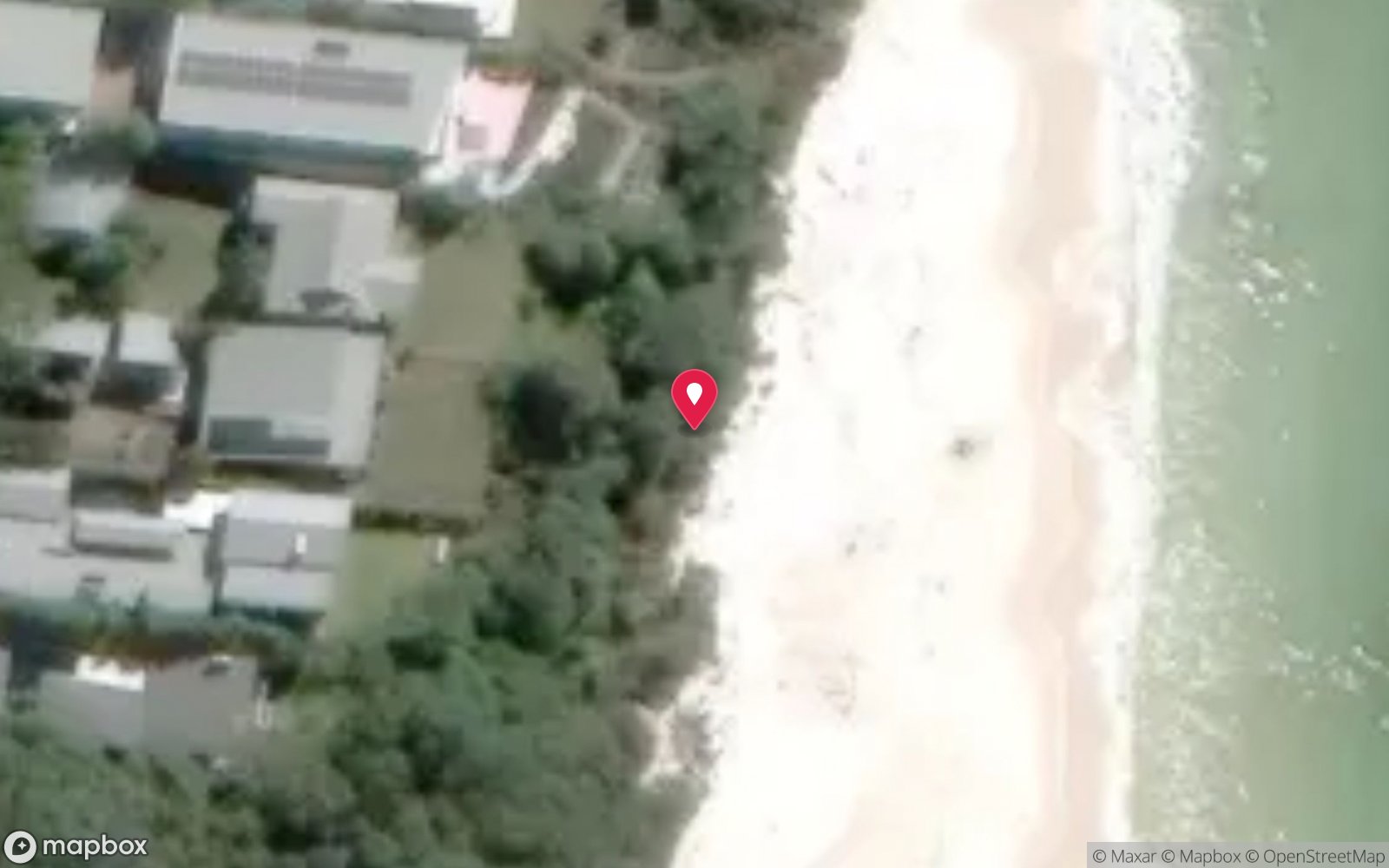
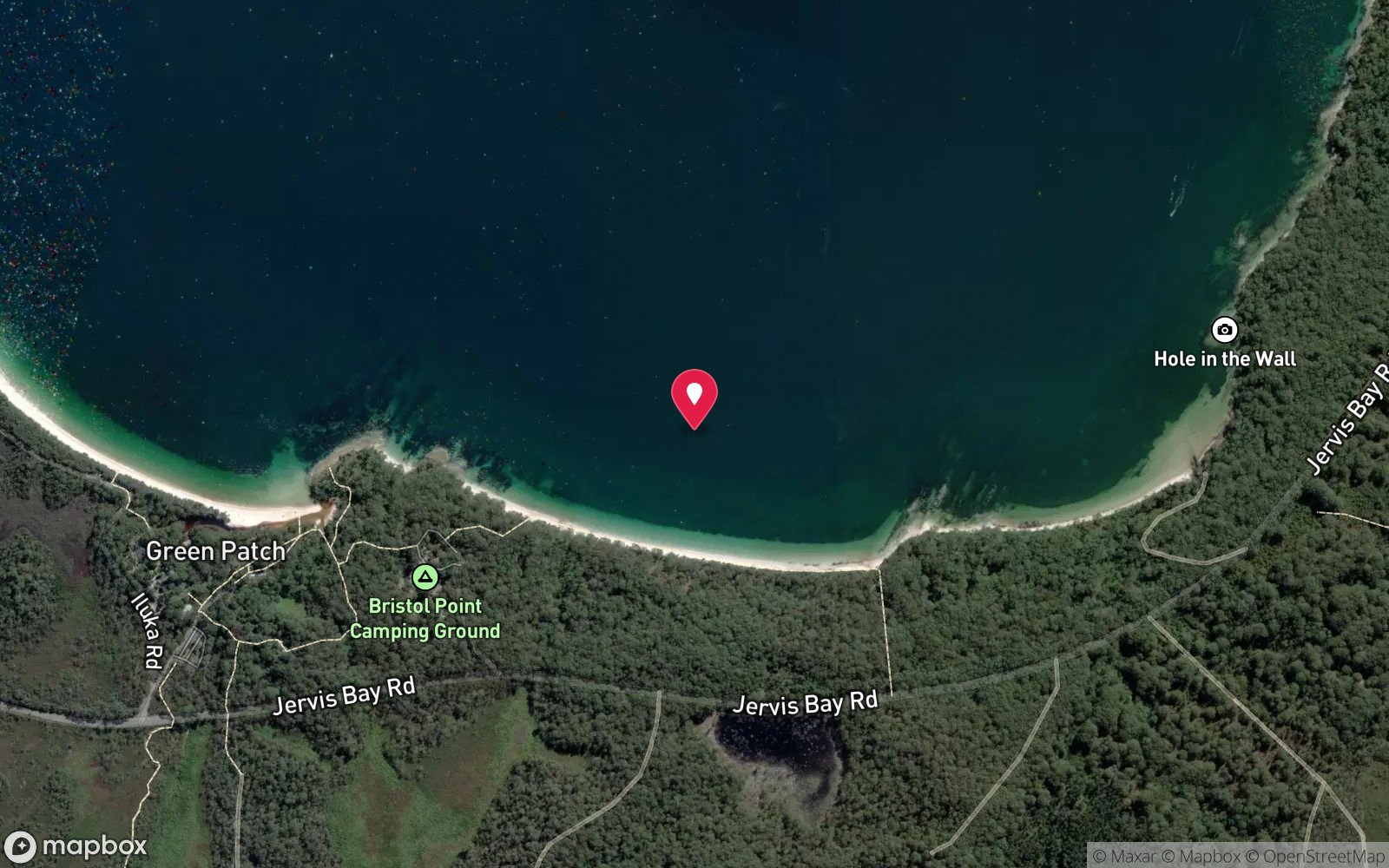
Satellite views
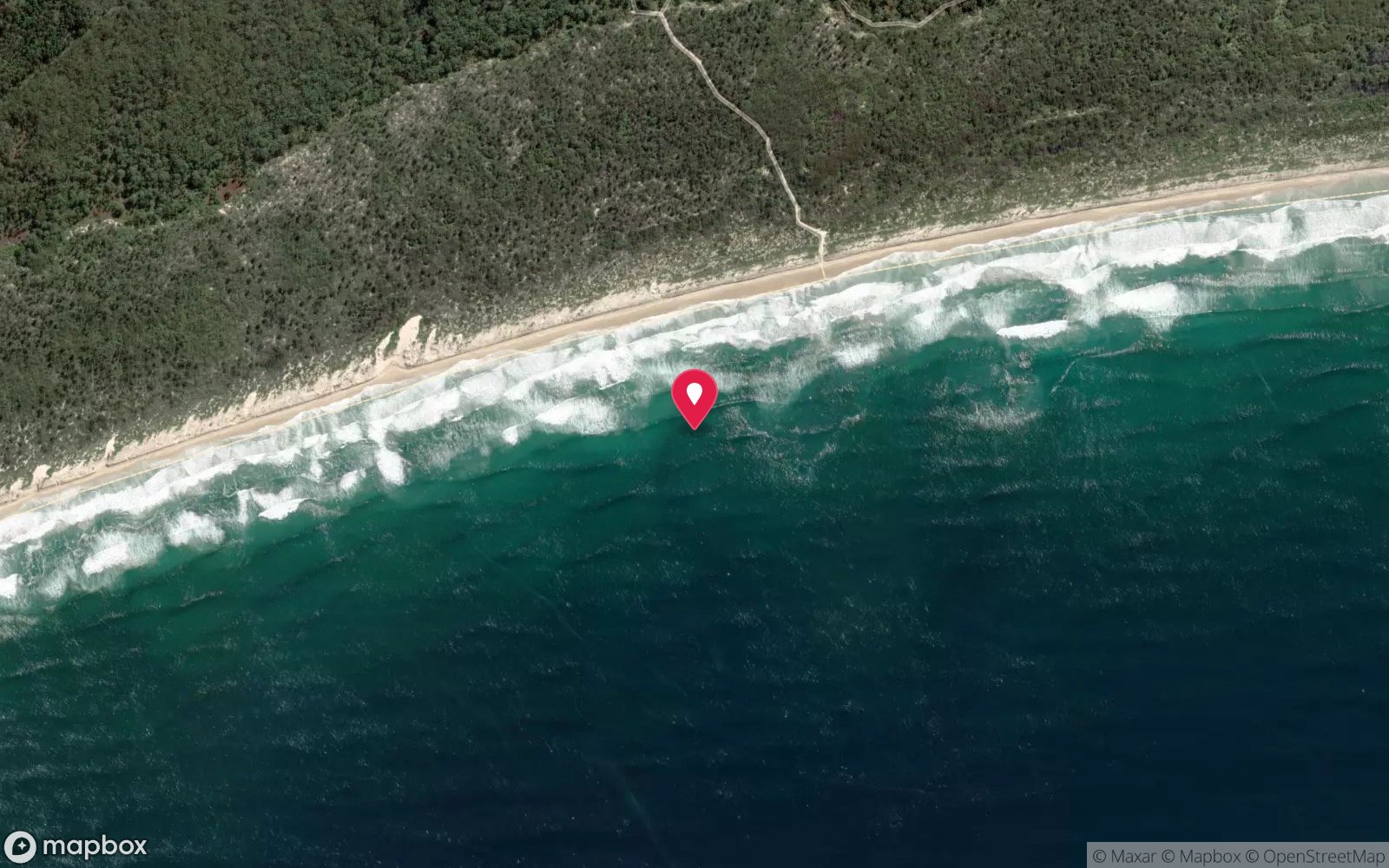
Hive Wreck Site: frequently asked questions
How deep is Hive Wreck Site?
Hive Wreck Site reaches a maximum depth of 2 m, with the shallowest part at about 1 m; most of the dive is spent around 2 m.
What certification do I need to dive Hive Wreck Site?
No certification is needed to snorkel it, and it suits introductory dives. Rated beginner: sheltered, shallow and manageable for a newly certified diver on a normal day, though note cold water.
Can I shore dive Hive Wreck Site?
Experienced divers do dive Hive Wreck Site from the shore, but the entry or conditions make it unsuitable for newer divers without local guidance. Entry: Beach entry (remains are buried – nothing normally visible).
When is the best time to dive Hive Wreck Site?
N/A – remains buried.
What marine life will I see at Hive Wreck Site?
Regularly recorded: Sand-dwelling species only (surf zone) – whiting, flathead, stingrays.
What wetsuit do I need at Hive Wreck Site?
5–7 mm wetsuit with hood in summer–autumn; 7 mm semi-dry or drysuit June–October.
How cold is the water at Hive Wreck Site?
Typically 19-23 °C in summer and 15-17 °C in winter.
What are the main hazards at Hive Wreck Site?
Surf beach with rips; remains buried – nothing to see; heritage-listed – no digging, probing or removal; Booderee park rules. See the hazards section above for the full list.
Where is the nearest recompression chamber to Hive Wreck Site?
Prince of Wales Hospital (Randwick, Sydney) – approx. 3 h by road from Jervis Bay; call 000 and DAN Asia-Pacific hotline (evacuation usually by air). In an emergency call 000, then DAN Asia-Pacific on 1800 088 200.
Diving in Shoalhaven Coast
Between Jervis Bay and Ulladulla, the Shoalhaven's headlands at Currarong, Culburra and Bendalong have wrecks, caves and reefs that are dived far less than their neighbours. The wreck of the Merimbula at Currarong is a shallow shore dive on a 1928 steamer, and Beecroft Peninsula's outer walls are boat dives for experienced divers.
Getting there: Two and a half hours from Sydney. Shore entries at Currarong and Bendalong; boat dives via Huskisson or Ulladulla operators.
Sources
Data confidence: Medium · Being verified: Not a practical dive – consider excluding from diver-facing listings.. Last updated September 2026. Know this site better? How to send a correction
Nearby dive sites
More wrecks in New South Wales
Explore more