Dive slate · divesites.com.au · printed 9 Nov 2026
Horsburgh Island
Cocos (Keeling) Islands, External Territories · near West Island
| Depth | 0.5–6 m |
|---|---|
| Minimum level | Snorkel/Any |
| Difficulty | Beginner |
| Access | Boat (day trip) |
| Entry | Wade or slip in from the tour boat |
| Current | Variable/Tidal |
| Visibility | 20-40 m |
| Water | summer 28-29 °C, winter 26-27 °C |
| Suit | 3 mm wetsuit or rash vest year-round |
| Best season | November–April (doldrum season, light winds); diveable year-round when the south-east trades allow |
| Position | -12.07670, 96.83970 (approximate) |
| Permit | Cocos (Keeling) Islands Marine Park – Habitat Protection (yellow) zone; no permit needed for snorkelling |
| Nearest chamber | Fiona Stanley Hospital (Perth) – about 2,700 km away via aeromedical evacuation; there is no recompression chamber on Cocos or Christmas Island |
| Emergency | 000 · DAN Asia-Pacific diving emergency 1800 088 200 |
Horsburgh Island
Also known as Pulu Luar
Uninhabited palm island with WWII six-inch guns and shallow lagoon snorkelling, surrounded by some of Cocos' best dive sites.
Near West Island · Cocos (Keeling) Islands, External Territories
- Depth
- 0.5–6 m
- Minimum level
- Snorkel/Any
- Access
- Boat (day trip)
- Boat ride
- —
- Water
- 28-29 °C
- Visibility
- 20-40 m
Horsburgh Island0.5–6 m · Snorkel/Any
Dive factsDepths, conditions, location & safety
Season
In season nowBest months: year-round.
November–April (doldrum season, light winds); diveable year-round when the south-east trades allow
- Best months
- Now (November)
- Stinger suit Nov–May
Dive facts
- Depth
- 0.5–6 m
- Typical depth
- 3 m
- Certification
- Snorkel/Any
- Difficulty
- Beginner
- Depth tier
- Easy (0–10 m)
- Access
- Boat (day trip)
- Dive centre needed
- Recommended
- Shore / independent
- No
- Current
- Variable/Tidal
- Visibility
- 20-40 m
- Water temp (summer)
- 28-29 °C
- Water temp (winter)
- 26-27 °C
- Water
- Tropical
- Dive traffic
- Moderate (occasional charters/club dives)
- Night dive
- No
- Snorkel friendly
- Yes
Exposure suit
3 mm wetsuit or rash vest year-round
Location
North-west rim – Horsburgh Island · Cocos (Keeling) Islands – Indian Ocean
-12.07670, 96.83970
Approximate position — not for navigation.
Open in Google MapsPrimary source: en.wikipedia.orgMarine park & permits
Cocos (Keeling) Islands Marine Park – Habitat Protection (yellow) zone; no permit needed for snorkelling
Nearest recompression chamber
Fiona Stanley Hospital (Perth) – about 2,700 km away via aeromedical evacuation; there is no recompression chamber on Cocos or Christmas Island
Diving emergency: call 000, then DAN AP 1800 088 200.
Trip planner
Build a trip around Horsburgh Island →
A day-by-day plan for Cocos (Keeling) Islands with this site locked in.
This guide is a planning aid. Conditions change daily — confirm with a local dive centre and dive within your training. Data & safety notes.
Dive profile
How this site rates
Scores are computed from the recorded data, not opinions. How?
At a glance
Horsburgh Island is a island boat dive in Cocos (Keeling) Islands, Australia's external territories, 0.5–6 m, suitable for snorkellers and first-time divers, variable/tidal current.
Rated beginner: sheltered, shallow and manageable for a newly certified diver on a normal day, though note tidal current that must be timed and boat traffic overhead.
Why dive here
- Uninhabited palm island with WWII six-inch guns and shallow lagoon snorkelling, surrounded by some of Cocos' best dive sites.
- Snorkel-friendly, so non-diving companions can join at the surface.
- Visibility often reaches 20-40 m.
Conditions to avoid
- Outgoing tide or run-off after rain (poor visibility)
- Any time other than slack water
About Horsburgh Island
Horsburgh Island is the uninhabited island at the north-western corner of the southern atoll, about 1 km² of coconut palms and sand no more than 2 m above sea level, named after the hydrographer James Horsburgh who charted the islands in the early 1800s. Its main attraction ashore is historical: during the Second World War the Ceylon Garrison Artillery installed two six-inch guns at the southern point for coastal defence, and they remain in place today, listed on the Commonwealth Heritage List. Lagoon tours stop here to see the guns and snorkel the shallow reef along the shore, and Cocos Blue Charters includes Horsburgh on its half-day history and snorkelling trips.
Underwater, the lagoon side has shallow coral patches over sand with reef fish, small blacktip reef sharks and turtles, while the island's outer reefs host some of Cocos' best dive sites – Cologne Gardens and Lynnies Leap to the west, Garden of Eden to the north, and Cabbage Patch and Rose Wall to the south-east near the Western Boat Passage. The Phaeton wreck lies about a nautical mile south-east of the island in Port Refuge, and the Catalina JX435 site between Horsburgh and Direction Island, so a boat trip can combine several heritage sites. Snorkelling here is best treated as part of a tour rather than a destination in its own right; public documentation of specific snorkel spots around the island is limited.
The passage beside the island has tidal flow and boat traffic, so snorkellers should stay on the lagoon side close to the shore.
Getting there & entry
Uninhabited island on the north-western corner of the southern atoll, with WWII six-inch guns on its southern point and shallow reef around it.
Horsburgh Island is reached only by boat, a short run north from West Island across the western lagoon. Cocos Blue Charters' half-day trips visit Horsburgh and Prison Islands for history and snorkelling, and private skippers can drop visitors on the beach. Cocos Dive's north-western dive sites – Cologne Gardens, Lynnies Leap, Eden, Cabbage Patch and Rose Wall – are on the reefs around it.
Entry: Wade or slip in from the tour boat
Facilities: None; bring water and shade.
Weather, swell & tides
Lagoon snorkelling is possible year-round, but the south-east trades (April/May–October, often 15–25 knots) chop the lagoon, stir up sand and make swimming harder; the doldrum season (November–April) usually brings glassy conditions and the clearest water. Tides matter more than swell inside the lagoon: shallow flats can become too shallow at low water, and tidal streams run through channels between islands. Heavy tropical showers are brief and have little effect on visibility because there is no river run-off.
Horsburgh sits beside the Western Boat Passage, where tidal streams run; snorkel on the lagoon side and near slack water.
Best season: November–April (doldrum season, light winds); diveable year-round when the south-east trades allow
If it's blown out
Sheltered or shore sites within 25 km that often work when Horsburgh Island doesn't.
- The Rip (Direction Island) · 5 km · Max 8 m
- Phaeton Wreck · 3 km · Max 6 m
- Broccoli Patch · 5 km · Max 10 m
- Pulu Maraya · 9 km · Max 5 m
How the dive is usually run
Land on the lagoon-side beach, visit the guns, then snorkel the shallow coral along the lagoon shore, staying clear of the passage where tidal currents run.
Marine life
- Reef fish
- juvenile blacktip reef sharks →
- green turtles →
- parrotfish
- hard corals; seabirds ashore
Linked species have their own page listing every site where they are recorded. All marine life →
Training required
Shallow enough for snorkellers and for a first dive under supervision. Any certified diver can dive it.
Depth tiers: 0–10 m easy · to 18 m Open Water · 18–30 m Advanced (25 m+ is a deep dive) · 30–40 m Deep specialty · 40 m+ technical. All courses
Hazards & warnings
Tidal current in the Western Boat Passage; boat traffic; shallow coral – reef shoes. No facilities; sun exposure. Heritage guns – do not climb or damage.
Dive centres that go here
Visited by local lagoon-tour operators: Cocos Blue Charters (half-day glass-bottom boat, snorkel and fishing trips, visiting Prison and Horsburgh Islands), Cocosday Tours (motorised canoe safaris to Pulu Maraya and the eastern atoll) and Cocos Dive on its day trips.
Operators recorded for Horsburgh Island
Cocos Dive
ListedWest Island · Cocos (Keeling) Islands · WA
The main dive operation in the Cocos Keeling Islands, servicing atoll and outer reef diving.
cocosdive.com · 0498 080 187
Cocos Blue Charters
Named by sitesWest Island · Cocos (Keeling) Islands · External Territory
Charter boat operator (dive/fishing/snorkel charters).
cocosblue.com.au · (08) 9162 6579
Cocosday Tours
Named by sitesWest Island · Cocos (Keeling) Islands · External Territory
Boat tours, fishing, motorised canoe tours and boat hire; not a scuba dive shop.
cocosislandsboatandfishing.com · (08) 9162 7741
Map
7 pinned sites. Pins marked approximate on their pages show the general area only; not for navigation.
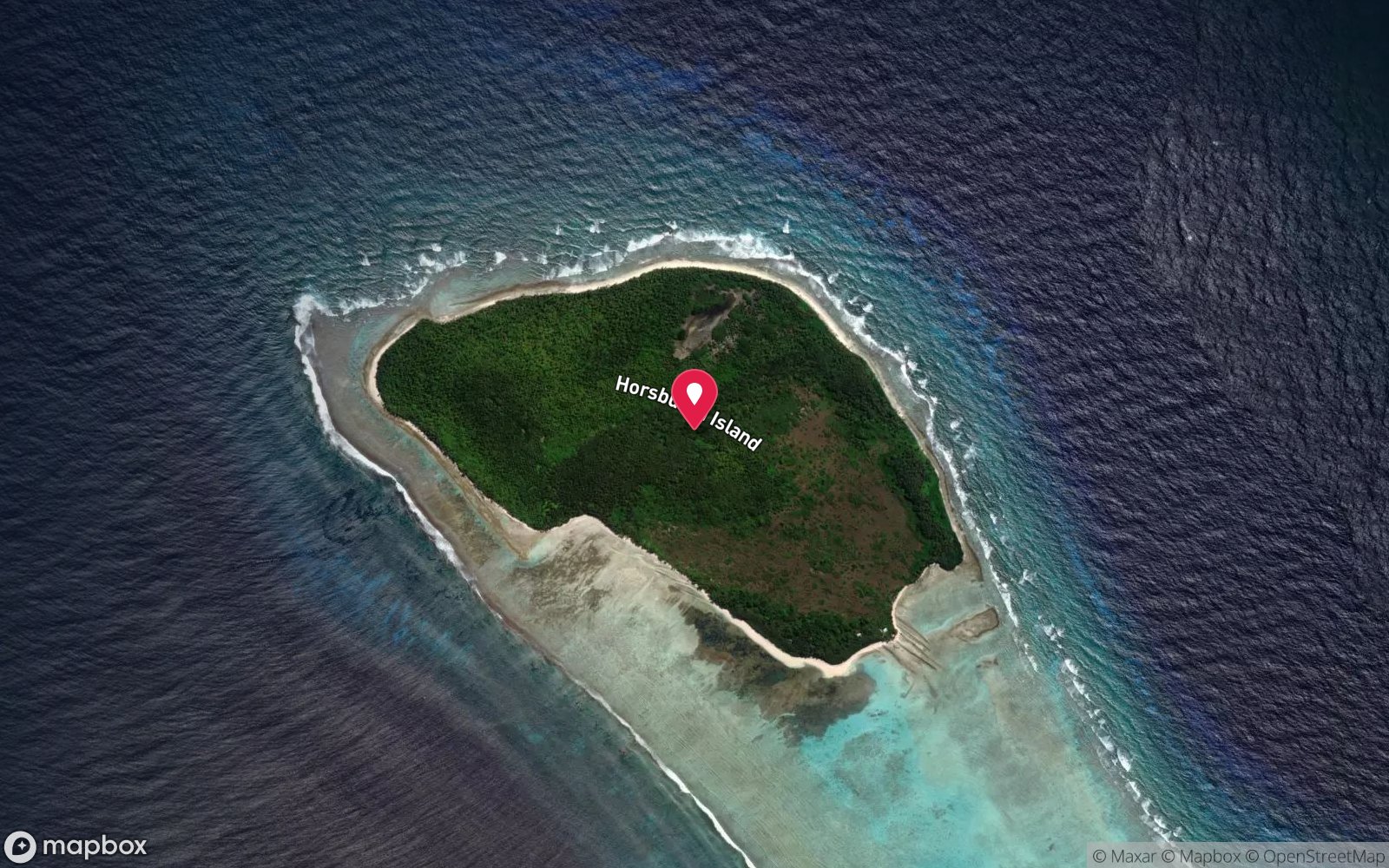
Satellite views
Horsburgh Island: frequently asked questions
How deep is Horsburgh Island?
Horsburgh Island reaches a maximum depth of 6 m, with the shallowest part at about 0.5 m; most of the dive is spent around 3 m.
What certification do I need to dive Horsburgh Island?
No certification is needed to snorkel it, and it suits introductory dives. Rated beginner: sheltered, shallow and manageable for a newly certified diver on a normal day, though note tidal current that must be timed and boat traffic overhead.
Can I shore dive Horsburgh Island?
No, it is reached by boat.
When is the best time to dive Horsburgh Island?
November–April (doldrum season, light winds); diveable year-round when the south-east trades allow.
What marine life will I see at Horsburgh Island?
Regularly recorded: Reef fish, juvenile blacktip reef sharks, green turtles, parrotfish, hard corals; seabirds ashore.
What wetsuit do I need at Horsburgh Island?
3 mm wetsuit or rash vest year-round.
How cold is the water at Horsburgh Island?
Typically 28-29 °C in summer and 26-27 °C in winter.
What are the main hazards at Horsburgh Island?
Tidal current in the Western Boat Passage; boat traffic; shallow coral – reef shoes. See the hazards section above for the full list.
Where is the nearest recompression chamber to Horsburgh Island?
Fiona Stanley Hospital (Perth) – about 2,700 km away via aeromedical evacuation; there is no recompression chamber on Cocos or Christmas Island. In an emergency call 000, then DAN Asia-Pacific on 1800 088 200.
Diving in Cocos (Keeling) Islands
Cocos is a true coral atoll 2,750 km north-west of Perth, with 27 islands around a shallow turquoise lagoon and an outer reef that drops to deep water. Manta rays feed in the channels, green turtles are everywhere, dolphins visit the boats, and the outer walls hold grey reef sharks, tuna and huge schools of fusiliers. Two sites, the Cabbage Patch and the Rip, are among the best drift dives in the Indian Ocean.
Getting there: Fly from Perth via Christmas Island. One operator on West Island runs boat dives on the outer reef and lagoon; some lagoon sites can be reached by kayak or a long swim.
All Cocos (Keeling) Islands dive sites and a suggested itinerary →
Sources
- en.wikipedia.org/wiki/Horsburgh_Island
- en.wikipedia.org/wiki/Six_Inch_Guns
- australiantraveller.com/territories/cocos-keeling-islands/things-to-do-in-cocos-keeling-islands
- westernaustralia.com/en/plan-my-trip/planning-tools/travel-stories/cocos-keeling-islands-a-tropical-aquatic-dream
- museum.wa.gov.au/maritime-archaeology-db/sites/default/files/no._194_phaeton_cocos.pdf
Data confidence: Low · Being verified: Specific snorkel spots not documented; Malay name unconfirmed.. Last updated September 2026. Know this site better? How to send a correction
Nearby dive sites
More island dives in External Territories
Explore more
This region