Dive slate · divesites.com.au · printed 7 Nov 2026
Rose Wall
Cocos (Keeling) Islands, External Territories · near West Island
| Depth | 6–30 m |
|---|---|
| Minimum level | Advanced Open Water |
| Difficulty | Intermediate |
| Access | Boat (day trip) |
| Entry | Giant stride or back roll from dive boat |
| Current | Mild |
| Visibility | 20-40 m |
| Water | summer 28-29 °C, winter 26-27 °C |
| Suit | 3 mm wetsuit or rash vest year-round |
| Best season | November–April (doldrum season, light winds); diveable year-round when the south-east trades allow |
| Bottom time | 50 min |
| Position | -12.09320, 96.84180 (GPS) |
| Permit | Cocos (Keeling) Islands Marine Park (Australian Marine Parks, proclaimed 20 March 2022) – inshore waters are mostly Habitat Protection (yellow) zone: diving and snorkelling allowed, no seafloor-disturbing activity; no permit needed for recreational divers on a licensed tour |
| Nearest chamber | Fiona Stanley Hospital (Perth) – about 2,700 km away via aeromedical evacuation; there is no recompression chamber on Cocos or Christmas Island |
| Emergency | 000 · DAN Asia-Pacific diving emergency 1800 088 200 |
Rose Wall
Also known as Rosewall Coral, Rosewall
A continuous sheet of rose-coloured hard coral covering the wall from about 16 m to 35–40 m, right beside Cabbage Patch.
Near West Island · Cocos (Keeling) Islands, External Territories
- Depth
- 6–30 m
- Minimum level
- Advanced Open Water
- Access
- Boat (day trip)
- Boat ride
- —
- Water
- 28-29 °C
- Visibility
- 20-40 m
Rose Wall6–30 m · Advanced Open Water
Dive factsDepths, conditions, location & safety
Season
In season nowBest months: year-round.
November–April (doldrum season, light winds); diveable year-round when the south-east trades allow
- Best months
- Now (November)
- Stinger suit Nov–May
Dive facts
- Depth
- 6–30 m
- Typical depth
- 18 m
- Certification
- Advanced Open Water
- Difficulty
- Intermediate
- Depth tier
- Advanced Open Water (18–30 m)
- Access
- Boat (day trip)
- Dive centre needed
- Yes – boat access only
- Shore / independent
- No
- Current
- Mild
- Visibility
- 20-40 m
- Water temp (summer)
- 28-29 °C
- Water temp (winter)
- 26-27 °C
- Water
- Tropical
- Bottom time
- 50 min
- Dive traffic
- Popular (weekly charters)
- Night dive
- No
- Snorkel friendly
- No
Exposure suit
3 mm wetsuit or rash vest year-round
Location
North-west rim – Horsburgh Island / Western Boat Passage · Cocos (Keeling) Islands – Indian Ocean
-12.09320, 96.84180
Published GPS position.
Open in Google MapsDive site map (external) →Primary source: cocoskeelingislands.com.auMarine park & permits
Cocos (Keeling) Islands Marine Park (Australian Marine Parks, proclaimed 20 March 2022) – inshore waters are mostly Habitat Protection (yellow) zone: diving and snorkelling allowed, no seafloor-disturbing activity; no permit needed for recreational divers on a licensed tour
Nearest recompression chamber
Fiona Stanley Hospital (Perth) – about 2,700 km away via aeromedical evacuation; there is no recompression chamber on Cocos or Christmas Island
Diving emergency: call 000, then DAN AP 1800 088 200.
Trip planner
Build a trip around Rose Wall →
A day-by-day plan for Cocos (Keeling) Islands with this site locked in.
This guide is a planning aid. Conditions change daily — confirm with a local dive centre and dive within your training. Data & safety notes.
Dive profile
How this site rates
Scores are computed from the recorded data, not opinions. How?
At a glance
Rose Wall is a wall boat dive in Cocos (Keeling) Islands, Australia's external territories, 6–30 m, suited to Advanced Open Water divers.
Rated intermediate because of depth beyond 18 m.
Why dive here
- A continuous sheet of rose-coloured hard coral covering the wall from about 16 m to 35–40 m, right beside Cabbage Patch.
- A photographer's site: bring a macro lens or a wide-angle depending on the season.
- Visibility often reaches 20-40 m.
Conditions to avoid
- Strong southerly or south-east swell and wind
- Strong westerlies
- Cyclone season (roughly December–April)
About Rose Wall
Rose Wall is named for the rosy-coloured hard coral that carpets it. Where most walls are a patchwork of coral, sponge and bare rock, here a solid sheet of pinkish hard coral covers the wall from about 16 m down to 35–40 m, a continuous growth that Diveplanit describes as 'solid coral 16–35 m'. The official Cocos tourism listing gives the recreational depth range as 6–30 m, with the reef top at around 6 m and the wall face the main event.
The site sits right next to Cabbage Patch on the sheltered north-western side of the atoll, and the two are often dived as a pair – the golden monoculture of Cabbage Patch in the shallows and the rose-coloured wall below. The colour is best appreciated with a torch or strobe: at 20 m natural light turns everything blue, and a beam brings back the pink and mauve tones. Fish life is typical of a healthy grazing reef.
Schools of surgeonfish and parrotfish work along the face and the reef top, scraping algae and coral, and a steady procession of tropical reef fish – butterflyfish, angelfish, wrasse and damsels – moves across the coral. Out in the blue, grey reef sharks and trevally patrol, and the endemic Cocos pygmy angelfish can be found in the reef crevices. It is not a dramatic, overhanging wall of the kind found on Christmas Island; rather it is a steep slope of living coral, and the pleasure is in the sheer extent and health of the coral cover.
Because the coral continues well past 30 m, the main discipline is depth control: it is easy to follow the colour downward. Most divers hold 18–25 m, which gives good colour and reasonable no-decompression time. Current is usually mild, but it runs with the tide through the nearby Western Boat Passage, so Cocos Dive sets the direction of the dive on the day.
The site suits Open Water divers comfortable on a wall and experienced divers who want a relaxed, colourful dive; photographers should bring wide-angle and strobes.
Getting there & entry
Coral wall beside Cabbage Patch on the north-western rim of the southern atoll, south-east of Horsburgh Island, at -12.0932, 96.8418.
Fly to West Island on the twice-weekly Virgin Australia service from Perth (usually routed via Christmas Island; allow 7–10 days on the islands to absorb weather and flight delays). Cocos Dive collects divers from West Island accommodation in the morning (pickup around 8 am, departure about 9 am) and runs its boats from West Island into the lagoon. The north-western sites around Horsburgh Island are among the closest to West Island: the boat runs north up the inside of the lagoon past the northern tip of West Island towards Horsburgh, a short, usually sheltered ride.
Moorings or live-boat drops are used; there is no shore access. The lunchtime surface interval is normally taken on the beach at Direction Island before the second dive.
Entry: Giant stride or back roll from dive boat
Facilities: Departs West Island; no shops or fuel on the outer islands – Cocos Dive supplies lunch on day trips.
Weather, swell & tides
Cocos has two seasons. The south-east trades blow steadily from roughly April/May to October, often 15–25 knots, which chops up the lagoon and pushes swell onto the eastern and southern outer reefs; divers are then kept to sheltered sites. The doldrum season (November to March/April) brings lighter, variable winds, flatter seas and the widest choice of outer-reef sites, and is the best time to dive, though it is also the tropical cyclone season and squalls pass through.
The north-western rim sits in the lee of the atoll during south-east trade winds, so these sites are often the ones that stay diveable when the trades blow; a strong westerly or north-westerly swell (uncommon, mostly in the doldrum season or with passing cyclones) closes them. Tidal flow through the Western Boat Passage near Horsburgh sets up currents along the reef edge, so dives are timed with the tide; visibility is best on the incoming tide when clear oceanic water pushes in.
Best season: November–April (doldrum season, light winds); diveable year-round when the south-east trades allow
If it's blown out
Sheltered or shore sites within 25 km that often work when Rose Wall doesn't.
- The Rip (Direction Island) · 4 km · Max 8 m
- Phaeton Wreck · 2 km · Max 6 m
- Broccoli Patch · 4 km · Max 10 m
- Pulu Maraya · 8 km · Max 5 m
How the dive is usually run
Descend on the reef top at 6–10 m and move to the wall edge, then drop to 16–25 m where the rose coral cover is continuous. Swim with the wall on one shoulder with the tide, keeping an eye on depth since the coral carries on below 30 m. Turn at half gas, rise gradually along the wall and finish on the reef top for the safety stop.
Marine life
- Rose-coloured hard coral
- surgeonfish schools
- parrotfish
- butterflyfish
- angelfish
- Cocos pygmy angelfish
- grey reef sharks →
- trevally
- turtles →
Linked species have their own page listing every site where they are recorded. All marine life →
Training required
Beyond 18 m an Advanced certification (which includes a deep dive to 30 m) is the accepted minimum. Anything past 25 m is a deep dive in practice.
Open Water divers can dive the shallower section (typical depth 18 m); the full site to 30 m needs Advanced Open Water. Operators often quote Open Water. At more than 25 m this counts as a deep dive: watch no-decompression limits and gas.
Operators' own listing: Open Water.
Courses that help here
- Enriched Air Nitrox – Longer no-decompression time at 25 m and deeper.
Depth tiers: 0–10 m easy · to 18 m Open Water · 18–30 m Advanced (25 m+ is a deep dive) · 30–40 m Deep specialty · 40 m+ technical. All courses
Hazards & warnings
Coral continues past 30 m – watch depth and no-decompression limits. Tidal current along the wall. No chamber on the islands (nearest Fiona Stanley Hospital, Perth, by aeromedical evacuation).
Dive centres that go here
Cocos Dive (Dieter Gerhard, West Island, operating since 1990) is the only scuba operator on the islands and the only way to dive this site. It runs seasonal two-dive day trips with lunch and a surface interval on Direction Island, maximum 10 divers per trip; sites are chosen on the day according to wind, tide and diver experience. Trips book out well ahead and courses are currently suspended, so arrive certified.
Operators recorded for Rose Wall
Other dive centres in Cocos (Keeling) Islands
Cocos Blue Charters
Named by sitesWest Island · Cocos (Keeling) Islands · External Territory
Charter boat operator (dive/fishing/snorkel charters).
cocosblue.com.au · (08) 9162 6579
Cocosday Tours
Named by sitesWest Island · Cocos (Keeling) Islands · External Territory
Boat tours, fishing, motorised canoe tours and boat hire; not a scuba dive shop.
cocosislandsboatandfishing.com · (08) 9162 7741
Map
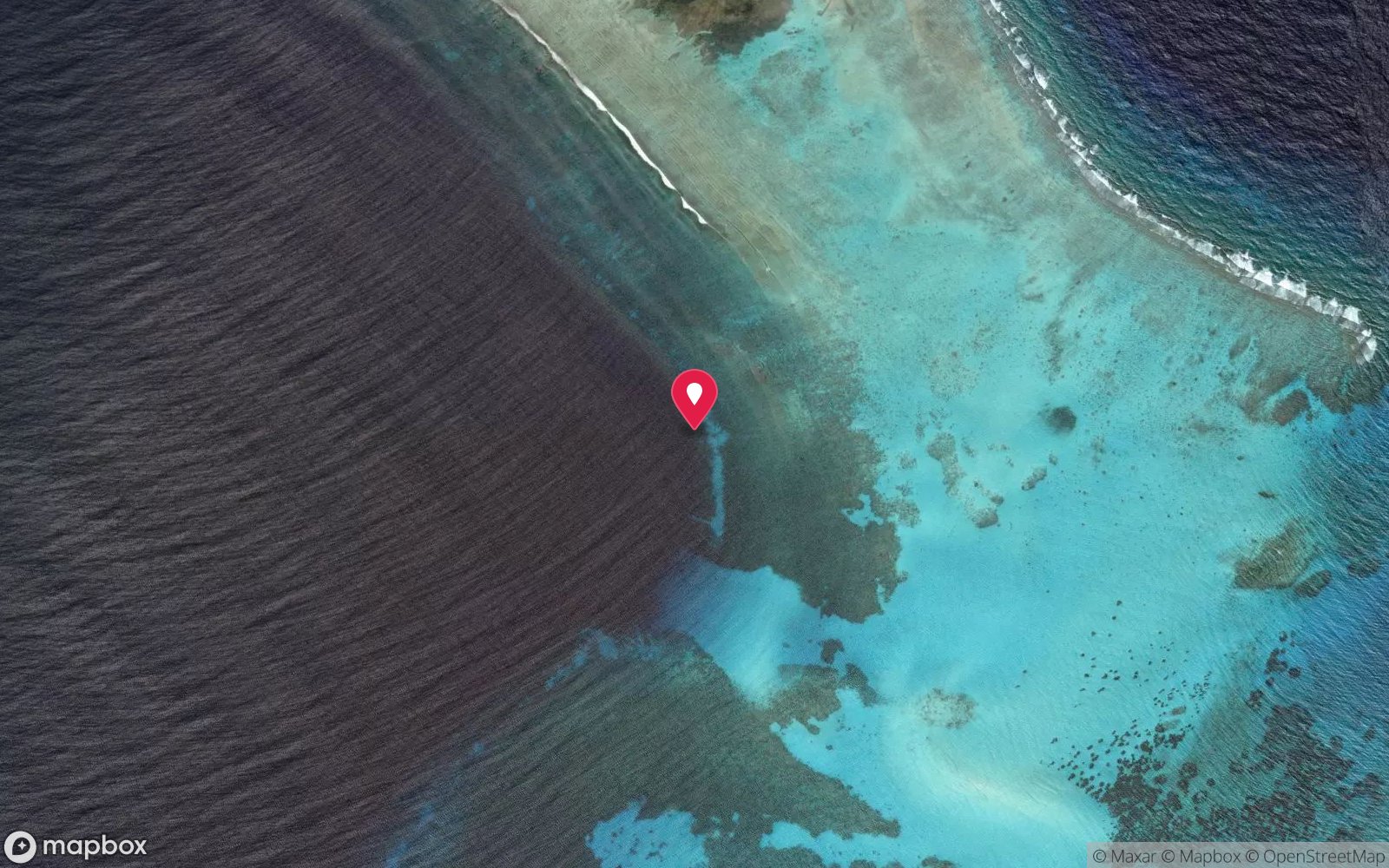
7 pinned sites. Pins marked approximate on their pages show the general area only; not for navigation.
Satellite views
Rose Wall: frequently asked questions
How deep is Rose Wall?
Rose Wall reaches a maximum depth of 30 m, with the shallowest part at about 6 m; most of the dive is spent around 18 m.
What certification do I need to dive Rose Wall?
Advanced Open Water is the recommended minimum. Open Water divers can dive the shallower section (typical depth 18 m); the full site to 30 m needs Advanced Open Water. Operators often quote Open Water. At more than 25 m this counts as a deep dive: watch no-decompression limits and gas. Rated intermediate because of depth beyond 18 m.
Can I shore dive Rose Wall?
No, it is reached by boat. A dive centre is required: boat access only.
When is the best time to dive Rose Wall?
November–April (doldrum season, light winds); diveable year-round when the south-east trades allow.
What marine life will I see at Rose Wall?
Regularly recorded: Rose-coloured hard coral, surgeonfish schools, parrotfish, butterflyfish, angelfish, Cocos pygmy angelfish, grey reef sharks, trevally, turtles.
What wetsuit do I need at Rose Wall?
3 mm wetsuit or rash vest year-round.
How cold is the water at Rose Wall?
Typically 28-29 °C in summer and 26-27 °C in winter.
What are the main hazards at Rose Wall?
Coral continues past 30 m – watch depth and no-decompression limits. See the hazards section above for the full list.
Where is the nearest recompression chamber to Rose Wall?
Fiona Stanley Hospital (Perth) – about 2,700 km away via aeromedical evacuation; there is no recompression chamber on Cocos or Christmas Island. In an emergency call 000, then DAN Asia-Pacific on 1800 088 200.
Diving in Cocos (Keeling) Islands
Cocos is a true coral atoll 2,750 km north-west of Perth, with 27 islands around a shallow turquoise lagoon and an outer reef that drops to deep water. Manta rays feed in the channels, green turtles are everywhere, dolphins visit the boats, and the outer walls hold grey reef sharks, tuna and huge schools of fusiliers. Two sites, the Cabbage Patch and the Rip, are among the best drift dives in the Indian Ocean.
Getting there: Fly from Perth via Christmas Island. One operator on West Island runs boat dives on the outer reef and lagoon; some lagoon sites can be reached by kayak or a long swim.
All Cocos (Keeling) Islands dive sites and a suggested itinerary →
Sources
- cocoskeelingislands.com.au/things-to-do/see-do/activities/scuba-diving
- diveplanit.com/australia/cocos-keeling-islands
Data confidence: High. Last updated September 2026. Know this site better? How to send a correction
Nearby dive sites
More wall dives in External Territories
Explore more
This region