Dive slate · divesites.com.au · printed 9 Nov 2026
Policemans Helmet
Norfolk Island, External Territories · near Kingston / Burnt Pine
| Depth | 5–18 m |
|---|---|
| Minimum level | Open Water |
| Difficulty | Beginner |
| Access | Boat (day trip) |
| Entry | Backward roll from the small open dive boat |
| Current | Mild |
| Visibility | 20-40 m |
| Water | summer 22-25 °C, winter 18-19 °C |
| Suit | 5 mm full suit year-round; add a hood or vest June–October |
| Best season | November–April for warmer water and lighter winds; winter can give 40 m visibility but more days lost to wind |
| Bottom time | 45 min |
| Position | -29.01000, 167.93000 (approximate) |
| Permit | Norfolk Marine Park (Parks Australia) – Special Purpose Zone around the island; check the Parks Australia activity table |
| Nearest chamber | Prince of Wales Hospital (Randwick, Sydney) – about 1,700 km; no chamber on Norfolk Island, aeromedical evacuation from Norfolk Island Airport via the Norfolk Island Health service (Auckland may be used – confirm) |
| Emergency | 000 · DAN Asia-Pacific diving emergency 1800 088 200 |
Policemans Helmet
Also known as Policeman's Helmet
Easy wall dive with overhangs beneath a helmet-shaped rock.
Near Kingston / Burnt Pine · Norfolk Island, External Territories
- Depth
- 5–18 m
- Minimum level
- Open Water
- Access
- Boat (day trip)
- Boat ride
- ~20 min
- Water
- 22-25 °C
- Visibility
- 20-40 m
Policemans Helmet5–18 m · Open Water
Dive factsDepths, conditions, location & safety
Season
In season nowBest months: January, February, March, April, June, July, August, November, December.
November–April for warmer water and lighter winds; winter can give 40 m visibility but more days lost to wind
- Best months
- Now (November)
- Stinger suit Nov–May
Dive facts
- Depth
- 5–18 m
- Typical depth
- 12 m
- Certification
- Open Water
- Difficulty
- Beginner
- Depth tier
- Open Water (10–18 m)
- Access
- Boat (day trip)
- Offshore
- 0.5 km
- Dive centre needed
- Yes – boat access only
- Shore / independent
- No
- Boat ride
- ~20 min
- Current
- Mild
- Visibility
- 20-40 m
- Water temp (summer)
- 22-25 °C
- Water temp (winter)
- 18-19 °C
- Water
- Subtropical
- Bottom time
- 45 min
- Dive traffic
- Moderate (occasional charters/club dives)
- Night dive
- No
- Snorkel friendly
- No
Exposure suit
5 mm full suit year-round; add a hood or vest June–October
Location
North coast – Duncombe Bay
-29.01000, 167.93000
Approximate position — not for navigation.
Open in Google MapsPrimary source: oceanatik.comMarine park & permits
Norfolk Marine Park (Parks Australia) – Special Purpose Zone around the island; check the Parks Australia activity table
Nearest recompression chamber
Prince of Wales Hospital (Randwick, Sydney) – about 1,700 km; no chamber on Norfolk Island, aeromedical evacuation from Norfolk Island Airport via the Norfolk Island Health service (Auckland may be used – confirm)
Diving emergency: call 000, then DAN AP 1800 088 200.
Trip planner
Build a trip around Policemans Helmet →
A day-by-day plan for Norfolk Island with this site locked in.
This guide is a planning aid. Conditions change daily — confirm with a local dive centre and dive within your training. Data & safety notes.
Dive profile
How this site rates
Scores are computed from the recorded data, not opinions. How?
At a glance
Policemans Helmet is a wall boat dive in Norfolk Island, Australia's external territories, 5–18 m, suited to Open Water divers, about 20 minutes by boat.
Rated beginner: sheltered, shallow and manageable for a newly certified diver on a normal day, though note an overhead environment and surge on the entry or in the shallows.
Why dive here
- Easy wall dive with overhangs beneath a helmet-shaped rock.
- Visibility often reaches 20-40 m.
Conditions to avoid
- Strong southerly or south-east swell and wind
- Strong northerlies
- Stinger season without a full suit (November–May)
About Policemans Helmet
Policemans Helmet lies between Duncombe Bay and Anson Point on Norfolk's north-west coast and is named for a distinct rock formation shaped like a British policeman's helmet. Oceanatik calls it an excellent wall dive, with numerous overhangs, a maximum depth of 18 m and rich corals and marine life, and rates it suitable for beginners.
The wall is the main feature, dropping from the base of the rock with overhangs along its length. Overhangs on Norfolk's volcanic walls are typically lined with sponges, soft corals and fans and shelter crayfish, morays, soldierfish and cardinalfish, while the open face attracts wrasse, drummer and sweep. Norfolk's reef fauna generally includes groper, morwong, rock cod and emperors, with kingfish and trevally passing along the wall.
The moderate depth and straightforward profile make it a good introduction to Norfolk's north-coast diving, and it pairs well with the arches nearby. The north-west coast is in the lee of the prevailing south-east trades and is often calm when the south coast is rough, but it is exposed to northerly and north-westerly swell, which makes the overhangs surgy.
The site is dived by boat, usually from Cascade Pier, with a run along the north coast of roughly 20 minutes. Oceanatik lists no species specifically, so the fauna described here is general. Coordinates are approximate. It suits Open Water divers and anyone who likes a relaxed wall dive with plenty of places to look. Take a torch to see colour under the overhangs, and combine it with Cooks Arch or Duncombe Bay for a two-dive trip along the north coast.
Getting there & entry
A distinctive helmet-shaped rock between Duncombe Bay and Anson Point on the north-west coast, with a wall and overhangs to 18 m.
Norfolk Island is about 1,450 km east of Brisbane; flights run from Sydney and Brisbane (about 2.5 h; check the current carrier). A hire car is essential. Norfolk has no harbour: Norfolk Island Diving's open boat is lowered by crane from Kingston Pier (south coast) or Cascade Pier (north-east coast), whichever is in the lee of the day's wind, and divers board from the pier steps once it is in the water.
North-coast sites are normally reached from Cascade Pier (end of Cascade Road, about 10 minutes' drive from Burnt Pine): the boat runs north-west along the cliffs to the Duncombe Bay area below the Captain Cook Monument, roughly 15–25 minutes. The coast here is within or beside Norfolk Island National Park.
Entry: Backward roll from the small open dive boat
Facilities: Departure from Cascade Pier (crane launch).
Weather, swell & tides
Norfolk's north coast, from Duncombe Bay west to Anson Bay, is in the lee of the prevailing south-east trade winds, so it is the most reliable part of the island for much of the year. It is exposed to northerly and north-westerly winds and swell, more common in summer, which break on the cliffs and pinnacles and cause strong surge. Anything over about 1.5 m of northerly swell closes the boat sites; the beaches need a flat day.
Visibility is typically 15–45 m and often best in winter. There is no stinger season.
Best season: November–April for warmer water and lighter winds; winter can give 40 m visibility but more days lost to wind
If it's blown out
Sheltered or shore sites within 25 km that often work when Policemans Helmet doesn't.
- Slaughter Bay · 6 km · Max 6 m
- Emily Bay · 6 km · Max 6 m
- Cemetery Bay · 7 km · Depth not published
- Anson Bay · 1 km · Max 8 m
How the dive is usually run
Descend beside the rock and follow the wall with it on one shoulder, looking under the overhangs for crayfish and morays. Turn at half air and return a little shallower to the boat.
Marine life
- Corals
- sponges
- fans
- crayfish
- morays
- soldierfish
- wrasse
- drummer
- sweep
- groper
- morwong
- rock cod
- kingfish (general north-coast fauna)
Linked species have their own page listing every site where they are recorded. All marine life →
Training required
Within the 18 m limit of an entry-level certification.
Courses that help here
- Cavern Diver – An overhead environment.
Depth tiers: 0–10 m easy · to 18 m Open Water · 18–30 m Advanced (25 m+ is a deep dive) · 30–40 m Deep specialty · 40 m+ technical. All courses
Hazards & warnings
Surge around pinnacles and arches in northerly swell; current; small open boat some distance from the pier; overheads in arches and caves – stay within daylight; no chamber on Norfolk Island.
Dive centres that go here
Norfolk Island Diving (local instructor James and divemaster Mitch Graham) – small open boat craned in at Kingston or Cascade Pier depending on wind; runs part-time, mostly weekends, so book ahead by email (norfolkislanddiving@gmail.com).
Operators recorded for Policemans Helmet
Other dive centres in Norfolk Island
Map
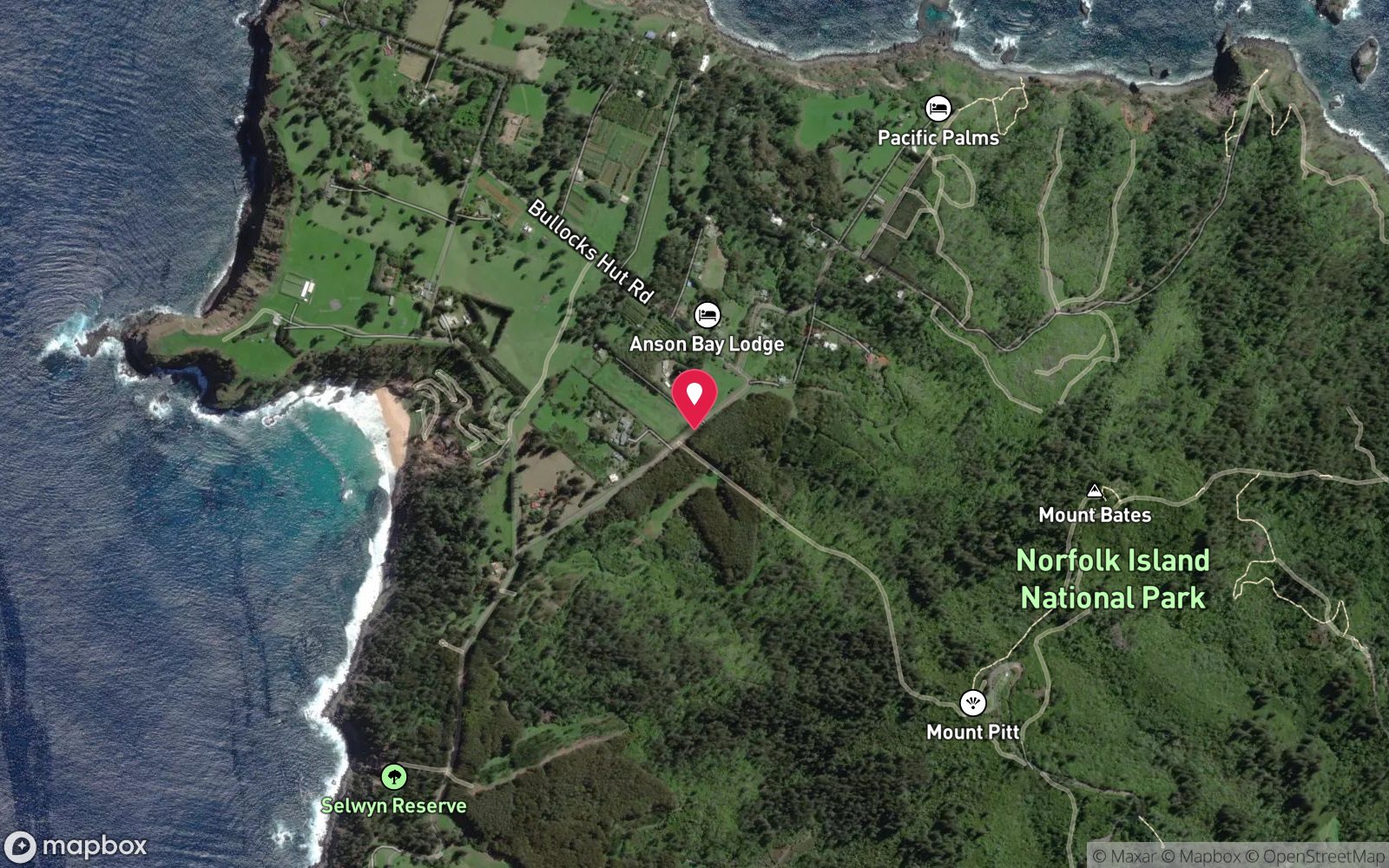
7 pinned sites. Pins marked approximate on their pages show the general area only; not for navigation.
Satellite views
Policemans Helmet: frequently asked questions
How deep is Policemans Helmet?
Policemans Helmet reaches a maximum depth of 18 m, with the shallowest part at about 5 m; most of the dive is spent around 12 m.
What certification do I need to dive Policemans Helmet?
Open Water is the recommended minimum. Rated beginner: sheltered, shallow and manageable for a newly certified diver on a normal day, though note an overhead environment and surge on the entry or in the shallows.
Can I shore dive Policemans Helmet?
No, it is reached by boat (about 20 minutes). A dive centre is required: boat access only.
When is the best time to dive Policemans Helmet?
November–April for warmer water and lighter winds; winter can give 40 m visibility but more days lost to wind.
What marine life will I see at Policemans Helmet?
Regularly recorded: Corals, sponges, fans, crayfish, morays, soldierfish, wrasse, drummer, sweep, groper, morwong, rock cod and more.
What wetsuit do I need at Policemans Helmet?
5 mm full suit year-round; add a hood or vest June–October.
How cold is the water at Policemans Helmet?
Typically 22-25 °C in summer and 18-19 °C in winter.
What are the main hazards at Policemans Helmet?
Surge around pinnacles and arches in northerly swell; current; small open boat some distance from the pier; overheads in arches and caves – stay within daylight; no chamber on Norfolk Island. See the hazards section above for the full list.
Where is the nearest recompression chamber to Policemans Helmet?
Prince of Wales Hospital (Randwick, Sydney) – about 1,700 km; no chamber on Norfolk Island, aeromedical evacuation from Norfolk Island Airport via the Norfolk Island Health service (Auckland may be used – confirm). In an emergency call 000, then DAN Asia-Pacific on 1800 088 200.
Diving in Norfolk Island
Norfolk Island sits on its own in the Tasman Sea, and its reefs feel like it: subtropical coral and kelp together, arches and swim-throughs in volcanic rock, 20–40 m visibility and endemic fish found nowhere else. Slaughter Bay and Emily Bay inside the lagoon are easy shore dives; the outer sites around Nepean and Phillip islands are boat dives in clear blue water.
Getting there: Fly from Sydney or Brisbane (about two and a half hours). One dive operator on the island runs boat and shore dives depending on the wind.
Sources
- oceanatik.com/destination/norfolk-island/sites/policemans-helmet-5058.html
- oceanatik.com/destination/norfolk-island/sites?page=2
Data confidence: Medium · Being verified: Coordinates approximate.. Last updated September 2026. Know this site better? How to send a correction