Dive slate · divesites.com.au · printed 7 Nov 2026
Roebuck Bay Flying Boat Wrecks (deep-water Catalinas)
Broome & Kimberley, Western Australia · near Broome
| Depth | 5–14 m |
|---|---|
| Minimum level | Advanced Open Water |
| Difficulty | Expert/Technical |
| Access | Boat |
| Entry | Backward roll from private boat at slack water on a neap tide; surface support essential |
| Current | Strong |
| Visibility | 0-3 m |
| Water | summer 29-31 °C, winter 23-25 °C |
| Suit | 3 mm full suit |
| Best season | Mid-year (June–August) on neap tides, 1–2 days after the smallest tide, on the incoming tide |
| Bottom time | 30 min |
| Position | -17.97000, 122.24000 (approximate) |
| Permit | Protected under WA Heritage Act 2018 (war graves); Roebuck Bay Marine Park |
| Nearest chamber | Fiona Stanley Hospital (Perth) via RFDS from Broome; Royal Darwin Hospital is the alternative for the far north Kimberley |
| Emergency | 000 · DAN Asia-Pacific diving emergency 1800 088 200 |
Roebuck Bay Flying Boat Wrecks (deep-water Catalinas)
Also known as Broome flying boat wrecks, Catalina wrecks Broome, Dornier wrecks, Site 02, Site 03
WWII Catalina flying boats sunk in the 1942 Broome raid, with engines and turret still recognisable.
Near Broome · Broome & Kimberley, Western Australia
- Depth
- 5–14 m
- Minimum level
- Advanced Open Water
- Access
- Boat
- Boat ride
- ~10 min
- Water
- 29-31 °C
- Visibility
- 0-3 m
Roebuck Bay Flying Boat Wrecks (deep-water Catalinas)5–14 m · Advanced Open Water
Dive factsDepths, conditions, location & safety
Season
Off-peak nowBest months: June, July, August.
Mid-year (June–August) on neap tides, 1–2 days after the smallest tide, on the incoming tide
- Best months
- Now (November)
- Stinger suit Nov–May
Dive facts
- Depth
- 5–14 m
- Typical depth
- 10 m
- Certification
- Advanced Open Water
- Difficulty
- Expert/Technical
- Depth tier
- Open Water (10–18 m)
- Access
- Boat
- Offshore
- 1.5 km
- Dive centre needed
- Recommended
- Shore / independent
- No
- Boat ride
- ~10 min
- Current
- Strong
- Visibility
- 0-3 m
- Water temp (summer)
- 29-31 °C
- Water temp (winter)
- 23-25 °C
- Water
- Tropical
- Bottom time
- 30 min
- Dive traffic
- Rarely dived (private boat/club only)
- Night dive
- No
- Snorkel friendly
- No
Exposure suit
3 mm full suit
Location
Roebuck Bay
-17.97000, 122.24000
Approximate position — not for navigation.
Open in Google MapsPrimary source: divingwawrecks.comMarine park & permits
Protected under WA Heritage Act 2018 (war graves); Roebuck Bay Marine Park
Nearest recompression chamber
Fiona Stanley Hospital (Perth) via RFDS from Broome; Royal Darwin Hospital is the alternative for the far north Kimberley
Diving emergency: call 000, then DAN AP 1800 088 200.
Trip planner
Build a trip around Roebuck Bay Flying Boat Wrecks (deep-water Catalinas) →
A day-by-day plan for Broome & Kimberley with this site locked in.
This guide is a planning aid. Conditions change daily — confirm with a local dive centre and dive within your training. Data & safety notes.
Dive profile
How this site rates
Scores are computed from the recorded data, not opinions. How?
At a glance
Roebuck Bay Flying Boat Wrecks (deep-water Catalinas) is a aircraft wreck boat dive in Broome & Kimberley, WA, 5–14 m, suited to Advanced Open Water divers, strong current, about 10 minutes by boat.
Rated expert/technical because of strong current, boat traffic overhead.
Why dive here
- WWII Catalina flying boats sunk in the 1942 Broome raid, with engines and turret still recognisable.
- Sunk in 1942; protected as underwater cultural heritage, so look but do not touch.
- Rarely dived: expect to have the site to yourself, and plan your own logistics.
Conditions to avoid
- Outgoing tide or run-off after rain (poor visibility)
- Cyclone season (roughly December–April)
- Stinger season without a full suit (November–May)
About Roebuck Bay Flying Boat Wrecks (deep-water Catalinas)
On the morning of 3 March 1942, nine Japanese Zero fighters attacked Broome, destroying 15 flying boats moored in Roebuck Bay — Dutch Dorniers, US Navy PBY Catalinas and RAF/Qantas Short Empire flying boats — and seven aircraft at the airfield. Many flying boats were full of Dutch refugees evacuating Java. At least 80 people, including more than 20 children, died, making it the second-deadliest attack on mainland Australia after Darwin. A US B-24 Liberator was shot down about seven miles off Cable Beach and has never been found.
Six wrecks lie on the mudflats off Town Beach and are exposed on spring low tides below 1.1 m. The other nine lie in deeper water off the edge of the flats, several still unlocated. Divingwawrecks documents two PBY-5 Catalinas: Site 03 at about 10 m (on a 5.0 m tide) with twin 14-cylinder radial engines, nose turret and cockpit area visible; and Site 02 at up to 14 m with a complete engine in its cowling, wing structure and fuselage sections. The ABC described divers navigating 'from shadow to shadow' in soupy water.
This is among the most demanding dives in Australia: near-zero visibility, currents to 4 knots, a narrow tidal window, and a bay that is known shark and saltwater crocodile habitat. The wrecks are protected under the WA Heritage Act 2018 and treated as war graves; positions are not published, and nothing may be disturbed or removed.
It suits only highly experienced, self-sufficient divers with local knowledge and full surface support. For most visitors, the low-tide walk to the shallow wrecks and the WA Museum's material are the way to experience this history.
Wreck details
WWII flying boats: PBY-5 Catalinas, Dornier Do 24s, Short Empire (15 destroyed) · Sunk 1942 · Protected historic shipwreck
Era: Second World War. Oldest wrecks · Wartime wrecks · Scuttled warships
Other wrecks of the same era
- Uribes Wreck · Max 4 m · Rottnest Island
- Town Beach Flying Boat Wrecks (low-tide walk) · Max 1 m · Broome & Kimberley
- ALC40 & Gay Dragon Wrecks (Bicton) · Max 8.5 m · Perth
- Shark Hopper Barge (Henrietta Rocks) · Max 4 m · Rottnest Island
- HNLMS K XI Submarine Wreck · Max 38 m · Rottnest Island
- Ahwina Tug Wreck (Gull Rock) · Max 3 m · Albany & Great Southern
Getting there & entry
Nine WWII flying-boat wrecks in deeper water off the edge of the Roebuck Bay mudflats near Town Beach, Broome, sunk in the Japanese air raid of 3 March 1942; diveable wrecks lie in about 10–14 m at high tide.
Launch at the Town Beach boat ramp on Roebuck Bay (Broome) on the higher part of the tide. The deep-water wrecks lie off the edge of the mudflats a short run from the ramp; their GPS positions are not published because they are war graves, so dive with someone who knows the sites. Keep a boat live with a lookout at all times.
Entry: Backward roll from private boat at slack water on a neap tide; surface support essential
Facilities: Town Beach: boat ramp, parking, café, toilets.
Weather, swell & tides
Roebuck Bay has tides of up to about 10 m and currents up to 4 knots. Dive only mid-year on neap tides, on the incoming tide one or two days after the smallest range; the rest of the time currents and turbidity make it impossible. Visibility is typically 0–3 m (about 1–2.5 m recorded on the Catalinas).
Strong easterlies in the dry season chop up the bay. Wet season (November–April) brings cyclones, run-off and box jellyfish.
Best season: Mid-year (June–August) on neap tides, 1–2 days after the smallest tide, on the incoming tide
If it's blown out
Sheltered or shore sites within 25 km that often work when Roebuck Bay Flying Boat Wrecks (deep-water Catalinas) doesn't.
- Town Beach Flying Boat Wrecks (low-tide walk) · 1 km · Max 1 m
- Gantheaume Point to Riddell Point Reef · 7 km · Max 10 m
How the dive is usually run
Descend a shot line placed on the wreck at slack water, stay in physical or line contact with the wreck in near-zero visibility, and explore from shadow to shadow — engines, wing and fuselage sections — without touching. Ascend the shot before the tide begins to run; the boat must be live to recover anyone swept off.
Marine life
- Silt-tolerant reef fish on wreckage
- large sharks
- occasional saltwater crocodiles
Linked species have their own page listing every site where they are recorded. All marine life →
Training required
Within the 18 m limit of an entry-level certification.
Courses that help here
- Drift Diver – Current is a feature of the dive.
Depth tiers: 0–10 m easy · to 18 m Open Water · 18–30 m Advanced (25 m+ is a deep dive) · 30–40 m Deep specialty · 40 m+ technical. All courses
Hazards & warnings
Currents up to 4 knots; tidal range to ~10 m; 0–3 m visibility; saltwater crocodiles and large sharks; war graves – protected, no disturbance; box jellyfish in wet season; boat traffic from Town Beach.
Technical notes
Dive on neap incoming tide; shot line and live boat with lookout essential; lights and line/contact navigation.
Dive centres that go here
No commercial dive operator. Dived by experienced local divers and WA Museum expeditions; land-based guided walks visit the shallow wrecks at low tide.
Other dive centres in Broome & Kimberley
The Great Escape Charter Company
Named by sitesBroome · Rowley Shoals · WA
Website live for 2026 advertising 5- and 7-night Rowley Shoals dive and snorkel cruises for the 2026 and 2027 seasons (March–November).
greatescapecruises.com.au · (08) 9193 5983
Broome Historical Walking Tours
Named by sitesBroome · Broome & Kimberley · WA
Walking tour operator, not a dive business; departs Town Beach, Broome.
broomehistoricalwalkingtours.com
All dive centres in Western Australia →
Operators mentioned: None regular
Map
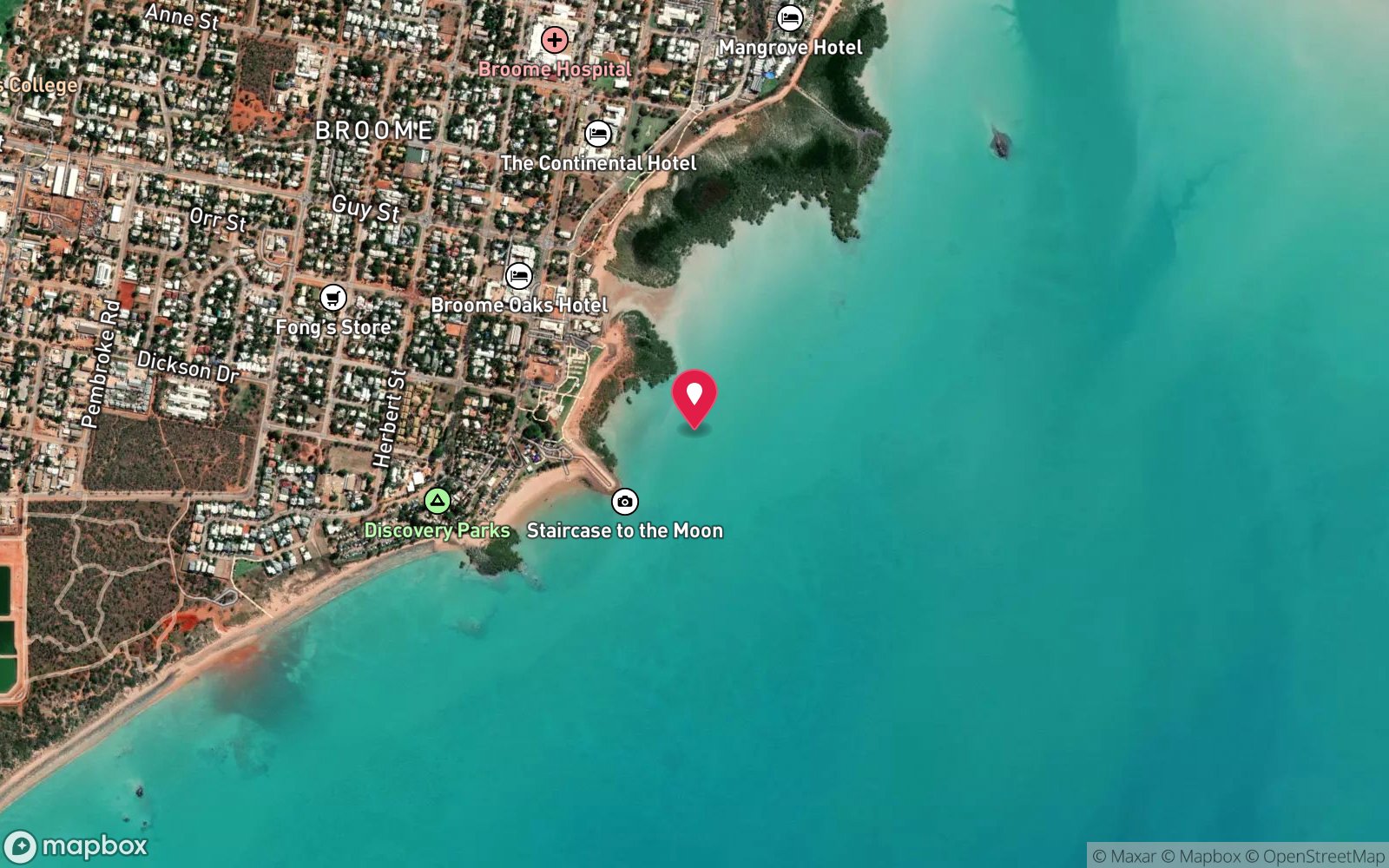
7 pinned sites. Pins marked approximate on their pages show the general area only; not for navigation.
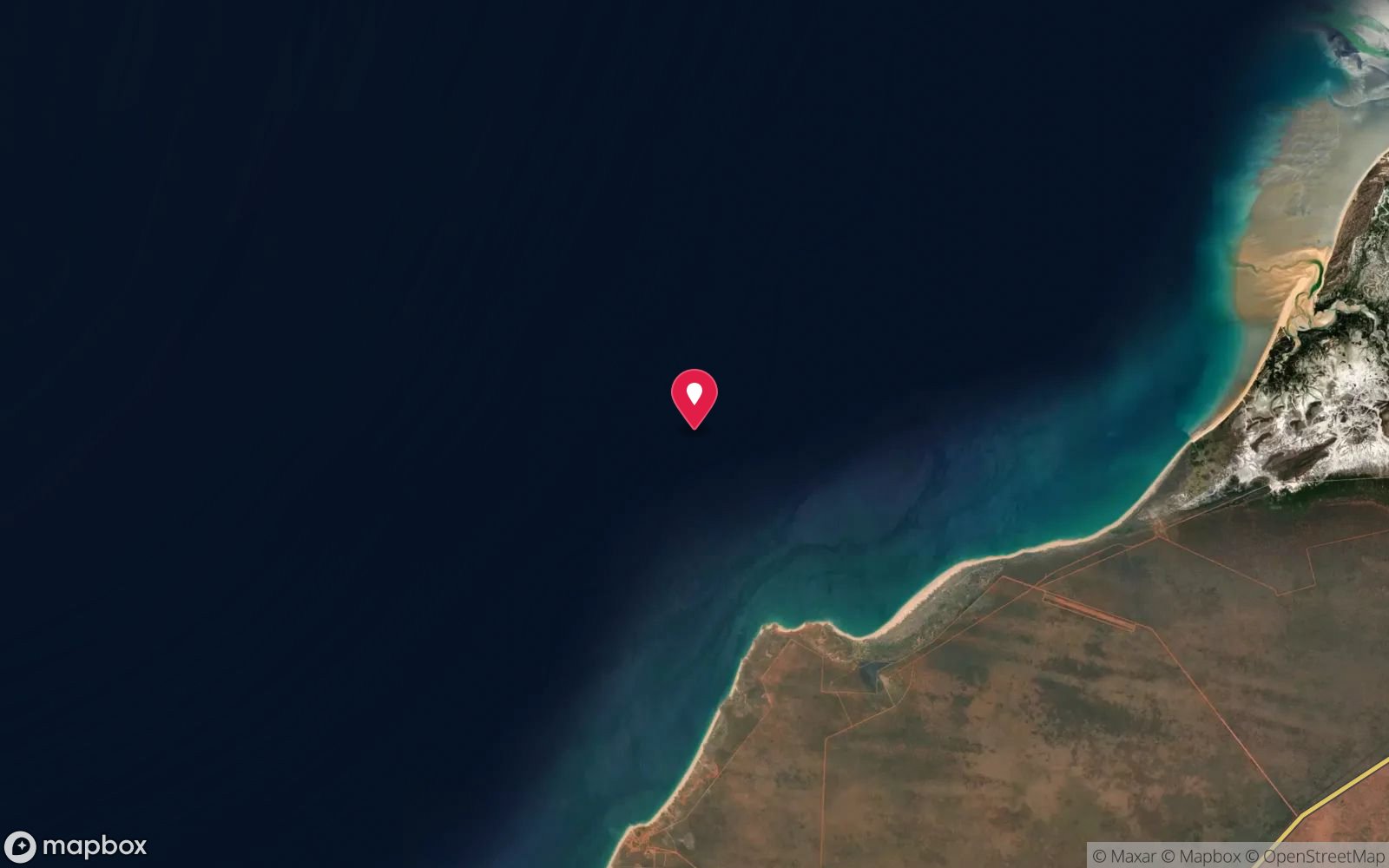
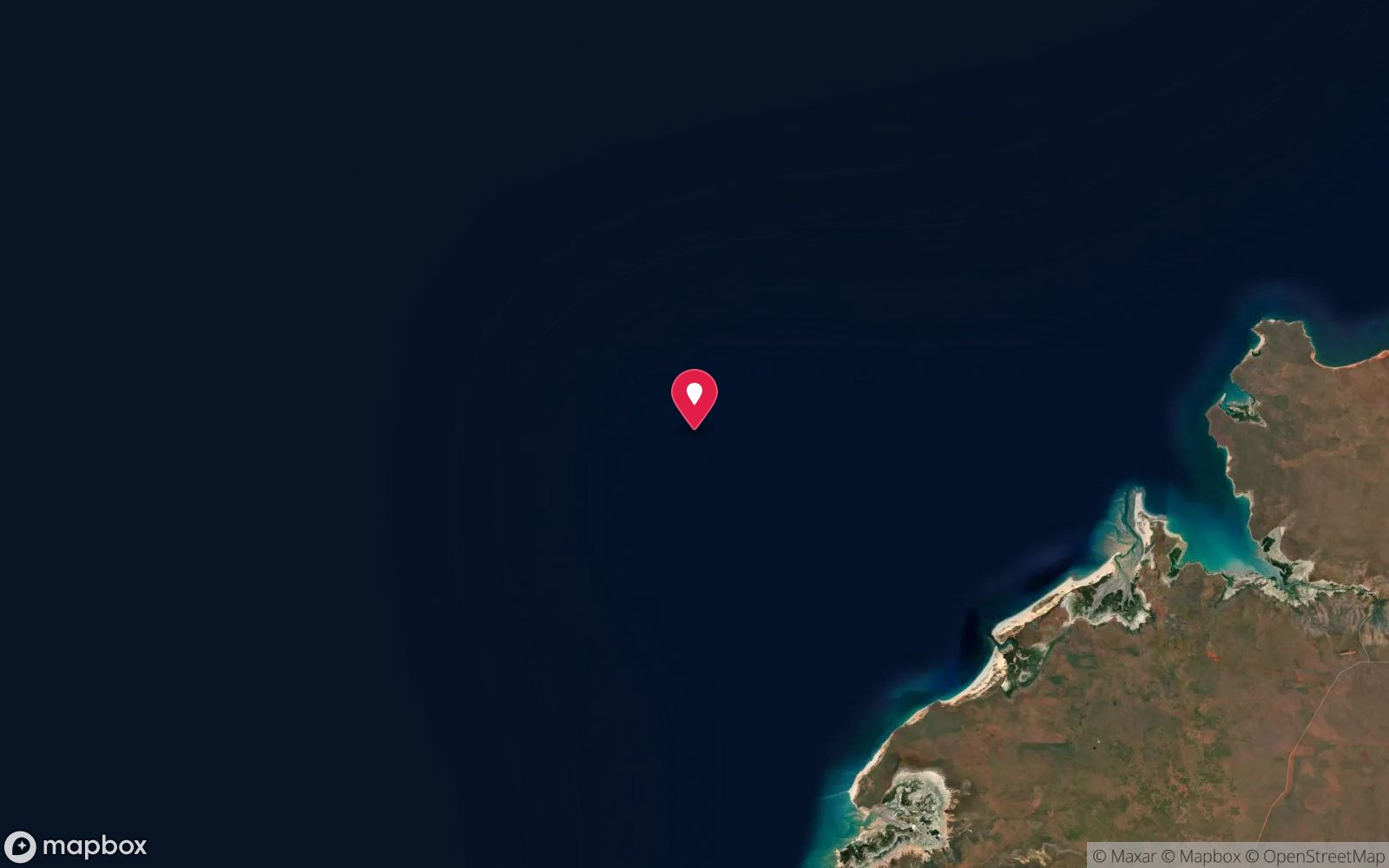
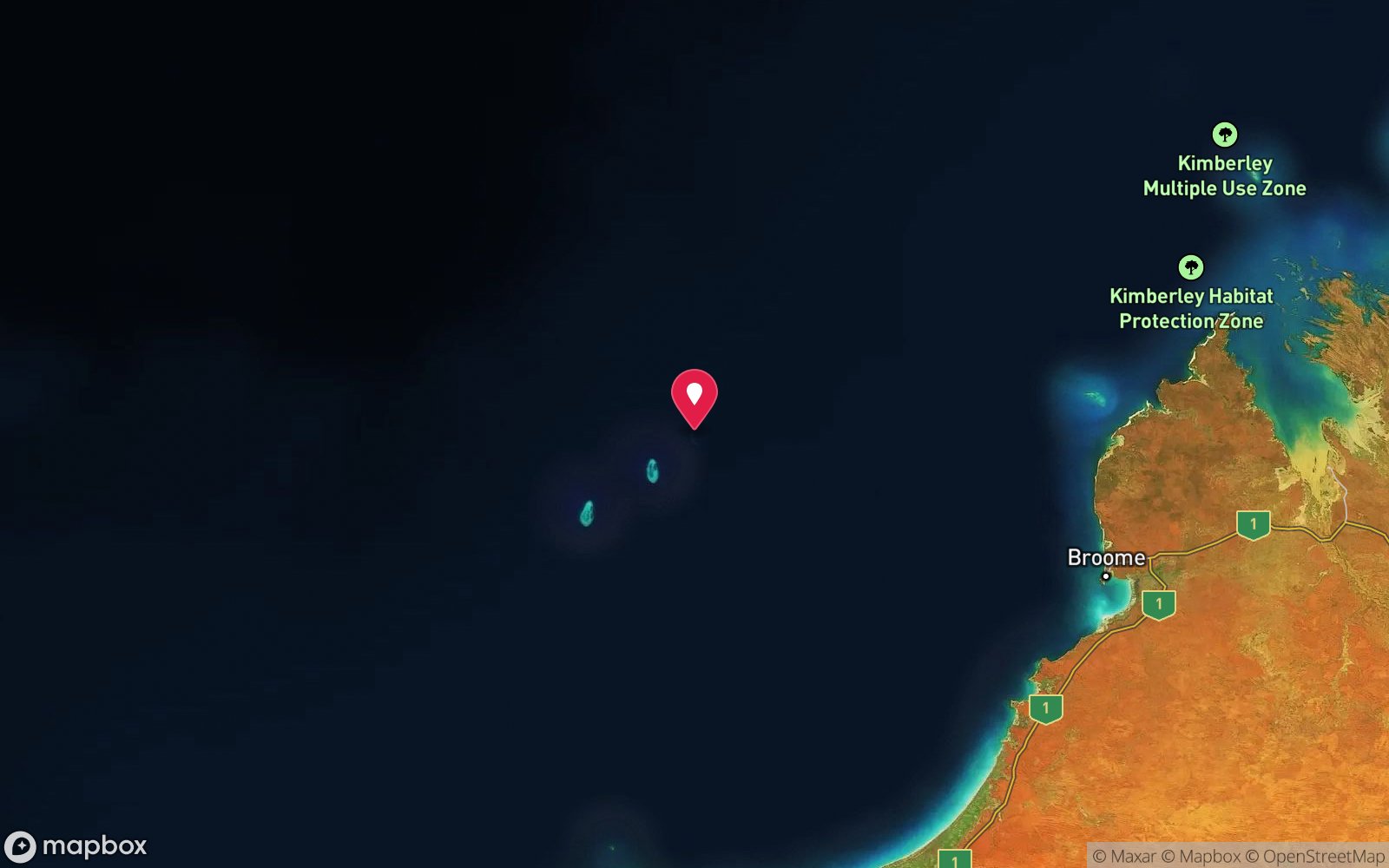
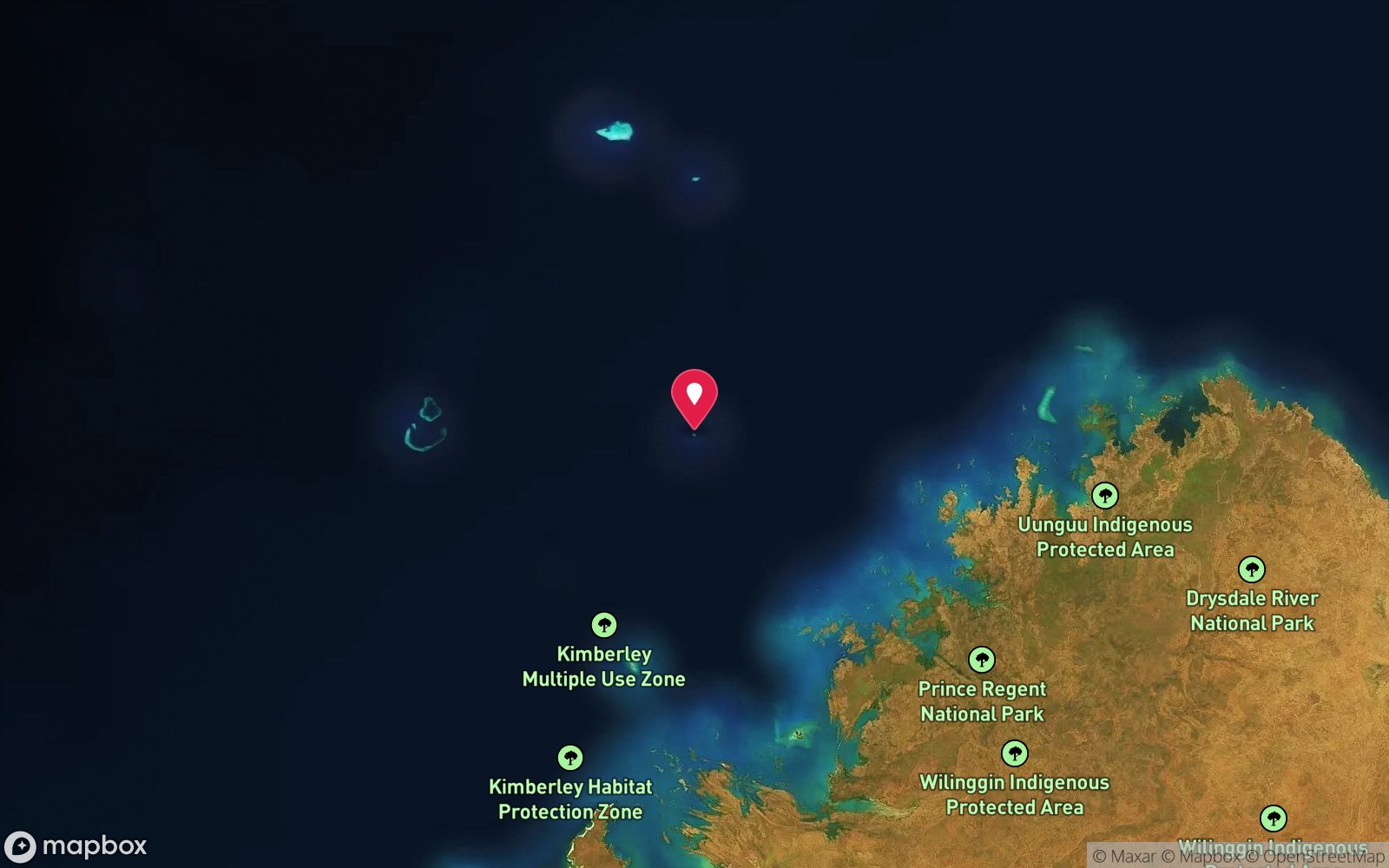
Satellite views
Roebuck Bay Flying Boat Wrecks (deep-water Catalinas): frequently asked questions
How deep is Roebuck Bay Flying Boat Wrecks (deep-water Catalinas)?
Roebuck Bay Flying Boat Wrecks (deep-water Catalinas) reaches a maximum depth of 14 m, with the shallowest part at about 5 m; most of the dive is spent around 10 m.
What certification do I need to dive Roebuck Bay Flying Boat Wrecks (deep-water Catalinas)?
Advanced Open Water is the recommended minimum. Rated expert/technical because of strong current, boat traffic overhead.
Can I shore dive Roebuck Bay Flying Boat Wrecks (deep-water Catalinas)?
No, it is reached by boat (about 10 minutes).
When is the best time to dive Roebuck Bay Flying Boat Wrecks (deep-water Catalinas)?
Mid-year (June–August) on neap tides, 1–2 days after the smallest tide, on the incoming tide.
What marine life will I see at Roebuck Bay Flying Boat Wrecks (deep-water Catalinas)?
Regularly recorded: Silt-tolerant reef fish on wreckage, large sharks, occasional saltwater crocodiles.
What wetsuit do I need at Roebuck Bay Flying Boat Wrecks (deep-water Catalinas)?
3 mm full suit.
How cold is the water at Roebuck Bay Flying Boat Wrecks (deep-water Catalinas)?
Typically 29-31 °C in summer and 23-25 °C in winter.
What are the main hazards at Roebuck Bay Flying Boat Wrecks (deep-water Catalinas)?
Currents up to 4 knots; tidal range to ~10 m; 0–3 m visibility; saltwater crocodiles and large sharks; war graves – protected, no disturbance; box jellyfish in wet season; boat traffic from Town Beach. See the hazards section above for the full list.
Where is the nearest recompression chamber to Roebuck Bay Flying Boat Wrecks (deep-water Catalinas)?
Fiona Stanley Hospital (Perth) via RFDS from Broome; Royal Darwin Hospital is the alternative for the far north Kimberley. In an emergency call 000, then DAN Asia-Pacific on 1800 088 200.
Diving in Broome & Kimberley
Broome's diving is tidal and turbid but full of history: the pearling-lugger wrecks, WWII flying boats sunk in Roebuck Bay in 1942 and reachable on the lowest tides, and the reefs off Gantheaume Point. The Kimberley coast beyond is liveaboard country with huge tides, crocodiles and untouched reef.
Getting there: Fly to Broome. Local operators dive on neap tides; Kimberley coast trips are multi-day expedition charters.
All Broome & Kimberley dive sites and a suggested itinerary →
Sources
- divingwawrecks.com/broomeflyingboats
- abc.net.au/news/2021-09-02/rules-around-diving-on-wwii-wrecks/100402424
- divingwawrecks.com/kimberley
Data confidence: High. Last updated September 2026. Know this site better? How to send a correction