Dive slate · divesites.com.au · printed 9 Nov 2026
Bellbird
Darwin Harbour, Northern Territory · near Darwin
| Depth | Max 16 m |
|---|---|
| Minimum level | Open Water |
| Difficulty | Intermediate |
| Access | Boat (day trip) |
| Entry | Giant stride or backward roll from the boat; descend the shot or anchor line |
| Current | Variable/Tidal |
| Visibility | 2-8 m |
| Water | summer 29-32 °C, winter 24-26 °C |
| Suit | 3 mm wetsuit or skin in the dry season; full-length Lycra stinger suit (with hood and gloves) October-May |
| Best season | May-October (dry season), on neap tides only |
| Bottom time | 40 min |
| Position | -12.45700, 130.83500 (approximate) |
| Permit | Cyclone Tracy wreck; no permit required to dive. Do not remove material. |
| Nearest chamber | Royal Darwin Hospital hyperbaric medicine unit (Tiwi, Darwin) |
| Emergency | 000 · DAN Asia-Pacific diving emergency 1800 088 200 |
Bellbird
Also known as Bell Bird
An upturned Cyclone Tracy trawler draped in gorgonians, a few minutes from the CBD and sheltered from the trade winds.
Near Darwin · Darwin Harbour, Northern Territory
- Depth
- Max 16 m
- Minimum level
- Open Water
- Access
- Boat (day trip)
- Boat ride
- —
- Water
- 29-32 °C
- Visibility
- 2-8 m
BellbirdMax 16 m · Open Water
Dive factsDepths, conditions, location & safety
Season
Off-peak nowBest months: May, June, July, August, September, October.
May-October (dry season), on neap tides only
- Best months
- Now (November)
- Stinger suit Nov–May
Dive facts
- Depth
- Max 16 m
- Typical depth
- 14 m
- Certification
- Open Water
- Difficulty
- Intermediate
- Depth tier
- Open Water (10–18 m)
- Access
- Boat (day trip)
- Dive centre needed
- Yes – boat access only
- Shore / independent
- No
- Current
- Variable/Tidal
- Visibility
- 2-8 m
- Water temp (summer)
- 29-32 °C
- Water temp (winter)
- 24-26 °C
- Water
- Tropical
- Bottom time
- 40 min
- Dive traffic
- Moderate (occasional charters/club dives)
- Night dive
- Possible
- Snorkel friendly
- No
Exposure suit
3 mm wetsuit or skin in the dry season; full-length Lycra stinger suit (with hood and gloves) October-May
Location
Inner harbour - Doctors Gully
-12.45700, 130.83500
Approximate position — not for navigation.
Open in Google MapsDive site map (external) →Primary source: dsac.com.auMarine park & permits
Cyclone Tracy wreck; no permit required to dive. Do not remove material.
Nearest recompression chamber
Royal Darwin Hospital hyperbaric medicine unit (Tiwi, Darwin)
Diving emergency: call 000, then DAN AP 1800 088 200.
Trip planner
Build a trip around Bellbird →
A day-by-day plan for Darwin Harbour with this site locked in.
This guide is a planning aid. Conditions change daily — confirm with a local dive centre and dive within your training. Data & safety notes.
Dive profile
How this site rates
Scores are computed from the recorded data, not opinions. How?
At a glance
Bellbird is a wreck boat dive in Darwin Harbour, NT, to a maximum of 16 m, suited to Open Water divers, variable/tidal current.
Rated intermediate because of tidal current that must be timed, an overhead environment, boat traffic overhead.
Why dive here
- An upturned Cyclone Tracy trawler draped in gorgonians, a few minutes from the CBD and sheltered from the trade winds.
- Sunk in 1974 (Steel prawn trawler, 82 ft (25 m), 197 GRT).
Conditions to avoid
- Strong southerly or south-east swell and wind
- Outgoing tide or run-off after rain (poor visibility)
- Spring tides (strong current)
- Any time other than slack water
- Cyclone season (roughly December–April)
About Bellbird
The Bellbird was an 82 ft (25 m), 197-ton prawn trawler owned by Gollin Kyokuyo Fishing Co. At the time of Cyclone Tracy she was out of service with her engines removed and tied up on the inner face of Fort Hill Wharf. Cyclone Tracy crossed Darwin in the early hours of 25 December 1974 with gusts estimated at over 200 km/h, destroying most of the city and killing 66 people, many of them at sea. More than 20 vessels sank or were driven ashore in and around the harbour, and several of those wrecks now form a second, much more intact wreck trail beside the 1942 sites. During the storm she broke from her moorings, capsized and came to rest off Doctors Gully, where the old iron-ore loading wharf used to stand.
She lies upside down in about 15-16 m, canted at an angle because her cabin and trawling gear hold one side off the bottom. Large gorgonian fans have grown on the upturned hull, and there is plenty of other debris around the site from the ore wharf. The angle leaves gaps into the interior that trained wreck divers with a torch can look into, but the silt is easily disturbed and light penetration varies. Fish life is good for an inshore site: Moorish idols, coral trout and rock cod are regulars. DSAC describes it as an interesting dive close to shore and out of the weather, and that is its main value - it is often the fallback when south-easterlies or a sloppy sea make the outer harbour uncomfortable. It suits Open Water divers comfortable in low visibility, and works well as a short second dive.
Wreck details
Steel prawn trawler, 82 ft (25 m), 197 GRT · Sunk 1974
Era: post-war. Oldest wrecks · Wartime wrecks · Scuttled warships
Other wrecks of the same era
- NR Diemen · Max 12 m · Darwin Harbour
- Bluebird · Max 15 m · Darwin Harbour
- Booya · Max 22 m · Darwin Harbour
- Darwin Princess · Max 26 m · Darwin Harbour
- Mandorah Queen · Max 21 m · Darwin Harbour
- Buffalo LVT amphibious vehicle · Max 23 m · Darwin Harbour
Getting there & entry
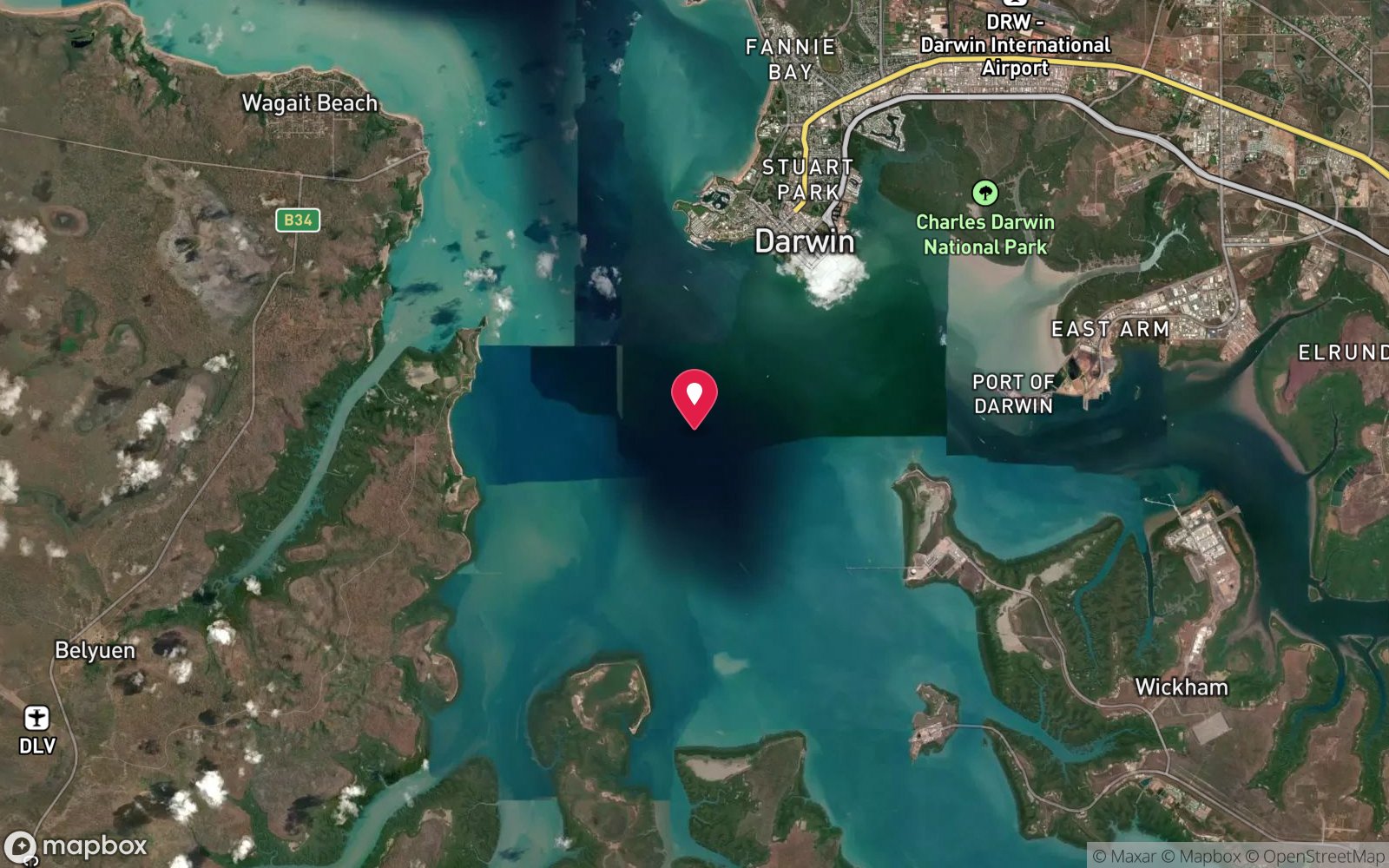
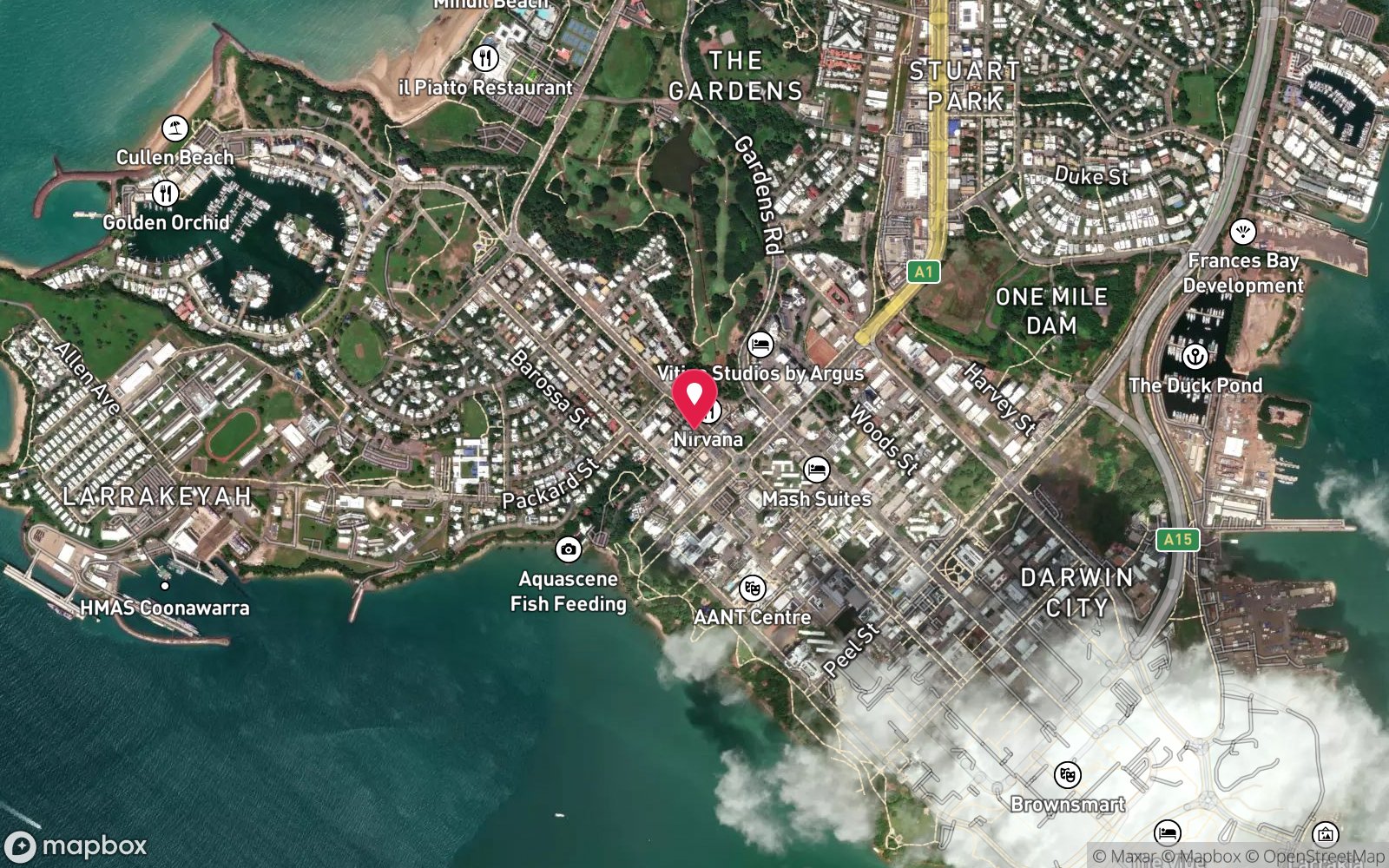
Off Doctors Gully on the CBD waterfront, about 300 m from the Esplanade hotels, on the site of the old iron-ore wharf.
Boat. The wreck is only a few minutes from Cullen Bay Marina or the Cullen Bay ramp, running east along the CBD shoreline to Doctors Gully (where the Aquascene fish-feeding is held). The Stokes Hill / Frances Bay ramp is about as close from the other side.
Close to shore and sheltered, it is a useful option when wind rules out the outer harbour. Mark with GPS and shot; watch for other vessels using the waterfront.
Entry: Giant stride or backward roll from the boat; descend the shot or anchor line
Weather, swell & tides
Tide is everything in Darwin Harbour: the spring range is 7-8 m and tidal streams run hard through the harbour, so diving is generally only possible on neap tides (range under about 3-4 m), timed to the slack at high water when clearer ocean water sits over the site. Spring tides bring strong currents and silt-laden water with near-zero visibility. The dry season (May-October) gives the most consistent conditions; the south-east trade winds can chop up exposed water in the afternoon, so mornings are best.
In the wet season (November-April) run-off from the rivers and creeks drops visibility, afternoon storms build quickly, and the harbour is in cyclone season; box jellyfish are present October-May.
Best season: May-October (dry season), on neap tides only
If it's blown out
Sheltered or shore sites within 25 km that often work when Bellbird doesn't.
- NR Diemen · 8 km · Max 12 m
- Stokes Hill Wharf Artificial Reef · 2 km · Max 10 m
- MV Neptuna remnants · 2 km · Max 10 m
- East Point Reef · 6 km · Max 8 m
How the dive is usually run
Descend at neap slack, circle the upturned hull to see the gorgonians on the keel, then examine the surrounding debris from the old ore wharf. Penetration of the interior is only for trained wreck divers with a line and torch - silt comes up instantly. Ascend on the shot.
Marine life
- Gorgonian fans
- sponges
- Moorish idols
- coral trout
- rock cod (estuary cod)
- batfish
- snapper
Linked species have their own page listing every site where they are recorded. All marine life →
Training required
Within the 18 m limit of an entry-level certification.
Courses that help here
- Wreck Diver – The wreck has penetration options.
- Peak Performance Buoyancy – Silt and low visibility punish poor trim.
Depth tiers: 0–10 m easy · to 18 m Open Water · 18–30 m Advanced (25 m+ is a deep dive) · 30–40 m Deep specialty · 40 m+ technical. All courses
Hazards & warnings
Darwin's tidal range reaches 7-8 m on springs: dive only on neap tides at slack water or currents become unswimmable and visibility collapses. Saltwater crocodiles live throughout the harbour - keep surface intervals short, no dangling legs, keep a lookout at entry and exit. Box jellyfish (Chironex) and Irukandji October-May - full-length stinger suit, hood and gloves, vinegar on board.
Silt is fine and easily stirred. Boat traffic along the CBD waterfront. Overhead environment and silt inside the hull; enter only with wreck training.
Dive centres that go here
Darwin Dive Centre and Dive Darwin run harbour wreck charters only on neap-tide windows (typically a few days either side of each neap, weekends favoured); Darwin Sub Aqua Club dives it on club neap-tide days (members plan dives at Thursday meetings at the Darwin Ski Club). No daily schedule.
Operators recorded for Bellbird
Dive Darwin
ProfiledDarwin · Darwin Harbour · NT
The main verified dive operation in the Northern Territory, offering recreational training through professional level alongside technical diving and a large specialty range.
divedarwin.com.au · +61 401 751 651
Darwin Sub Aqua Club
Named by sitesDarwin · Darwin Harbour · NT
Club, not a shop: official site updated August 2026 with the 2026 AGM notice; meets Thursdays at Darwin Ski Club, Fannie Bay.
dsac.com.au
Map
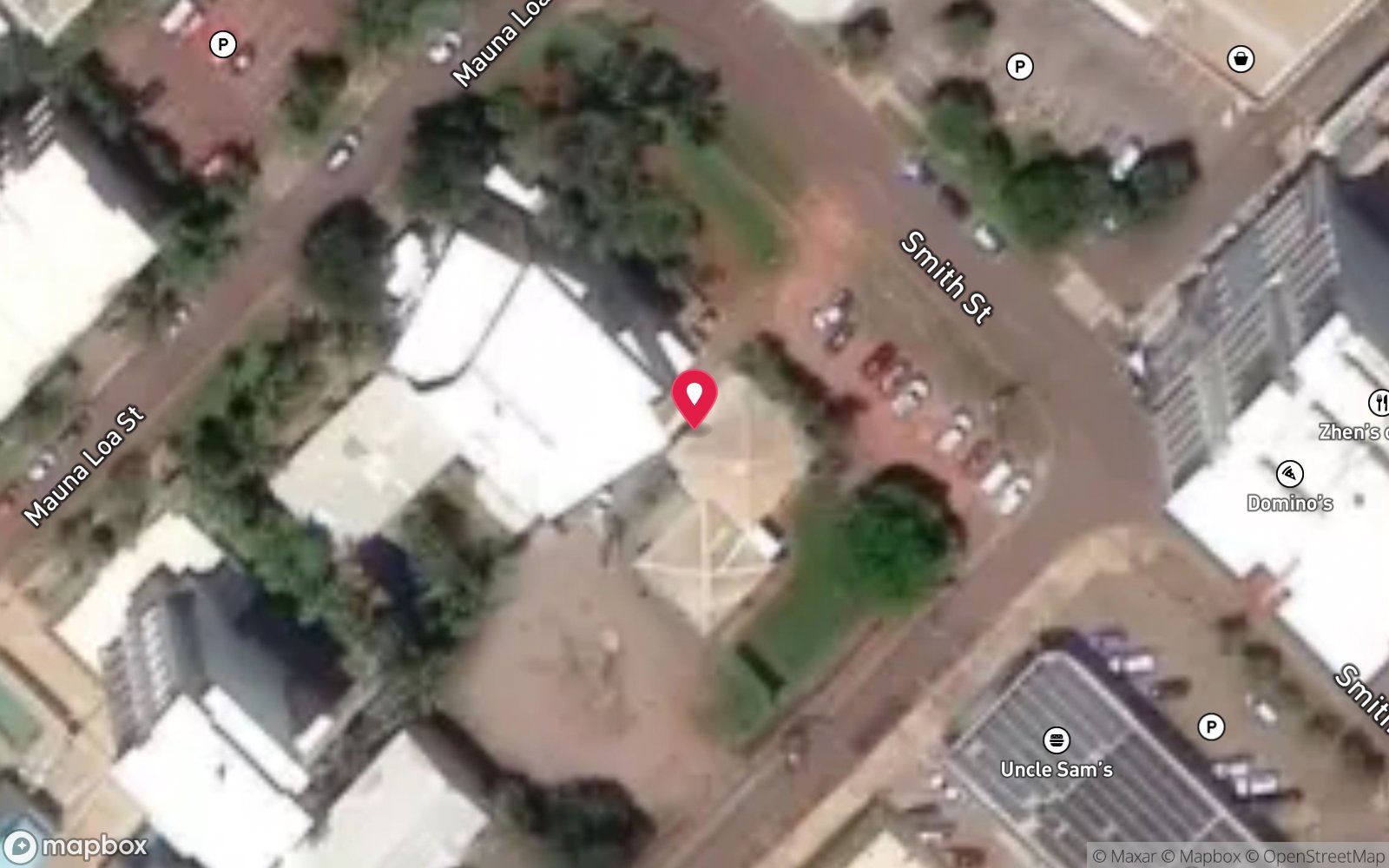
7 pinned sites. Pins marked approximate on their pages show the general area only; not for navigation.
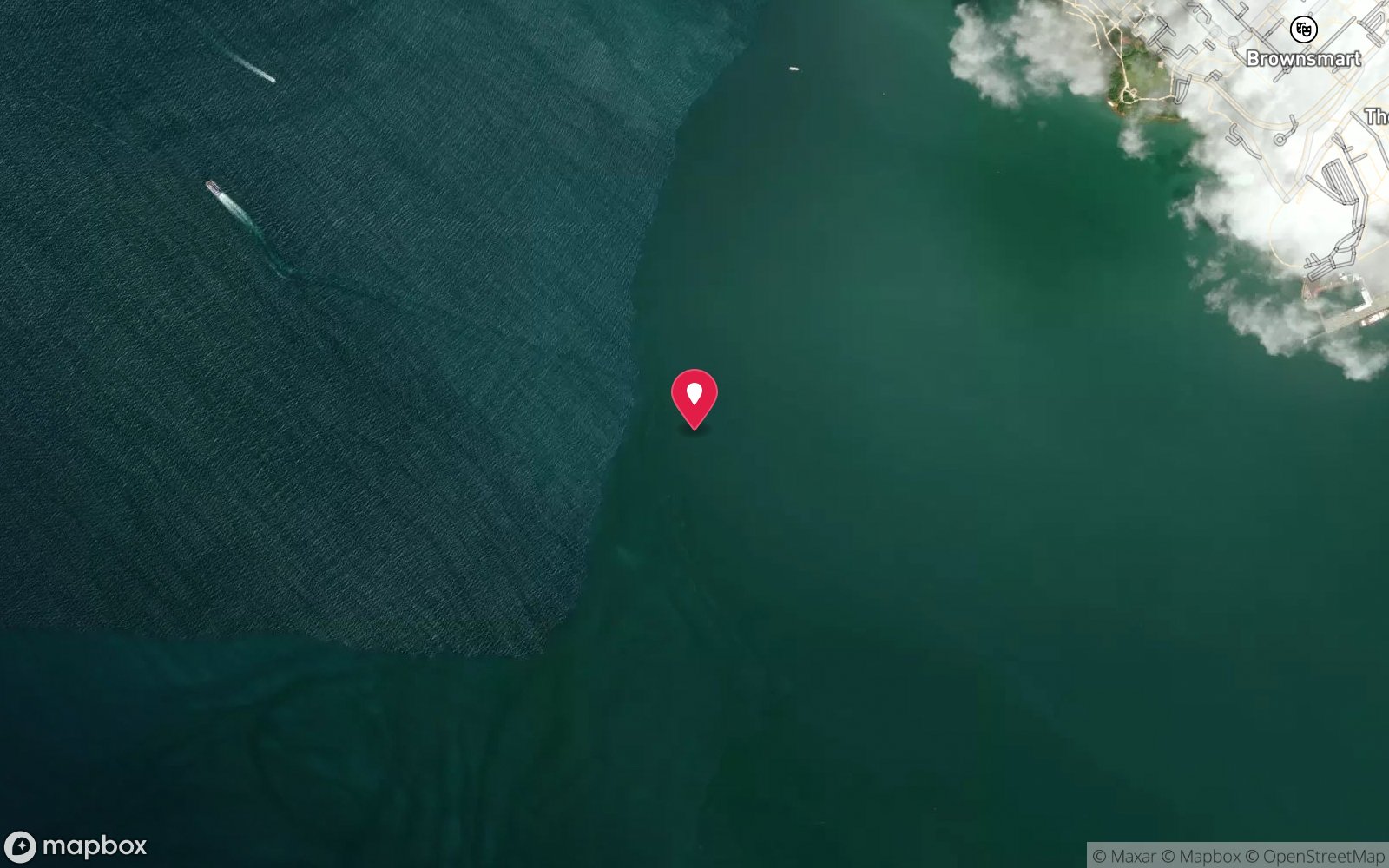
Satellite views
Bellbird: frequently asked questions
How deep is Bellbird?
Bellbird reaches a maximum depth of 16 m; most of the dive is spent around 14 m.
What certification do I need to dive Bellbird?
Open Water is the recommended minimum. Rated intermediate because of tidal current that must be timed, an overhead environment, boat traffic overhead.
Can I shore dive Bellbird?
No, it is reached by boat. A dive centre is required: boat access only.
When is the best time to dive Bellbird?
May-October (dry season), on neap tides only.
What marine life will I see at Bellbird?
Regularly recorded: Gorgonian fans, sponges, Moorish idols, coral trout, rock cod (estuary cod), batfish, snapper.
What wetsuit do I need at Bellbird?
3 mm wetsuit or skin in the dry season; full-length Lycra stinger suit (with hood and gloves) October-May.
How cold is the water at Bellbird?
Typically 29-32 °C in summer and 24-26 °C in winter.
What are the main hazards at Bellbird?
Darwin's tidal range reaches 7-8 m on springs: dive only on neap tides at slack water or currents become unswimmable and visibility collapses. See the hazards section above for the full list.
Where is the nearest recompression chamber to Bellbird?
Royal Darwin Hospital hyperbaric medicine unit (Tiwi, Darwin). In an emergency call 000, then DAN Asia-Pacific on 1800 088 200.
Diving in Darwin Harbour
Darwin Harbour is Australia's most historic wreck-diving location. The Japanese air raid of 19 February 1942 sank the USAT Meigs, SS Mauna Loa, British Motorist, Zealandia, Kelat and others, and they remain as protected war graves in 15–25 m, along with the Song Saigon refugee boat and a scatter of barges and aircraft. Visibility is low (3–8 m) and the tidal range reaches 8 m, so every dive is planned around slack water on the neap tides.
Getting there: Charters from Darwin, generally advertised weeks ahead for the neap-tide windows. No shore diving.
Sources
Data confidence: Medium · Being verified: Coordinates approximate (Doctors Gully). Depth 15 m (DSAC) or 16 m (marinelife).. Last updated September 2026. Know this site better? How to send a correction