Dive slate · divesites.com.au · printed 9 Nov 2026
Booya
Darwin Harbour, Northern Territory · near Darwin
| Depth | Max 22 m |
|---|---|
| Minimum level | Advanced Open Water |
| Difficulty | Intermediate |
| Access | Boat (day trip) |
| Entry | Giant stride or backward roll from the boat; descend the shot or anchor line |
| Current | Variable/Tidal |
| Visibility | 2-8 m |
| Water | summer 29-32 °C, winter 24-26 °C |
| Suit | 3 mm wetsuit or skin in the dry season; full-length Lycra stinger suit (with hood and gloves) October-May |
| Best season | May-October (dry season), on neap tides only |
| Bottom time | 35 min |
| Position | -12.38968, 130.77135 (approximate) |
| Permit | NT Heritage Branch permission required to dive (heritage site declared 2005, closed-waters controls); no anchoring or fishing. Contact heritage.branch@nt.gov.au / 08 8999 5039. |
| Nearest chamber | Royal Darwin Hospital hyperbaric medicine unit (Tiwi, Darwin) |
| Emergency | 000 · DAN Asia-Pacific diving emergency 1800 088 200 |
Booya
Also known as Booya schooner, ex De Lauwers, Argosy Lemal, Ametco, Clair Crouch
A complete 1917 three-masted schooner lost with five people in Cyclone Tracy and found by chance in 2003.
Near Darwin · Darwin Harbour, Northern Territory
- Depth
- Max 22 m
- Minimum level
- Advanced Open Water
- Access
- Boat (day trip)
- Boat ride
- —
- Water
- 29-32 °C
- Visibility
- 2-8 m
BooyaMax 22 m · Advanced Open Water
Dive factsDepths, conditions, location & safety
Season
Off-peak nowBest months: May, June, July, August, September, October.
May-October (dry season), on neap tides only
- Best months
- Now (November)
- Stinger suit Nov–May
Dive facts
- Depth
- Max 22 m
- Typical depth
- 20 m
- Certification
- Advanced Open Water
- Difficulty
- Intermediate
- Depth tier
- Advanced Open Water (18–30 m)
- Access
- Boat (day trip)
- Dive centre needed
- Yes – permit/guide required
- Shore / independent
- No
- Current
- Variable/Tidal
- Visibility
- 2-8 m
- Water temp (summer)
- 29-32 °C
- Water temp (winter)
- 24-26 °C
- Water
- Tropical
- Bottom time
- 35 min
- Dive traffic
- Rarely dived (private boat/club only)
- Night dive
- No
- Snorkel friendly
- No
Exposure suit
3 mm wetsuit or skin in the dry season; full-length Lycra stinger suit (with hood and gloves) October-May
Location
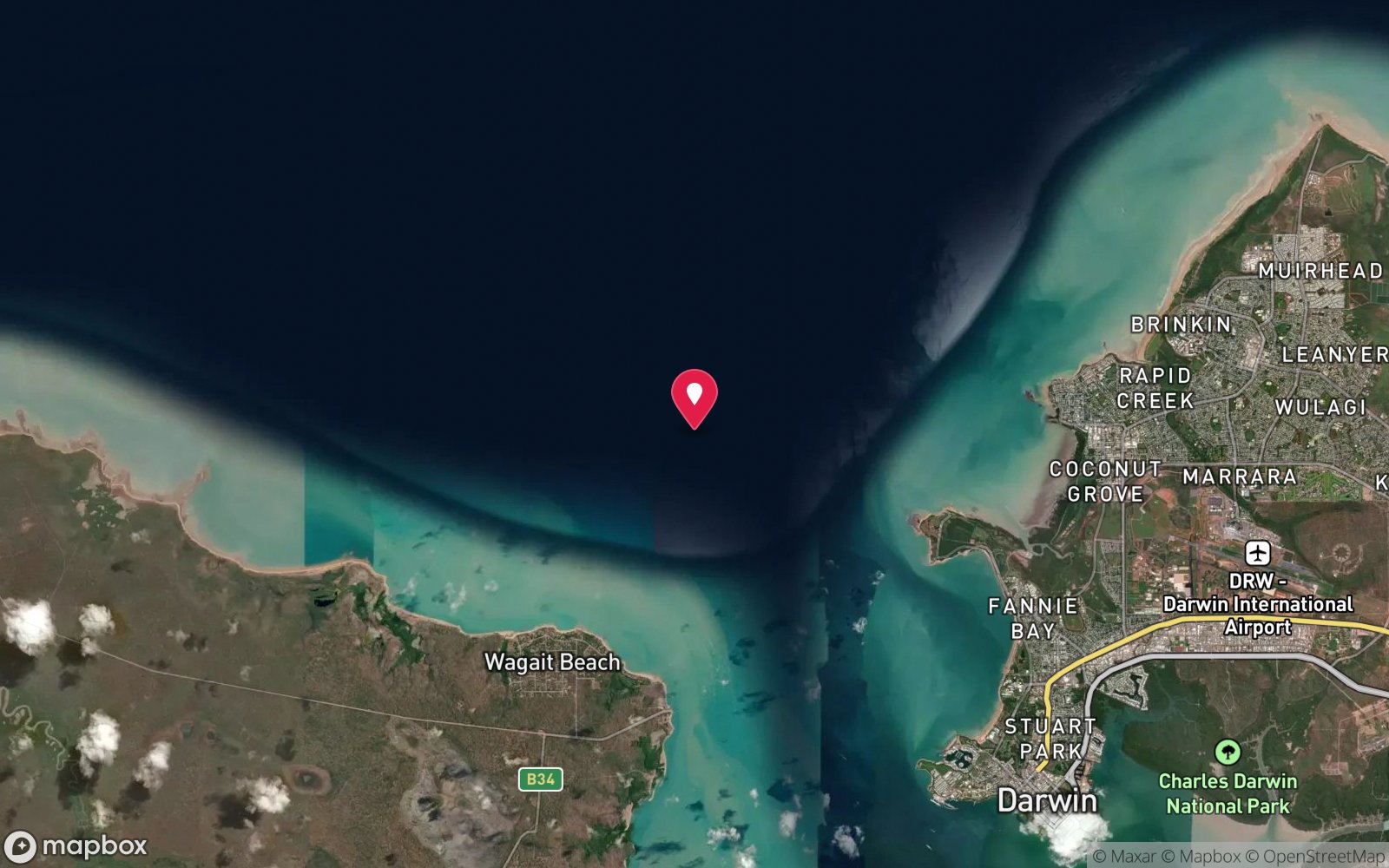
Outer harbour - Cyclone Tracy wrecks
-12.38968, 130.77135
Approximate position — not for navigation.
Open in Google MapsDive site map (external) →Primary source: dsac.com.auMarine park & permits
NT Heritage Branch permission required to dive (heritage site declared 2005, closed-waters controls); no anchoring or fishing. Contact heritage.branch@nt.gov.au / 08 8999 5039.
Nearest recompression chamber
Royal Darwin Hospital hyperbaric medicine unit (Tiwi, Darwin)
Diving emergency: call 000, then DAN AP 1800 088 200.
Trip planner
Build a trip around Booya →
A day-by-day plan for Darwin Harbour with this site locked in.
This guide is a planning aid. Conditions change daily — confirm with a local dive centre and dive within your training. Data & safety notes.
Dive profile
How this site rates
Scores are computed from the recorded data, not opinions. How?
At a glance
Booya is a wreck boat dive in Darwin Harbour, NT, to a maximum of 22 m, suited to Advanced Open Water divers, variable/tidal current.
Rated intermediate because of depth beyond 18 m, tidal current that must be timed, an overhead environment, boat traffic overhead, wreck penetration options that need training.
Why dive here
- A complete 1917 three-masted schooner lost with five people in Cyclone Tracy and found by chance in 2003.
- Sunk in 1974.
- Rarely dived: expect to have the site to yourself, and plan your own logistics.
Conditions to avoid
- Strong southerly or south-east swell and wind
- Outgoing tide or run-off after rain (poor visibility)
- Spring tides (strong current)
- Any time other than slack water
- Cyclone season (roughly December–April)
About Booya
The Booya is the most intact and the most poignant of the Cyclone Tracy wrecks. She began life in Holland in 1917 as the De Lauwers, a three-masted, steel-hulled motor-sailing schooner of 262 gross tons and about 36-40 m. Renamed Argosy Lemal in England in 1920, she came to South Australia in 1923, was requisitioned by the Commonwealth in 1942 as a forces radio station, became the Ametco in 1949 and sank at Low Wooded Island in Queensland, was salvaged around 1952 as the Clair Crouch, converted to carry sulphuric acid in 1958, and in 1964 became the Booya, a mother ship for the northern prawn fleets.
In December 1974 she was owned by the Denham Island Transport Company and lying at anchor off Fort Hill Wharf with general cargo, freezers and fuel tanks aboard. Cyclone Tracy crossed Darwin in the early hours of 25 December 1974 with gusts estimated at over 200 km/h, destroying most of the city and killing 66 people, many of them at sea. More than 20 vessels sank or were driven ashore in and around the harbour, and several of those wrecks now form a second, much more intact wreck trail beside the 1942 sites.
The Booya disappeared with five people aboard: crew members Graham Dearden, Gerald Thompson, Gregory Westerman and Terrance Westwood, and 24-year-old Ruth Vincent. She was found by chance by Cullen Bay Dive divers on 22 October 2003, almost 29 years later, lying on her starboard side in about 20 m. Police divers searched her and found no remains, but personal effects were recovered, including Ruth Vincent's opal ring.
The hull is virtually intact, with one of the three masts broken away, deck fittings showing the crew's efforts to save her, and a distinct V-shaped dent in the stern that may be where another vessel struck her. She was declared a heritage site in 2005 with an exclusion zone, and DSAC laid a wreath on her for the 50th anniversary of Tracy in 2024. Divers describe it as an underwater garden, with coral and fish over a recognisable, complete ship - a rarity in Darwin.
It suits divers with low-visibility experience who will respect a site where lives were lost.
Wreck details
Three-masted steel motor-sailing schooner, 130 ft (about 40 m), 262 GRT · Sunk 1974
Era: post-war. Oldest wrecks · Wartime wrecks · Scuttled warships
Other wrecks of the same era
- NR Diemen · Max 12 m · Darwin Harbour
- Bellbird · Max 16 m · Darwin Harbour
- Bluebird · Max 15 m · Darwin Harbour
- Darwin Princess · Max 26 m · Darwin Harbour
- Mandorah Queen · Max 21 m · Darwin Harbour
- Buffalo LVT amphibious vehicle · Max 23 m · Darwin Harbour
Getting there & entry
Darwin Harbour; the schooner broke from her anchorage off Fort Hill Wharf during Cyclone Tracy and lies on her starboard side in about 20 m.
Boat only. Charters and private boats usually leave from Cullen Bay Marina or the Cullen Bay public boat ramp (off Marina Boulevard, 5 minutes' drive from the CBD, with trailer parking), then run out into the harbour; the Stokes Hill / Frances Bay ramp by the Waterfront is the alternative. Run time on a calm neap morning is typically 15-30 minutes.
There is no permanent surface marker on most sites, so a GPS mark and a shot line are needed; plan the trip to arrive before high-water slack. A permit from the NT Heritage Branch is required before diving, and anchoring is prohibited over the declared site.
Entry: Giant stride or backward roll from the boat; descend the shot or anchor line
Weather, swell & tides
Tide is everything in Darwin Harbour: the spring range is 7-8 m and tidal streams run hard through the harbour, so diving is generally only possible on neap tides (range under about 3-4 m), timed to the slack at high water when clearer ocean water sits over the site. Spring tides bring strong currents and silt-laden water with near-zero visibility. The dry season (May-October) gives the most consistent conditions; the south-east trade winds can chop up exposed water in the afternoon, so mornings are best.
In the wet season (November-April) run-off from the rivers and creeks drops visibility, afternoon storms build quickly, and the harbour is in cyclone season; box jellyfish are present October-May.
Best season: May-October (dry season), on neap tides only
If it's blown out
Sheltered or shore sites within 25 km that often work when Booya doesn't.
- NR Diemen · 6 km · Max 12 m
- East Point Reef · 5 km · Max 8 m
- Mandorah Jetty · 6 km · Depth not published
- Nightcliff Reef · 8 km · Max 10 m
How the dive is usually run
Descend the permitted mooring or a shot placed clear of the wreck at neap slack. Swim the length of the hull along the upper (port) side, look down onto the deck with its fittings, drop to the sand at the stern to see the V-shaped impact dent, and return along the keel side. No penetration and no contact; ascend on the line.
Marine life
- Soft and hard corals on the hull
- golden snapper
- estuary cod
- batfish
- trevally
- sweetlip
- baitfish schools
Linked species have their own page listing every site where they are recorded. All marine life →
Training required
Beyond 18 m an Advanced certification (which includes a deep dive to 30 m) is the accepted minimum. Anything past 25 m is a deep dive in practice.
Courses that help here
- Wreck Diver – The wreck has penetration options.
- Peak Performance Buoyancy – Silt and low visibility punish poor trim.
Depth tiers: 0–10 m easy · to 18 m Open Water · 18–30 m Advanced (25 m+ is a deep dive) · 30–40 m Deep specialty · 40 m+ technical. All courses
Hazards & warnings
Darwin's tidal range reaches 7-8 m on springs: dive only on neap tides at slack water or currents become unswimmable and visibility collapses. Saltwater crocodiles live throughout the harbour - keep surface intervals short, no dangling legs, keep a lookout at entry and exit. Box jellyfish (Chironex) and Irukandji October-May - full-length stinger suit, hood and gloves, vinegar on board.
Silt is fine and easily stirred. Commercial shipping, ferries and tugs use the harbour: fly the dive flag, use an SMB on ascent and keep a boat cover. Permit required; no anchoring or fishing on the site.
No penetration - rope, rigging and overheads on the intact hull. Irukandji stings have been reported on this site.
Dive centres that go here
Access only with NT Heritage Branch permission. Darwin Sub Aqua Club divers monitor the site regularly on neap-tide days; commercial operators (Darwin Dive Centre, Dive Darwin) may arrange permitted trips on request. Not a scheduled charter site.
Operators recorded for Booya
Dive Darwin
ProfiledDarwin · Darwin Harbour · NT
The main verified dive operation in the Northern Territory, offering recreational training through professional level alongside technical diving and a large specialty range.
divedarwin.com.au · +61 401 751 651
Darwin Sub Aqua Club
Named by sitesDarwin · Darwin Harbour · NT
Club, not a shop: official site updated August 2026 with the 2026 AGM notice; meets Thursdays at Darwin Ski Club, Fannie Bay.
dsac.com.au
Map
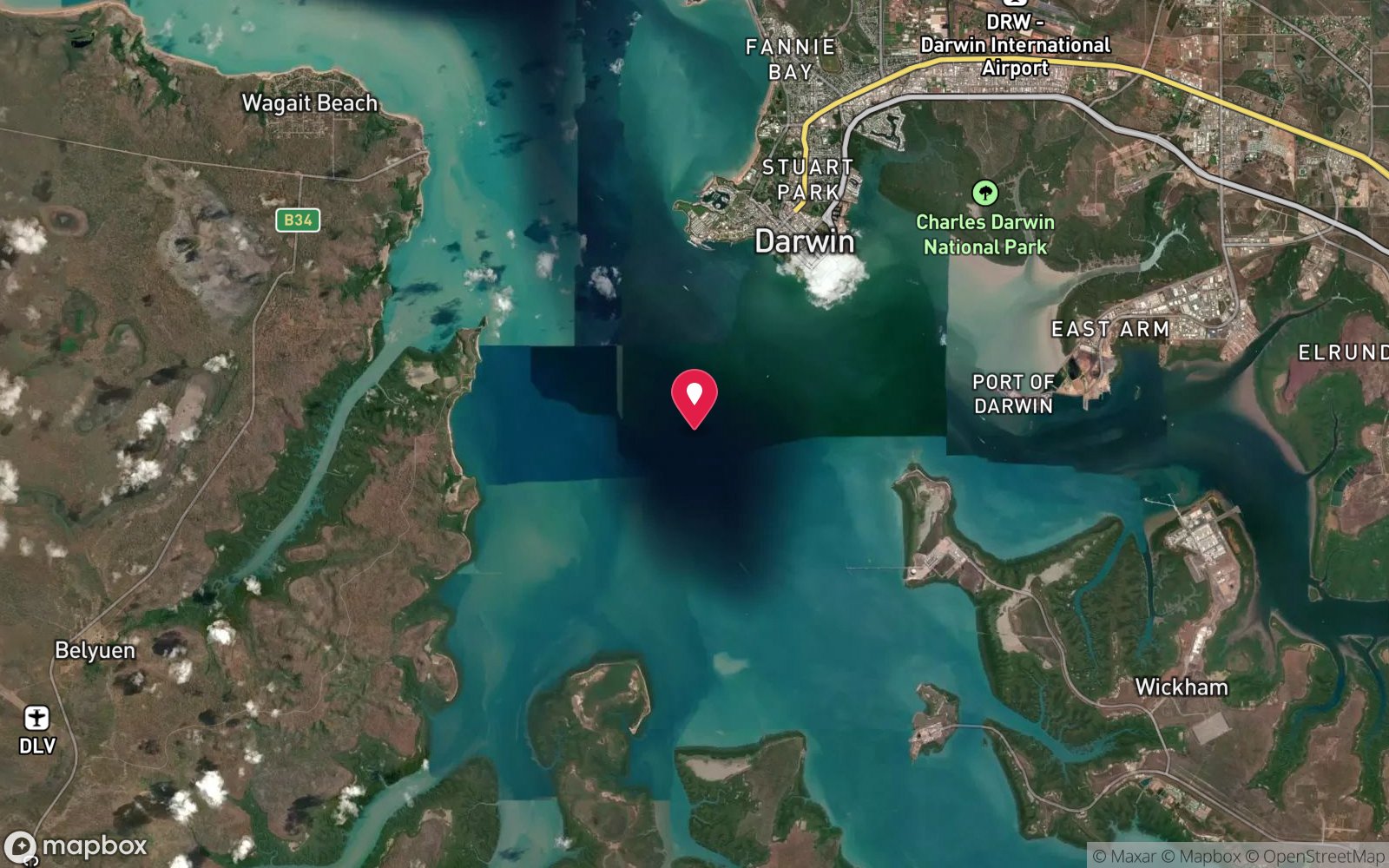
7 pinned sites. Pins marked approximate on their pages show the general area only; not for navigation.
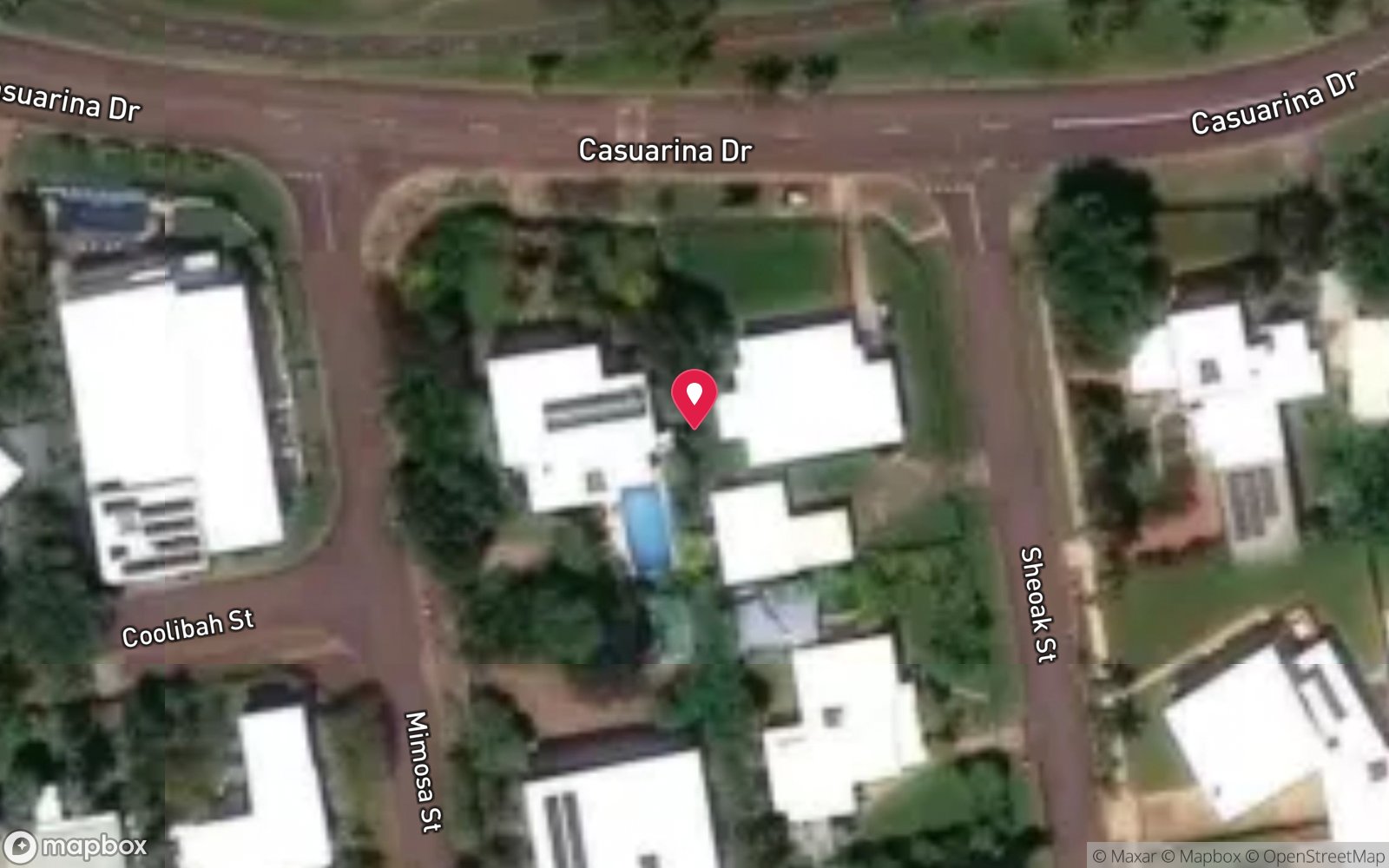
Satellite views
Booya: frequently asked questions
How deep is Booya?
Booya reaches a maximum depth of 22 m; most of the dive is spent around 20 m.
What certification do I need to dive Booya?
Advanced Open Water is the recommended minimum. Rated intermediate because of depth beyond 18 m, tidal current that must be timed, an overhead environment, boat traffic overhead, wreck penetration options that need training.
Can I shore dive Booya?
No, it is reached by boat. A dive centre is required: permit/guide required.
When is the best time to dive Booya?
May-October (dry season), on neap tides only.
What marine life will I see at Booya?
Regularly recorded: Soft and hard corals on the hull, golden snapper, estuary cod, batfish, trevally, sweetlip, baitfish schools.
What wetsuit do I need at Booya?
3 mm wetsuit or skin in the dry season; full-length Lycra stinger suit (with hood and gloves) October-May.
How cold is the water at Booya?
Typically 29-32 °C in summer and 24-26 °C in winter.
What are the main hazards at Booya?
Darwin's tidal range reaches 7-8 m on springs: dive only on neap tides at slack water or currents become unswimmable and visibility collapses. See the hazards section above for the full list.
Where is the nearest recompression chamber to Booya?
Royal Darwin Hospital hyperbaric medicine unit (Tiwi, Darwin). In an emergency call 000, then DAN Asia-Pacific on 1800 088 200.
Diving in Darwin Harbour
Darwin Harbour is Australia's most historic wreck-diving location. The Japanese air raid of 19 February 1942 sank the USAT Meigs, SS Mauna Loa, British Motorist, Zealandia, Kelat and others, and they remain as protected war graves in 15–25 m, along with the Song Saigon refugee boat and a scatter of barges and aircraft. Visibility is low (3–8 m) and the tidal range reaches 8 m, so every dive is planned around slack water on the neap tides.
Getting there: Charters from Darwin, generally advertised weeks ahead for the neap-tide windows. No shore diving.
Sources
- dsac.com.au/Divesite_files/Booya.htm
- nt.gov.au/leisure/arts-culture-heritage/visit-a-cultural-or-heritage-site/maritime-heritage
- en.wikipedia.org/wiki/Booya_(ship)
- rodneyfox.com.au/diving-into-history-unraveling-the-tale-of-the-darwin-princess-and-booya
- abc.net.au/news/2024-11-11/dive-to-booya-shipwreck-to-mark-cyclone-tracy-50-years-nt/104583458
- abc.net.au/news/2015-12-02/ww2-wrecks-and-darwin-ice-age-history-mapped/6989224
Data confidence: High · Being verified: Coordinates from Wikipedia (12°23.381'S 130°46.281'E) - lies well north of Fort Hill Wharf; confirm with Heritage Branch. Length given as 130 ft (DSAC), 35-36 m (ABC).. Last updated September 2026. Know this site better? How to send a correction