Dive slate · divesites.com.au · printed 8 Nov 2026
J7 Submarine (Sandringham)
Melbourne & Port Phillip Bay, Victoria · near Sandringham
| Depth | 1–3 m |
|---|---|
| Minimum level | Snorkel/Any |
| Difficulty | Beginner |
| Access | Shore |
| Entry | Walk-in from the marina breakwater or yacht club hardstand with club permission; effectively a snorkel or shallow scuba in 1–2 m |
| Current | None |
| Visibility | 2-6 m |
| Water | summer 18-21 °C, winter 10-13 °C |
| Suit | 7 mm wetsuit or semi-dry with hood in summer; drysuit in winter |
| Best season | Summer and autumn at high tide on a calm day with an easterly or light offshore wind |
| Bottom time | 30 min |
| Position | -37.94332, 144.99467 (GPS) |
| Permit | No marine park. Historic shipwreck protected under the Victorian Heritage Act 2017 and Commonwealth Underwater Cultural Heritage Act 2018 – look but do not touch, no artefact removal, no anchoring into the wreck. No dive permit required. |
| Nearest chamber | The Alfred (Melbourne) |
| Emergency | 000 · DAN Asia-Pacific diving emergency 1800 088 200 |
J7 Submarine (Sandringham)
Also known as HMAS J7, HMS J7, Sandringham Yacht Club submarine
The last J-class submarine in commission, scuttled as a marina breakwater in 1930 and visible from the Sandringham foreshore – a heritage snorkel in 1–2 m.
Near Sandringham · Melbourne & Port Phillip Bay, Victoria
- Depth
- 1–3 m
- Minimum level
- Snorkel/Any
- Access
- Shore
- Boat ride
- —
- Water
- 18-21 °C
- Visibility
- 2-6 m
J7 Submarine (Sandringham)1–3 m · Snorkel/Any · Shore
Dive factsDepths, conditions, location & safety
Season
Off-peak nowBest months: January, February, March, April, May, December.
Summer and autumn at high tide on a calm day with an easterly or light offshore wind
- Best months
- Now (November)
Dive facts
- Depth
- 1–3 m
- Typical depth
- 2 m
- Certification
- Snorkel/Any
- Difficulty
- Beginner
- Depth tier
- Easy (0–10 m)
- Access
- Shore
- Offshore
- 0 km
- Dive centre needed
- No – independently diveable
- Shore / independent
- Possible (experienced only)
- Current
- None
- Visibility
- 2-6 m
- Water temp (summer)
- 18-21 °C
- Water temp (winter)
- 10-13 °C
- Water
- Cold Temperate
- Bottom time
- 30 min
- Dive traffic
- Rarely dived (private boat/club only)
- Night dive
- No
- Snorkel friendly
- Yes
Exposure suit
7 mm wetsuit or semi-dry with hood in summer; drysuit in winter
Location
Melbourne Bayside – Sandringham · Port Phillip Bay
-37.94332, 144.99467
Published GPS position.
Open in Google MapsDive site map (external) →Primary source: scubadoctor.com.auMarine park & permits
No marine park. Historic shipwreck protected under the Victorian Heritage Act 2017 and Commonwealth Underwater Cultural Heritage Act 2018 – look but do not touch, no artefact removal, no anchoring into the wreck. No dive permit required.
Nearest recompression chamber
The Alfred (Melbourne)
Diving emergency: call 000, then DAN AP 1800 088 200.
Trip planner
Build a trip around J7 Submarine (Sandringham) →
A day-by-day plan for Melbourne & Port Phillip Bay with this site locked in.
This guide is a planning aid. Conditions change daily — confirm with a local dive centre and dive within your training. Data & safety notes.
Dive profile
How this site rates
Scores are computed from the recorded data, not opinions. How?
At a glance
J7 Submarine (Sandringham) is a wreck shore dive for experienced divers in Melbourne & Port Phillip Bay, VIC, 1–3 m, suitable for snorkellers and first-time divers.
Rated beginner: sheltered, shallow and manageable for a newly certified diver on a normal day, though note boat traffic overhead and cold water.
Why dive here
- The last J-class submarine in commission, scuttled as a marina breakwater in 1930 and visible from the Sandringham foreshore – a heritage snorkel in 1–2 m.
- Sunk in 1930 (J-class submarine (modified), 84 m, 1,760 t submerged); protected as underwater cultural heritage, so look but do not touch.
- Snorkel-friendly, so non-diving companions can join at the surface.
- Rarely dived: expect to have the site to yourself, and plan your own logistics.
Conditions to avoid
- Strong westerlies
- Outgoing tide or run-off after rain (poor visibility)
About J7 Submarine (Sandringham)
J7 was the odd one out of the class: built at Devonport Dockyard and launched on 12 February 1917, she was completed to a modified design with the control room and conning tower moved further aft and a submerged displacement of 1,760 tons, 60 tons less than her sisters. Commissioned into the Royal Navy in September 1917, she came to Australia with the flotilla in 1919 and was the last of the J-boats in commission, serving as a depot and training boat at Flinders Naval Depot before being paid off. Sold with the others, she was stripped and on 6 August 1930 was sunk as a breakwater for the Sandringham Yacht Club, where she has remained ever since – a strange, low silhouette built into the marina wall.
There is not a great deal to dive. The hull sits in 1–2 m of water with much of it awash at low tide; the casing has largely gone, the conning tower was removed, and what remains is the long pressure hull with its hatch openings, frames and rivets, colonised by mussels, weed and small bay fish – leatherjackets, crabs, sea stars and the occasional seahorse in the marina growth. It is best treated as a heritage snorkel at high tide rather than a scuba dive, and because it lies on the yacht club's lease, permission should be sought at the office.
Its value is historical. J7 is the most accessible J-class submarine in the country, visible from the foreshore path, and together with J3 at Swan Island and the four Graveyard boats she completes the story of Australia's first submarine flotilla. Divers working through the Victorian J-class set usually pay her a visit, photograph the hull from the breakwater and then do a proper dive on the Sandringham breakwater and pier 155 m away, which offer far more life in the same shallow water.
It suits snorkellers, historians and completists; it is not a destination dive.
Wreck details
J-class submarine (modified), 84 m, 1,760 t submerged · Sunk 1930 · Protected historic shipwreck
Era: early 20th century. Oldest wrecks · Wartime wrecks · Scuttled warships
Other wrecks of the same era
- Auriga · Max 57 m · Port Phillip Heads
- John Nimmo · Max 68 m · Port Phillip Heads
- TSS Kanowna · Max 82 m · Wilsons Promontory
- Werfa · Max 65 m · Port Phillip Heads
- SS Coogee · Max 35 m · Port Phillip Heads
- Casino · Max 9 m · Surf Coast & Great Ocean Road
Getting there & entry
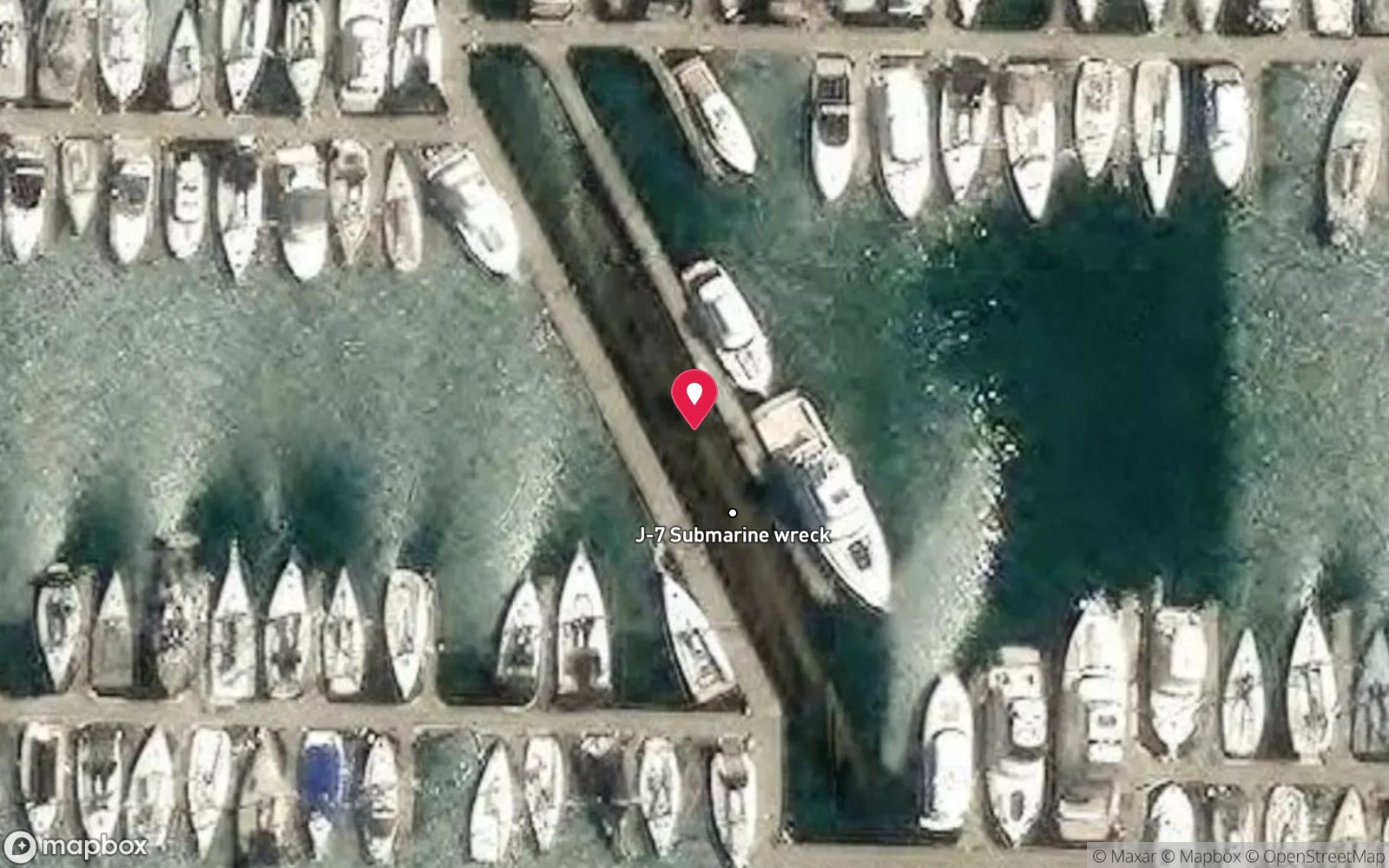
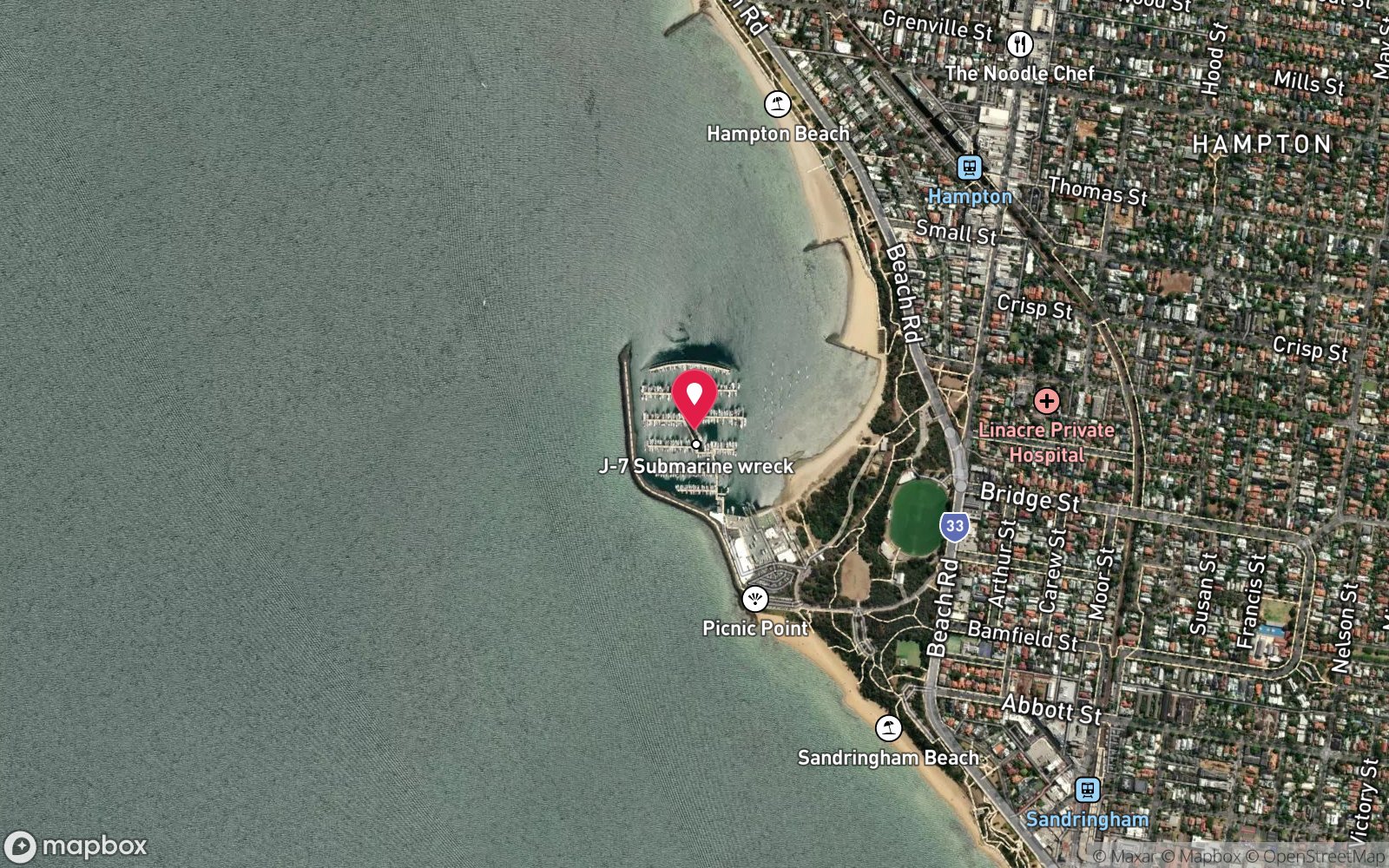
Scuttled in 1930 as a breakwater inside the Sandringham Yacht Club marina, Jetty Road, Sandringham, in Melbourne's bayside suburbs; the hull forms part of the marina wall.
Sandringham Yacht Club is at Jetty Road, Sandringham, 16 km south of Melbourne's CBD – take Beach Road and turn into Jetty Road; paid public parking is at the Sandringham foreshore car parks and along Jetty Road, with the club's own car park for members. The submarine forms part of the marina's outer breakwater on the club's private lease, so ask at the club office before entering the water; the usual approach is to walk along the breakwater and slip in beside the hull at high tide. Sandringham Pier and its breakwater, a recognised shore dive, are 155 m to the south and share the same parking, toilets and cafes on the foreshore.
Nearest fills are at Diveline (Frankston) or Melbourne bayside dive shops.
Entry: Walk-in from the marina breakwater or yacht club hardstand with club permission; effectively a snorkel or shallow scuba in 1–2 m
Facilities: Sandringham foreshore car parks (paid), public toilets, cafes on Jetty Road, yacht club (members); fills at bayside dive shops.
Weather, swell & tides
Inside the marina the water is flat in almost anything, but the site faces west across the bay, so a strong westerly or south-westerly drives chop and dirty water into the breakwater and makes the shallow hull surge; easterlies and calm mornings give the clearest water. High tide is essential – at low water the hull is awash and there is barely a metre to work in. Visibility in this part of the bay is 2–6 m and is worst after rain when the Elster Creek and stormwater outfalls discolour the water.
Marina boat movements are constant on weekends; a dive flag and a spotter on the wall are sensible.
Best season: Summer and autumn at high tide on a calm day with an easterly or light offshore wind
If it's blown out
Sheltered or shore sites within 25 km that often work when J7 Submarine (Sandringham) doesn't.
- McGregor Rock, Quiet Corner · 5 km · Max 5 m
- Banksia Point, Ricketts Point · 5 km · Max 3 m
- Tea House Reef, Ricketts Point · 6 km · Max 5 m
- Ricketts Point Marine Sanctuary · 6 km · Max 8 m
How the dive is usually run
At high tide, enter beside the exposed hull from the breakwater, follow the pressure hull along its length looking at the hatch openings and the collapsed casing, then swim back on the other side. Combine with the Sandringham breakwater 155 m south for a longer, more rewarding dive.
Marine life
- Mussels
- leatherjackets
- crabs
- sea stars
- small wrasse
- occasional seahorse →
- marina weed and sponges
Linked species have their own page listing every site where they are recorded. All marine life →
Training required
Shallow enough for snorkellers and for a first dive under supervision. Any certified diver can dive it.
Courses that help here
- Drysuit Diver – Cold water; locals dive dry for much of the year.
- Peak Performance Buoyancy – Silt and low visibility punish poor trim.
Depth tiers: 0–10 m easy · to 18 m Open Water · 18–30 m Advanced (25 m+ is a deep dive) · 30–40 m Deep specialty · 40 m+ technical. All courses
Hazards & warnings
Marina boat traffic; very shallow, sharp steel awash at low tide; private yacht club lease – ask permission; poor visibility after rain; slippery rock wall entry.
Dive centres that go here
No operator dives the J7; it is a heritage curiosity visited by the occasional snorkeller with yacht club permission. Melbourne bayside dive shops (Diveline, Scuba Culture) run the neighbouring Sandringham breakwater and pier as shore dives.
Operators recorded for J7 Submarine (Sandringham)
Diveline Scuba Centre
ListedFrankston · Melbourne & Port Phillip Bay · VIC
A Victorian business associated with technical training and gas support alongside recreational courses.
diveline.com.au · (03) 9783 7166
Scuba Culture
ListedBurwood · Melbourne & Port Phillip Bay · VIC
A Melbourne business providing training and equipment support for local divers.
scubaculture.com.au · (03) 9808 0033
Other dive centres in Melbourne & Port Phillip Bay
The Scuba Doctor
ProfiledRye · Melbourne & Port Phillip Bay · VIC
A Victorian equipment and service business with an extensive retail presence, located to serve both Melbourne and Mornington Peninsula divers.
scubadoctor.com.au · (03) 5985 3322
Aquability
ListedMordialloc · Melbourne & Port Phillip Bay · VIC
A Victorian operation associated with technical diving training. Exact agency, course levels and gas support require verification.
aquability.com.au · (03) 9587 1811
Bay City Scuba
ListedEast Geelong · Melbourne & Port Phillip Bay · VIC
A Victorian business associated with recreational and technical training alongside equipment and gas services.
baycityscuba.com · (03) 5248 1488
Divein2Scuba (Geelong Dive Centre)
ListedGeelong · Geelong & Bellarine · VIC
A Geelong business providing training, equipment and local diving support.
divein2scuba.com · (03) 5221 3342
Ocean Divers
ListedBentleigh East · Melbourne & Port Phillip Bay · VIC
A Victorian operation associated with recreational and technical training and access to Port Phillip diving.
oceandivers.com.au · (03) 9579 2600
Academy of Scuba
ListedRye · Melbourne & Port Phillip Bay · VIC
A Melbourne training business offering recreational courses with technical pathways.
academyofscuba.com.au · (03) 9889 9952
Map
7 pinned sites. Pins marked approximate on their pages show the general area only; not for navigation.
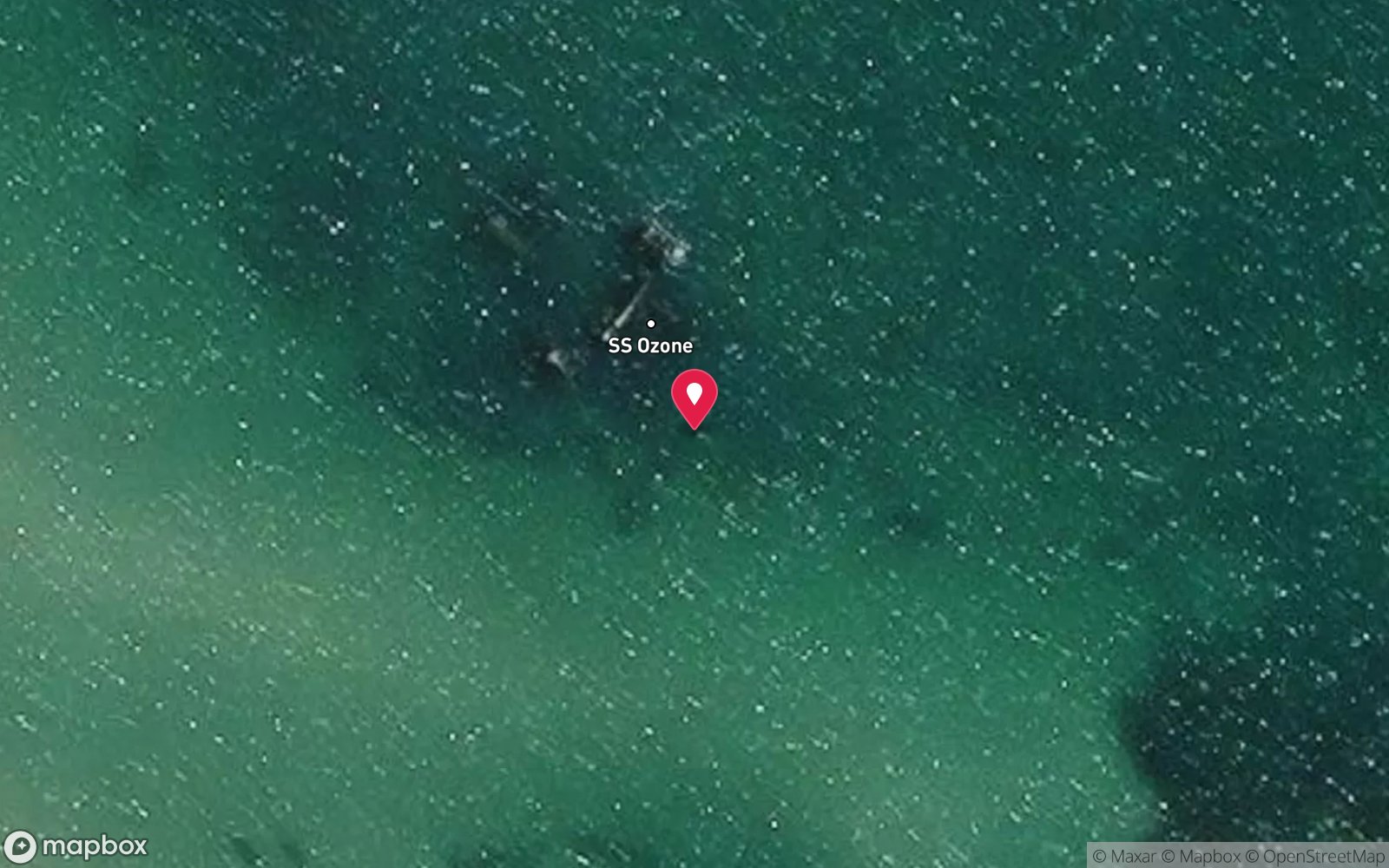
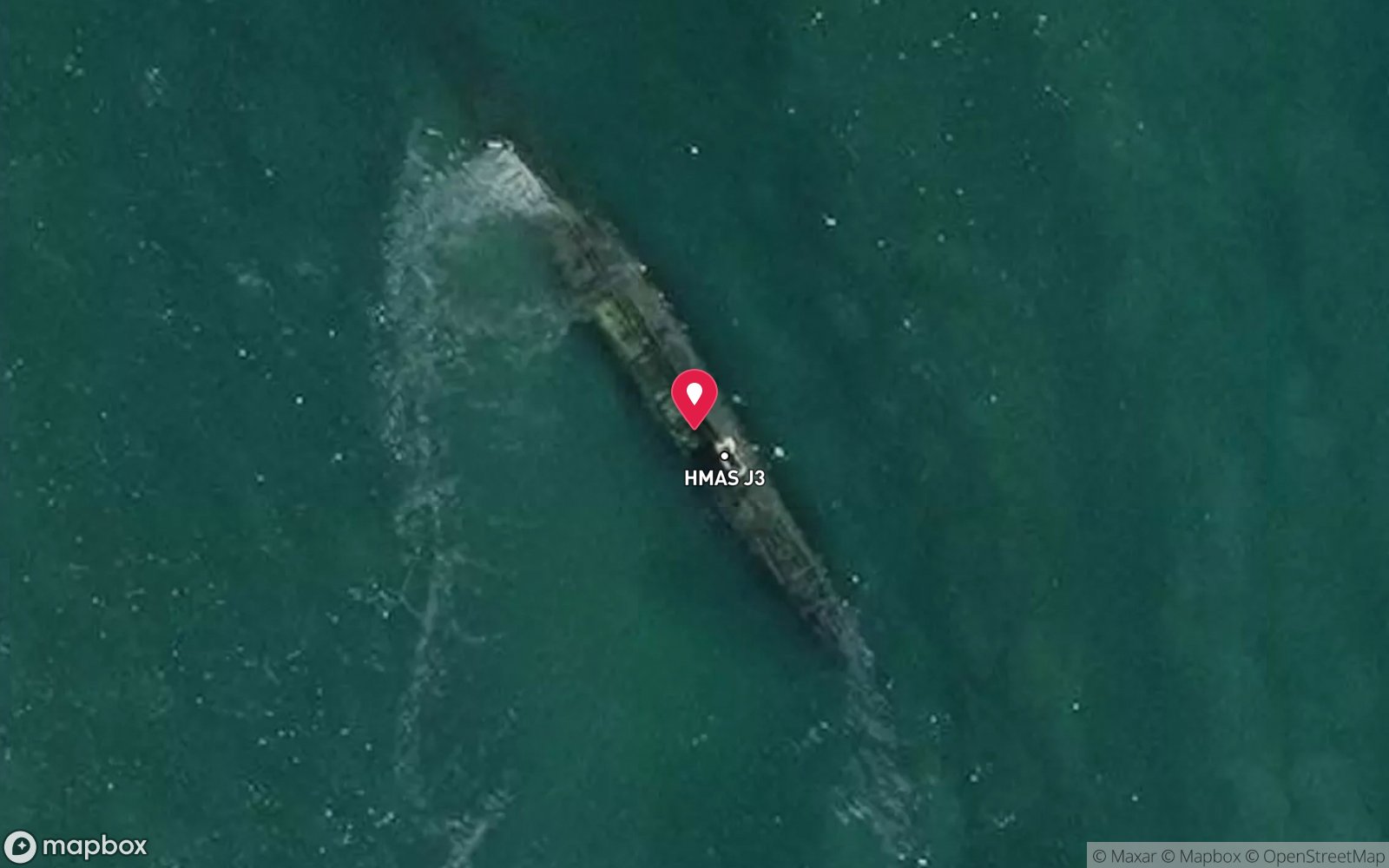
Satellite views
J7 Submarine (Sandringham): frequently asked questions
How deep is J7 Submarine (Sandringham)?
J7 Submarine (Sandringham) reaches a maximum depth of 3 m, with the shallowest part at about 1 m; most of the dive is spent around 2 m.
What certification do I need to dive J7 Submarine (Sandringham)?
No certification is needed to snorkel it, and it suits introductory dives. Rated beginner: sheltered, shallow and manageable for a newly certified diver on a normal day, though note boat traffic overhead and cold water.
Can I shore dive J7 Submarine (Sandringham)?
Experienced divers do dive J7 Submarine (Sandringham) from the shore, but the entry or conditions make it unsuitable for newer divers without local guidance. Entry: Walk-in from the marina breakwater or yacht club hardstand with club permission; effectively a snorkel or shallow scuba in 1–2 m.
When is the best time to dive J7 Submarine (Sandringham)?
Summer and autumn at high tide on a calm day with an easterly or light offshore wind.
What marine life will I see at J7 Submarine (Sandringham)?
Regularly recorded: Mussels, leatherjackets, crabs, sea stars, small wrasse, occasional seahorse, marina weed and sponges.
What wetsuit do I need at J7 Submarine (Sandringham)?
7 mm wetsuit or semi-dry with hood in summer; drysuit in winter.
How cold is the water at J7 Submarine (Sandringham)?
Typically 18-21 °C in summer and 10-13 °C in winter.
What are the main hazards at J7 Submarine (Sandringham)?
Marina boat traffic; very shallow, sharp steel awash at low tide; private yacht club lease – ask permission; poor visibility after rain; slippery rock wall entry. See the hazards section above for the full list.
Where is the nearest recompression chamber to J7 Submarine (Sandringham)?
The Alfred (Melbourne). In an emergency call 000, then DAN Asia-Pacific on 1800 088 200.
Diving in Melbourne & Port Phillip Bay
Melbourne's bayside suburbs, from Williamstown around to Frankston, have shallow, easy shore dives: Ricketts Point Marine Sanctuary, Black Rock, Half Moon Bay and the Cerberus wreck, Frankston pier, and the artificial reefs and scuttled boats off St Kilda and Mordialloc. Visibility is modest but the life, especially at night, is good.
Getting there: Suburban shore dives with parking; charters from St Kilda and Mordialloc for the bay wrecks.
All Melbourne & Port Phillip Bay dive sites and a suggested itinerary →
Sources
- scubadoctor.com.au/divesite.htm?site=J7-Submarine
- scubadoctor.com.au/j-class-submarine-wreck-dives.htm
- scubadoctor.com.au/port-phillip-wreck-dives.htm
- en.wikipedia.org/wiki/HMS_J7
Data confidence: Medium · Being verified: Yacht club access policy – confirm before visiting. Last updated September 2026. Know this site better? How to send a correction
Nearby dive sites
More wrecks in Victoria
Explore more
This region