Dive slate · divesites.com.au · printed 8 Nov 2026
TSS Kanowna
Wilsons Promontory, Victoria · near Port Welshpool
| Depth | 70–82 m |
|---|---|
| Minimum level | Technical (decompression) |
| Difficulty | Expert/Technical |
| Access | Boat (multi-day/liveaboard) |
| Entry | Backward roll from an expedition vessel; shot line placed on the wreck; live-boat pick-up after a long drifting decompression |
| Current | Moderate |
| Visibility | 15-30 m |
| Water | summer 16-19 °C, winter 12-14 °C |
| Suit | Drysuit with heated undergarments; CCR standard |
| Best season | Autumn (Mar–May) for the settled highs that give 2–3 days of low swell and light wind |
| Bottom time | 20 min |
| Position | not published |
| Permit | Historic shipwreck protected under the Underwater Cultural Heritage Act 2018 – no artefact removal. Lies outside the Wilsons Promontory Marine National Park boundary; check current charts. No dive permit required. |
| Nearest chamber | The Alfred (Melbourne) |
| Emergency | 000 · DAN Asia-Pacific diving emergency 1800 088 200 |
TSS Kanowna
Also known as Kanowna, SS Kanowna, HMAT Kanowna
A 126 m WWI hospital ship and coastal liner lost in fog in 1929, found in 2005 and lying largely recognisable in 80–82 m of clear Bass Strait water – Victoria's deepest regularly attempted wreck.
Near Port Welshpool · Wilsons Promontory, Victoria
- Depth
- 70–82 m
- Minimum level
- Technical (decompression)
- Access
- Boat (multi-day/liveaboard)
- Boat ride
- ~150 min
- Water
- 16-19 °C
- Visibility
- 15-30 m
TSS Kanowna70–82 m · Technical (decompression)
Dive factsDepths, conditions, location & safety
Season
Off-peak nowBest months: March, April, May.
Autumn (Mar–May) for the settled highs that give 2–3 days of low swell and light wind
- Best months
- Now (November)
Dive facts
- Depth
- 70–82 m
- Typical depth
- 78 m
- Certification
- Technical (decompression)
- Difficulty
- Expert/Technical
- Depth tier
- Technical (40 m +)
- Access
- Boat (multi-day/liveaboard)
- Offshore
- 50 km
- Dive centre needed
- Yes – boat access only
- Shore / independent
- No
- Boat ride
- ~150 min
- Current
- Moderate
- Visibility
- 15-30 m
- Water temp (summer)
- 16-19 °C
- Water temp (winter)
- 12-14 °C
- Water
- Cold Temperate
- Bottom time
- 20 min
- Dive traffic
- Remote/expedition only
- Night dive
- No
- Snorkel friendly
- No
Exposure suit
Drysuit with heated undergarments; CCR standard
Location
Bass Strait – Wilsons Promontory · Gippsland & Wilsons Promontory
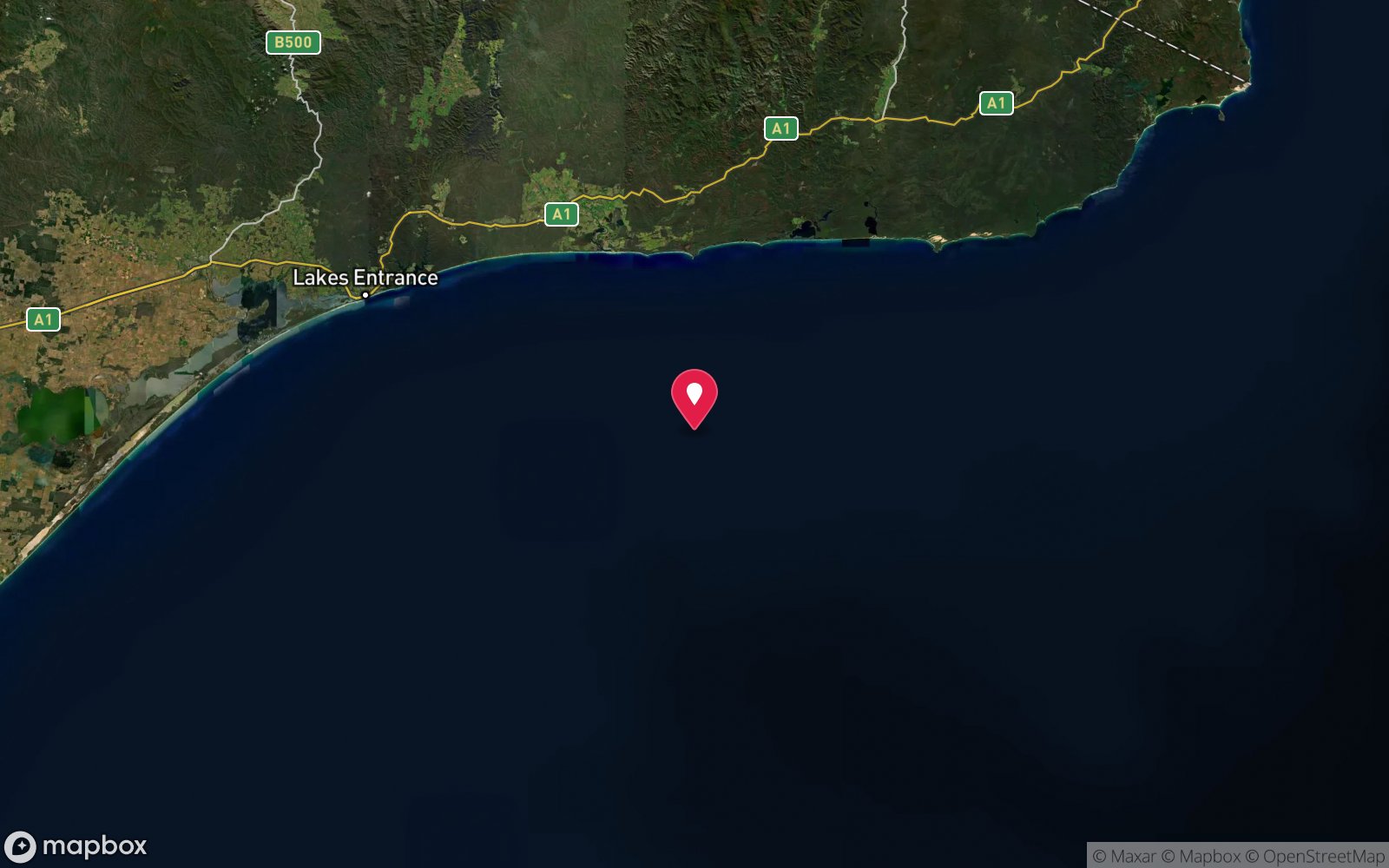
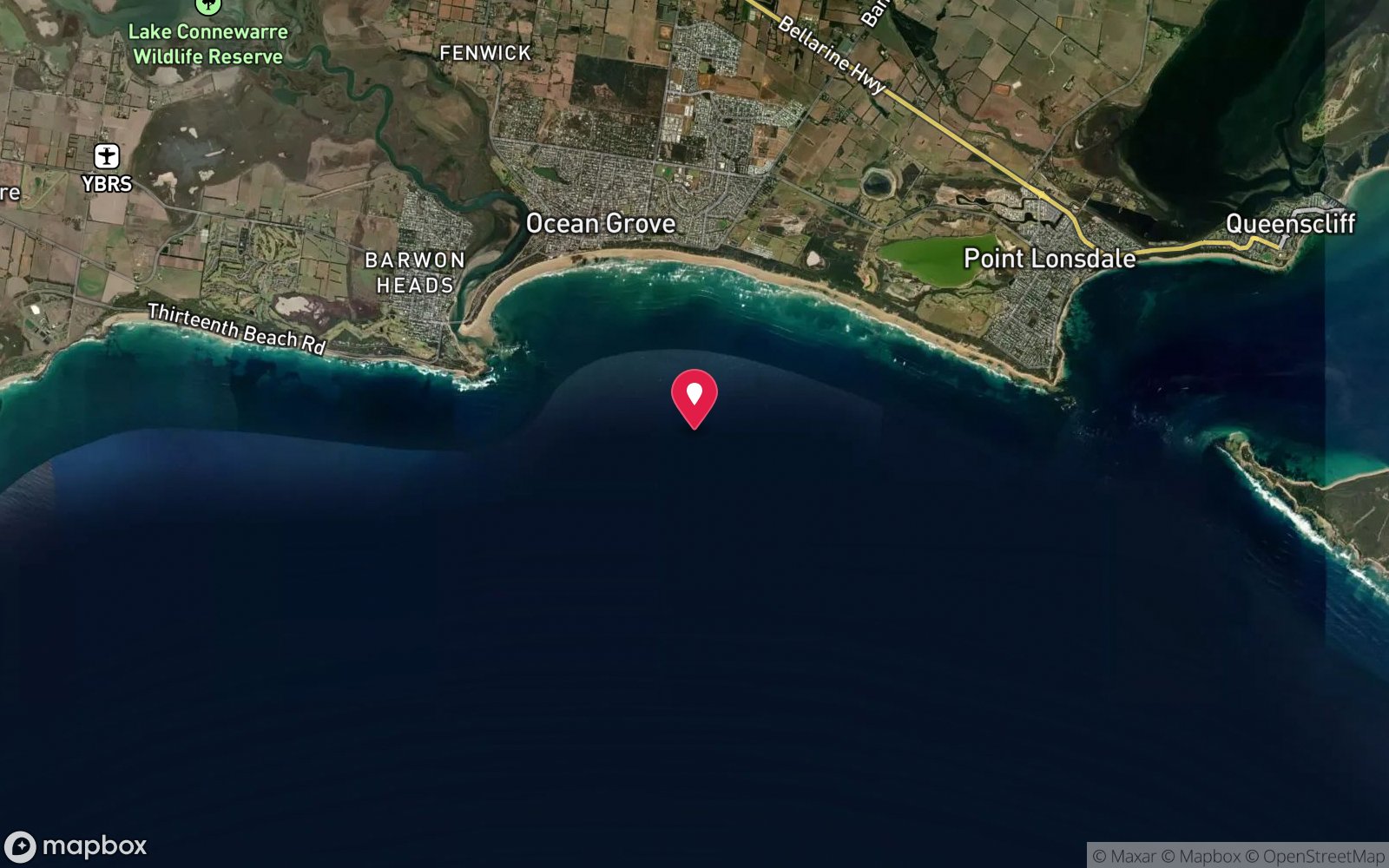
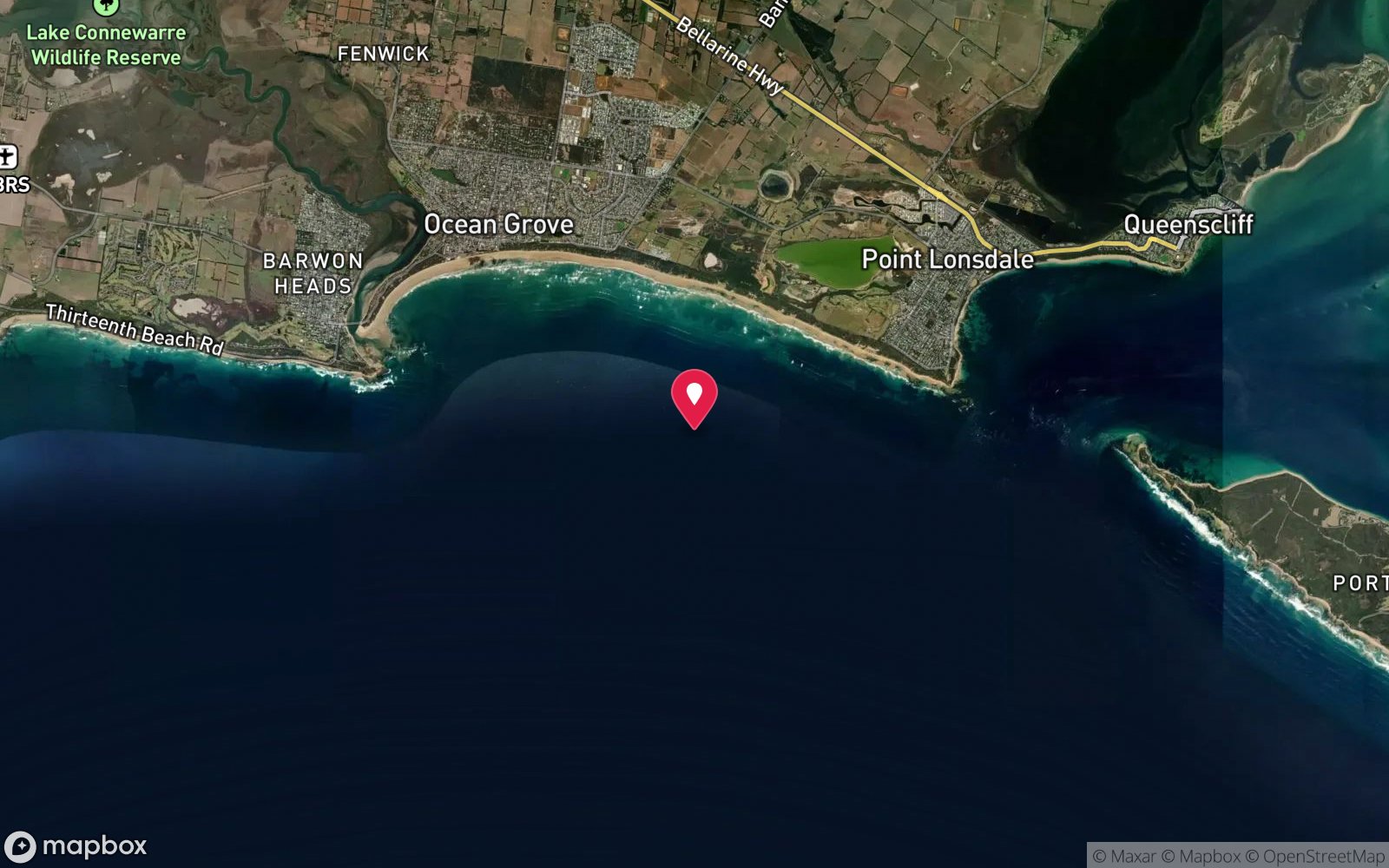
No published coordinates. The map above shows the general area, estimated from other documented sites near Port Welshpool.
Primary source: en.wikipedia.orgMarine park & permits
Historic shipwreck protected under the Underwater Cultural Heritage Act 2018 – no artefact removal. Lies outside the Wilsons Promontory Marine National Park boundary; check current charts. No dive permit required.
Nearest recompression chamber
The Alfred (Melbourne)
Diving emergency: call 000, then DAN AP 1800 088 200.
Trip planner
Build a trip around TSS Kanowna →
A day-by-day plan for Wilsons Promontory with this site locked in.
This guide is a planning aid. Conditions change daily — confirm with a local dive centre and dive within your training. Data & safety notes.
Dive profile
How this site rates
Scores are computed from the recorded data, not opinions. How?
At a glance
TSS Kanowna is a wreck liveaboard-only site in Wilsons Promontory, VIC, 70–82 m, suited to Technical (decompression) divers, moderate current, about 150 minutes by boat.
Rated expert/technical because of depth to 82 m, cold water.
Why dive here
- A 126 m WWI hospital ship and coastal liner lost in fog in 1929, found in 2005 and lying largely recognisable in 80–82 m of clear Bass Strait water – Victoria's deepest regularly attempted wreck.
- Sunk in 1929; protected as underwater cultural heritage, so look but do not touch.
- Rarely dived: expect to have the site to yourself, and plan your own logistics.
- Visibility often reaches 15-30 m.
About TSS Kanowna
Kanowna was a 6,993-ton, 126 m twin-screw passenger liner built by William Denny and Brothers at Dumbarton in 1902 for the Australasian United Steam Navigation Company's Sydney–Fremantle run, one of the finest coastal liners of her day. In August 1914 she carried a thousand men of the Australian Naval and Military Expeditionary Force towards German New Guinea, a voyage cut short by a stokers' mutiny over water rations in the heat of the boiler rooms; from June 1915 to 1919 she served as a hospital ship with 452 cots and 88 medical staff, making about ten voyages between Australia and England and bringing home the wounded of Gallipoli and the Western Front. Back in civilian service, she left Sydney for Melbourne in February 1929 and on the morning of 18 February, in fog, ran onto rocks near Cleft Island off Wilsons Promontory.
Passengers were taken off by the SS Mackarra; she was got off the rocks but her boilers failed, the crew abandoned her to the SS Dumosa and she sank the next morning. The inquiry blamed her master for insufficient caution in fog. Lost for 76 years, she was found on 23 April 2005 by four Melbourne technical divers about 50 km into Bass Strait in roughly 80 m, and identified on 8 May 2005 against the builder's drawings.
She lies on a sand bottom at 80–82 m, and although corroded and collapsing in places, her sections remain recognisable – the bow, the long line of the hull, the boilers and engines of a big twin-screw steamer, the stern – on a scale unmatched by anything else dived in Victoria. Visibility of 20–30 m is common and the wreck teems with ling, boarfish, butterfly perch and big crayfish; deep-water sponges and sea whips cover the steel. Kanowna is an expedition, not a charter: a 2–3 hour passage each way from Port Welshpool, 20 minutes at 80 m on hypoxic trimix or a rebreather, and an hour and a half of drifting decompression in the open Strait.
A few teams a year manage it. For Australian technical divers it sits alongside the Alert and the City of Rayville as the pinnacle of Victorian deep wreck diving, and it is the only one of the three that is neither in a protected zone nor requires a permit – though it is a historic shipwreck under Commonwealth law and nothing may be removed.
The ship and the sinking
The Kanowna was a 6,900-ton coastal liner built in Scotland in 1902 for the Australasian United Steam Navigation Company, running passengers between Fremantle and the east coast. In 1914 she carried the Australian Naval and Military Expeditionary Force to New Guinea, and from 1915 she served as a hospital ship, carrying wounded from Gallipoli and the Western Front. She returned to the coastal trade after the war.
On 18 February 1929, in thick fog, she struck rocks off Wilsons Promontory near Cleft Island (Skull Rock). Her passengers and crew were taken off safely; the ship drifted and sank in deep water. The wreck was found in 2005 by a team of Victorian wreck hunters in 80–82 m.
What is there today
She is remarkably intact for her depth and age: the bow, the promenade decks, lifeboat davits and holds are recognisable, and Bass Strait's clear water can give 30 m visibility. A serious technical dive out of Port Welshpool on rare calm days.
Wrecks older than 75 years, and several younger ones, are protected under the Underwater Cultural Heritage Act 2018: look, photograph, take nothing. Australia's oldest wreck dives →
Wreck details
Steel twin-screw passenger liner / WWI troopship and hospital ship, 126 m (413 ft), 6,993 t · Sunk 1929 · Protected historic shipwreck
Era: early 20th century. Oldest wrecks · Wartime wrecks · Scuttled warships
Other wrecks of the same era
- Werfa · Max 65 m · Port Phillip Heads
- SS Coogee · Max 35 m · Port Phillip Heads
- Auriga · Max 57 m · Port Phillip Heads
- J7 Submarine (Sandringham) · Max 3 m · Melbourne & Port Phillip Bay
- SS Courier · Max 42 m · Port Phillip Heads
- SS Malaita · Max 65 m · Port Phillip Heads
Getting there & entry
In open Bass Strait off the south-west of Wilsons Promontory, near Cleft Island (Skull Rock) and the Anser Group, in about 80 m; found in 2005 roughly 50 km into the Strait from the nearest port.
Expedition only. The wreck lies off the south-western tip of Wilsons Promontory near Cleft Island, a long open-water passage from any port: Port Welshpool (Lewis Channel ramp and wharf) is the usual departure, about 60–70 km and 2–3 hours in a fast expedition boat around the Prom; Port Franklin, Port Albert and, for larger vessels, Western Port (Flinders/Hastings) have also been used with an overnight anchorage at Refuge Cove or Waterloo Bay. Drive Melbourne–Port Welshpool via the South Gippsland Highway, about 2 h 45 min.
Trips are organised privately by technical teams (Southern Ocean Exploration, Melbourne rebreather groups) who charter a suitable vessel; there is no ramp, mooring or shore facility at the site and everything – gas, scrubber, support divers – must be carried.
Entry: Backward roll from an expedition vessel; shot line placed on the wreck; live-boat pick-up after a long drifting decompression
Facilities: Port Welshpool wharf and ramp (parking, toilets, fuel); nothing at the site
Weather, swell & tides
This is the most exposed dive site in the state – the open Southern Ocean side of Wilsons Promontory, where the westerly swell wraps around the Prom and the tidal streams of Bass Strait run between the Anser Group and Cleft Island. A viable window needs a stationary high over the Strait with swell under about 1 m and wind under 10 knots for the whole day, plus a benign forecast for the long passage home; such windows come a few times a year, mostly in autumn. Currents at 80 m are moderate but variable and the 90-minute decompression is done drifting under a surface float with the boat following.
Fog, which sank the ship, is a real hazard in the same conditions. Visibility at depth is frequently 20–30 m, the best in Victorian wreck diving, because the site is far from any river.
Best season: Autumn (Mar–May) for the settled highs that give 2–3 days of low swell and light wind
How the dive is usually run
Expedition CCR dive: descend the shot to the wreck (75–82 m), spend 20 minutes on the highest and most recognisable sections – the bow, the boilers and engine area, the stern – photographing and surveying, then leave the shot on a DSMB and complete 90–120 minutes of drifting decompression under the boat with support divers meeting the team at the 21 m and 6 m stops.
Marine life
- Ling
- boarfish
- butterfly perch
- southern rock lobster
- deep-water sponges
- sea whips
- occasional seals and dolphins on the passage →
Linked species have their own page listing every site where they are recorded. All marine life →
Training required
Beyond recreational limits: decompression, mixed gas or full cave/wreck training is required.
Courses that help here
- Enriched Air Nitrox – Longer no-decompression time at 25 m and deeper.
- Drysuit Diver – Cold water; locals dive dry for much of the year.
Depth tiers: 0–10 m easy · to 18 m Open Water · 18–30 m Advanced (25 m+ is a deep dive) · 30–40 m Deep specialty · 40 m+ technical. All courses
Hazards & warnings
82 m depth and 90–120 min decompression in the open Southern Ocean; remote – 2–3 hours from port with no rescue cover nearby; fog; currents; tiny weather windows; expedition logistics and rebreather/trimix only.
Technical notes
Expedition CCR dive: diluent around 10/60–10/70, bailout for a full 80 m ascent (typically 3–4 stages or team bailout), oxygen and EAN50 deco gases, drifting decompression under a float with support divers and a live boat. Open-circuit is impractical. Historic shipwreck – no artefact recovery.
Dive centres that go here
No commercial operator. Found and dived by Southern Ocean Exploration (2005) and since visited by a small number of Melbourne closed-circuit rebreather expeditions, typically one or two attempts a year in the best autumn weather; Divernet describes it as one of the deepest historic wrecks regularly dived in Victoria, but 'regularly' here means a handful of dives annually.
Operators recorded for TSS Kanowna
Other dive centres in Wilsons Promontory
Scubabo Dive Victoria (Dive Victoria Group)
Named by sitesQueenscliff · Port Phillip Heads · VIC
Rebranded as Scubabo Dive Victoria, Queenscliff; dive.scubabo.com is live for 2026 with active charter bookings.
dive.scubabo.com · (03) 5258 1188
VSAG
Named by sitesWilsons Promontory · VIC
Victorian Sub-Aqua Group, a non-commercial dive club (est. 1954), not a shop or charter.
vsag.org.au
Dive La Trobe
Named by sitesBundoora · Wilsons Promontory · VIC
University dive club (est. 1968), not a shop; runs SDI courses.
divelatrobe.org.au
General area
No position has been published for TSS Kanowna. The circle shows where it is likely to be, worked out from other documented sites near Port Welshpool. Ask a local operator for the exact site.
Dashed circle: general area (about 15 km), from other documented sites near Port Welshpool. 6 pinned sites. Pins marked approximate on their pages show the general area only; not for navigation.
TSS Kanowna: frequently asked questions
How deep is TSS Kanowna?
TSS Kanowna reaches a maximum depth of 82 m, with the shallowest part at about 70 m; most of the dive is spent around 78 m.
What certification do I need to dive TSS Kanowna?
Technical (decompression) is the recommended minimum. Rated expert/technical because of depth to 82 m, cold water.
Can I shore dive TSS Kanowna?
No, it is reached by boat (about 150 minutes). A dive centre is required: boat access only.
When is the best time to dive TSS Kanowna?
Autumn (Mar–May) for the settled highs that give 2–3 days of low swell and light wind.
What marine life will I see at TSS Kanowna?
Regularly recorded: Ling, boarfish, butterfly perch, southern rock lobster, deep-water sponges, sea whips, occasional seals and dolphins on the passage.
What wetsuit do I need at TSS Kanowna?
Drysuit with heated undergarments; CCR standard.
How cold is the water at TSS Kanowna?
Typically 16-19 °C in summer and 12-14 °C in winter.
What are the main hazards at TSS Kanowna?
82 m depth and 90–120 min decompression in the open Southern Ocean; remote – 2–3 hours from port with no rescue cover nearby; fog; currents; tiny weather windows; expedition logistics and rebreather/trimix only. See the hazards section above for the full list.
Where is the nearest recompression chamber to TSS Kanowna?
The Alfred (Melbourne). In an emergency call 000, then DAN Asia-Pacific on 1800 088 200.
Diving in Wilsons Promontory
The Prom is Victoria's wildest and clearest diving: granite pinnacles, walls and boulder fields around the Glennie and Anser groups and Skull Rock, deep wrecks like the SS Kanowna (115 m) and the Cape Liptrap sites, and water that can hit 30 m visibility. Fur seals at Kanowna Island and Norman Island add company.
Getting there: Charters from Port Welshpool or Tidal River, three hours from Melbourne; conditions cancel more trips than they permit.
All Wilsons Promontory dive sites and a suggested itinerary →
Sources
- en.wikipedia.org/wiki/TSS_Kanowna
- divernet.com/scuba-diving/general-wrecks/victoria-wreck-diving-australia
- scubadoctor.com.au/victoria-wreck-dives.htm
Data confidence: Medium · Being verified: Coordinates not published (left blank deliberately); departure port and boat time are typical, not fixed. Last updated September 2026. Know this site better? How to send a correction
Nearby dive sites
More wrecks in Victoria
Explore more
This region
Similar dives
Marine life