Dive slate · divesites.com.au · printed 8 Nov 2026
Sanko Harvest Wreck
Esperance & Recherche Archipelago, Western Australia · near Esperance
| Depth | 13–44 m |
|---|---|
| Minimum level | Technical (decompression) |
| Difficulty | Advanced |
| Access | Boat (day trip) |
| Entry | Giant stride or back roll from charter/private boat |
| Current | Mild |
| Visibility | 15-30 m |
| Water | summer 19-21 °C, winter 15-16 °C |
| Suit | 7 mm wetsuit with hood, or drysuit (recommended for two deep dives) |
| Best season | Summer and autumn (December-May), ideally February-April |
| Bottom time | 20 min |
| Position | -34.12250, 122.08140 (approximate) |
| Permit | 500 m no-take/no-spearfishing exclusion zone around the wreck (since 1995). Recherche Archipelago Nature Reserve islands – no landing without authorisation. |
| Nearest chamber | Fiona Stanley Hospital Hyperbaric Medicine Unit (Murdoch, Perth) – about 720 km; aeromedical evacuation (RFDS) from Esperance Hospital |
| Emergency | 000 · DAN Asia-Pacific diving emergency 1800 088 200 |
Sanko Harvest Wreck
Also known as Sanko Harvest, Hood Island wreck
Australia's largest wreck dive – a 174 m bulk carrier broken into giant sections in 13-44 m, protected by a 500 m no-take zone.
Near Esperance · Esperance & Recherche Archipelago, Western Australia
- Depth
- 13–44 m
- Minimum level
- Technical (decompression)
- Access
- Boat (day trip)
- Boat ride
- ~75 min
- Water
- 19-21 °C
- Visibility
- 15-30 m
Sanko Harvest Wreck13–44 m · Technical (decompression)
Dive factsDepths, conditions, location & safety
Season
Off-peak nowBest months: January, February, March, April, May, December.
Summer and autumn (December-May), ideally February-April
- Best months
- Now (November)
Dive facts
- Depth
- 13–44 m
- Typical depth
- 30 m
- Certification
- Technical (decompression)
- Difficulty
- Advanced
- Depth tier
- Technical (40 m +)
- Access
- Boat (day trip)
- Offshore
- 13 km
- Dive centre needed
- Recommended
- Shore / independent
- No
- Boat ride
- ~75 min
- Current
- Mild
- Visibility
- 15-30 m
- Water temp (summer)
- 19-21 °C
- Water temp (winter)
- 15-16 °C
- Water
- Temperate
- Bottom time
- 20 min
- Dive traffic
- Moderate (occasional charters/club dives)
- Night dive
- No
- Snorkel friendly
- No
Exposure suit
7 mm wetsuit with hood, or drysuit (recommended for two deep dives)
Location
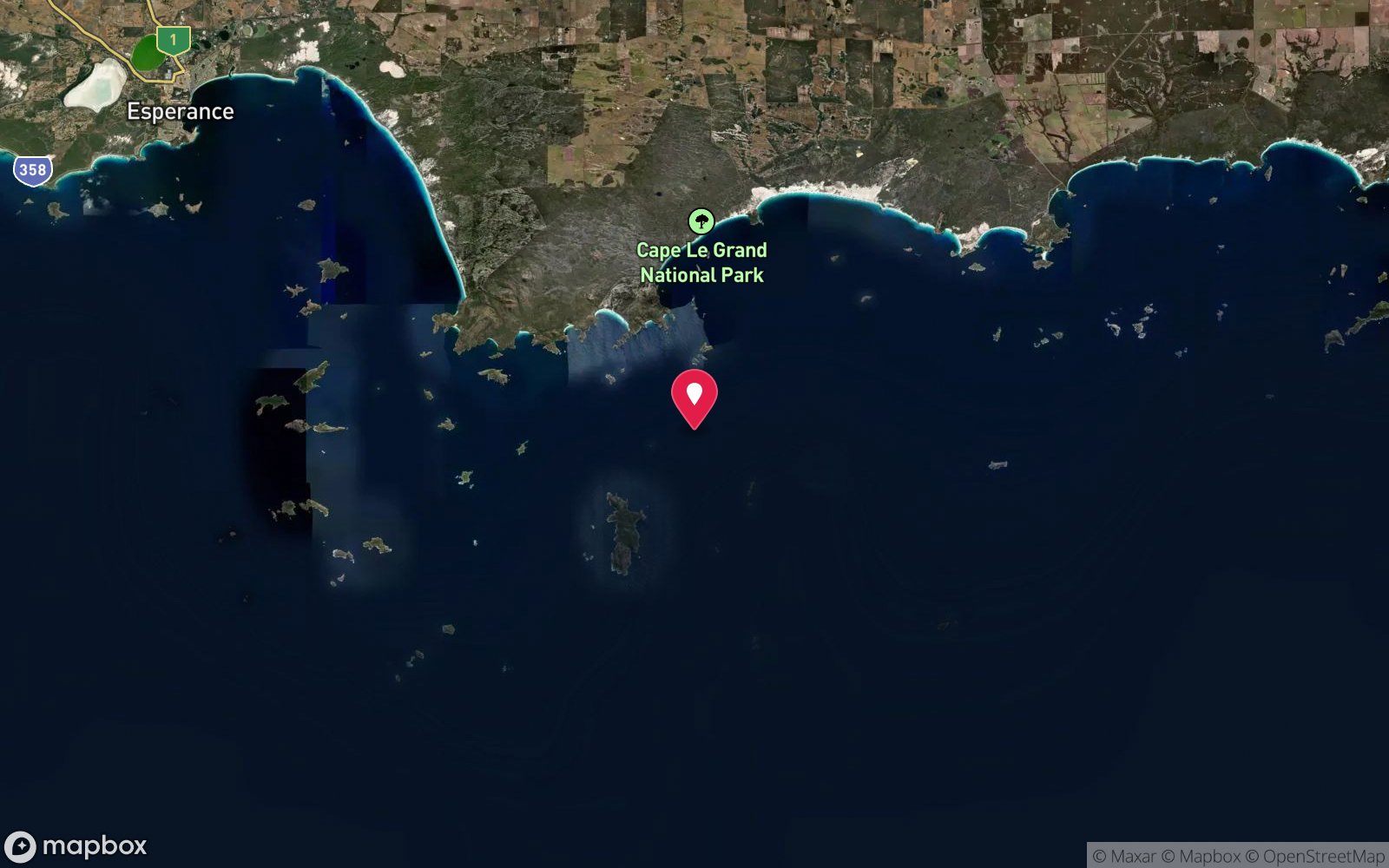
Hood Island – Cape Le Grand · Esperance – Recherche Archipelago
-34.12250, 122.08140
Approximate position — not for navigation.
Open in Google MapsPrimary source: esperancedivingandfishing.com.auMarine park & permits
500 m no-take/no-spearfishing exclusion zone around the wreck (since 1995). Recherche Archipelago Nature Reserve islands – no landing without authorisation.
Nearest recompression chamber
Fiona Stanley Hospital Hyperbaric Medicine Unit (Murdoch, Perth) – about 720 km; aeromedical evacuation (RFDS) from Esperance Hospital
Diving emergency: call 000, then DAN AP 1800 088 200.
Trip planner
Build a trip around Sanko Harvest Wreck →
A day-by-day plan for Esperance & Recherche Archipelago with this site locked in.
This guide is a planning aid. Conditions change daily — confirm with a local dive centre and dive within your training. Data & safety notes.
Dive profile
How this site rates
Scores are computed from the recorded data, not opinions. How?
At a glance
Sanko Harvest Wreck is a wreck boat dive in Esperance & Recherche Archipelago, WA, 13–44 m, suited to Technical (decompression) divers, about 75 minutes by boat.
Rated advanced because of depth to 44 m, wreck penetration options that need training, cold water.
Why dive here
- Australia's largest wreck dive – a 174 m bulk carrier broken into giant sections in 13-44 m, protected by a 500 m no-take zone.
- Sunk in 1991.
- Visibility often reaches 15-30 m.
About Sanko Harvest Wreck
The Sanko Harvest is the largest shipwreck dive in Australia and is often described as the second-largest diveable wreck in the world. She was a 174 m, 32,500 DWT Japanese dry bulk carrier carrying 32,790 tonnes of phosphate fertiliser (plus about 680 t of heavy bunker fuel) when she struck a charted reef near Hood Island in the Recherche Archipelago on 14 February 1991. The subsequent inquiry blamed the master and second officer for failing to correct the ship's charts. Over the next few days the hull broke into pieces and sank, and all her fuel oil escaped; much of it washed onto the beaches of Cape Le Grand National Park, oiling seal colonies and seabirds before a clean-up in which about 80% of oiled seal pups were rescued. Salvage plans were abandoned.
The wreck now lies in about 40-44 m of water, with its highest points around 13 m. The ship split into large sections – the forward holds and the stern with its accommodation are the main pieces – and three decades of breakdown have opened the holds into a vast landscape of plates, frames and girders. Since 1995 a 500 m no-take zone has protected the site, and the steel is covered in anemones, seaweed, soft coral, sponges and ascidians. Fish life is heavy: blue groper, boarfish, bullseyes, morwong, sweep, perch, yellowtail and red snapper, with seals and dolphins sometimes appearing.
The scale is the point. A single dive covers only a small part of the wreck, and most recreational divers explore the upper hull between 13 and 30 m. The deeper parts, including the stern and bridge areas that reach the sand, are for deep-trained or technical divers.
It is a genuinely remote wreck dive – a long boat ride from a town 720 km from Perth – and weather cancels many planned trips, but for experienced divers it is one of the great temperate wreck dives in the southern hemisphere.
Wreck details
Japanese dry bulk carrier, 174.7 m x 27.3 m, 32,502 DWT; phosphate fertiliser cargo · Sunk 1991
Era: modern, mostly scuttled as artificial reefs. Oldest wrecks · Wartime wrecks · Scuttled warships
Other wrecks of the same era
- Gemini Wreck · Max 30 m · Perth
- No. 20 McDermott Barge · Max 5 m · Pilbara & Dampier
- North Mole & North Mole Barge · Max 8.5 m · Perth
- HMAS Swan Wreck · Max 31 m · Geographe Bay & Busselton
- Rockingham Wreck Trail · Max 18 m · Perth
- Two Fold Bay Wreck · Max 12 m · Perth
Getting there & entry
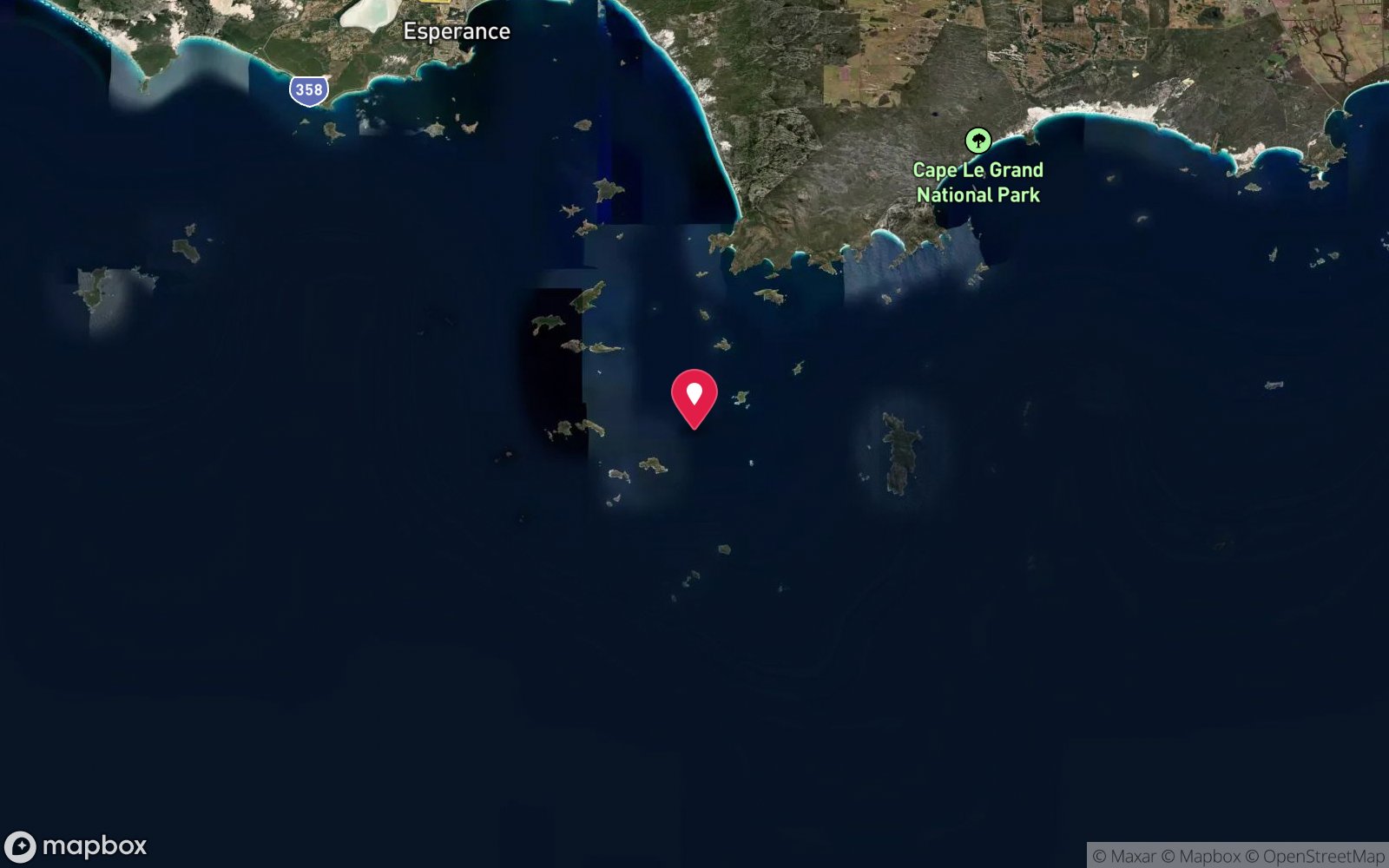
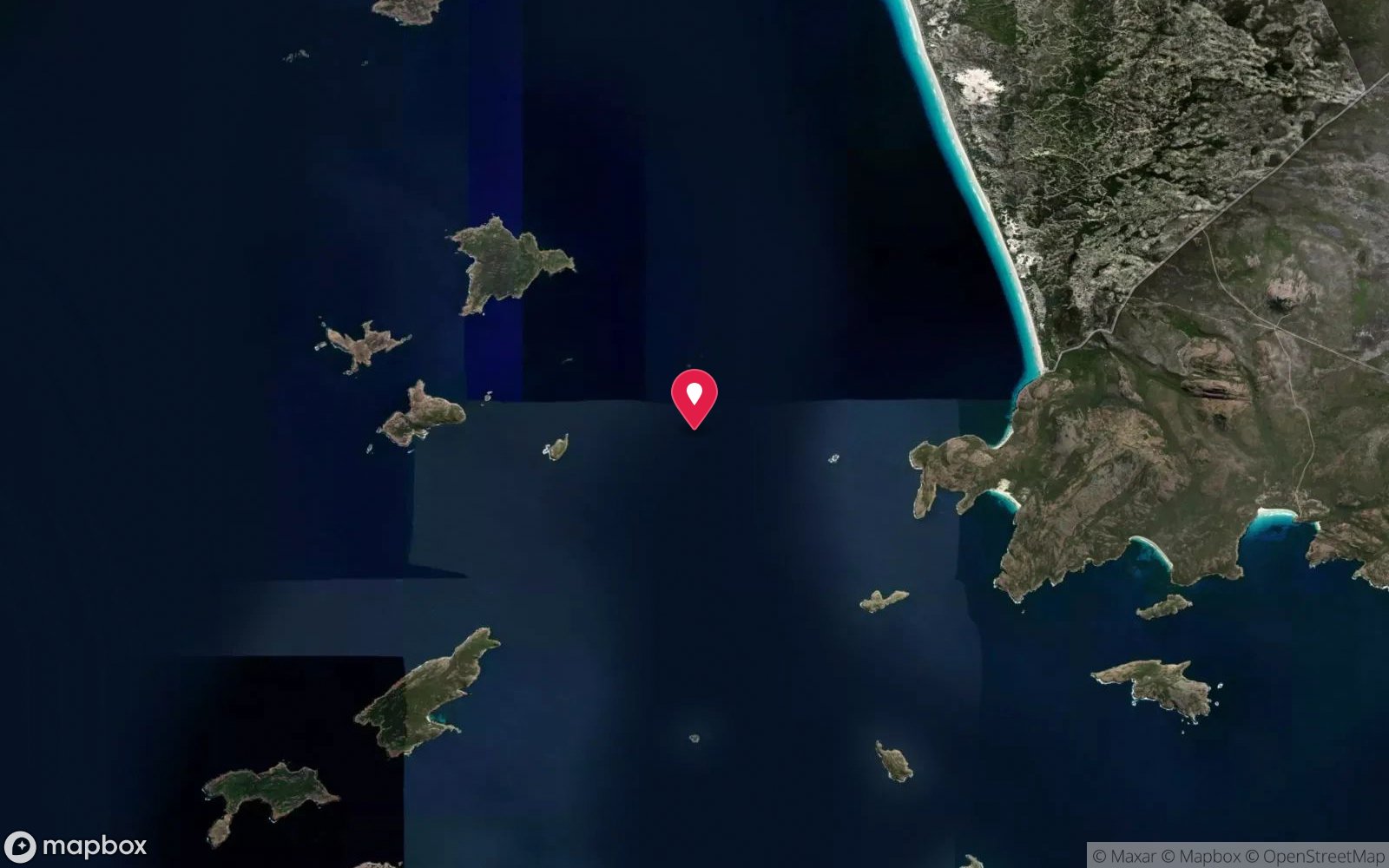
A 174 m Japanese bulk carrier that struck a reef near Hood Island in February 1991 and broke up, lying in 13-44 m about 10 km south of Cape Le Grand and 21 nautical miles by boat from Esperance.
Esperance is about 720 km (8 hours) south-east of Perth via the Albany or Great Eastern and Coolgardie-Esperance Highways, with daily flights from Perth. Dive boats and private boats launch from the Bandy Creek Boat Harbour (5 km east of town, with ramps, parking and toilets) or operate from the town waterfront on The Esplanade. Air, nitrox and hire gear are available from Esperance Diving & Fishing on The Esplanade.
The wreck is about 21 nautical miles (39 km) from port near Hood Island in the Recherche Archipelago, roughly 10 km south of Cape Le Grand; allow 60-90 minutes each way depending on sea state. Esperance Diving & Fishing runs dedicated Sanko Harvest days (bookings essential, minimum group size) and Perth Scuba runs Esperance weekenders that include a Sanko day. Private boats must stay within the 500 m sanctuary rules and avoid anchoring into the hull.
Entry: Giant stride or back roll from charter/private boat
Facilities: Bandy Creek Boat Harbour (ramps, toilets, parking); air, nitrox and hire at Esperance Diving & Fishing.
Weather, swell & tides
The Recherche Archipelago lies open to the Southern Ocean, and the islands shelter each other only partly. Boat diving needs swell under about 2 m and winds under 15-20 knots; the prevailing south-westerly swell and winter cold fronts cancel many trips from May to September. Summer brings reliable morning calms but strong easterly sea breezes most afternoons.
The Sanko Harvest is one of the longest and most exposed runs from Esperance, so operators need a forecast of swell under about 2 m and moderate winds for the whole day; trips are often postponed, so allow spare days. There is usually little current on the wreck, but surface drift can develop in wind. Visibility is often 20 m or more on the wreck, better than inshore.
Best season: Summer and autumn (December-May), ideally February-April
If it's blown out
Sheltered or shore sites within 25 km that often work when Sanko Harvest Wreck doesn't.
- Hellfire Bay (Cape Le Grand) · 17 km · Max 8 m
- Thistle Cove (Cape Le Grand) · 18 km · Max 8 m
- Woody Island (Recherche Archipelago) · 19 km · Max 10 m
- Lucky Bay (Cape Le Grand) · 20 km · Max 10 m
How the dive is usually run
Descend the shotline to the highest section of the hull at 13-18 m, then work along the upper structure holding 20-30 m – for most AOW divers the plan is an exterior dive within 30 m. Explore the collapsed hold areas and hull plating, keep well clear of loose cables and plates, and return to the shot with enough gas for a safety stop. Deeper areas toward the 40-44 m sand and the stern/bridge require deep or technical training.
Marine life
- Blue groper →
- boarfish
- bullseyes
- morwong
- sweep
- perch
- yellowtail
- red snapper (nannygai)
- harlequin fish
- queen snapper
- Australian sea lions and New Zealand fur seals →
- dolphins
- anemones
- soft corals
- sponges
- ascidians
Linked species have their own page listing every site where they are recorded. All marine life →
Training required
Beyond recreational limits: decompression, mixed gas or full cave/wreck training is required.
Operators often quote Deep/Advanced + experience, but the site reaches 44 m, which is beyond that level's depth limit; Technical (decompression) is the appropriate minimum for the full dive.
Operators' own listing: Deep/Advanced + experience.
Courses that help here
- Enriched Air Nitrox – Longer no-decompression time at 25 m and deeper.
- Wreck Diver – The wreck has penetration options.
- Drysuit Diver – Cold water; locals dive dry for much of the year.
Depth tiers: 0–10 m easy · to 18 m Open Water · 18–30 m Advanced (25 m+ is a deep dive) · 30–40 m Deep specialty · 40 m+ technical. All courses
Hazards & warnings
Depth to 44 m; extensive entanglement hazards (cables, loose plating, collapsing structure); penetration dangerous; long, exposed boat ride; cold water; very remote from recompression (720 km).
Technical notes
Nitrox (EAN28-32) recommended for the upper hull. Deep sections and the sand at 40-44 m require deep/technical training and appropriate gas; decompression dives should be planned with drifting-deco contingency. The structure is deteriorating – do not penetrate.
Operators require AOW minimum, limited to 30 m unless deep-certified.
Dive centres that go here
Esperance Diving & Fishing (72 The Esplanade, Esperance; operating since 1983) – boat dives in the Recherche Archipelago on demand/weather permitting, minimum numbers apply for long trips – dedicated Sanko Harvest trips (usually two dives); Perth Scuba (Perth) – Esperance 'Sanko Harvest Weekender' trips (AOW minimum) once or twice a year; Woody Island Eco Tours references the wreck on archipelago cruises (no diving).
Operators recorded for Sanko Harvest Wreck
Perth Scuba
ProfiledCanning Vale · Perth · WA
One of the most fully documented operations in Western Australia, covering recreational, professional, technical and freediving training alongside substantial equipment facilities.
perthscuba.com · (08) 9455 4448
Esperance Diving & Fishing
ListedEsperance · Esperance & Recherche Archipelago · WA
An Esperance business providing diving and fishing charters to the Recherche Archipelago, along with equipment support.
esperancedivingandfishing.com.au · (08) 9071 5111
Other dive centres in Esperance & Recherche Archipelago
Map
7 pinned sites. Pins marked approximate on their pages show the general area only; not for navigation.
Satellite views
Sanko Harvest Wreck: frequently asked questions
How deep is Sanko Harvest Wreck?
Sanko Harvest Wreck reaches a maximum depth of 44 m, with the shallowest part at about 13 m; most of the dive is spent around 30 m.
What certification do I need to dive Sanko Harvest Wreck?
Technical (decompression) is the recommended minimum. Operators often quote Deep/Advanced + experience, but the site reaches 44 m, which is beyond that level's depth limit; Technical (decompression) is the appropriate minimum for the full dive. Rated advanced because of depth to 44 m, wreck penetration options that need training, cold water.
Can I shore dive Sanko Harvest Wreck?
No, it is reached by boat (about 75 minutes).
When is the best time to dive Sanko Harvest Wreck?
Summer and autumn (December-May), ideally February-April.
What marine life will I see at Sanko Harvest Wreck?
Regularly recorded: Blue groper, boarfish, bullseyes, morwong, sweep, perch, yellowtail, red snapper (nannygai), harlequin fish, queen snapper, Australian sea lions and New Zealand fur seals, dolphins and more.
What wetsuit do I need at Sanko Harvest Wreck?
7 mm wetsuit with hood, or drysuit (recommended for two deep dives).
How cold is the water at Sanko Harvest Wreck?
Typically 19-21 °C in summer and 15-16 °C in winter.
What are the main hazards at Sanko Harvest Wreck?
Depth to 44 m; extensive entanglement hazards (cables, loose plating, collapsing structure); penetration dangerous; long, exposed boat ride; cold water; very remote from recompression (720 km). See the hazards section above for the full list.
Where is the nearest recompression chamber to Sanko Harvest Wreck?
Fiona Stanley Hospital Hyperbaric Medicine Unit (Murdoch, Perth) – about 720 km; aeromedical evacuation (RFDS) from Esperance Hospital. In an emergency call 000, then DAN Asia-Pacific on 1800 088 200.
Diving in Esperance & Recherche Archipelago
Esperance's Recherche Archipelago has more than 100 granite islands in clear Southern Ocean water: sea lions, fur seals, leafy seadragons, kelp and the Sanko Harvest wreck, the largest diveable wreck in Australia, in 12–40 m. It is spectacular and dived by very few.
Getting there: Eight hours from Perth or a flight to Esperance. Local charters when demand allows; the town beaches and Woody Island have shore diving.
All Esperance & Recherche Archipelago dive sites and a suggested itinerary →
Sources
- esperancedivingandfishing.com.au/diving/diving-exploration
- mastermariners.org.au/stories-from-the-past/5164-wreck-of-the-sanko-harvest
- woodyisland.com.au/around-woody-island-sanko-harvest
- perthscuba.com/pages/esperance-sanko-harvest-weekender-boat-dives
- marinelife.org.au/?page_id=160
- divernet.com/scuba-diving/diving-western-australia-ningaloo-to-albany-reefs-wrecks-wildlife
Data confidence: High · Being verified: Exact coordinates approximate; depth given variously as 13-44 m, 18-44 m and 13-42 m; number of sections (two vs three) varies by source.. Last updated September 2026. Know this site better? How to send a correction
Nearby dive sites
More wrecks in Western Australia
Explore more
This region