Dive slate · divesites.com.au · printed 7 Nov 2026
Sloping Island Kelp Forest
Tasman Peninsula, Tasmania · near Dunalley
| Depth | 4–12 m |
|---|---|
| Minimum level | Open Water |
| Difficulty | Beginner |
| Access | Boat (day trip) |
| Entry | Back roll or giant stride from charter boat |
| Current | Mild |
| Visibility | 5-15 m |
| Water | summer 14-18 °C, winter 10-13 °C |
| Suit | Drysuit strongly recommended year-round; 7 mm semi-dry or two-piece 7 mm wetsuit with hood and gloves is the minimum in summer |
| Best season | Late summer to autumn (February-May) for settled weather and best visibility; diveable year-round between fronts |
| Bottom time | 55 min |
| Position | -42.95500, 147.64500 (approximate) |
| Permit | Sloping Island is a nature reserve – no landing; no marine permit required for diving. |
| Nearest chamber | Royal Hobart Hospital Hyperbaric Medicine Unit (Hobart CBD); DAN emergency hotline 1800 088 200 |
| Emergency | 000 · DAN Asia-Pacific diving emergency 1800 088 200 |
Sloping Island Kelp Forest
Also known as Sloping Island, Slopin Island Reef, Sloping Reef
One of the few giant kelp forests within reach of Hobart, with seahorses in easy depths.
Near Dunalley · Tasman Peninsula, Tasmania
- Depth
- 4–12 m
- Minimum level
- Open Water
- Access
- Boat (day trip)
- Boat ride
- ~25 min
- Water
- 14-18 °C
- Visibility
- 5-15 m
Sloping Island Kelp Forest4–12 m · Open Water
Dive factsDepths, conditions, location & safety
Season
Off-peak nowBest months: January, February, March, April, May, December.
Late summer to autumn (February-May) for settled weather and best visibility; diveable year-round between fronts
- Best months
- Now (November)
Dive facts
- Depth
- 4–12 m
- Typical depth
- 8 m
- Certification
- Open Water
- Difficulty
- Beginner
- Depth tier
- Open Water (10–18 m)
- Access
- Boat (day trip)
- Offshore
- 2 km
- Dive centre needed
- Recommended
- Shore / independent
- No
- Boat ride
- ~25 min
- Current
- Mild
- Visibility
- 5-15 m
- Water temp (summer)
- 14-18 °C
- Water temp (winter)
- 10-13 °C
- Water
- Cold Temperate
- Bottom time
- 55 min
- Dive traffic
- Popular (weekly charters)
- Night dive
- No
- Snorkel friendly
- Yes
Exposure suit
Drysuit strongly recommended year-round; 7 mm semi-dry or two-piece 7 mm wetsuit with hood and gloves is the minimum in summer
Location
Frederick Henry Bay – Lime Bay
-42.95500, 147.64500
Approximate position — not for navigation.
Open in Google MapsPrimary source: godivetas.com.auMarine park & permits
Sloping Island is a nature reserve – no landing; no marine permit required for diving.
Nearest recompression chamber
Royal Hobart Hospital Hyperbaric Medicine Unit (Hobart CBD); DAN emergency hotline 1800 088 200
Diving emergency: call 000, then DAN AP 1800 088 200.
Trip planner
Build a trip around Sloping Island Kelp Forest →
A day-by-day plan for Tasman Peninsula with this site locked in.
This guide is a planning aid. Conditions change daily — confirm with a local dive centre and dive within your training. Data & safety notes.
Dive profile
How this site rates
Scores are computed from the recorded data, not opinions. How?
At a glance
Sloping Island Kelp Forest is a kelp forest boat dive in Tasman Peninsula, TAS, 4–12 m, suited to Open Water divers, about 25 minutes by boat.
Rated beginner: sheltered, shallow and manageable for a newly certified diver on a normal day, though note boat traffic overhead and cold water.
Why dive here
- One of the few giant kelp forests within reach of Hobart, with seahorses in easy depths.
- Snorkel-friendly, so non-diving companions can join at the surface.
About Sloping Island Kelp Forest
Sloping Island is a 117-hectare nature reserve off the north-western Tasman Peninsula, part of the Sloping Island group that includes the adjacent Sloping Reef. Go Dive Tasmania lists it as one of the few diveable giant kelp forests near Hobart, in 5-12 m and suitable for all certified divers, with seahorses and schooling fish. That makes it an important site: giant kelp has declined by around 95 per cent on Tasmania's east coast since the mid-twentieth century, and stands close enough to Hobart for a half-day trip are rare.
Diving through a healthy Macrocystis forest is a special experience, with golden light filtering through the canopy and fish moving among the stipes. Big-belly seahorses cling to the kelp and understorey algae, while schools of bastard trumpeter, wrasse, leatherjackets and juvenile fish shelter in the forest. The older Marine Life Network guide describes a reef about 100 m long and 50 m wide on the south side of the island in 4-8 m, attractive with reef fish and colourful sponge growths, and notes shallow reefs between Sloping Island and the mainland.
The island has ruins of early settlement foundations ashore, though little remains. The shallow depth means long, relaxed dives suitable for beginners and photographers. Kelp condition varies with summer water temperatures, so ask the operator about its current state.
Treat the kelp gently – avoid pulling on stipes or kicking holdfasts – and never land on the island, which protects nesting seabirds. Go Dive Tasmania's guided trips remove the logistics for visitors without their own boat.
Getting there & entry
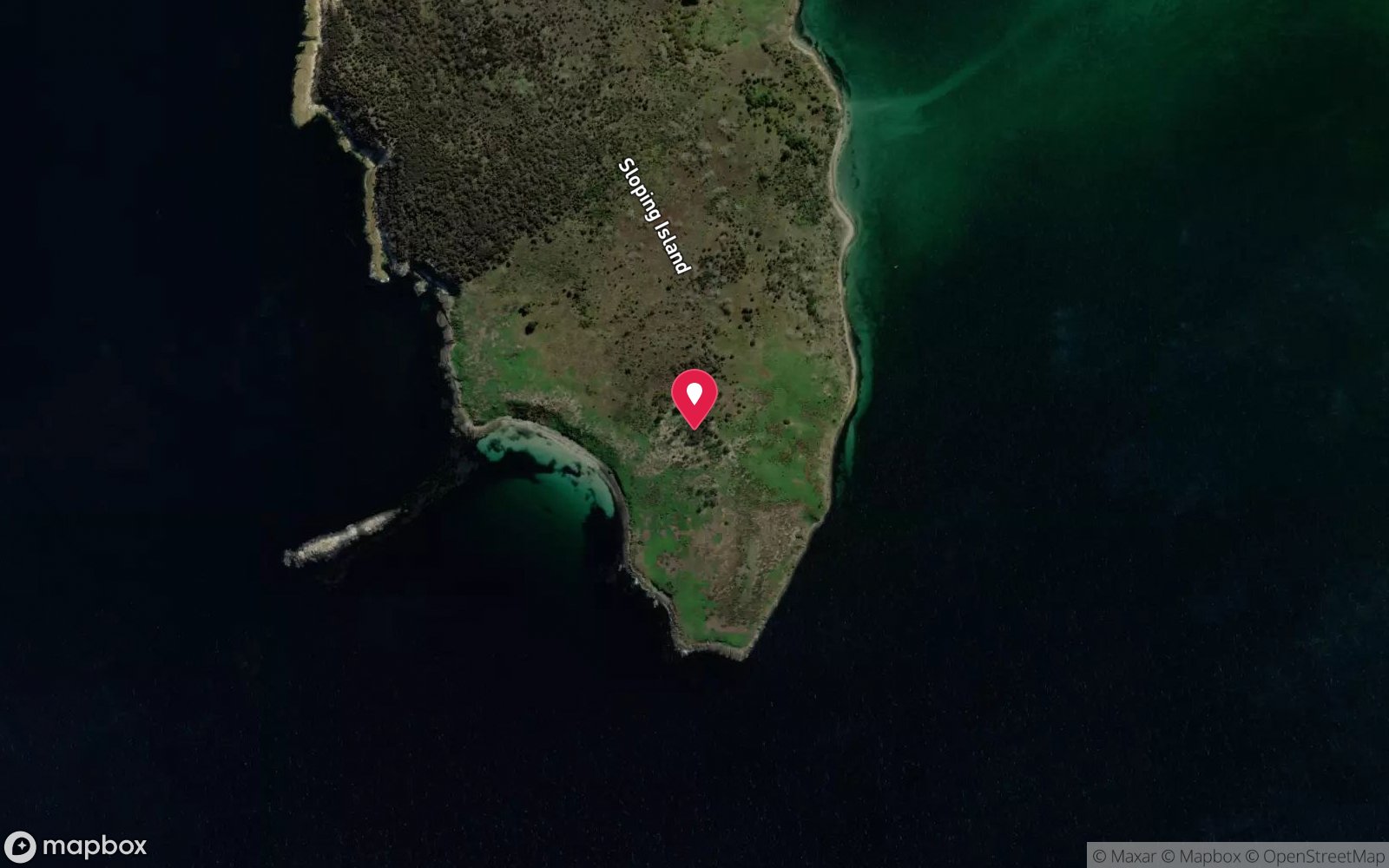
Small nature-reserve island (117 ha) off the north-west Tasman Peninsula near Lime Bay, with one of the few diveable giant kelp forests close to Hobart.
Boat access. Launch at the Pipe Clay Lagoon area, Dunalley or Primrose Sands; the Marine Life Network guide suggests Pipe Clay Lagoon or Dunalley. From Dunalley (Arthur Highway, about 55 km from Hobart) the run through Norfolk Bay to Sloping Island is roughly 20-30 minutes.
Go Dive Tasmania runs guided boat dives here. Anchor in sand on the south side of the island clear of the kelp; the island is a nature reserve, so do not land.
Entry: Back roll or giant stride from charter boat
Facilities: Boat ramps and facilities at Dunalley and Primrose Sands; fills in Hobart.
Weather, swell & tides
Frederick Henry Bay is very exposed to strong southerly winds and swell, which the Marine Life Network notes can make it rough; a calm day is required. The south side of Sloping Island offers some shelter from swell. Northerly and westerly winds are usually fine.
Summer marine heatwaves can thin the giant kelp canopy, and visibility falls after strong southerlies stir up the bay.
Best season: Late summer to autumn (February-May) for settled weather and best visibility; diveable year-round between fronts
If it's blown out
Sheltered or shore sites within 25 km that often work when Sloping Island Kelp Forest doesn't.
- Eaglehawk Neck Jetty (Pirates Bay) · 24 km · Max 12 m
- Spectacle Head · 9 km · Max 8 m
- Whale Rock (Spectacle Head) · 9 km · Max 12 m
- Dunalley (Denison) Canal · 15 km · Max 10 m
How the dive is usually run
Descend on the south side at the kelp edge, swim slowly through the stipes at 6-10 m looking for seahorses in the understorey, and loop back to the boat along the reef.
Marine life
- Giant kelp (Macrocystis pyrifera)
- big-belly seahorses →
- bastard trumpeter
- wrasse
- leatherjackets
- juvenile fish
- sponges
- sea stars
Linked species have their own page listing every site where they are recorded. All marine life →
Training required
Within the 18 m limit of an entry-level certification.
Courses that help here
- Drysuit Diver – Cold water; locals dive dry for much of the year.
Depth tiers: 0–10 m easy · to 18 m Open Water · 18–30 m Advanced (25 m+ is a deep dive) · 30–40 m Deep specialty · 40 m+ technical. All courses
Hazards & warnings
Frederick Henry Bay is exposed to southerlies; kelp entanglement; nature reserve – no landing; boat traffic.
Dive centres that go here
Go Dive Tasmania – Sloping Island Kelp Forest (5-12 m, all certified divers) on its boat dive program; private boats from Dunalley and Primrose Sands.
Operators recorded for Sloping Island Kelp Forest
Other dive centres in Tasman Peninsula
Map
7 pinned sites. Pins marked approximate on their pages show the general area only; not for navigation.
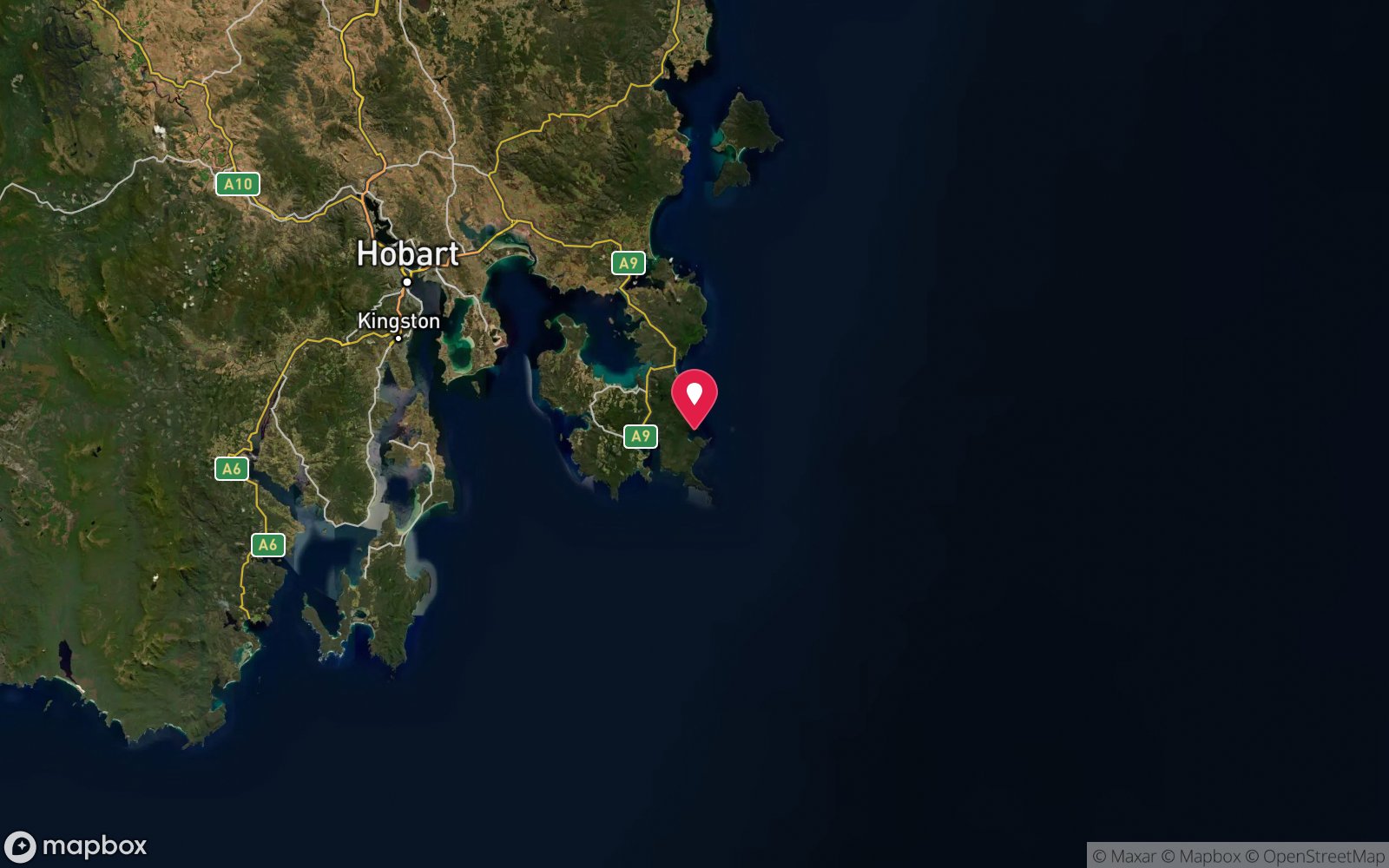
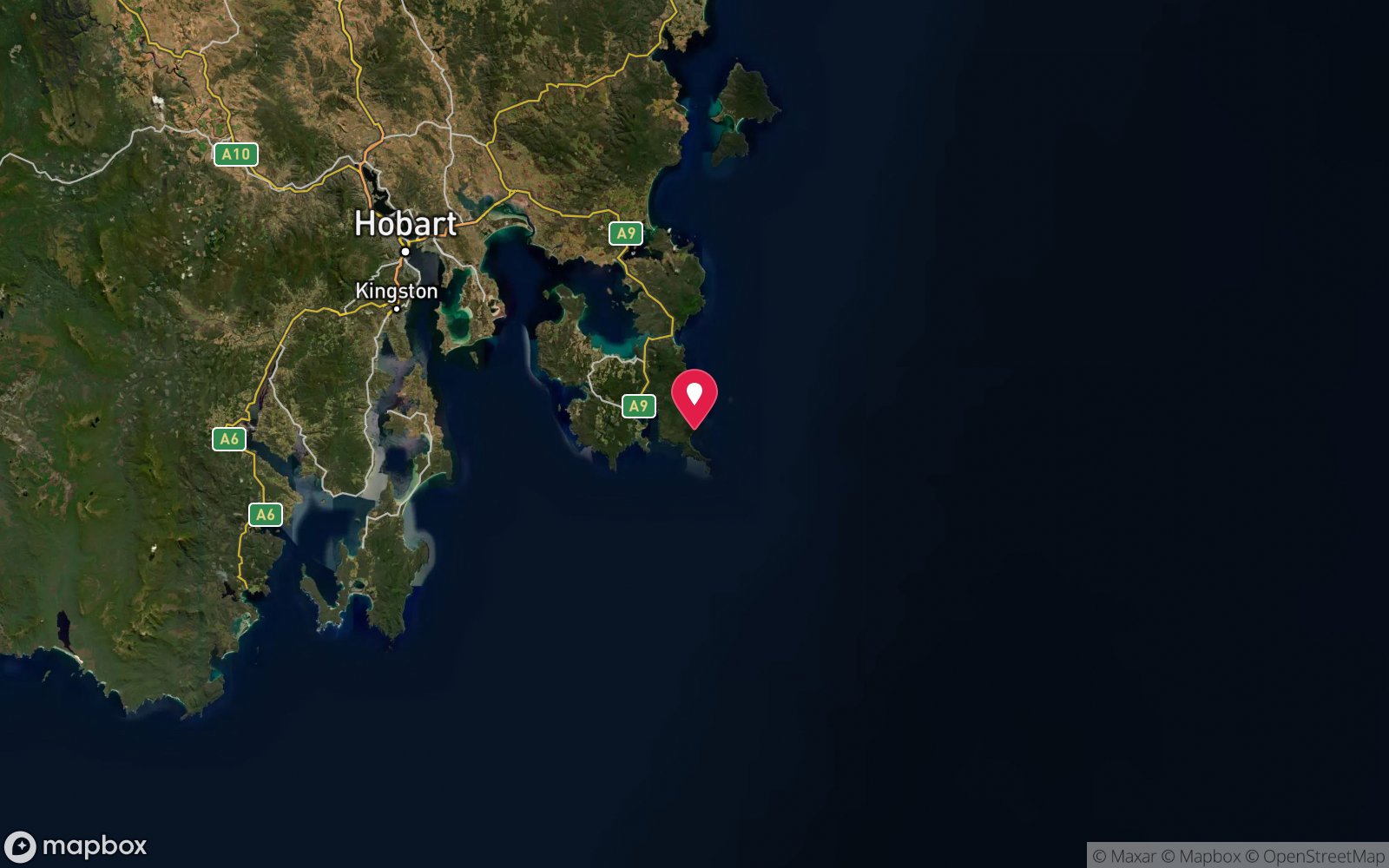
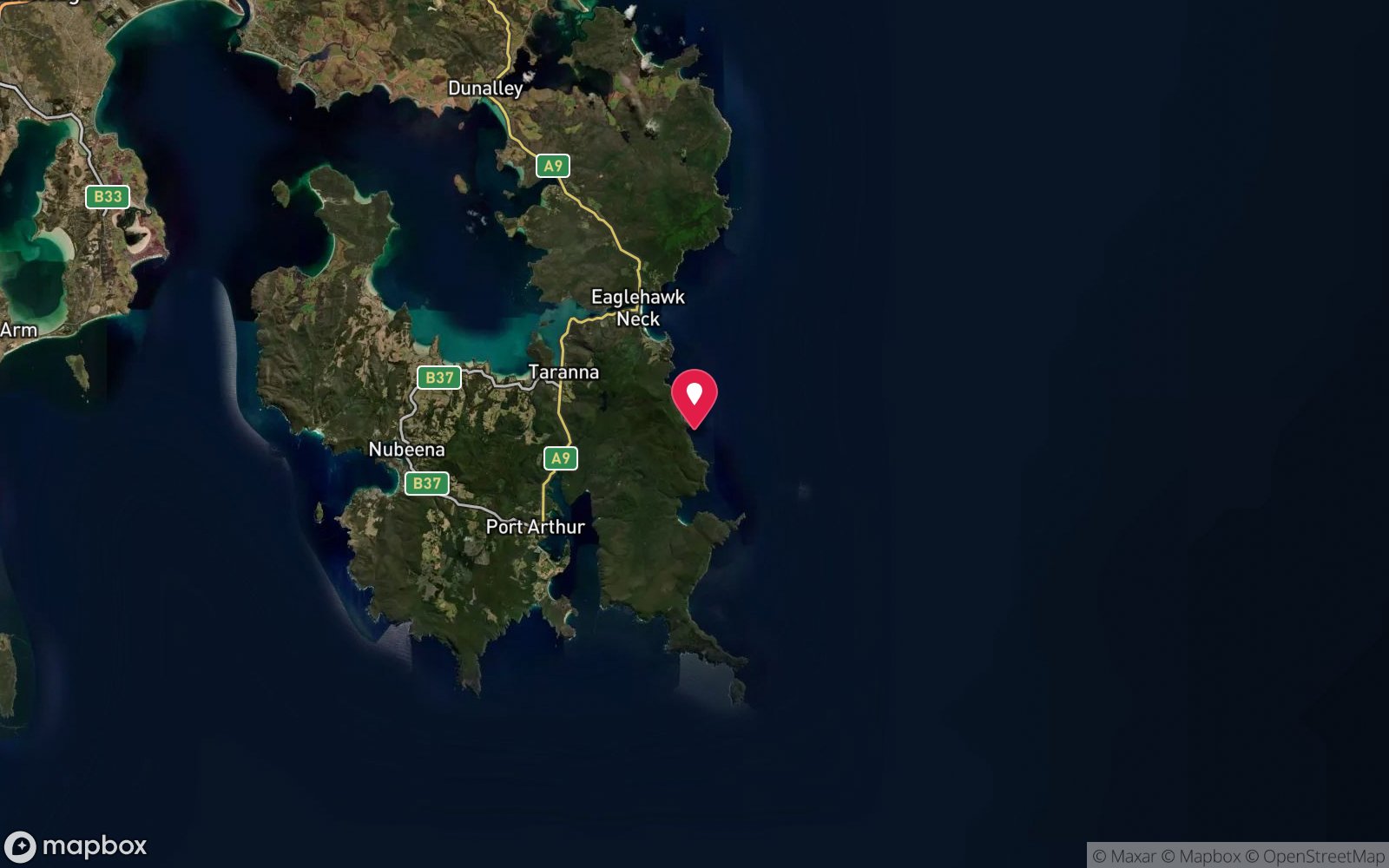
Satellite views
Sloping Island Kelp Forest: frequently asked questions
How deep is Sloping Island Kelp Forest?
Sloping Island Kelp Forest reaches a maximum depth of 12 m, with the shallowest part at about 4 m; most of the dive is spent around 8 m.
What certification do I need to dive Sloping Island Kelp Forest?
Open Water is the recommended minimum. Rated beginner: sheltered, shallow and manageable for a newly certified diver on a normal day, though note boat traffic overhead and cold water.
Can I shore dive Sloping Island Kelp Forest?
No, it is reached by boat (about 25 minutes).
When is the best time to dive Sloping Island Kelp Forest?
Late summer to autumn (February-May) for settled weather and best visibility; diveable year-round between fronts.
What marine life will I see at Sloping Island Kelp Forest?
Regularly recorded: Giant kelp (Macrocystis pyrifera), big-belly seahorses, bastard trumpeter, wrasse, leatherjackets, juvenile fish, sponges, sea stars.
What wetsuit do I need at Sloping Island Kelp Forest?
Drysuit strongly recommended year-round; 7 mm semi-dry or two-piece 7 mm wetsuit with hood and gloves is the minimum in summer.
How cold is the water at Sloping Island Kelp Forest?
Typically 14-18 °C in summer and 10-13 °C in winter.
What are the main hazards at Sloping Island Kelp Forest?
Frederick Henry Bay is exposed to southerlies; kelp entanglement; nature reserve – no landing; boat traffic. See the hazards section above for the full list.
Where is the nearest recompression chamber to Sloping Island Kelp Forest?
Royal Hobart Hospital Hyperbaric Medicine Unit (Hobart CBD); DAN emergency hotline 1800 088 200. In an emergency call 000, then DAN Asia-Pacific on 1800 088 200.
Diving in Tasman Peninsula
The Tasman Peninsula has the tallest sea cliffs in the southern hemisphere, and beneath them some of Australia's most dramatic diving: the Cathedral Cave system and Waterfall Bay's caves and wall, the Sisters and Hippolyte Rocks with their fur seals, the Thumbs, and the remnant giant kelp at Fortescue Bay and Munro Bight. Deep sites like the Patersons Arch and the Nord wreck (40 m) reward experienced divers.
Getting there: Ninety minutes from Hobart. A dedicated dive operator at Eaglehawk Neck runs boat dives; Fortescue Bay and Pirates Bay have shore access.
Sources
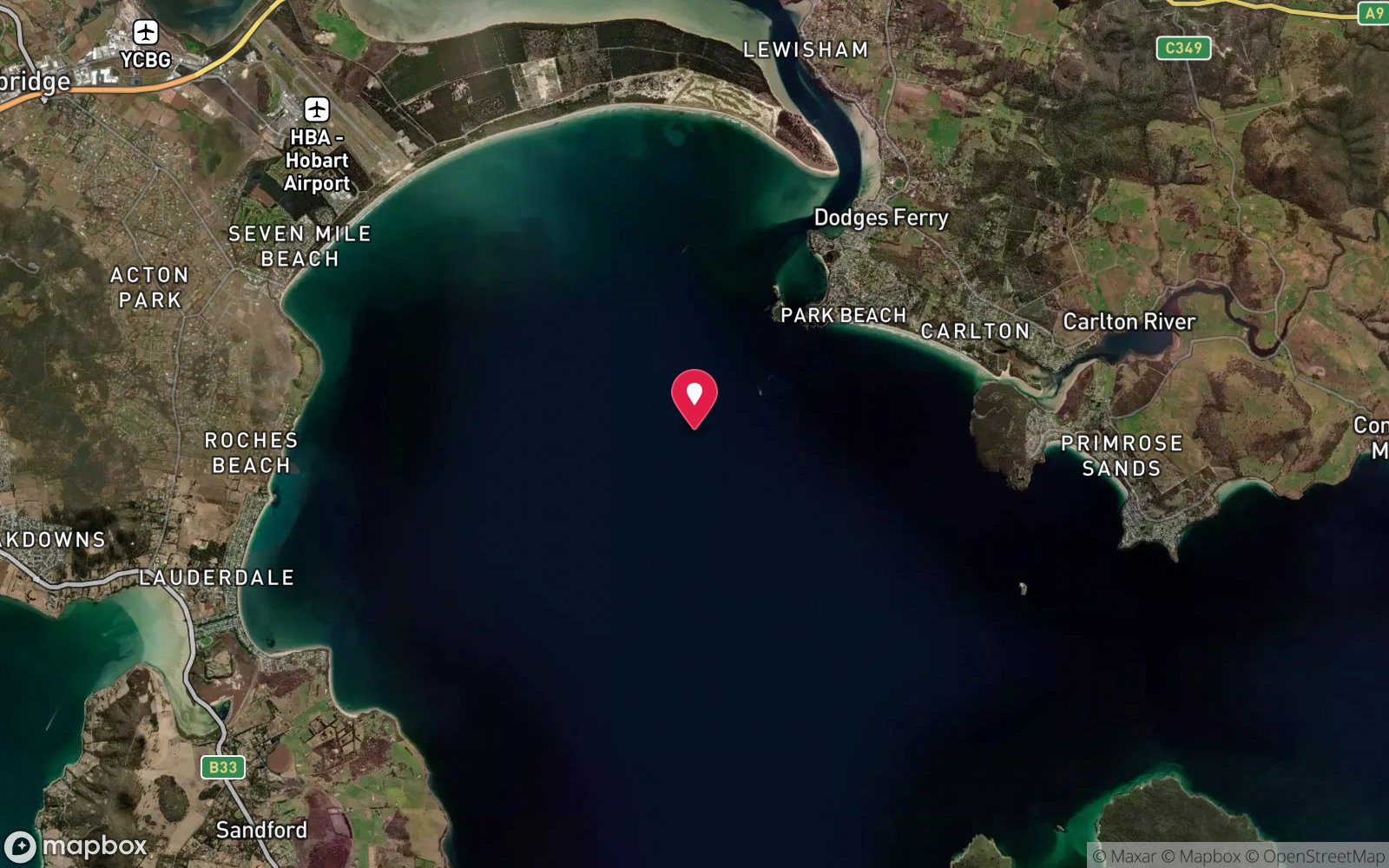
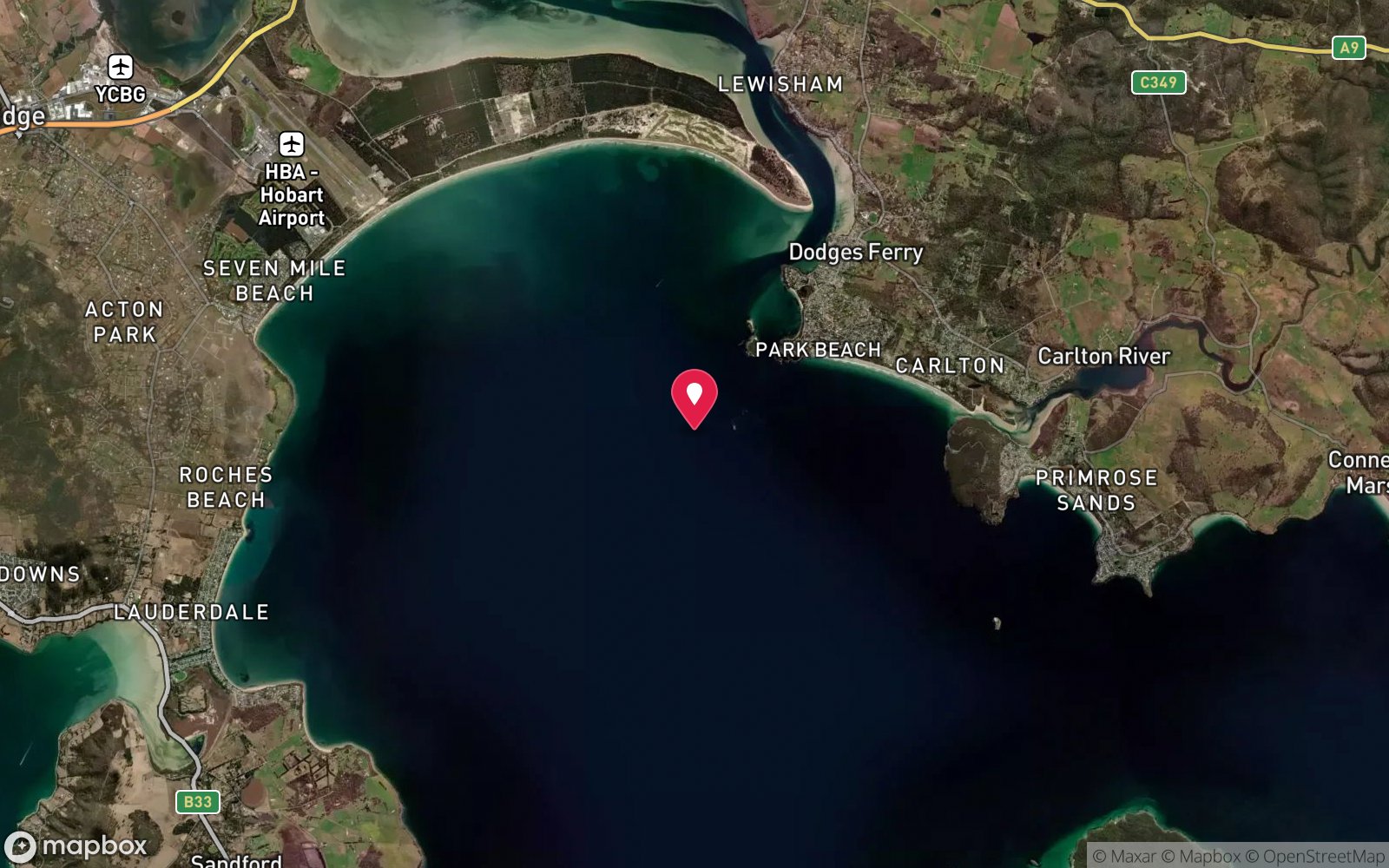
Nearby dive sites
More kelp forest dives in Tasmania
Explore more
This region
Similar dives