Dive slate · divesites.com.au · printed 7 Nov 2026
SS Clan Ranald Wreck
Yorke Peninsula, South Australia · near Edithburgh
| Depth | 12–21 m |
|---|---|
| Minimum level | Advanced Open Water |
| Difficulty | Advanced |
| Access | Boat |
| Entry | Giant stride from boat; descend on a shot or the site mooring (anchoring on the wreck discouraged) |
| Current | Variable/Tidal |
| Visibility | 8-15 m |
| Water | summer 20-24 °C, winter 12-14 °C |
| Suit | 5-7 mm full wetsuit with hood in summer/autumn; 7 mm semi-dry or drysuit in winter |
| Best season | February-April with prevailing northerlies |
| Bottom time | 30 min |
| Position | -35.16633, 137.62221 (GPS) |
| Permit | Protected historic shipwreck (Historic Shipwrecks Act) within Troubridge Hill Aquatic Reserve – no permit needed to dive, no disturbance or take |
| Nearest chamber | Royal Adelaide Hospital hyperbaric medicine unit (Adelaide) |
| Emergency | 000 · DAN Asia-Pacific diving emergency 1800 088 200 |
SS Clan Ranald Wreck
Also known as Clan Ranald, Clan Ronald
The only turret ship lost in Australian waters, lying upside down in 18-21 m inside an aquatic reserve – a haunting and fish-rich wreck with 40 lives lost in 1909.
Near Edithburgh · Yorke Peninsula, South Australia
- Depth
- 12–21 m
- Minimum level
- Advanced Open Water
- Access
- Boat
- Boat ride
- ~30 min
- Water
- 20-24 °C
- Visibility
- 8-15 m
SS Clan Ranald Wreck12–21 m · Advanced Open Water
Dive factsDepths, conditions, location & safety
Season
Off-peak nowBest months: February, March, April.
Dive facts
- Depth
- 12–21 m
- Typical depth
- 18 m
- Certification
- Advanced Open Water
- Difficulty
- Advanced
- Depth tier
- Advanced Open Water (18–30 m)
- Access
- Boat
- Offshore
- 0.7 km
- Dive centre needed
- Recommended
- Shore / independent
- No
- Boat ride
- ~30 min
- Current
- Variable/Tidal
- Visibility
- 8-15 m
- Water temp (summer)
- 20-24 °C
- Water temp (winter)
- 12-14 °C
- Water
- Temperate
- Bottom time
- 30 min
- Dive traffic
- Moderate (occasional charters/club dives)
- Night dive
- No
- Snorkel friendly
- No
Exposure suit
5-7 mm full wetsuit with hood in summer/autumn; 7 mm semi-dry or drysuit in winter
Location
Troubridge Hill Aquatic Reserve · Yorke Peninsula – Troubridge / Investigator Strait
-35.16633, 137.62221
Published GPS position.
Open in Google MapsPrimary source: environment.sa.gov.auTags
Marine park & permits
Protected historic shipwreck (Historic Shipwrecks Act) within Troubridge Hill Aquatic Reserve – no permit needed to dive, no disturbance or take
Nearest recompression chamber
Royal Adelaide Hospital hyperbaric medicine unit (Adelaide)
Diving emergency: call 000, then DAN AP 1800 088 200.
Trip planner
Build a trip around SS Clan Ranald Wreck →
A day-by-day plan for Yorke Peninsula with this site locked in.
This guide is a planning aid. Conditions change daily — confirm with a local dive centre and dive within your training. Data & safety notes.
Dive profile
How this site rates
Scores are computed from the recorded data, not opinions. How?
At a glance
SS Clan Ranald Wreck is a wreck boat dive in Yorke Peninsula, SA, 12–21 m, suited to Advanced Open Water divers, variable/tidal current, about 30 minutes by boat.
Rated advanced because of depth beyond 18 m, tidal current that must be timed, wreck penetration options that need training, cold water.
Why dive here
- The only turret ship lost in Australian waters, lying upside down in 18-21 m inside an aquatic reserve – a haunting and fish-rich wreck with 40 lives lost in 1909.
- Sunk in 1909; protected as underwater cultural heritage, so look but do not touch.
Conditions to avoid
- Strong southerly or south-east swell and wind
- Spring tides (strong current)
- Any time other than slack water
About SS Clan Ranald Wreck
The Clan Ranald is one of South Australia's great wreck dives and a site of real historical weight. Built in 1900 at Sunderland by William Doxford & Sons, she was a turret-deck steamer, an unusual experimental hull form with a narrow raised 'turret' along the centreline designed to reduce Suez Canal tolls, which were charged on deck width. She was 108 m long with a 13.9 m beam and 3,596 gross tons.
In January 1909 she loaded 39,862 bags of wheat and 28,451 bags of flour at Port Adelaide, with extra coal stowed on deck. On 31 January, soon after leaving, a list to starboard steadily worsened and near Troubridge Point it suddenly increased to about 45 degrees. That night she capsized roughly 700 m from shore.
Forty of her 64 crew died, many of them Indian lascars, and a number are buried in the Edithburgh cemetery. The subsequent inquiry blamed overloading and poor stability, and the disaster contributed to changes in loading regulations. The wreck was rediscovered by volunteers in 1962, and in 1983 the Troubridge Hill Aquatic Reserve was declared around it.
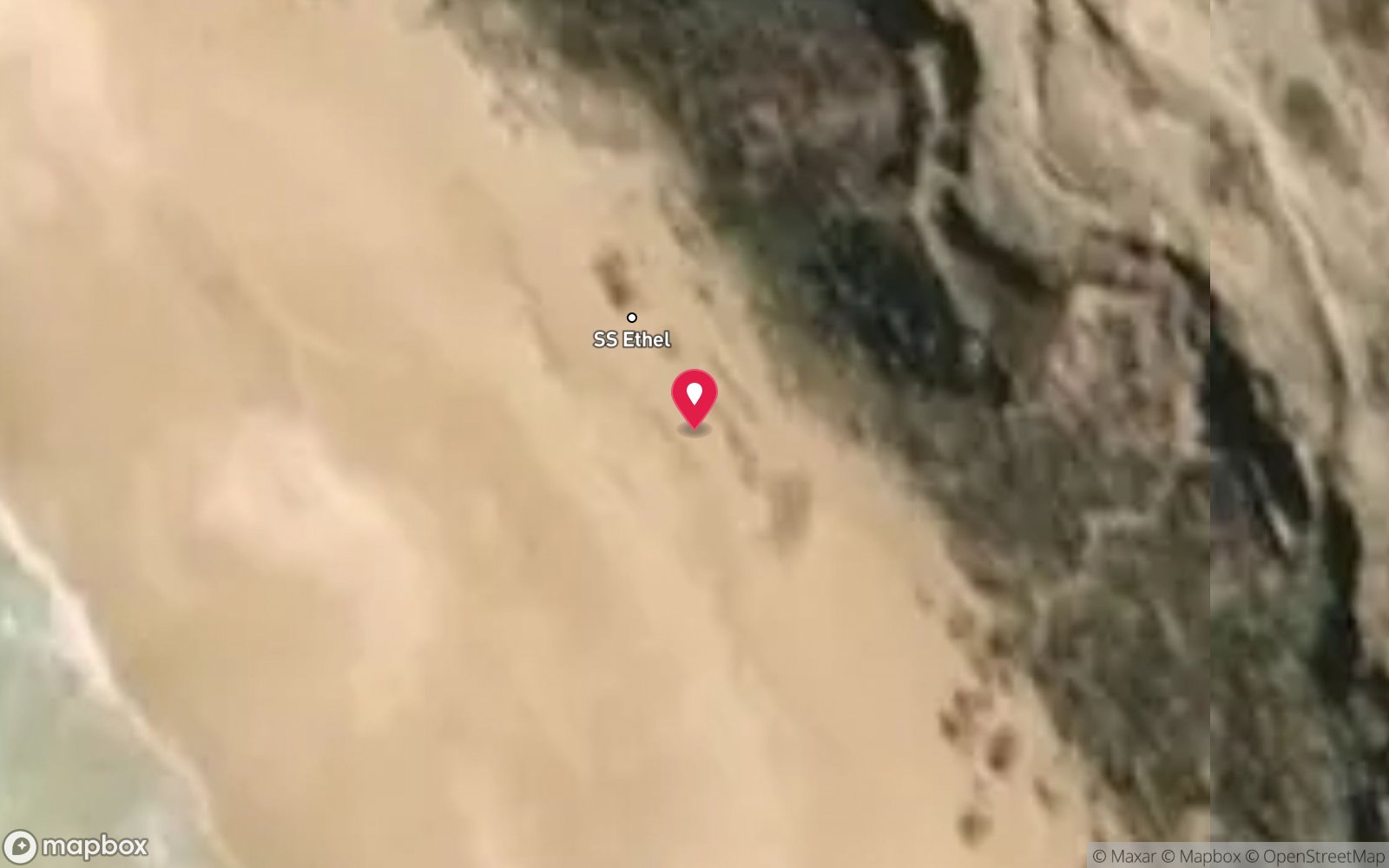
An anchor was mounted on the clifftop in 1975 as a memorial. The ship lies upside down on sand in about 18-21 m, bow pointing east-south-east, her hull slowly collapsing onto the boilers. Divers swim along the upturned keel and around the sides, where gaps under the gunwales and collapsed plating reveal machinery and structure.
The Dive Shack calls it one of the best wreck dives in South Australia. After a century on the seabed it is a dense reef in its own right: boarfish, snapper, bullseyes, old wives and leatherjackets school around it, blue groper patrol, and large crayfish – protected in the reserve – shelter under the hull plates. Depth, current and open-water location make it a dive for experienced, advanced-certified divers.
It is also a war-grave-like site for many families and a protected historic shipwreck, so treat it with respect.
Wreck details
Steel turret-deck screw steamer, 108.2 m, 3,596 GRT, built Sunderland 1900 · Sunk 1909 · Protected historic shipwreck
Era: early 20th century. Oldest wrecks · Wartime wrecks · Scuttled warships
Other wrecks of the same era
- Monarch Wreck · Max 2 m · Yorke Peninsula
- John Robb Wreck · Max 20 m · Adelaide Metro
- Aagot Wreck · Max 4 m · Yorke Peninsula
- Norma Wreck · Max 15 m · Adelaide Metro
- SS Willyama Wreck · Max 12 m · Yorke Peninsula
- Montebello Wreck · Max 15 m · Kangaroo Island
Getting there & entry
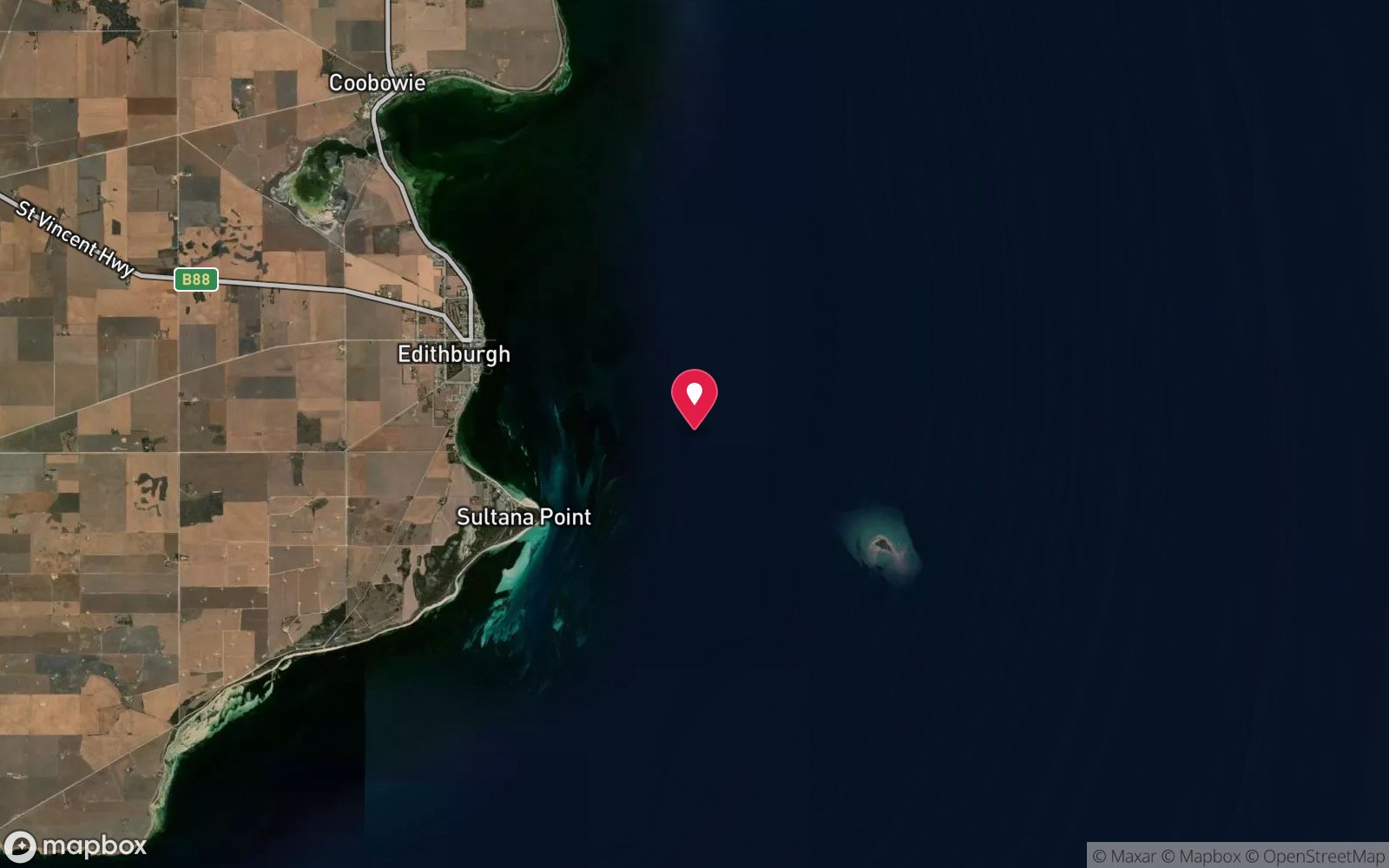
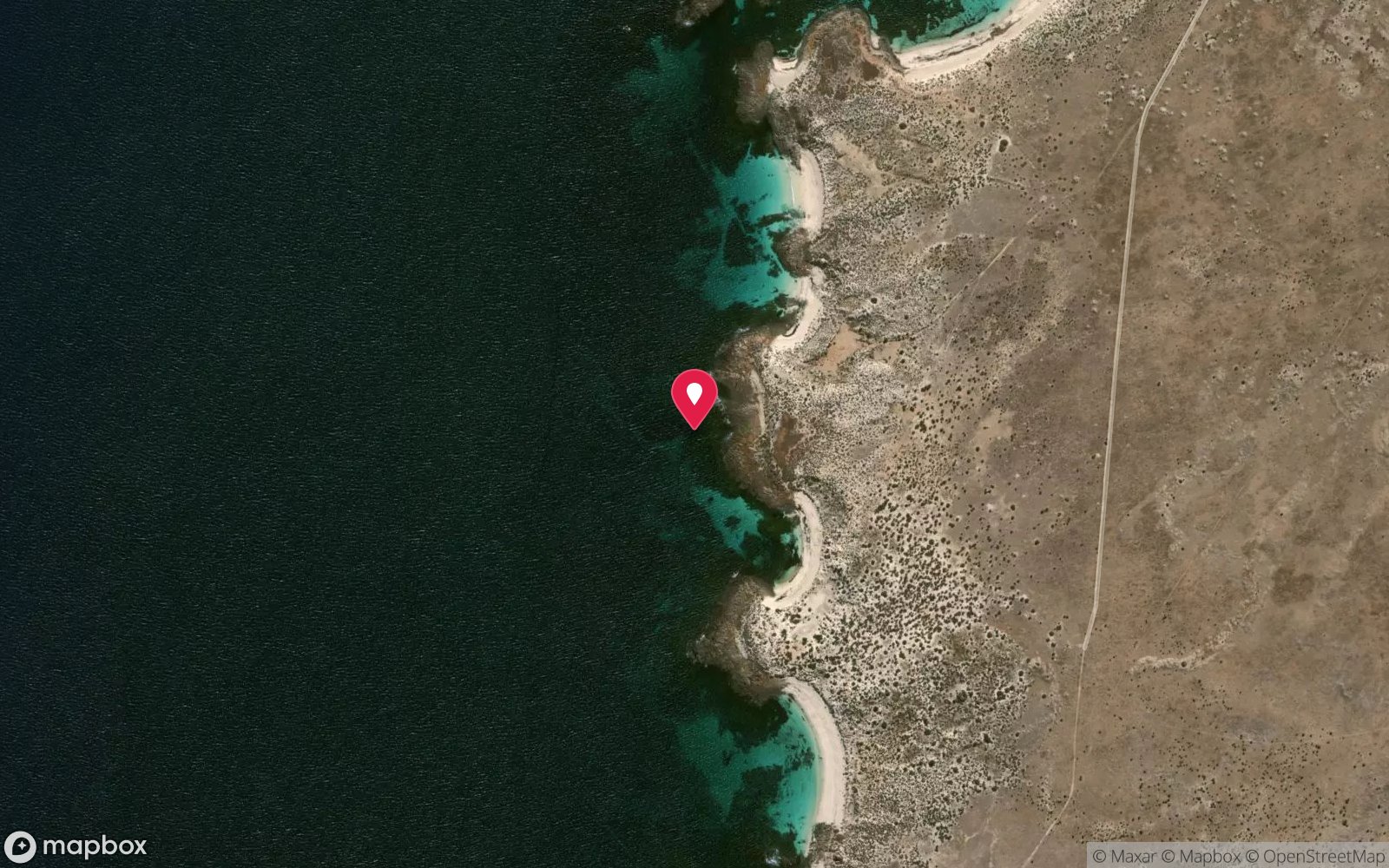
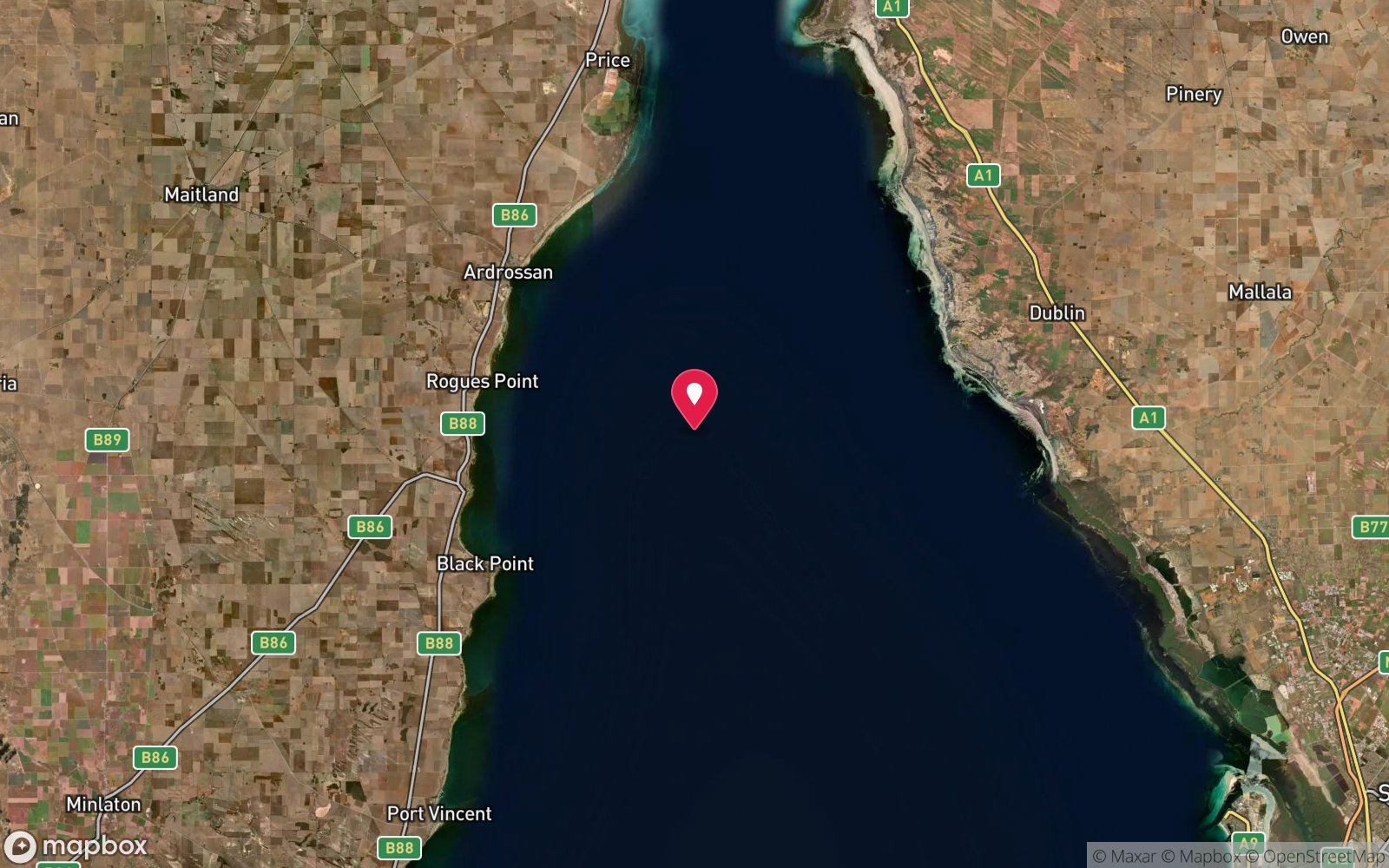
Steel turret-deck steamer lying upside down on sand in about 18-21 m, some 700 m off the cliffs of Troubridge Point and about 14 km south-west of Edithburgh; the only turret ship lost in Australian waters.
Launch at the Edithburgh boat ramp and run south-west along the coast past Troubridge Hill; the wreck lies about 700 m off the cliffs where one of its anchors is mounted as a memorial. The trip takes 25-30 minutes in a small boat. GPS is essential.
There is no shore access. The Troubridge Point reef is immediately inshore and makes a natural second dive.
Entry: Giant stride from boat; descend on a shot or the site mooring (anchoring on the wreck discouraged)
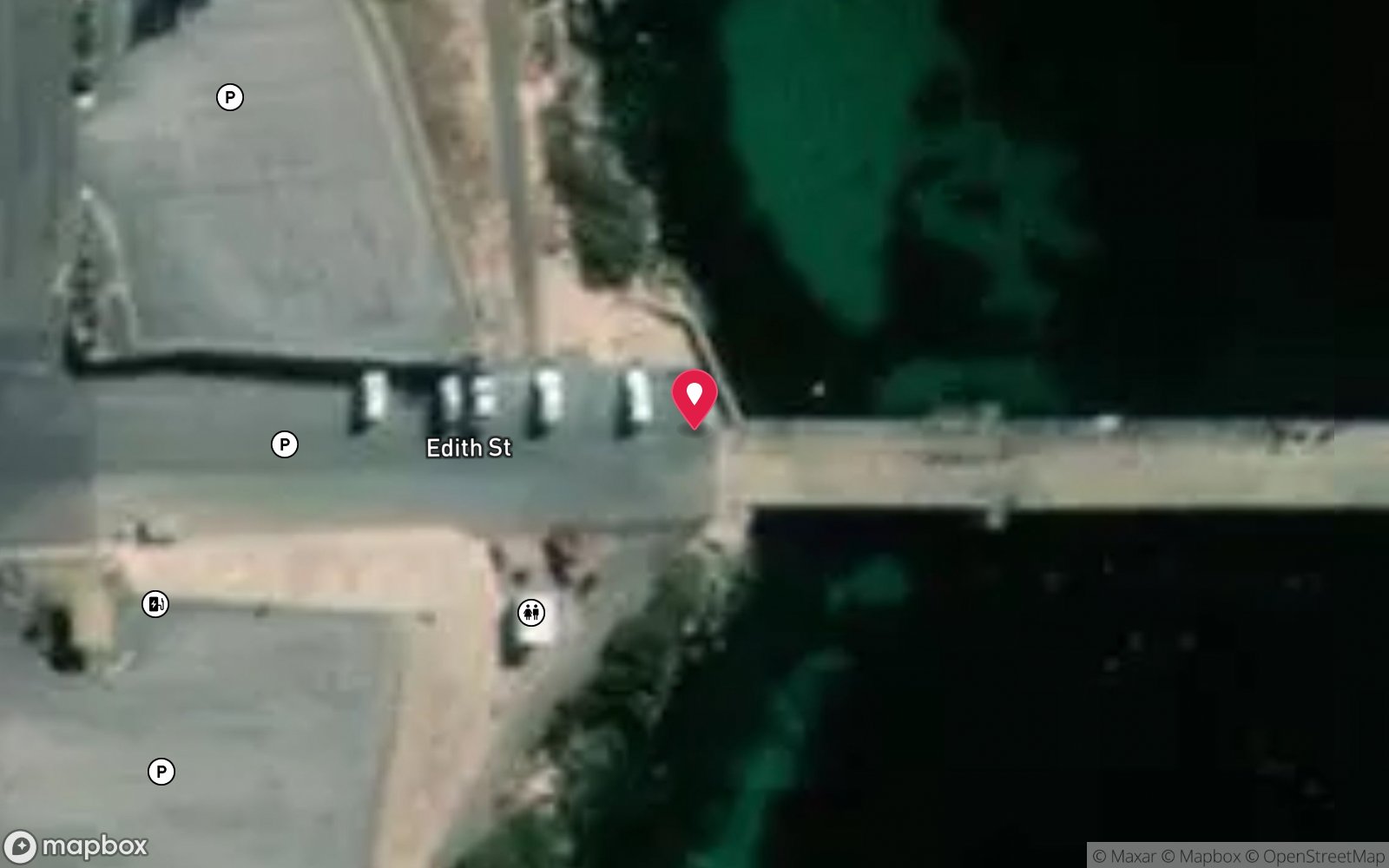
Facilities: Boat ramp, toilets and air fills at Edithburgh; anchor memorial on Troubridge Hill.
Weather, swell & tides
Troubridge Point and the reefs south-west of Edithburgh face Investigator Strait and pick up southerly and south-westerly swell that wraps in from the Southern Ocean past Kangaroo Island. Anything over about 1-1.5 m of southerly swell produces heavy surge on the drop-off and poor visibility, and strong south-westerly winds make the boat run from Edithburgh rough. The best days follow a few days of northerly or light north-westerly winds, which flatten the sea along this coast; February-April with a prevailing northerly is the classic window.
Tidal streams in the strait can run strongly on spring tides, so plan around neaps or the turn of the tide. Currents across the wreck can be strong at times, so time dives for slack water where possible.
Best season: February-April with prevailing northerlies
If it's blown out
Sheltered or shore sites within 25 km that often work when SS Clan Ranald Wreck doesn't.
- Edithburgh Jetty · 15 km · Max 9 m
- Wool Bay Jetty · 23 km · Max 5 m
- MV Yatala Reef Wreck · 13 km · Max 12 m
- Coobowie Jetty · 17 km · Max 4 m
How the dive is usually run
Descend to the upturned hull, orient on the bow (pointing east-south-east), and swim along the keel line to the stern, then drop to the sand to look under the gunwale at the collapsed sections and the starboard boiler. Keep well clear of confined spaces under the hull, return to the shot and do a safety stop at 5 m.
Marine life
- Boarfish
- snapper
- bullseyes
- old wives
- leatherjackets
- western blue groper →
- magpie perch
- southern rock lobster (protected)
- sponges and gorgonians
Linked species have their own page listing every site where they are recorded. All marine life →
Training required
Beyond 18 m an Advanced certification (which includes a deep dive to 30 m) is the accepted minimum. Anything past 25 m is a deep dive in practice.
Courses that help here
- Wreck Diver – The wreck has penetration options.
- Drysuit Diver – Cold water; locals dive dry for much of the year.
- Peak Performance Buoyancy – Silt and low visibility punish poor trim.
Depth tiers: 0–10 m easy · to 18 m Open Water · 18–30 m Advanced (25 m+ is a deep dive) · 30–40 m Deep specialty · 40 m+ technical. All courses
Hazards & warnings
Current can be strong – dive at slack water; depth to 21 m; confined spaces under the upturned hull – no penetration; exposed to southerly swell; protected historic shipwreck – do not disturb or remove anything; no take of rock lobster in the aquatic reserve.
Technical notes
Recreational air dive; nitrox (EAN32) useful for extended bottom time. Collapsing hull – do not enter voids beneath it.
Dive centres that go here
No resident operator; Adelaide shops (The Dive Shack, Diving Adelaide) and clubs run Yorke Peninsula boat weekends several times a year, and private boats dive it from Edithburgh on calm days.
Operators recorded for SS Clan Ranald Wreck
Diving Adelaide
ListedMarleston · Adelaide Metro · SA
An Adelaide training and guided diving operation serving local sites and organised trips.
divingadelaide.com.au · (08) 8122 5003
The Dive Shack
ListedGlenelg · Adelaide Metro · SA
An Adelaide business combining retail, servicing and training for South Australian divers.
thediveshack.com.au
Other dive centres in Yorke Peninsula
Map
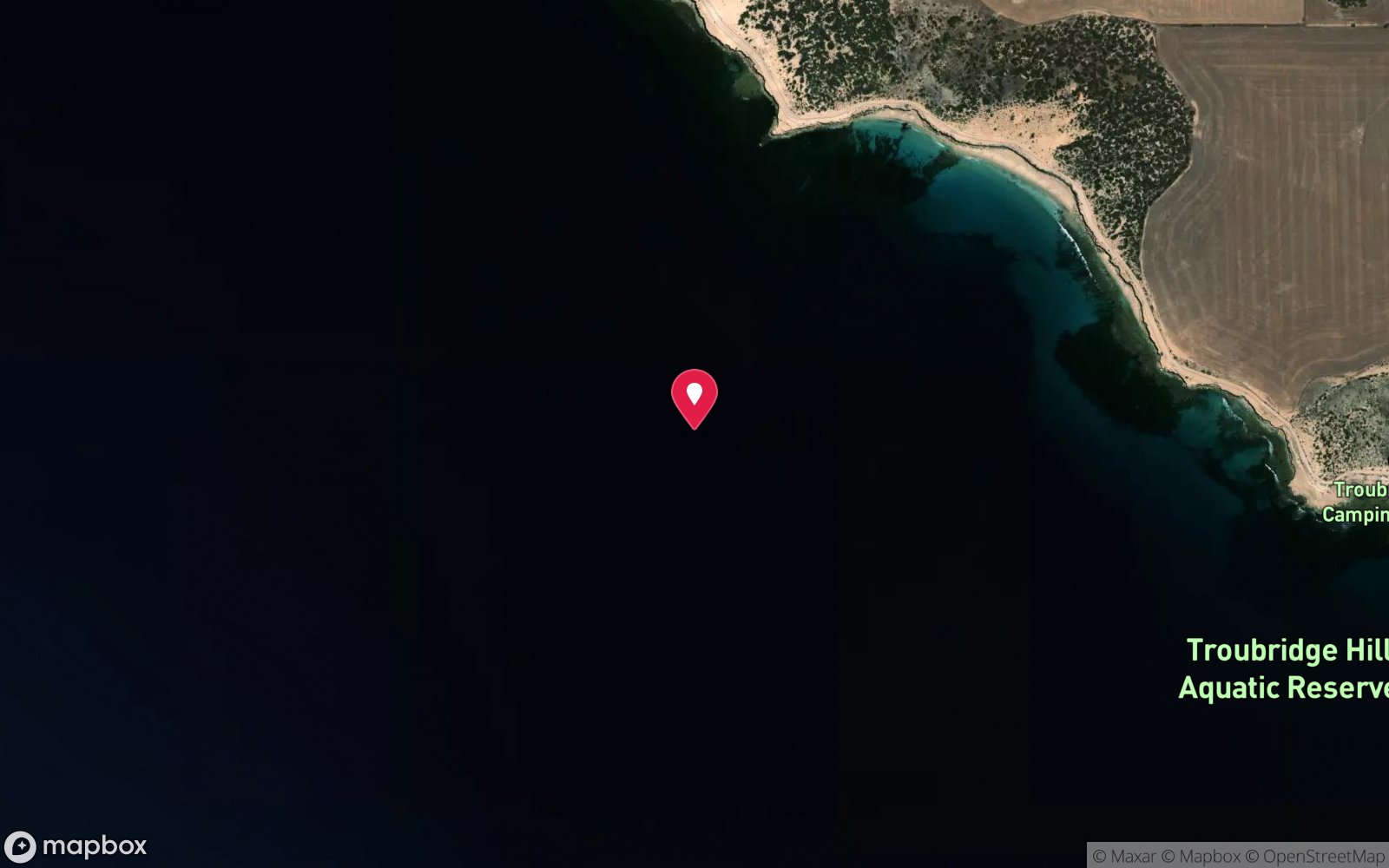
7 pinned sites. Pins marked approximate on their pages show the general area only; not for navigation.
Satellite views
SS Clan Ranald Wreck: frequently asked questions
How deep is SS Clan Ranald Wreck?
SS Clan Ranald Wreck reaches a maximum depth of 21 m, with the shallowest part at about 12 m; most of the dive is spent around 18 m.
What certification do I need to dive SS Clan Ranald Wreck?
Advanced Open Water is the recommended minimum. Rated advanced because of depth beyond 18 m, tidal current that must be timed, wreck penetration options that need training, cold water.
Can I shore dive SS Clan Ranald Wreck?
No, it is reached by boat (about 30 minutes).
When is the best time to dive SS Clan Ranald Wreck?
February-April with prevailing northerlies.
What marine life will I see at SS Clan Ranald Wreck?
Regularly recorded: Boarfish, snapper, bullseyes, old wives, leatherjackets, western blue groper, magpie perch, southern rock lobster (protected), sponges and gorgonians.
What wetsuit do I need at SS Clan Ranald Wreck?
5-7 mm full wetsuit with hood in summer/autumn; 7 mm semi-dry or drysuit in winter.
How cold is the water at SS Clan Ranald Wreck?
Typically 20-24 °C in summer and 12-14 °C in winter.
What are the main hazards at SS Clan Ranald Wreck?
Current can be strong – dive at slack water; depth to 21 m; confined spaces under the upturned hull – no penetration; exposed to southerly swell; protected historic shipwreck – do not disturb or remove anything; no take of rock lobster in the aquatic reserve. See the hazards section above for the full list.
Where is the nearest recompression chamber to SS Clan Ranald Wreck?
Royal Adelaide Hospital hyperbaric medicine unit (Adelaide). In an emergency call 000, then DAN Asia-Pacific on 1800 088 200.
Diving in Yorke Peninsula
The Yorke Peninsula is jetty country. Edithburgh, Port Hughes, Wool Bay, Stenhouse Bay and Port Victoria have some of the richest macro diving in Australia under their pylons: blue devils, pyjama squid, seahorses, tasselled anglerfish, leafy seadragons and carpets of sponges in 5–12 m. Marion Bay and Innes National Park at the southern tip add wrecks, sea lions and clearer open-coast water.
Getting there: Two to four hours west of Adelaide. All the jetties are walk-in shore dives with ladders or beach entries; Innes National Park sites need a park pass.
Sources
- environment.sa.gov.au/topics/heritage/maritime-heritage/visiting-maritime-heritage-places/shipwreck-trails/investigator-strait
- en.wikipedia.org/wiki/SS_Clan_Ranald_(1900)
- marinelife.org.au/?page_id=122
- thediveshack.com.au/dive-sites/local-dive-sites-yorke-peninsula
Data confidence: High. Last updated September 2026. Know this site better? How to send a correction
Nearby dive sites
More wrecks in South Australia
Explore more
This region
Similar dives
Marine life