Dive slate · divesites.com.au · printed 7 Nov 2026
Ex-HMAS Hobart
Fleurieu Peninsula & Victor Harbor, South Australia · near Wirrina Cove
| Depth | 5–30 m |
|---|---|
| Minimum level | Advanced Open Water |
| Difficulty | Advanced |
| Access | Boat (day trip) |
| Entry | Back roll or giant stride from private or charter boat |
| Current | Strong |
| Visibility | 5-15 m |
| Water | summer 19-23 °C, winter 12-14 °C |
| Suit | 7 mm wetsuit with hood year-round; drysuit popular in winter (June-September) |
| Best season | Late summer to autumn (February-May) for the calmest mornings and best visibility; winter can be clear on easterly days |
| Bottom time | 25 min |
| Position | -35.48100, 138.15722 (GPS) |
| Permit | Encounter Marine Park – Rapid Head Sanctuary Zone (no fishing or take); 0.5 nm restricted area with mooring rules; historic shipwreck protection; no permit required for recreational divers (permit requirement lifted 2023); commercial tour operators need a permit |
| Nearest chamber | Royal Adelaide Hospital Hyperbaric Medicine Unit (Adelaide CBD); DAN emergency hotline 1800 088 200 |
| Emergency | 000 · DAN Asia-Pacific diving emergency 1800 088 200 |
Ex-HMAS Hobart
Also known as HMAS Hobart (D 39), Fleurieu Artificial Reef, The Hobart
A 133 m guided missile destroyer sitting upright in 30 m with the superstructure from 5 m, and the only prepared naval wreck in Australia with diver access to the engine room.
Near Wirrina Cove · Fleurieu Peninsula & Victor Harbor, South Australia
- Depth
- 5–30 m
- Minimum level
- Advanced Open Water
- Access
- Boat (day trip)
- Boat ride
- ~15 min
- Water
- 19-23 °C
- Visibility
- 5-15 m
Ex-HMAS Hobart5–30 m · Advanced Open Water
Dive factsDepths, conditions, location & safety
Season
Off-peak nowBest months: January, February, March, April, May, June, July, August, December.
Late summer to autumn (February-May) for the calmest mornings and best visibility; winter can be clear on easterly days
- Best months
- Now (November)
Dive facts
- Depth
- 5–30 m
- Typical depth
- 22 m
- Certification
- Advanced Open Water
- Difficulty
- Advanced
- Depth tier
- Advanced Open Water (18–30 m)
- Access
- Boat (day trip)
- Offshore
- 8.9 km
- Dive centre needed
- Recommended
- Shore / independent
- No
- Boat ride
- ~15 min
- Current
- Strong
- Visibility
- 5-15 m
- Water temp (summer)
- 19-23 °C
- Water temp (winter)
- 12-14 °C
- Water
- Temperate
- Bottom time
- 25 min
- Dive traffic
- Popular (weekly charters)
- Night dive
- No
- Snorkel friendly
- No
Exposure suit
7 mm wetsuit with hood year-round; drysuit popular in winter (June-September)
Location
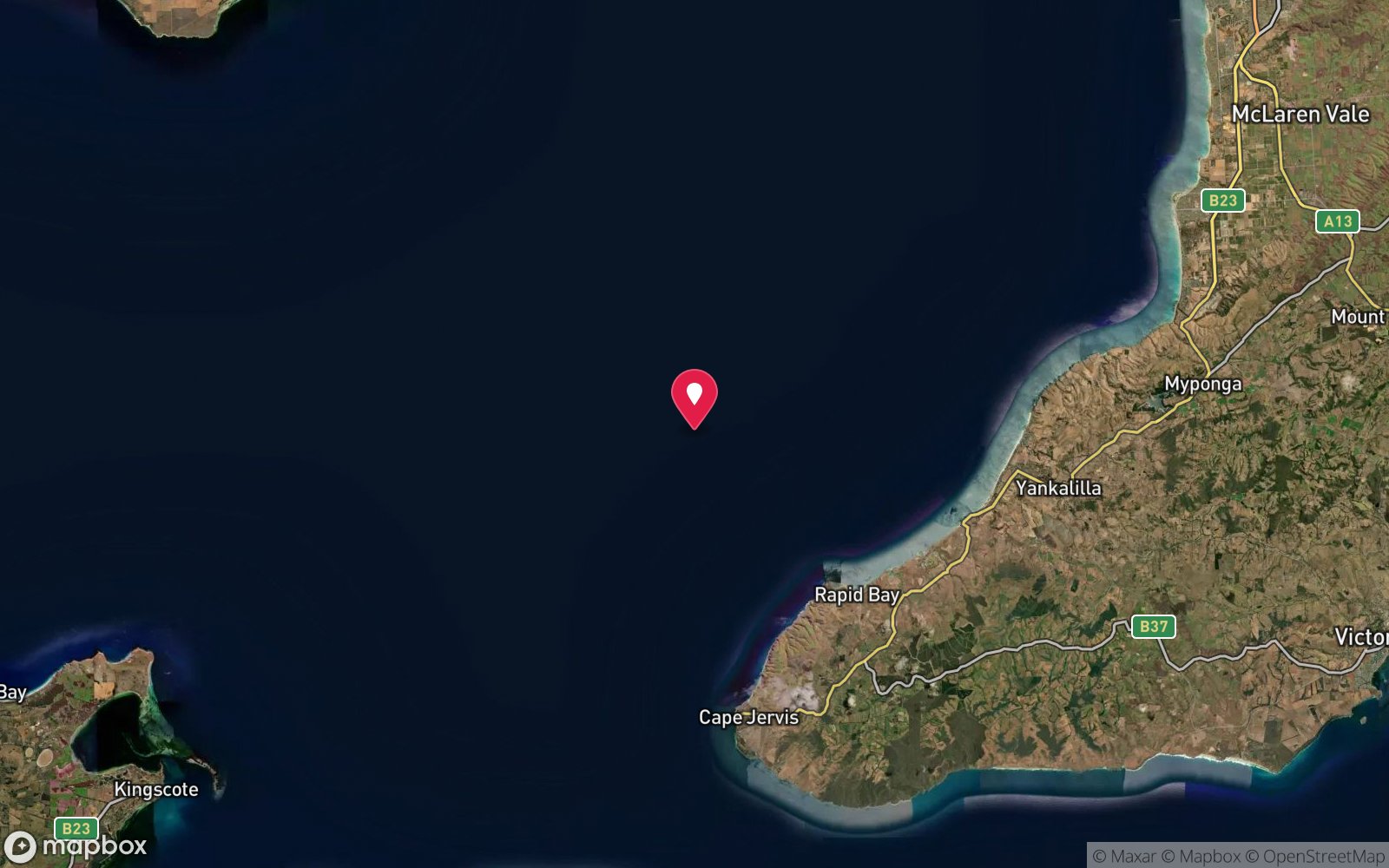
Yankalilla Bay – Rapid Head Sanctuary Zone · Fleurieu Peninsula
-35.48100, 138.15722
Published GPS position.
Open in Google MapsDive site map (external) →Primary source: cdn.environment.sa.gov.auTags
Marine park & permits
Encounter Marine Park – Rapid Head Sanctuary Zone (no fishing or take); 0.5 nm restricted area with mooring rules; historic shipwreck protection; no permit required for recreational divers (permit requirement lifted 2023); commercial tour operators need a permit
Nearest recompression chamber
Royal Adelaide Hospital Hyperbaric Medicine Unit (Adelaide CBD); DAN emergency hotline 1800 088 200
Diving emergency: call 000, then DAN AP 1800 088 200.
Trip planner
Build a trip around Ex-HMAS Hobart →
A day-by-day plan for Fleurieu Peninsula & Victor Harbor with this site locked in.
This guide is a planning aid. Conditions change daily — confirm with a local dive centre and dive within your training. Data & safety notes.
Dive profile
How this site rates
Scores are computed from the recorded data, not opinions. How?
At a glance
Ex-HMAS Hobart is a wreck boat dive in Fleurieu Peninsula & Victor Harbor, SA, 5–30 m, suited to Advanced Open Water divers, strong current, about 15 minutes by boat.
Rated advanced because of depth beyond 18 m, strong current, an overhead environment, wreck penetration options that need training, cold water.
Why dive here
- A 133 m guided missile destroyer sitting upright in 30 m with the superstructure from 5 m, and the only prepared naval wreck in Australia with diver access to the engine room.
- Sunk in 2002.
About Ex-HMAS Hobart
The ex-HMAS Hobart is one of Australia's great wreck dives and South Australia's premier boat dive. Launched in Michigan in 1964 and commissioned in Boston in 1965, the 133 m, 4,500-tonne Charles F. Adams-class guided missile destroyer served the Royal Australian Navy for 35 years, including three Vietnam deployments – during one of which, in 1968, she was mistakenly struck by US aircraft and two sailors were killed.
After decommissioning she was gifted to South Australia and prepared at Port Adelaide for scuttling: contaminants were removed, doors and hatches taken out, corridors widened, sharp protrusions removed and some entrances sealed, while keeping her character as a fighting ship. She was scuttled on 5 November 2002 in Yankalilla Bay. The ship sits upright on sand in 30 m, with her superstructure rising to within about 5-8 m of the surface and the main deck around 15 m.
The bow rises like a knife toward the surface, the sonar dome sits near the seabed at 30 m, and the gun mounts and bridge remain. Large openings cut in the hull let in light and allow access to the interior, and the Hobart is the only artificially prepared naval wreck in Australia where divers can reach the engine room. Crew quarters with bunks, and even toilets, remain.
More than two decades of growth have coated the hull in colourful sponges and algae, and the no-take sanctuary zone has produced a staggering variety of fish – bullseyes, snapper, flathead, blue devils (often inside), old wives and morwong. For 20 years divers needed a DEW permit, but the 550 m protected-zone permit requirement was removed in 2023; the 2025 code of conduct requires no permit for recreational divers and instead sets depth and penetration limits by certification. The Hobart rewards repeat visits and is best for Advanced divers and above; wreck-trained divers get the most from it.
The ship and the sinking
HMAS Hobart (D 39) was the second of the RAN's three Charles F. Adams-class destroyers, built at Bay City, Michigan and commissioned in December 1965. She was the first RAN ship to serve off Vietnam, in 1967, and returned for two more tours; in June 1968 she was hit by missiles fired in error from a US aircraft, killing two of her crew. She served for 35 years and was decommissioned in May 2000.
South Australia acquired her for an artificial reef off the Fleurieu Peninsula. She was cleaned and prepared with a purpose-built diver trail: numbered plaques marking a route through cut openings, the first of its kind on an Australian warship. She was scuttled on 5 November 2002 in Yankalilla Bay and settled upright in 30 m.
What is there today
The superstructure rises to about 5 m below the surface, so snorkellers can see her from above and Open Water divers can dive the upper decks. The marked trail runs through the bridge, mess decks and machinery spaces. Charters run from Wirrina Cove and Adelaide; a permit is required and funds the site.
Wrecks older than 75 years, and several younger ones, are protected under the Underwater Cultural Heritage Act 2018: look, photograph, take nothing. Australia's oldest wreck dives →
Wreck details
Charles F. Adams-class guided missile destroyer, launched 1964 (Defoe Shipbuilding, Michigan), commissioned 1965; 133.2 m x 14.4 m, approx. 4,500 tonnes · Sunk 2002
Era: modern, mostly scuttled as artificial reefs. Oldest wrecks · Wartime wrecks · Scuttled warships
Other wrecks of the same era
- MV Seawolf Wreck · Max 20 m · Adelaide Metro
- HA Lumb Wreck · Max 20 m · Adelaide Metro
- Bronzewing Tug Wreck · Max 7 m · Eyre Peninsula
- HMAS Perth Wreck · Max 35 m · Albany & Great Southern
- Lena Wreck · Max 18 m · Geographe Bay & Busselton
- Karma Wreck · Max 27 m · Bundaberg & Agnes Water
Getting there & entry
133 m Charles F. Adams-class guided missile destroyer scuttled upright on 5 November 2002 in 30 m in Yankalilla Bay, about 8.9 km west-north-west of Marina St Vincent (Wirrina Cove), within the Rapid Head Sanctuary Zone.
Boat access only. Charters and private boats depart from Wirrina Cove (Marina St Vincent, also called Sunset Cove), about 1 hour 15 minutes' drive south of Adelaide via Main South Road past Normanville; the marina has a boat ramp and a fuel jetty from which charters load. The run to the wreck is about 10-20 minutes.
A restricted area of 0.5 nautical miles surrounds the wreck: anchoring is prohibited except at the permanent mooring facilities. Boats tie up to the red buoys (attached to concrete blocks on the seafloor); the white buoys are attached to the wreck and are for divers' descent and ascent lines only – boats must not use them as their primary mooring.
Entry: Back roll or giant stride from private or charter boat
Facilities: Wirrina Cove / Marina St Vincent: boat ramp, fuel jetty, parking, toilets; charter boats typically have toilets, showers, drinking water, oxygen and shark shields.
Weather, swell & tides
Tidal current is the dominant factor: local sources describe very strong tidal currents across Yankalilla Bay, and the Hobart should be dived only around slack water, ideally on neap 'dodge tides' when the gulf's tide barely moves. Check a dodge-tide calendar before booking. The wreck is exposed to westerly, south-westerly and northerly winds; easterlies and light southerlies give the calmest crossing.
Visibility is variable – often milky outside with current-driven water, sometimes clearer inside the hull – and is best in late summer and autumn.
Best season: Late summer to autumn (February-May) for the calmest mornings and best visibility; winter can be clear on easterly days
If it's blown out
Sheltered or shore sites within 25 km that often work when Ex-HMAS Hobart doesn't.
- Rapid Bay Jetty · 5 km · Max 10 m
- Second Valley · 6 km · Max 9 m
- Second Valley Jetty · 6 km · Max 5 m
- Old Rapid Bay Jetty · 5 km · Max 12 m
How the dive is usually run
Descend a white diver line to the superstructure (5-8 m tops, main deck about 15 m). On a first dive stay outside: tour the bridge, gun mounts and missile launcher along the upper deck, dropping to the sand at 30 m only if gas and no-deco time allow. Wreck-trained divers can enter the hull through cut openings to the crew quarters and the engine room.
Return to the same white line and ascend, doing the safety stop on the line with the current in mind. Most divers need several dives to see the whole ship.
Marine life
- Bullseyes
- snapper
- flathead
- blue devilfish →
- old wives
- morwong
- magpie perch
- leatherjackets
- nudibranchs →
- colourful sponges
- algae
- ascidians
Linked species have their own page listing every site where they are recorded. All marine life →
Training required
Beyond 18 m an Advanced certification (which includes a deep dive to 30 m) is the accepted minimum. Anything past 25 m is a deep dive in practice.
At more than 25 m this counts as a deep dive: watch no-decompression limits and gas.
Courses that help here
- Enriched Air Nitrox – Longer no-decompression time at 25 m and deeper.
- Wreck Diver – The wreck has penetration options.
- Drift Diver – Current is a feature of the dive.
- Drysuit Diver – Cold water; locals dive dry for much of the year.
Depth tiers: 0–10 m easy · to 18 m Open Water · 18–30 m Advanced (25 m+ is a deep dive) · 30–40 m Deep specialty · 40 m+ technical. All courses
Hazards & warnings
Very strong tidal currents – dive slack water / dodge tides only; easy to exceed no-deco limits; overhead environment inside – penetration only within wreck/cave/technical training; certification limits apply (Open Water: outside only, max 18 m; Advanced: outside only to 30 m); variable visibility; no anchoring in the 0.5 nm restricted area – use red boat moorings, white buoys for divers only; sanctuary zone – no fishing.
Technical notes
Code of conduct (2025): Open Water divers outside the wreck to 18 m; Advanced Open Water outside to 30 m; wreck, technical or cave trained divers may penetrate within their training. EANx 28-32 extends bottom time; penetration needs a continuous guideline, redundant lights and gas reserves; deco diving should be planned around slack. Rebreathers well suited.
Divers under 18 must be supervised by qualified adults.
Dive centres that go here
Adelaide Scuba (Glenelg North) – regular Hobart double-dive days from the Wirrina Cove fuel jetty; Underwater Sports (Edwardstown) – scheduled Hobart trips on its own boat; other Adelaide shops and clubs run periodic trips; private boats from Wirrina Cove. Commercial operators require a marine park commercial tour operator permit.
Operators recorded for Ex-HMAS Hobart
Adelaide Scuba
ListedGlenelg North · Adelaide Metro · SA
An Adelaide business providing training, equipment and local diving support, located near Glenelg.
adelaidescuba.com.au · (08) 8294 7744
Diving Adelaide
ListedMarleston · Adelaide Metro · SA
An Adelaide training and guided diving operation serving local sites and organised trips.
divingadelaide.com.au · (08) 8122 5003
Underwater Sports
ListedHolden Hill · Adelaide Metro · SA
An Adelaide equipment and service business. Retail range and servicing capability require verification.
underwatersports.com.au · (08) 8263 3337
Sea Dragon Dive Lodge
Named by sitesSecond Valley · Fleurieu Peninsula & Victor Harbor · SA
seadragondivelodge.com.au · 0499 229 053
Other dive centres in Fleurieu Peninsula & Victor Harbor
The Dive Shack
ListedGlenelg · Adelaide Metro · SA
An Adelaide business combining retail, servicing and training for South Australian divers.
thediveshack.com.au
Divers Delight
ListedStepney · Adelaide Metro · SA
An Adelaide dive business. Retail range, servicing and training availability require verification.
diversdelight.com.au · (08) 8363 7518
Adelaide Technical Diving
ListedPark Holme · Adelaide Metro · SA
An Adelaide operation specialising in technical diving training, relevant to divers preparing for deep, decompression or cave diving in South Australia.
Map
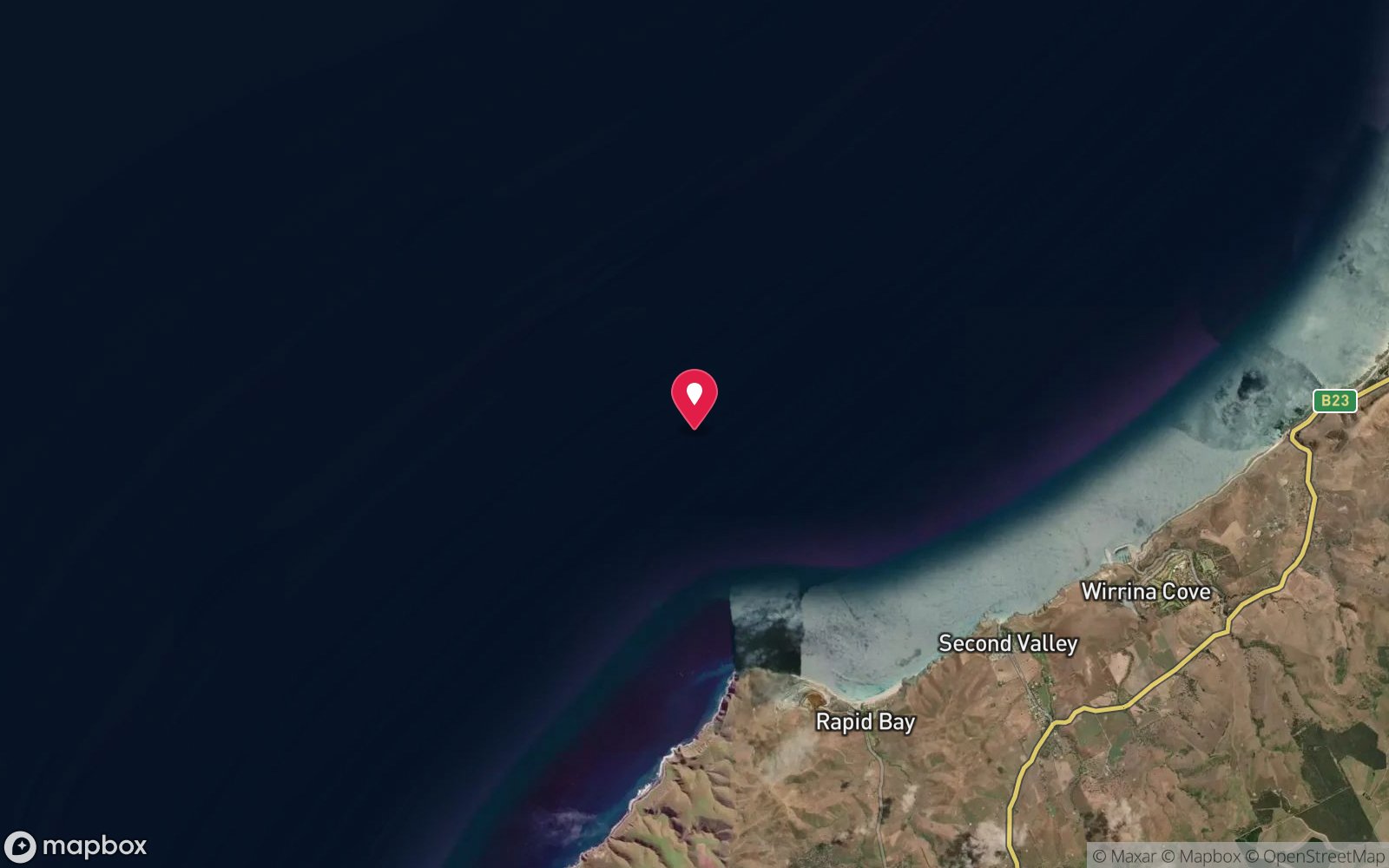
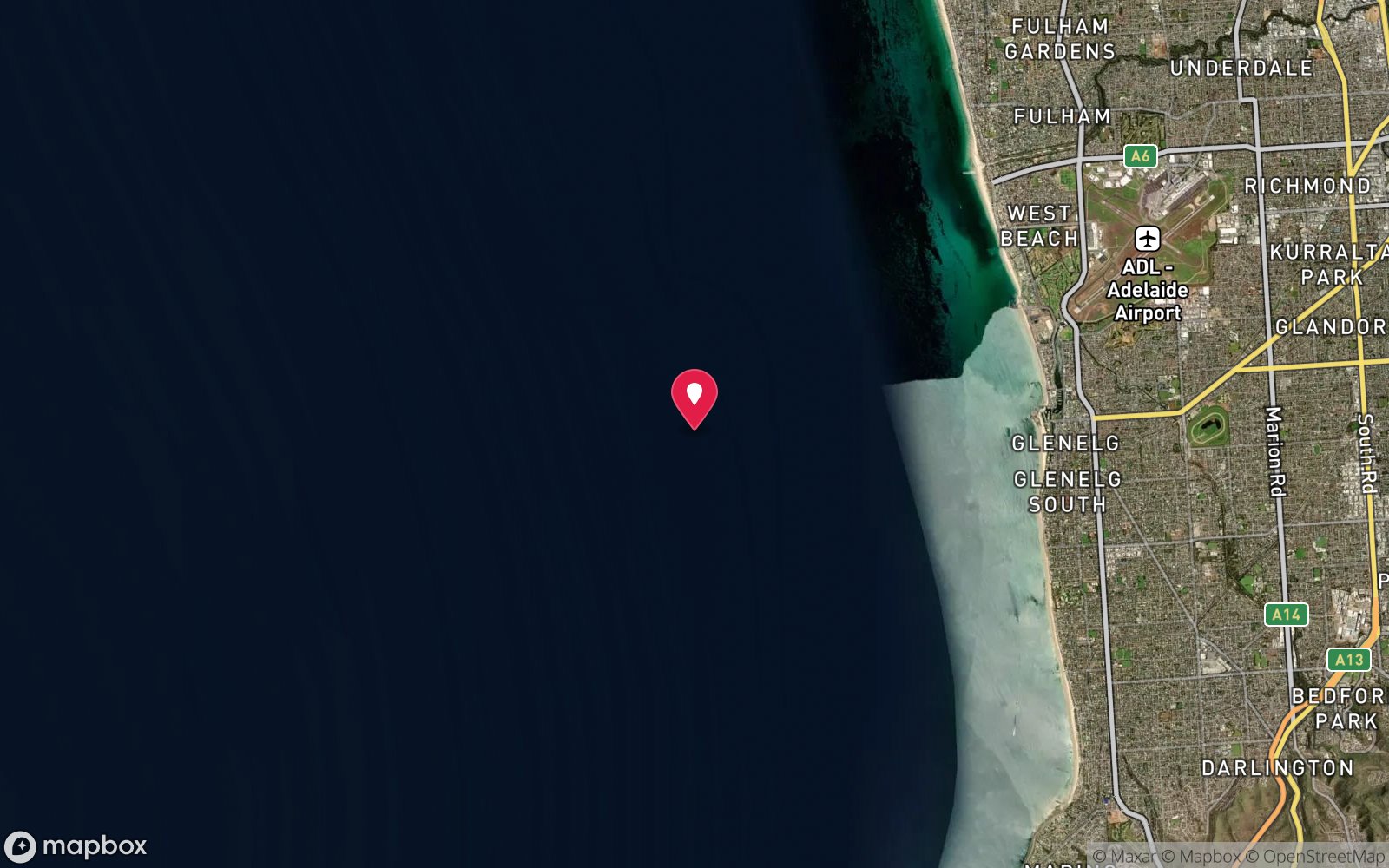
7 pinned sites. Pins marked approximate on their pages show the general area only; not for navigation.
Satellite views
Ex-HMAS Hobart: frequently asked questions
How deep is Ex-HMAS Hobart?
Ex-HMAS Hobart reaches a maximum depth of 30 m, with the shallowest part at about 5 m; most of the dive is spent around 22 m.
What certification do I need to dive Ex-HMAS Hobart?
Advanced Open Water is the recommended minimum. At more than 25 m this counts as a deep dive: watch no-decompression limits and gas. Rated advanced because of depth beyond 18 m, strong current, an overhead environment, wreck penetration options that need training, cold water.
Can I shore dive Ex-HMAS Hobart?
No, it is reached by boat (about 15 minutes).
When is the best time to dive Ex-HMAS Hobart?
Late summer to autumn (February-May) for the calmest mornings and best visibility; winter can be clear on easterly days.
What marine life will I see at Ex-HMAS Hobart?
Regularly recorded: Bullseyes, snapper, flathead, blue devilfish, old wives, morwong, magpie perch, leatherjackets, nudibranchs, colourful sponges, algae, ascidians.
What wetsuit do I need at Ex-HMAS Hobart?
7 mm wetsuit with hood year-round; drysuit popular in winter (June-September).
How cold is the water at Ex-HMAS Hobart?
Typically 19-23 °C in summer and 12-14 °C in winter.
What are the main hazards at Ex-HMAS Hobart?
Very strong tidal currents – dive slack water / dodge tides only; easy to exceed no-deco limits; overhead environment inside – penetration only within wreck/cave/technical training; certification limits apply (Open Water: outside only, max 18 m; Advanced: outside only to 30 m); variable visibility; no anchoring in the 0.5 nm restricted area – use red boat moorings, white buoys for divers only; sanctuary zone – no fishing. See the hazards section above for the full list.
Where is the nearest recompression chamber to Ex-HMAS Hobart?
Royal Adelaide Hospital Hyperbaric Medicine Unit (Adelaide CBD); DAN emergency hotline 1800 088 200. In an emergency call 000, then DAN Asia-Pacific on 1800 088 200.
Diving in Fleurieu Peninsula & Victor Harbor
The Fleurieu is where you go to see a leafy seadragon. Rapid Bay Jetty is the most reliable site anywhere, and Second Valley, the Bluff at Victor Harbor and Port Noarlunga are close behind. The ex-HMAS Hobart, a 133 m destroyer scuttled off Yankalilla in 2002, is the region's flagship boat dive, and the granite coves of Second Valley and Carrickalinga are easy shore dives.
Getting there: An hour or two south of Adelaide. Rapid Bay and Second Valley are walk-in shore dives; the Hobart is a charter from Wirrina Cove or Adelaide.
All Fleurieu Peninsula & Victor Harbor dive sites and a suggested itinerary →
Sources
- cdn.environment.sa.gov.au/marineparks/docs/NPWS-2025-Ex-HMAS-Hobart-Code-of-Conduct.pdf
- marineparks.sa.gov.au/enjoy/diving/diving-the-hmas-hobart
- divernet.com/world-dives/diving-the-hmas-hobart-explore-a-world-class-wreck
- divernet.com/scuba-news/wrecks/destroyer-wreck-dive-restrictions-lifted
- environment.sa.gov.au/topics/heritage/maritime-heritage/managing-maritime-heritage/protected-zones/ex-hmas-hobart
- en.wikipedia.org/wiki/Fleurieu_Artificial_Reef
- divedb.net/sites/ex-hmas-hobart
- environment.sa.gov.au/topics/heritage/maritime-heritage/visiting-maritime-heritage-places/ships-graveyards/yankalilla-bay
- sdfsa.net/sa-dive-sites/fleurieu-peninsula
- sdfsa.net/sa-dive-sites/exhmas-hobart
- thediveshack.com.au/dive-sites/local-dive-sites-fleurieu-peninsula
- marinelife.org.au/?page_id=130
Data confidence: High · Being verified: SDFSA site page still mentions a government permit – DEW 2025 code of conduct and Divernet (2023) confirm no recreational permit; minimum depth given as 5 m (DEW) or 8 m (Divernet).. Last updated September 2026. Know this site better? How to send a correction
Nearby dive sites
More wrecks in South Australia
Explore more
This region
Similar dives